
Organization
36 New Year Organization Ideas for 2027 That Keep a Home Tidy Past January
Nov 19, 2026
36 New year organization ideas for 2027 — closets, kitchen, pantry, paper and storage…
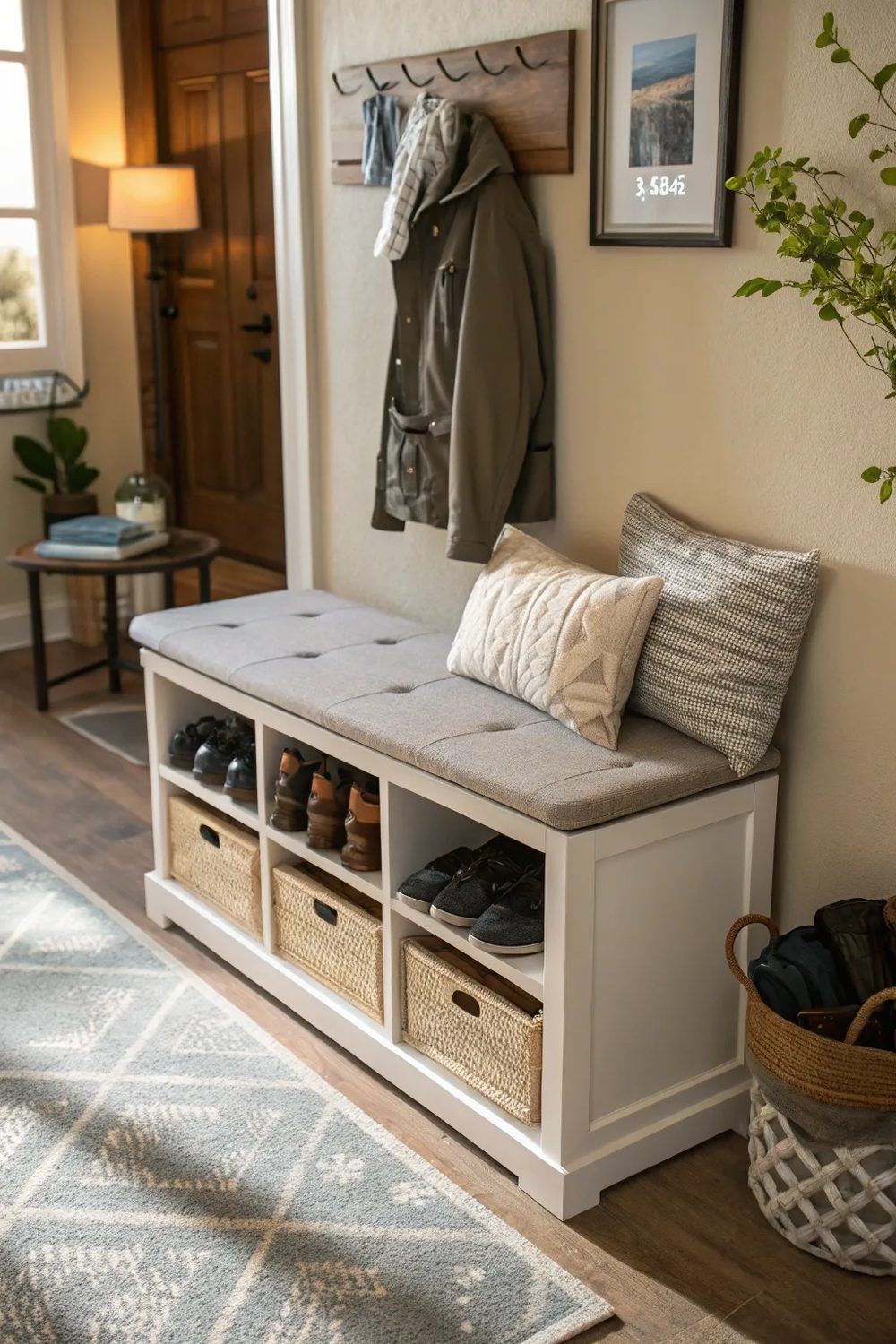
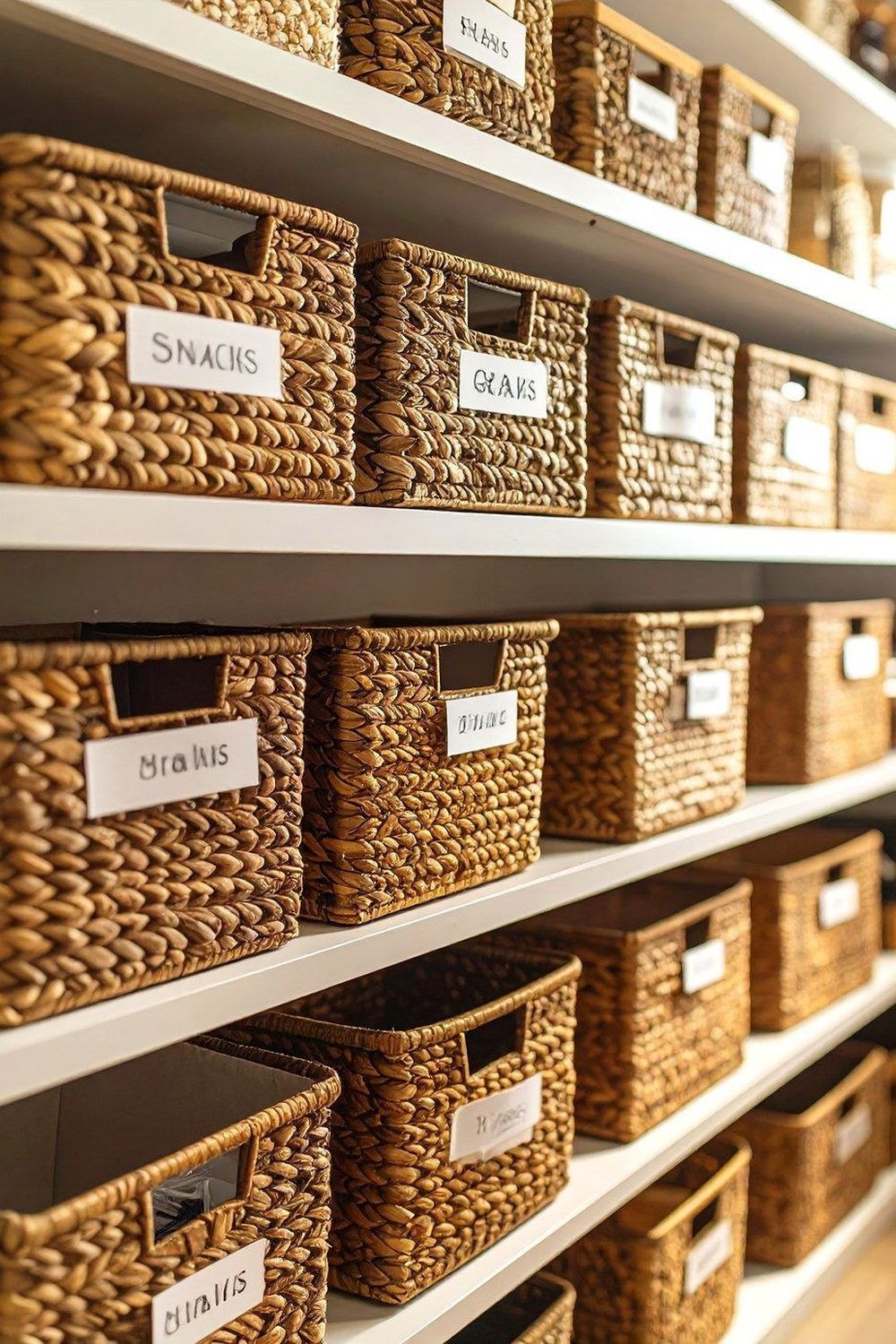
A new year deserves a home that works as well as it looks, and the fastest route is a room-by-room reset rather than one exhausting weekend. These new year home organization ideas work through the whole house in order — entryway, kitchen, closets, bathroom, desk and storage — giving every everyday thing a fixed home, so the tidy start quietly becomes a tidy year.
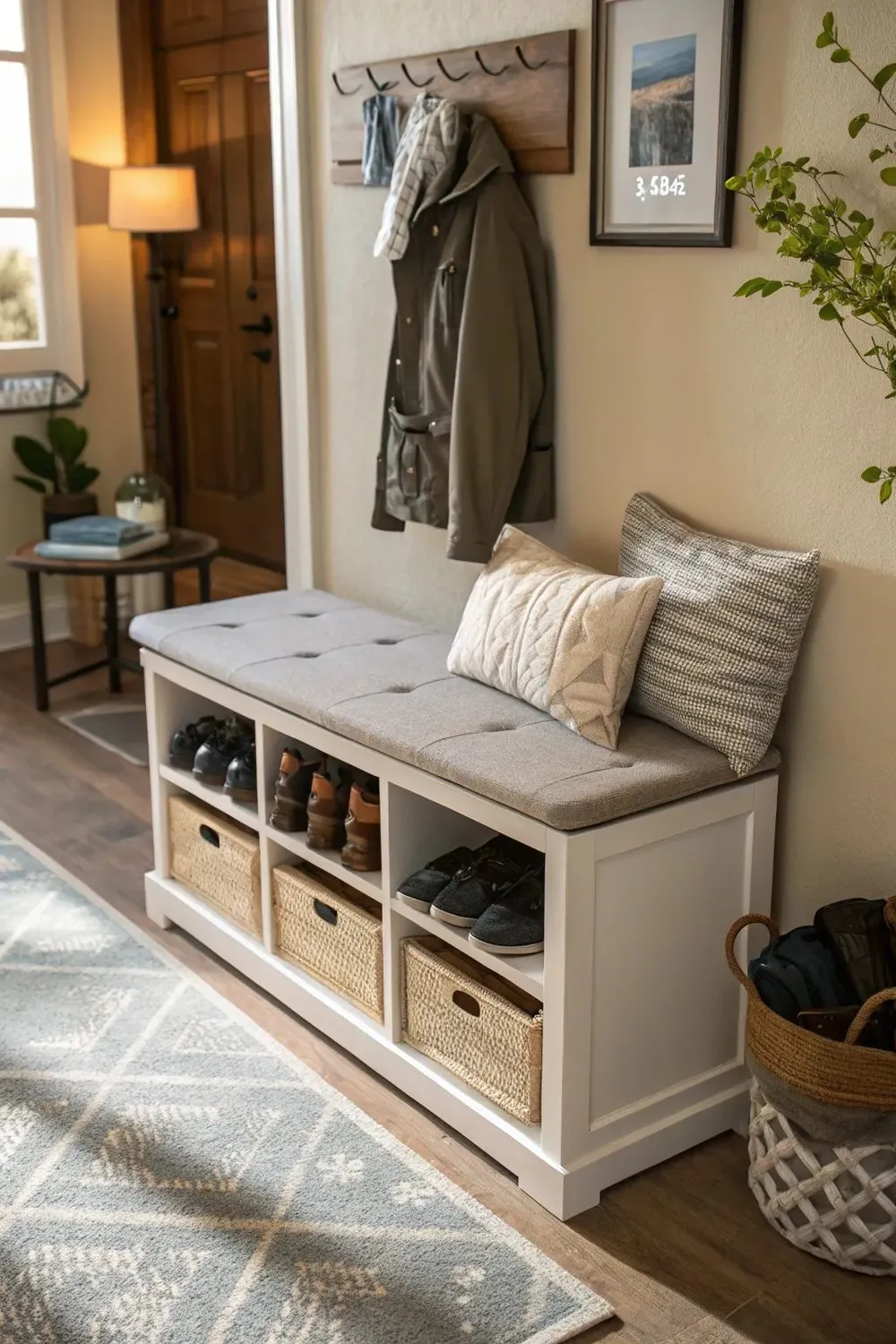
A bench to sit on, baskets below — the entryway swallows shoes instead of scattering them.
The entryway reset starts with furniture that works twice. A bench gives everyone a seat for pulling boots on, and the baskets slotted beneath it give shoes, bags and sports kits a home that is off the floor but still in reach. The hallway stops being a corridor of piles and becomes a room with a system.
Styling tip: one basket per person, or one per category — shoes, bags, outdoor gear — and never a fourth "miscellaneous" basket; miscellaneous is where systems go to die.
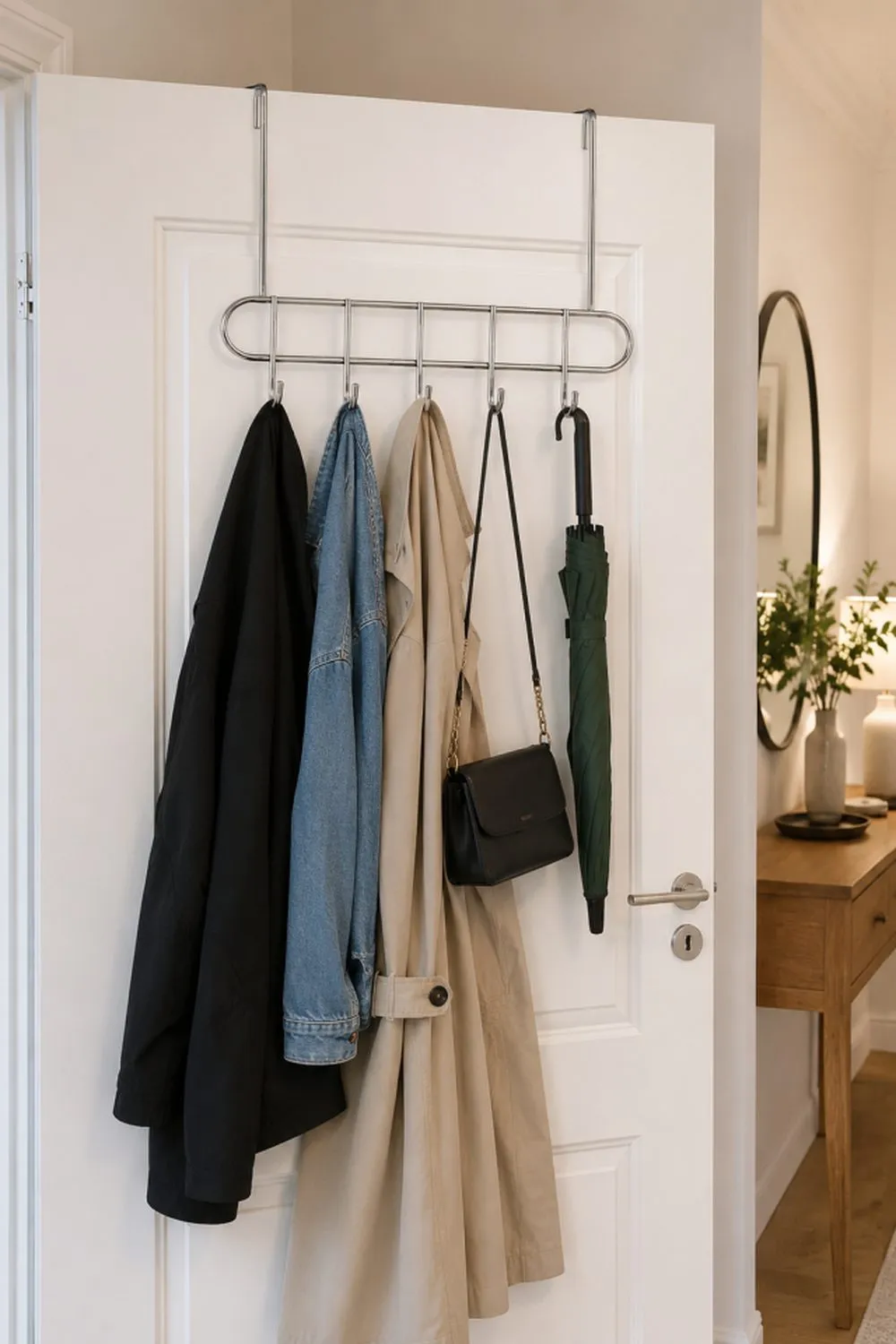
The back of the door is a free wall — coats and bags hang where the door already is.
No wall space for hooks? The door itself is the wall. An over-door rack with sturdy hooks takes the overflow coats, the school bags and the dog-walking jacket without a single screw, and it moves in minutes if the system needs to change. Rental-friendly, reset-friendly, and instantly tidier than a chair piled with coats.
Styling tip: hang the heaviest coat on the hook nearest the hinges; the outer hooks flex the rack every time the door swings.
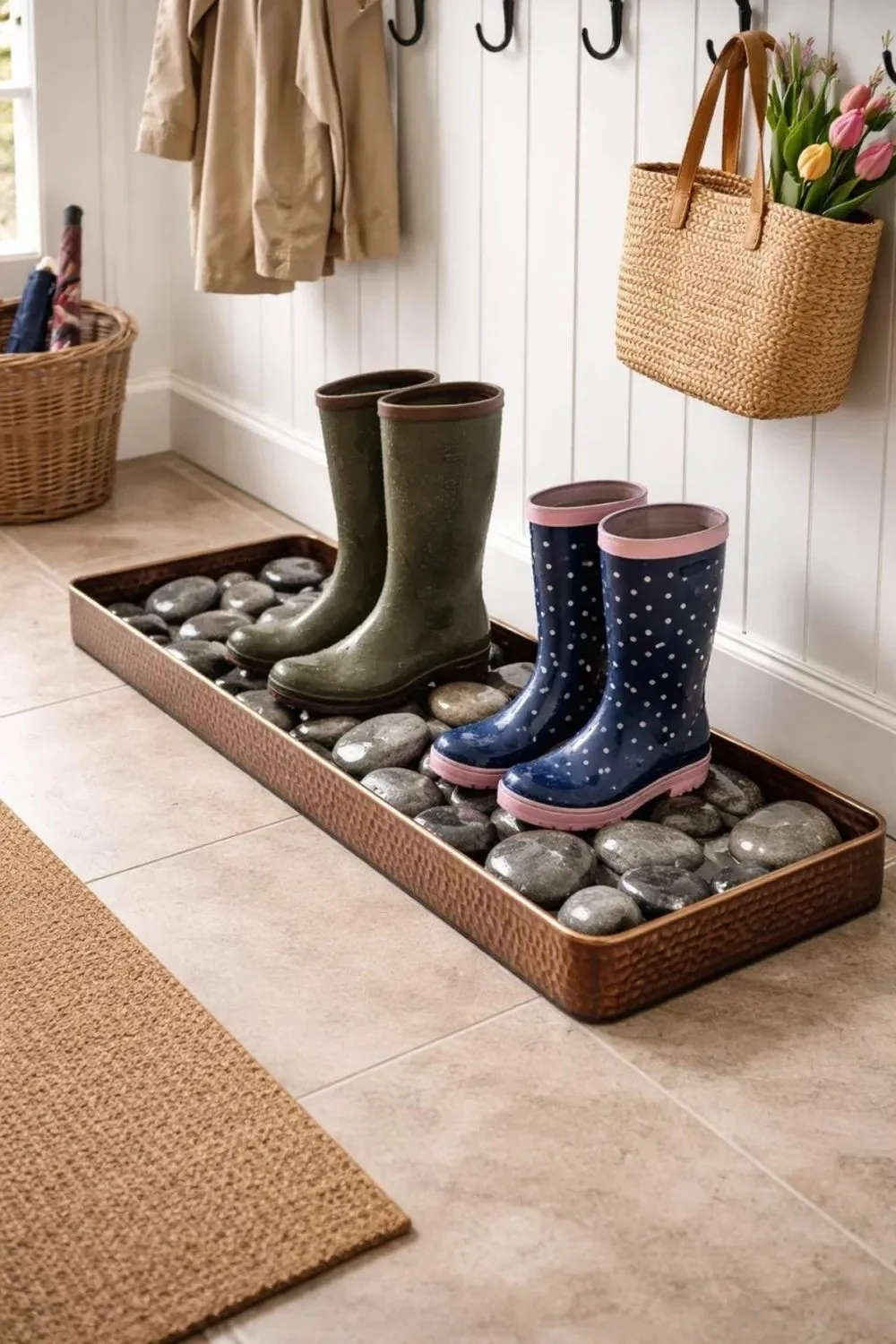
One tray for wet boots — the puddle stays on the tray, not across the hallway.
Winter entryways fail at floor level: melting snow and mud walk in on every sole. A low, lipped boot tray parked by the door gives wet footwear a landing strip that contains the water, protects the floor beneath, and makes the "shoes off here" rule visible to guests without a word being said.
Styling tip: a layer of smooth pebbles or a ribbed mat inside the tray lifts soles out of the meltwater, so boots dry instead of stewing.
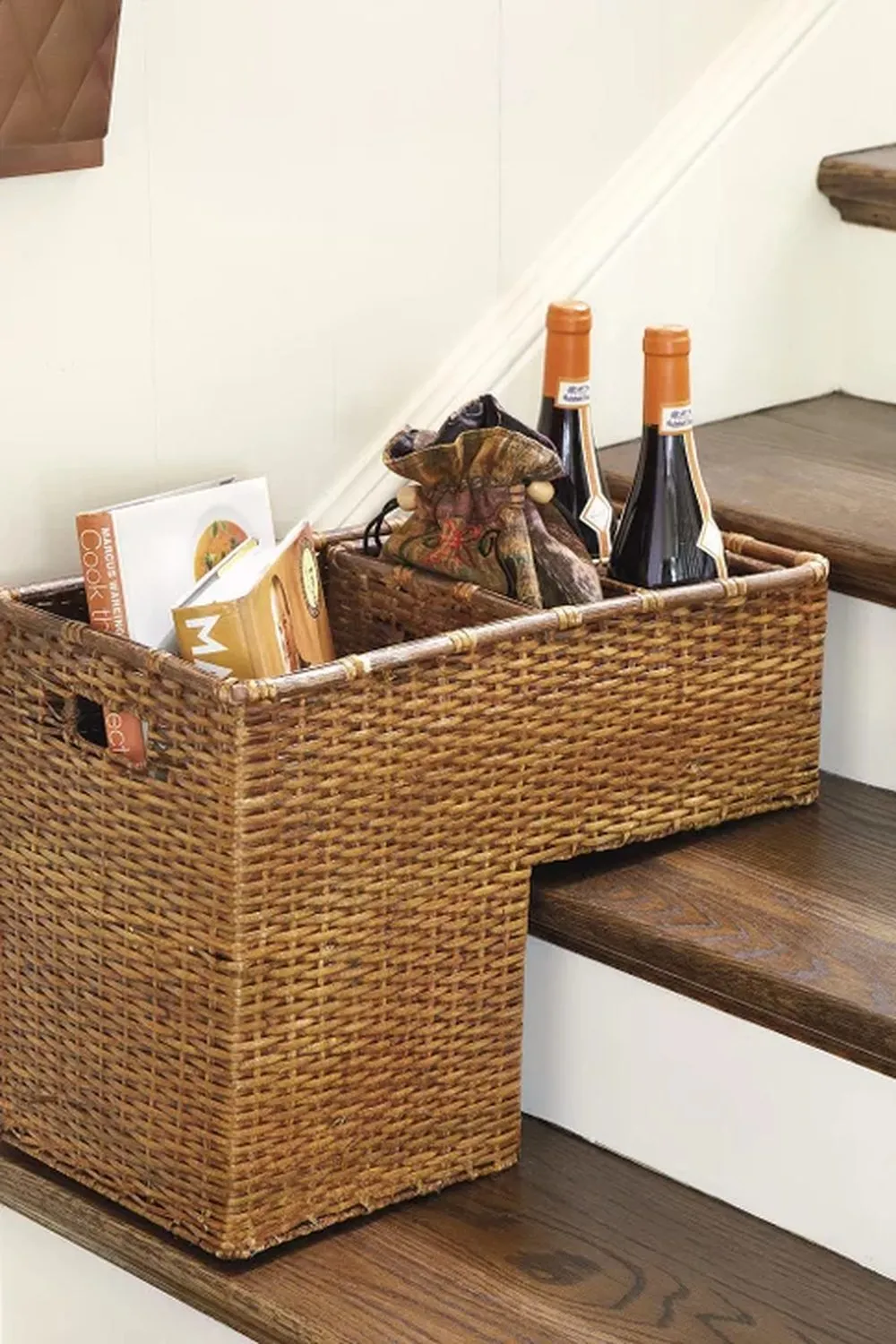
A basket shaped for the stairs — things that belong upstairs stop camping on the bottom step.
Every two-story home has the same exhibit: a drift of objects on the bottom steps, waiting for a trip that never quite happens. A stepped stair basket — shaped to sit level across two treads — collects the drift properly, and whoever goes up next takes the whole basket in one trip.
Styling tip: the rule that makes it work is one-way traffic — the basket only travels up full and comes down empty; the moment it lives upstairs, the drift returns.
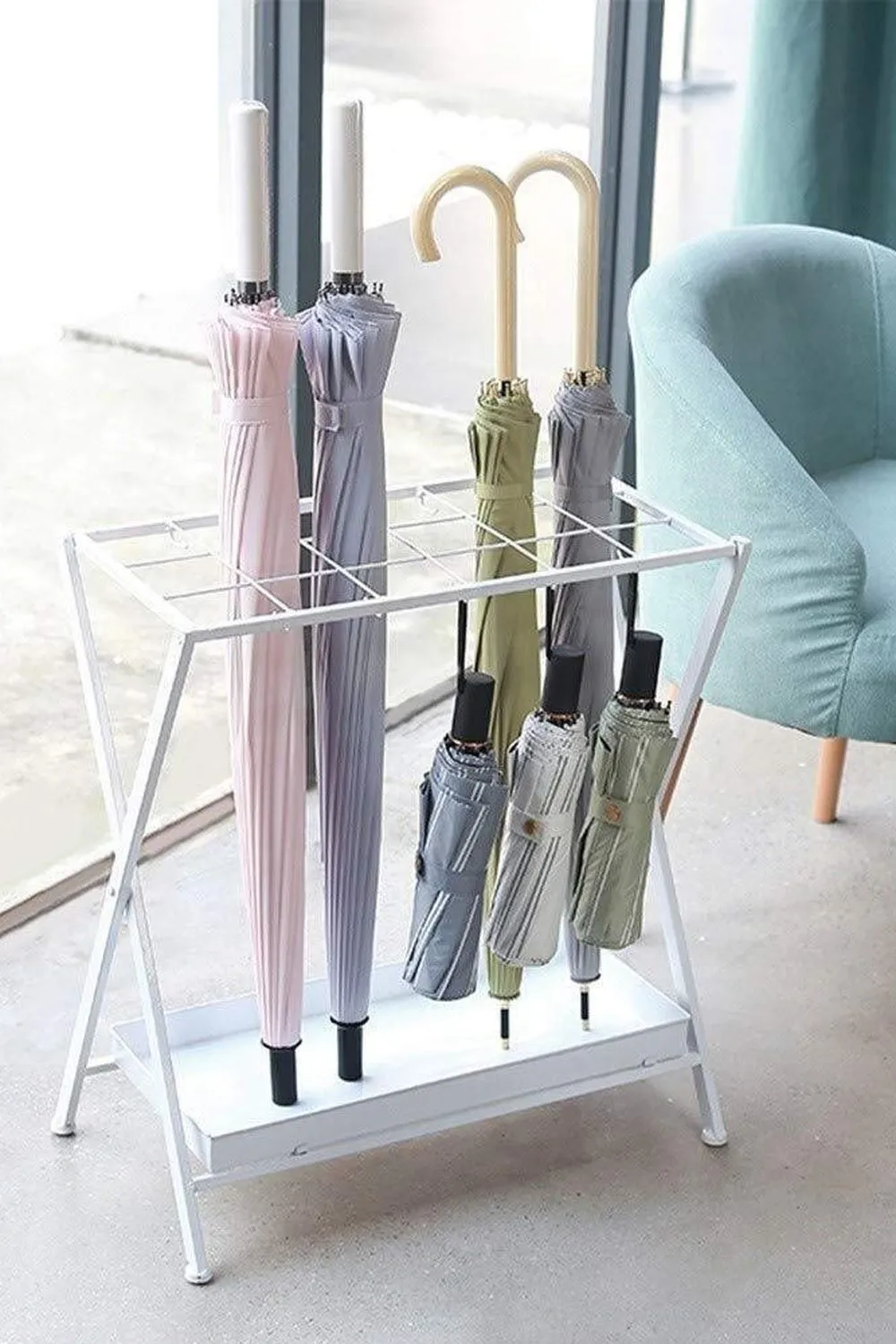
Umbrellas upright in one stand — no more wet umbrellas propped in corners.
Umbrellas are the entryway's awkward shape: too tall for drawers, too wet for cupboards. A stand with a drip tray corrals them upright in a single footprint by the door, walking sticks and all, and the tray keeps the meltwater off the floorboards. Choose a tall, narrow stand and it takes less room than one propped umbrella.
Styling tip: empty the drip tray on the same day the rain stops; a tray that stays wet starts to smell, and the stand becomes the thing nobody wants to touch.
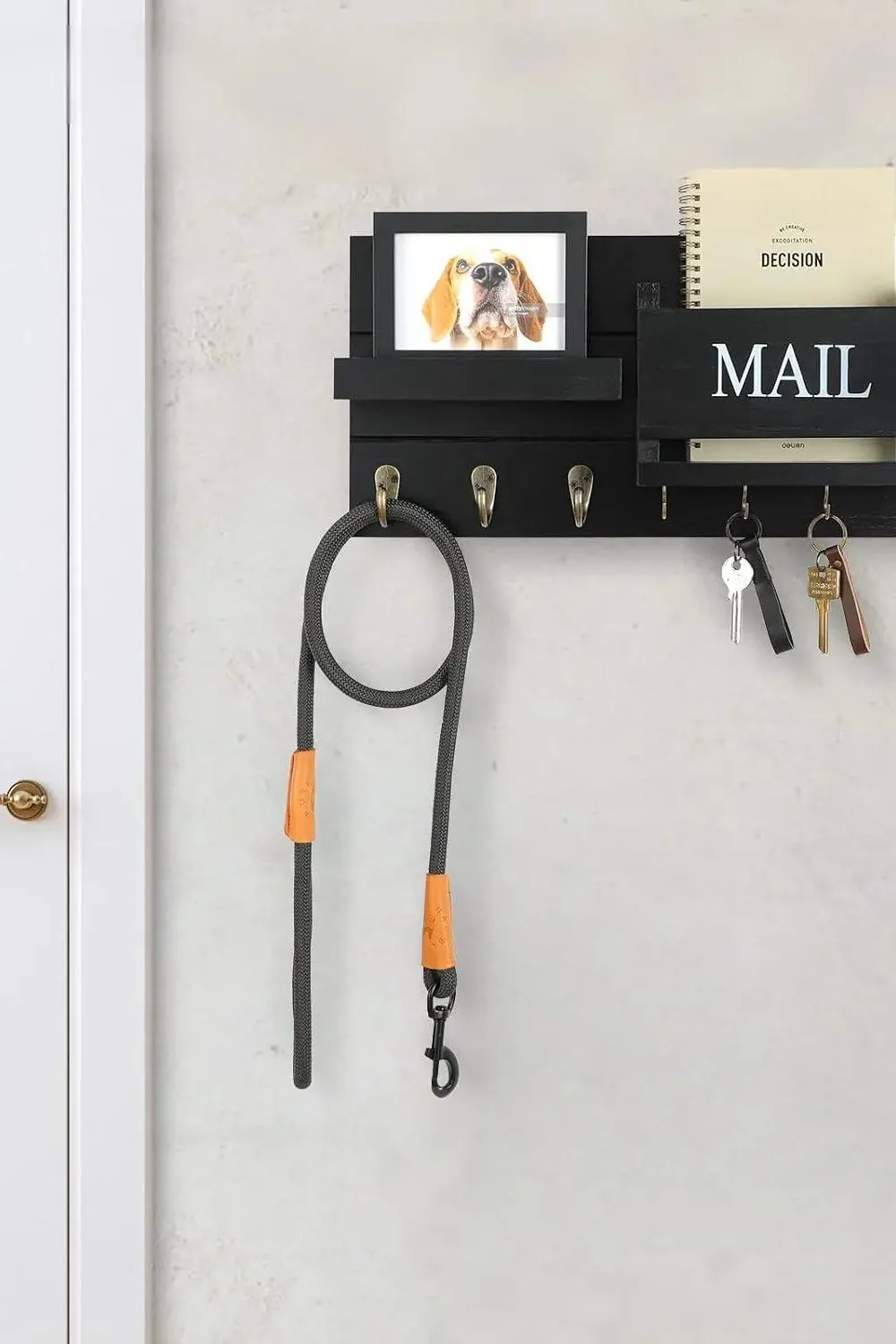
Pockets on the wall by the door — mail out, leash up, nothing balanced on the radiator.
Some clutter is not incoming but outgoing: letters to post, library books to return, the leash, the reusable bags. A wall-mounted strip of pockets beside the door gives outgoing things a visible holding bay — seen on the way out, grabbed on the way out, gone the same day instead of aging on the hall table.
Styling tip: keep the pockets shallow and open; deep pockets hide small letters, and a hidden letter is just a delayed letter.
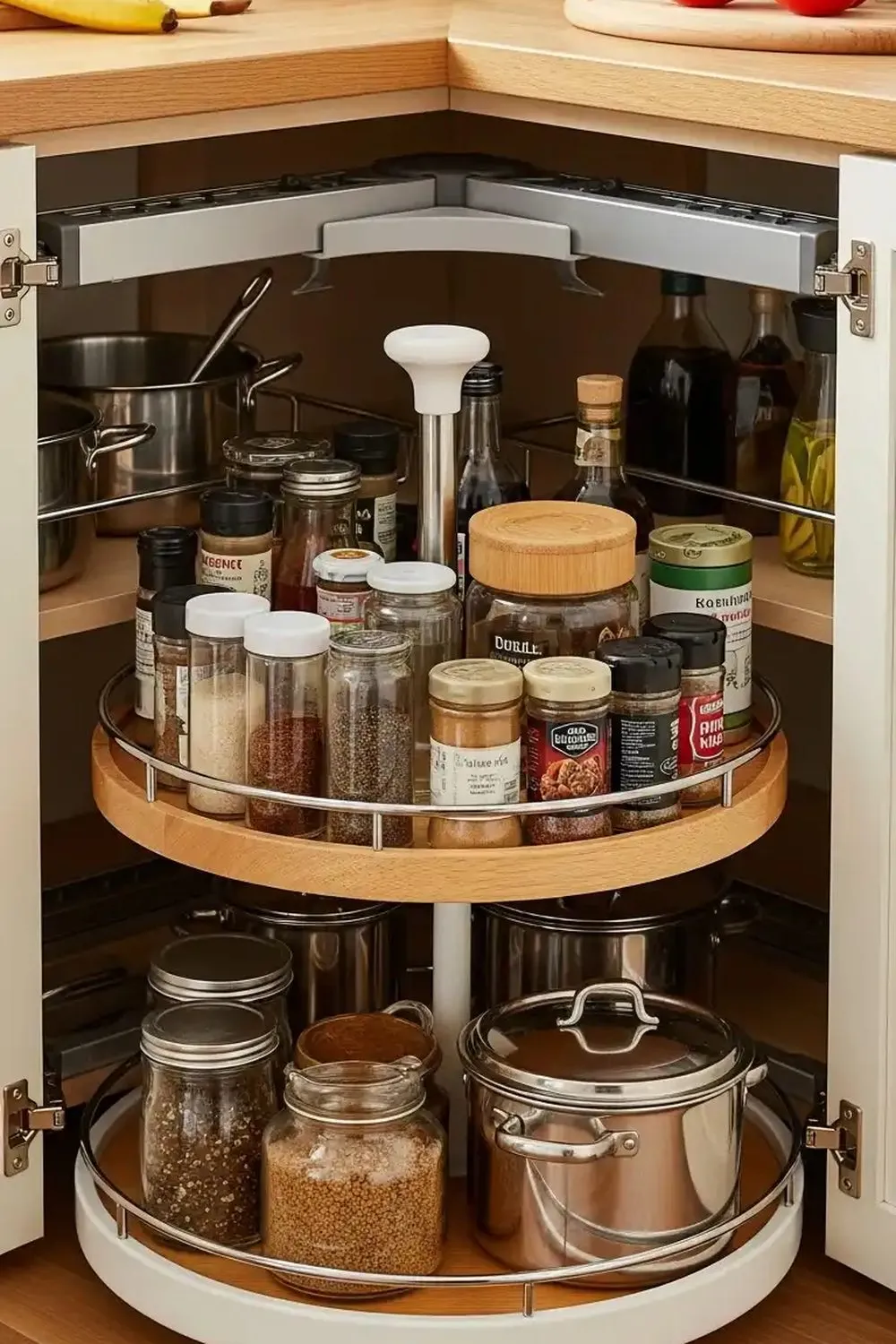
One spin replaces the dig — corner cabinets stop swallowing the good jars.
The corner cabinet is where sauces go to be forgotten. A lazy susan turntable fitted to the shelf brings the back row to the front with one spin, so the jar you bought is the jar you find. Two tiers double the win in tall cabinets: everyday bottles below, the occasional ones above.
Styling tip: keep the turntable to one category — oils and vinegars, or baking supplies; a mixed turntable spins into a mixed mess at speed.
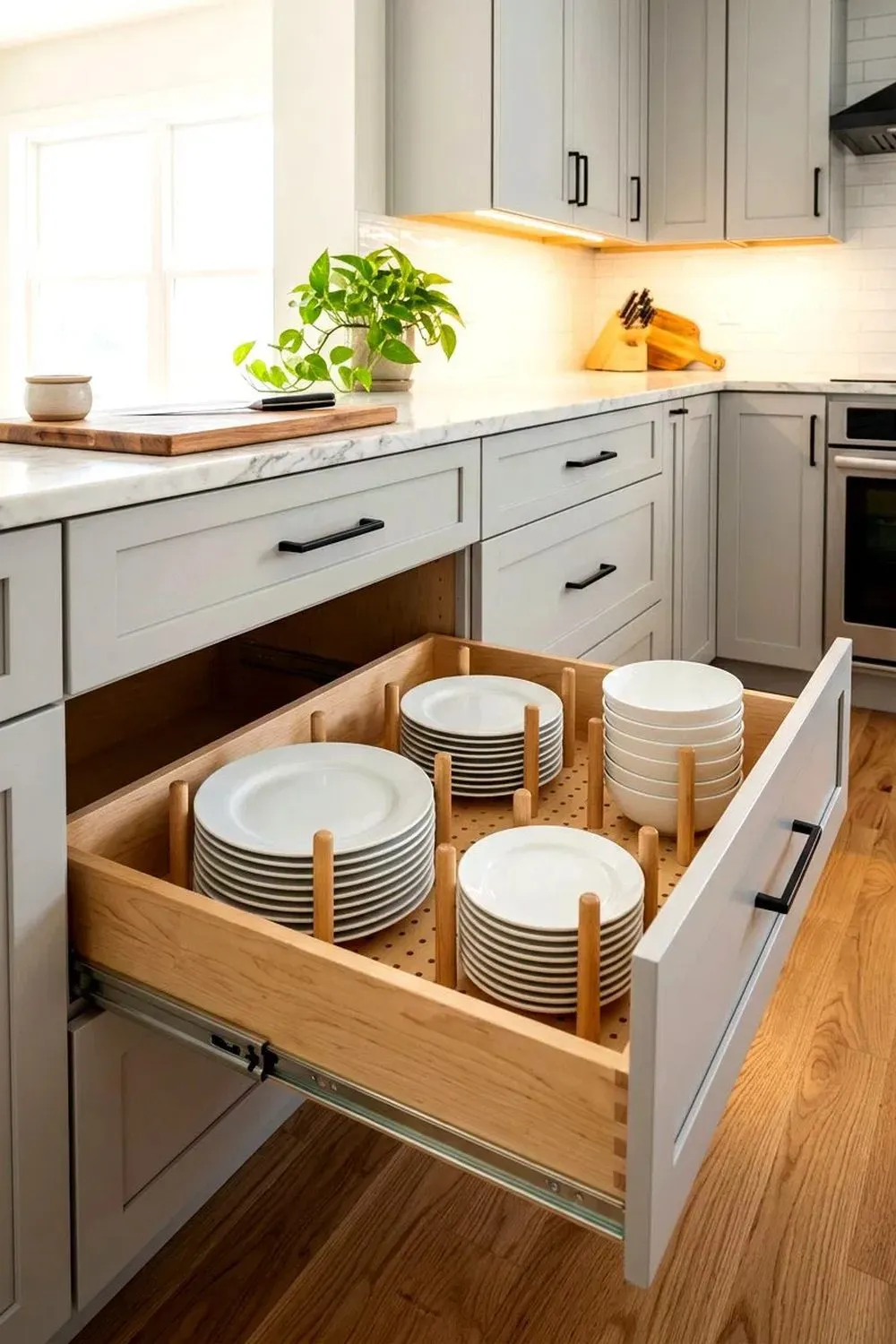
Plates standing between pegs — the drawer holds more and nothing chips.
Deep drawers waste their depth on flat stacks. A peg system — movable wooden pegs pushed into a perforated base — holds plates, bowls and serving dishes upright and separated, like files in a cabinet. You pull out the one plate you need without lifting a stack, and the drawer quietly holds a full set in the space a stack of eight used.
Styling tip: set the pegs with the largest platter first and work down in size; the big pieces decide the layout, the small ones fill it.
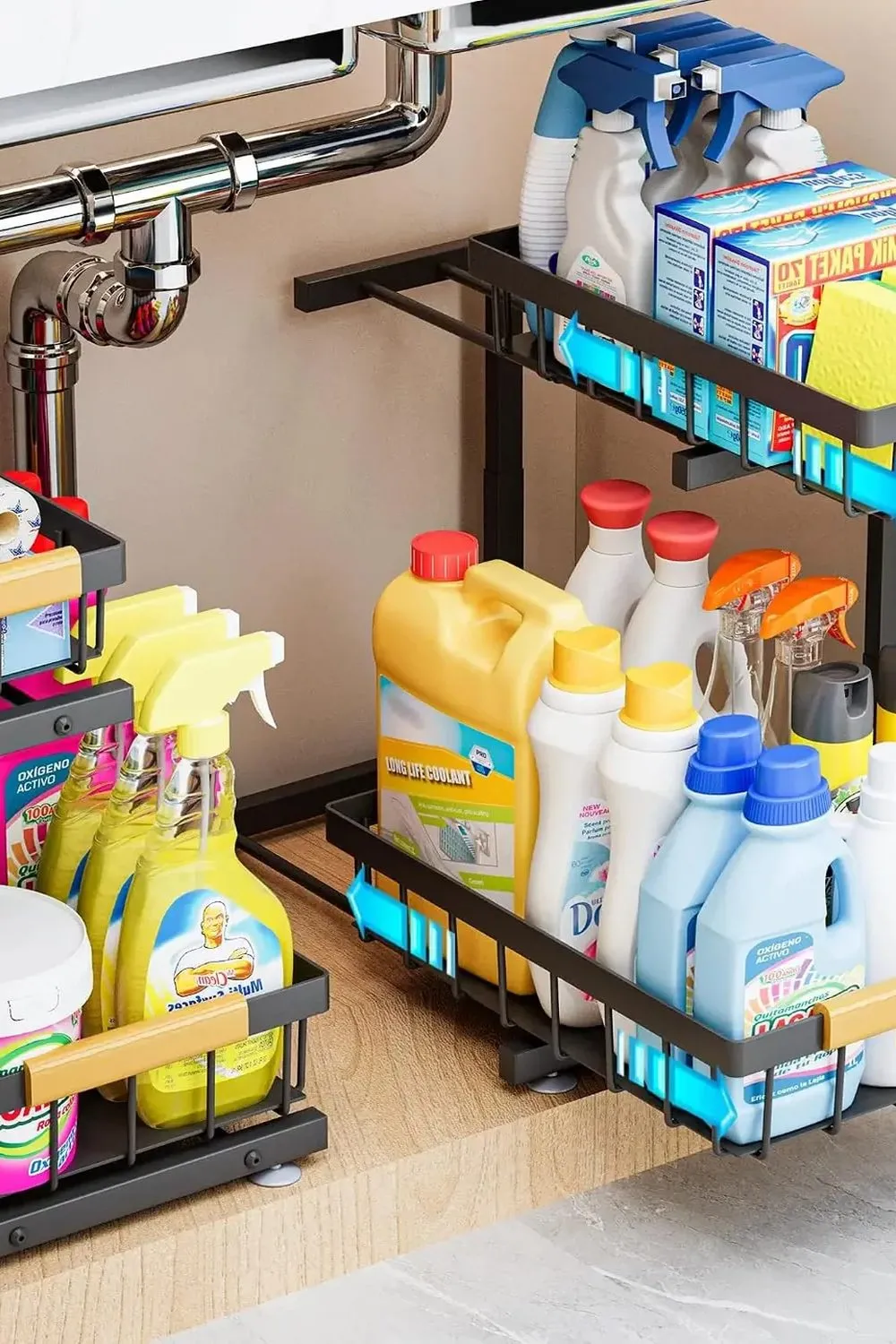
Baskets that slide past the pipes — the under-sink cave becomes two drawers.
Under the sink is deep, dark and interrupted by pipes, which is why it becomes a cave of fallen bottles. Sliding baskets on runners — narrow ones that pass either side of the plumbing — turn the cave into drawers: pull, take, push back. Cleaning supplies finally stand upright, visible and counted.
Styling tip: measure around the pipes, not just the cabinet; the trap in the middle is the dimension every under-sink plan forgets.
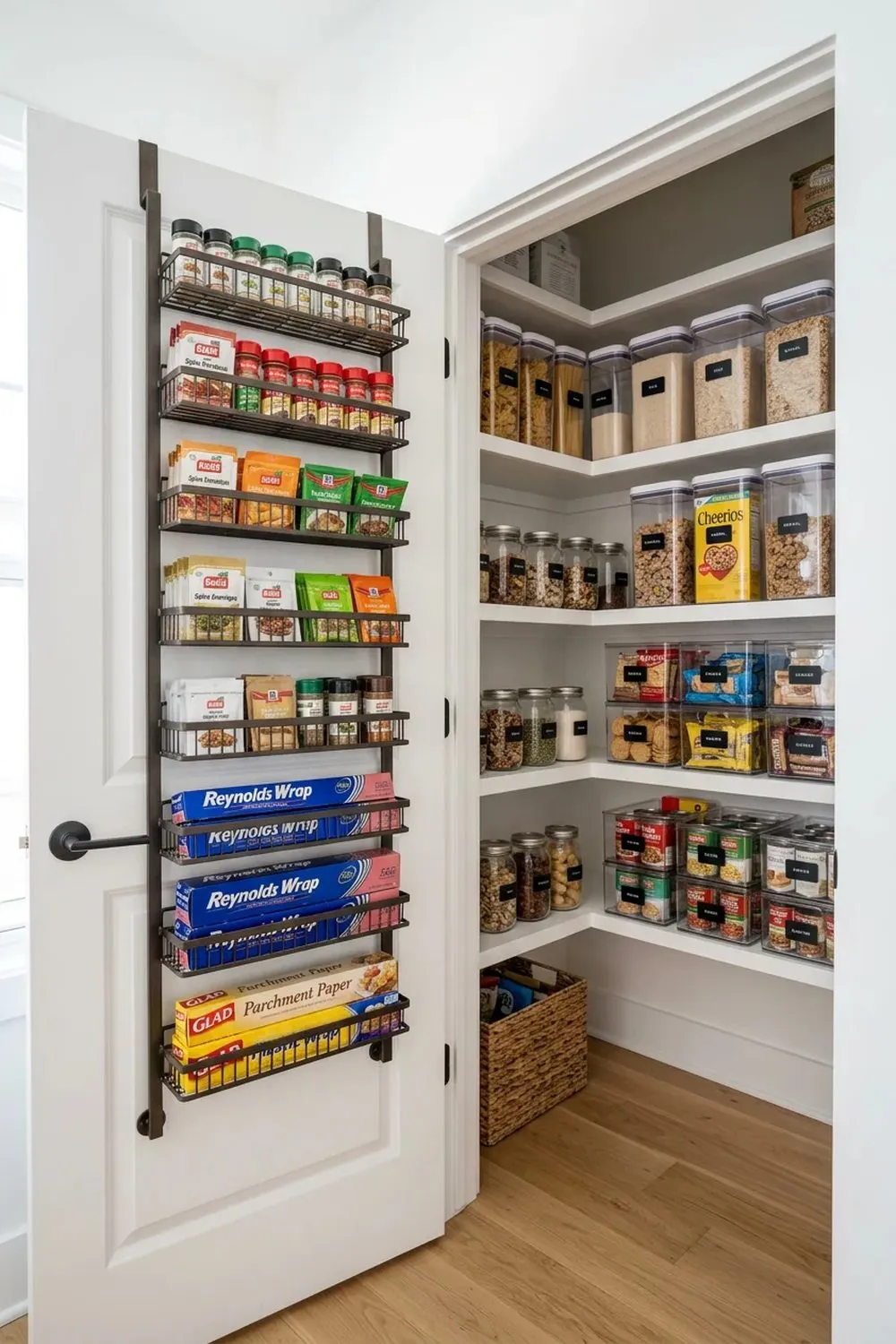
The pantry door is a shelf you already own — foil and wraps live flat against it.
Long boxes and small packets are the pantry's worst shapes: too tall for shelves, too small to see. A rack on the inside of the pantry door holds foil, wrap and baking paper upright in slots, with spice packets and sauce mixes in the small tiers — everything flat, facing out, and found in one look.
Styling tip: put the most-used wrap at hand height in the middle slot; the top slot is for the once-a-month items, not the daily foil.
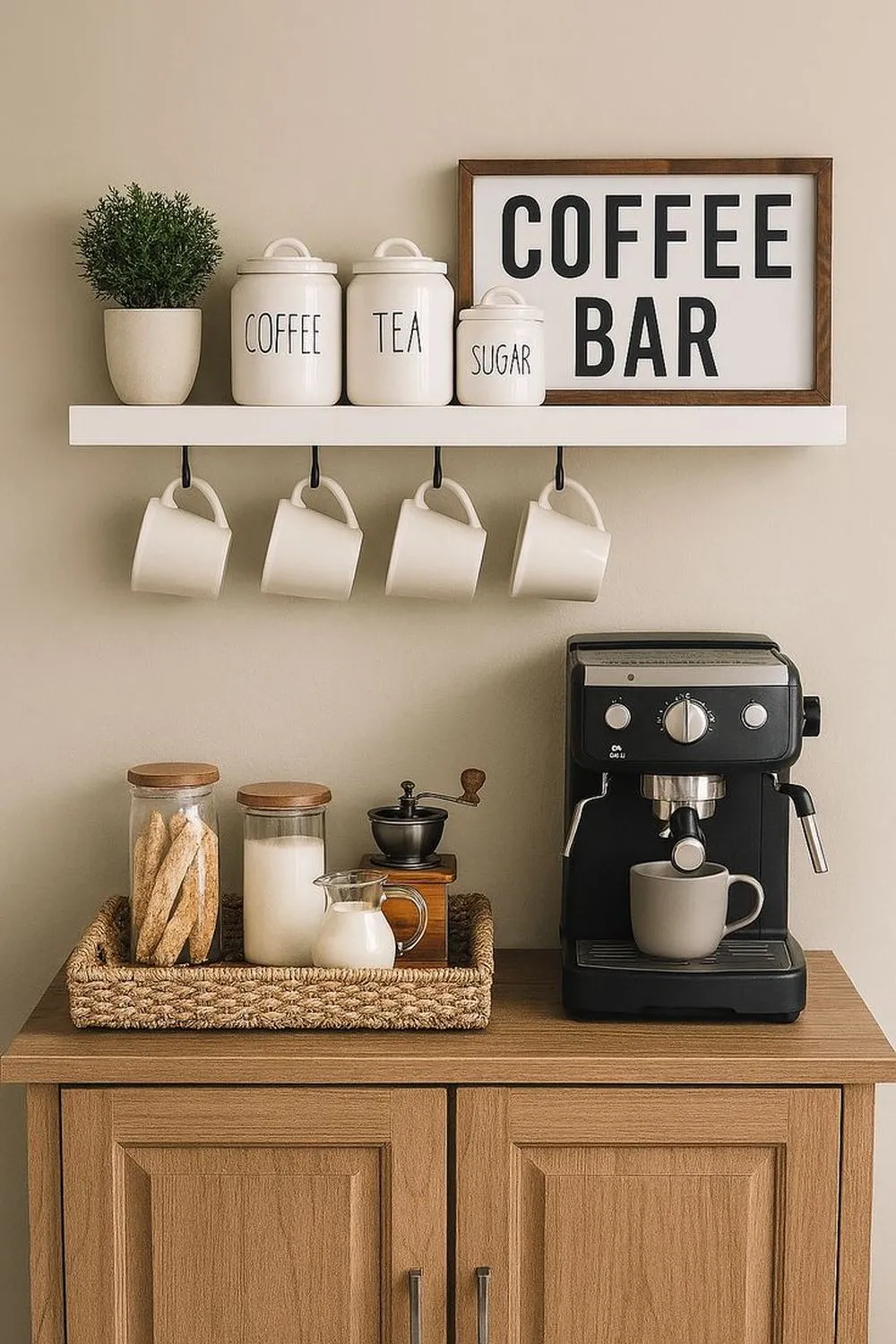
One cabinet section for the morning ritual — mugs, beans and tea within one reach.
The morning drink scatters supplies across three cabinets and a counter. Giving the ritual one cabinet section — mugs on the shelf, beans and tea in canisters below, filters and spoons in the small drawer under it — means the whole drink is made standing in one spot, and the counter stays clear of the evidence.
Styling tip: hang the two most-used mugs on hooks under the shelf; it frees the shelf for the canisters and makes the favorites a grab, not a rummage.
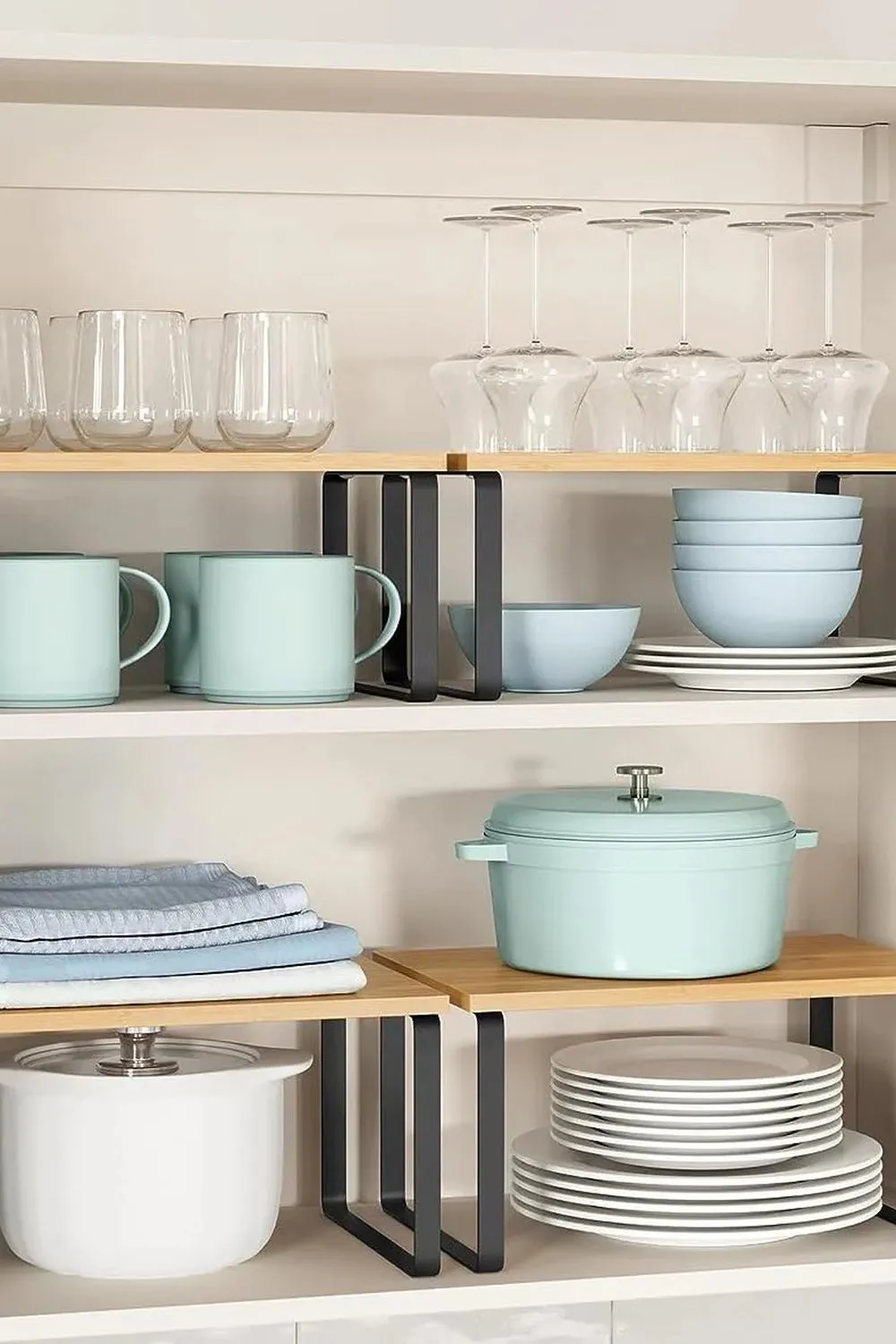
A riser makes a second shelf — tall cabinets stop wasting their top half.
Most cabinets have one shelf and a cathedral of empty air above it. A simple riser — a raised platform that stands on the existing shelf — creates a second level for glasses, cups or tins, doubling the storage without a single fitting. Both levels stay visible, which is the difference between a riser and a pile.
Styling tip: risers earn their keep with short items only; tall bottles on a riser just move the wasted air to a harder shelf.
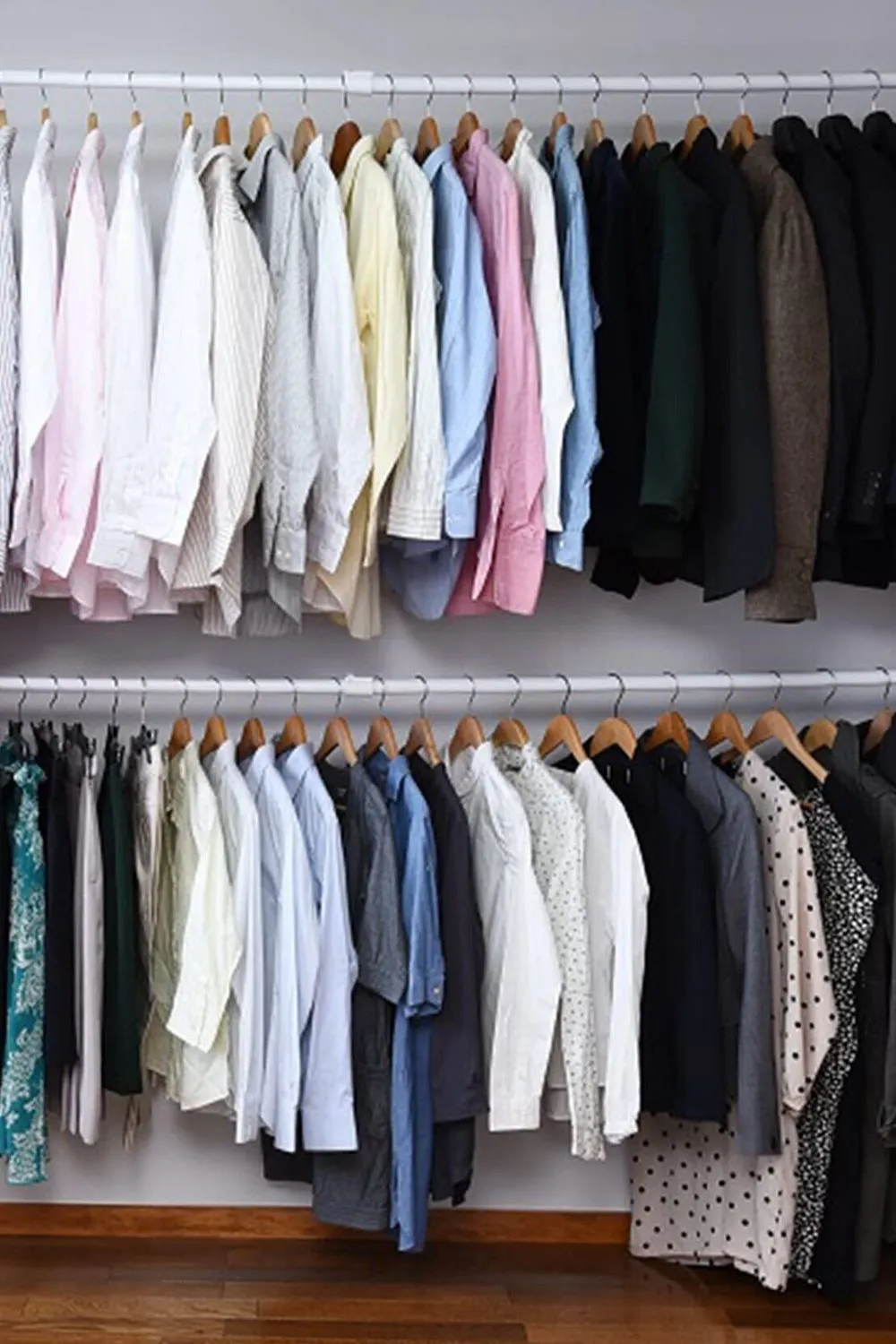
Two short rails beat one long one — shirts and blouses take half the closet.
A single rail at head height wastes everything below the hemlines. Splitting the closet into two shorter rails, one above the other, doubles the hanging space for shirts, blouses, folded trousers and jackets — the clothes most people actually wear. Keep one tall section for dresses and coats, and the closet fits the wardrobe instead of the other way round.
Styling tip: hang the daily rail at eye level and the second rail below it; reaching down for everyday shirts is a small daily tax that adds up.
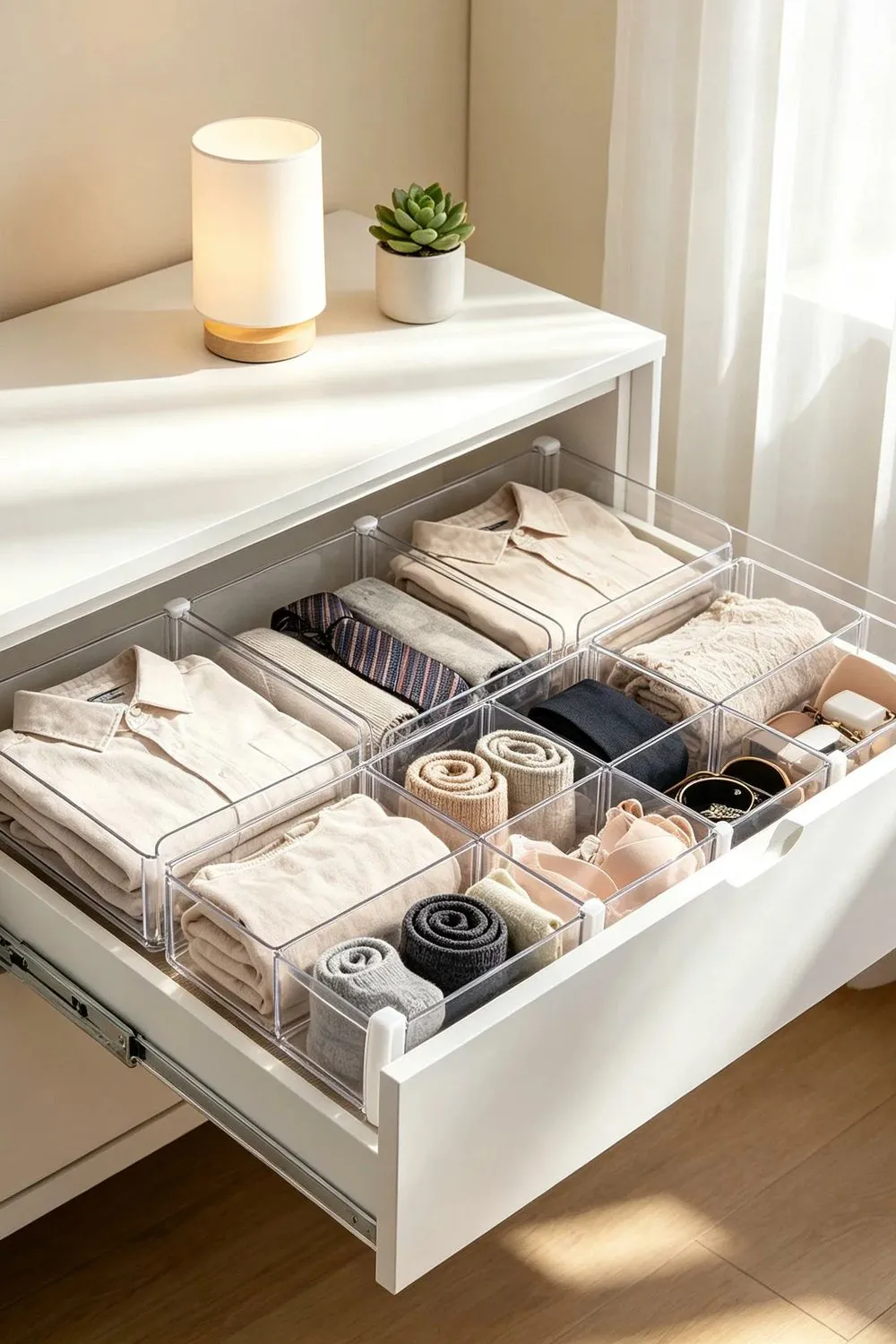
Boxes inside the drawer — folded tops stand in rows instead of sliding into one heap.
A dresser drawer without dividers is a landslide waiting for the first pull. Clear drawer boxes — sized to the drawer, one per category — hold folded tops, underwear and sleepwear in upright rows you can read at a glance. File-folding into the boxes means taking one top out disturbs none of the others.
Styling tip: fold to the height of the box, not the drawer; a fold that peeks above the box edge is the first one to topple the row.
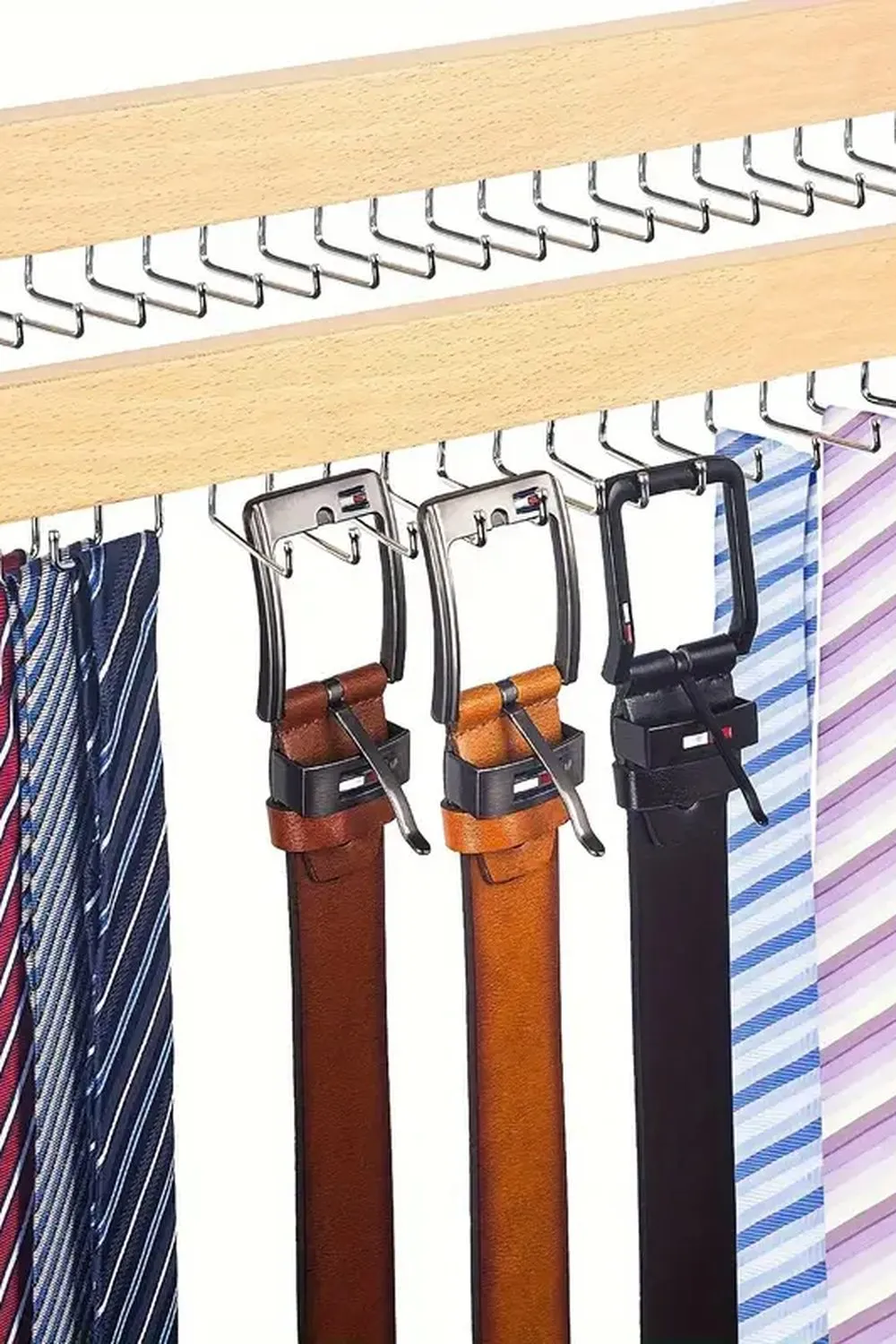
Belts and ties on their own rack — no more belts excavated from the sock drawer.
Belts curl in drawers, ties crease on doorknobs, and both surface at the worst moment. A slim rack mounted on the closet wall or the inside of the door — hooks or a sliding arm — holds every belt by its buckle and every tie flat in a row, visible in the same glance as the clothes they go with.
Styling tip: hang belts by the buckle, not looped through it; a buckle-hung belt keeps its shape and comes off the hook in one motion.
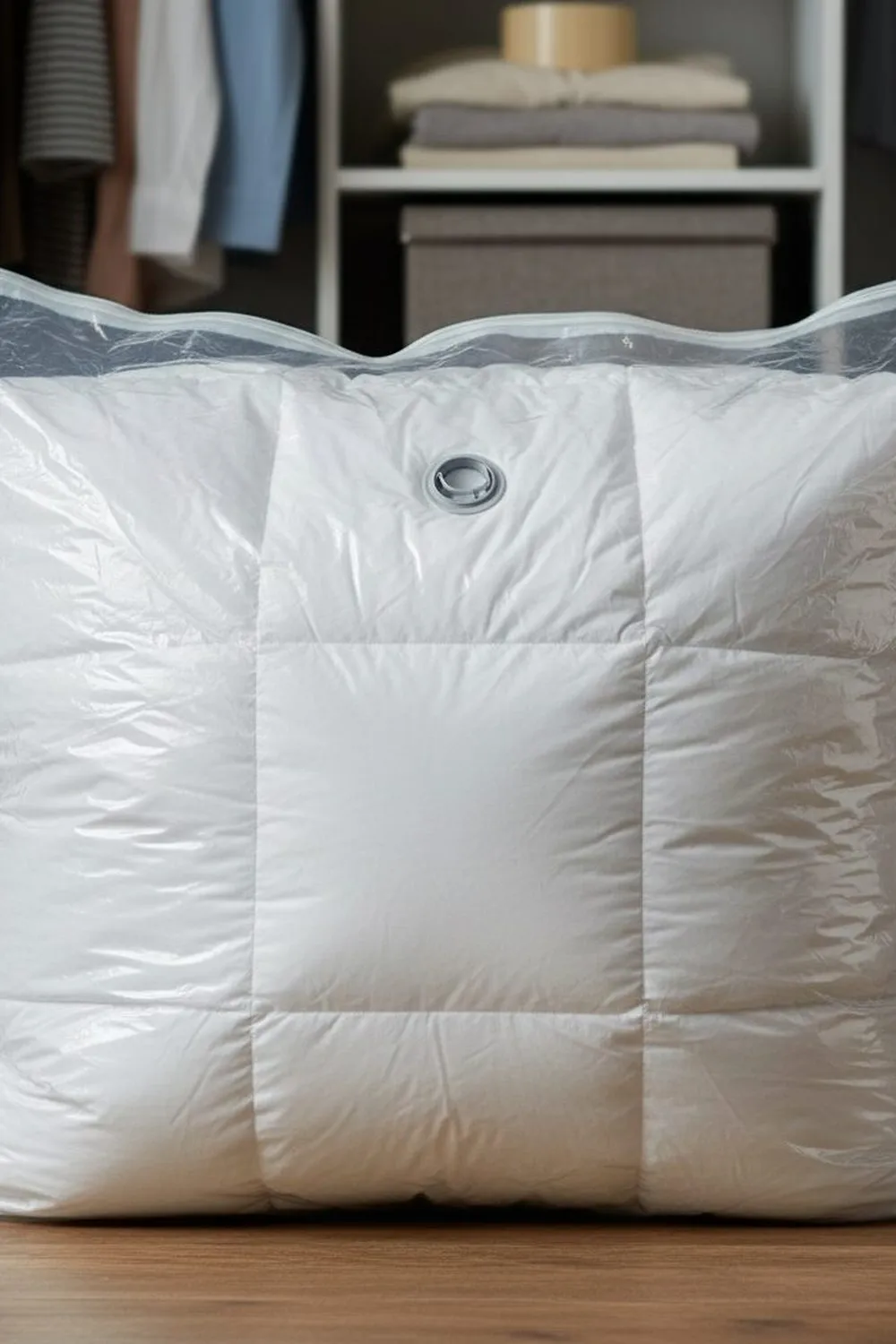
Duvets shrunk to a third of their size — the top shelf holds the spares without the bulk.
Spare duvets and thick blankets eat closet volume out of all proportion to their use. Vacuum bags compress them to flat, stackable slabs that live on the top shelf — out of the daily way, protected from dust, and labeled by size so the guest duvet is findable in the dark before guests arrive.
Styling tip: write the contents and size on the bag itself in marker; a compressed white slab tells you nothing about whether it is the single or the king.
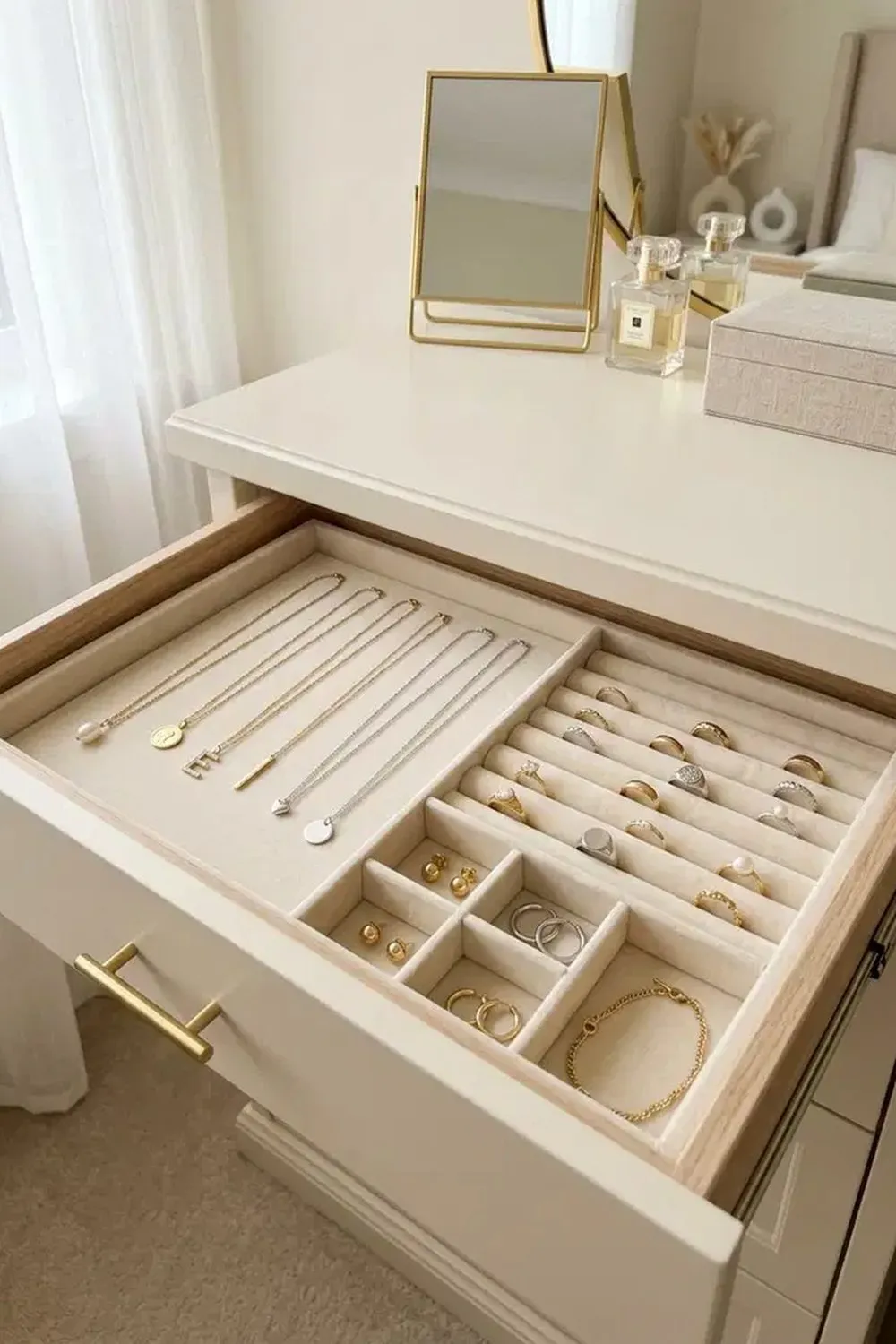
Jewelry in compartments, not in a tangle — necklaces stop knotting in the dark.
Jewelry stored loose in a pouch or a box becomes one shining knot. A velvet-lined tray with compartments, slipped into a shallow drawer, gives necklaces their own channels, rings their own slots and earrings their pairs — and the morning choice takes seconds because everything is visible at once.
Styling tip: give necklaces the long channels and never share a channel between two chains; one chain per channel is the whole secret of untangled jewelry.
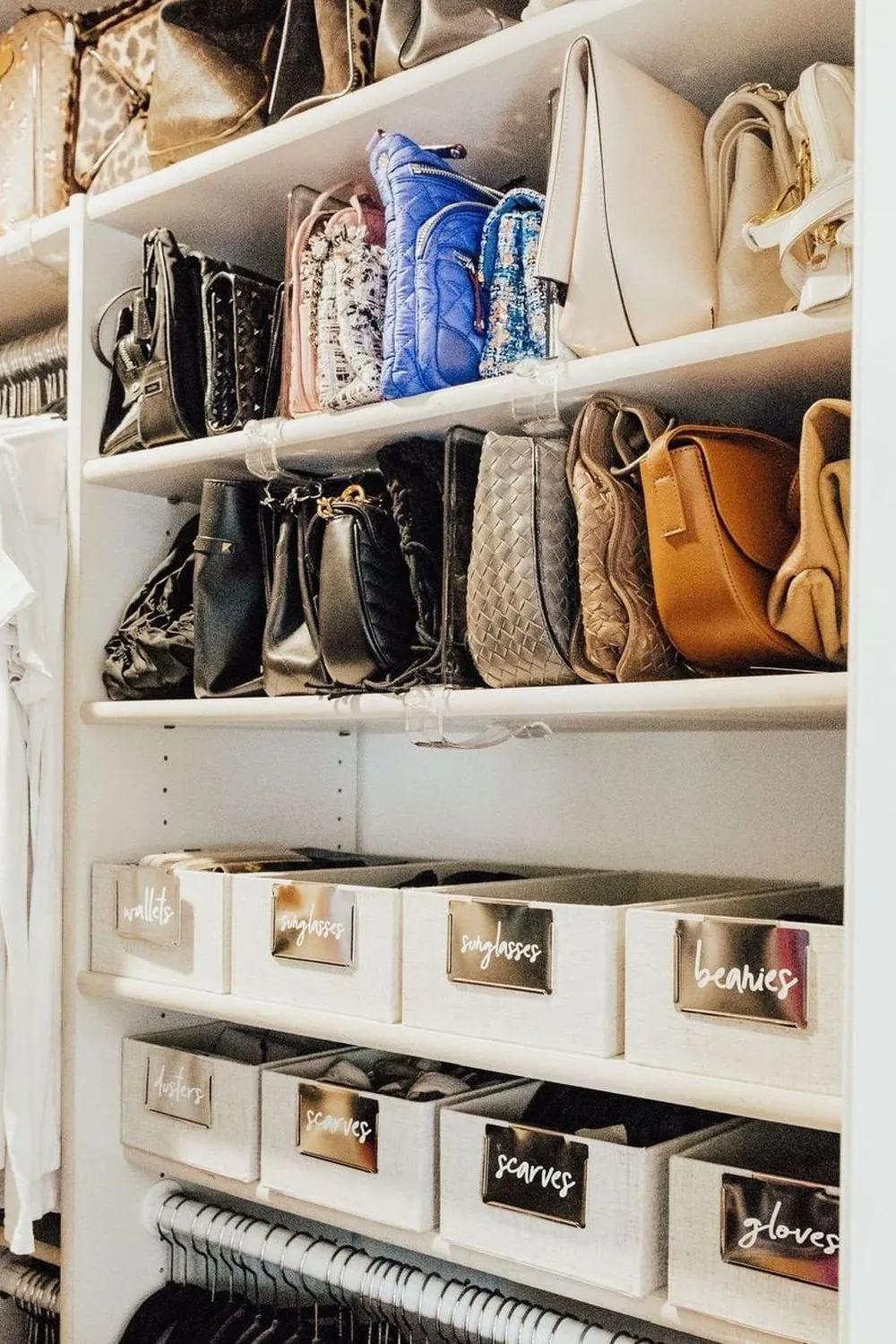
Bags standing in a row, stuffed to keep their shape — the shelf reads like a boutique.
Handbags stored flat in a pile crush each other and hide the one you want. Stuffed lightly with tissue to hold their shape and stood upright in a row on a labeled shelf, they stay in condition, stay visible, and rotate back into use — a bag you can see is a bag you carry.
Styling tip: keep the dust bags; a stuffed bag inside its dust bag, handles up, is the closest home storage gets to the shop it came from.
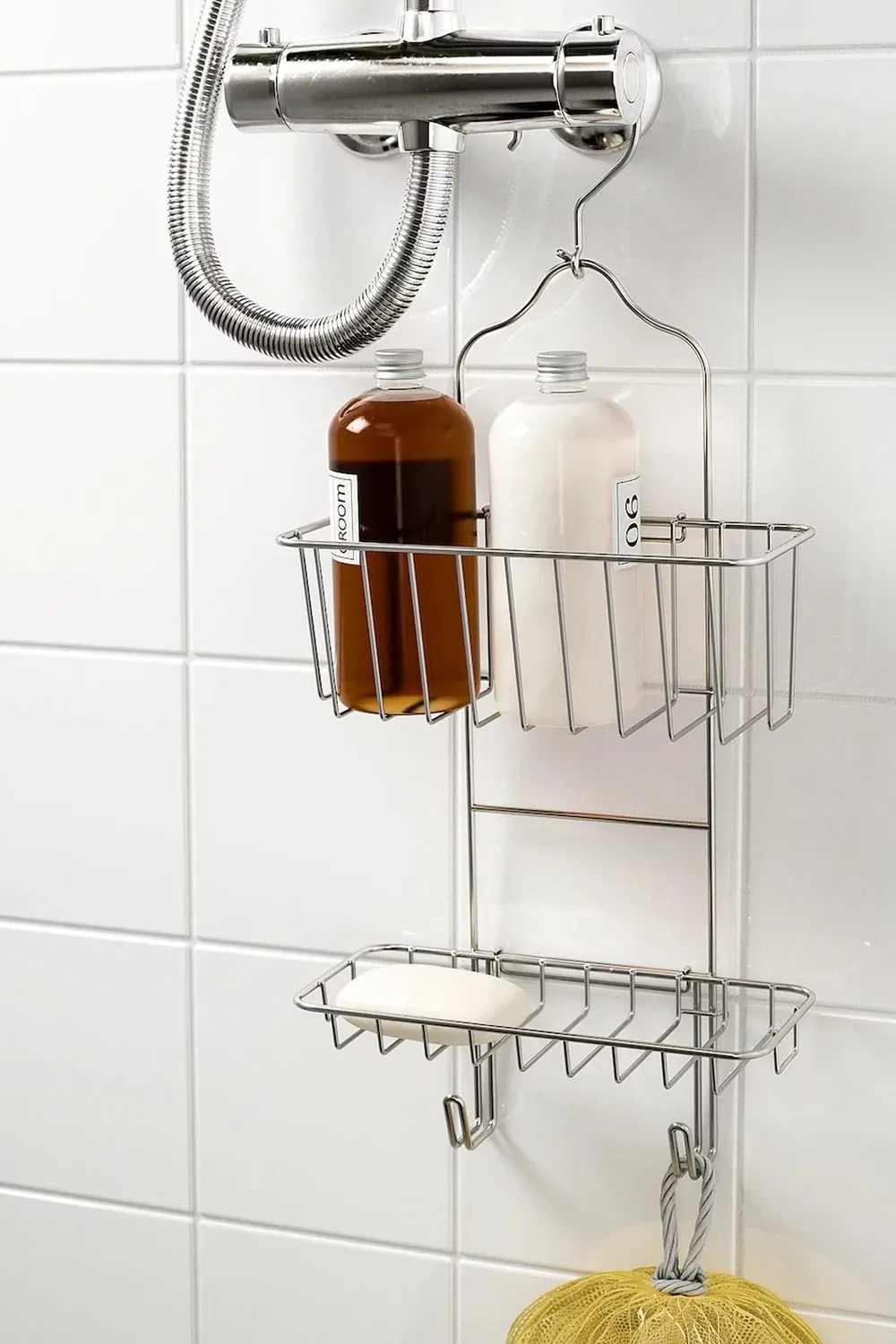
One caddy, a section each — the shower shelf stops being a bottle crowd.
Shared showers collect bottles the way beaches collect shells: everyone's shampoo, half of them empty. A caddy with a section per person — or per category in a solo bathroom — caps the collection at what the sections hold, and the empty bottle has to leave before its replacement comes in.
Styling tip: the caddy rule is in-and-out at the same moment; a new bottle carried in means the finished one carried out, every time.
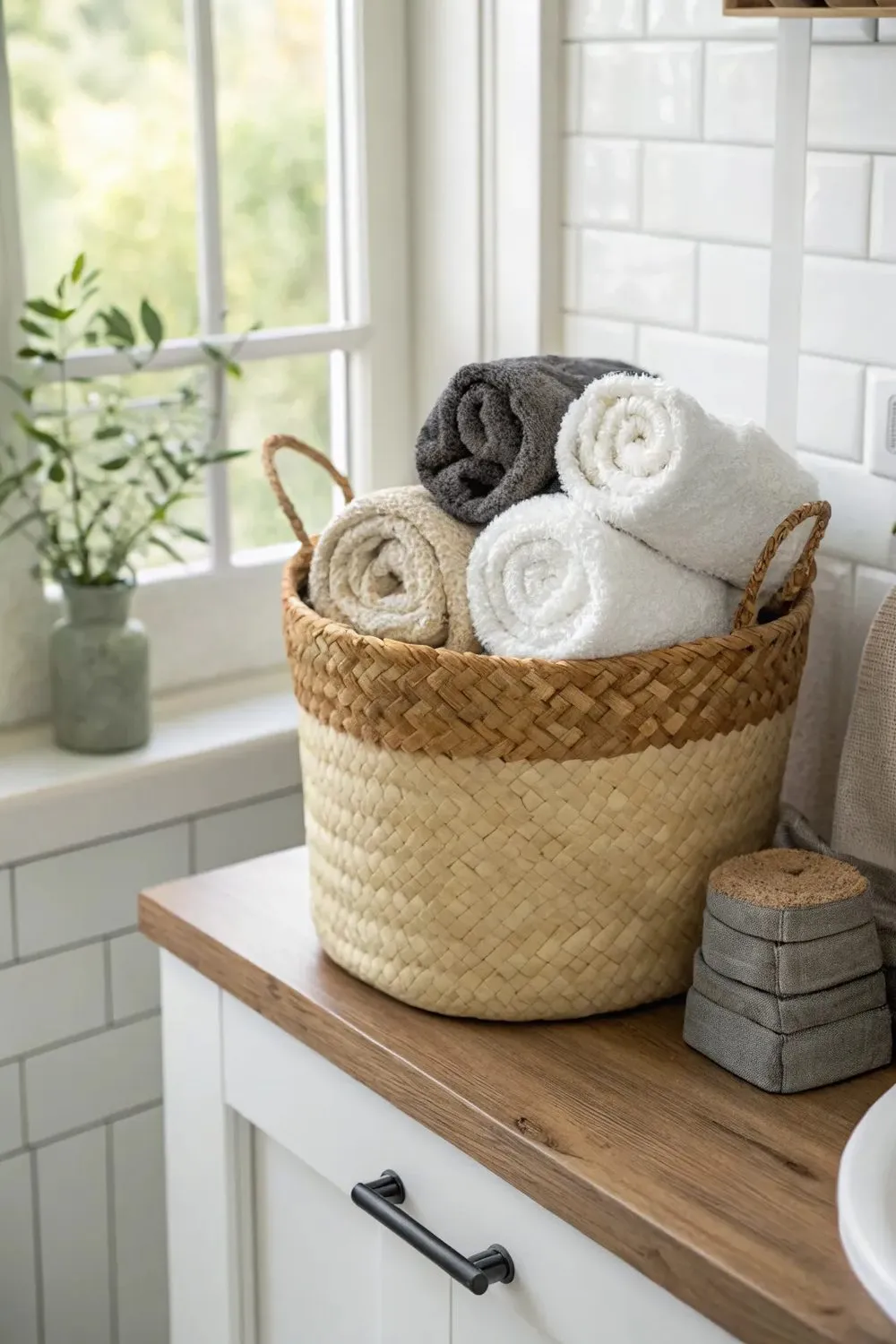
Rolled towels in a basket — the counter looks like a spa and the cupboard gains a shelf.
Rolling beats folding for towels in daily use: rolls do not topple, they pull out one at a time, and a basket of them on the counter reads as spa decor instead of storage. The linen cupboard shelf they vacate becomes room for the bulky things that genuinely need a door.
Styling tip: roll to a uniform tightness and stand the rolls spiral-up; an even field of spirals is what makes it look styled rather than stuffed.
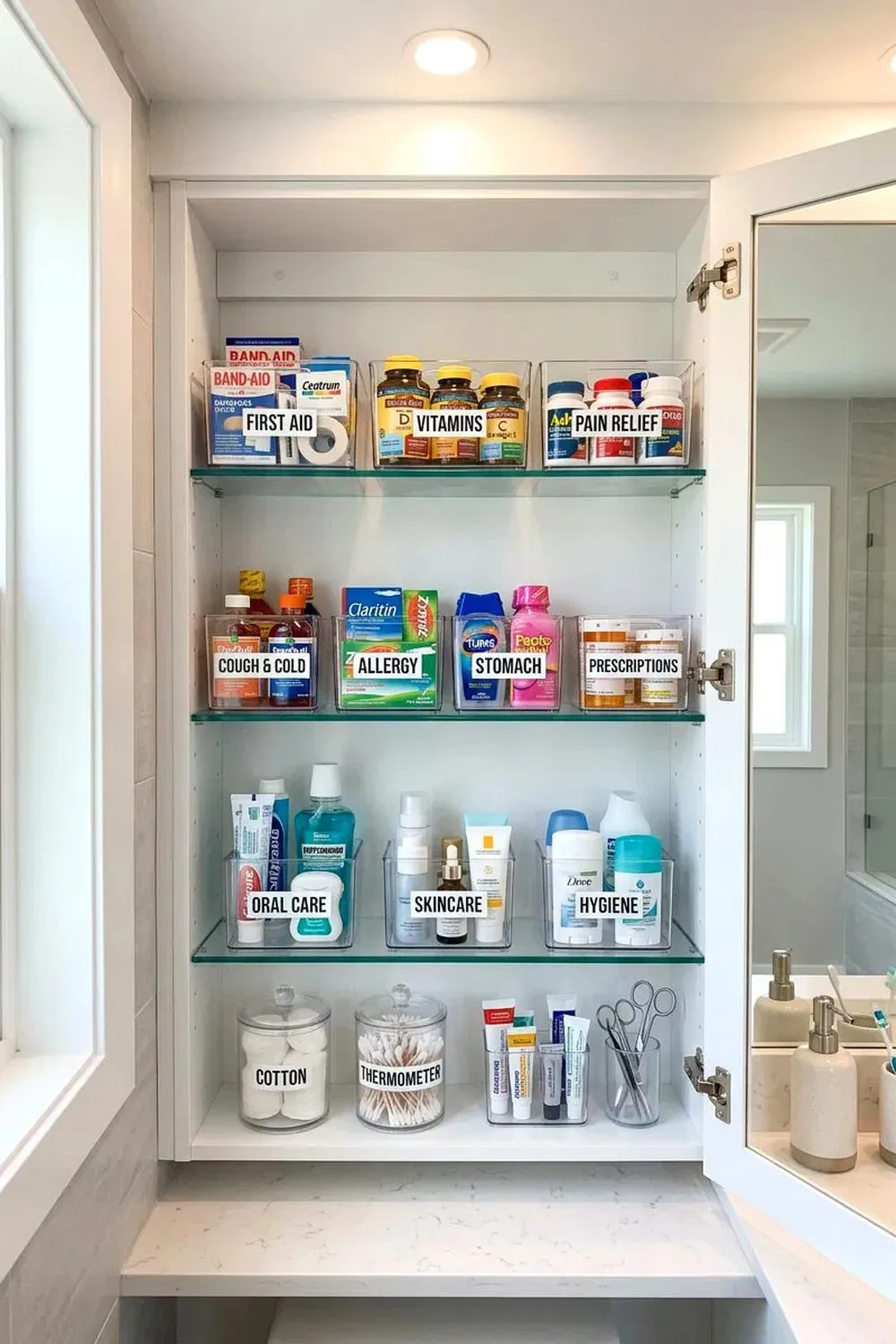
One job per shelf — daily things at eye level, first aid up top, nothing expired.
The medicine cabinet is small, deep and usually sorted by archaeology. Reset it shelf by shelf with one job each: daily essentials at eye level, skin and dental on the next shelf, first aid and medicines up top out of small hands' reach. The reset also catches the expired tubes every cabinet is quietly hoarding.
Styling tip: decant nothing here — medicines stay in their labeled packaging; this is the one cabinet where original labels are the organization.
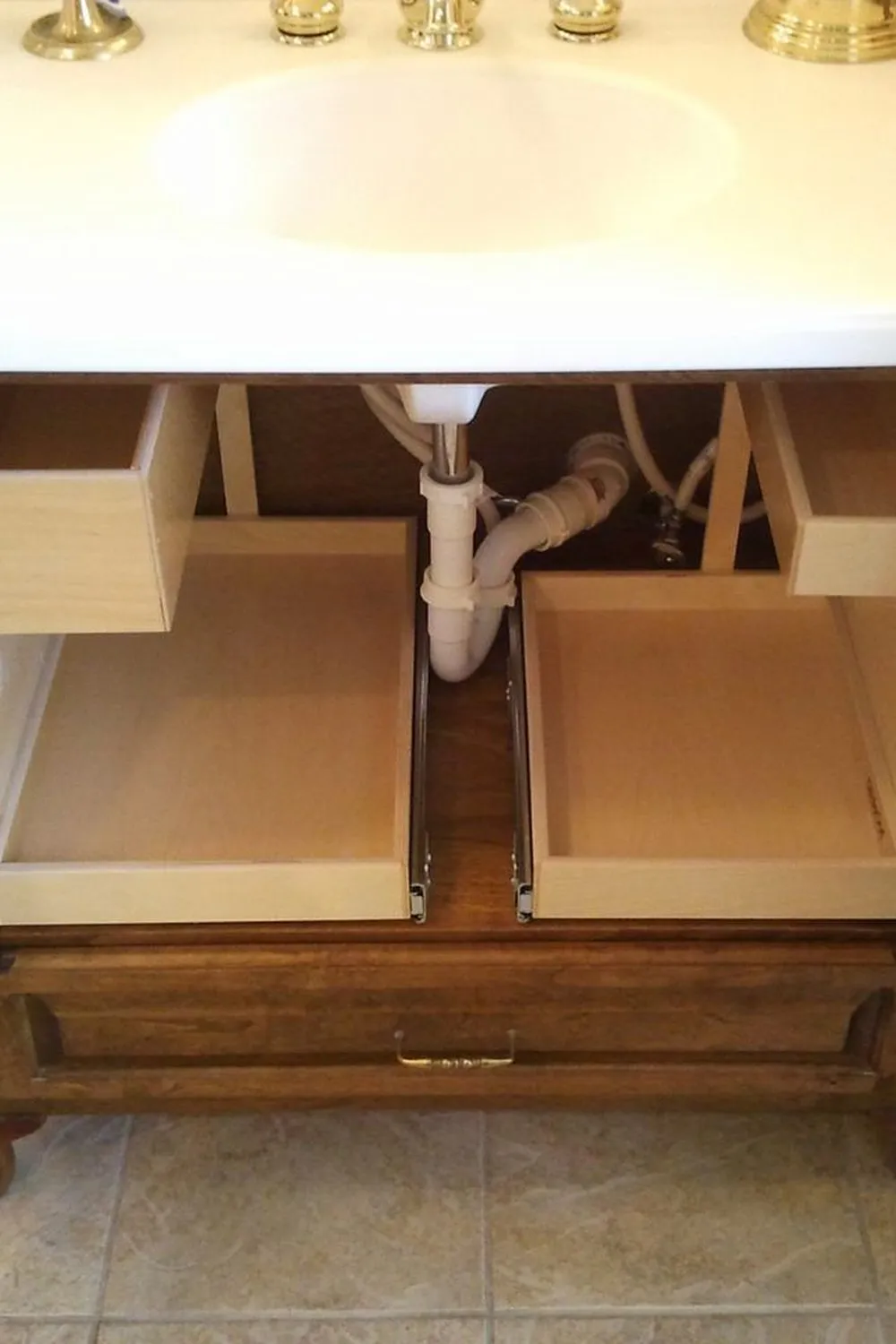
Drawers that come to you — the vanity's dark corners retire.
Bathroom vanities repeat the kitchen's mistake: a deep, pipe-crossed cupboard where things vanish. Pull-out drawers fitted around the plumbing — a U-shaped top drawer is made exactly for this — bring cotton, cleaners and spare bottles into the light, in tiers, without kneeling on the bath mat.
Styling tip: keep cleaning products in the bottom tier and daily items in the top; gravity and habits both work better that way round.
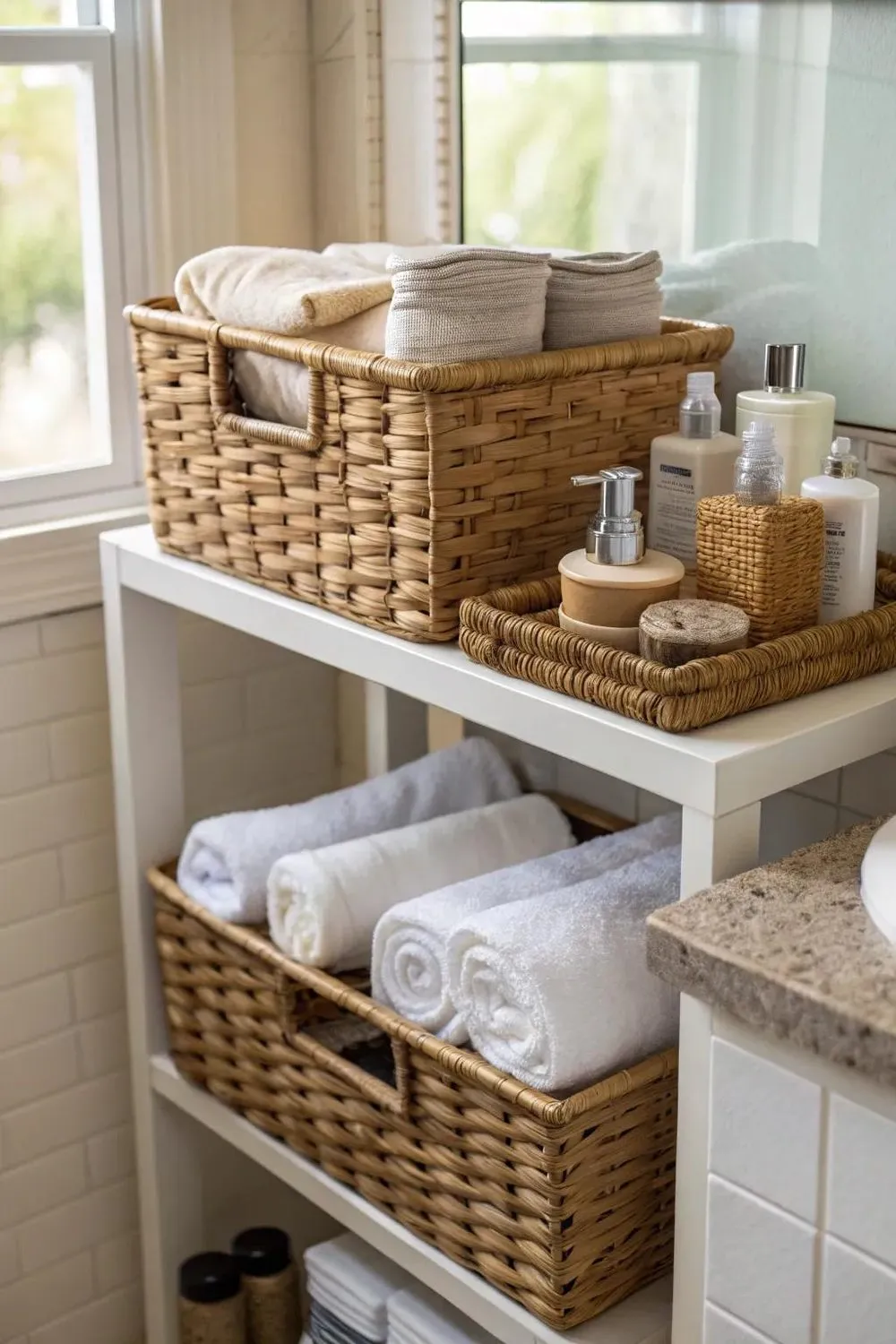
One basket holds the whole guest kit — visitors stop having to ask for a towel.
Guests need the same five things and feel awkward asking for each: a towel, a spare toothbrush, soap, a flannel, maybe a charger. A guest basket on the bathroom shelf or in the spare room, stocked once and checked after each visit, turns hosting into a gesture instead of a scavenger hunt.
Styling tip: fold the towel around the small items like a parcel; the basket looks deliberate, and a guest can carry the whole kit to their room in one trip.
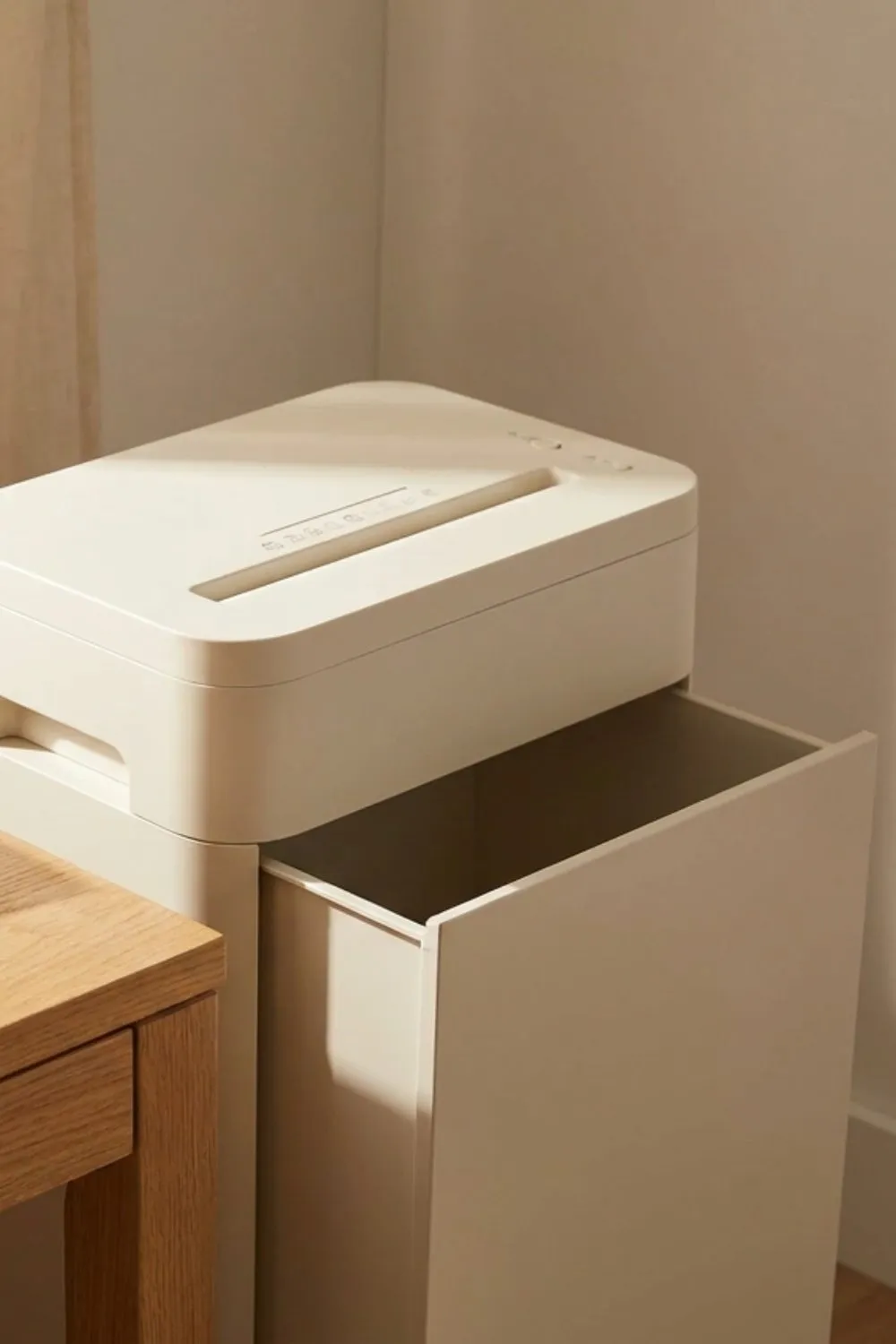
Paper leaves at the desk, not from it — junk mail dies where it is opened.
Paper piles grow because disposal needs a trip. A slim bin beside the desk — shredder on top or a simple two-slot bin for shred and recycle — means envelopes, statements and junk mail are dealt with in the same motion as opening them. What survives the bin is genuinely worth filing; the rest never becomes a pile.
Styling tip: open mail standing at the bin, not sitting at the desk; standing post is for decisions, and the recycling rate doubles.
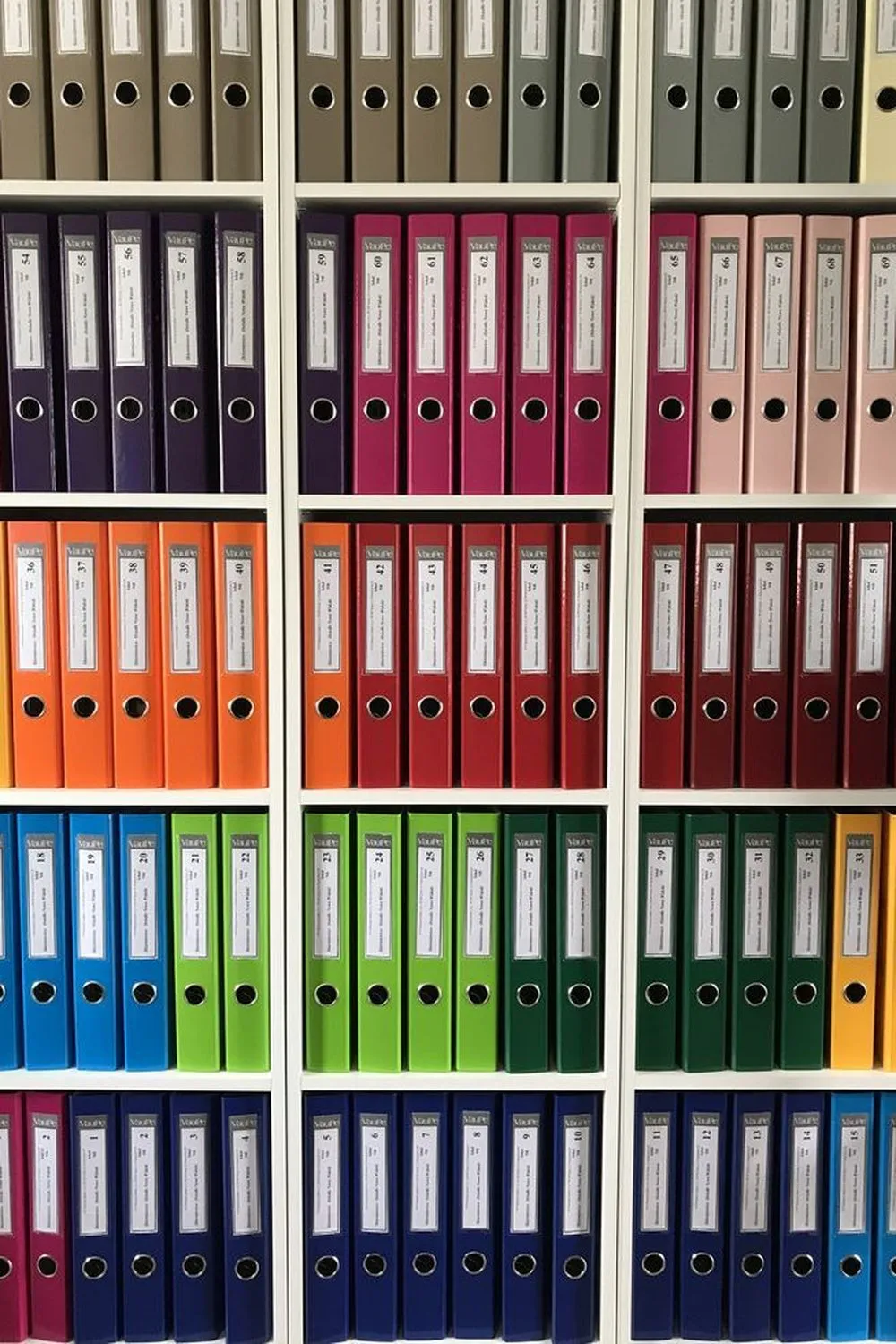
One binder runs the house — the manual and the warranty are in the same place at last.
Every appliance arrives with a manual and a warranty, and every home scatters them across four drawers. A single household binder with tabbed sections — kitchen, heating, garden, receipts and records — gives the whole paper side of the house one spine. When the washing machine flashes an error code, the answer is in the binder, not in a memory.
Styling tip: photograph each manual's cover and keep the binder's first page as an index; finding the section takes ten seconds when the index does the looking.
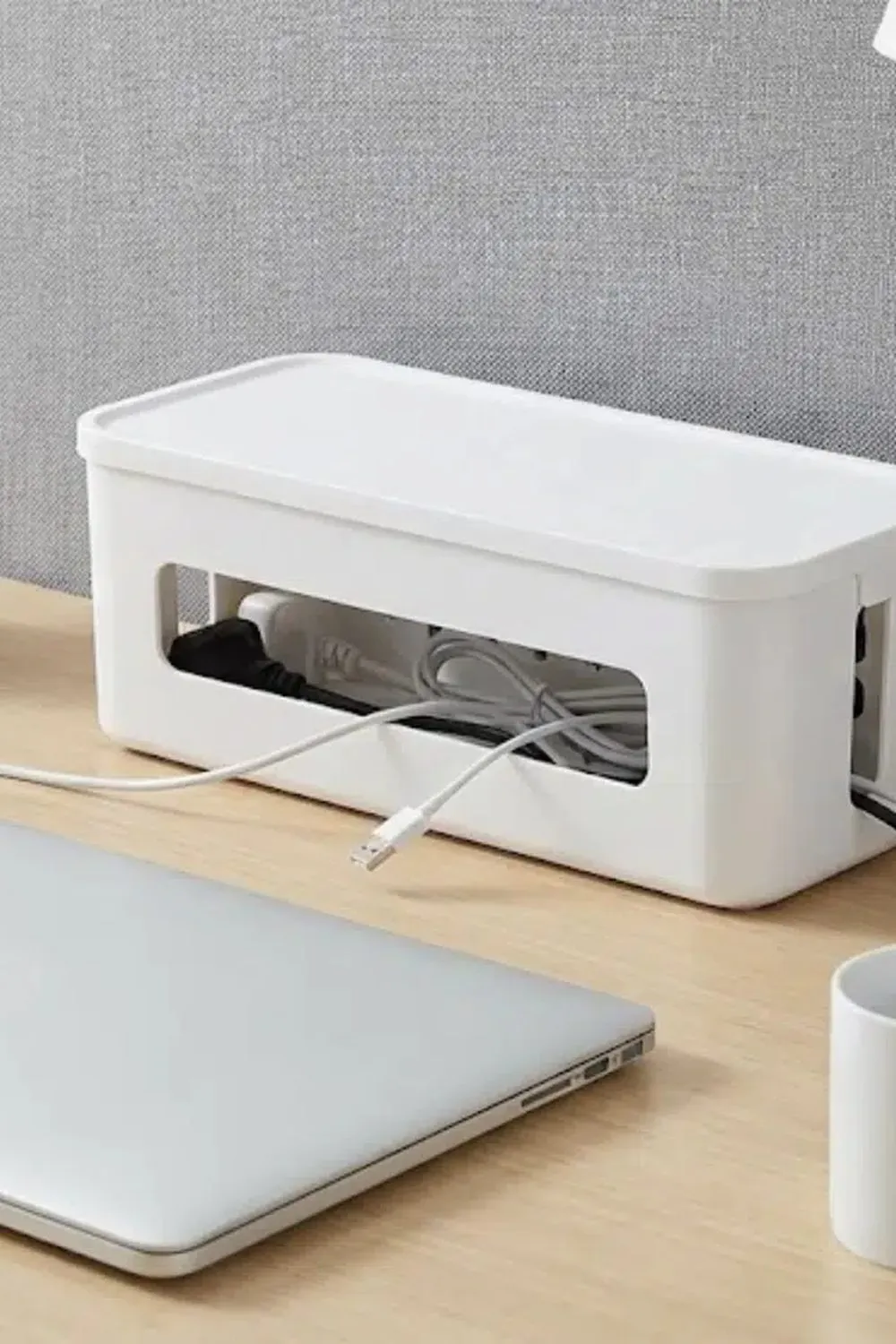
Cables in a box, labels on the plugs — the desk's spaghetti becomes a system.
The tangle behind the desk is not untidy, it is unlabeled: six black cables, no way to know which is which. A cord box hides the power strip and the slack, and a small label at each plug end names its device — so the right cable gets unplugged first time, and the floor behind the desk can finally be vacuumed.
Styling tip: label both ends of every cable; the plug end tells you what to pull, the device end tells you what you just pulled.

An empty inbox, a short folder list — email becomes a place things leave, not live.
The digital reset counts as much as the physical one. Clear the inbox to zero in passes — delete the noise, unsubscribe as you go, and file what must stay into a short list of folders with plain names: Bills, Home, School, Receipts. An inbox used as a to-do list is a drawer that never closes; folders are the drawers.
Styling tip: keep the folder list under ten; a filing system with forty folders is just a more colorful pile.
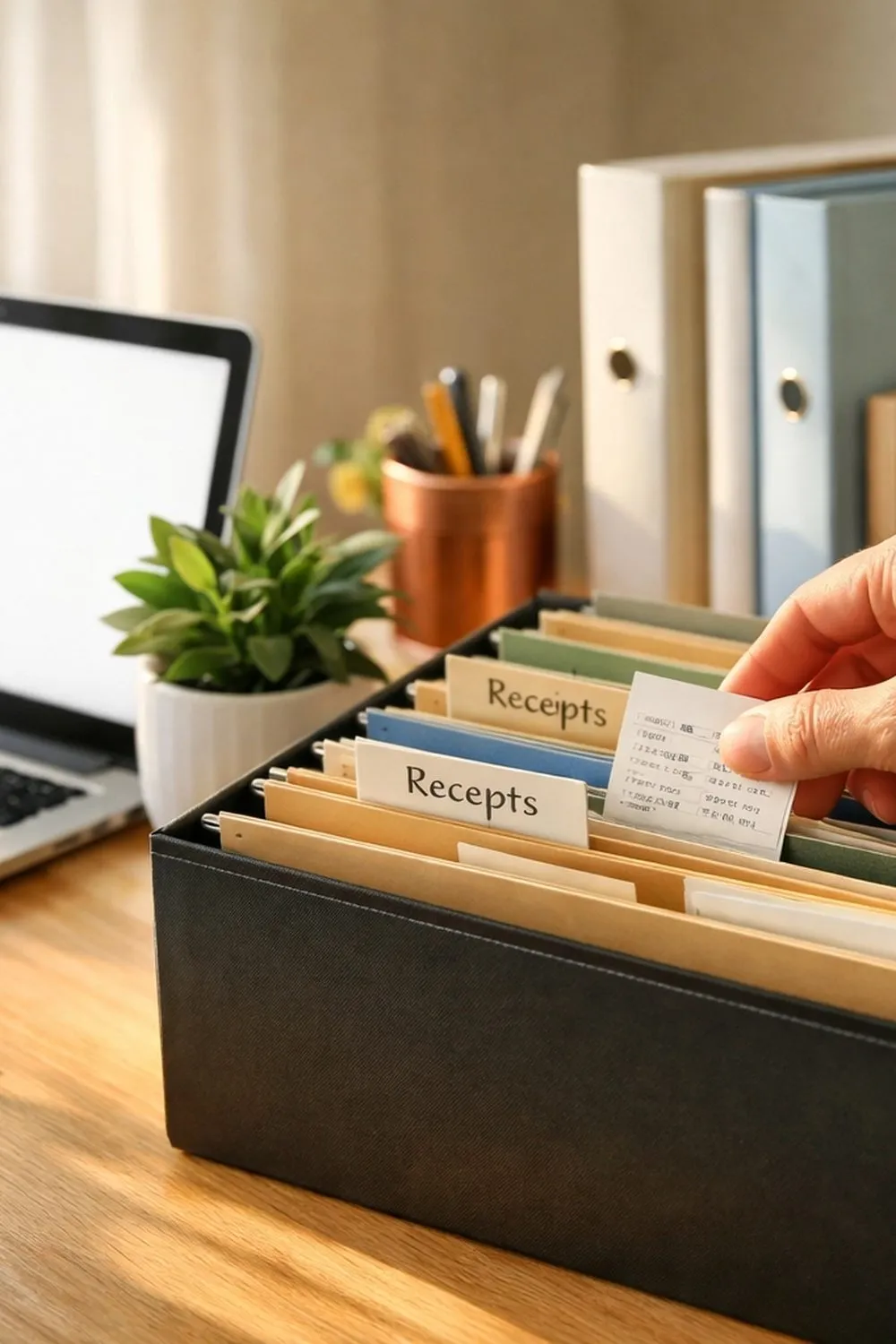
One envelope for the year's receipts — returns stop depending on memory and luck.
Receipts matter exactly twice: when something goes back, and when the accounts get done. One labeled envelope in the desk drawer — every receipt dropped in on the day of purchase, emptied and sorted at the season's end — covers both moments. No drawer-diving, no faded handful rescued from a coat pocket in spring.
Styling tip: photograph any receipt printed on thermal paper the day you file it; thermal print fades, and the photo in your phone is the copy that survives.
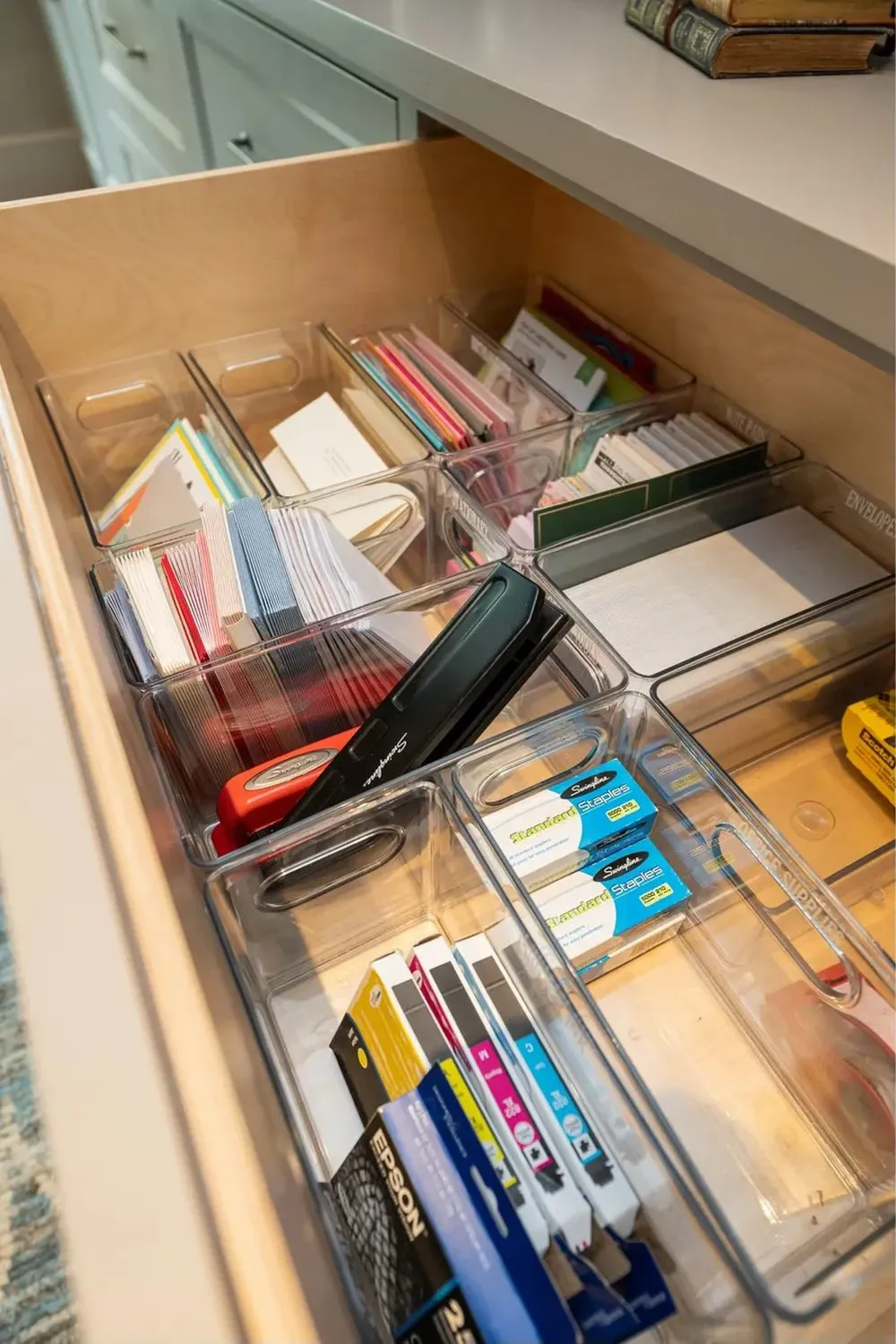
Cards and stamps in their own sections — the birthday card leaves on time.
The stationery drawer usually holds everything except what a card needs: a card, an envelope that fits it, a stamp. A divided drawer — cards in one section sorted by occasion, stamps and address labels in another, pens and tape in a third — turns the forgotten birthday into a two-minute job done at the desk.
Styling tip: keep two all-purpose cards in the front section at all times; the emergency card you already own is the one that actually gets sent.
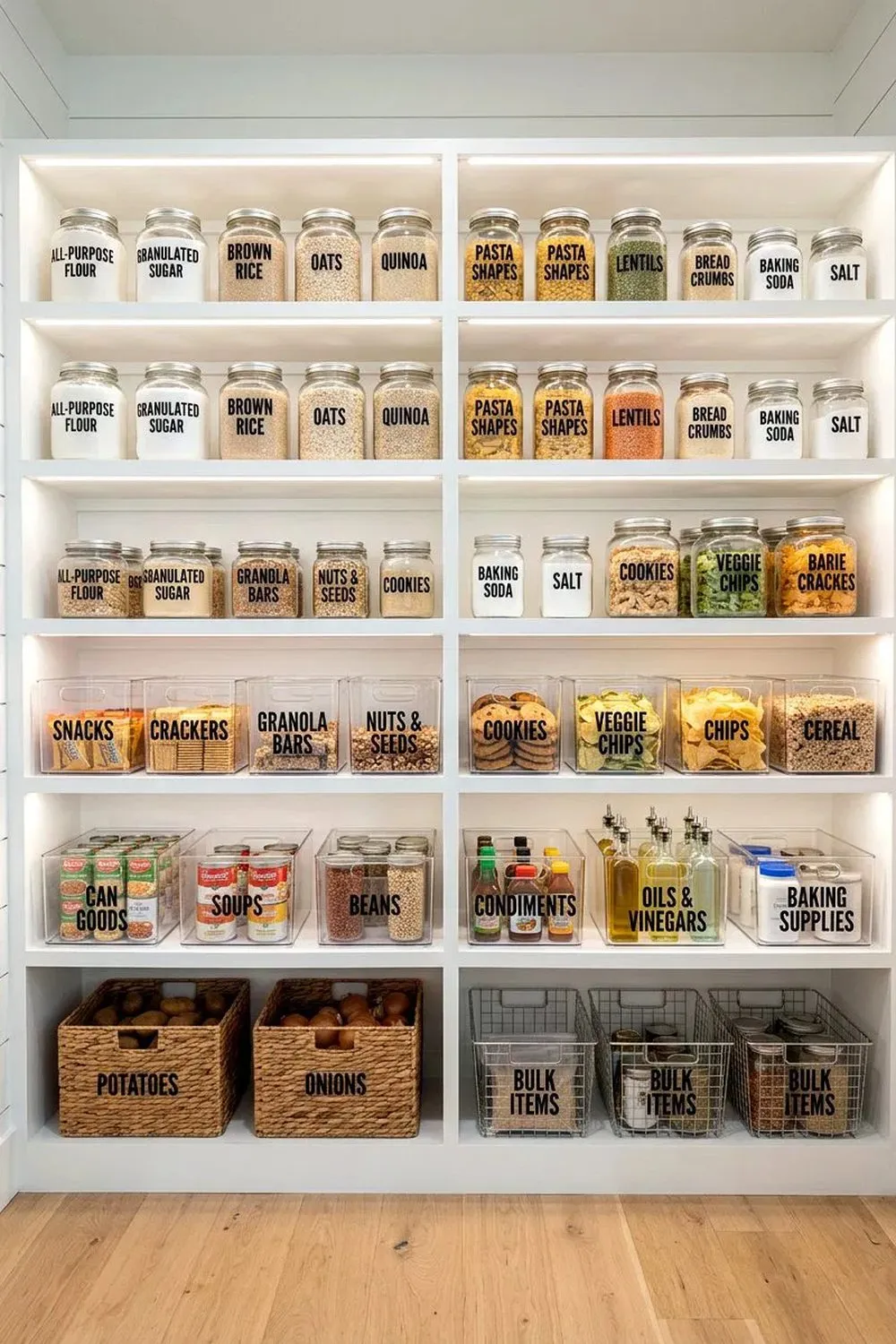
The label is on the shelf, not the box — the shelf itself says what lives there.
Boxes get labeled in every system; shelves rarely do, and that is why categories wander. A label on the shelf edge — Tools, Light Bulbs, Paint, Batteries — fixes the category to the place, so whoever puts something away puts it in the right bay, and the storage room survives other people's tidying.
Styling tip: use labels you can rewrite — a small chalk or dry-erase strip; categories change, and a label that cannot change becomes a lie the shelf tells.
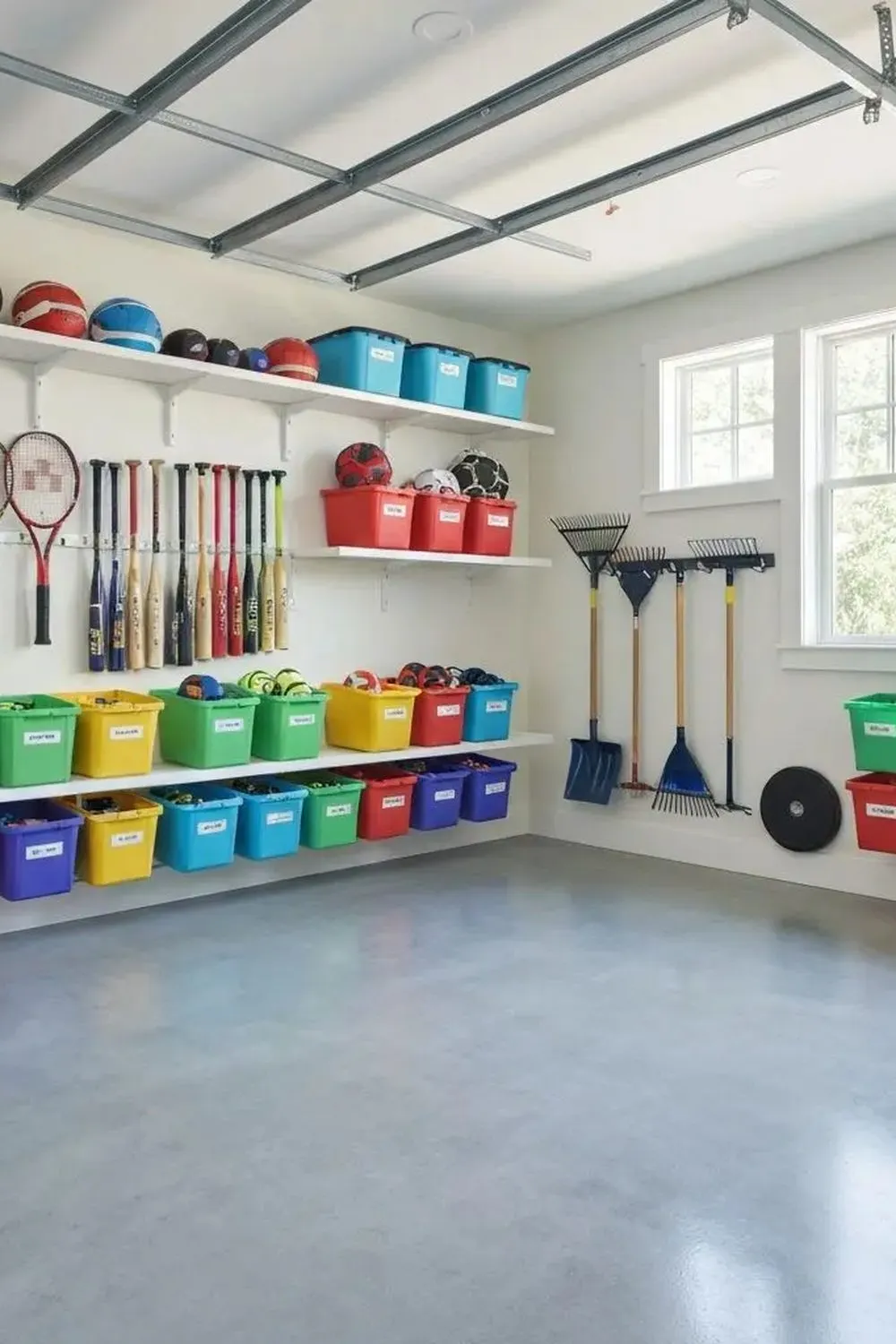
One category per zone — the garage becomes a warehouse you can actually read.
A garage fails as one big room and works as a row of zones: garden along one run of shelves, tools on the next, sports and camping on the third, car supplies by the door. Zoning means the search starts in the right two meters, and a zone that overflows is a visible signal to edit that category — not the whole garage.
Styling tip: paint or tape a simple zone label at standing eye height at the start of each run; labels at knee height are labels nobody reads.
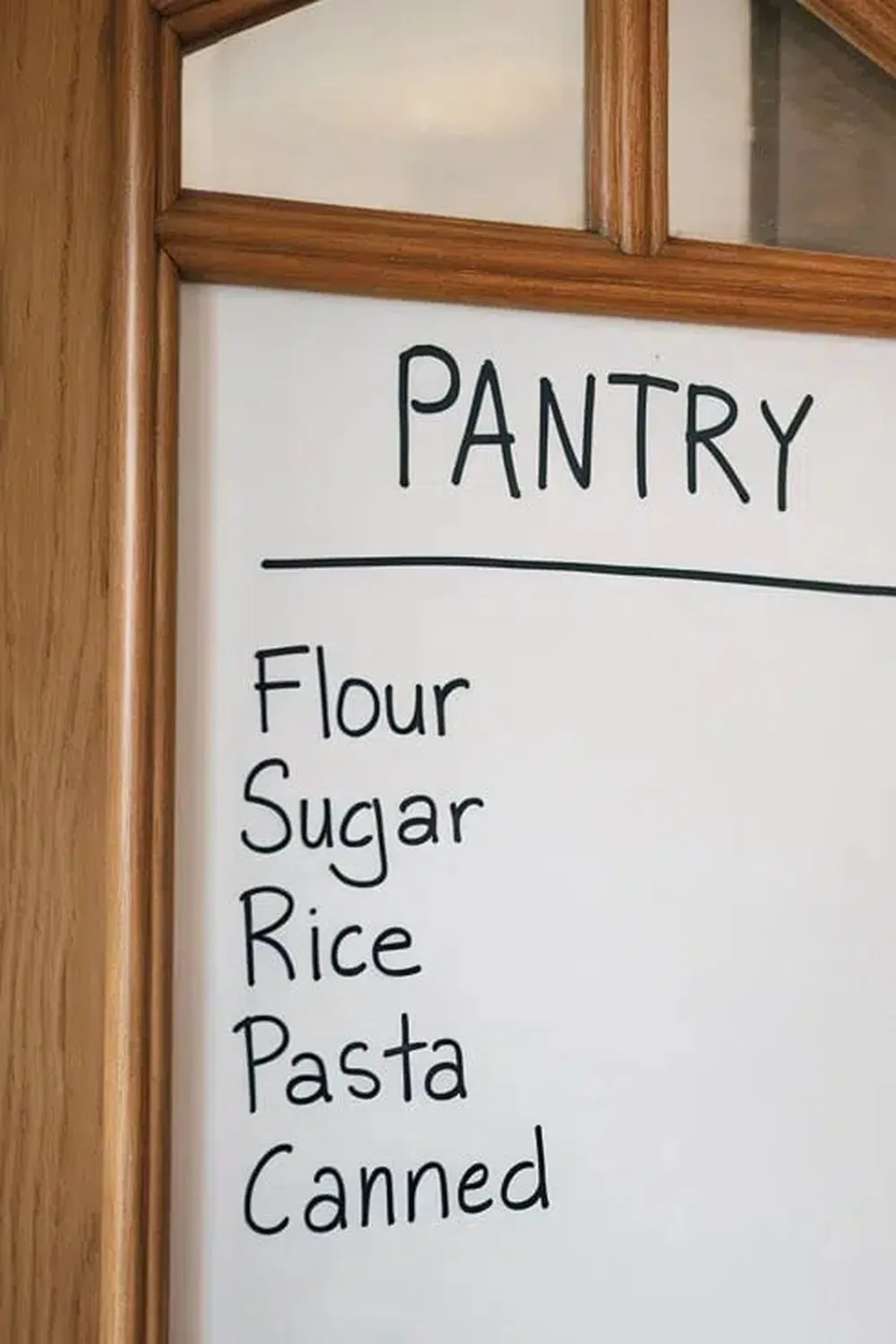
A list on the door says what is inside — no more buying a third of what you own two of.
Duplicates happen in the dark: you cannot see the spare batteries, so you buy batteries. A simple inventory list pinned inside the storage door — what is stored, in which box, since when — turns the cupboard into a searchable place, and the list gets a line crossed out or added every time something moves.
Styling tip: keep the list brutally short — item, box, shelf; an inventory that takes effort to update stops being updated by February.
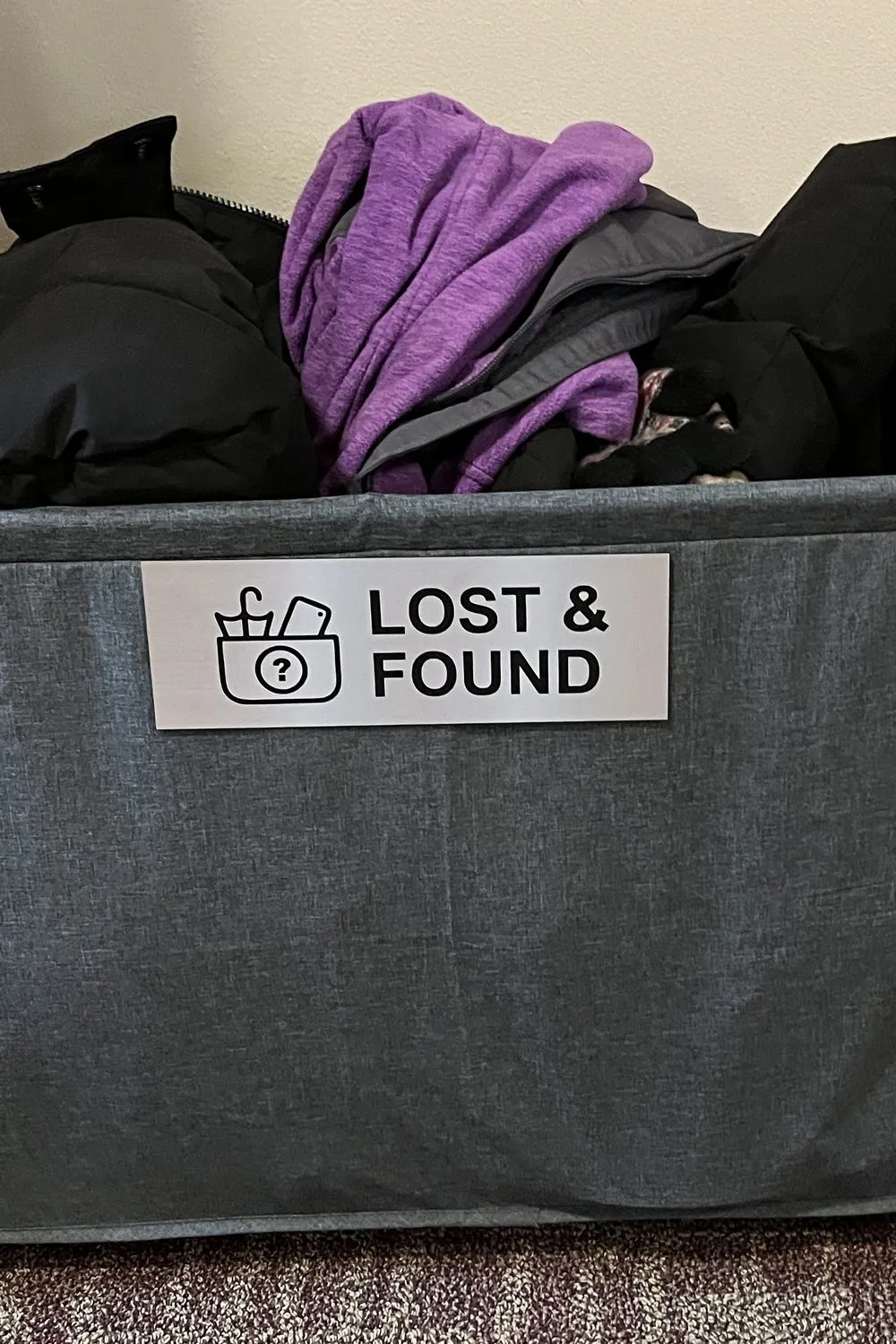
Found things go in one basket — the house's lost property office is a basket.
Every home generates orphans: one glove, a phone charger nobody claims, the small part that fell off something. A lost-and-found basket in the hall cupboard gives found things one address, so "has anyone seen…" has a first place to check — and anything unclaimed at the season's end leaves with a clear conscience.
Styling tip: empty it on a date, not on a feeling; unclaimed after a full season means it was never really missed.
Nothing new sleeps on the counter — every arrival gets its home the day it arrives.
The habit that protects all the others: nothing that enters the house spends its first night on a counter. A purchase is unpacked, its packaging recycled, and the thing itself put in its home — or given one — the same day. Clutter is rarely bought; it is postponed. This rule removes the postponement, and the reset holds itself.
Styling tip: if the new thing has no home, something in the same category leaves to make one; the shelf size, not the shopping, sets the limit.
At the entryway. It is the smallest space with the biggest daily traffic, it can be finished in one session, and every other room is entered through the habits it teaches — things land in their place the moment you come home.
One room per session, at whatever pace the house allows — a focused hour or two per room covers most of these ideas. The room-by-room order matters more than the speed: entryway, kitchen, closets, bathroom, desk, then storage.
No. Most of these systems run on what homes already own — baskets, trays, boxes and shelves. Spend only where a fitting solves a real geometry problem: a turntable for a corner cabinet, a riser for a tall one, drawers around a pipe.
Cleaning changes how a room looks today; a reset changes where things live permanently. Clean surfaces drift back in a week, but a labeled shelf, a fitted drawer and a fixed home keep working long after the cloth is put away.
Protect it with three small rules: everything new gets a home the same day, the "no home yet" shelf is emptied every Sunday, and the lost-and-found basket is cleared each season. Systems fail from drift, and drift is stopped by dates, not effort.
A tidy year is not built in one heroic weekend; it is built room by room, shelf by shelf, until every everyday thing has one place and the house runs on the system instead of on reminders. Start at the front door and work through in order. Save your favorite new year home organization ideas from this list, and follow TheStylingHub on Pinterest for fresh home ideas all season long.
Organization
Nov 19, 2026
36 New year organization ideas for 2027 — closets, kitchen, pantry, paper and storage…
Organization
Nov 13, 2026
January you will say thanks: christmas decor storage ideas that pack ornaments, lights and…
Outdoor
Nov 23, 2026
34 Winter front porch decor ideas — wreaths, lanterns and plaid for a front…