
Organization
32 Christmas Decor Storage Ideas to Pack Everything Away Neatly
Nov 13, 2026
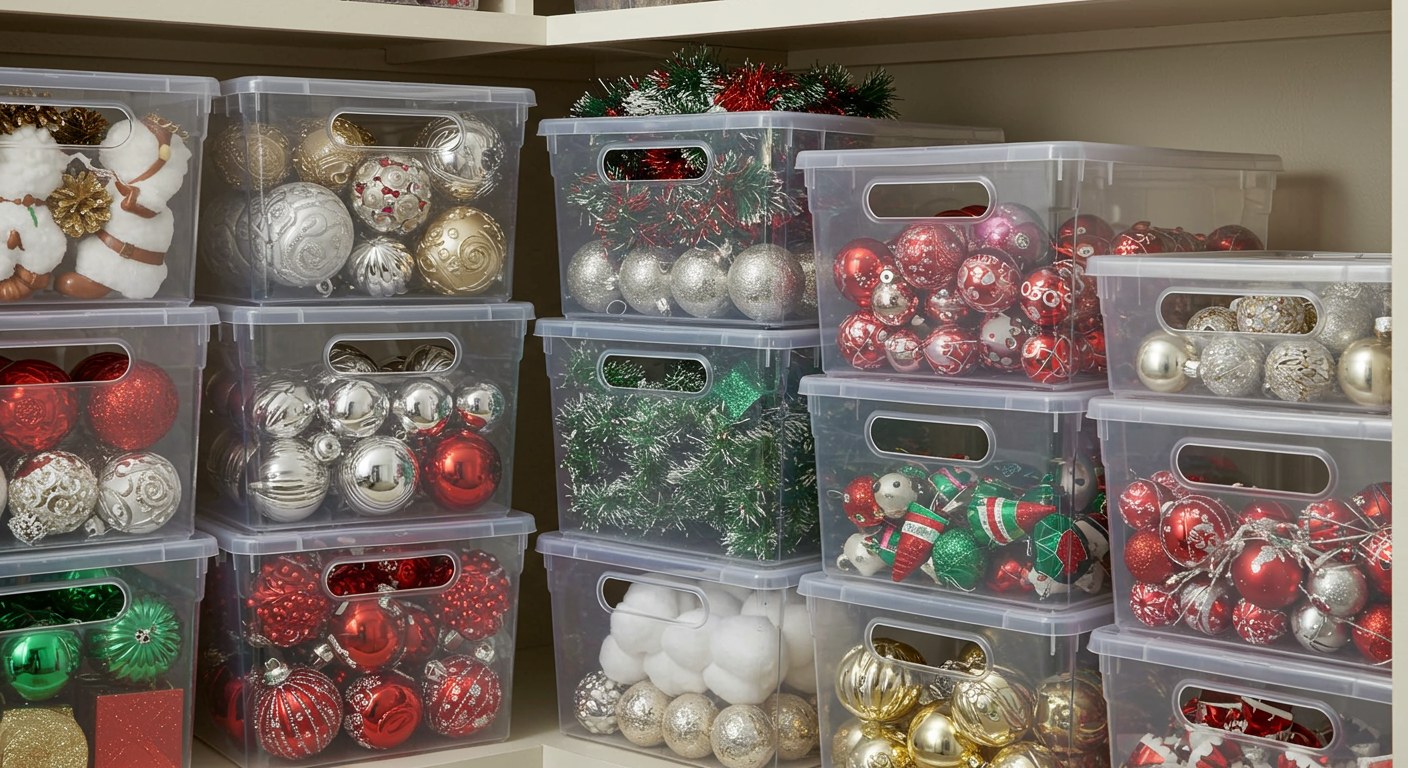
January you will say thanks: christmas decor storage ideas that pack ornaments, lights and…
A tidy house in January is not about buying more boxes — it is about giving everything one place to live and keeping it there. These 36 New Year organization ideas start with the easy wins (one drawer, one shelf, one cupboard) and build into systems for closets, kitchen, paper and the daily clutter, so the calm of the first week is still there in March.
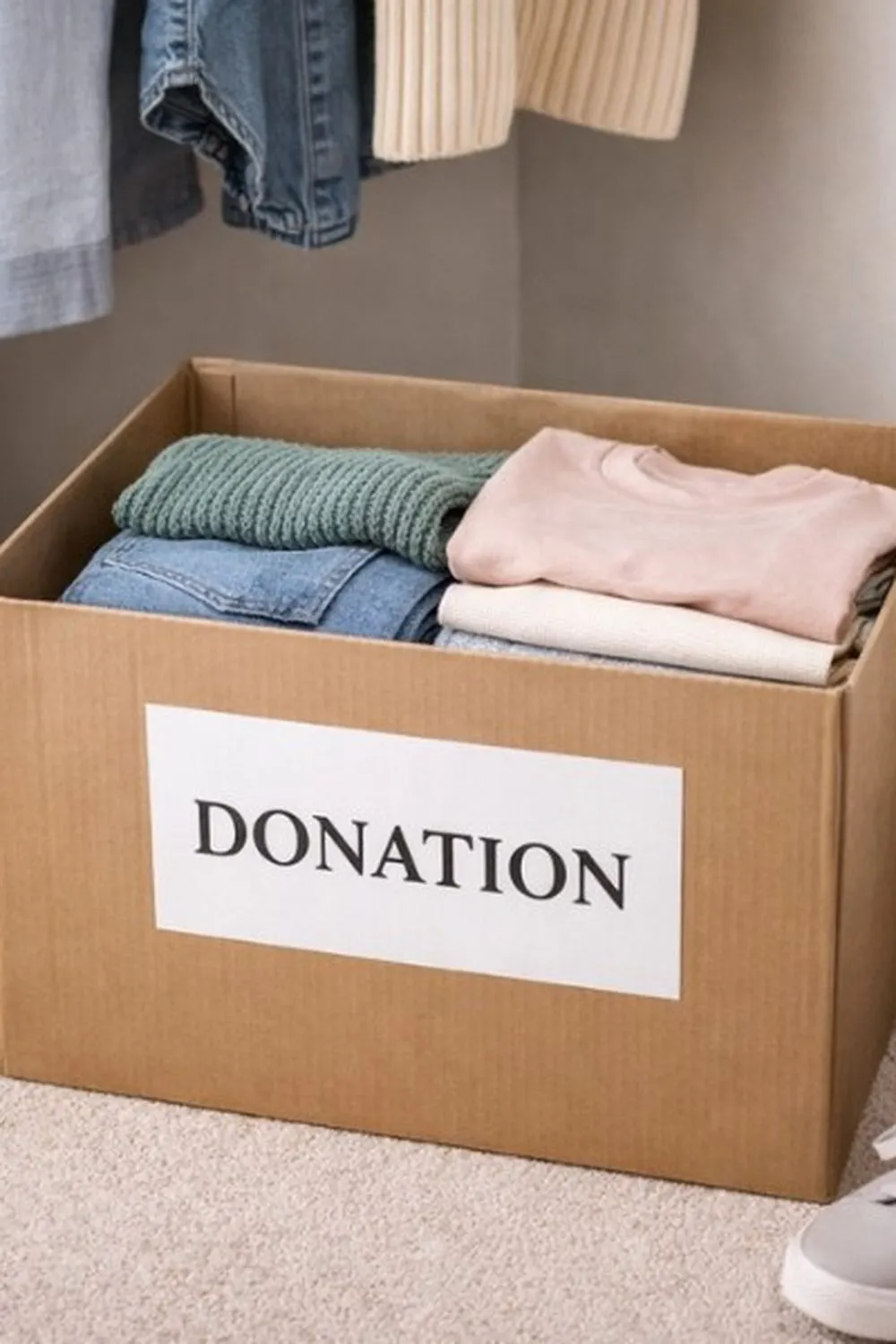
One labeled box by the closet — donations leave the house instead of piling up.
Every tidy home runs on exits, not just storage. A labeled donation box living beside the closet gives every "someone else could use this" item somewhere to go the moment you decide — not into a bag that migrates around the house for a month. When the box is full, it goes to the charity shop on the next trip out.
Styling tip: keep the box lidless and visible; a donation box you have to open is a donation box you stop using.
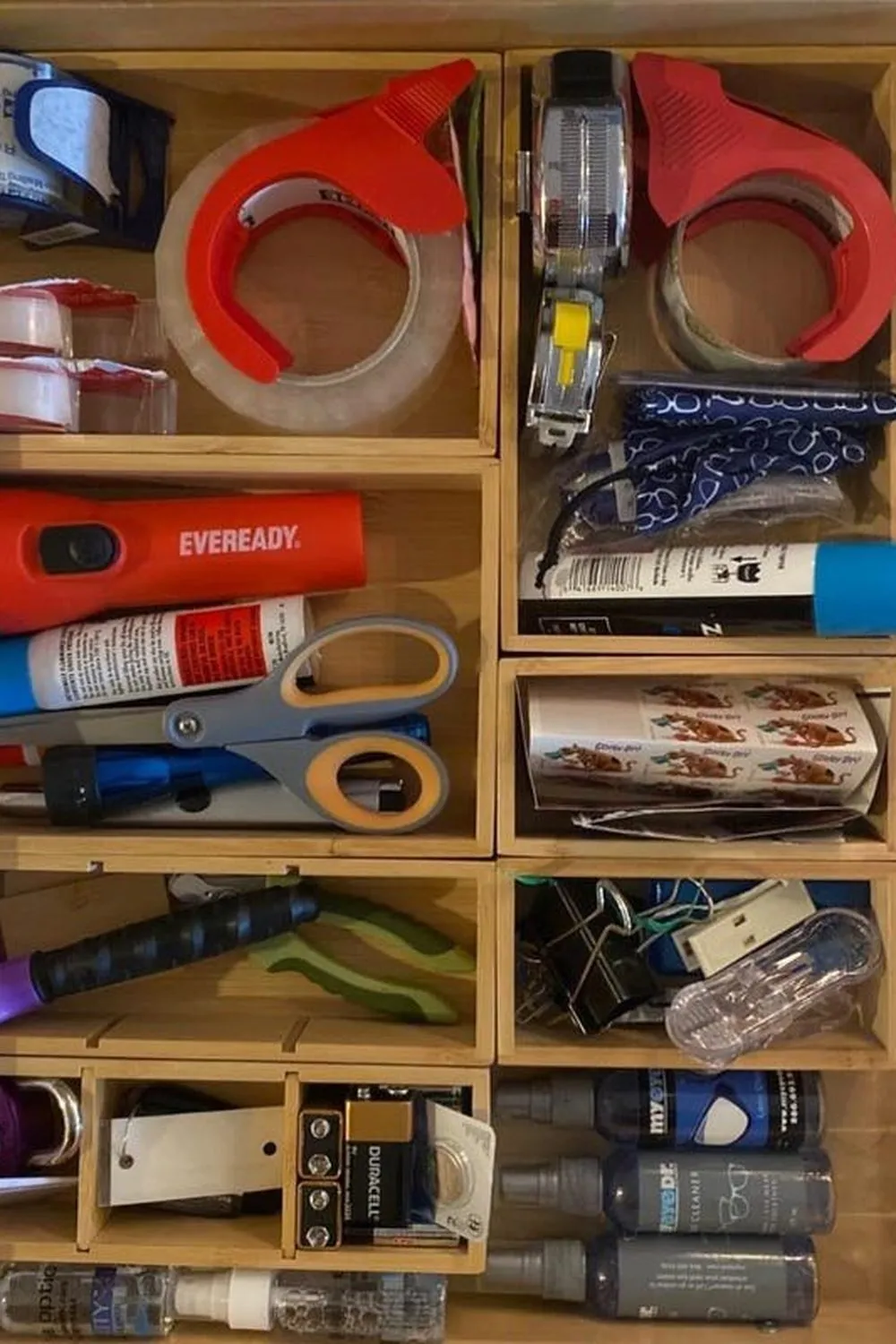
One drawer, divided — the junk drawer stops being a junk drawer.
Every house is allowed one junk drawer; the New Year rule is that it stops being junk. Empty it completely, fit wooden dividers, and give each section one job — batteries, tape and scissors, string and chargers. The drawer you open most becomes the drawer that works hardest.
Styling tip: if an item has no section, it does not go back in — the sections decide what the drawer is for, not the other way round.
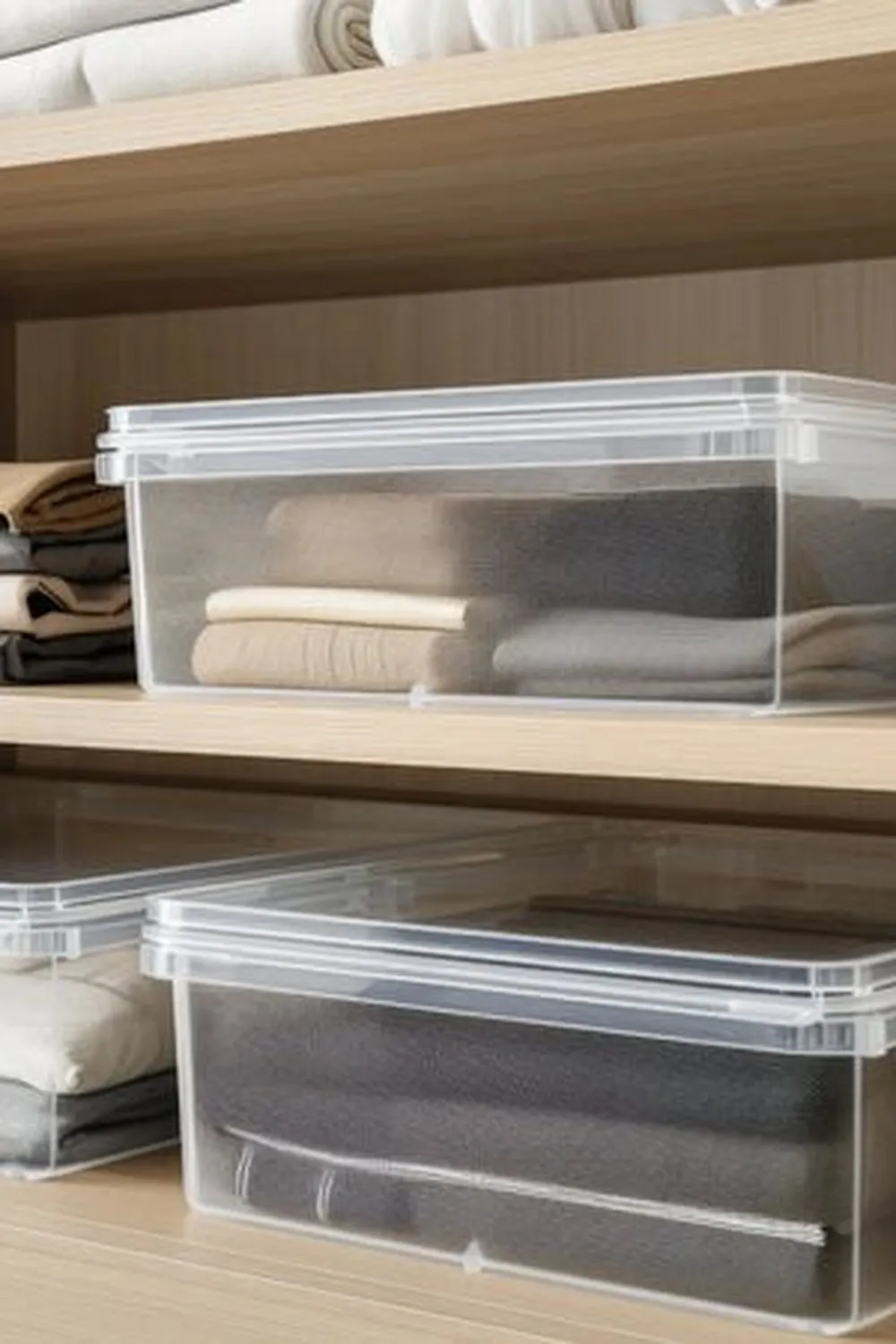
Clear boxes, straight stack — you can see what is inside without opening anything.
Clear boxes are the honest storage: nothing hides, nothing gets bought twice. Stacked straight on an open shelf they turn spare-room overflow into something that looks deliberate — the contents become the label. Keep the stack to one category per box and the shelf reads as a system.
Styling tip: buy one box style in several sizes rather than a different box for every need — a matched set stacks safely and looks calm.
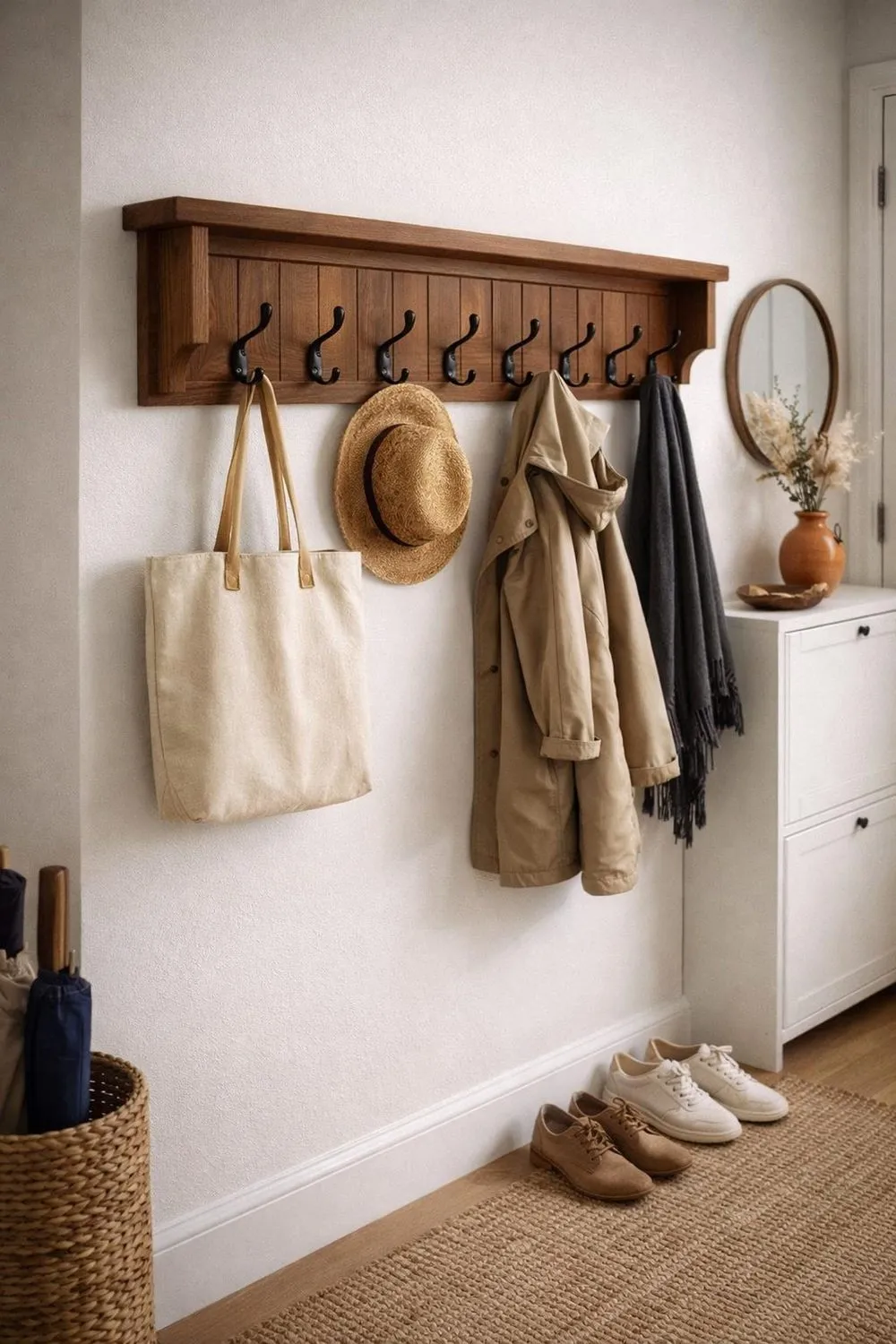
One hook per coat — the entryway stops being a coat pile.
The entryway fails when hooks are outnumbered. One hook per coat — for the people who live here, plus one spare for a guest — and the pile on the newel post disappears. Shoes lined up below the hooks complete the system: everything you put on to leave, in one meter of wall.
Styling tip: put the hooks at two heights if children use them — a low row of their own stops small coats landing on the floor.
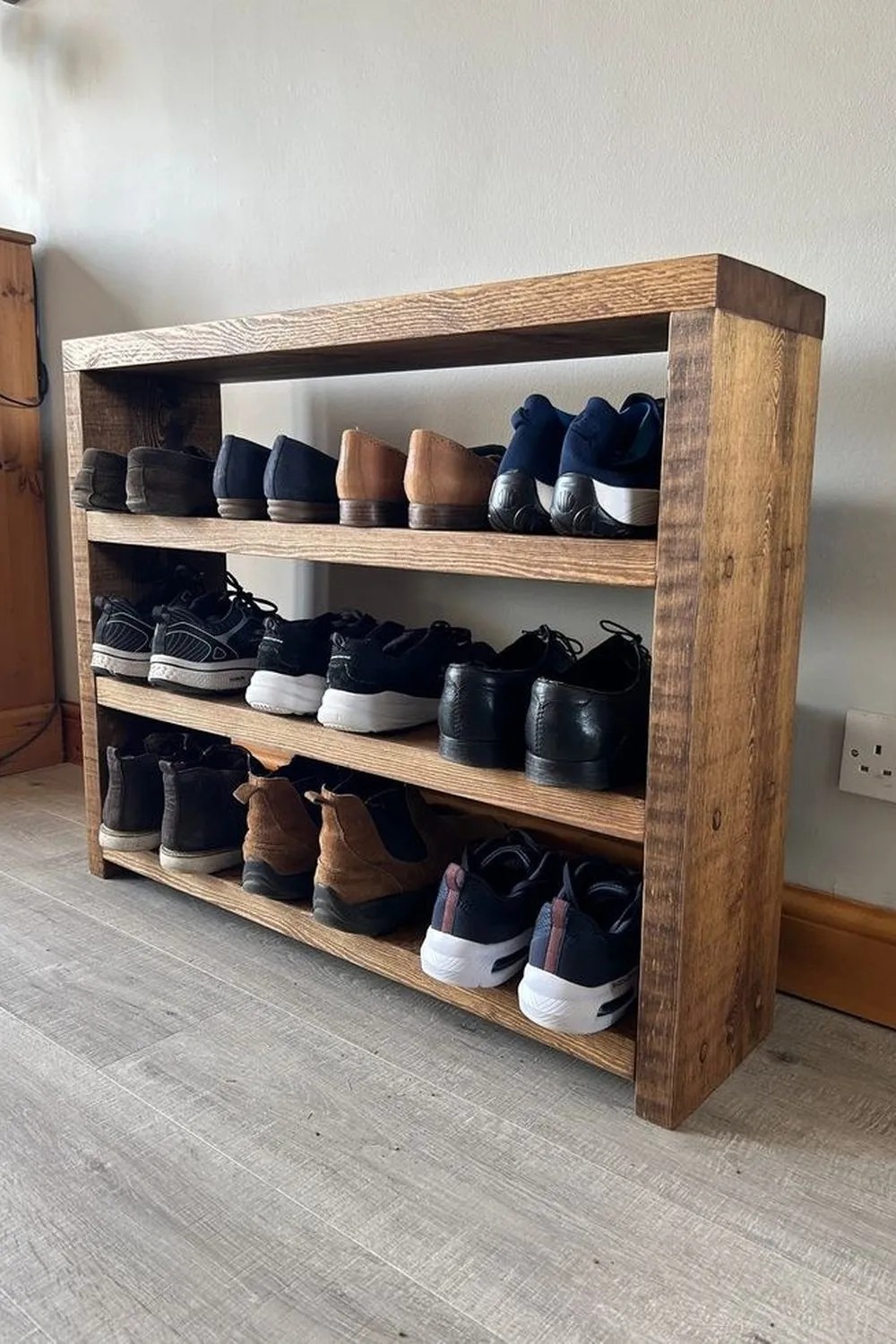
Only the pairs you wear stay — the rest go to the donation box.
A shoe rack is a promise the hallway makes: these pairs, no more. The New Year edit is to line up only what you actually wear weekly and let the rack's size make the decision — pairs that do not fit the rack go to the donation box or the wardrobe, not the floor beside it.
Styling tip: keep one empty slot on the rack at all times; an empty slot is what stops the next pair of shoes starting a floor pile.
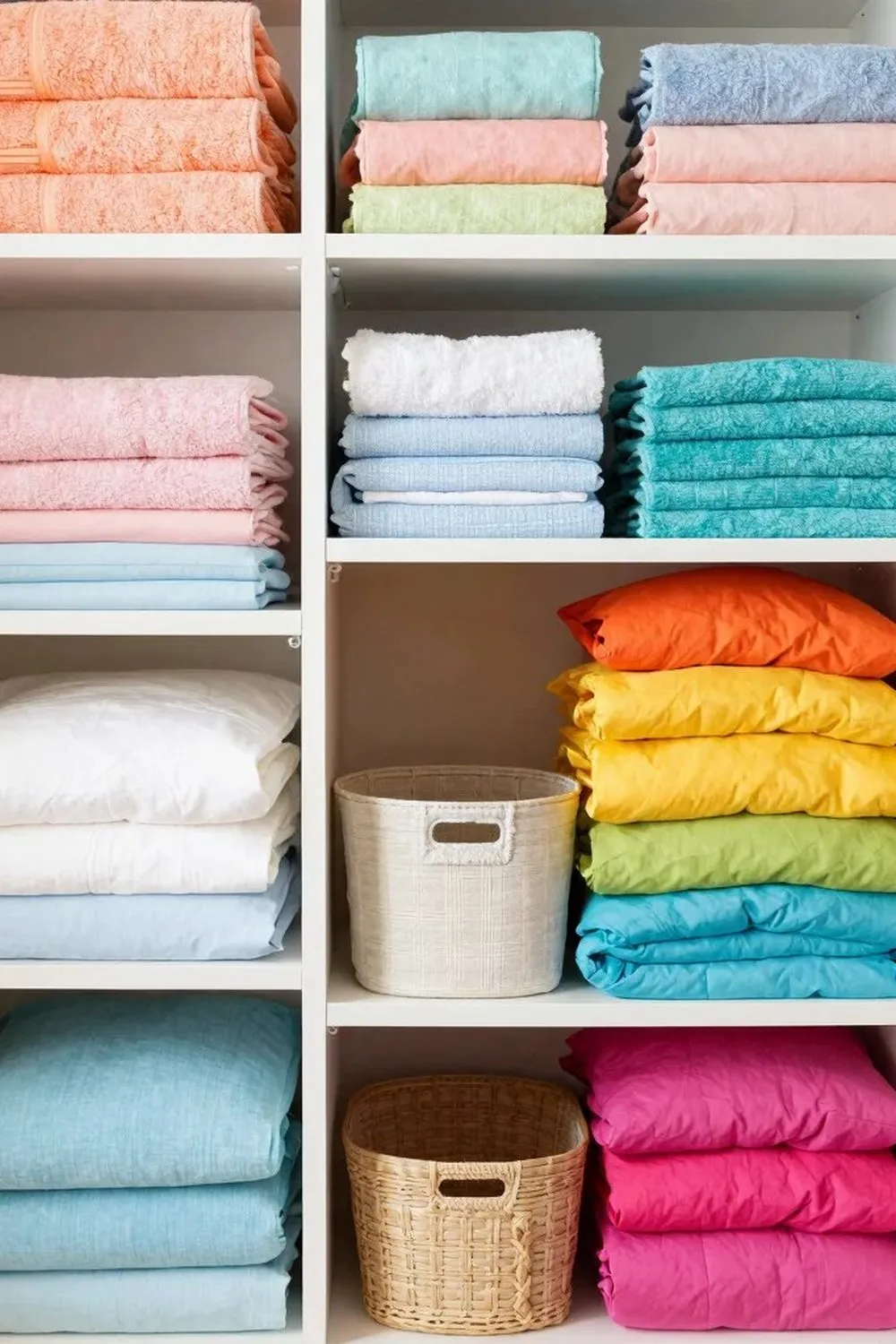
Sheets folded by color — the cupboard looks calm every time it opens.
The linen cupboard is opened daily and styled never. Folding sheets and towels into stacks sorted by color takes one laundry day and pays back every morning after: sets are findable, the cupboard looks calm, and the odd worn towel stands out ready for the rag bag.
Styling tip: store each sheet set inside one of its own pillowcases — the whole set comes out in one pull and the stacks stay tidy.
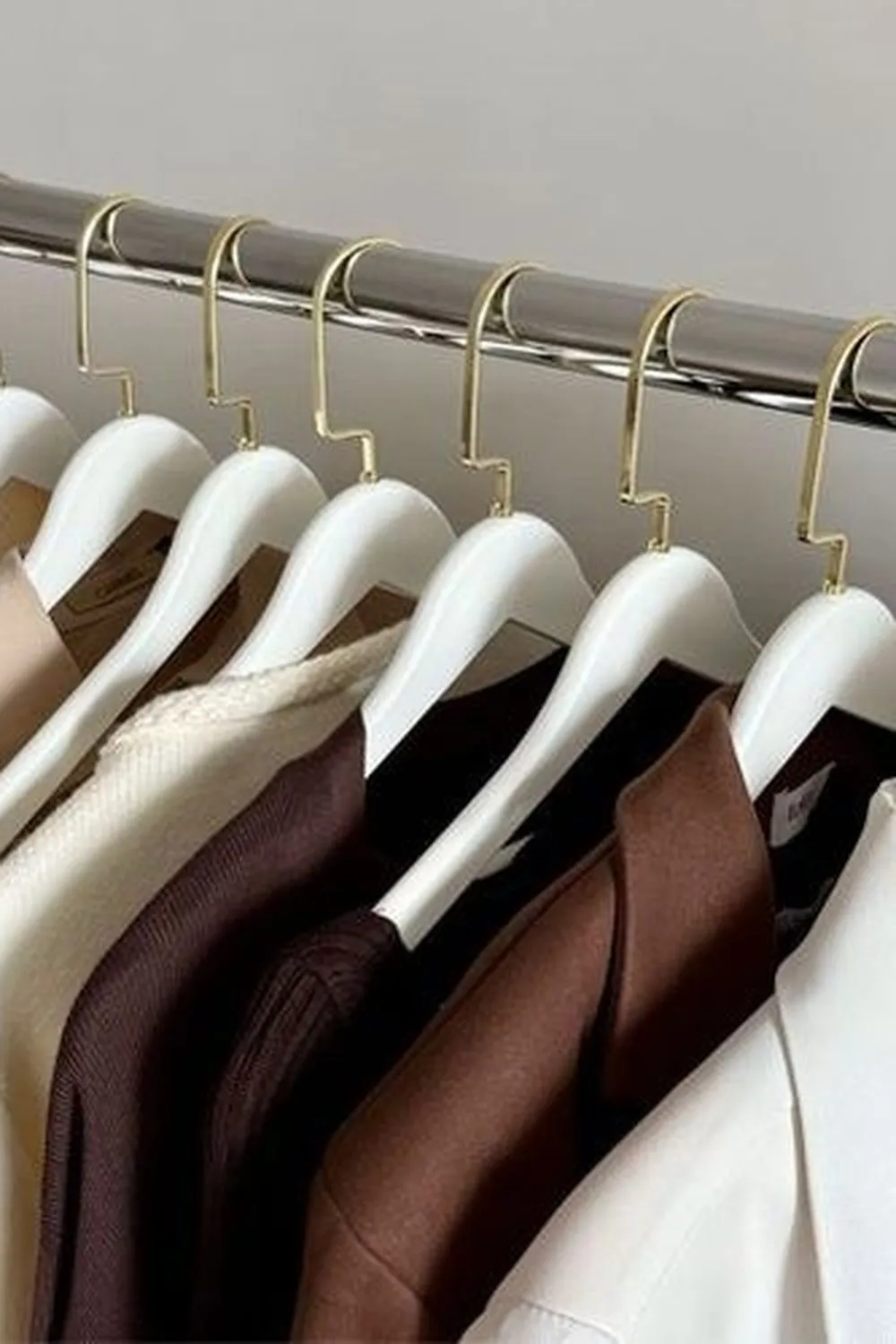
A rail of neutrals — fewer choices, and every one of them goes together.
A capsule rail is the closet edit made visible: the clothes you actually wear, in cream, gray and black, where every top meets every bottom. Getting dressed stops being a decision and the rail itself looks like a boutique — proof that organization and decor are sometimes the same photograph.
Styling tip: try the rail for one month before donating what did not make the cut; a trial month is easier to keep than a ruthless one-day purge.
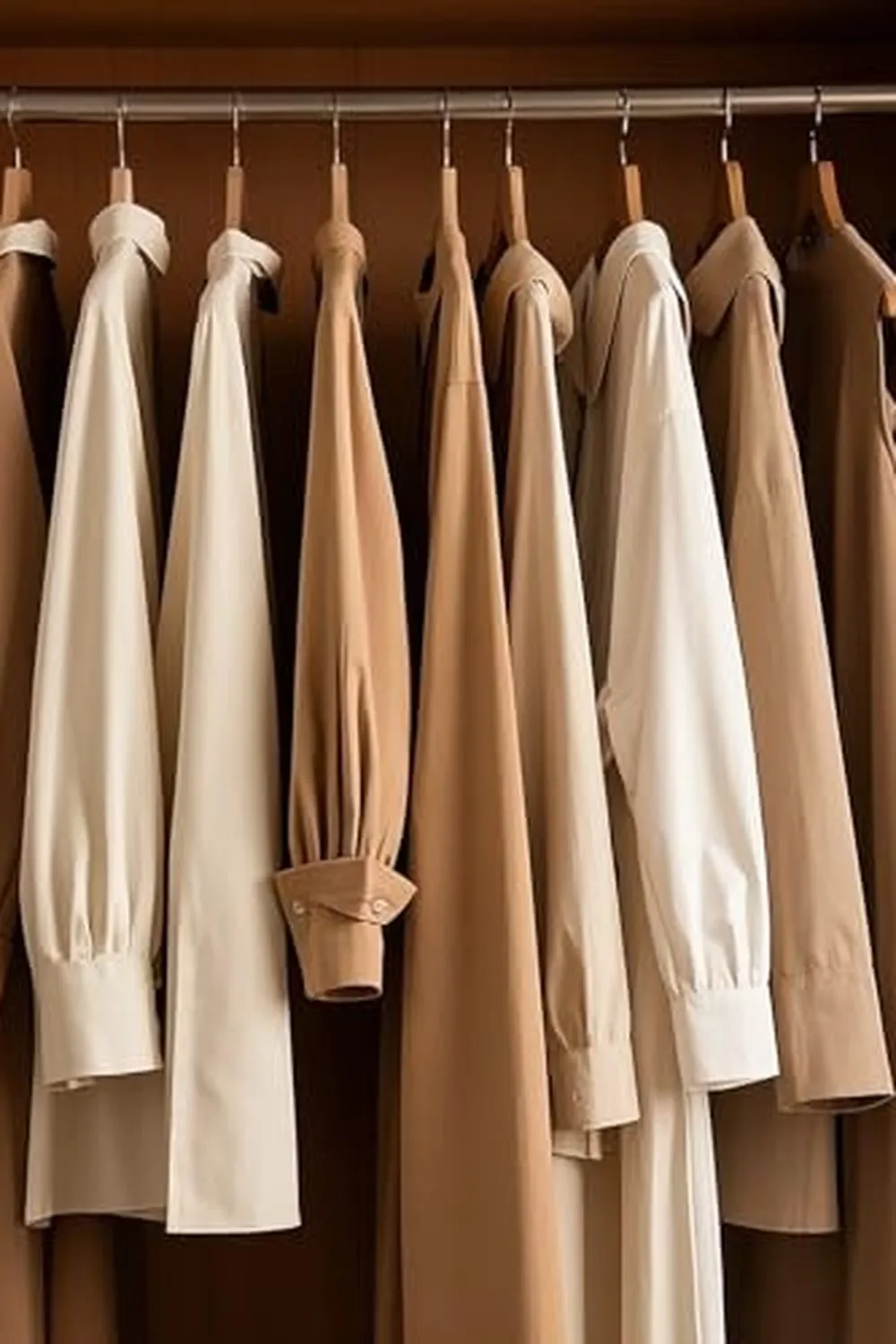
Matching hangers sound small — the closet looks twice as tidy for it.
Nothing makes a closet look more chaotic than forty hangers of fifteen kinds. One set of matching wooden hangers, shoulders aligned, and the same clothes look like a different wardrobe — this is the cheapest closet makeover there is, and it takes an afternoon at most.
Styling tip: hang everything facing the same direction, hooks the same way round; the uniform line is what the eye reads as tidy.
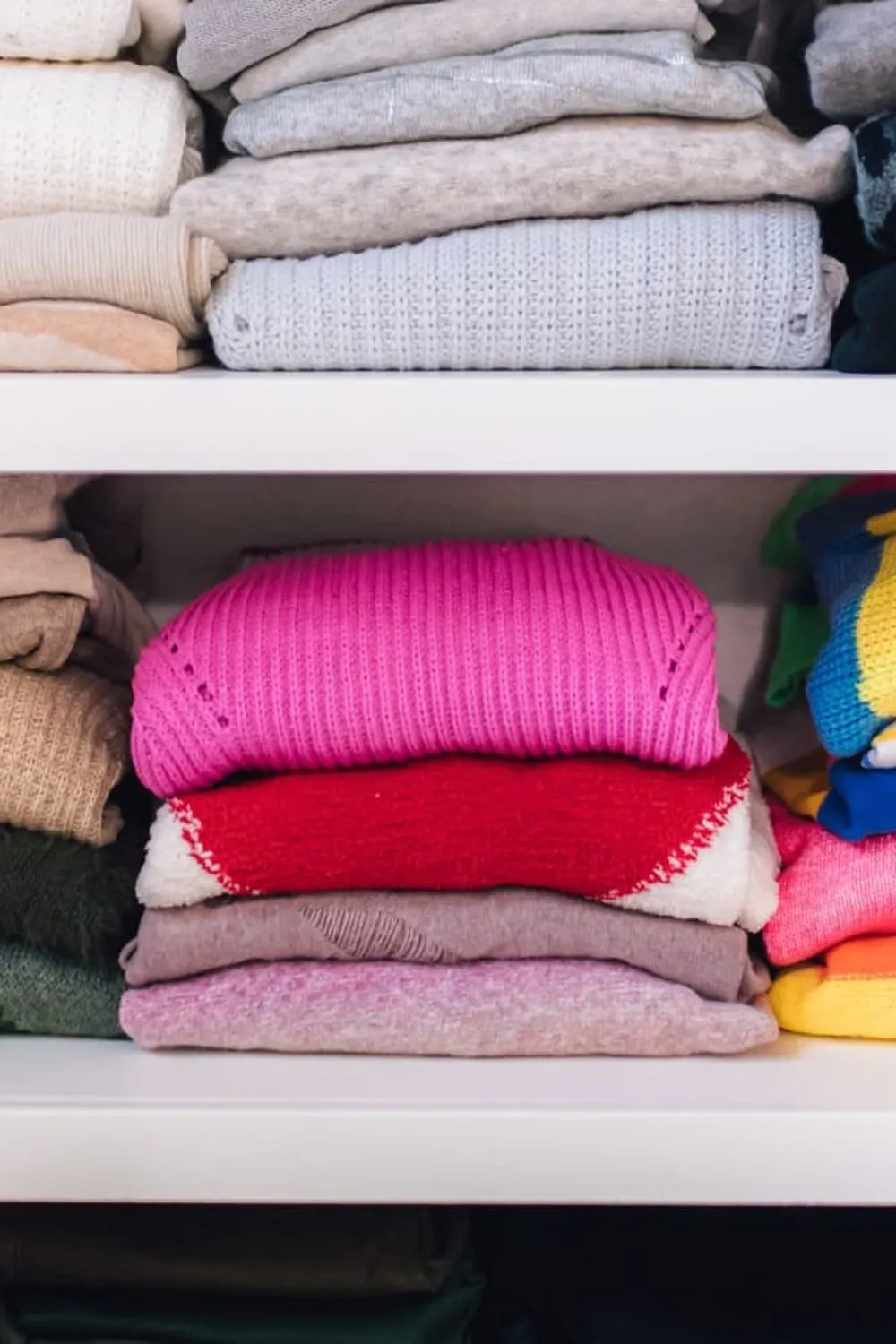
Jumpers by color — you find the one you want without unfolding five others.
Jumpers stored folded, stacked by color, stop the daily excavation. Three or four to a stack, light to dark, and the shelf looks like a shop display while working like a filing system. The color order is not fussiness — it is how you spot the navy one without touching the black one.
Styling tip: put the jumpers you wear most at eye level and the rarely worn on the high shelf; the system should serve the mornings, not the archive.
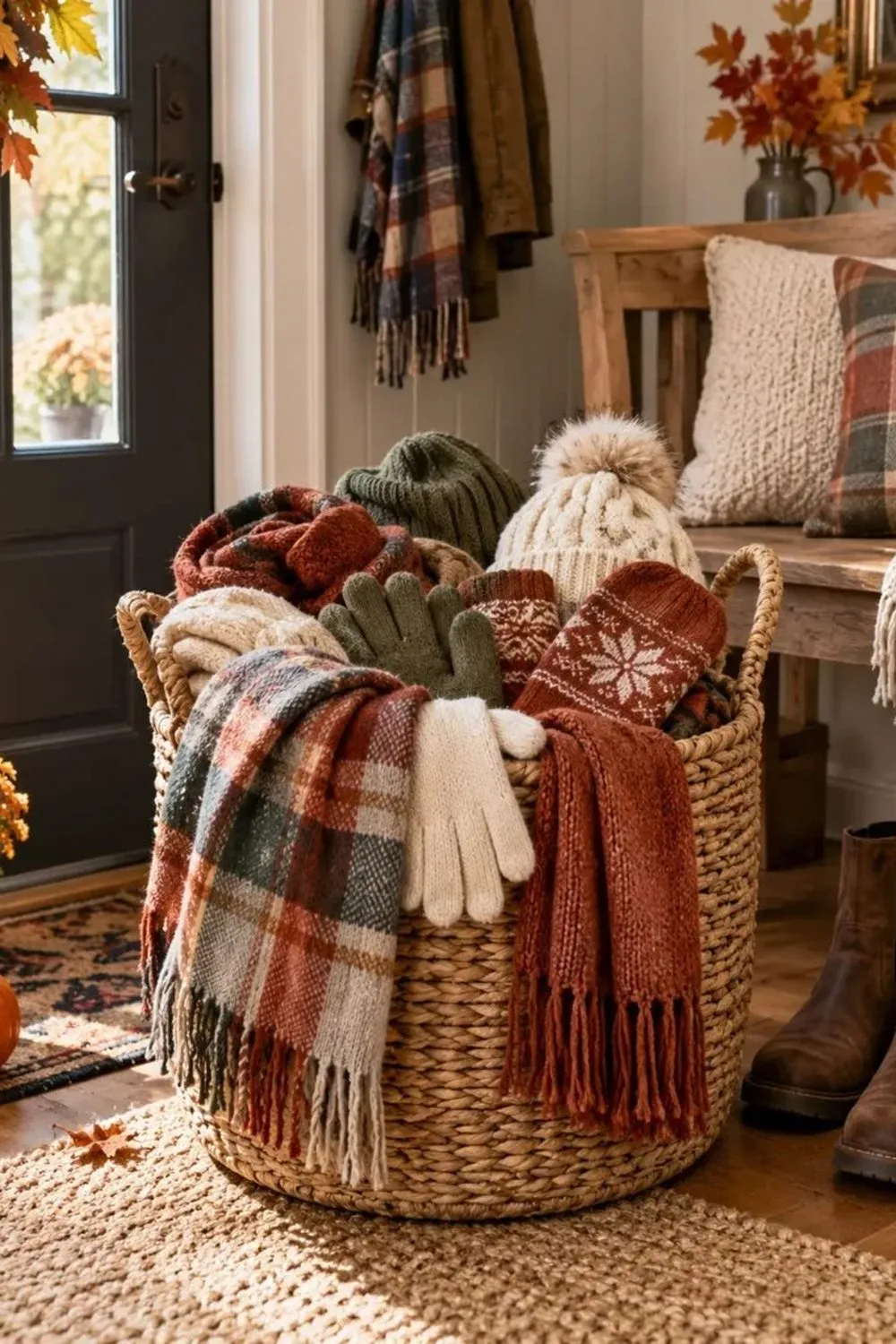
Scarves and gloves in one basket — winter accessories stop wandering the house.
Scarves on chairs, gloves in coat pockets, hats on the stairs — winter accessories wander like no other category. One woven basket by the door ends the migration: everything woollen lives there, gets grabbed on the way out and dropped on the way in.
Styling tip: roll scarves instead of folding them into the basket; rolls stack without creasing and you can see every color at a glance.
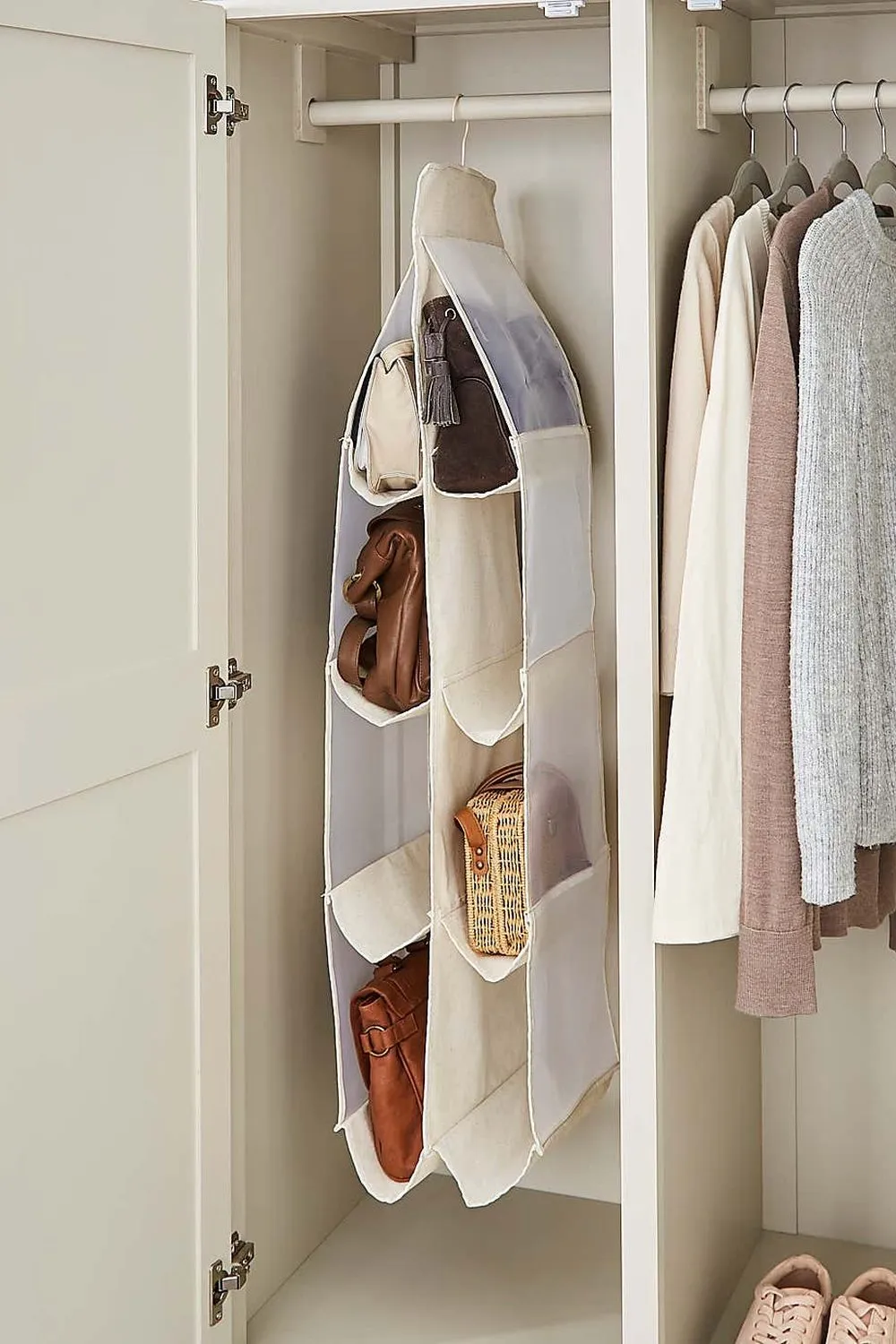
The back of the door is free storage — scarves, belts and bags, all visible.
The inside of the wardrobe door is the most wasted square meter in the bedroom. A hanging organiser with clear pockets turns it into visible storage for scarves, belts, sunglasses and small bags — things that vanish in drawers stay findable on a door you open every day.
Styling tip: give the organiser the small-and-losable category only; bulky items stretch the pockets and bow the door's hinges over time.
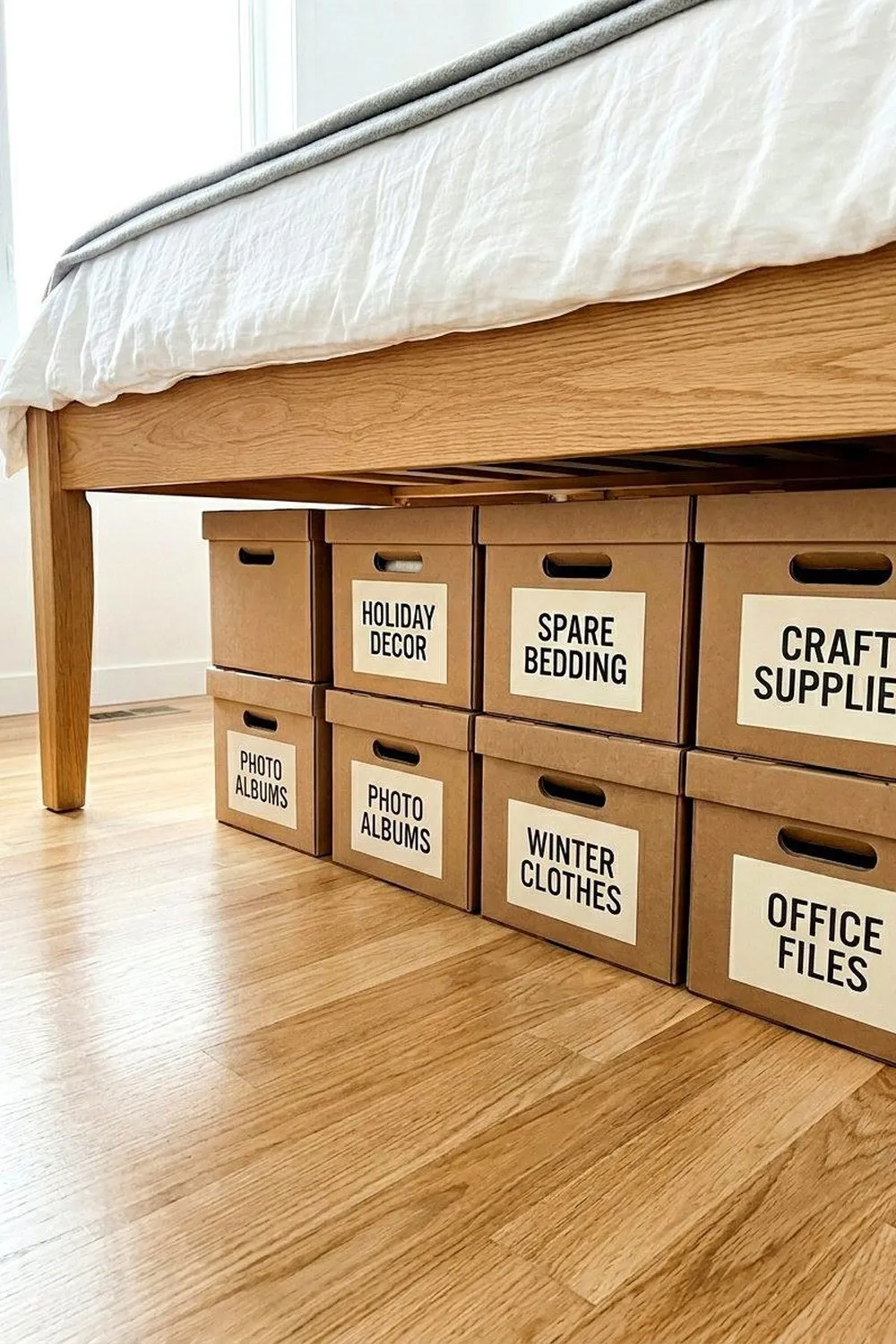
Out-of-season clothes under the bed, labeled — the closet breathes again.
Half of every crowded closet belongs to the other season. Flat, labeled boxes under the bed take the summer dresses or the heavy coats out of circulation for six months, and the closet that remains is the one you can actually dress from. Labels matter: under-bed storage without them is just hiding.
Styling tip: add a tumble-dryer sheet or a cedar block to each box before it slides under — clothes come out in spring smelling stored-on-purpose, not stored-and-forgotten.
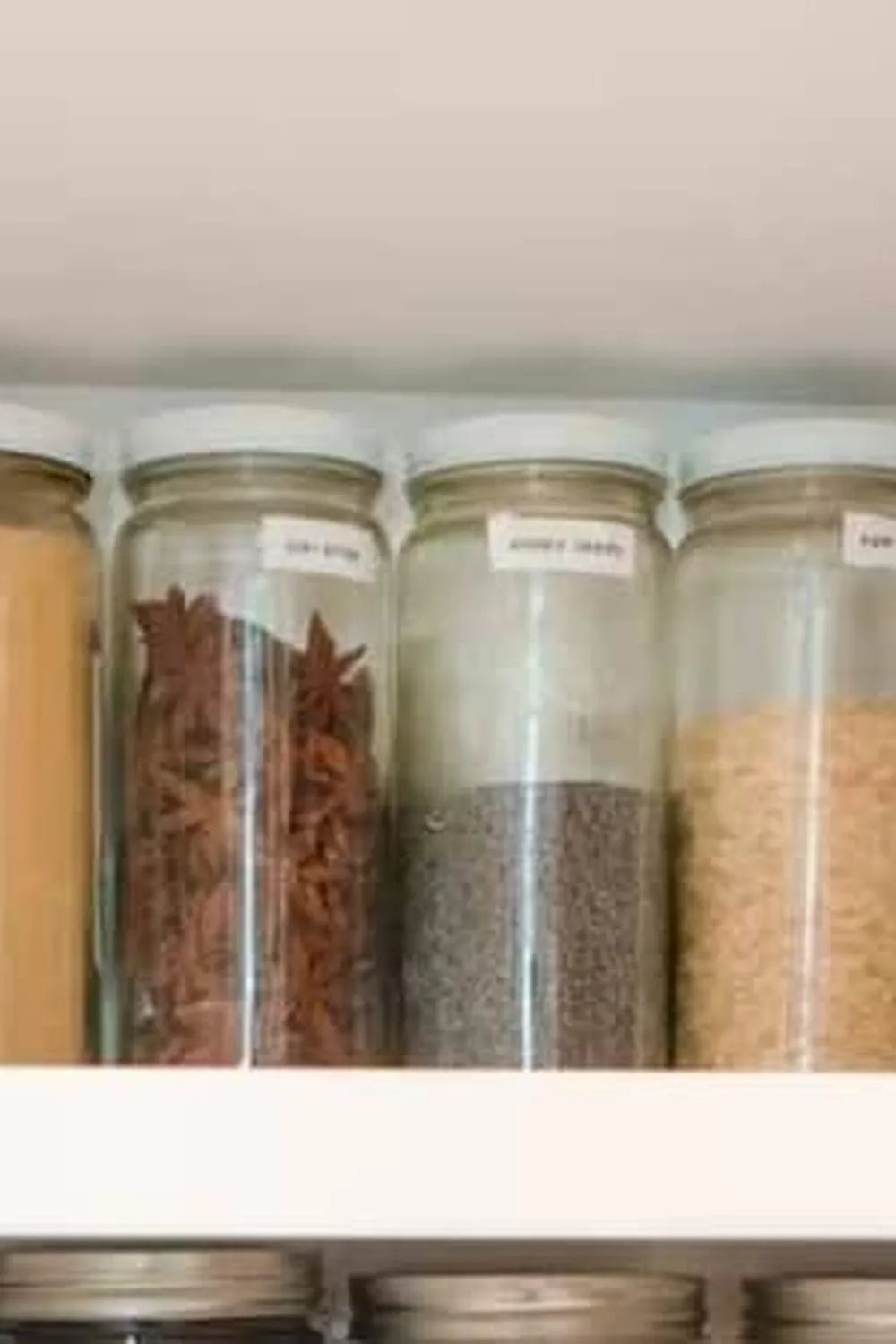
Jars in one straight row — the pantry looks like a shop shelf, in a good way.
Decant the half-open bags into glass jars and line the jars in one straight row, labels facing out. A single row means nothing hides behind anything else — the flour you need is the flour you see — and the shelf looks like a shop display instead of a stockpile.
Styling tip: keep one jar shape per shelf even if the sizes vary; matching silhouettes are what make a row look intentional.
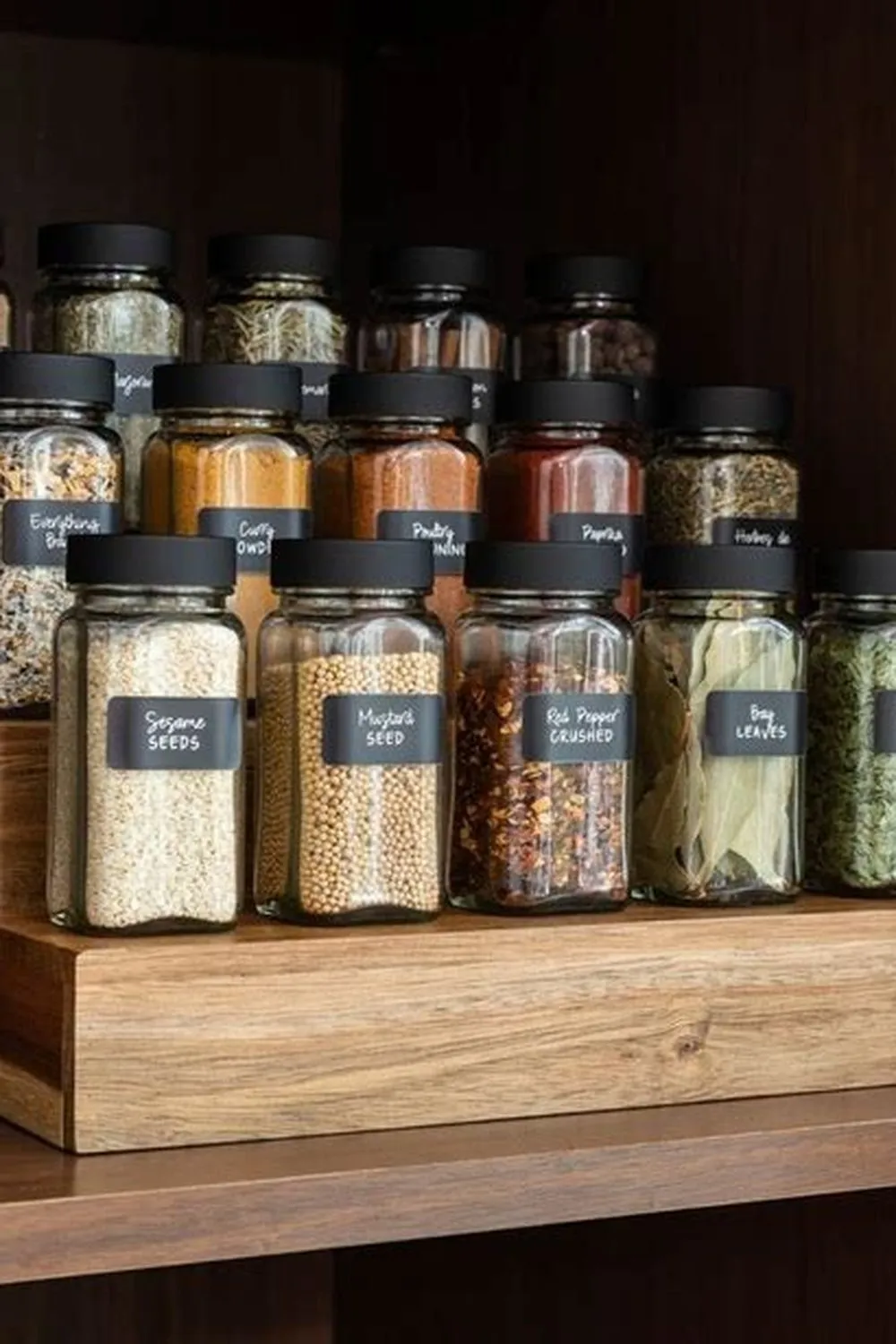
Spices on a tier, labeled — no more three jars of the same cumin.
Spices fail in flat drawers and deep cupboards alike. A tiered shelf inside the cupboard door or on the counter lifts every jar into view, and plain labels end the sniff-test era. The New Year edit usually finds two duplicates to merge before the shelf even goes in.
Styling tip: label the lids as well as the fronts if the tier is viewed from above — top-down jars are read from the top.
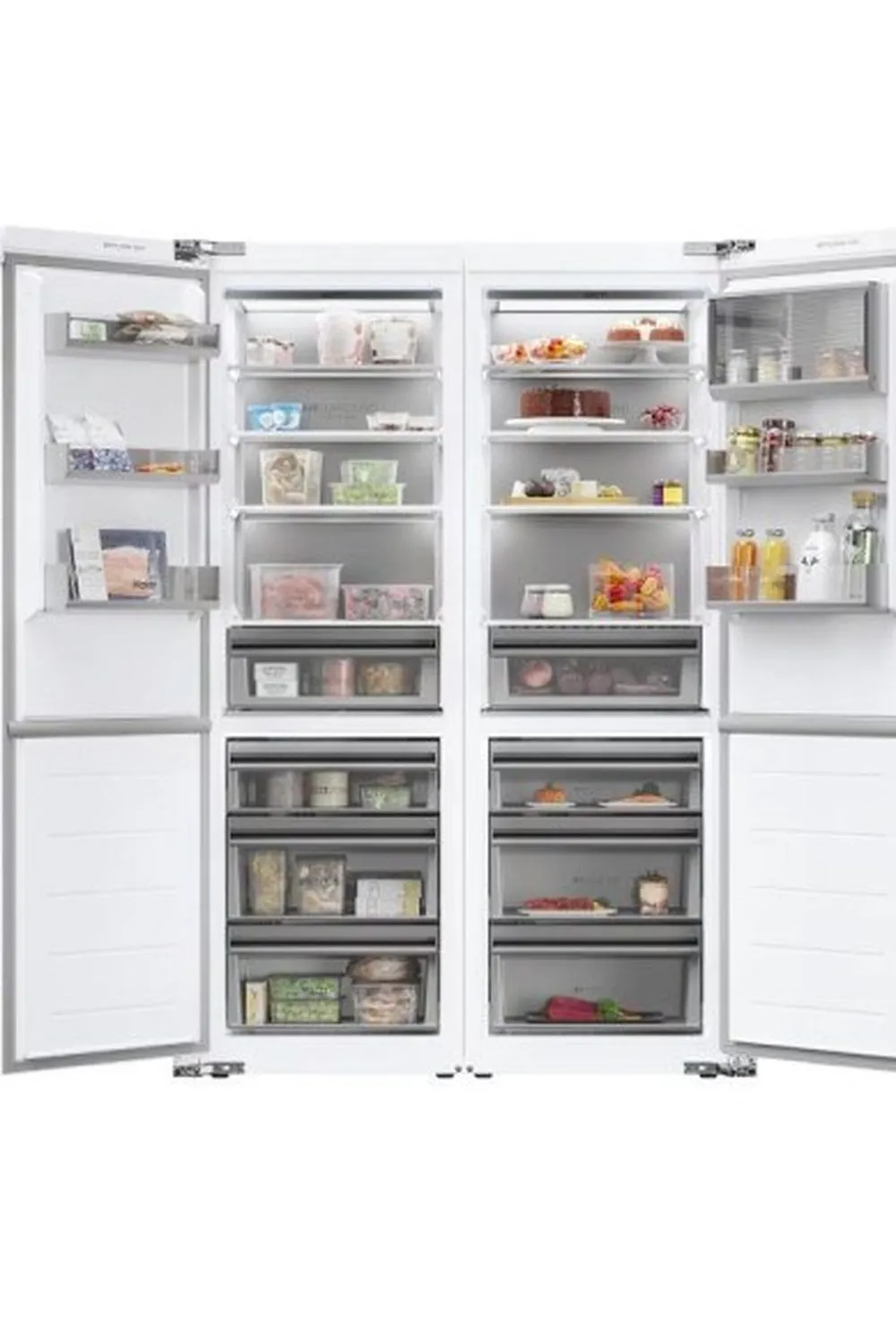
Clear bins in the fridge — leftovers stop disappearing behind the milk.
The fridge is a cupboard that expires. Clear bins on every shelf — one for leftovers, one for cheese and cold meats, one for jars and sauces — turn the weekly shop into a system where everything has a bin and the back of the shelf stops being a science experiment.
Styling tip: put the leftovers bin at eye level at the front; what is seen first is what gets eaten first.
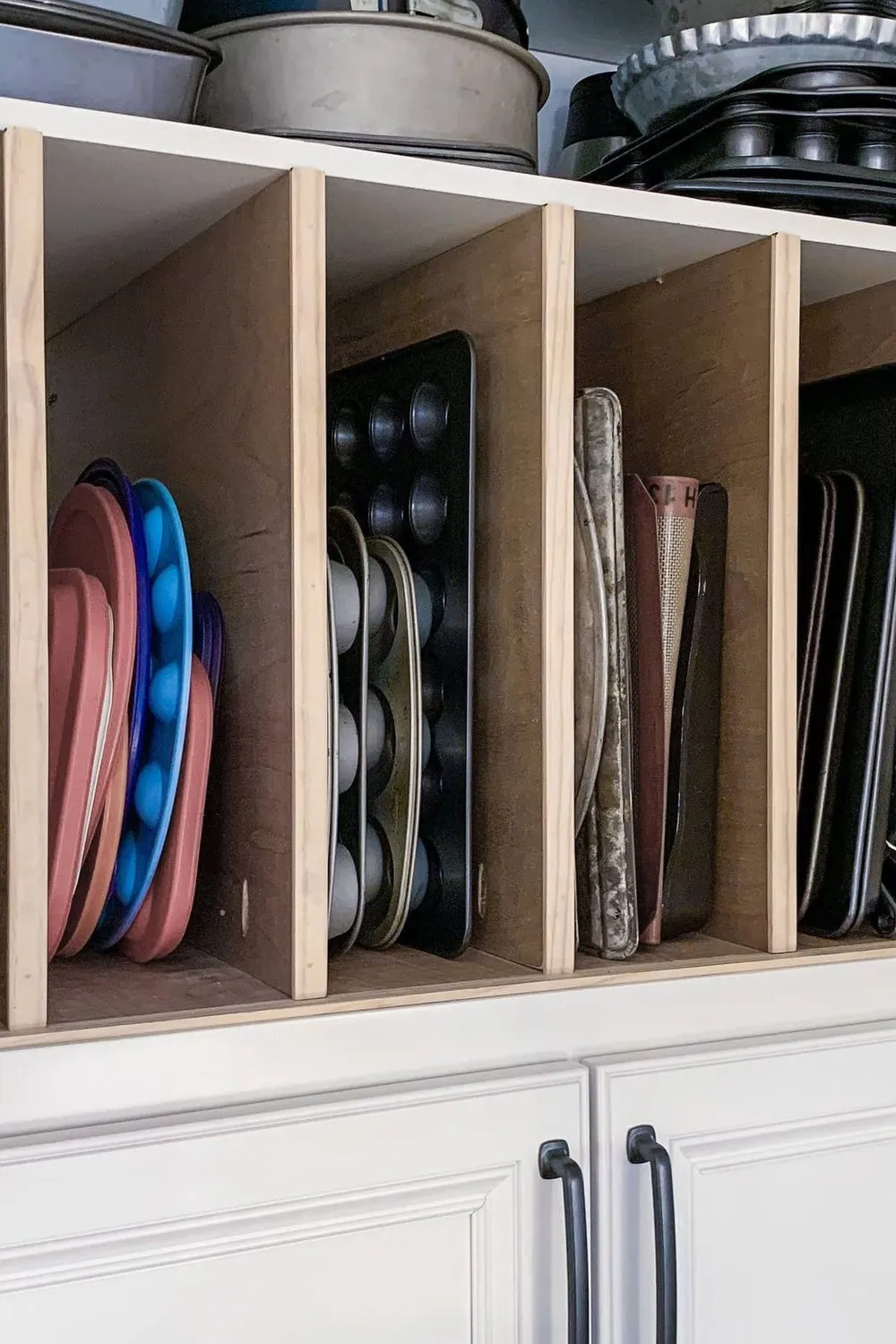
Trays upright, not stacked — the one you want slides out first time.
A flat stack of baking trays guarantees the one you need is at the bottom. A simple divider — a file organiser works — stores trays, chopping boards and cooling racks upright like books, and each one slides out without moving the others. It is a five-minute fix that pays back weekly.
Styling tip: measure the cupboard height before buying the divider; trays on edge need more vertical room than the same trays flat.
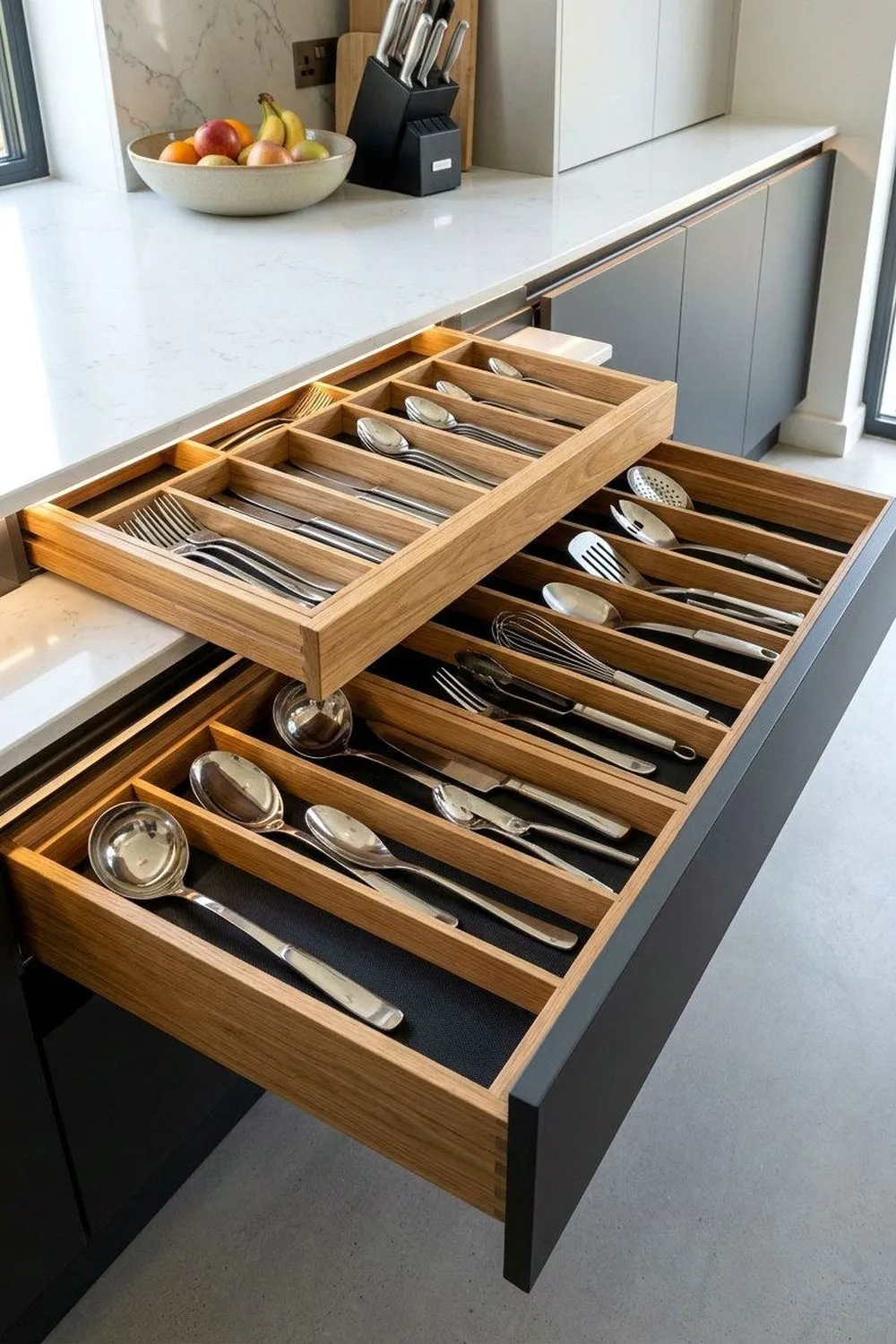
A wooden insert turns a rattling drawer into a quiet, sorted one.
A wooden cutlery insert is the grown-up version of the plastic tray: heavier, quieter, and sized sections keep forks from migrating into the spoons. It also looks like furniture when the drawer opens — a small daily pleasure that costs less than a takeaway.
Styling tip: if the insert is slightly smaller than the drawer, park the gap at the back for long utensils — the front sections stay perfectly aligned.
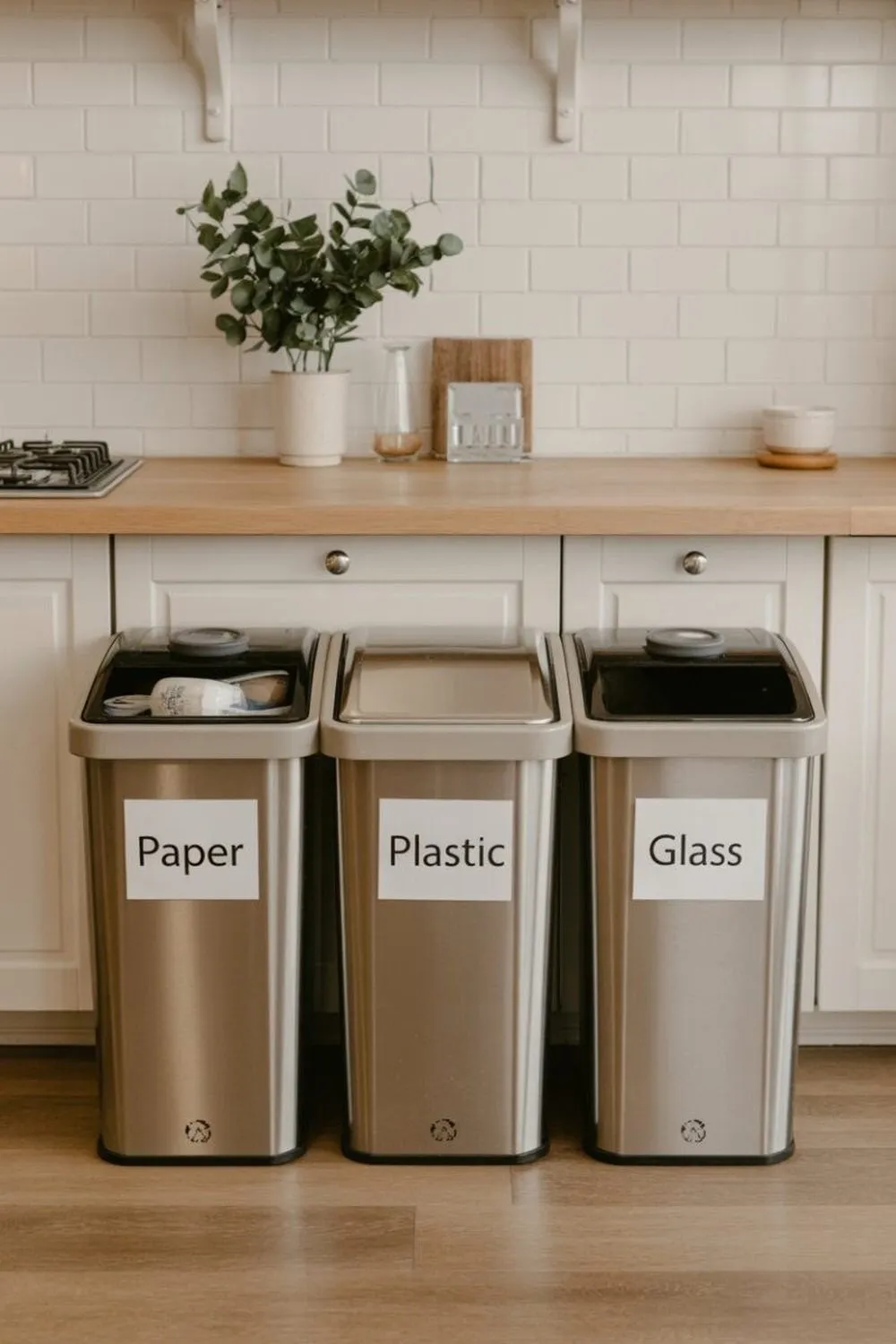
Three labeled bins — recycling sorts itself at the point you drop it.
Recycling fails when it needs a decision at the bin. Three labeled bins in a row — glass, card and paper, general — make the decision once, at setup, and the kitchen corner stays a station instead of a growing pile of things waiting to go out.
Styling tip: line the bins up in the order you use them most, not alphabetical order; the system should fit the habit, not the alphabet.
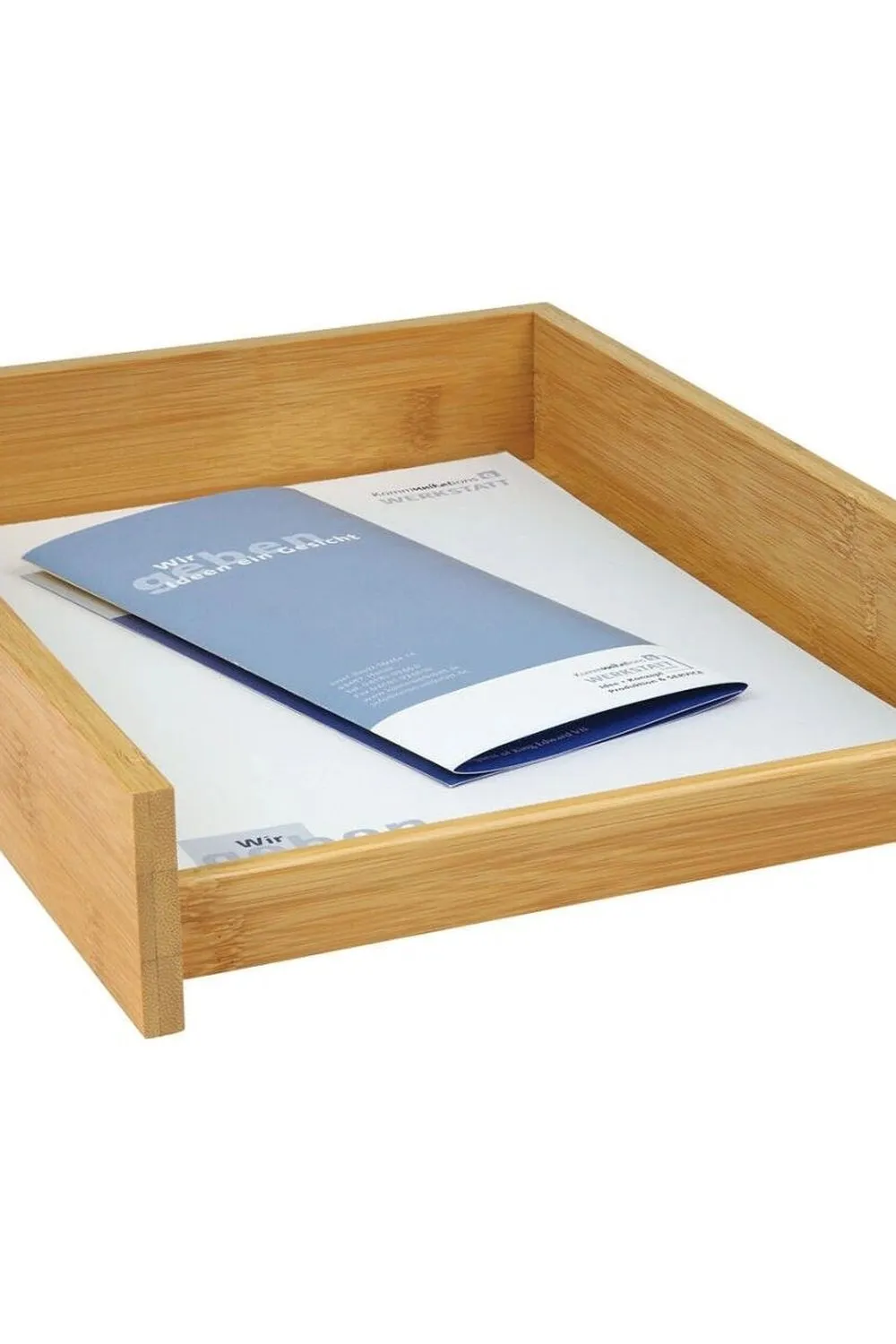
One tray for everything that arrives — paper has one home, not five.
Paper spreads because it lands everywhere. One tray on the desk — every letter, bill and form goes in it, unopened or not — gives paper a single home, and the desk stays a desk. The tray gets emptied once a week; between times, the pile is contained and honest.
Styling tip: the rule is one tray, not one tray per person or per type — the moment there are two trays, paper starts winning again.
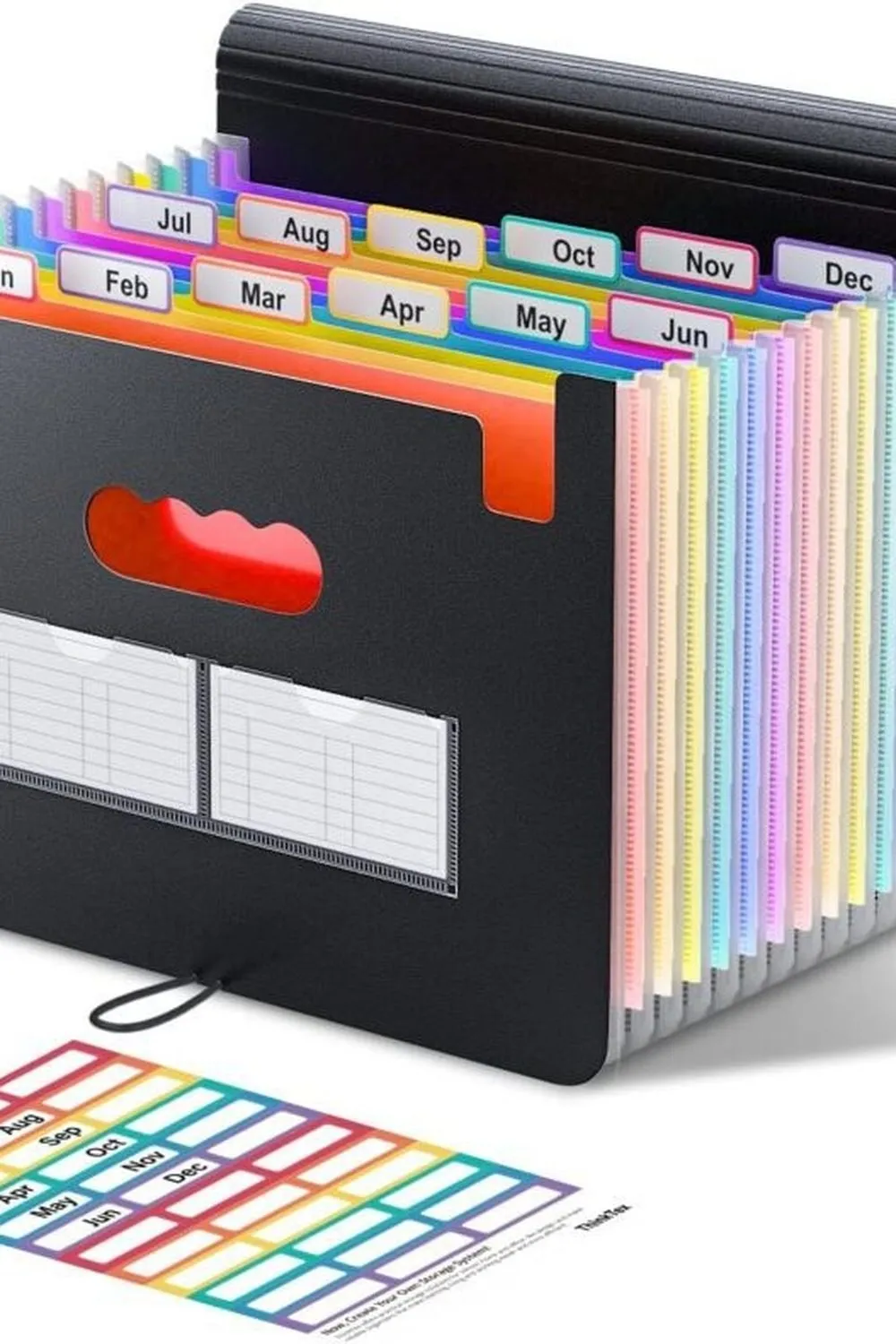
A folder per month — bills and letters file themselves in thirty seconds.
Twelve folders, one per month, in a single filing box: the simplest filing system that survives contact with real life. A bill paid in March goes in the March folder, findable in seconds, and at the year's end the whole box is the archive — no re-sorting, ever.
Styling tip: put the folders in month order with the current month at the front, and rotate it to the back when the month turns.
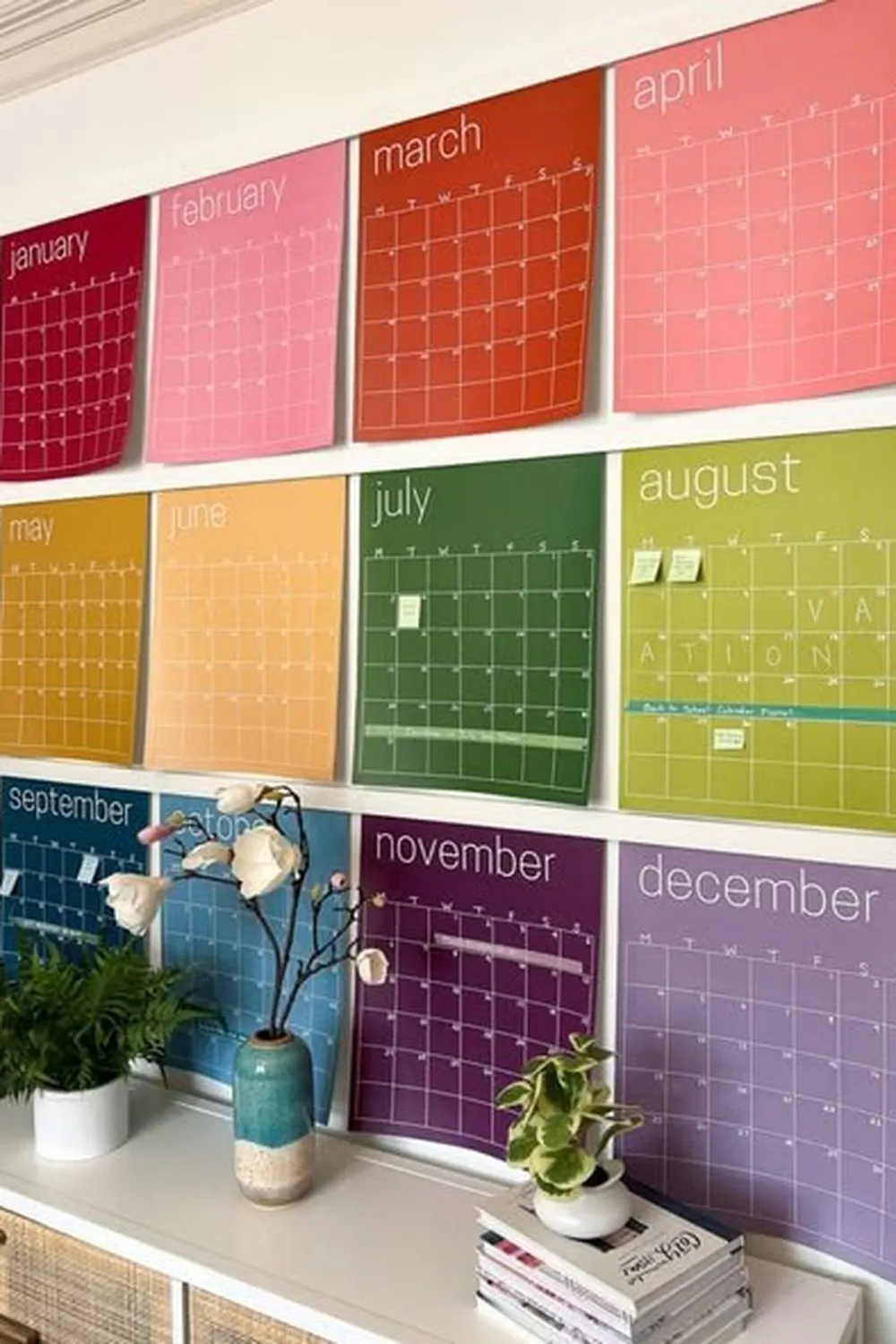
The whole month on the wall — nothing gets double-booked or forgotten.
Phone calendars hide the month behind taps. A large wall calendar shows the whole month at a glance — birthdays, bins, appointments and the declutter date — and the whole household can read it without asking anyone's phone. It is organization you can see from the doorway.
Styling tip: hang the calendar where the day starts (by the kettle or the door), not where it looks prettiest; a calendar is a tool first.
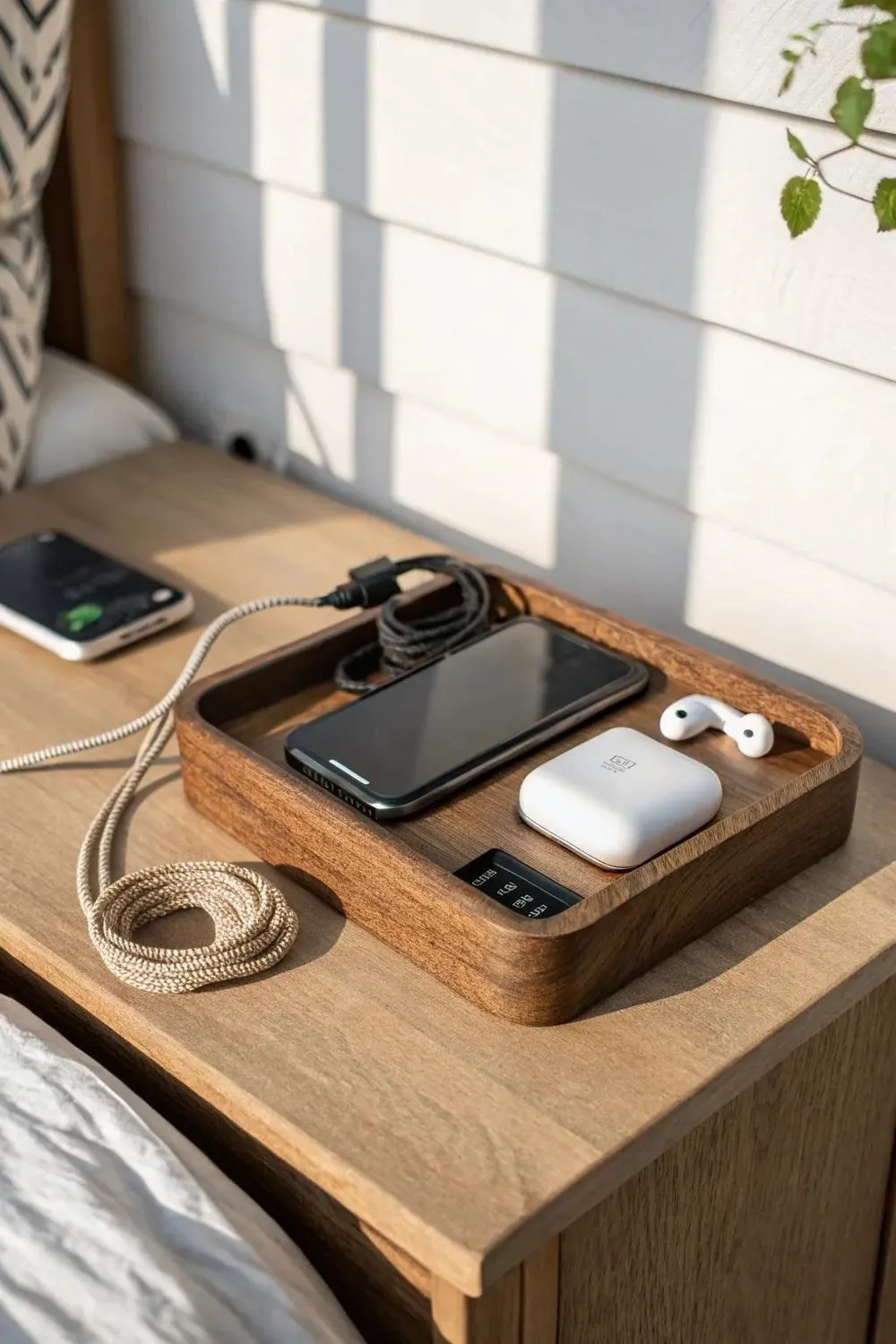
Chargers in one tray — cables stop living on every surface in the house.
Chargers colonise surfaces one cable at a time. A single wooden tray on a side table — one multi-plug inside it, cables coiled in the tray, phones landing there at night — gives charging one address in the house, and every other surface gets its space back.
Styling tip: add one short spare cable for guests in the tray; it stops visitors' chargers starting colonies elsewhere.
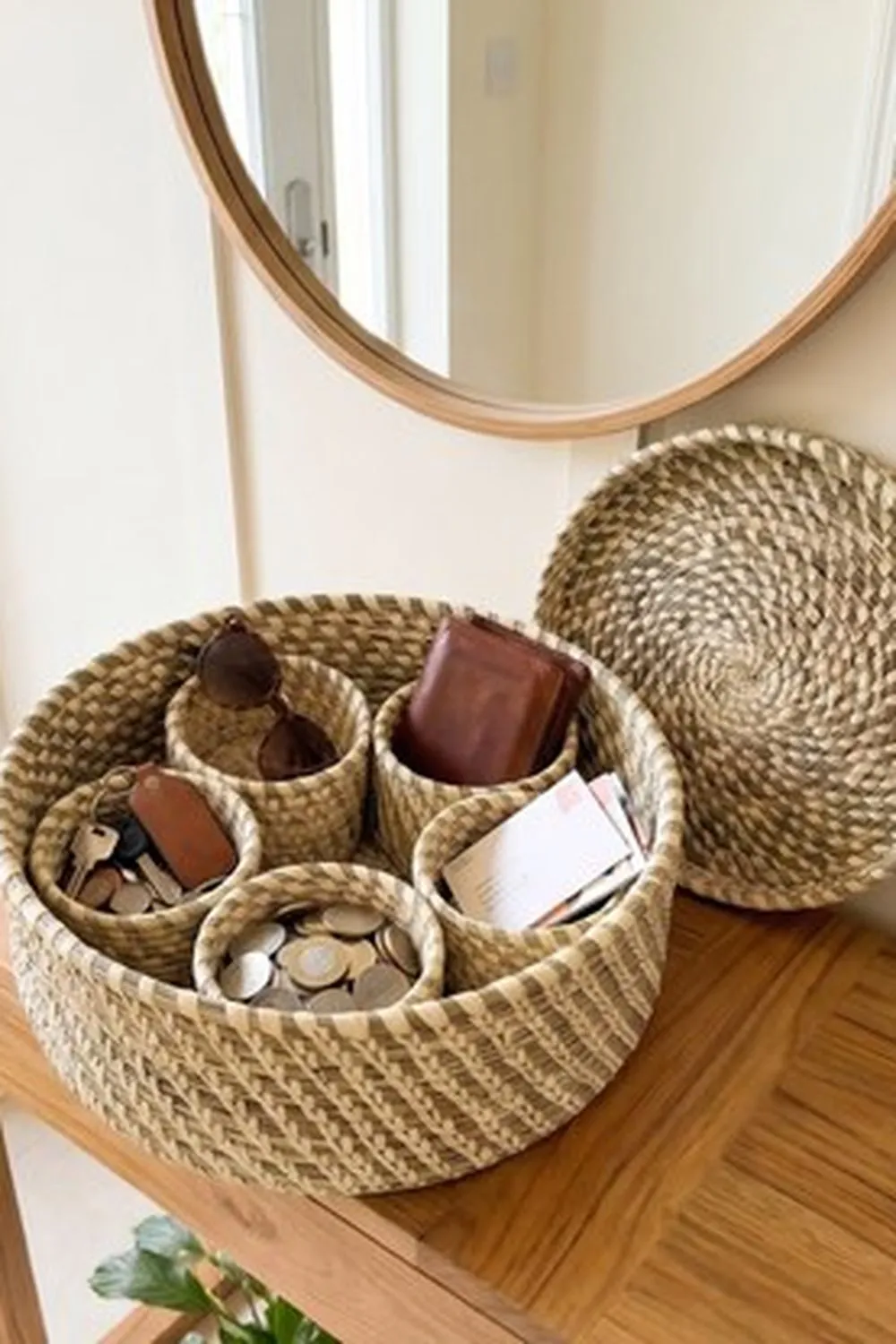
Keys, wallet, sunglasses — one basket by the door, no more morning hunt.
The morning hunt for keys is an organization failure, not a memory failure. A small woven basket on the console by the door — keys, wallet, sunglasses land in it the moment you come home — and leaving the house becomes a grab, not a search.
Styling tip: the basket must be the first surface the hand meets inside the door; two steps further and pockets win instead.
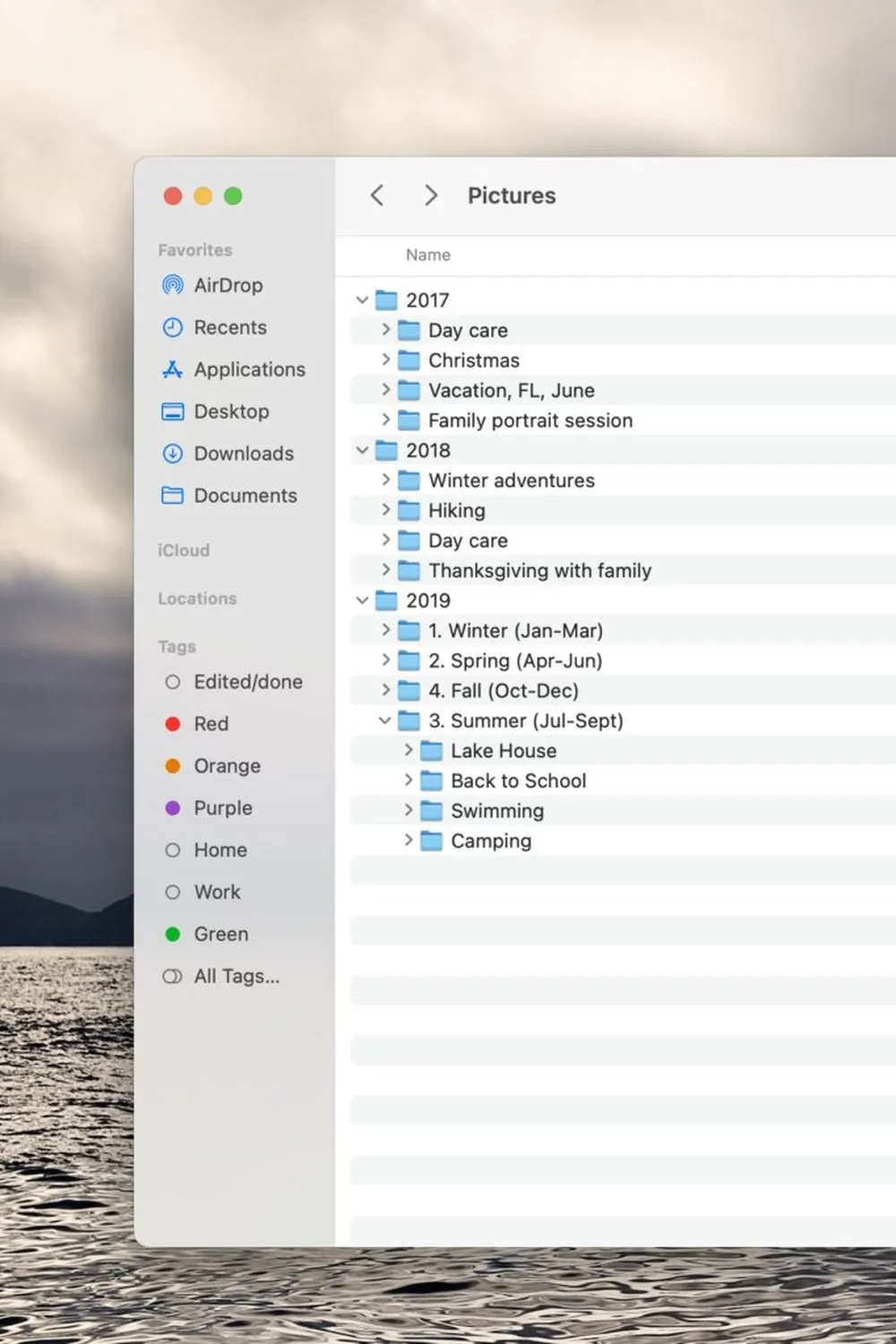
Photos sorted by year — the digital tidy-up counts just as much.
Ten thousand phone photos in one unsorted roll is the digital version of the junk drawer. One folder per year — this year's photos moved monthly, five minutes at a time — and the camera roll becomes an archive you can actually browse, back up and print from.
Styling tip: within each year, make one "Best of" folder as you go; future-you, making a calendar or a gift, will be grateful.
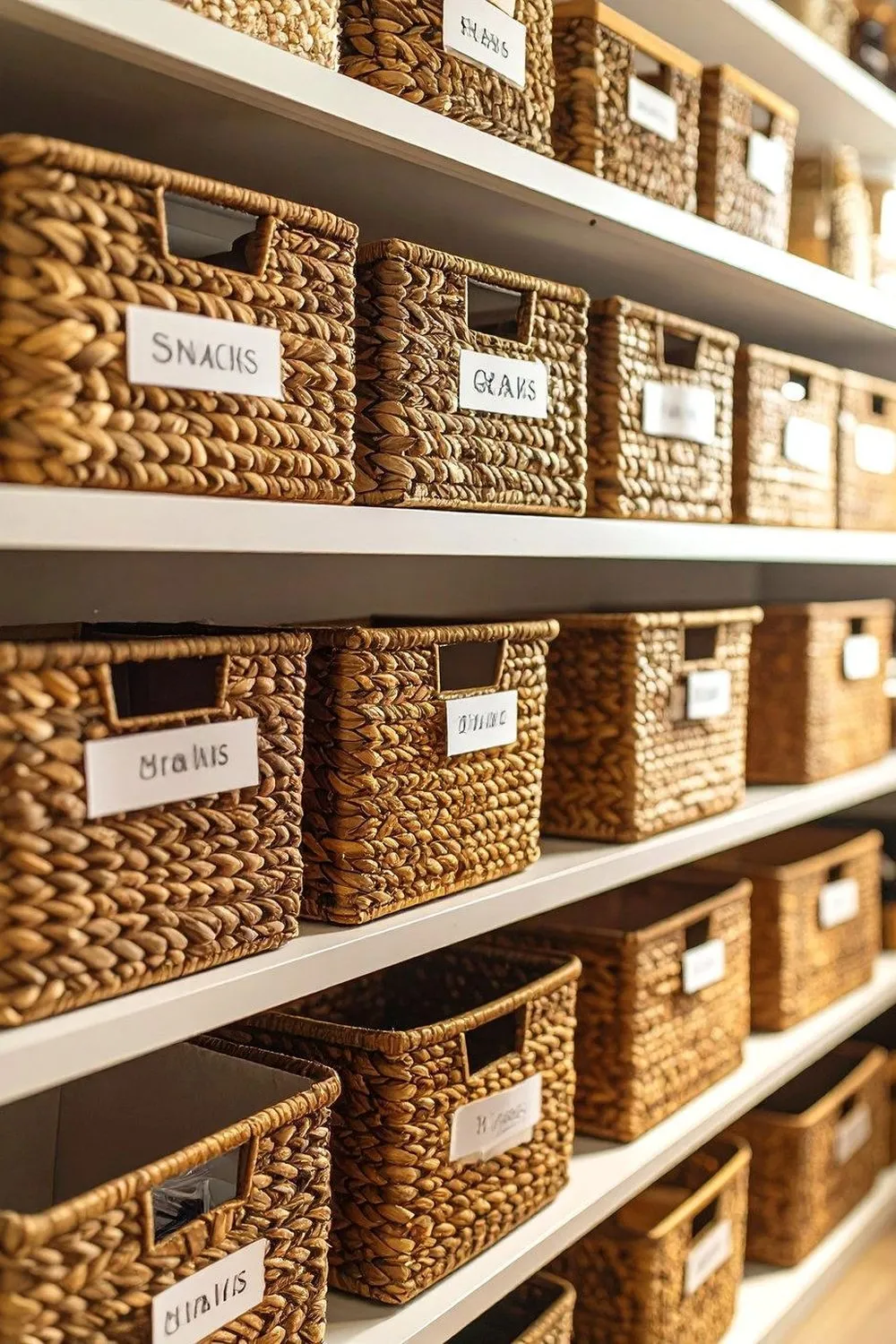
Woven baskets with labels — storage that looks like decor, not a warehouse.
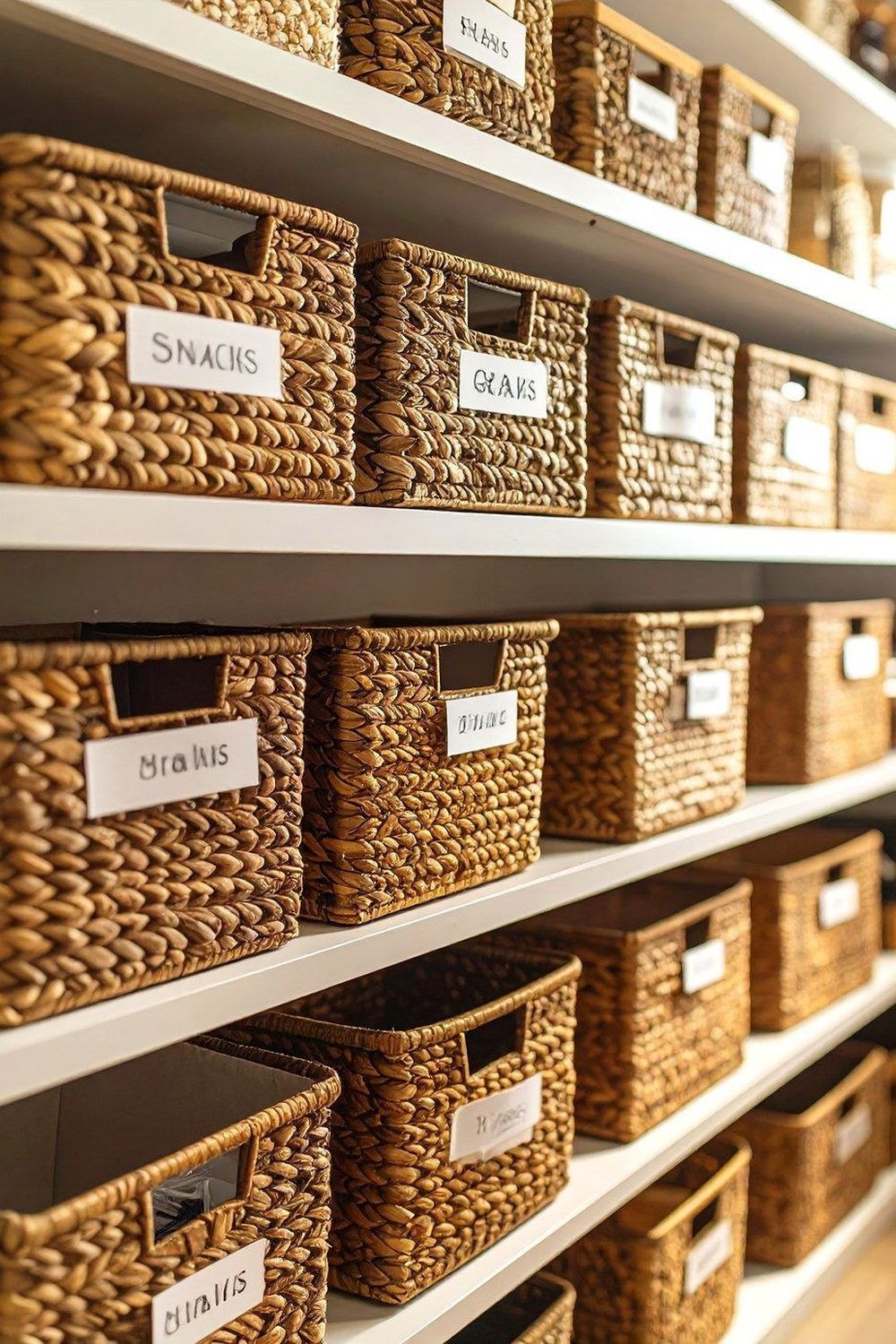
Open shelves stay beautiful when what sits on them matches. A row of woven baskets, one small label each, hides the visual noise (chargers, remotes, craft bits) behind a single calm texture — the shelf reads as decor while working as storage.
Styling tip: labels on the basket fronts, all at the same height — an even label line is the difference between styled and stored.
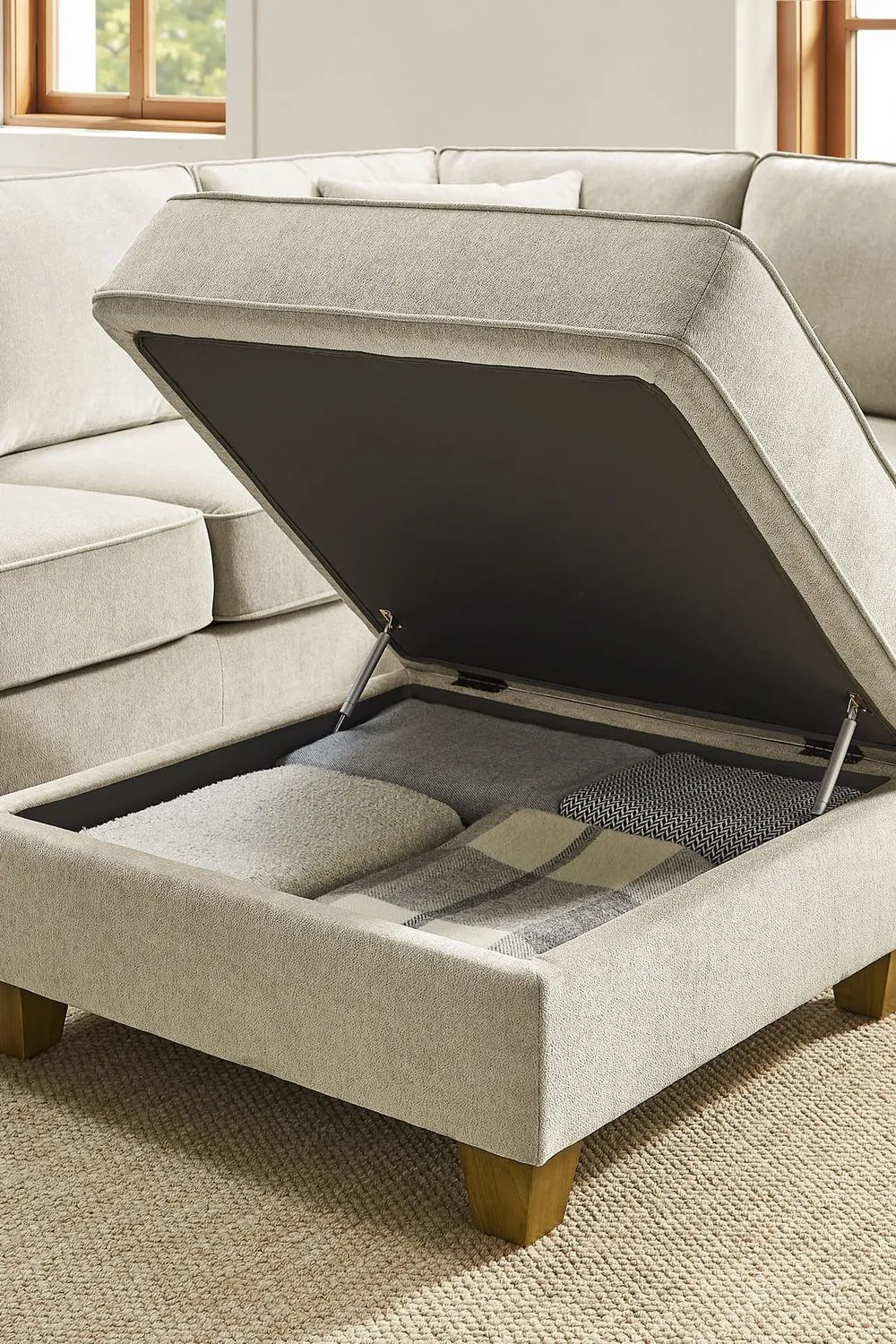
An ottoman that holds the throws — the living room tidies itself in one lift.
A storage ottoman is two solutions in one footprint: a footrest by day, and the home of the throws and board games that otherwise live on the sofa. The evening tidy becomes one lid-lift, which is exactly why it happens every evening.
Styling tip: fold throws flat inside rather than stuffing them — the lid sits level and the ottoman works as a side table too.
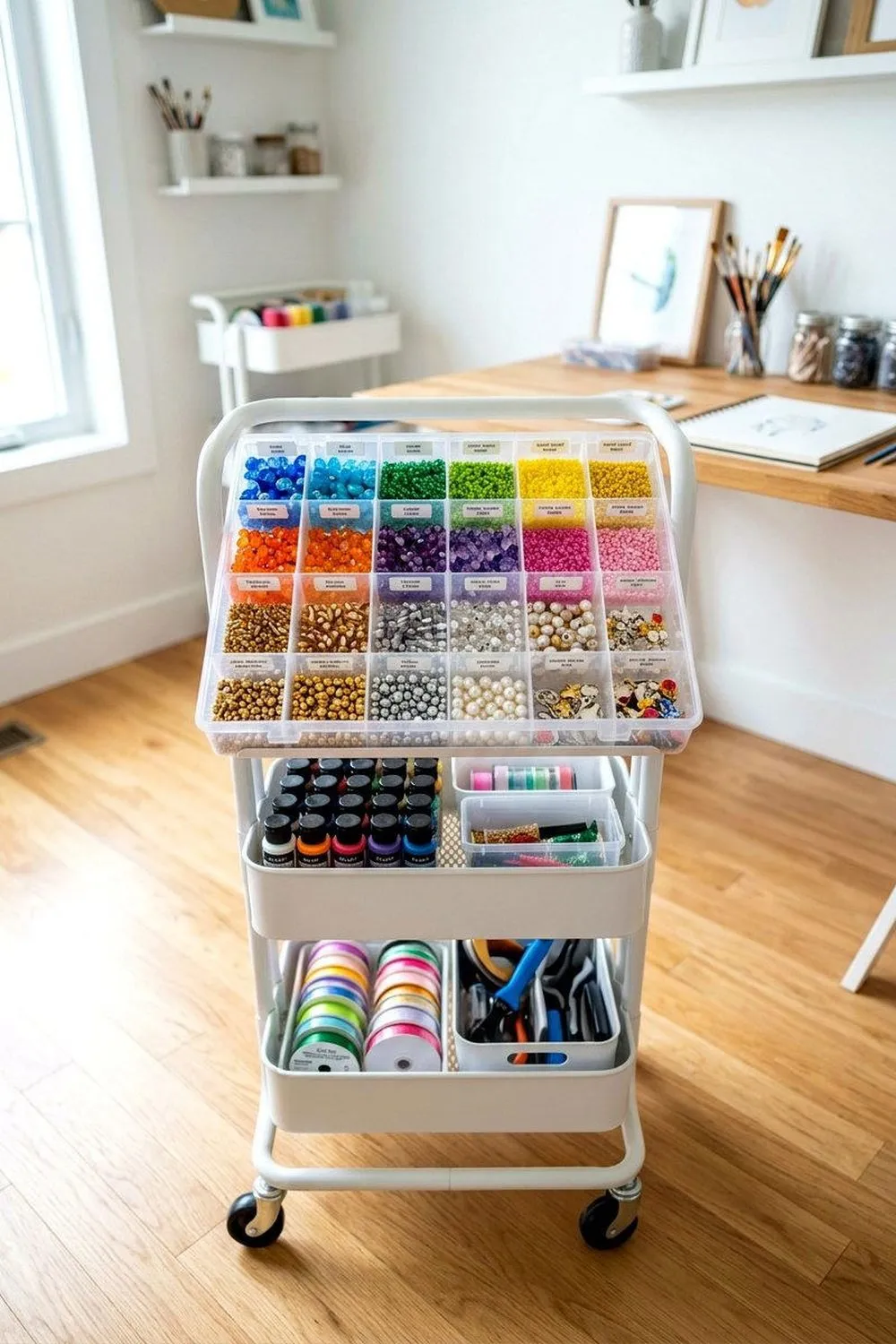
A rolling cart for crafts — out when you need it, tucked away when you don't.
Craft supplies spread because projects move around the house. A three-tier rolling cart follows the project — wheels to the table, works as the supply station, then tucks beside the desk or into a cupboard when the project ends. Contained, mobile, invisible between times.
Styling tip: top tier for the current project only; lower tiers hold the stash. When the top tier overflows, the project is done or the stash needs an edit.
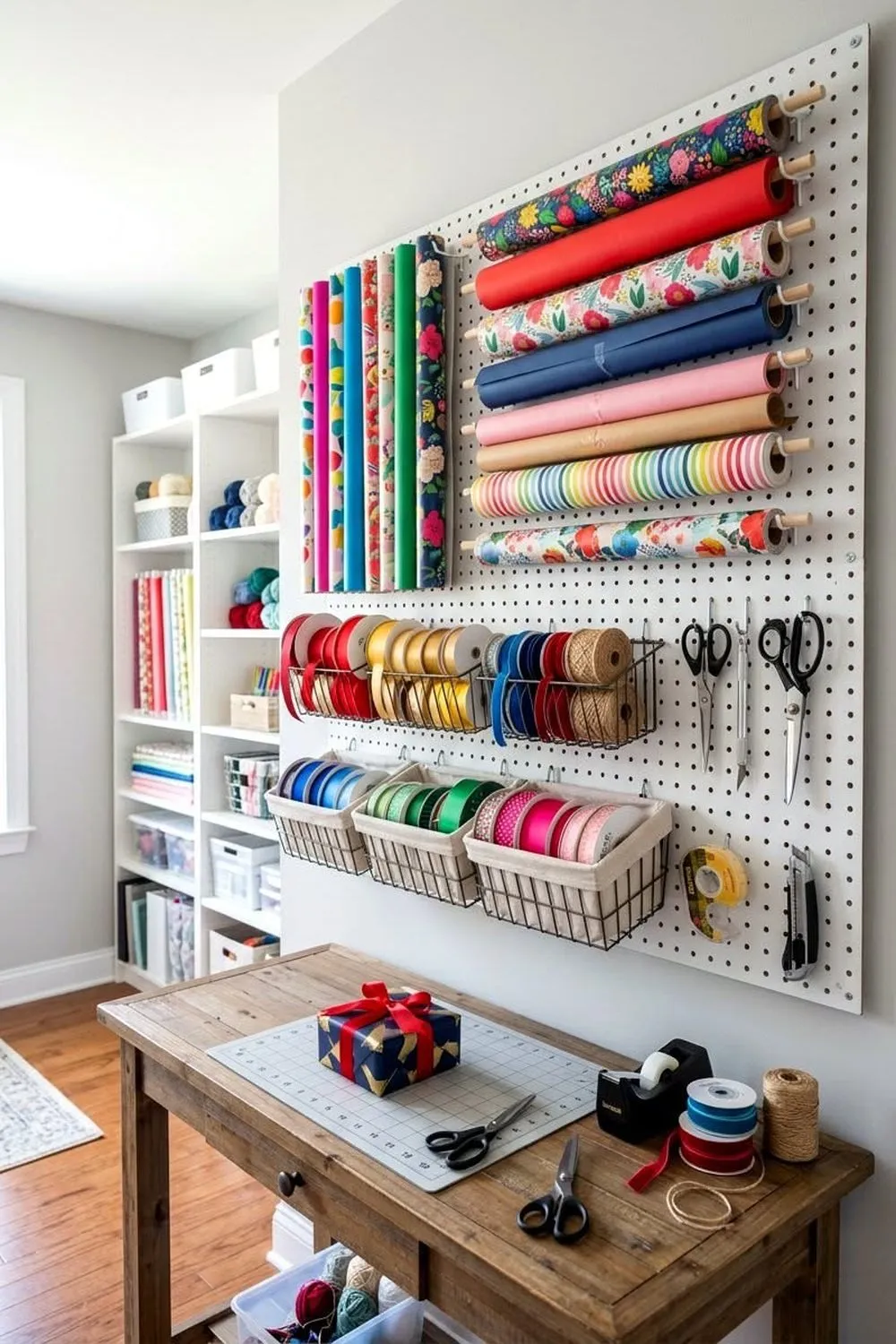
Ribbons and scissors on a pegboard — the wrapping drawer finally closes.
Gift wrap supplies are long, thin and impossible in drawers. A wooden pegboard on a cupboard or spare-room wall holds rolls upright, ribbons on hooks and scissors in sight — the whole wrapping station visible at once, and the drawer it used to jam finally closes.
Styling tip: hang the most-used items at hand height in the middle; the pegboard's edges are for the once-a-year supplies.
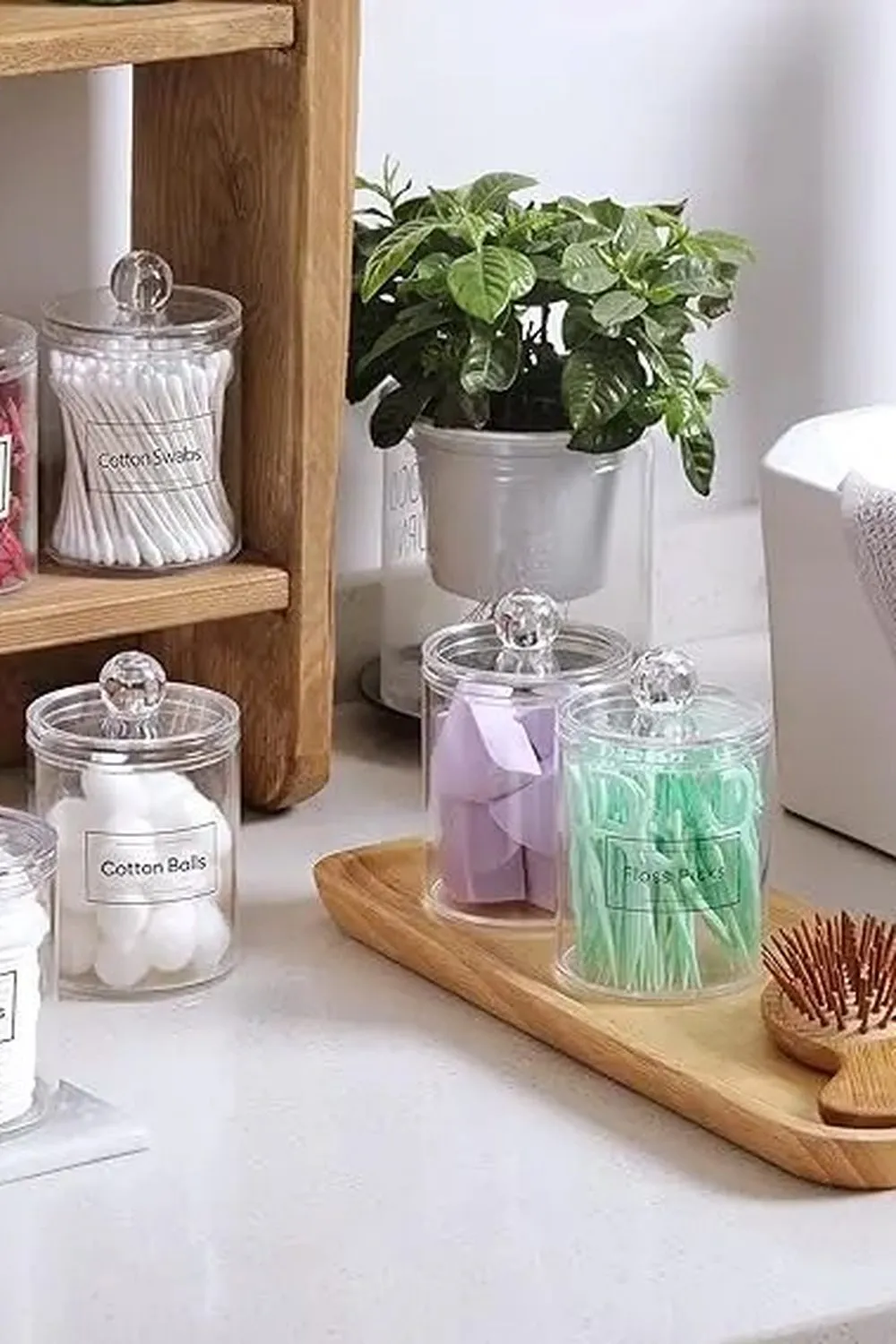
One glass jar per essential — the bathroom shelf looks like a spa shelf.
Cotton pads in a torn bag and buds in a plastic tub make a bathroom shelf look like a stockroom. Decanted into glass jars — one per essential, lids on — the same shelf looks like a spa's, and you can see at a glance what is running low.
Styling tip: jars of one family (same glass, same lid) in a row; mixed jars look collected, matched jars look designed.
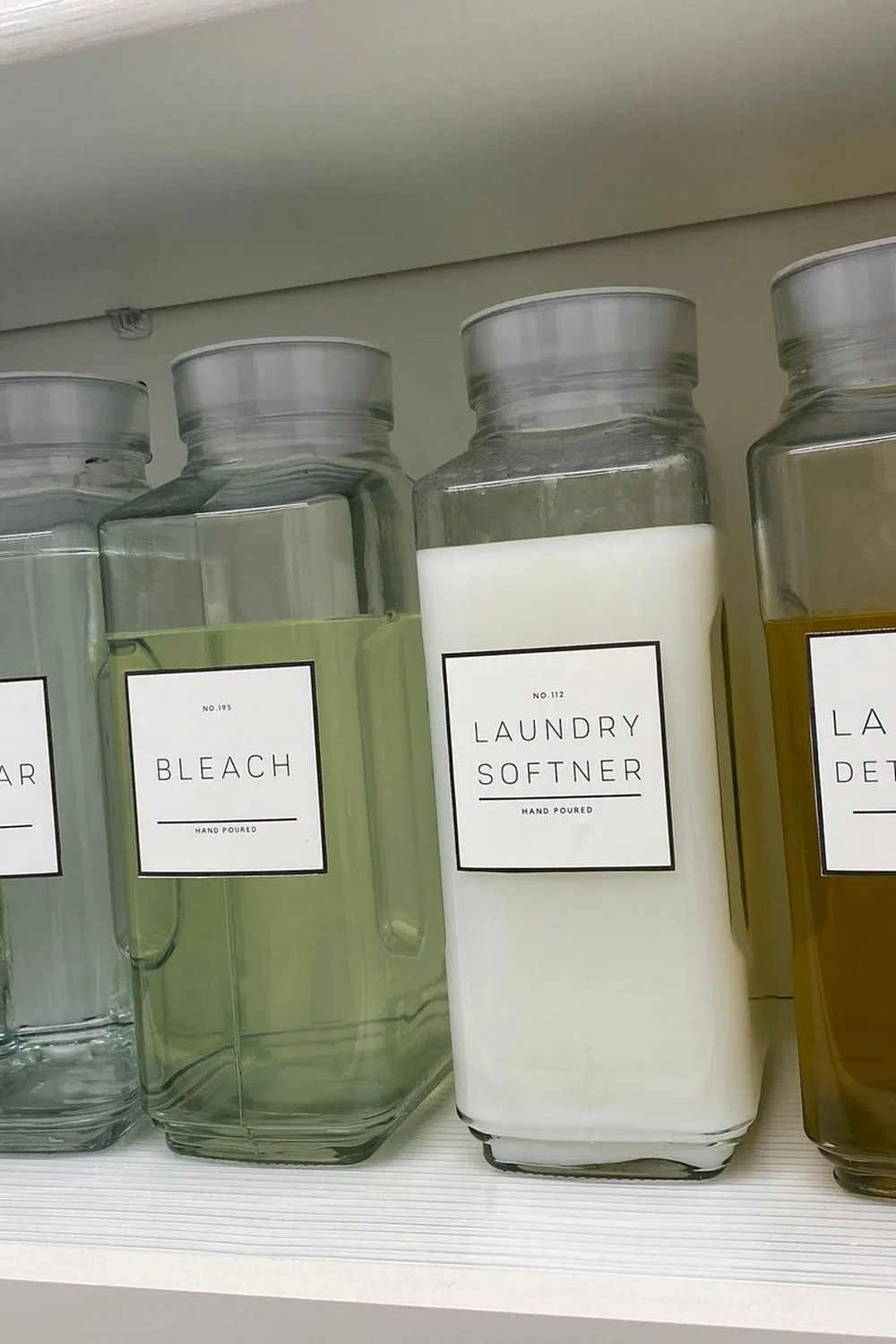
Detergent in matching bottles — the laundry shelf stops looking like a cupboard of clutter.
Laundry products arrive in the loudest packaging in the house. Poured into matching labeled bottles on one shelf, the utility corner calms down completely — and the shelf becomes easy to wipe, easy to scan, and oddly satisfying to look at while the machine runs.
Styling tip: keep the original packaging in a cupboard for one wash cycle in case of any mix-up, then recycle it once the labels are proven right.
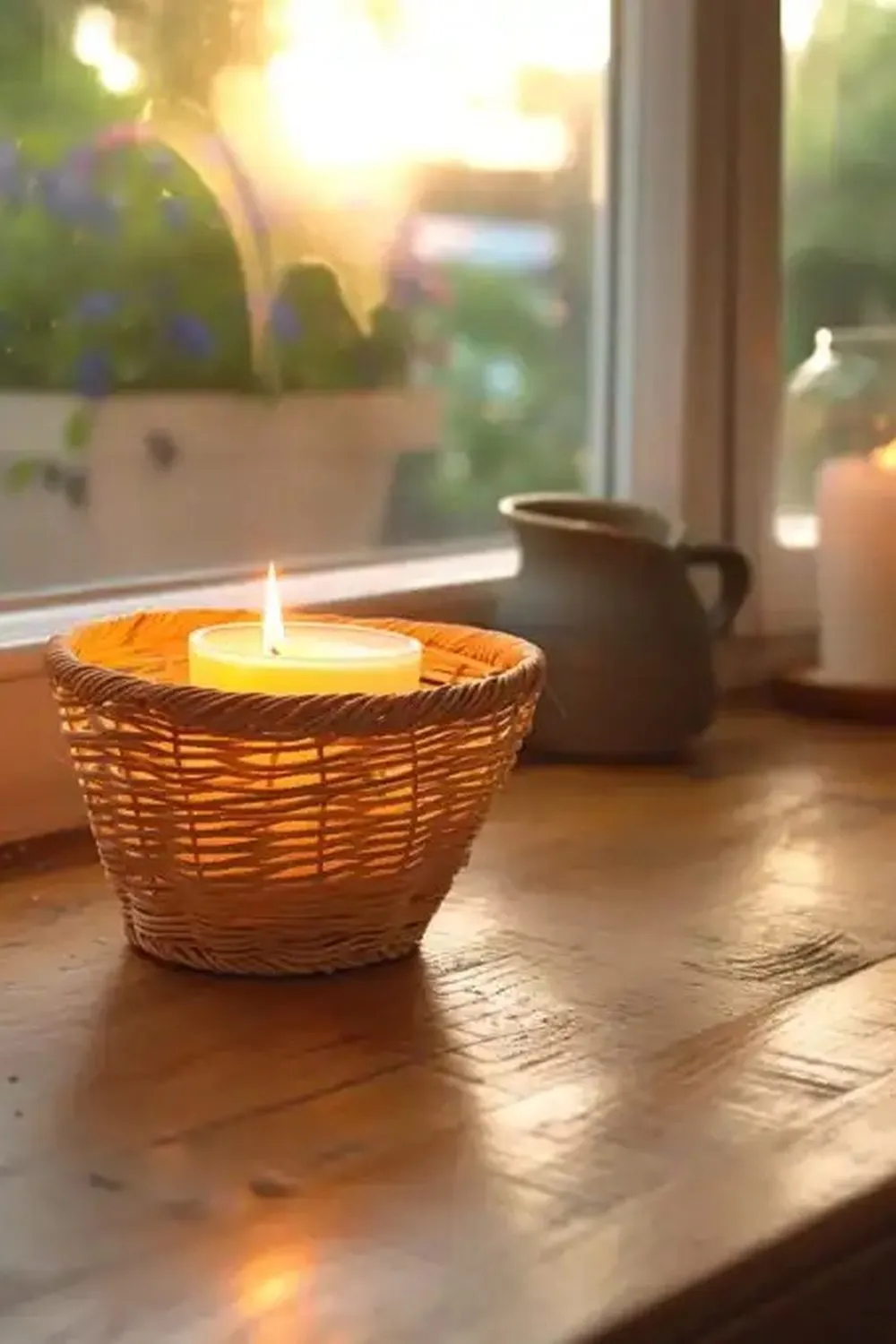
Clear counters every night — the morning starts tidy without trying.
Systems hold when a small habit closes the day. Clearing the kitchen counter every night — everything back in its cupboard, one basket for the strays, a candle if you like — takes four minutes and means the morning starts in an already-tidy room. The habit, not the storage, is the system.
Styling tip: if something has nowhere to go at clear-up time, that is the signal — it needs a home assigned tomorrow, not a corner tonight.
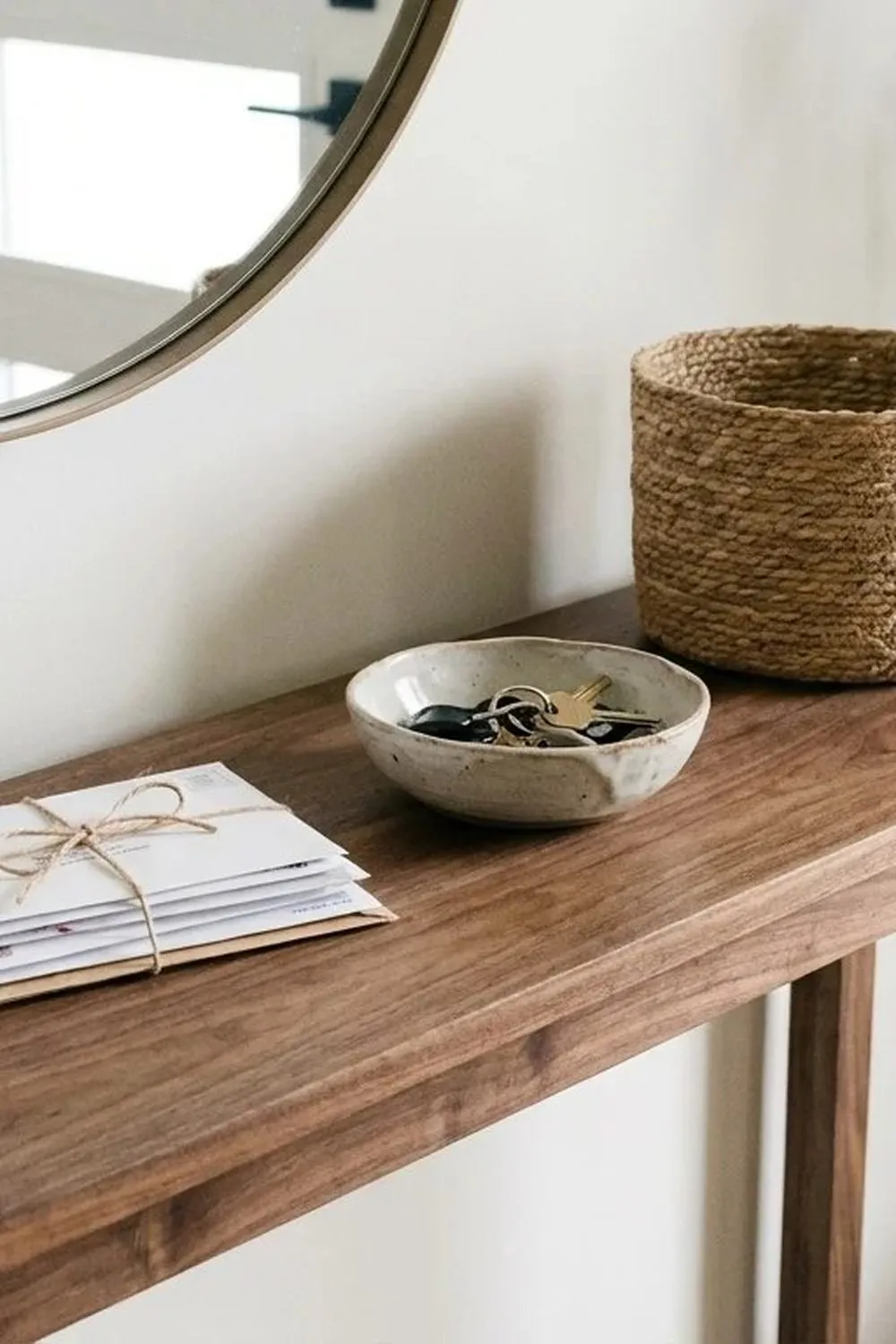
One basket for the week's clutter — Sunday sorts it, the house stays clear.
Things migrate during the week: a book upstairs, a charger in the kitchen, a toy everywhere. One basket on the hallway table collects the week's strays as you pass, and a five-minute Sunday sort returns everything home. The house stays clear without daily policing.
Styling tip: the Sunday sort is non-negotiable but tiny — basket to rooms, not room to rooms; five minutes with a timer beats an hour someday.
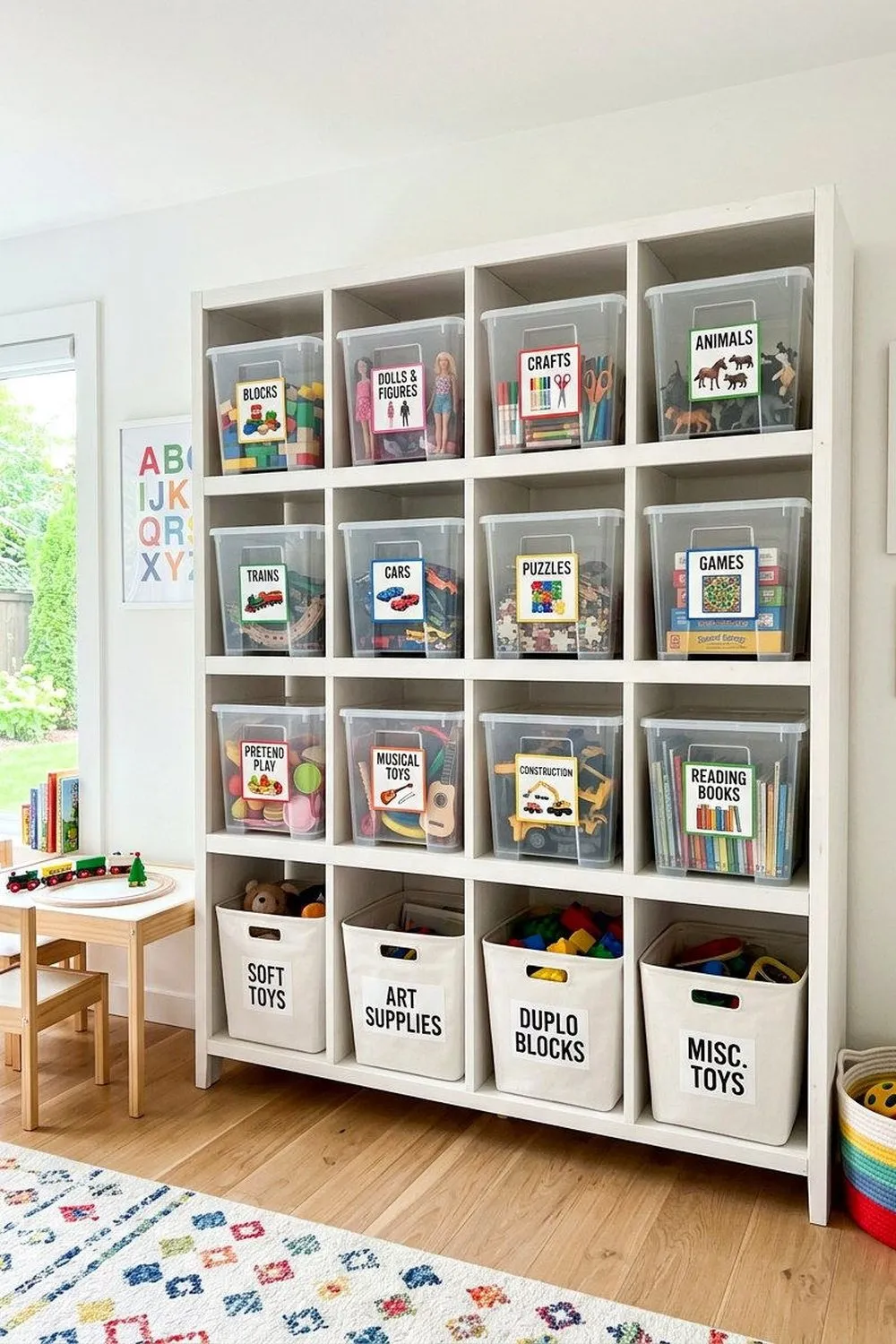
One toy box out, the rest stored — fewer toys out means a tidier floor.
All the toys out all the time means a floor that never clears and toys nobody plays with. Rotation — one box out, the rest labeled on a shelf — keeps the floor manageable and makes the swapped-in box feel new every fortnight. Tidy and exciting is a rare combination; this is it.
Styling tip: rotate on a fixed day so it becomes an event, not a confiscation — the new box arriving is the fun part.
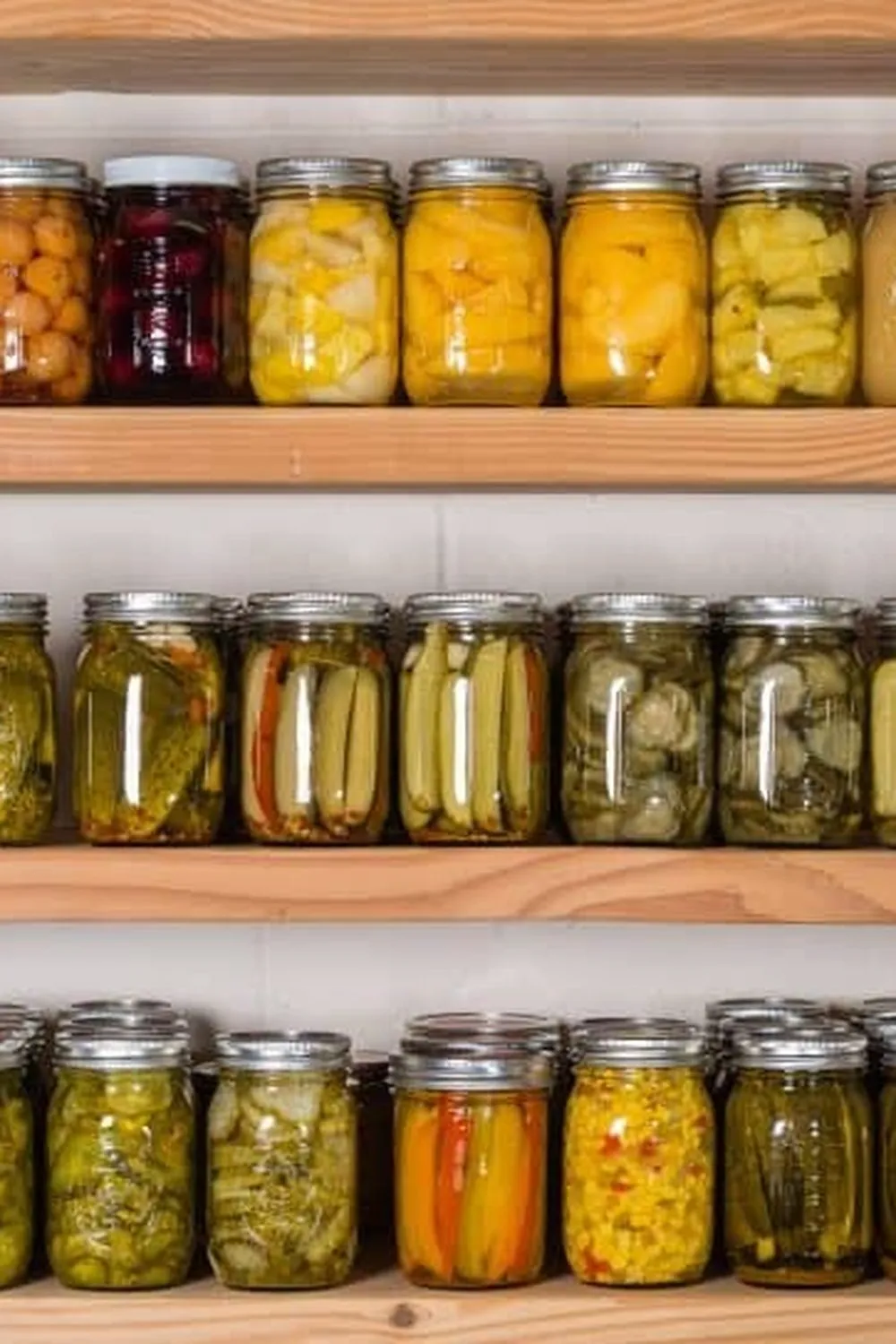
Oldest at the front — nothing expires at the back of the shelf again.
Shops rotate stock; pantries should too. When new jars and tins go to the back and the oldest sit at the front, everything gets used in date order and the archaeology layer at the back of the shelf never forms. It costs nothing but the order you unload the shopping.
Styling tip: shop your own pantry before the weekly list — the front row tells you what the week should cook.
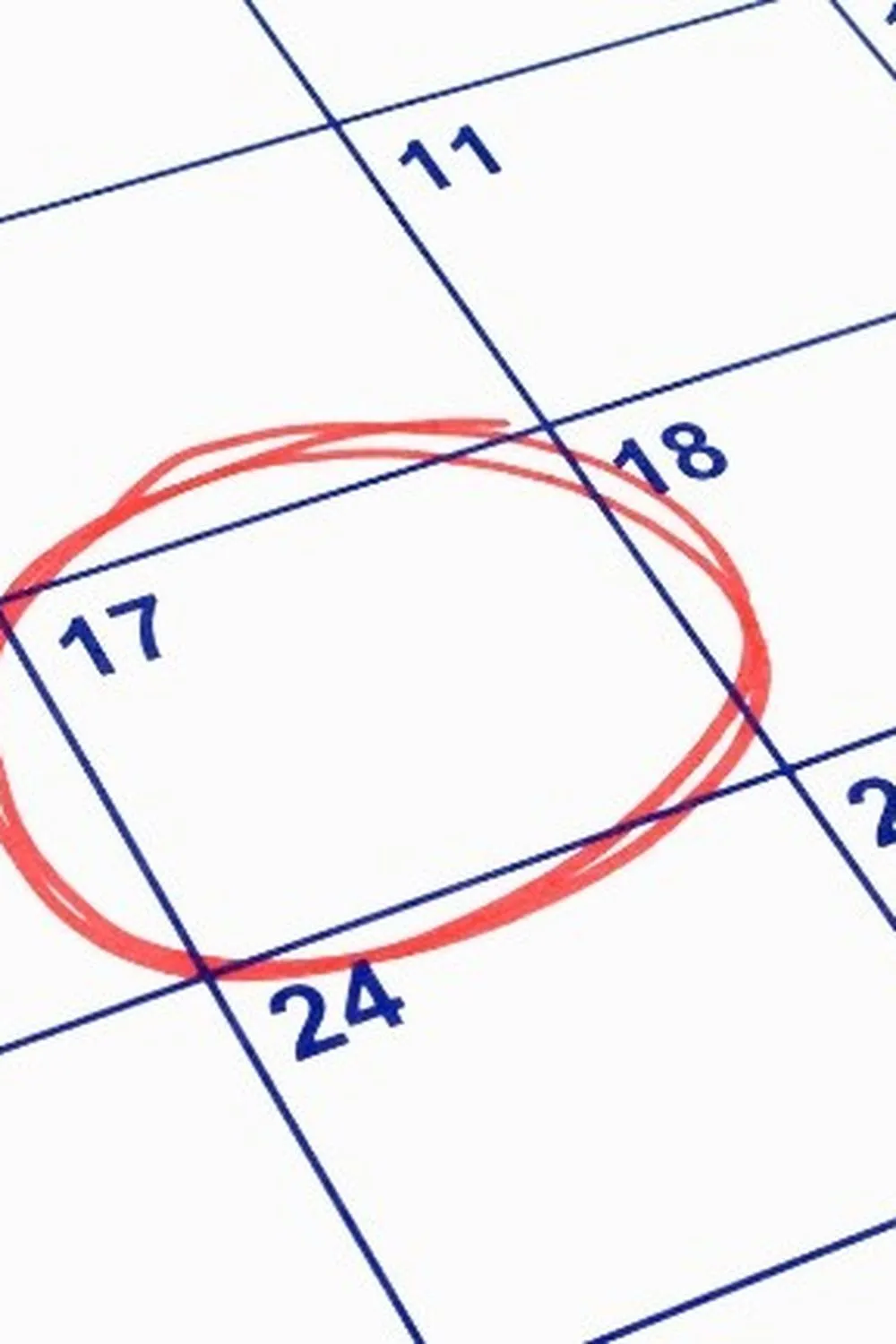
One circled date a month — decluttering becomes a date, not a dread.
Tidiness survives on appointments, not intentions. One circled date a month — one drawer, one cupboard or one shelf per date — keeps the whole system from sliding back, in sessions too small to dread. Twelve small dates a year quietly maintain what January built.
Styling tip: pair the declutter date with the donation box: whatever the date produces goes straight into the box by the door.
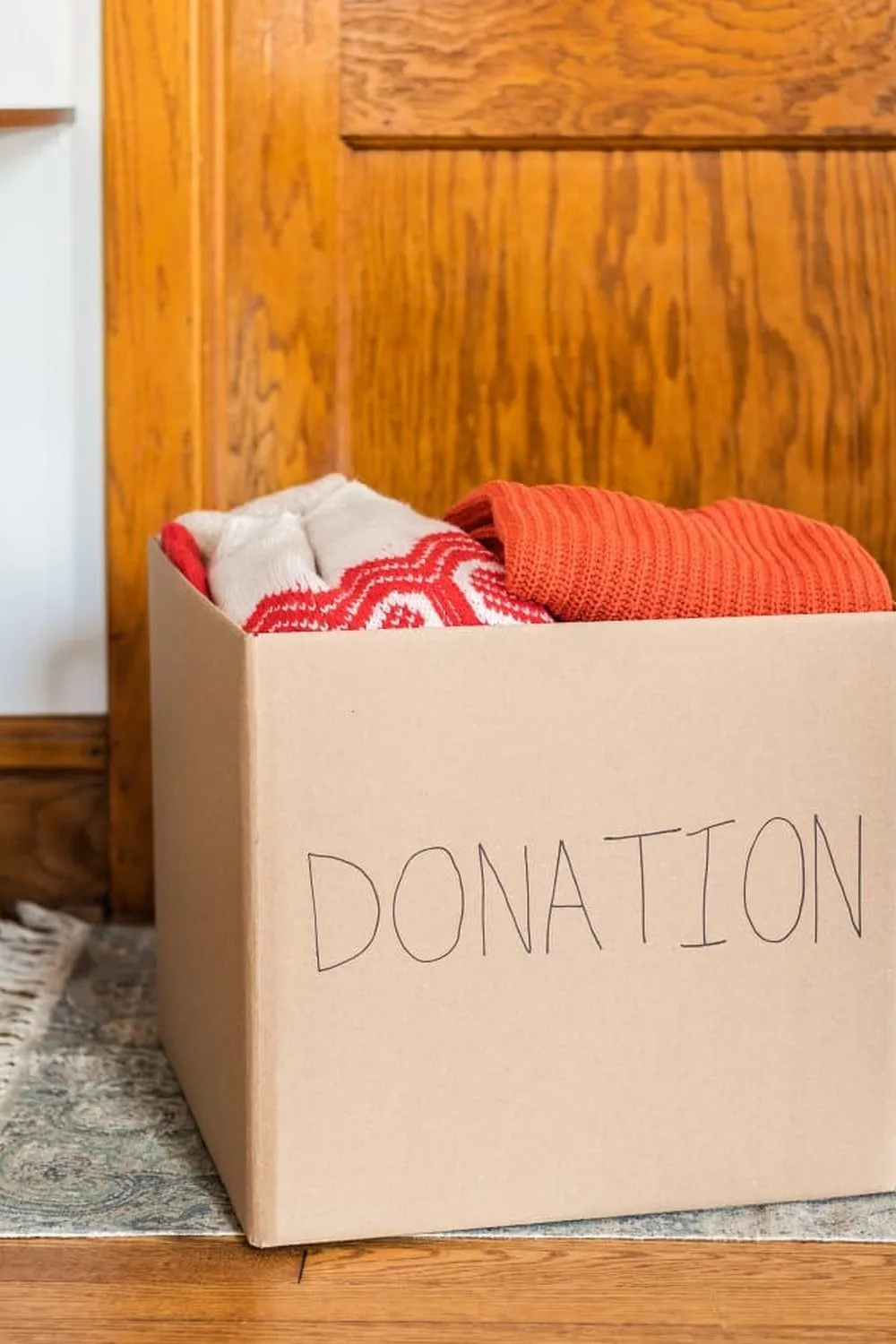
A donation box by the door — things leave the house the moment you decide.
The last habit closes the loop the first idea opened: a donation box that lives permanently by the front door. Decisions become departures — the jumper, the duplicate pan, the outgrown toy go in the box today and out of the house on the next trip, not into a cupboard of good intentions.
Styling tip: when the box is full, it leaves that week — a full box that stays becomes furniture, and furniture never leaves.
With exits and one small zone: put a donation box by the door, then do a single drawer or shelf completely. Small finished zones build the habit better than a whole-house blitz that stalls.
Mostly no. The systems here run on boxes, baskets and jars most homes already own; buy only the few pieces that give a category its permanent home, like a drawer divider or a filing box.
Habits with dates: clear counters nightly, empty the clutter basket weekly, and keep one circled declutter date a month. Systems fail from drift, not disaster — the dates stop the drift.
Use the hidden square meters: inside wardrobe doors, under the bed, upright dividers in cupboards, and hooks behind doors. Small homes tidy best vertically and invisibly.
One tray for everything that arrives, emptied weekly into a twelve-folder filing box — one folder per month. Paper with a single address never colonises the desk.
A home that stays tidy past January is not a stricter home; it is a home where everything has one place and the exits stay open. Start with the donation box and one drawer, and let the systems grow shelf by shelf. Save your favorite new year organization ideas from this list, and follow TheStylingHub on Pinterest for fresh home ideas all season long.
Organization
Nov 13, 2026
January you will say thanks: christmas decor storage ideas that pack ornaments, lights and…

Seasonal
Nov 21, 2026
32 New year balloon decor ideas — arches, garlands, giant number balloons and a…
Rooms
Nov 21, 2026
35 Winter bedroom decor ideas — layered bedding, chunky knits, soft lamplight and calm…