
Rooms
32 Small Bathroom Decor Ideas for 2026 That Make a Tiny Space Feel Bigger
Nov 18, 2026
Small bathroom decor ideas that make a tiny space feel bigger — light colors,…
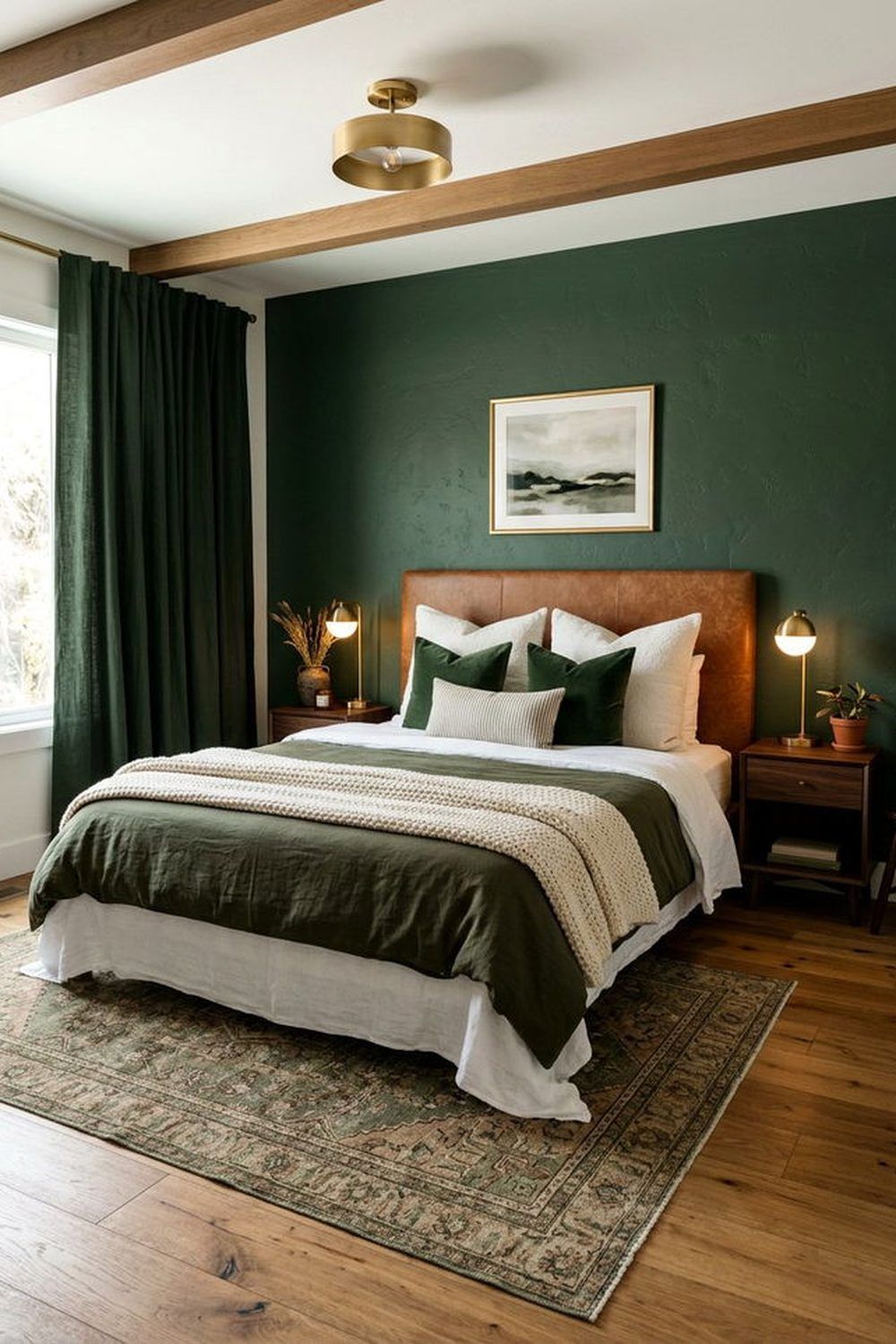
Winter turns the bedroom into the room that matters most — it is where the cold is shut out and the day finally ends. These winter bedroom decor ideas build warmth in layers: piled bedding, chunky knits, soft lamplight and calm color, so the coldest room in the house becomes the warmest place to land.
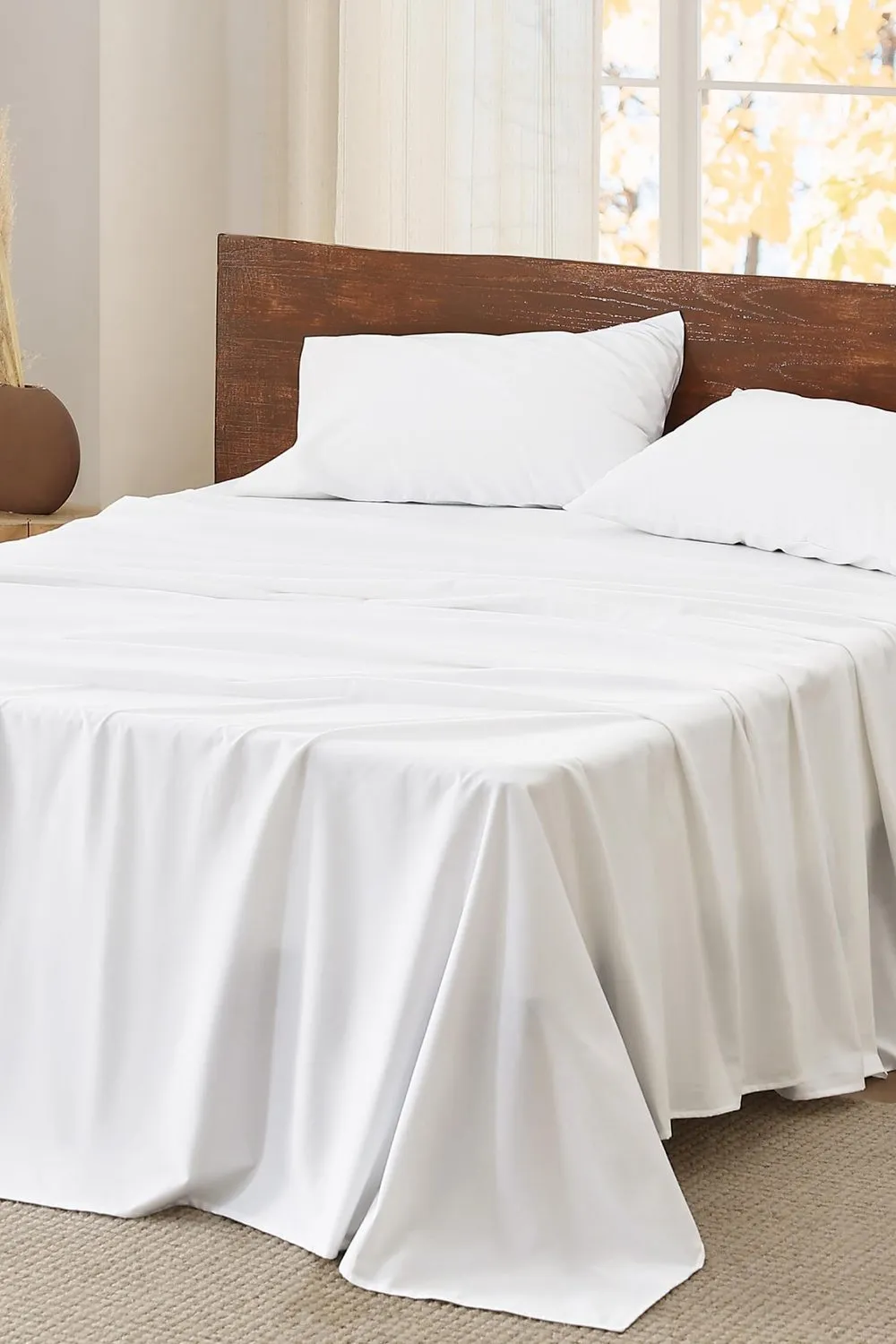
Flannel against the skin — the layer nobody sees is the one you feel most.
Every warm bed starts underneath. Brushed flannel sheets in warm white or soft gray take the cold shock out of getting into bed, and they hold body heat through the night in a way crisp cotton never does in January. Choose a plain, pale set and every layer you add on top looks calmer for it.
Styling tip: buy flannel by weight, not by thread count — a heavier flannel (around 170 GSM or more) stays brushed and warm after washing, while thin sets go flat by February.
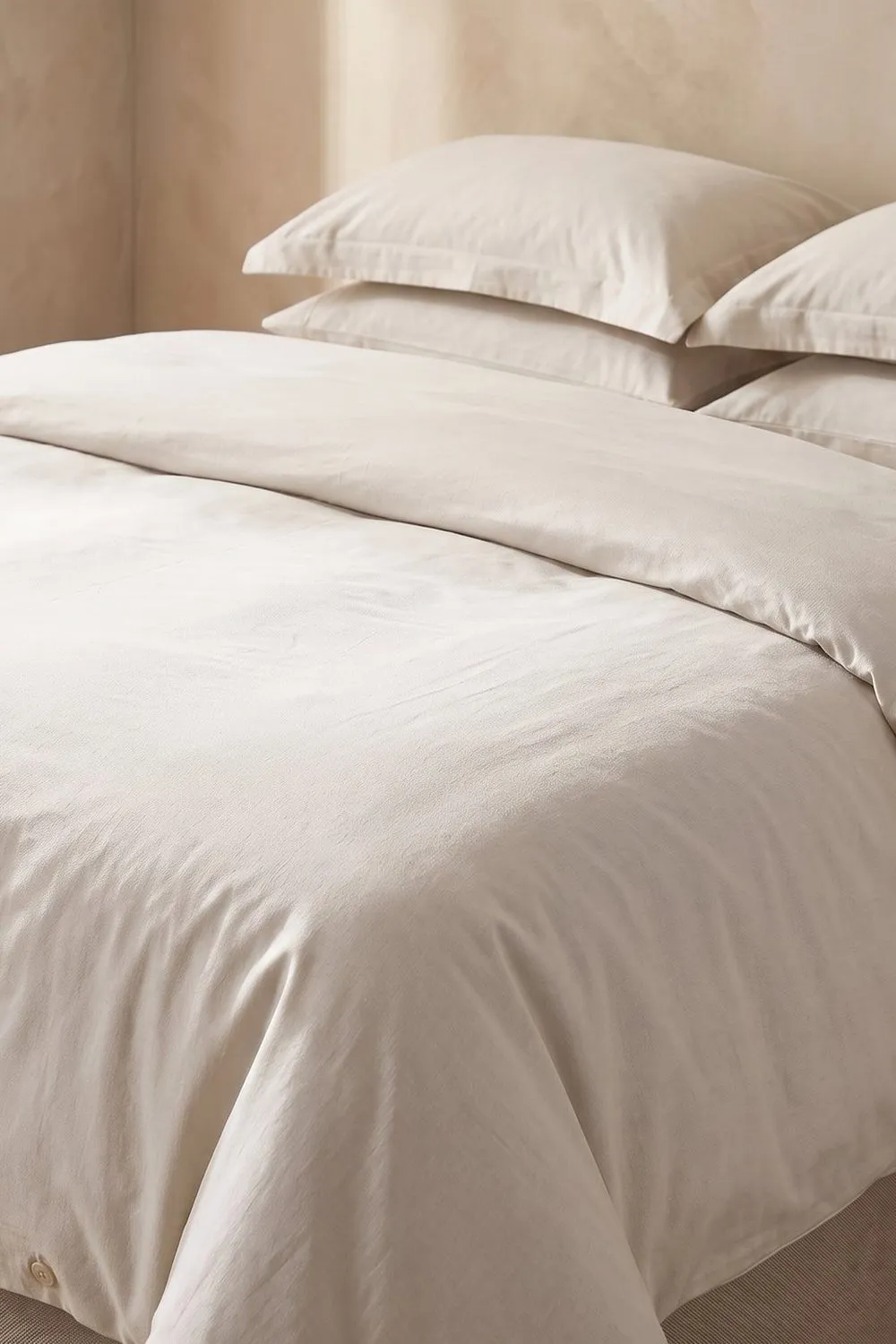
One deep duvet, softly rumpled linen — the bed looks warm before you touch it.
The winter swap that changes everything is the duvet itself: a higher-tog, loftier fill inside a washed linen cover. Linen's soft wrinkles read as warmth in photographs and in person, and cream or oatmeal tones keep the big shape of the bed light even though the layer itself is heavy.
Styling tip: shake the duvet and let it settle for ten minutes before making the bed — the loft is the look, and a freshly plumped duvet photographs a full size bigger.
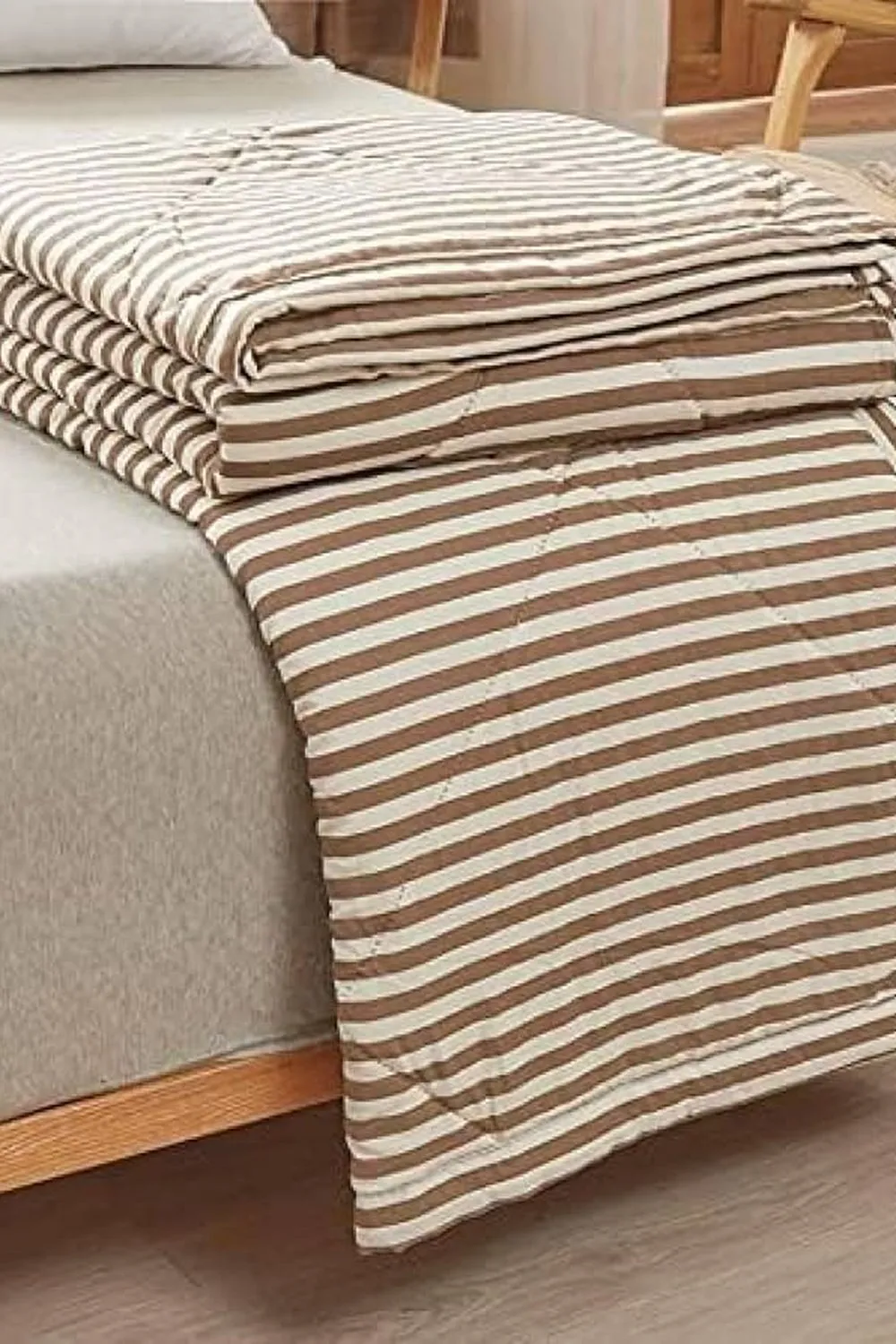
A quilt folded at the foot — an extra layer for cold feet, and the bed's finishing band.
A quilt folded into a long band across the foot of the bed is the oldest layering trick there is: it anchors the whole arrangement visually, and on the coldest nights it unfolds over feet that never warm up. A stitched cotton quilt in a muted stripe or a faded floral keeps the look wintry without a festive note in sight.
Styling tip: fold the quilt to about a third of the bed's length and let its edge fall just over the side — a band that is too neat looks like a hotel, a slight overhang looks like home.

Sleeping pillows behind, big squares in the middle, one long cushion in front — depth is the luxury.
A winter bed looks generous when the pillows stand three deep: everyday sleeping pillows at the back, two large square Euro cushions in front of them, and one long lumbar cushion to finish. The layers give the bed the plump, sink-in look of a boutique hotel while every pillow still earns its place at night.
Styling tip: karate-chop the top center of the two square cushions — the small dent breaks the flat face and makes the whole stack look soft rather than stuffed.

One deep band of color across pale bedding — the room's whole palette in a single strip.
When the bedding is pale, a runner in a deep winter tone — forest green, oxblood, ink navy — does the work of a whole color scheme in one strip of fabric. It crosses the bed where the eye lands first, it protects the duvet cover from shoes and trays, and it folds away in spring without changing anything else.
Styling tip: match the runner to one thing already in the room — a cushion, a curtain tieback, the art — so the deep note appears twice and reads as a decision.

Warmth you switch on ten minutes before bed — folded ready, it still looks like decor.
A heated throw folded at the foot of the bed is winter practicality dressed as a layer: switched on while you brush your teeth, it takes the chill off the whole bed without heating the room all evening. In a soft check or a plain fleece it reads as one more textile in the stack.
Styling tip: choose a throw with an auto-off timer and route the cord down the side of the bed out of sight — the layer should look like a blanket, not an appliance.
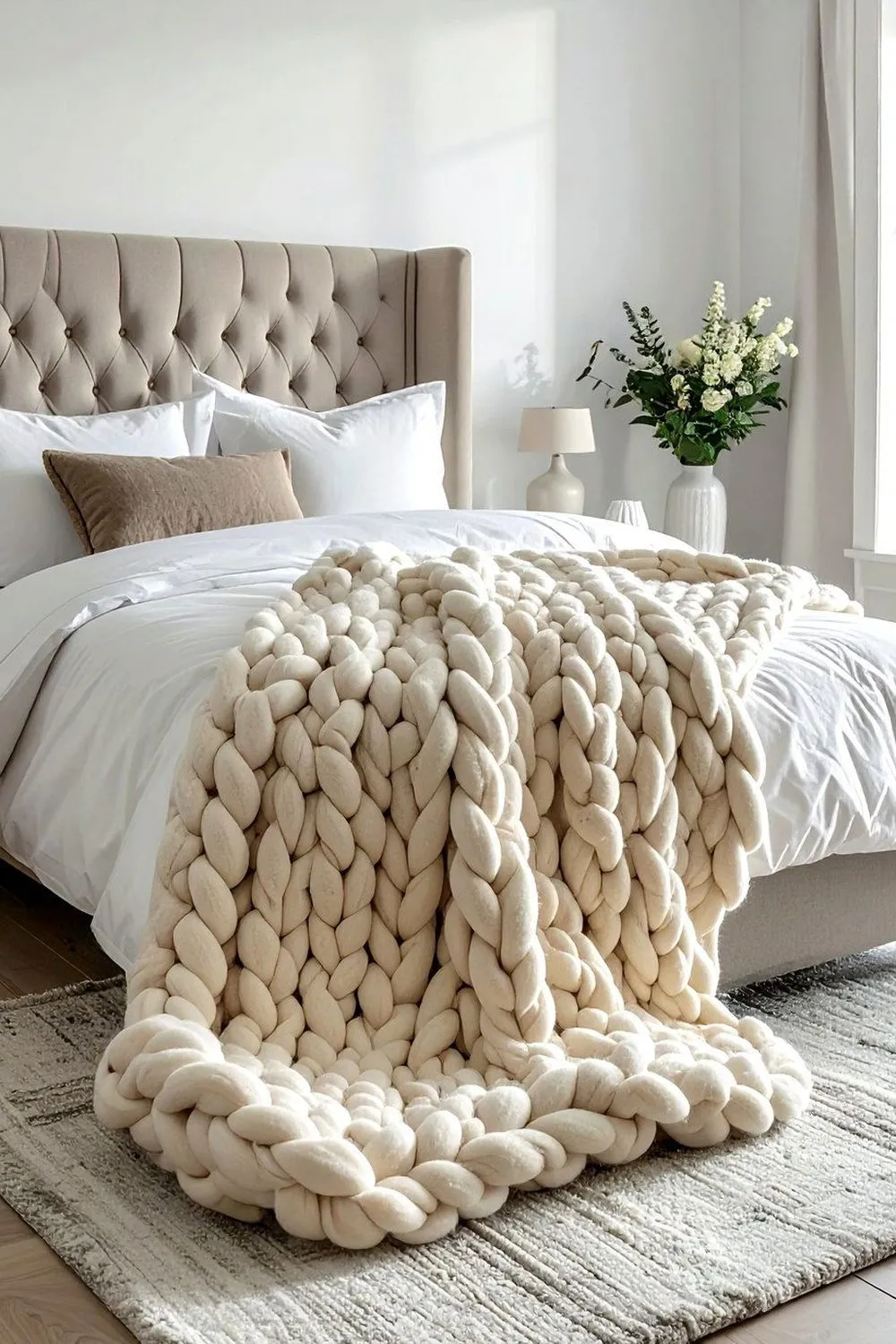
Oversized stitches in cream — the throw that makes the whole bed look warmer.
A chunky knit throw is the texture winter bedrooms are photographed for: oversized stitches, a soft cream or oatmeal yarn, draped across the foot of the bed where hands and eyes land. It adds visual weight without color, and on cold mornings it is the first thing pulled up over the duvet.
Styling tip: drape it diagonally across one corner rather than straight across — the diagonal shows more of the stitch pattern and looks placed, not parked.
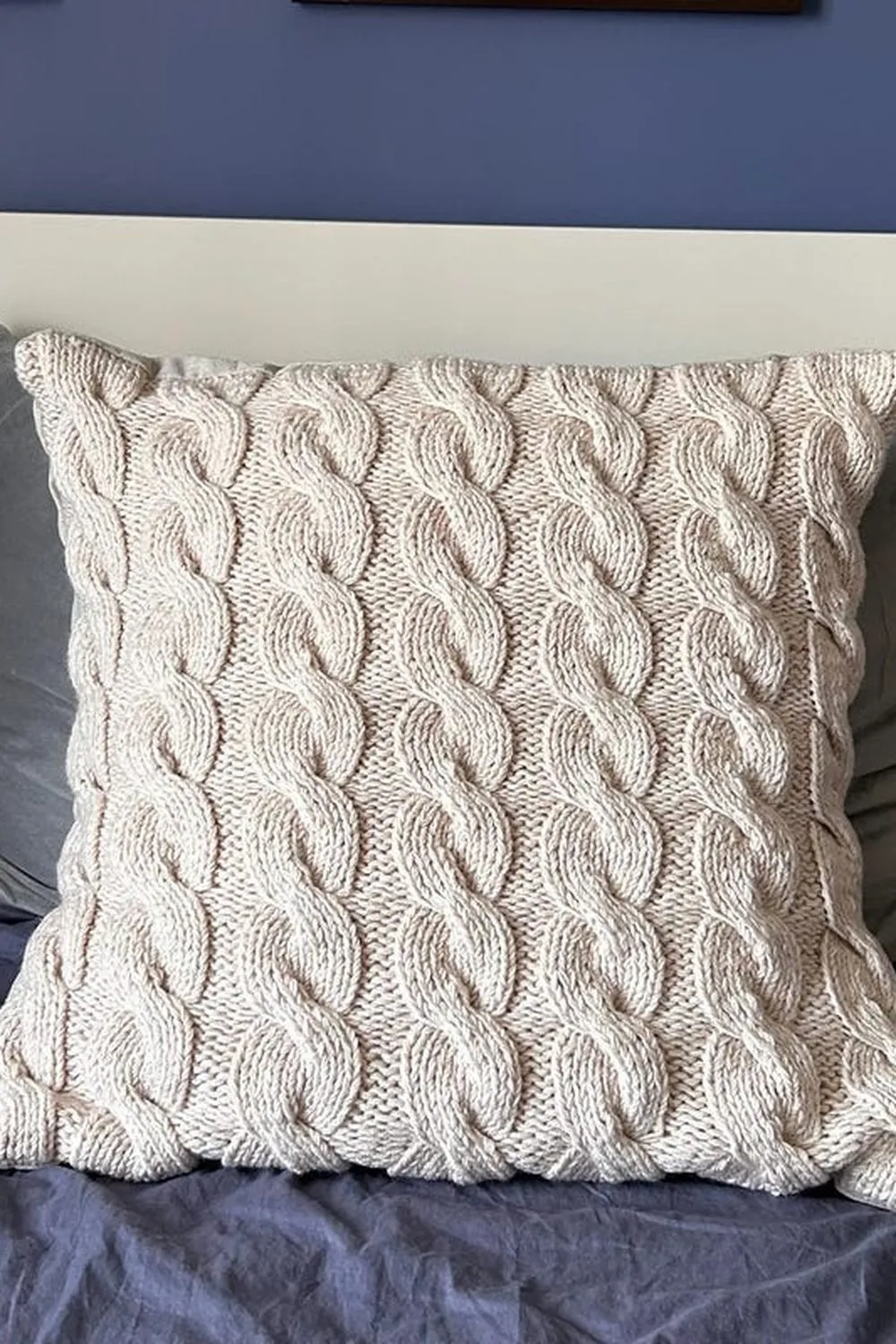
Cable knit on the cushions — sweater weather, translated to the bed.
Swapping two cushion covers for cable-knit versions changes the bed's texture story in five minutes. Cream and soft gray knits sit against smooth linen and washed cotton and give the arrangement the layered, dressed-for-winter feel of a favorite sweater — with no pattern anywhere to date the look.
Styling tip: knit cushions work best in odd numbers against smooth ones — two knits among five cushions is texture; five knits is a yarn shop.
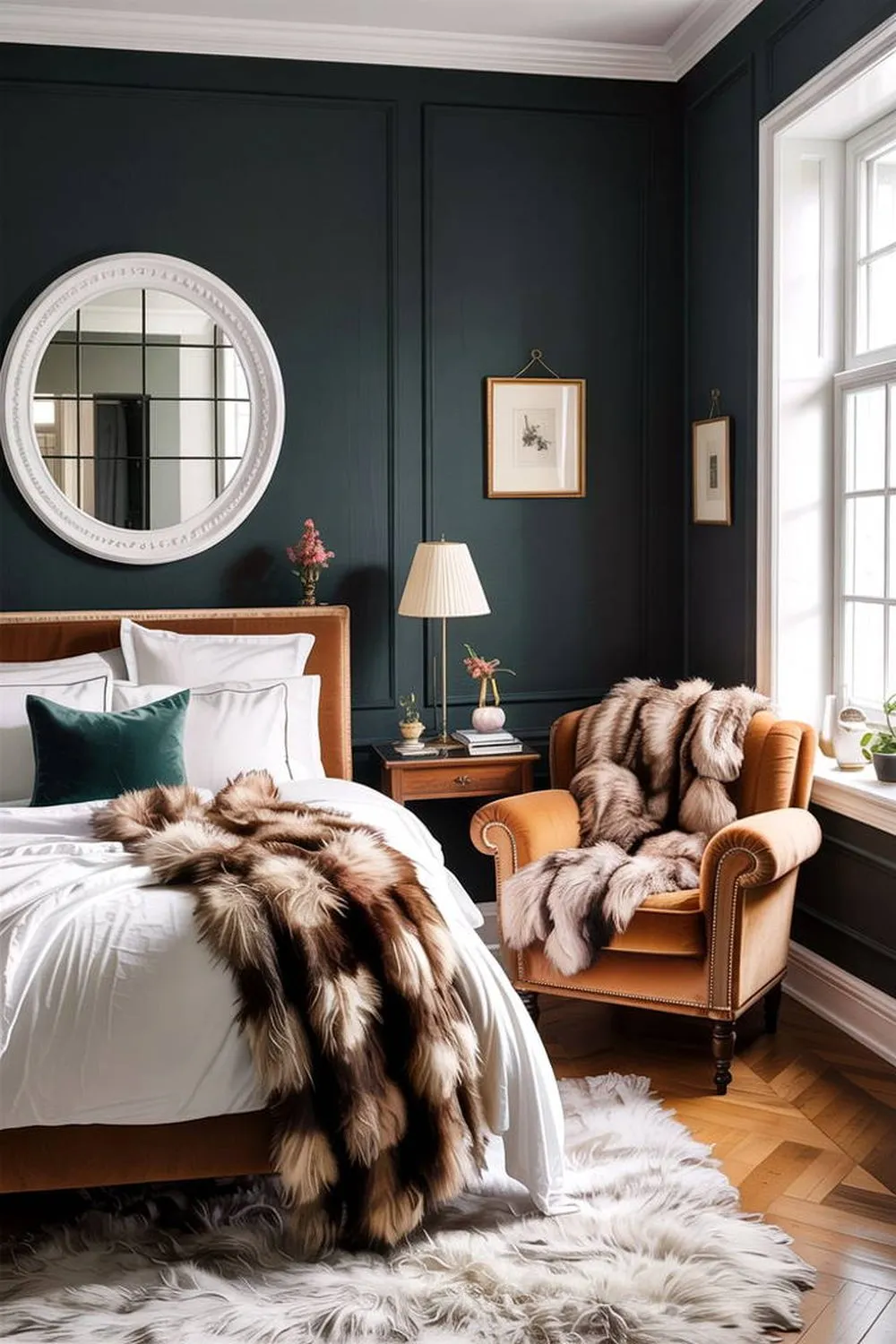
Faux fur over the chair — the corner where winter clothes land becomes the prettiest spot.
Every bedroom has the chair that collects clothes. A faux-fur throw draped over its back turns that corner into a styled moment and gives the room a second texture note beyond the bed. In soft white or pale gray it catches the low winter light beautifully on dark afternoons.
Styling tip: let the throw fall longer at the front than the back — a long front drape hides the chair's seat (and anything on it) while showing the fur's full pile.
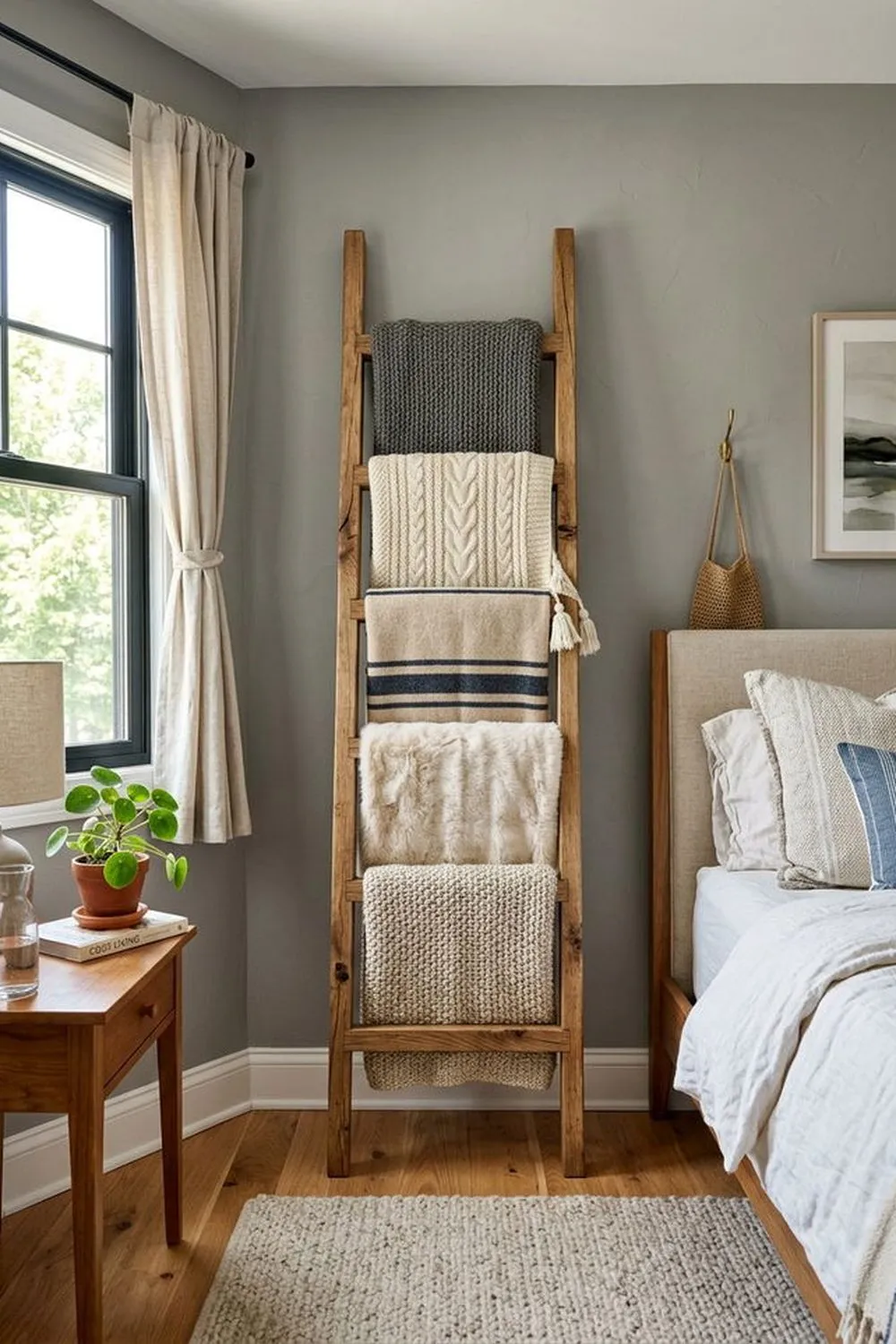
Blankets on a ladder — storage that behaves like a wall display.
A wooden blanket ladder leaning by the bed keeps two or three wool blankets in rotation — aired, visible and off the floor. Folded over the rungs in shades of one family, the blankets become the room's textile display, and the coldest-night layer is always within arm's reach.
Styling tip: put the thickest blanket on the lowest rung and the lightest at the top; the ladder looks balanced and the heavy one is easiest to lift off.

Velvet in emerald and ink — small cushions, deep color, instant evening mood.
If knits are winter's daytime texture, velvet is its evening one. Two cushions in deep emerald, ink navy or plum against cream bedding give the bed a rich, low-light glow that flat cotton cannot. Velvet also photographs beautifully in lamplight, which is when a winter bedroom is mostly seen.
Styling tip: brush velvet cushions with your hand before guests or photos — the pile catches light unevenly, and one direction of brush makes the color look twice as deep.
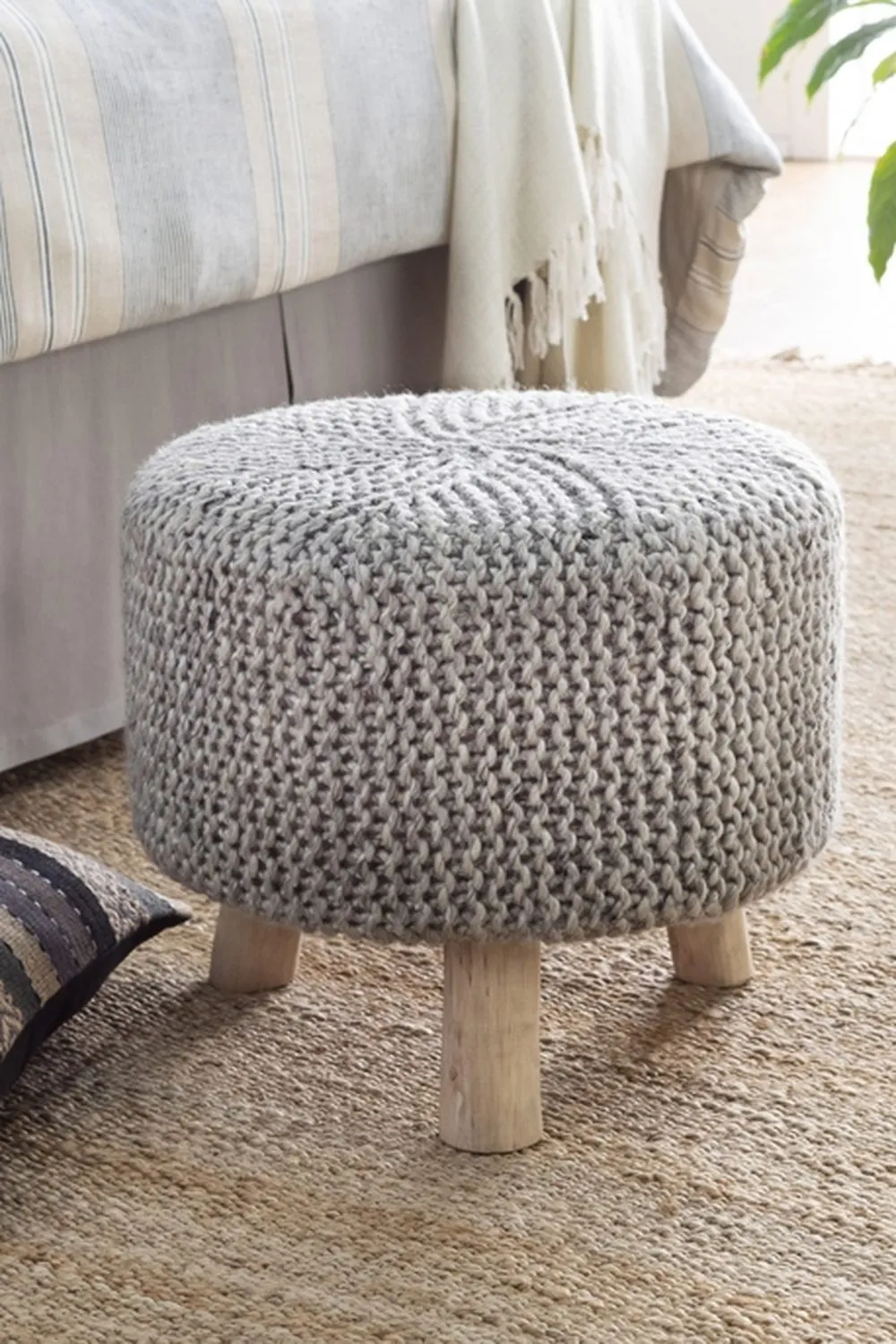
A knit pouf by the bed — a footrest, a book rest and one more soft shape in the room.
A knitted pouf fills the awkward gap beside the bed with something soft and useful: a rest for tired feet, a landing spot for the book and glasses, a seat while boots come off. In soft gray or cream it echoes the bed's knits without matching them exactly.
Styling tip: choose a pouf one shade deeper than the bedding — the slight contrast keeps it from disappearing into the bed skirt in low light.

Two lamps, low and warm — the bedroom's evening light should come from waist height, not the ceiling.
Overhead light is the enemy of a winter bedroom at night: flat, cold and shadowless. Matching bedside lamps with fabric shades throw a warm pool at reading height on both sides of the bed, and the symmetry alone makes the room look considered. Choose bulbs in the warm range and the whole palette softens.
Styling tip: the bottom of the shade should sit roughly at shoulder height when you are propped up in bed — much higher and the bulb glares, much lower and the book stays dark.
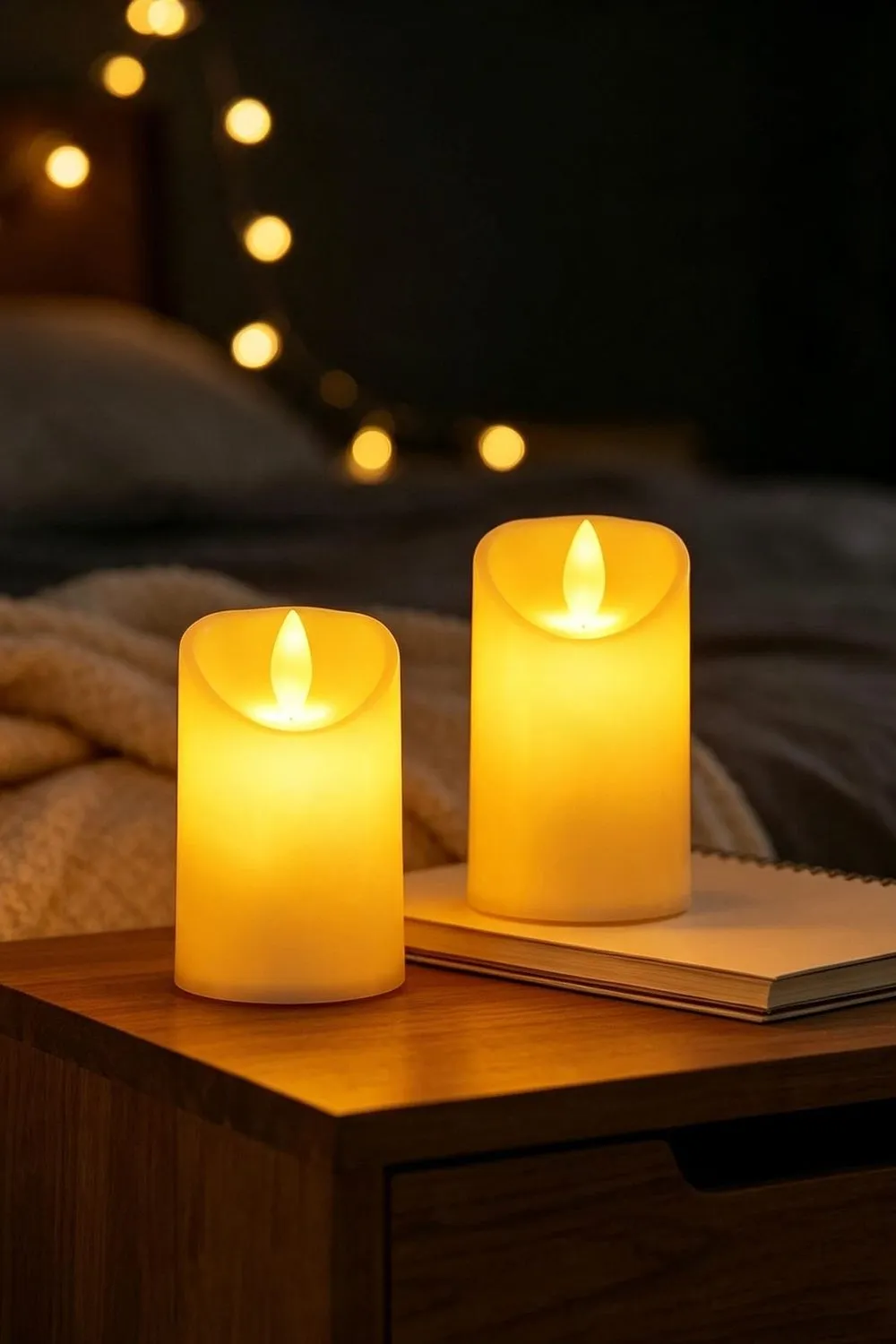
Candlelight without a flame — the glow stays, the worry goes.
Real candles and bedding are a poor mix, but the glow itself belongs in a winter bedroom. Flameless pillar candles with a realistic flicker give the nightstand that low, kind light on a timer — on at dusk, off after you sleep — with nothing to blow out and nothing to watch.
Styling tip: group three flameless pillars of different heights on a small tray; the cluster reads as one arrangement and the tray keeps remotes and glasses corralled too.

Fairy lights in a jar, not on a tree — a small lamp you make in two minutes.
A coil of warm fairy lights inside a large glass jar or vase is the softest light source in this list: a low golden glow for the dresser that costs almost nothing and asks for no wiring. It is winter light, not festive light — no tree, no garland, just a jar of captured fireflies for the dark corner of the room.
Styling tip: choose warm-white lights on a copper wire; the wire disappears inside the jar and the glow reads amber rather than blue-white.

Every bulb warm, none of them daylight — the cheapest mood change a bedroom can get.
Mixed bulbs undo good lamps: one daylight bulb in a ceiling fixture cools every warm lamp in the room. Swapping every bulb in the bedroom to the same warm temperature (2700K is the classic candlelight-adjacent choice) unifies the light so the room reads amber and calm from door to bed.
Styling tip: write the bulb temperature on a sticky note inside the lamp base when you change it — future replacements then match without guesswork.
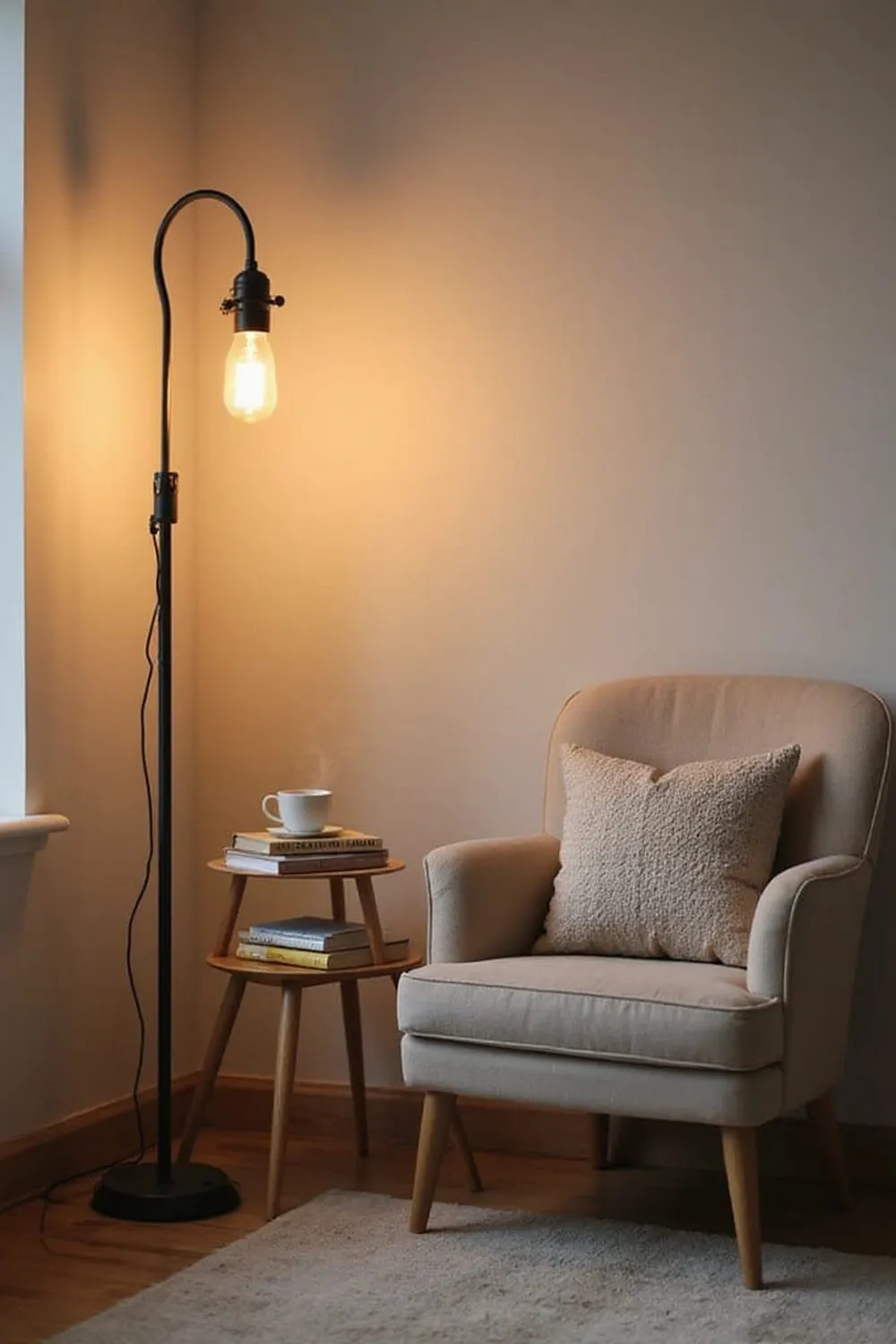
One small lamp in the forgotten corner — the room stops ending at the bed.
Most bedrooms light the bed and abandon the corners, so the room visually shrinks to the mattress at night. A small lamp on a stool, a crate or a low shelf in the darkest corner stretches the room back to its walls and gives the dressing area or reading chair its own pool of light.
Styling tip: put the corner lamp on the same timer as the bedside candles; the room lights itself at dusk and no switch round is needed before bed.

Amber light from a rough pink rock — the nightstand's warmest object.
A salt lamp earns its place on light quality alone: the bulb inside the rough salt glows a deep amber that no shade quite matches, dim enough for the last hour of the evening and warm enough to flatter every color in the room. Its uneven, natural shape also breaks up the straight lines of nightstand and books.
Styling tip: keep the salt lamp on a small tray or coaster — salt can sweat slightly in humid rooms, and a tray protects the wood beneath.
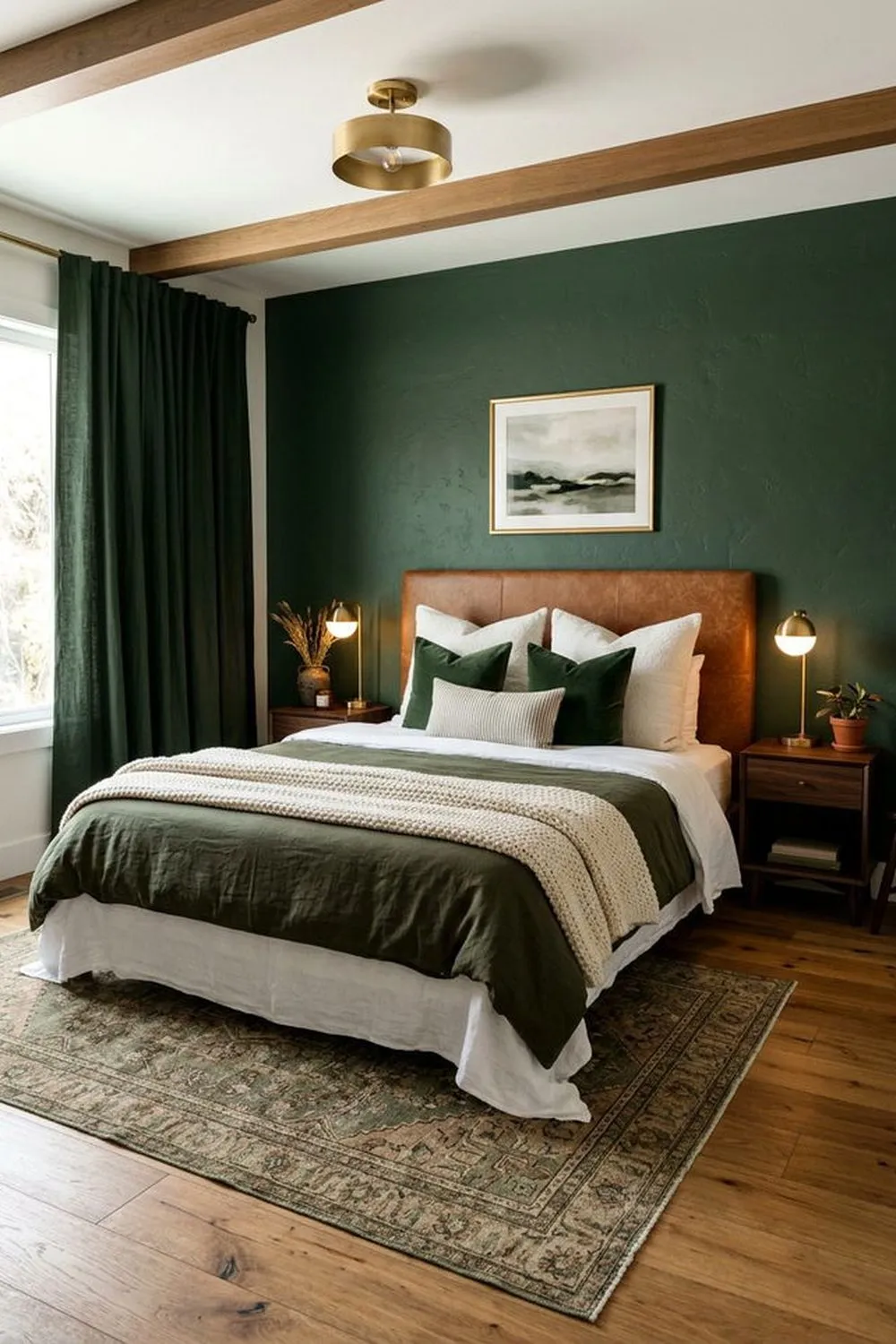
Deep green behind the bed, pale bedding in front — the contrast is the whole scheme.
Painting the wall behind the bed in a deep forest or pine green gives a winter bedroom its cocoon: the dark wall recedes, the pale bed advances, and every light in the room glows warmer against it. One wall is a weekend of work and it makes even plain bedding look styled.
Styling tip: take the green onto the baseboard of the same wall — a painted baseboard makes the color look built-in rather than stopped at the floor.
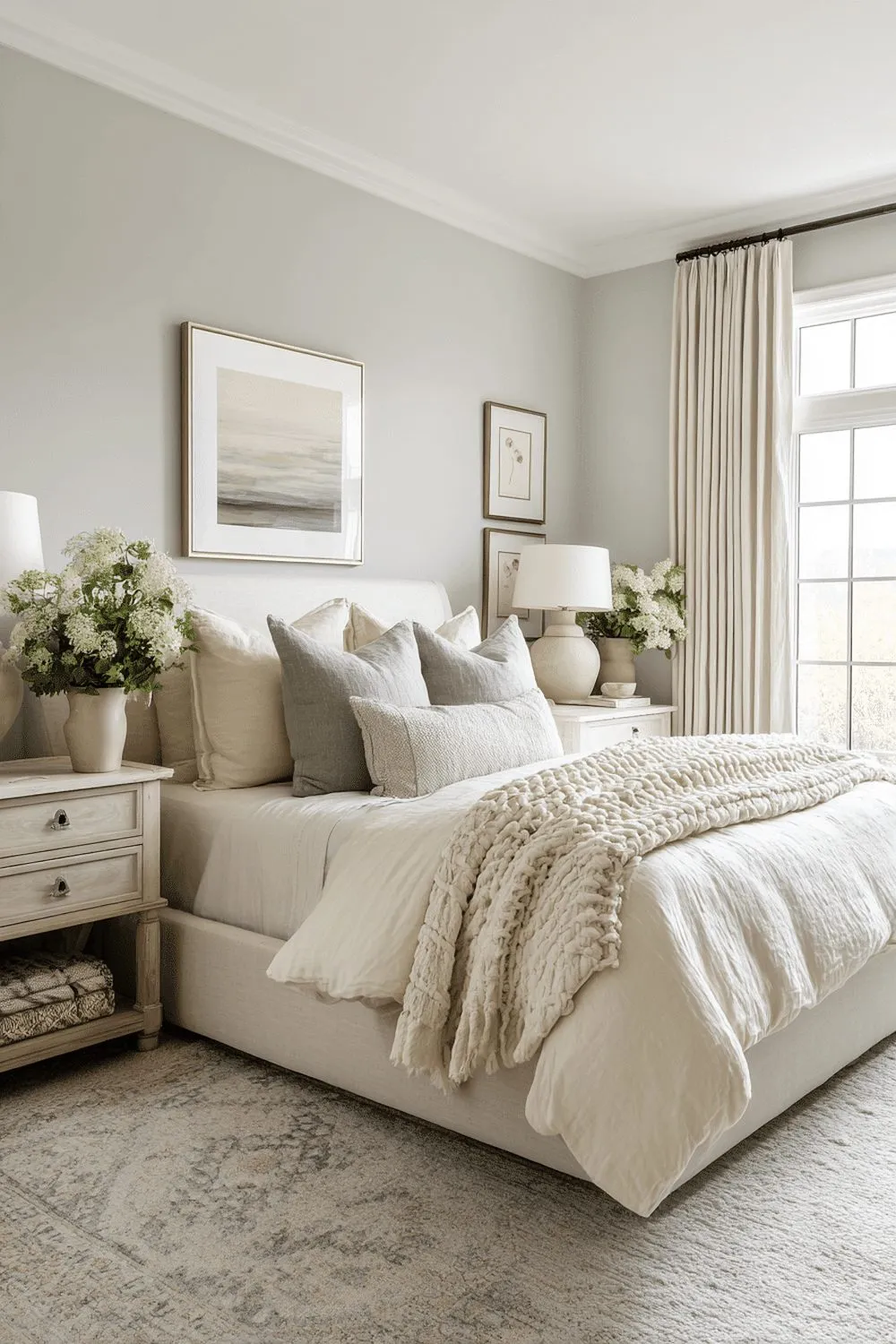
Cream on gray — the calmest palette in winter, and the easiest to layer.
If deep color is not your winter, the opposite works just as well: soft gray walls and a bed dressed entirely in cream and white. The interest comes from texture alone — linen, knit, flannel, velvet — which is why this palette photographs so peacefully and never fights the pale daylight.
Styling tip: in an all-neutral bed, vary the whites deliberately — warm cream against bright white against oatmeal — so the layers read as separate shapes, not one flat mass.
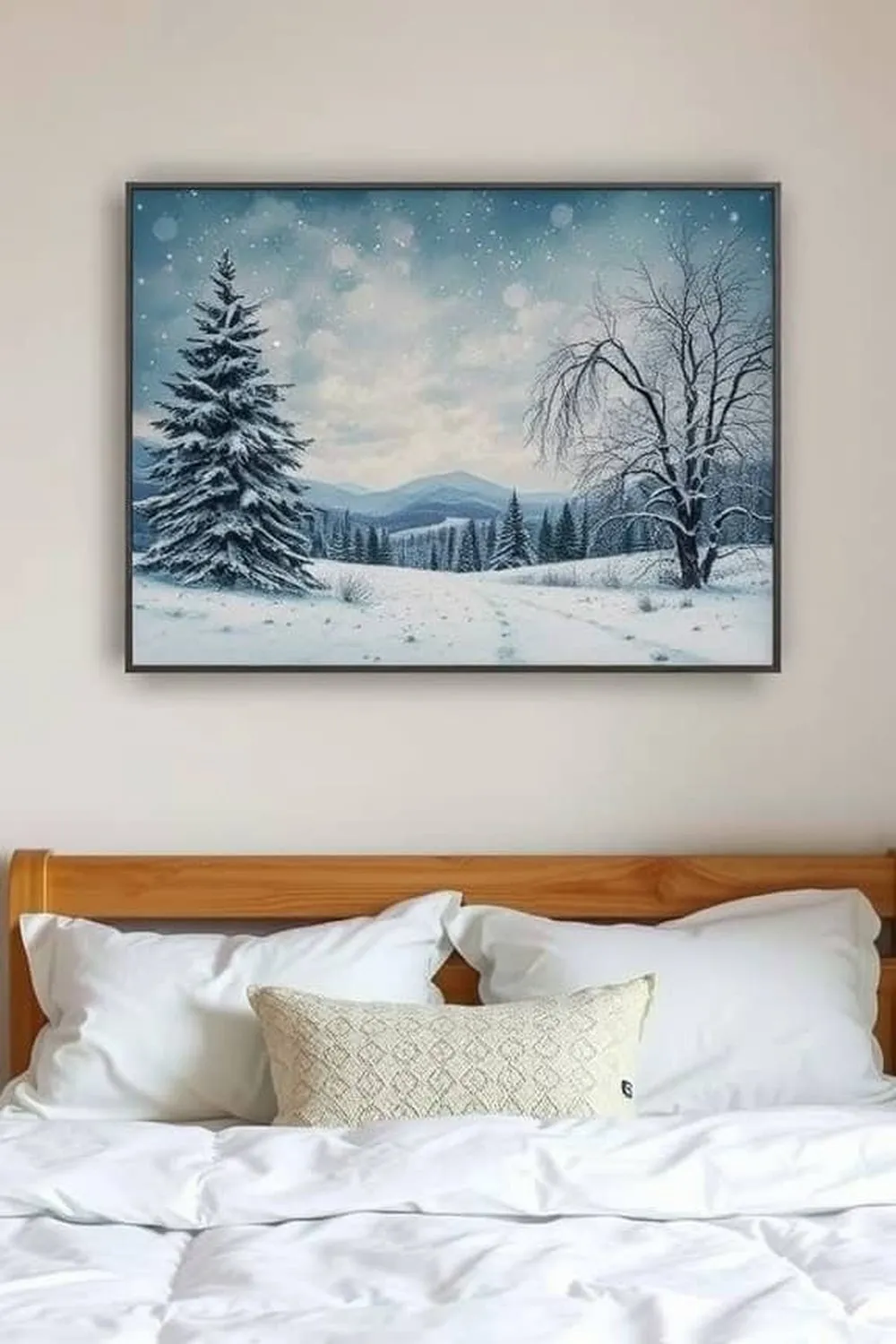
One big calm picture — misty hills and bare trees, in the colors the room already wears.
The wall above the bed wants one large, quiet image in winter: a misty landscape, bare trees in fog, a pale shoreline. Framed wide in thin wood or black, it gives the bed a headboard-like anchor and sets the room's color story — gray, sage, stone — without a single festive motif.
Styling tip: hang the frame so its bottom edge sits about eight inches above the headboard; higher and it floats away from the bed, lower and pillows crowd it.

Plain nightstands, painted ink navy — small furniture, deep color, no commitment to a wall.
If painting a wall feels like too much winter, paint the nightstands. Two small pieces in deep navy, charcoal or green flank the bed with the same rich note an accent wall gives, and they can be repainted in an afternoon come spring. Against pale bedding the deep pair looks like a deliberate design choice.
Styling tip: swap the drawer knobs for brushed brass when you paint — the small warm glint against deep paint is what makes the pieces look expensive.
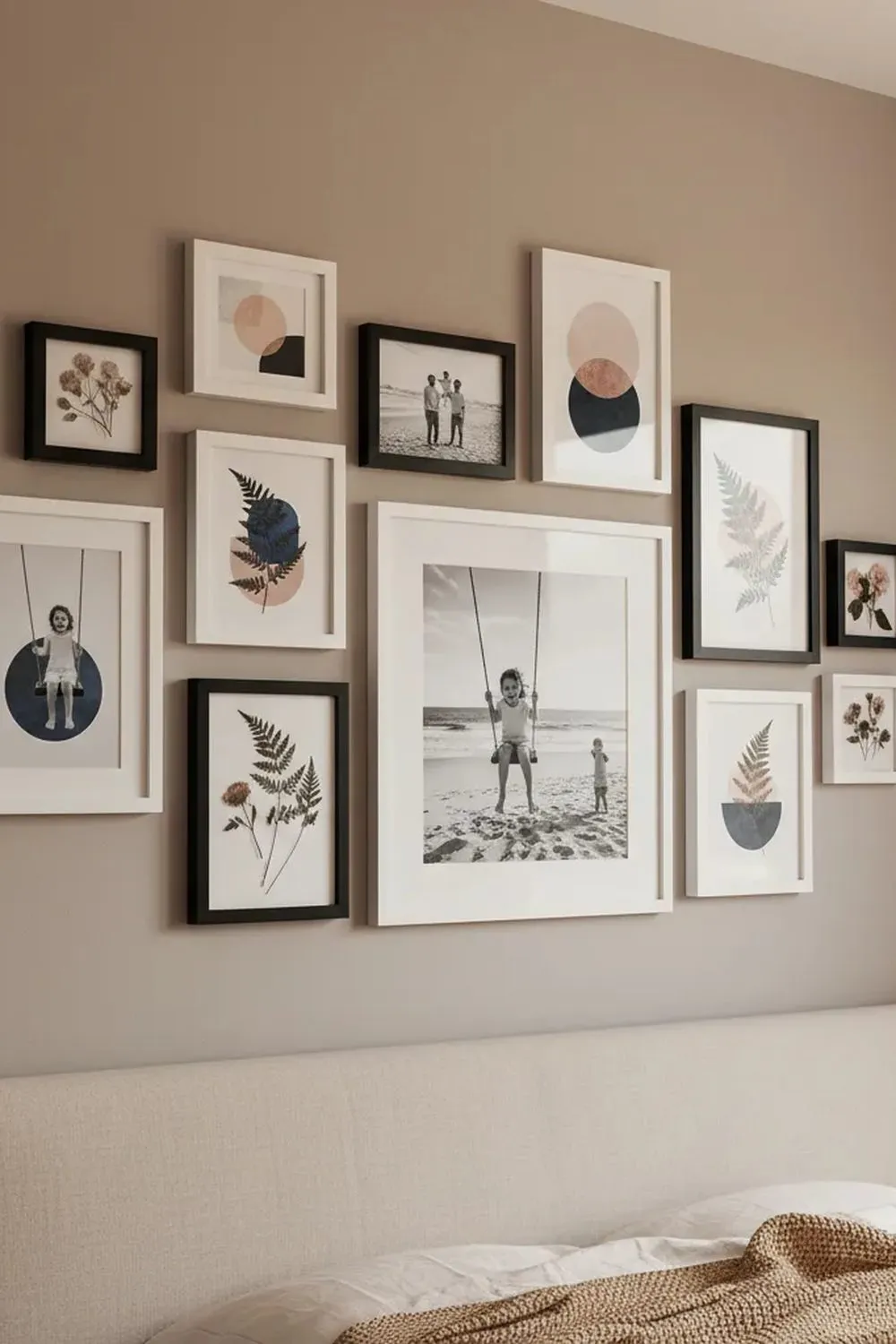
Small frames, one finish — a quiet gallery that fills a wall without shouting.
A plain side wall in the bedroom takes a small gallery well: six or eight frames in one finish — all black, all oak — holding calm prints, pressed leaves or black-and-white photographs. The single finish keeps the collection serene, and the wall gains the finished feeling bedrooms often lack.
Styling tip: lay the arrangement on the bed first and photograph it; it is far easier to adjust spacing flat than on a ladder with a hammer in hand.
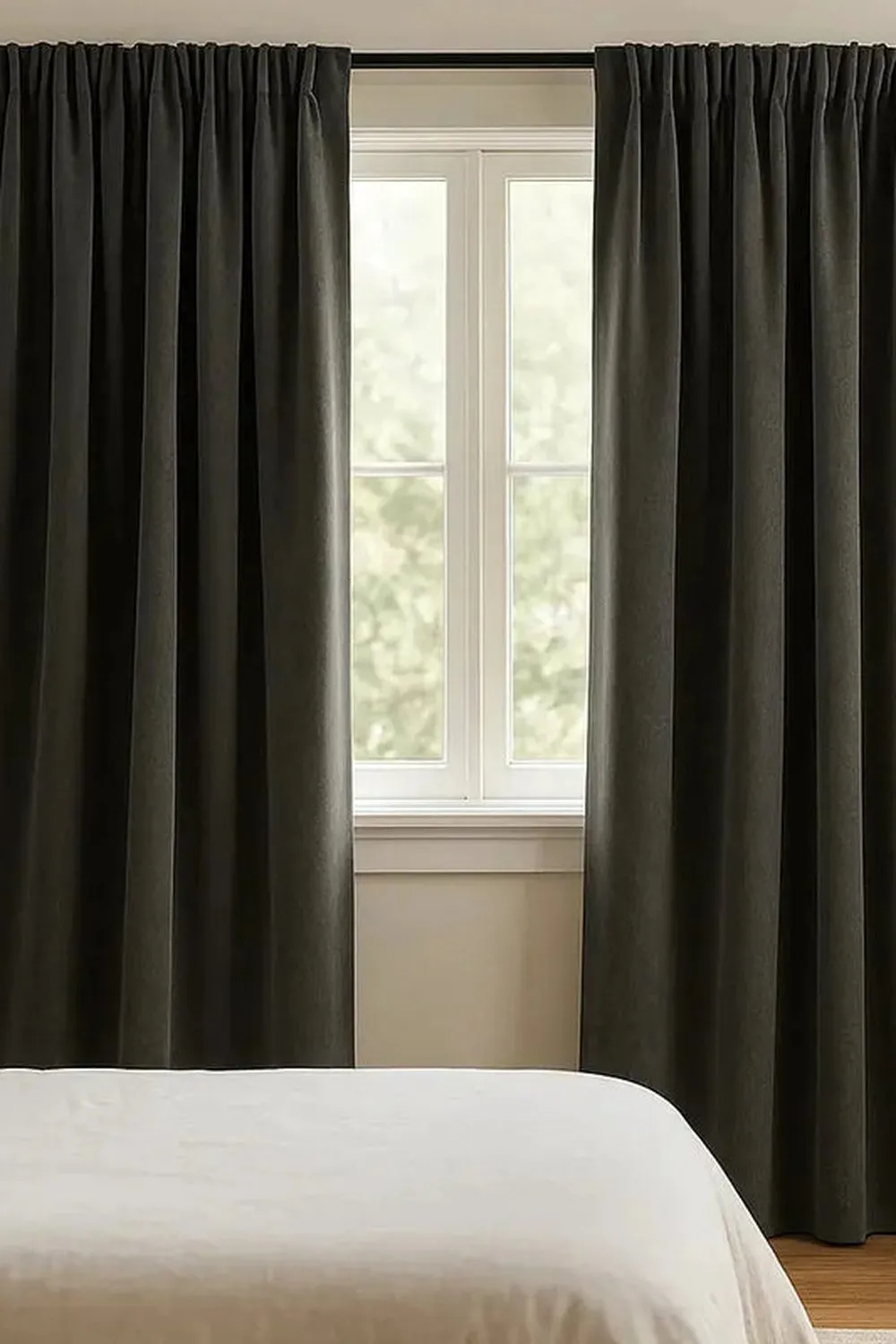
Heavy curtains drawn at dusk — the window stops leaking heat and the room feels sealed in.
Curtains in a winter bedroom are insulation you can see. Thermal-lined panels in a heavy weave — a wool-look or a thick linen blend — block the cold radiating off the glass, soften the room's sound, and make the dusk ritual of drawing them feel like tucking the room in for the night.
Styling tip: hang the rod a few inches wider than the frame so the drawn-back panels stack on wall, not glass — full daylight by day, full cover by night.

The rug should reach where feet land — wide on both sides, deep at the foot.
The classic winter rug placement runs under the bed and out on both sides, wide enough that the first step of the morning lands on pile, not floorboards. A high-pile or wool rug in a pale, forgiving tone also muffles the room and gives the bed a soft island to sit on.
Styling tip: run the rug under the top two-thirds of the bed and leave the foot end on the floor — the bed looks anchored and the rug goes further.
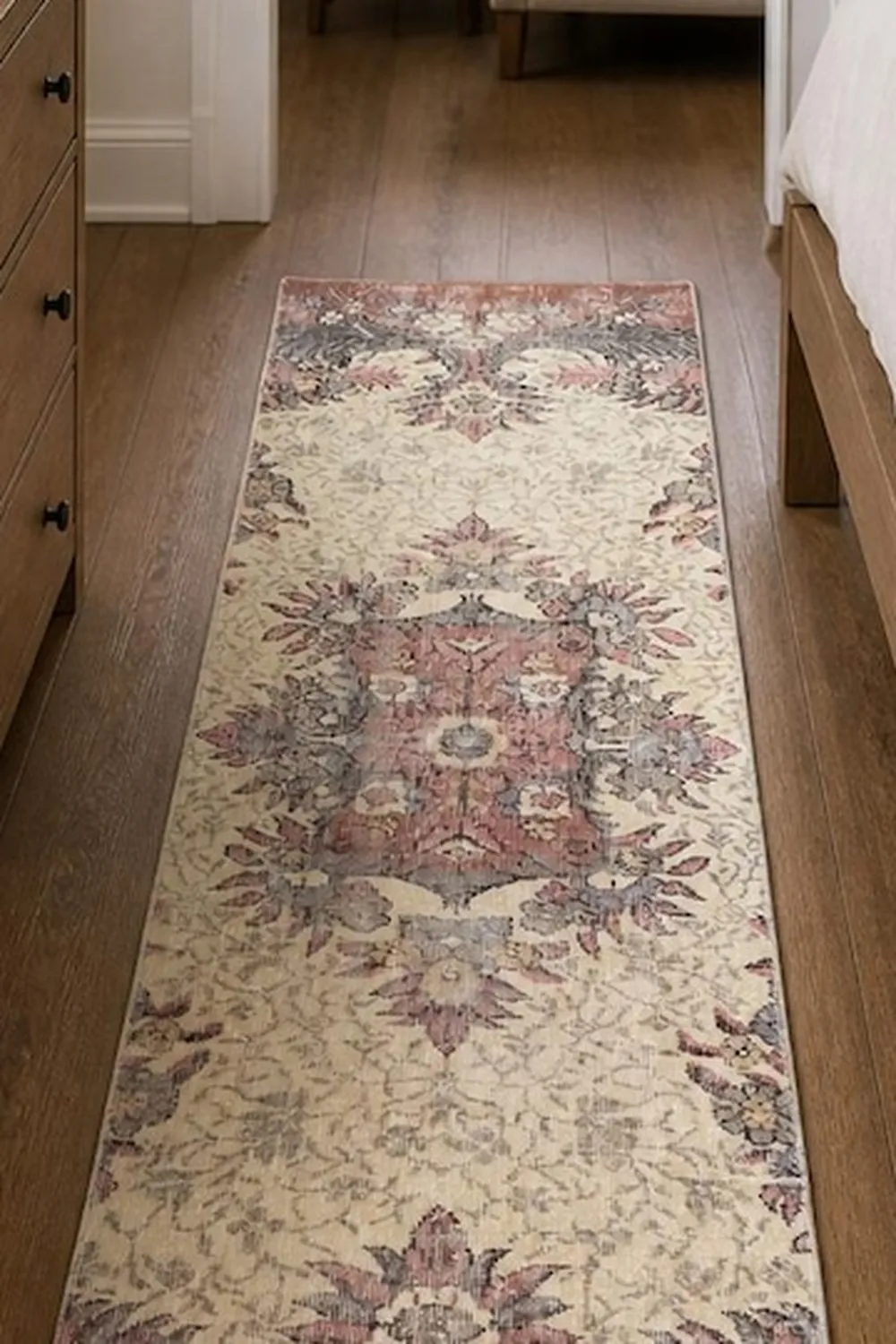
A runner where you dress — a warm path for the morning routine.
Where the bed rug does not reach, a wool runner can: along the side of the bed that leads to the dresser or closet, it warms the exact path bare feet take every morning. A flat-woven stripe or a muted pattern hides the daily traffic a pale pile would show.
Styling tip: choose a runner the full length of the bed rather than a short mat — a long line makes the room read longer and the path feel intentional.
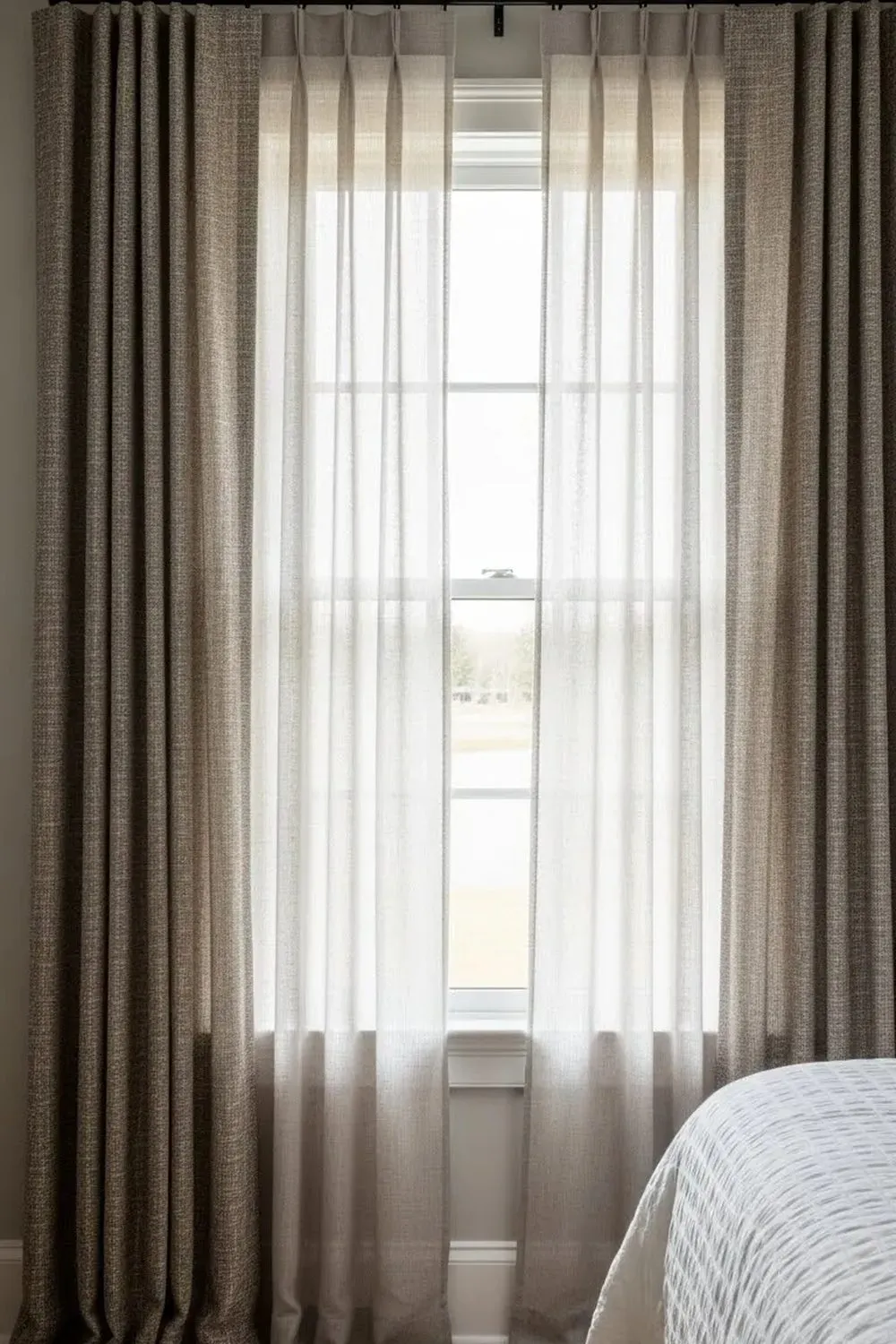
Sheers for the gray day, heavy panels for the cold night — one window, two jobs.
Two layers on one window solve winter's split personality: the sheer stays across the glass all day, softening the gray light and the view, while the heavy panel draws over it at night for warmth and darkness. The layered edge — sheer peeking past the panel — also looks tailored in a way single curtains never do.
Styling tip: keep the sheer a shade lighter than the heavy panel; the pale line at the edge is what makes the layering visible and pretty.
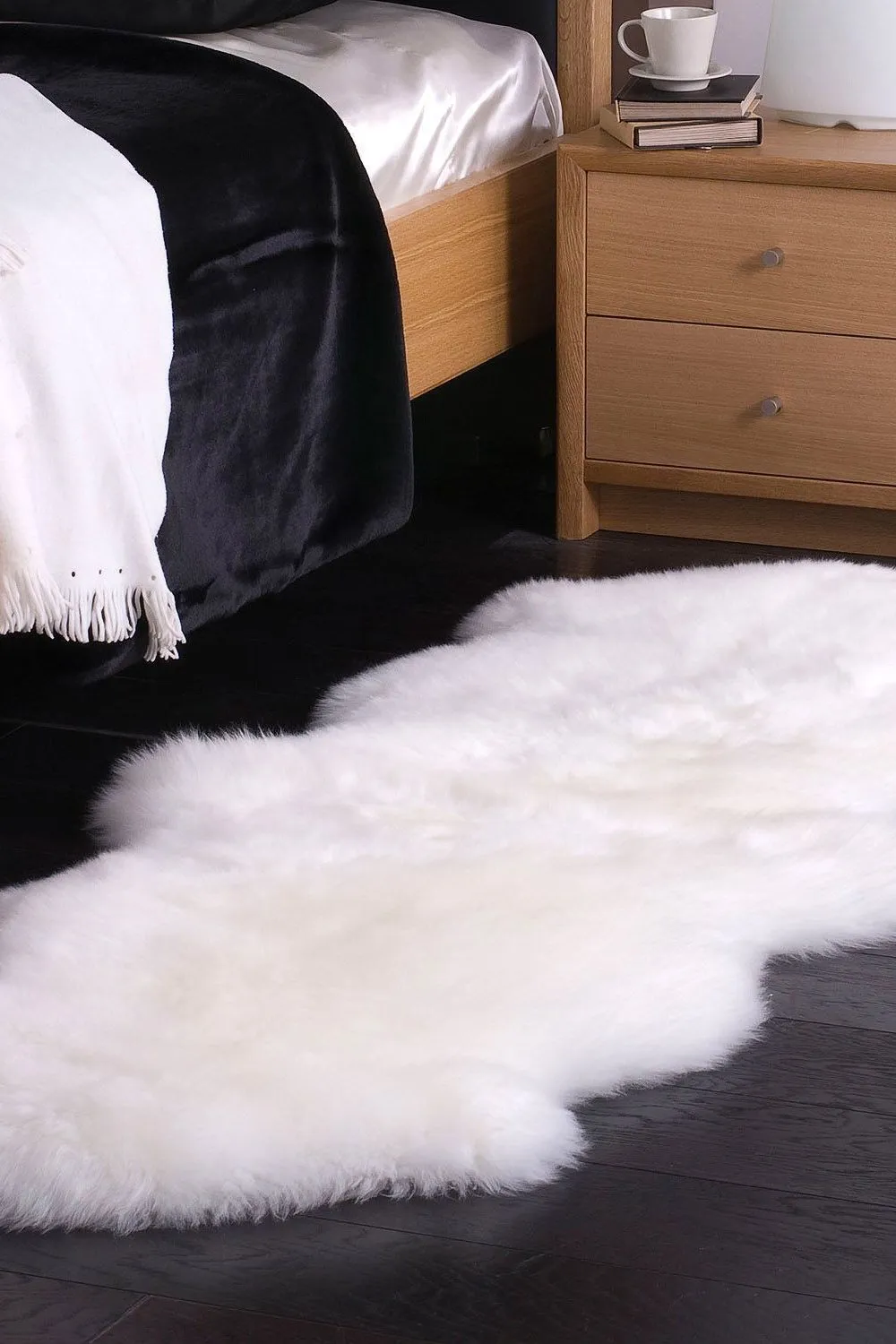
One sheepskin beside the bed — the softest possible first step.
If a full rug is not in the budget, a single sheepskin (real or good faux) beside the bed covers the one square yard that matters most: where feet land first. Its deep pile warms instantly underfoot, and the natural shape softens a room full of rectangles.
Styling tip: shake the sheepskin outside weekly and keep it out of direct radiator heat; five seconds of care keeps the pile deep instead of matted.
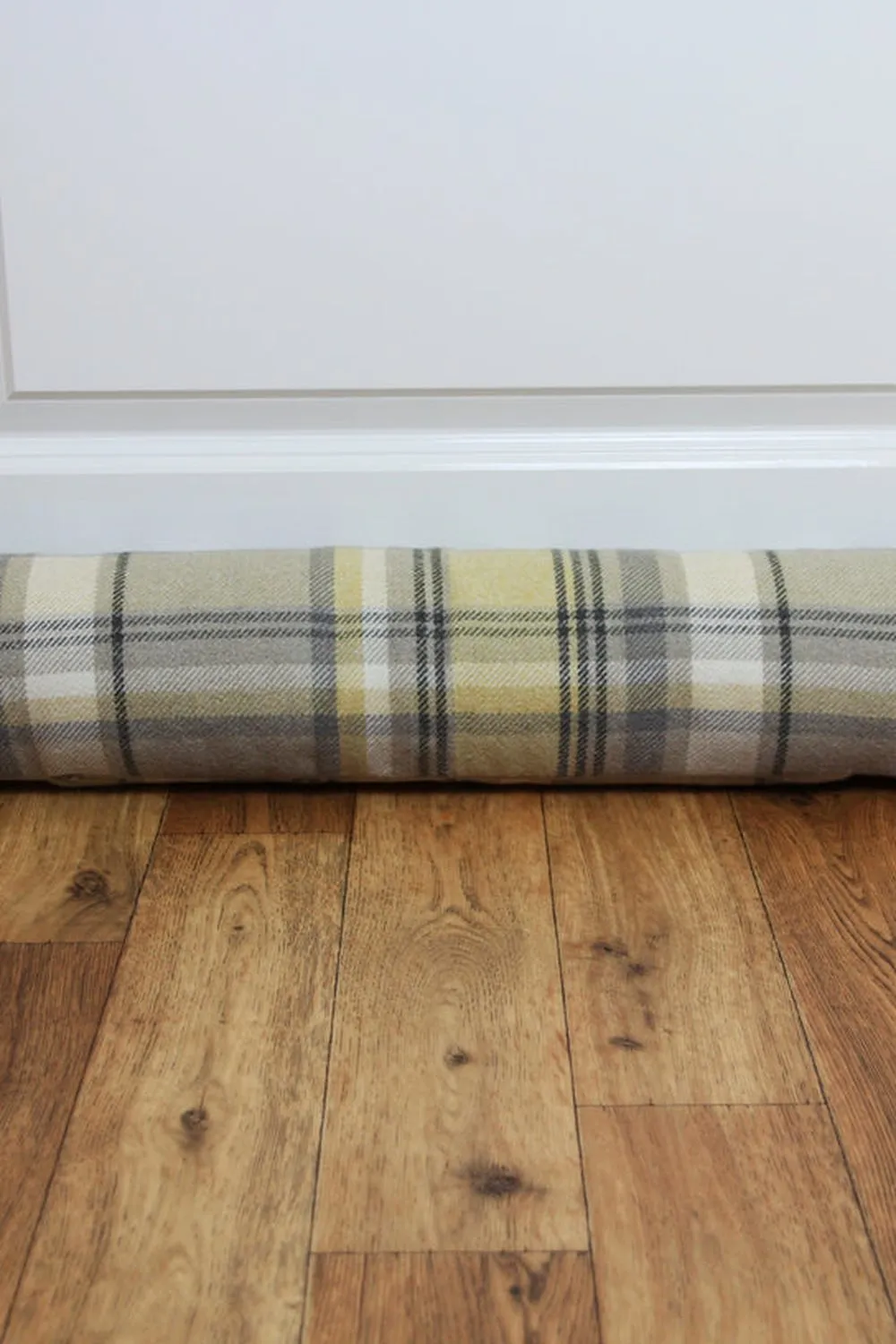
The gap under the door, dressed — a plaid draft stopper that looks like it belongs.
A surprising share of a bedroom's cold walks in under the door. A fabric draft stopper in plaid wool or heavy tweed blocks the gap and, in the room's own palette, reads as a small styled detail rather than a fix. It is the least glamorous idea on this list and one of the most effective.
Styling tip: make or buy the stopper a couple of inches wider than the door so it seals corner to corner even when it shifts.

Tray, book, mug — the bed becomes the best seat in the house.
A wooden tray with legs turns the layered bed into a place to actually spend a winter morning: book, mug, maybe a small vase, all stable on the one flat surface the bed lacks. Styled on the made bed in daylight, it also signals exactly how the room is meant to be used.
Styling tip: keep the tray stored dressed at the foot of the bed — book and mug live on it, so the ritual is ready without a setup every time.
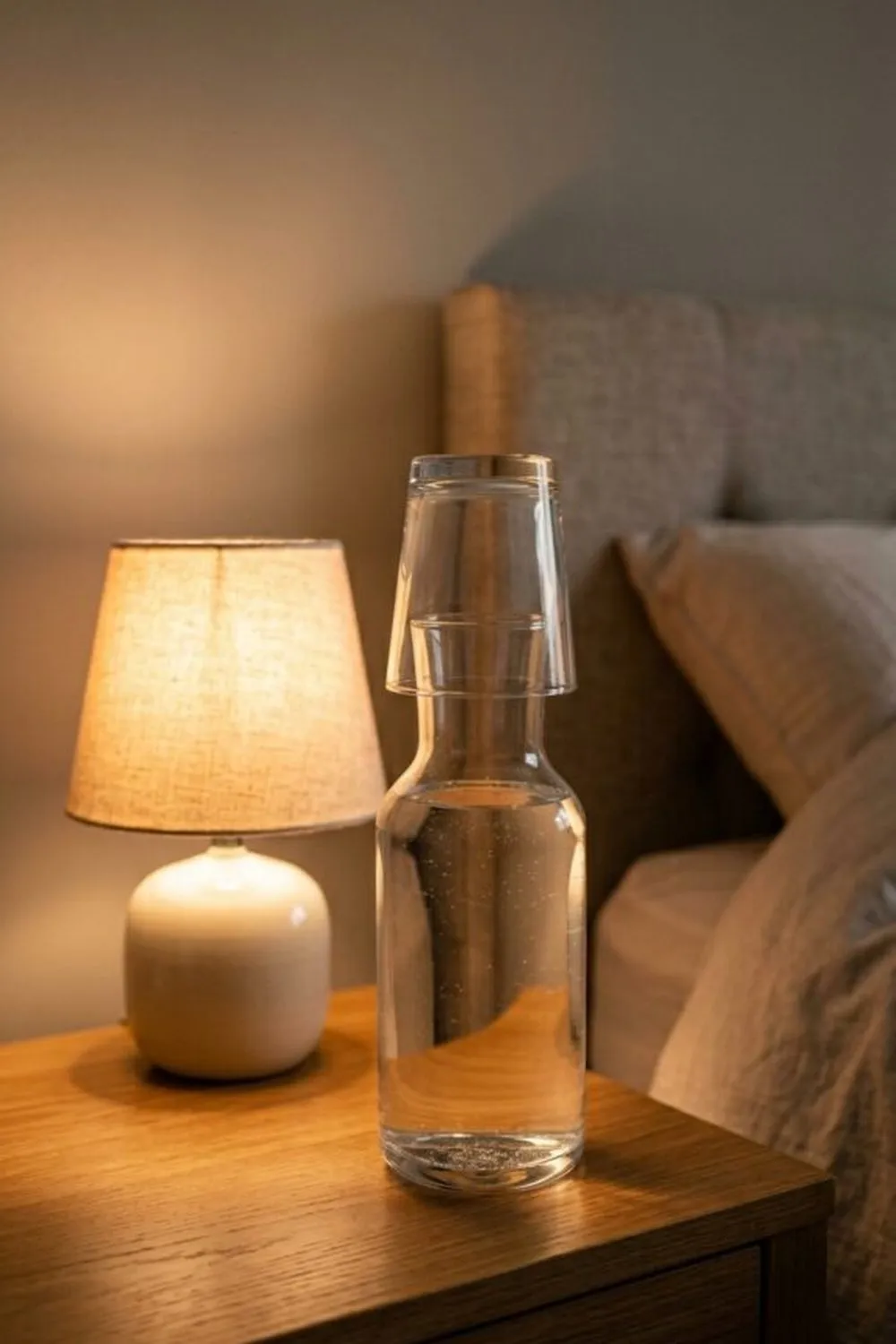
A carafe instead of a plastic bottle — the nightstand looks like a good hotel's.
The bedside water upgrade costs nothing but a swap: a glass carafe with a tumbler that doubles as its lid, in place of whatever bottle wandered in. It is a tiny object that makes the nightstand look intentional, and it belongs to the same calm, cared-for feeling as the layered bed beside it.
Styling tip: a slice of lemon or a sprig of mint in the carafe for guests makes the small gesture feel like a boutique stay.
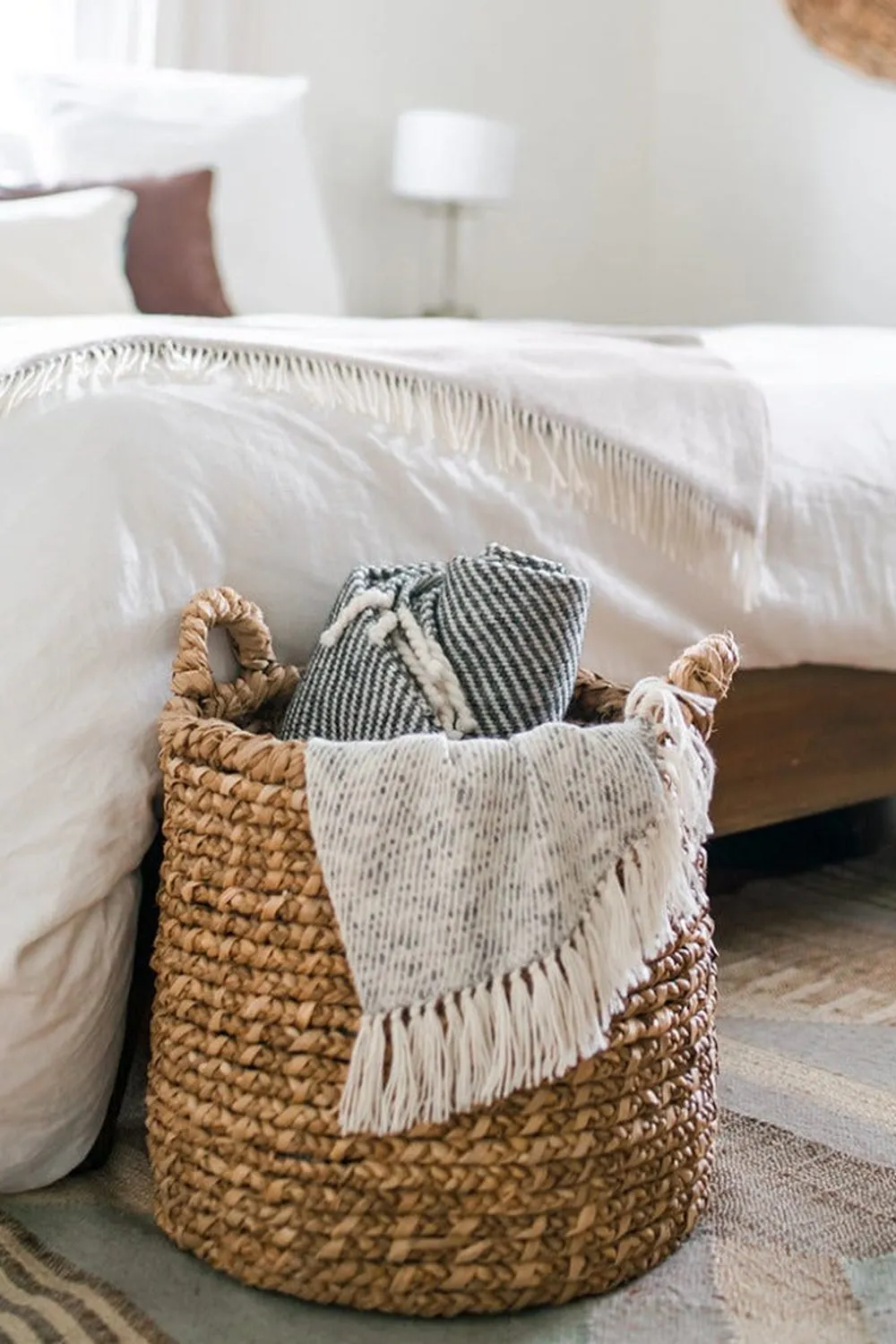
Spare blankets in a basket at the foot — extra warmth on show, not in a cupboard.
The coldest nights always ask for one more blanket, usually at 2 a.m. A woven basket at the foot of the bed keeps two folded spares in the room, visible and reachable, and the basket itself adds one more natural texture to the bed's layered story.
Styling tip: roll the spare blankets instead of folding them — rolls fill a basket neatly and pull out one at a time without unfolding the other.
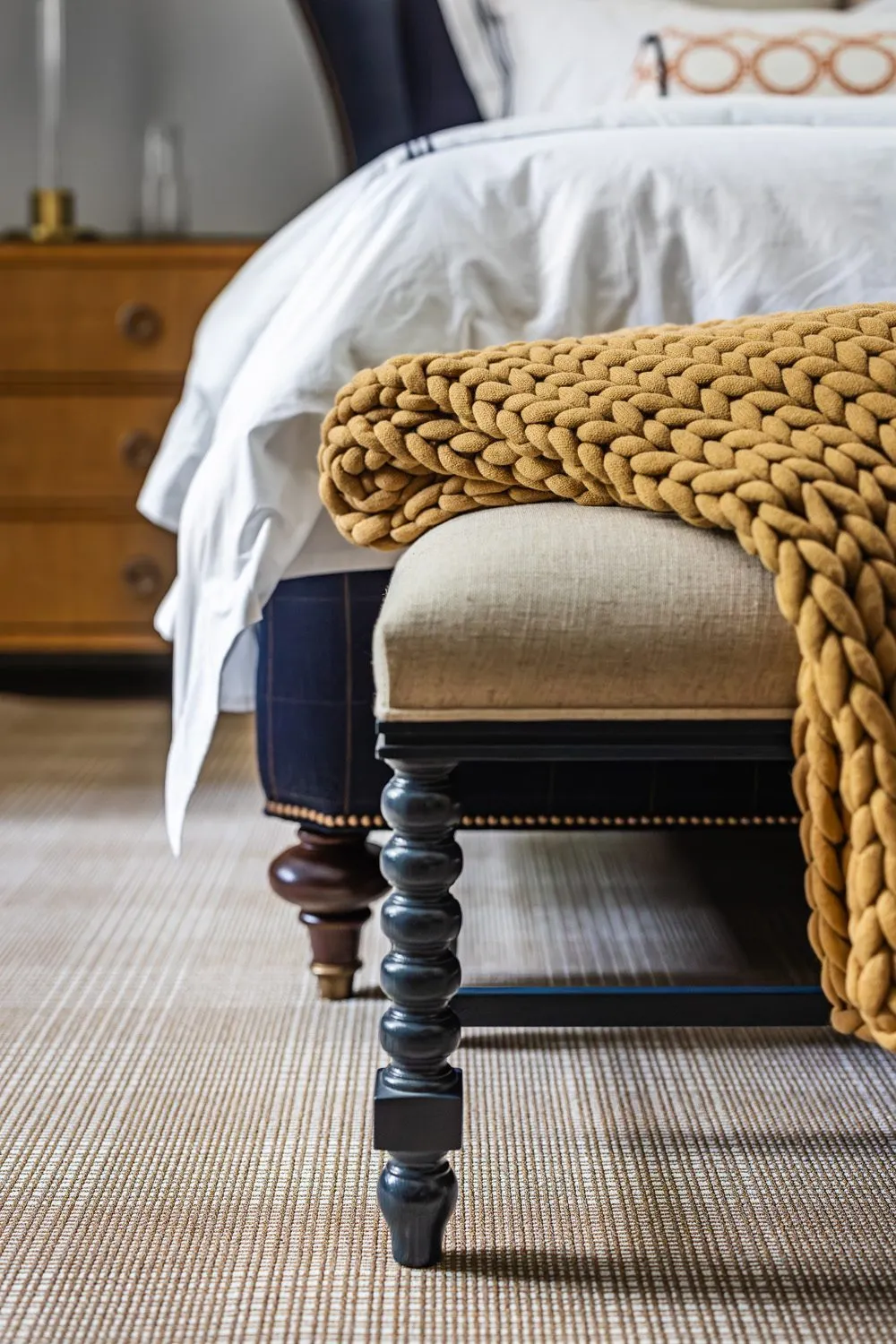
A bench at the foot — the bed gets its landing strip for clothes, trays and sitting.
A low bench or upholstered ottoman at the foot of the bed gives winter layers a home that is not the floor: the throw parks there by day, clothes land there at night, and it is the natural seat for boots and socks on cold mornings. With a folded knit on top it completes the bed's composition.
Styling tip: choose a bench about two-thirds the width of the bed — full width crowds the room, half width looks lost.
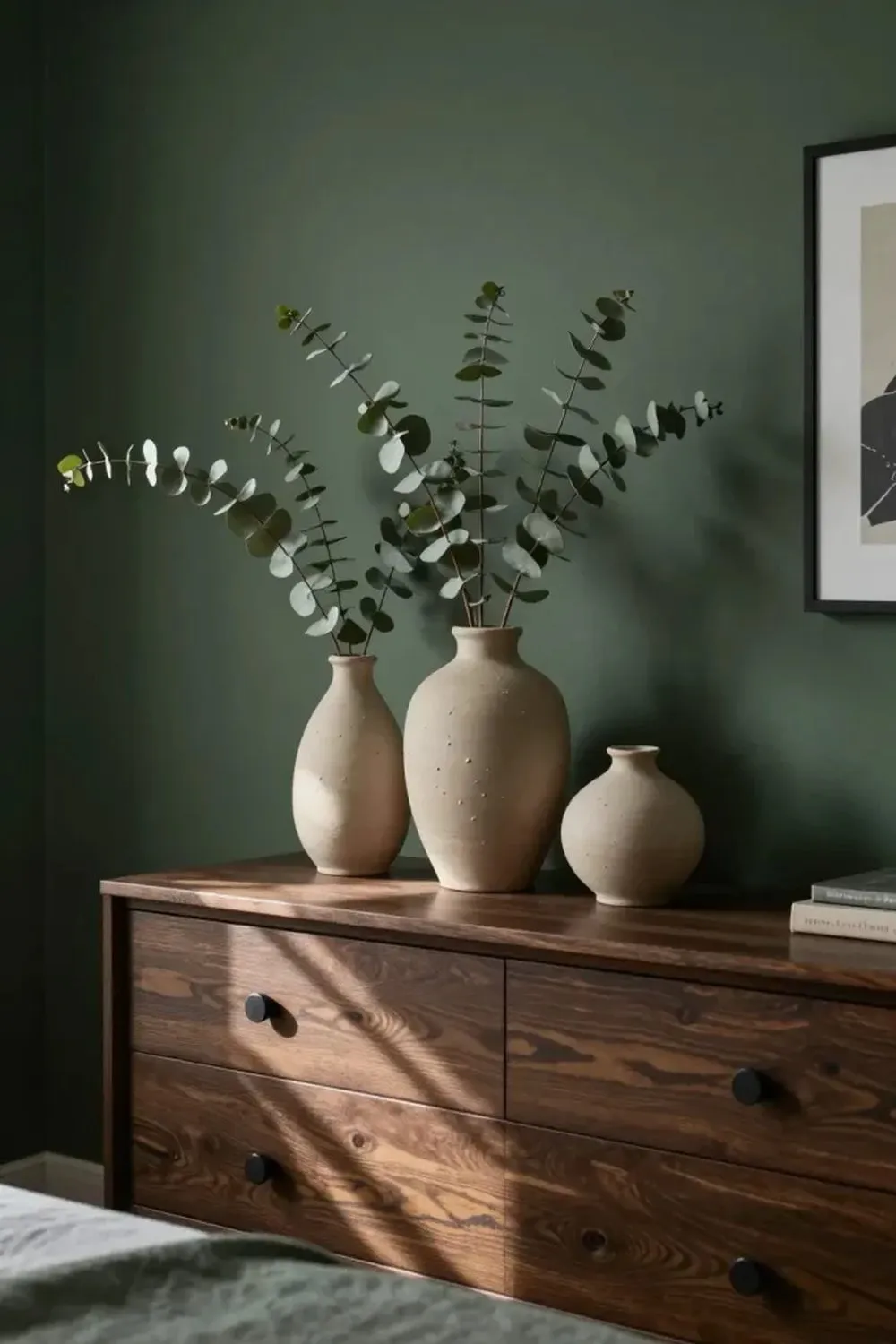
Dried eucalyptus, gray-green and quiet — greenery that asks for nothing all winter.
Fresh flowers are a short story in January; dried eucalyptus is a long one. A ceramic vase of gray-green stems on the dresser gives the bedroom its one living-looking note, suits the calm palette exactly, and needs no water, light or replacing until spring.
Styling tip: keep the stems tall and sparse — five or seven stems with air between them look sculptural; a tight bunch looks like storage.

Beeswax and amber glass — scent and glow for the day's last hour, safely away from the bed.
The finishing layer of a winter bedroom is scent: natural beeswax candles in amber glass, burned on the dresser — never the nightstand — for the last hour before sleep. Cedar, vanilla or plain honeyed beeswax all suit the season without a trace of festive spice, and the amber jars glow like the room's lamps in miniature.
Styling tip: keep candles on a heat-safe tray on the dresser, well clear of curtains and bedding, and put them out before getting into bed — the flameless pillars by the bed carry the glow from there.
Layer the bed (flannel sheets, a higher-tog duvet, a quilt), add thermal-lined curtains, put a rug where feet land and block the gap under the door. The room feels several degrees warmer because the cold surfaces are covered.
Calm, deep or pale neutrals: cream, warm white, soft gray, forest green, ink navy and plum, in natural textures. They suit low winter light and need no festive colors to feel seasonal.
Four working layers is the sweet spot: flannel sheets, a deep duvet, a folded quilt or runner at the foot, and a throw on top. Add or peel one at a time as the night changes.
Keep real flames on a dresser, on a heat-safe tray, well away from bedding and curtains, and put them out before sleep. By the bed itself, flameless pillar candles give the same glow with no flame at all.
Swap every bulb to the same warm temperature, add a folded throw or quilt you already own at the foot of the bed, and hang the heaviest curtains you have. All three cost little or nothing.
A winter bedroom is not decorated so much as built — layer by layer, from the flannel against the skin to the last amber candle on the dresser. Start with the bed, then the light, then the floor, and the coldest room in the house becomes the one nobody wants to leave. Save your favorite winter bedroom decor ideas from this list, and follow TheStylingHub on Pinterest for fresh winter ideas all season long.
Rooms
Nov 18, 2026
Small bathroom decor ideas that make a tiny space feel bigger — light colors,…
Rooms
Nov 18, 2026
31 Winter bathroom decor ideas for 2027 — spa-calm towels, candles, eucalyptus, wood and…

Rooms
Nov 13, 2026
Make their room part of the magic: christmas kids room decor ideas with mini…