

Outdoor
35+ Christmas Front Porch Decor Ideas for a Warm Welcome
Oct 30, 2026
Give guests a festive first impression with christmas front porch decor ideas, from lantern-lined…
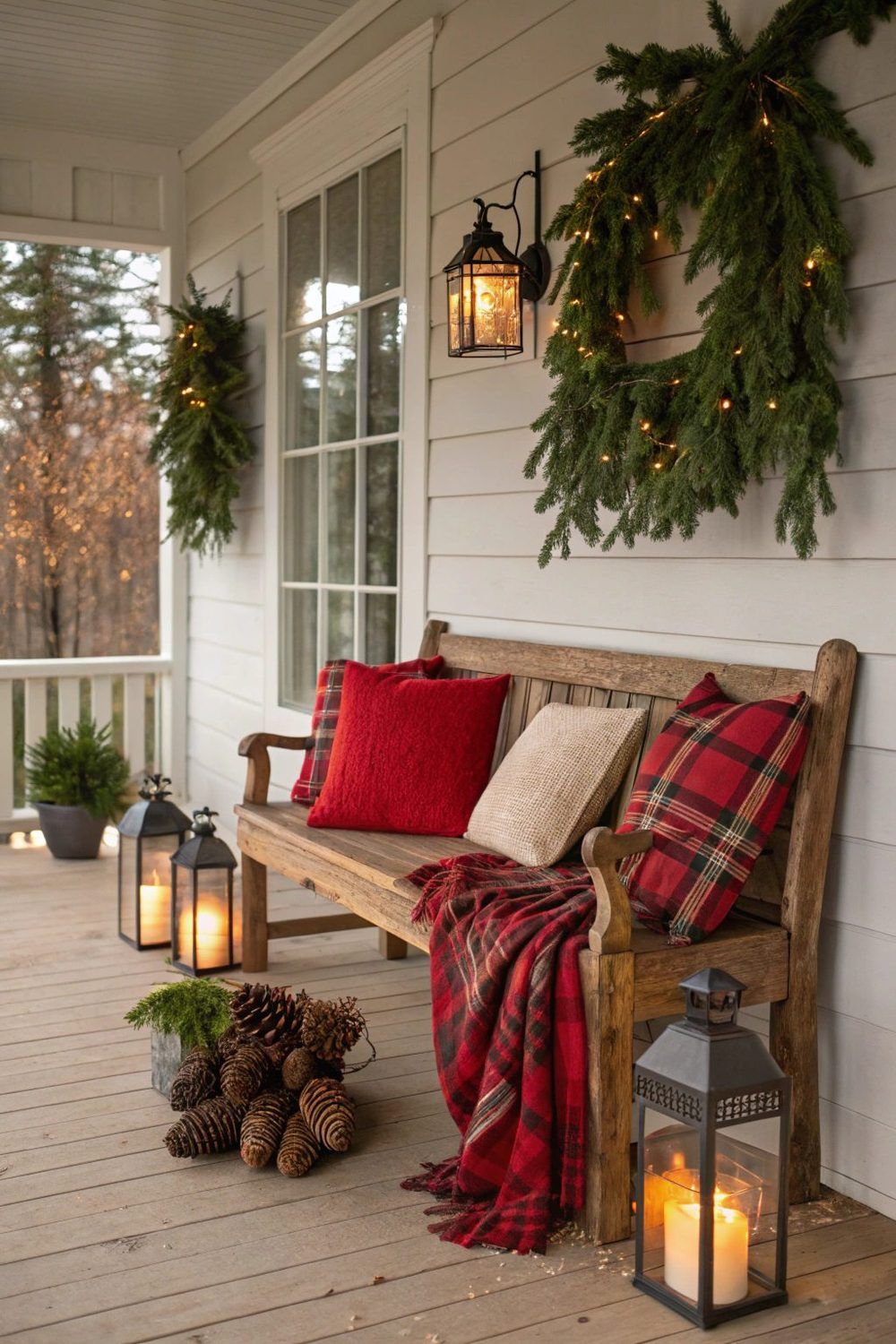
The front porch is the first thing winter shows a visitor, and these winter front porch decor ideas make it a proper welcome instead of a bare threshold. Plain evergreen wreaths, lanterns that hold their flame against the wind, plaid and wool on the bench and planters that carry the season's green — all of it built to stand up to cold, wet and dark evenings, and all of it without a single festive cliché.
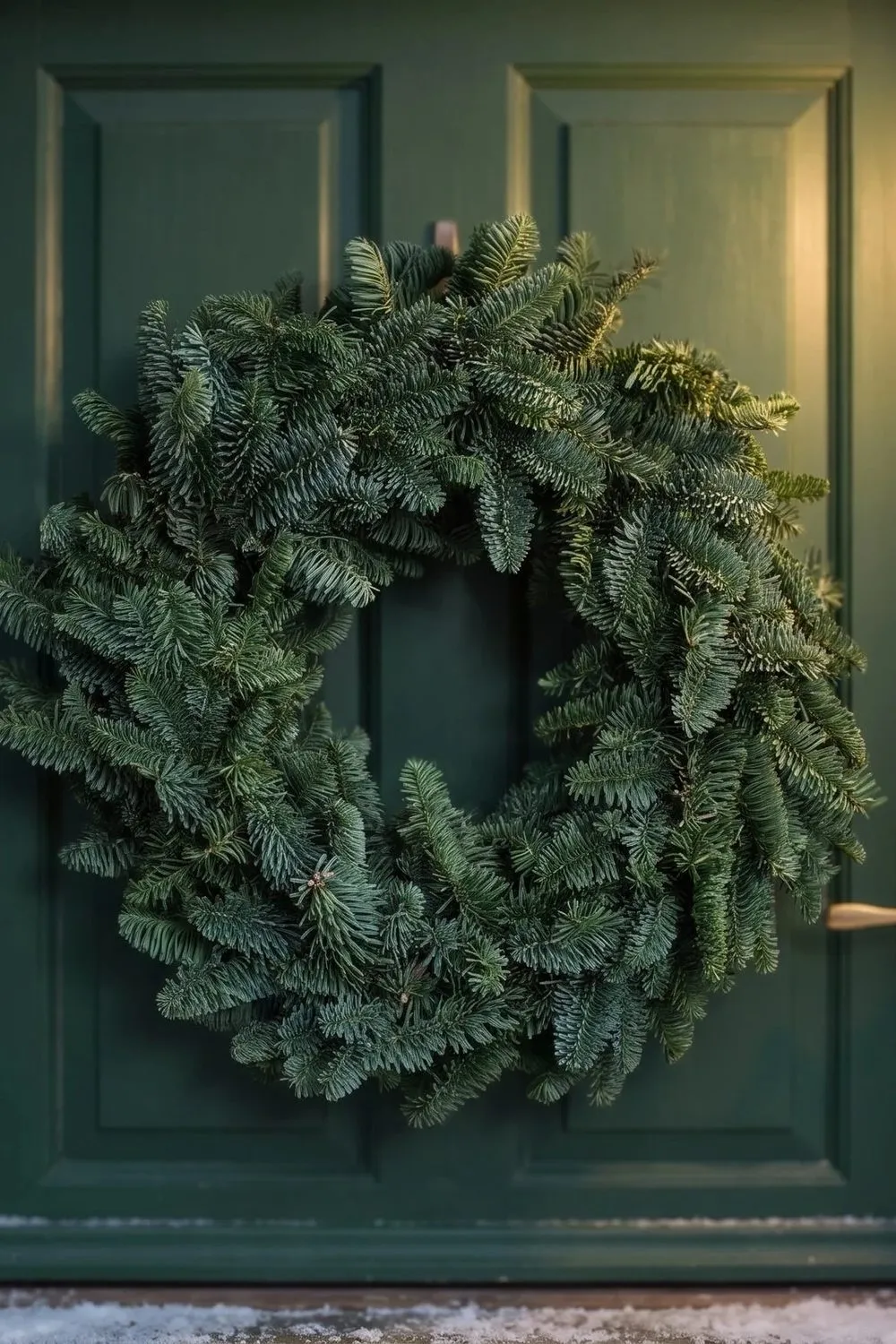
One deep green door — the porch gets its color from the paint, not the decorations.
A front door painted deep green is the single strongest move a winter porch can make: the color reads warm against bare branches and gray skies, it suits the evergreen wreath that hangs on it, and it needs no decoration at all to carry the season. One coat of exterior paint, a polished brass handle, and the whole porch suddenly looks considered.
Styling tip: paint the door on a dry day above freezing and leave it open to cure — paint that skins over in damp cold stays tacky and picks up every fingerprint for weeks.
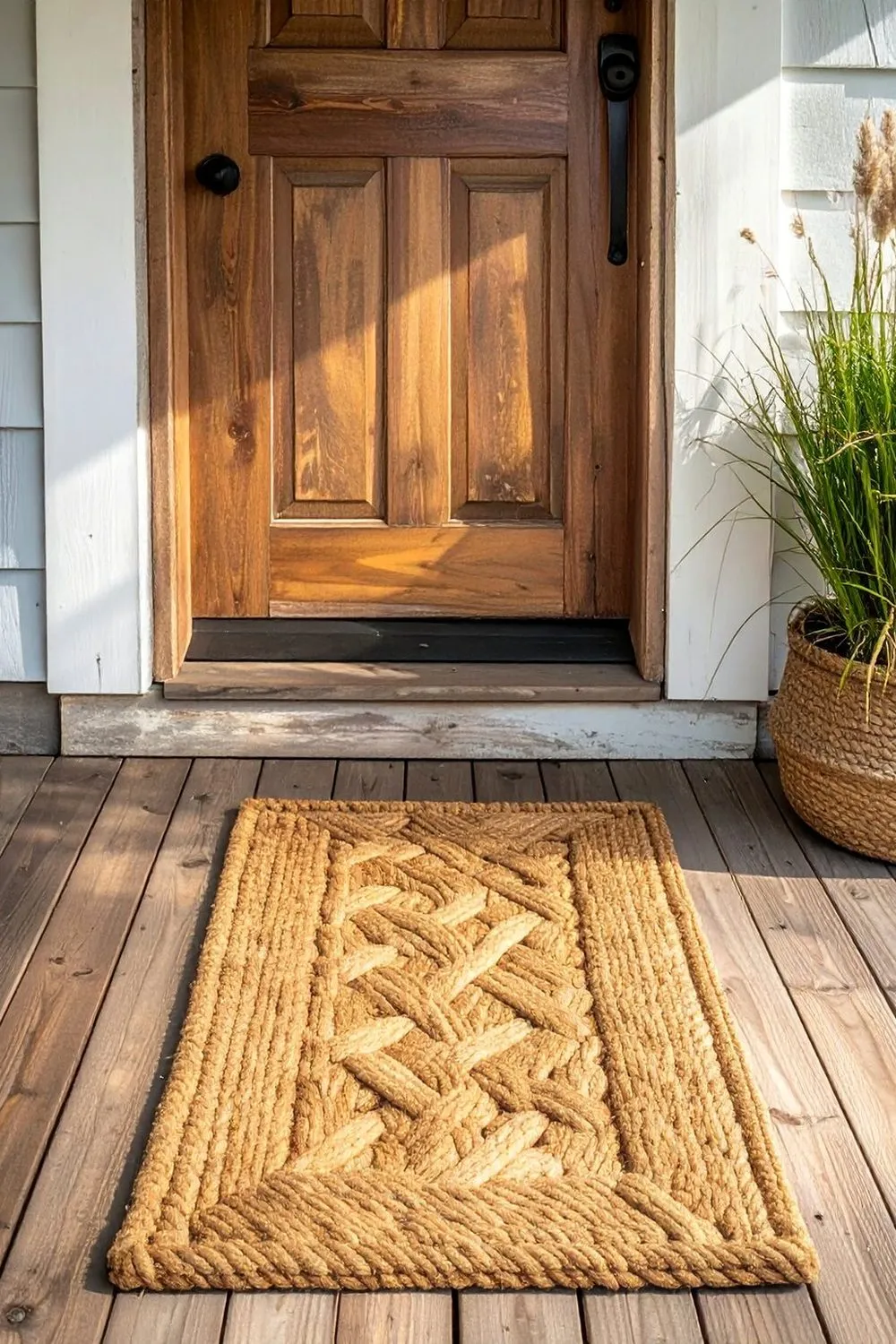
A wide coir mat — the welcome starts underfoot, and the mud stops there.
A wide woven doormat in natural coir is the porch's hardest worker: it scrapes winter mud off boots, it reads warm against stone and paint, and its plain weave suits every wreath and lantern beside it. Go wide — a mat that spans most of the door's width looks generous, while a narrow one looks like an afterthought that will slide.
Styling tip: shake the mat out weekly and keep it off wet stone when it rains — coir holds damp and rots from underneath if it never dries.

Polished brass on the door — the smallest shine in the porch, and the one everyone touches.
A brass door knocker, polished until it catches the porch light, is the porch's jewelry: small, functional, and the one thing every visitor touches. Winter dulls brass fast, so a ten-minute polish with a soft cloth is a monthly habit worth keeping — the shine is what makes a plain door read cared for rather than merely painted.
Styling tip: lacquer the brass after polishing and the shine lasts the season — unlacquered brass outdoors dulls again within a fortnight.
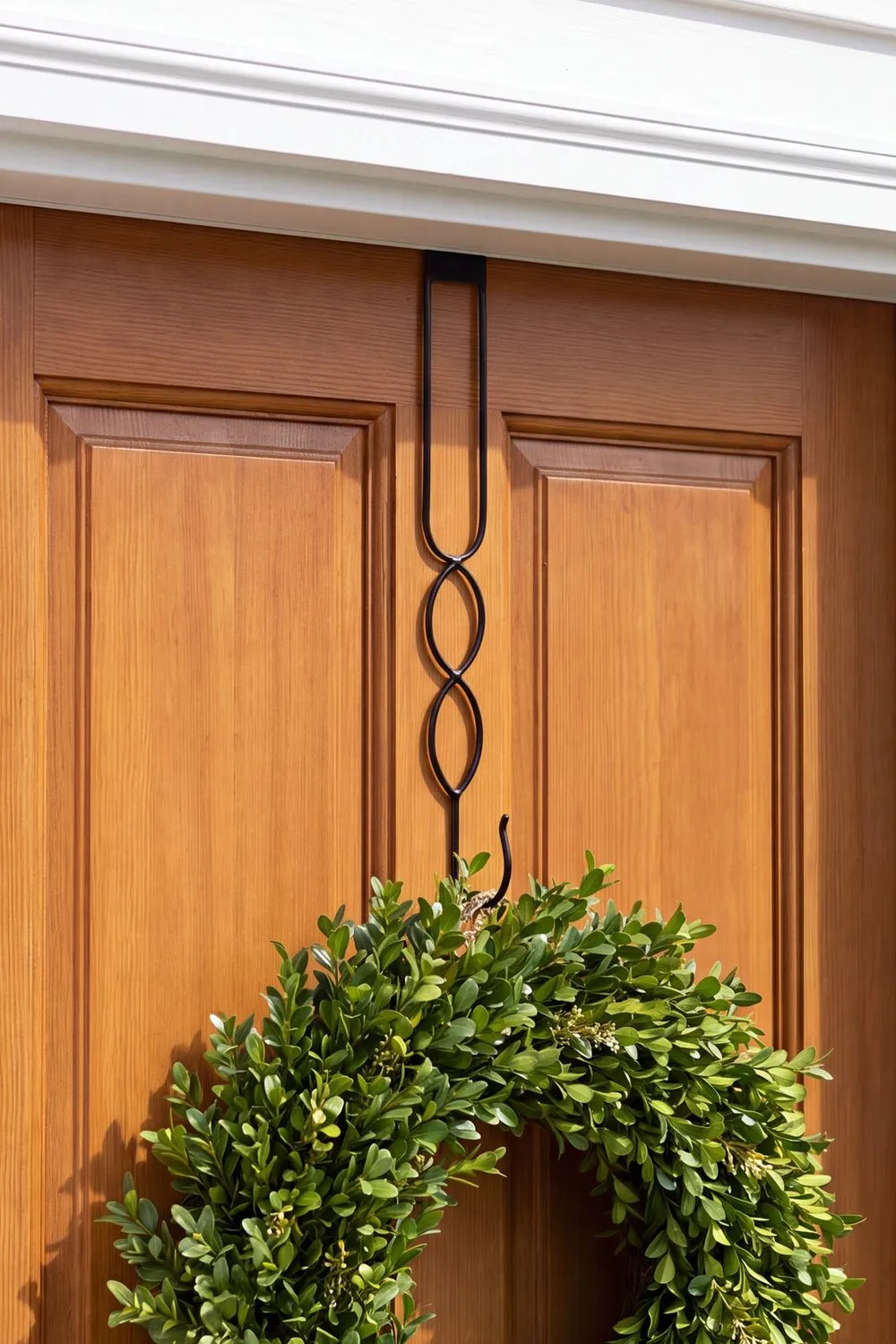
A black metal hanger over the door — the wreath hangs without a single nail.
A simple black metal hanger over the door top is the honest way to hang a winter wreath: no nail in the paint, no hole to fill in spring, and the wreath lifts off in one hand when the season turns. The black metal disappears against a dark door and reads as a deliberate line on a pale one — either way the wreath, not the hardware, is what shows.
Styling tip: check the hanger's weight rating before the wreath goes up — a full evergreen wreath is heavier than it looks, and a bent hanger drops it onto the steps.
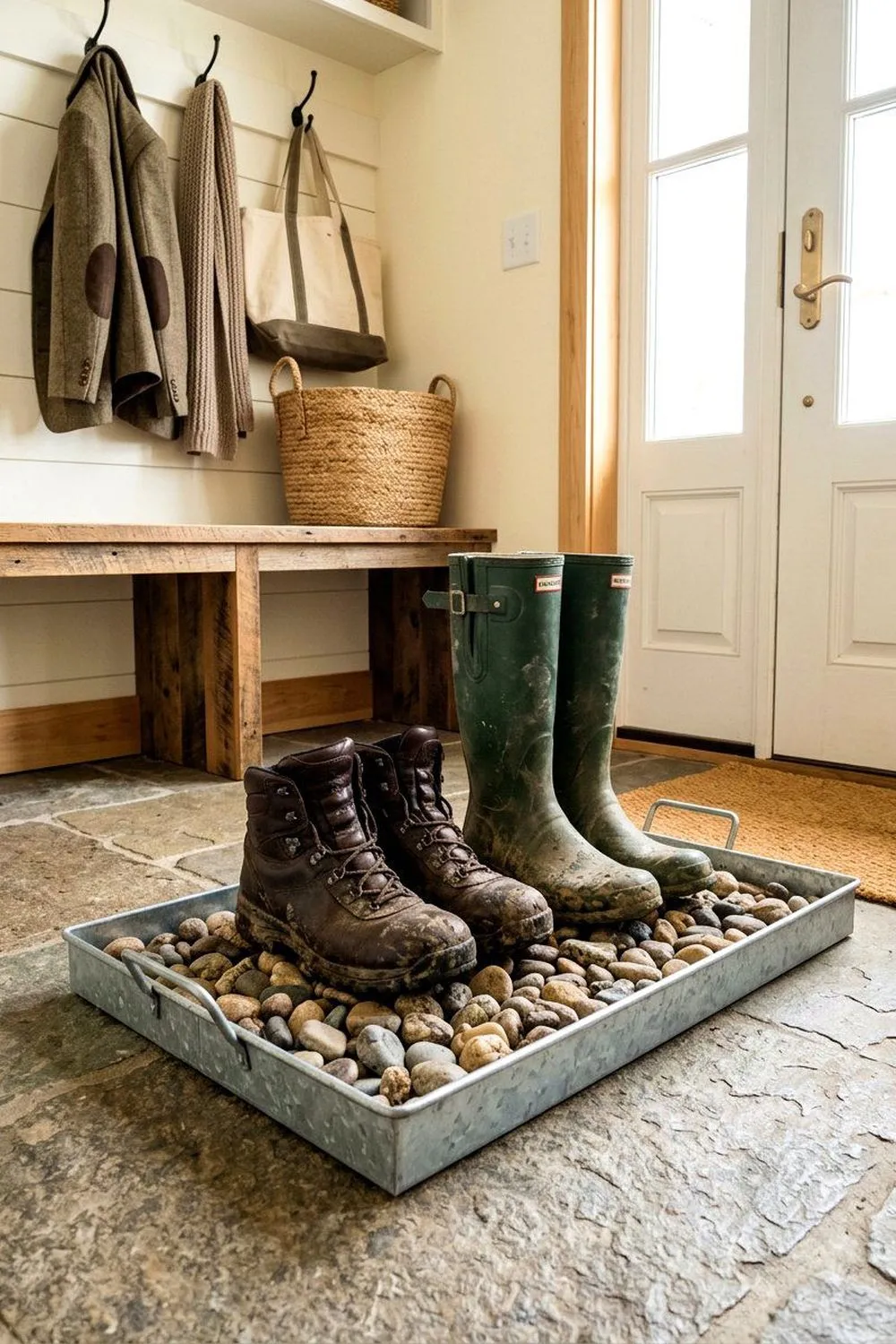
River stones in a boot tray — wet boots drain, and the tray looks like a garden bed.
A boot tray lined with smooth river stones turns the porch's messiest corner into its prettiest: wet boots drain between the stones instead of pooling, the stones read as a garden bed rather than a drip tray, and the whole thing costs less than a pair of boots. Choose stones big enough that heels cannot tip between them.
Styling tip: rinse the stones once a month and let the tray dry in the sun — grit and salt collect under the stones and stain the tray if left all winter.
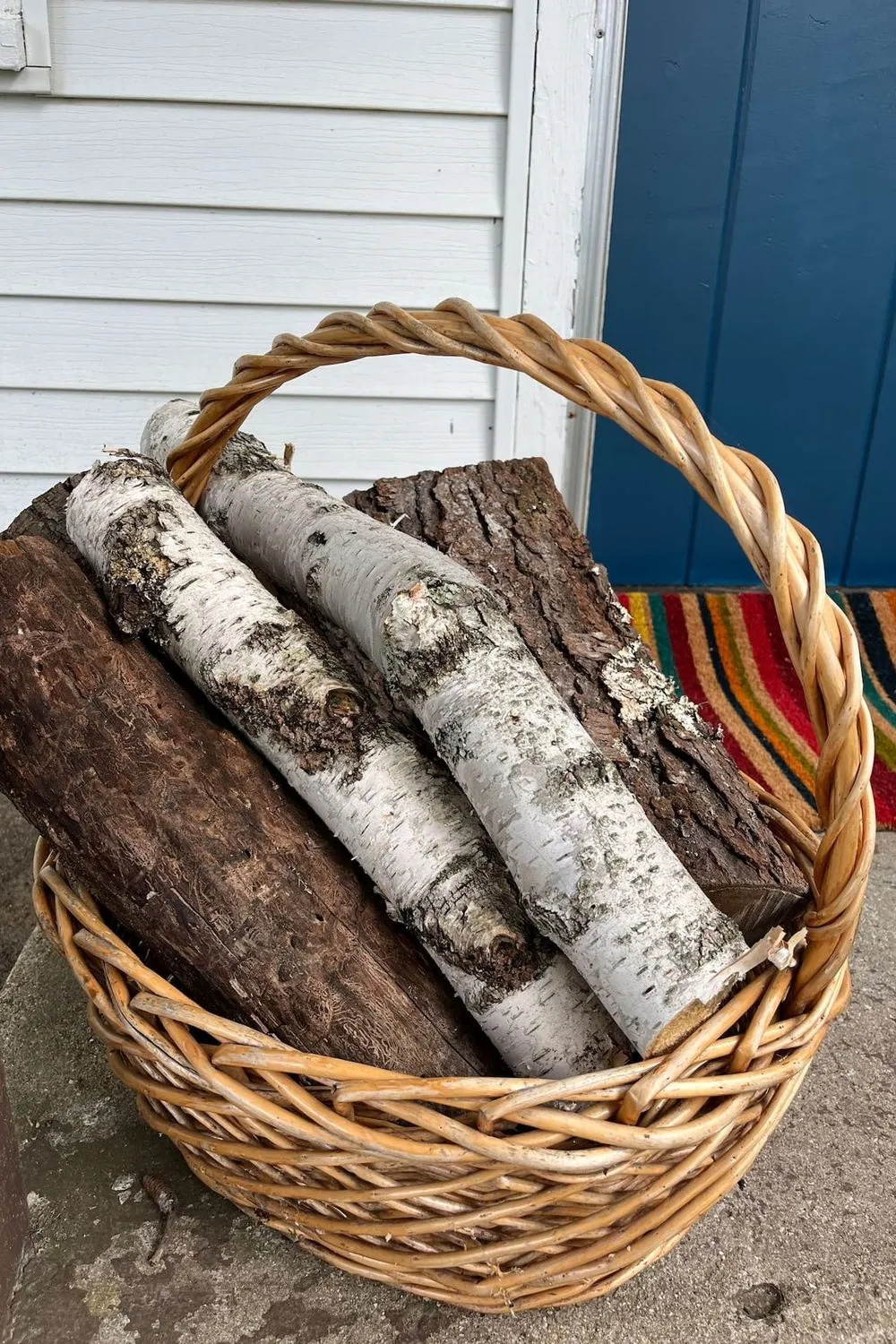
Firewood by the door — the porch admits what winter is for.
A woven basket of split firewood beside the door is the porch's most honest decoration: it says the house burns wood, it smells faintly of it, and its warm tones soften a wall of paint and stone. Keep the basket under cover and the logs stacked bark-out — a basket that gets rained on rots, and bark-out stacking sheds water instead of holding it.
Styling tip: bring the basket in to refill it, never fill it where it stands — dragging logs across the porch scratches the paint and chips the steps.

Full evergreen on the door — the wreath is the whole welcome.
A full evergreen wreath of pine and fir, hung plain with nothing added, is the front door's entire winter statement: deep green against the door, scented every time it opens, and generous enough that the door needs nothing else. Fresh is best here — a full fresh wreath holds its shape for weeks in cold air and smells of the season in a way no faux wreath can.
Styling tip: mist the wreath lightly once a week and keep it out of direct sun — winter sun through a storm door cooks a wreath brown in days.
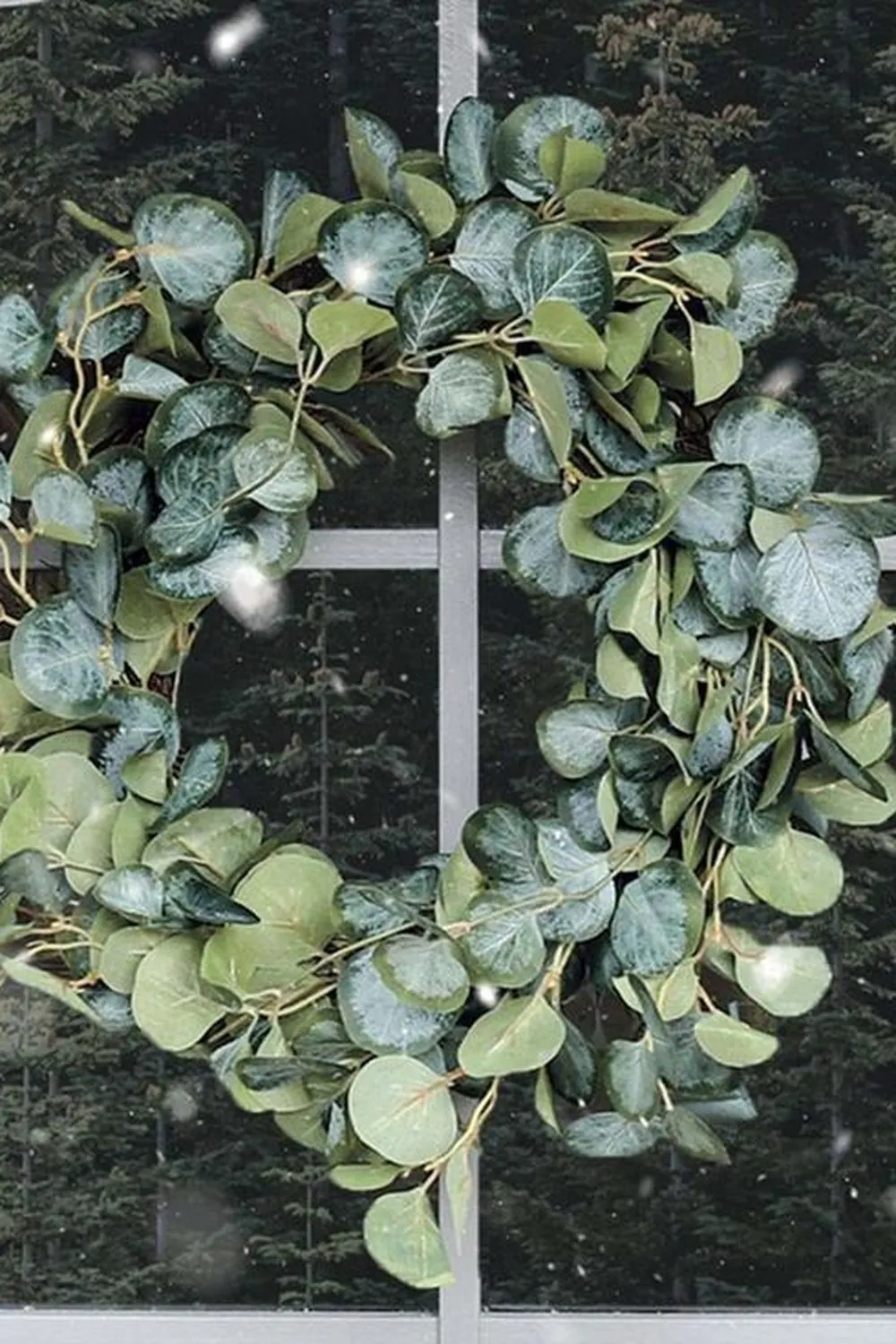
Eucalyptus and pine on the side window — the door's wreath gets a quieter echo.
The side window beside the door deserves its own wreath, smaller and quieter than the door's: eucalyptus and pine in a thin circle, silver-green against the glass. The echo makes the porch feel designed rather than decorated in one spot, and the eucalyptus scent drifts in whenever the window is cracked for air.
Styling tip: hang the window wreath from a suction hook rated for the cold — cheap hooks fail in frost, and a wreath on the steps is a wreath in the mud.
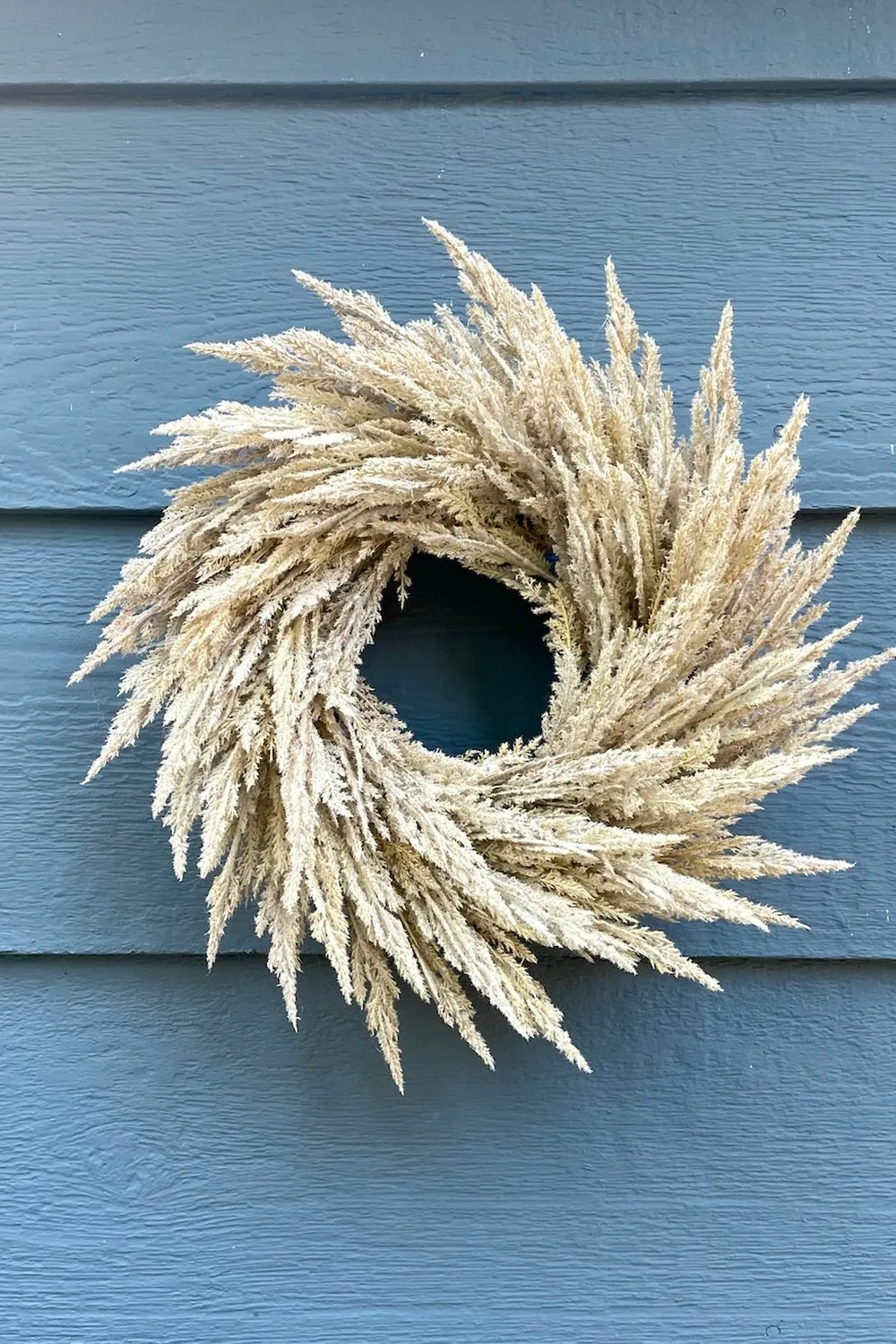
Dried grass in wheat tones — the wreath that never wilts.
A dried grass wreath is the porch's most forgiving decoration: wheat tones against paint, no water, no wilting, and it holds its shape from the first frost to the last. Hung on the wall beside the door rather than on it, it gives the porch a second focal point and a pale, warm color the evergreen wreath cannot.
Styling tip: keep a dried wreath under the porch roof, out of the rain — one soaking mats the grasses flat and the wreath never recovers its shape.
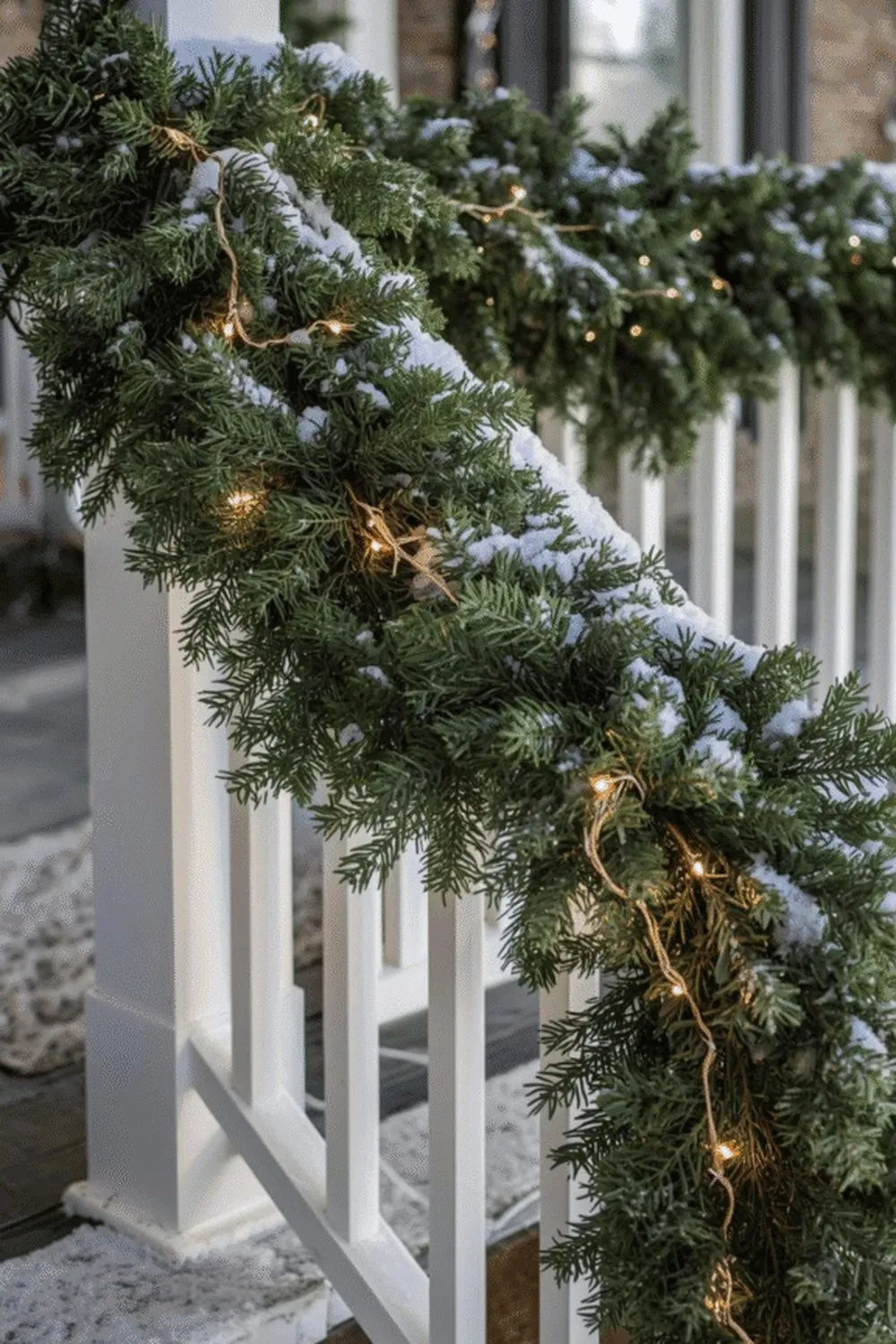
Cedar along the rail — the porch gets a green line that swags instead of hanging straight.
A fresh cedar garland draped along the porch rail, swagging gently between the posts, is the porch's longest line of green: it frames the whole sitting area, it smells of cedar every time someone leans on the rail, and its soft drape suits a porch in a way a straight line never could. Tie it at each post with twine and let the middle fall naturally.
Styling tip: wire the garland to the rail, not just draped over it — winter wind lifts an untied garland clean off the rail and into the garden.
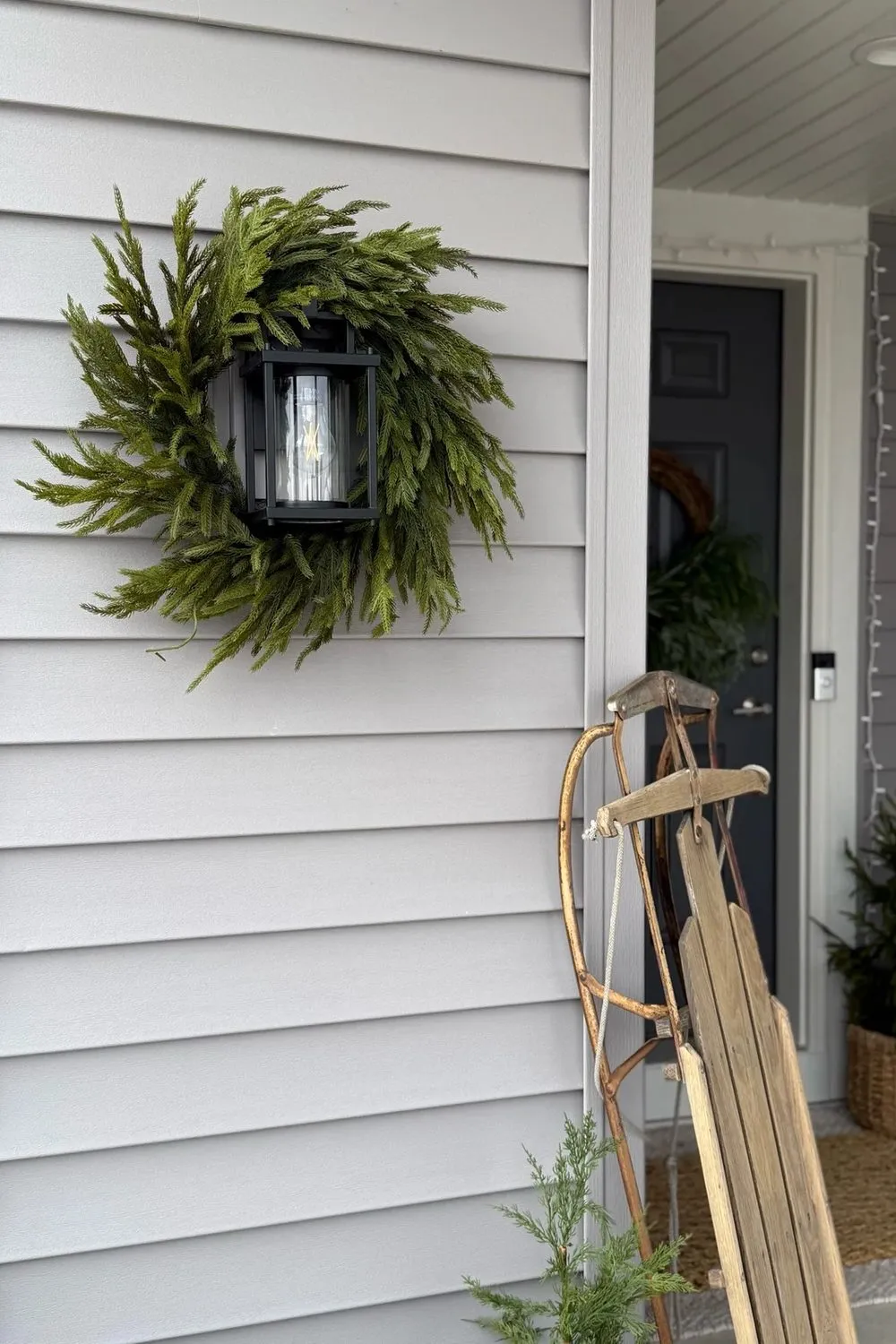
A small wreath on the porch light — the fixture gets dressed too.
The porch light is the one fixture every visitor looks at, and a small plain wreath hung on it is the detail that makes the porch feel finished: a thin circle of greenery around the lamp, glowing from inside when the light is on. Keep the wreath small and the greenery clear of the bulb — a wreath that touches a hot bulb is a hazard, not a decoration.
Styling tip: use a battery lantern or a cool LED bulb behind the wreath — a hot bulb dries the greenery in a day and browns the leaves that touch it.
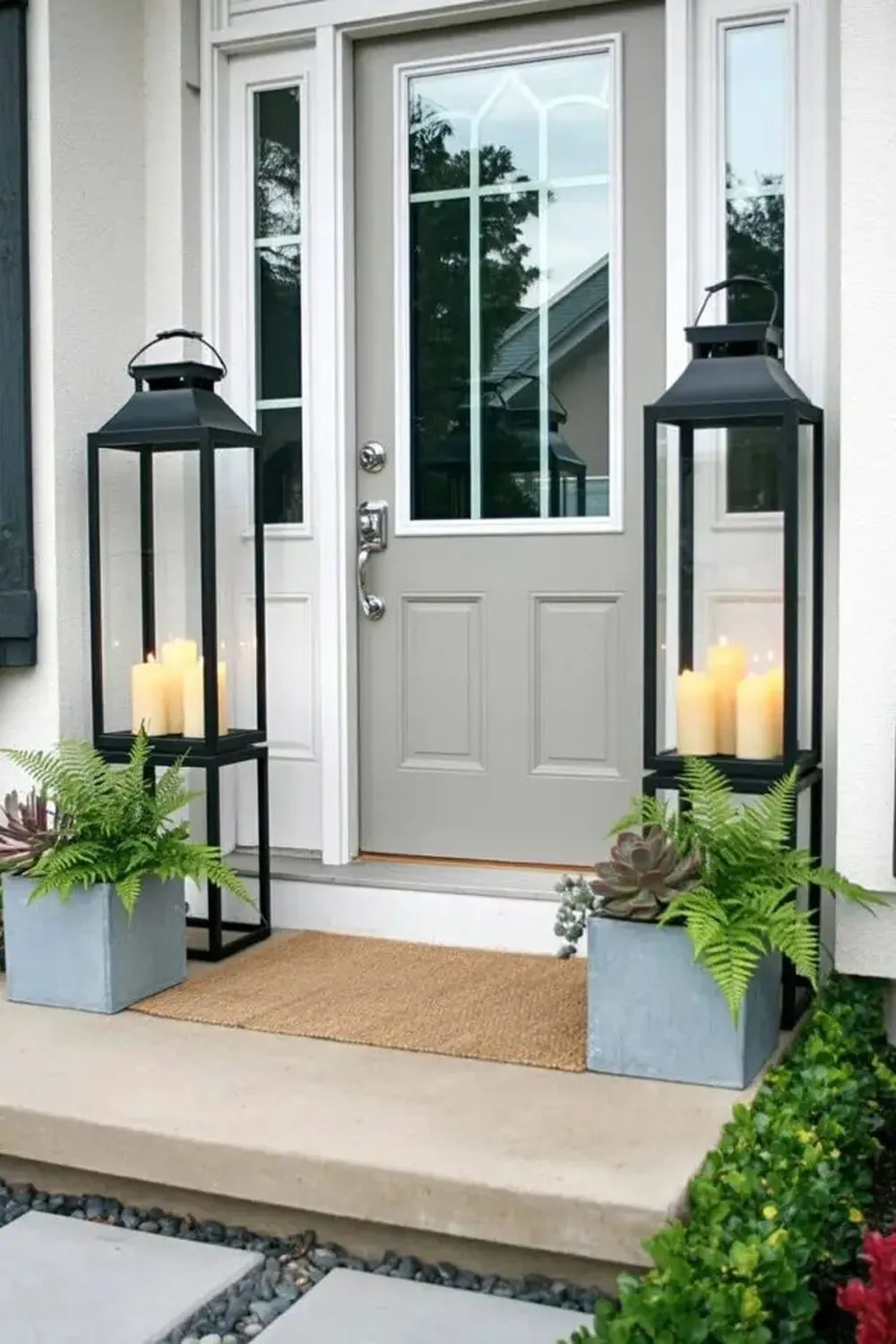
Two tall lanterns, one each side — the door gets a guard of honor in glass and iron.
A pair of tall black lanterns flanking the door, each holding a pillar candle, is the porch's evening architecture: symmetrical, protective and warm. The glass keeps the flames alive against the wind, and the pair frames the door the way columns would — the porch reads grander for two lanterns that cost less than one planter.
Styling tip: set the lanterns on flat stone, never on a sloped step — a lantern that tips spills hot wax across the porch and cracks its own glass.
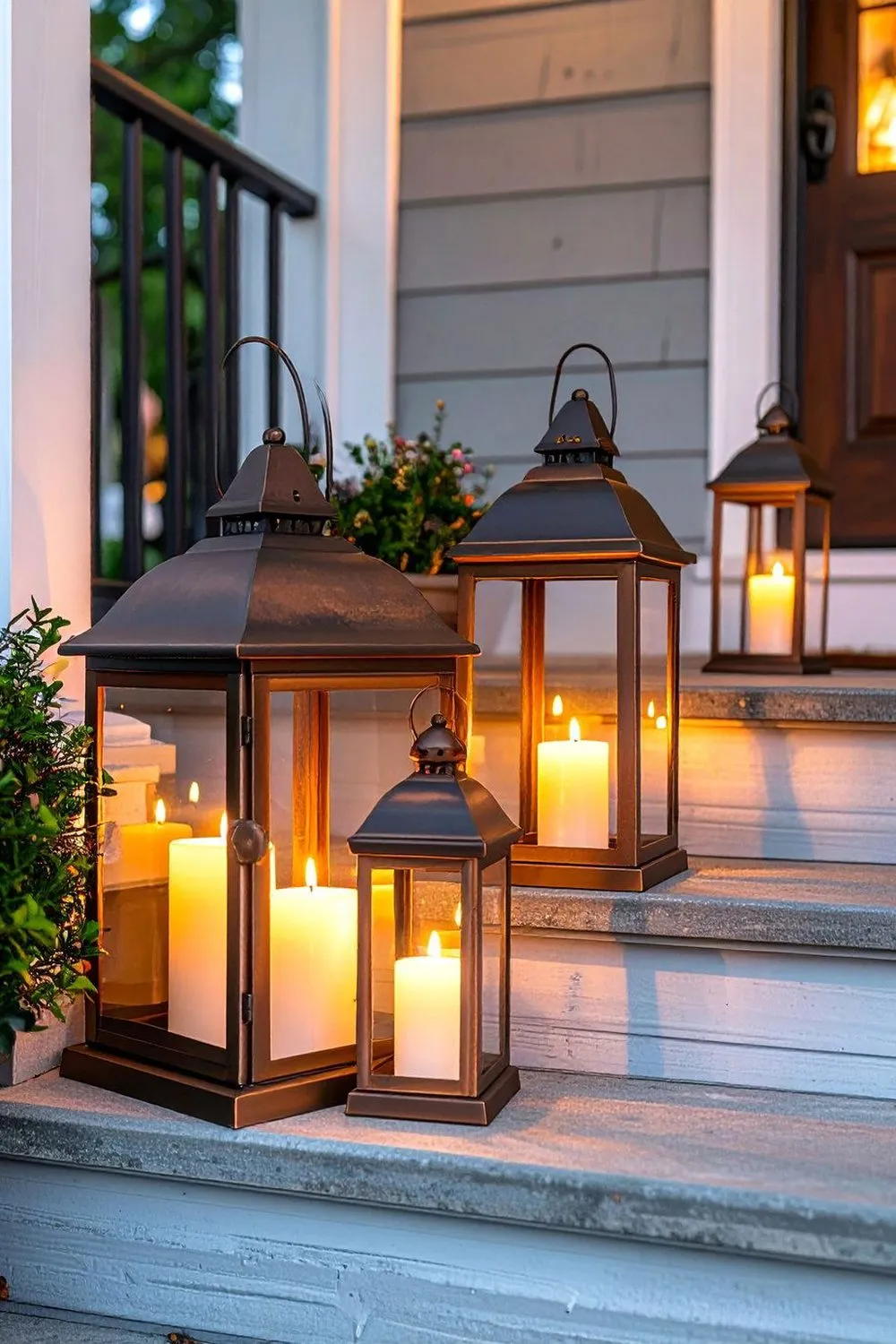
Lanterns of three sizes on the steps — the way up is lit like a path, not a runway.
A cluster of lanterns in three sizes on the porch steps turns the way up into a lit path: one tall, one medium, one small, grouped at the step's edge so the light pools where feet land. Mixed sizes read collected; three identical lanterns read like a shop display. Flameless candles inside mean the cluster can stay out all evening with nobody watching it.
Styling tip: keep the cluster to one side of the steps, never both — the other side stays clear for carrying parcels, and nobody trips over a lantern in the dark.
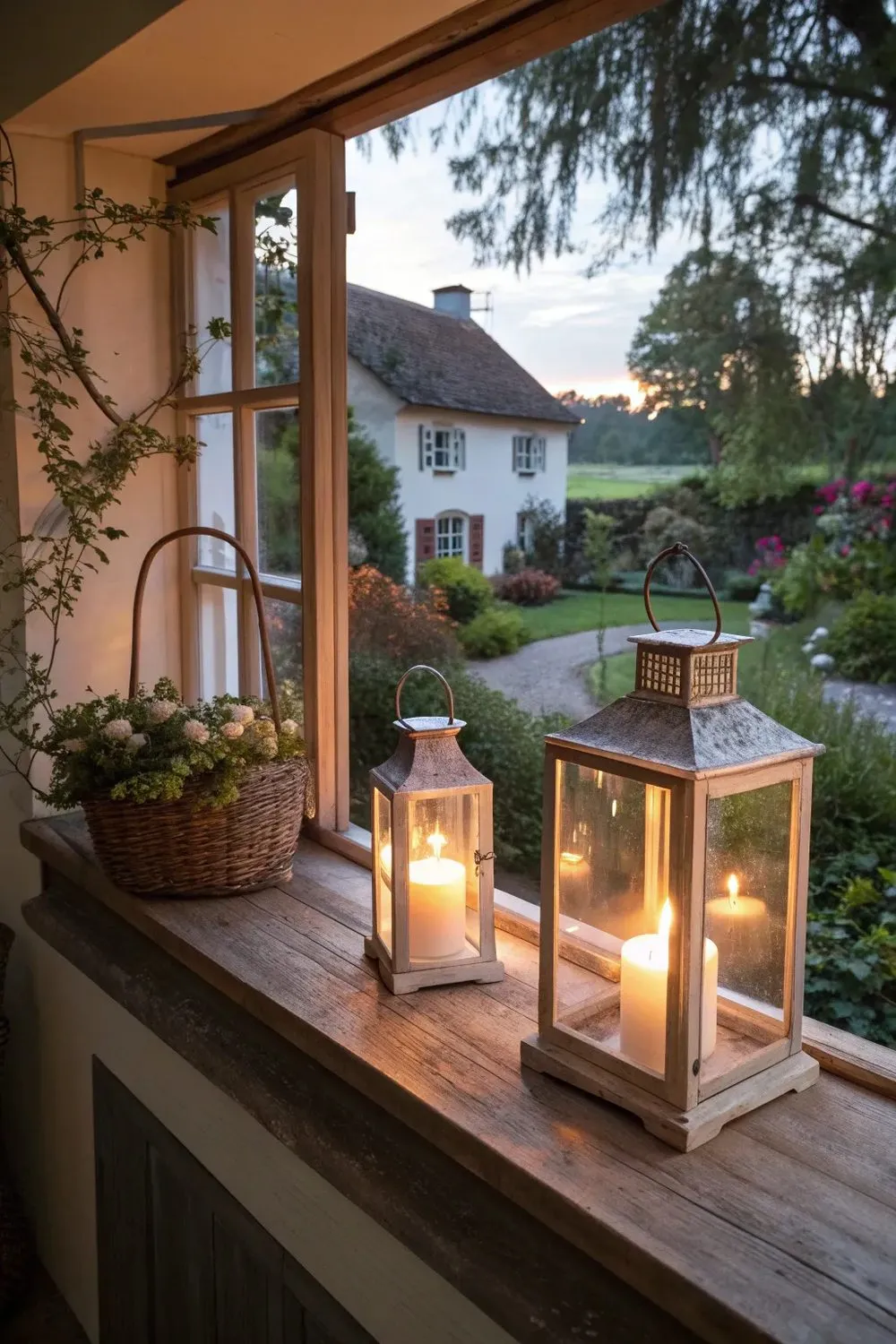
Flameless candles in the window lanterns — the glow stays, the worry goes.
The lanterns on the porch windowsill are the ones nobody watches, so flameless candles belong in them: the same warm glow, on a timer that switches them on at dusk, with no flame for the wind to blow out and nothing to remember at bedtime. From the street the windows read lit and lived in, and the house never burns a candle unattended.
Styling tip: match the flameless candles' warm white to the porch bulb — a cool-white candle beside a warm porch light reads like a torch in the window.
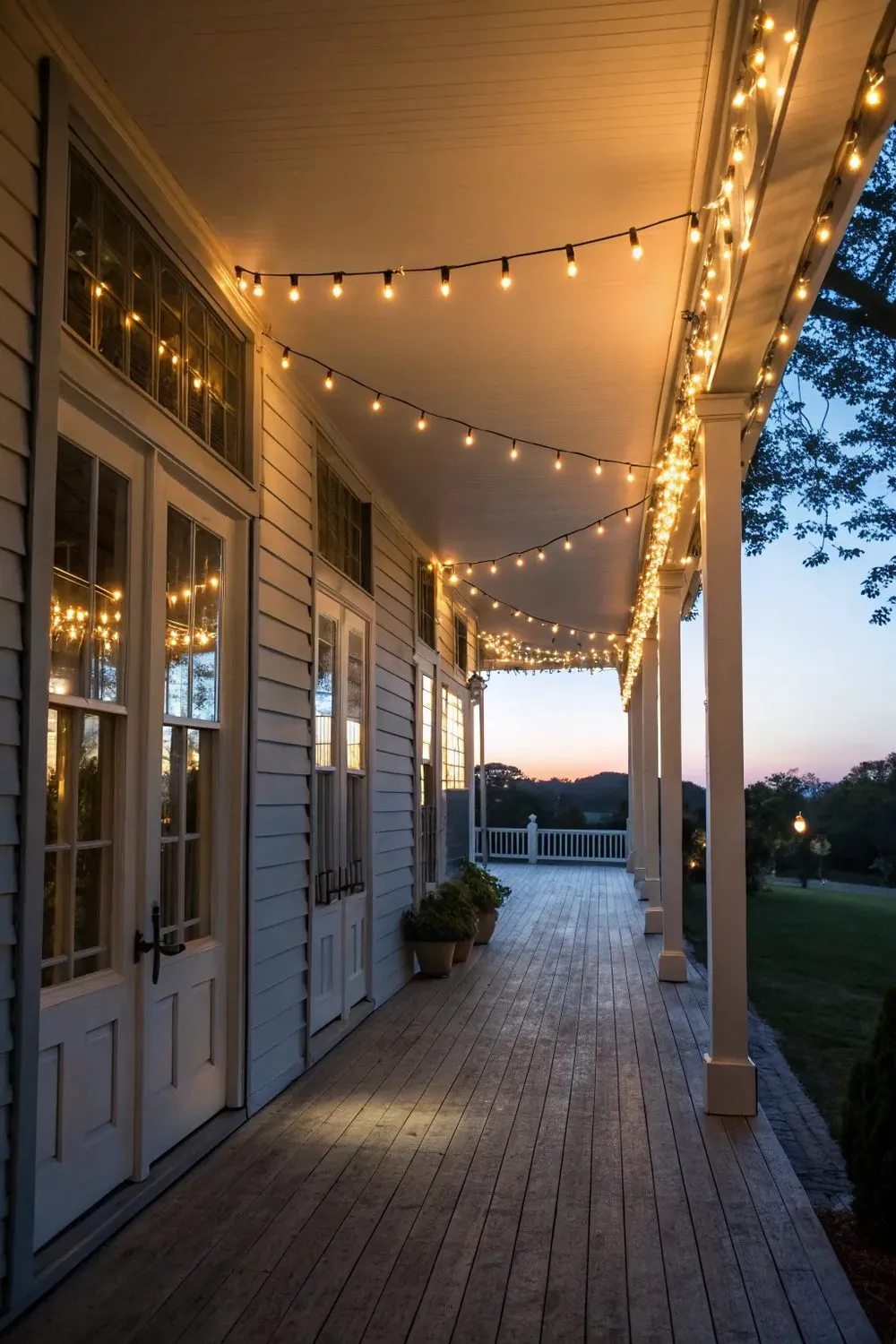
Warm string lights along the beam — the porch ceiling becomes the room's lamp.
Warm white string lights draped along the porch beam turn the porch ceiling into the room's lamp: the whole sitting area glows, the bench and the planters read at night, and the porch becomes a room instead of a dark threshold. Warm white only — cool white reads like a shopfront, and a single warm strand beats three bright ones.
Styling tip: run the lights on a timer from dusk to bedtime and check the outdoor rating — indoor lights outdoors fail in the first rain, and a failed strand is a dark porch for the rest of winter.
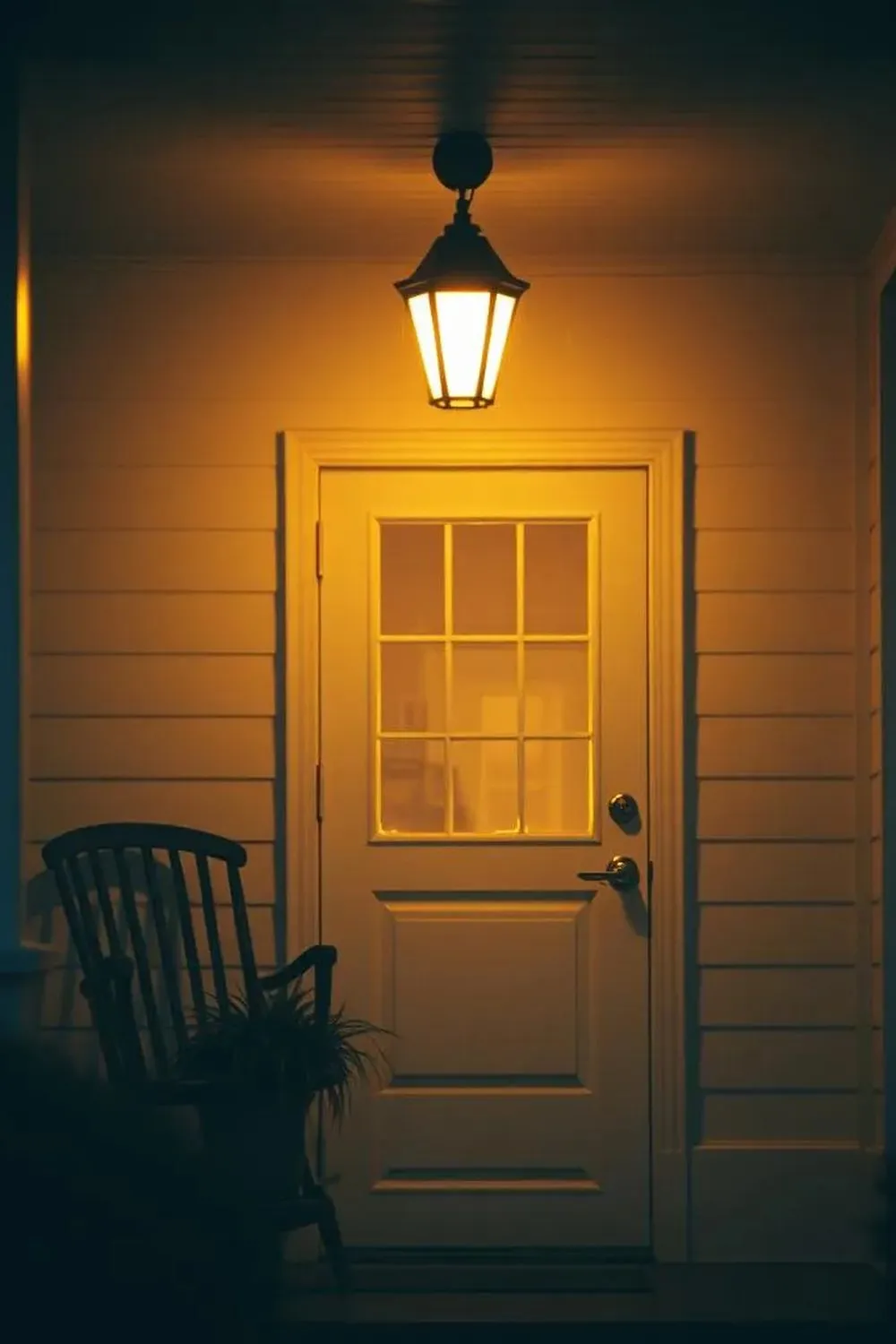
A motion-sensor light in warm white — the porch lights itself for whoever arrives.
A motion-sensor porch light in warm white is the porch's most practical decoration: it switches on for the visitor, the delivery and the dog, and switches itself off again, so the porch is never dark when it matters and never lit when it does not. Warm white keeps the light welcoming; a cold white sensor light makes the porch look like a car park.
Styling tip: aim the sensor at the path, not the street — a sensor that fires for every passing car burns all night and annoys the neighbors.
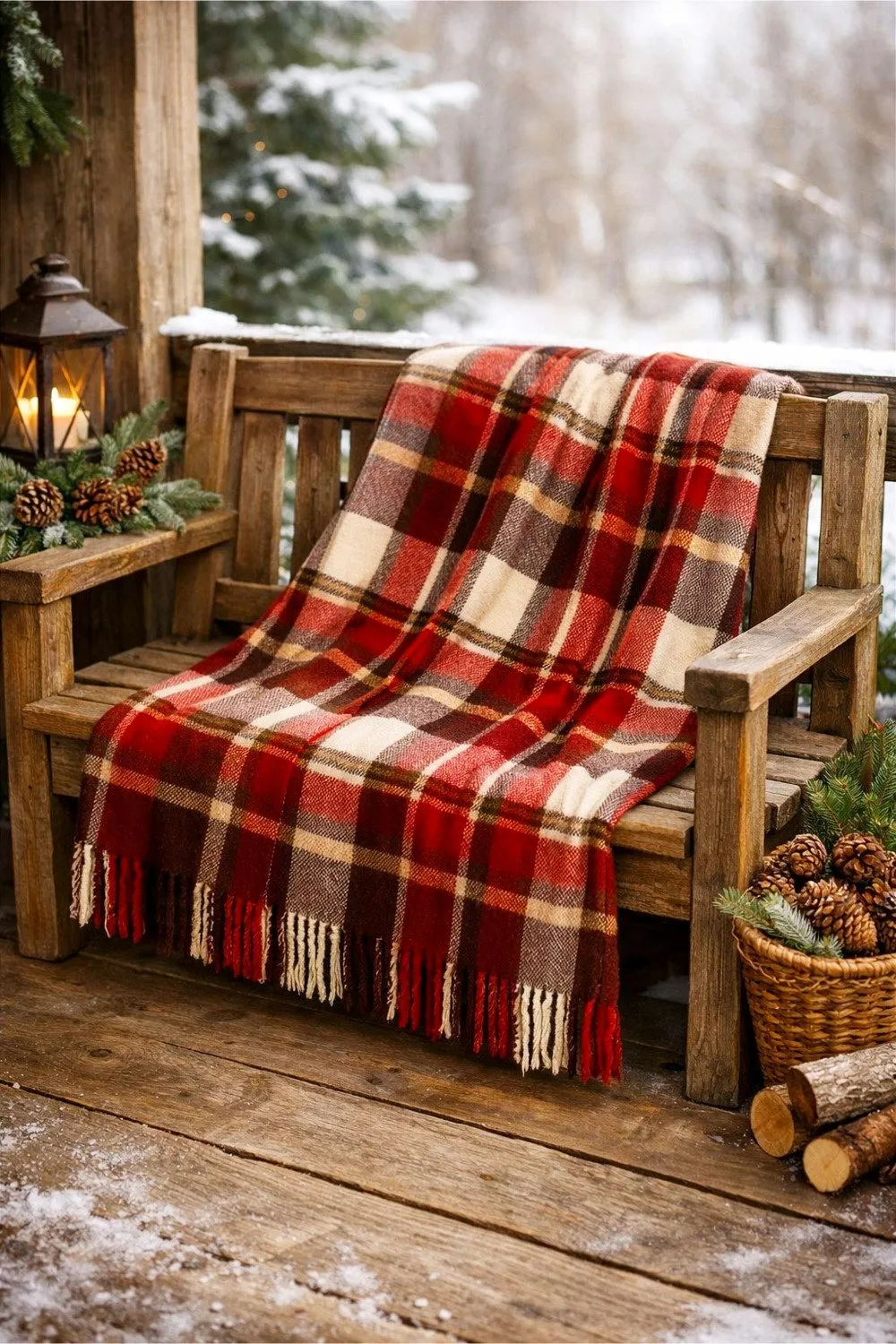
Plaid over the bench — the porch's color comes from wool, not paint.
A plaid throw draped over the porch bench is the porch's warmest layer and its strongest pattern: the checks read against plain wood and paint, the wool invites sitting even in the cold, and the throw can come inside to dry on the wettest days. Choose a plaid in deep red and cream or forest and oatmeal — strong enough to carry the porch, calm enough to sit beside the wreath.
Styling tip: bring the throw in when rain is forecast and shake it out before it goes back — a wet wool throw left on a bench smells of damp for a week.
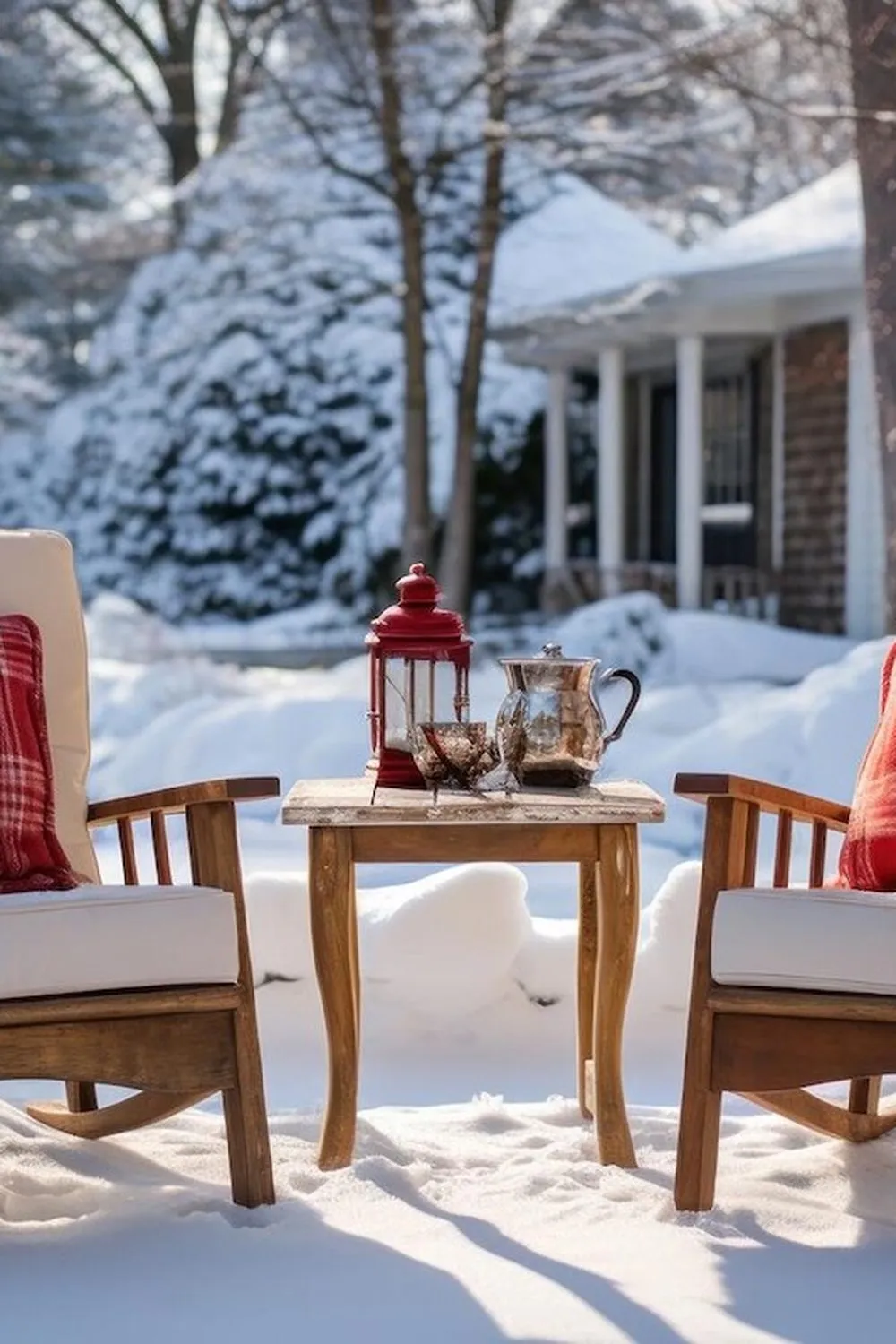
Plaid cushions on the chairs — the seats get the pattern, the bench keeps the throw.
Plaid cushions on the porch chairs spread the pattern around the porch instead of leaving it all on the bench: deep red checks on the seats, the throw folded on the bench, the doormat layered below. The repetition is what makes the porch feel designed — one plaid thing is an accident, three is a scheme.
Styling tip: use outdoor cushion covers with a zip, not plain indoor ones — a winter shower soaks an indoor cushion through, and a soaked cushion stays damp for days.
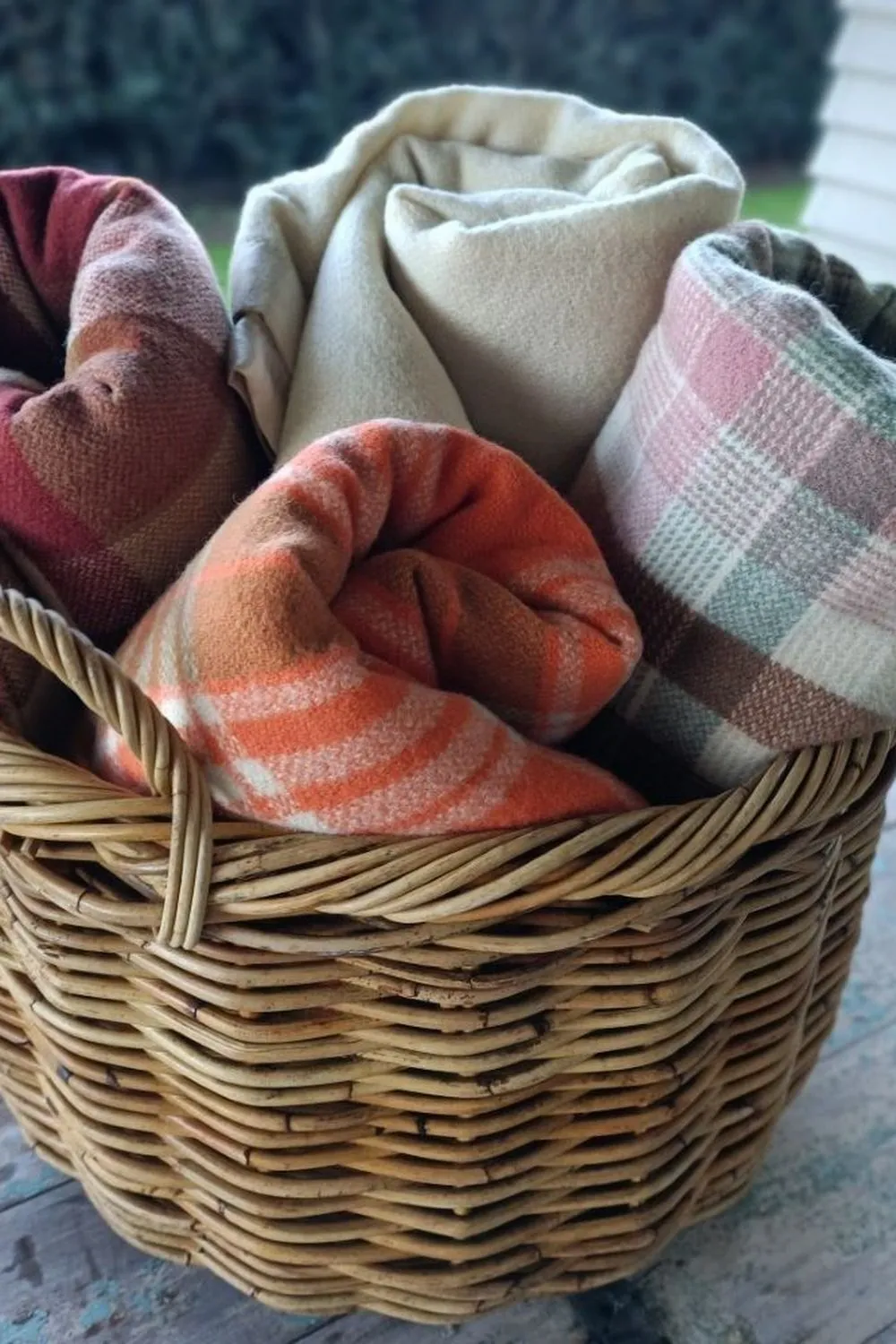
A basket of folded wool blankets — the porch keeps its own warmth within reach.
A woven basket of folded wool blankets beside the bench is the porch's promise that sitting outside is allowed in winter: the blankets are there, the basket keeps them tidy, and the whole thing reads as hospitality rather than storage. Roll the blankets instead of folding them — a basket of rolls looks generous, and a roll pulls out without disturbing the rest.
Styling tip: line the basket with a dry cloth and store it under the porch roof — a basket that sits in rain rots from the bottom, blankets and all.
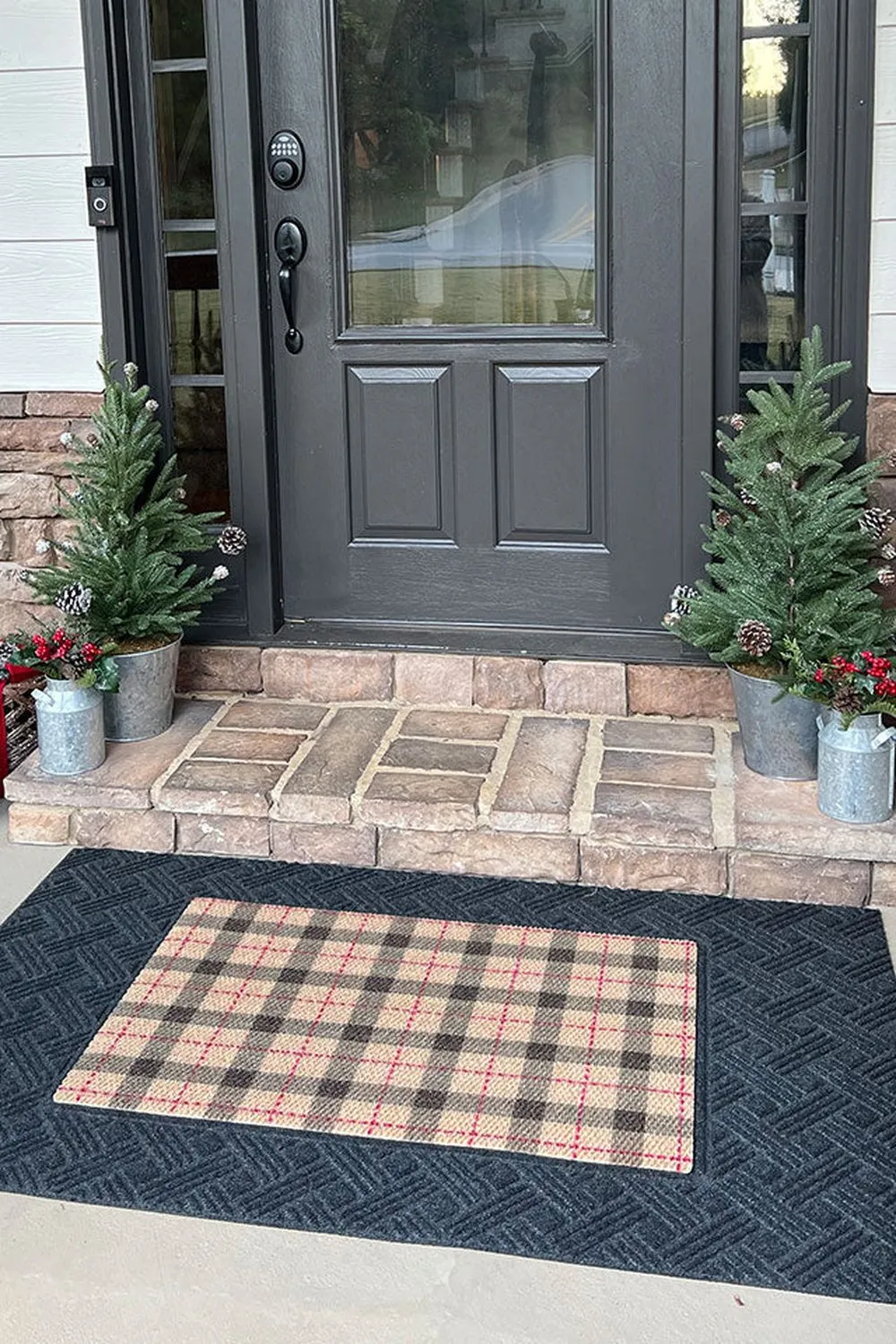
Plaid over woven — two mats, one doorway, twice the welcome.
Layering a small plaid doormat over a larger woven rug is the porch's easiest upgrade: the rug widens the welcome, the plaid adds the pattern, and the pair reads deliberate in a way a single mat never does. Keep the plaid mat smaller than the rug by a hand's width all round, so the layering reads as a frame rather than a mistake.
Styling tip: tape the rug's corners down with outdoor rug grippers — a layered mat that slides is the first thing a visitor trips on.
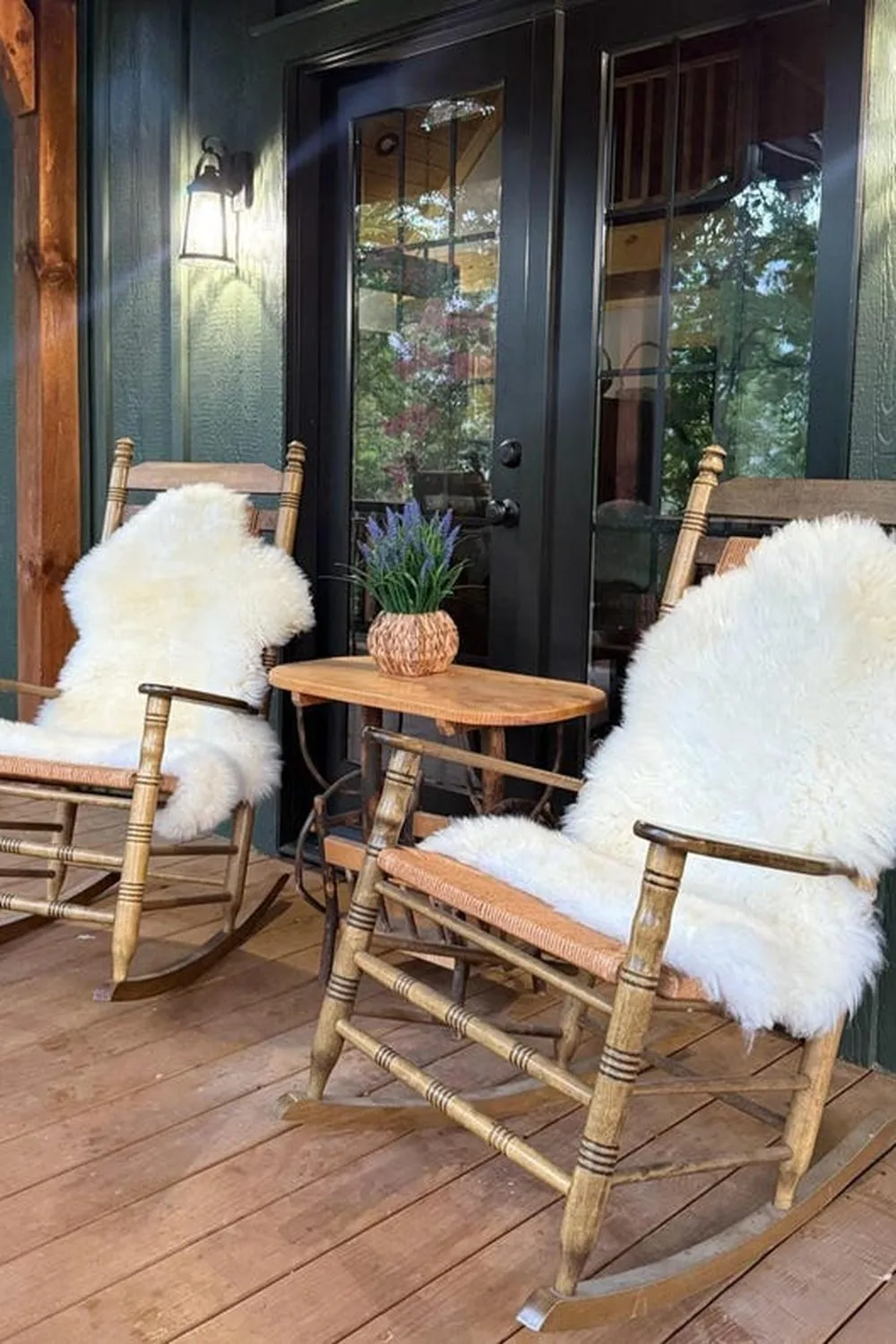
Sheepskins on the rocking chairs — the cold seats get the room's softest layer.
The rocking chairs are where the porch is actually sat in, and sheepskin seat pads are the smallest comfort with the biggest effect: warm to sit on, soft to lean against, and the one textile that makes an outdoor chair feel like an indoor one. Two pads, two chairs — the rest of the porch stays plain, and the dressed chairs read as an invitation to sit a while.
Styling tip: bring the sheepskins in on wet days and brush them with a wide comb — porch sheepskins collect dust and damp, and a matted fleece looks tired fast.
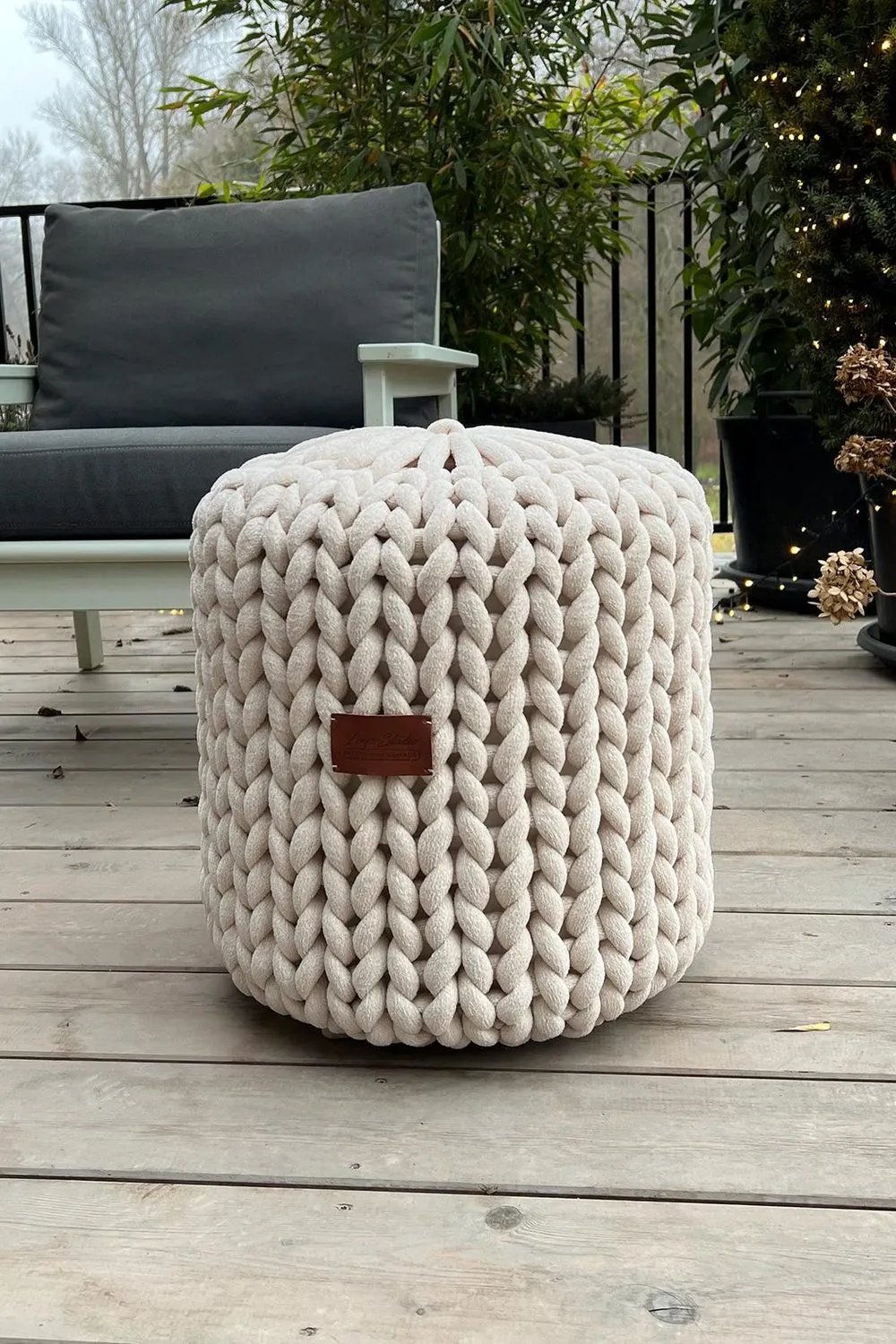
A knitted pouf at the bench's foot — somewhere to put tired feet, and a soft shape in a hard porch.
A chunky knitted pouf in cream wool at the foot of the bench is the porch's softest shape: a footrest, an extra seat, and the one object on the porch with no straight edge. Its pale wool lightens a porch of dark paint and wood, and it moves inside in one hand when the weather turns — the most portable comfort the porch owns.
Styling tip: keep the pouf under cover and off wet stone — wool that sits in a puddle felts, and a felted pouf never springs back.
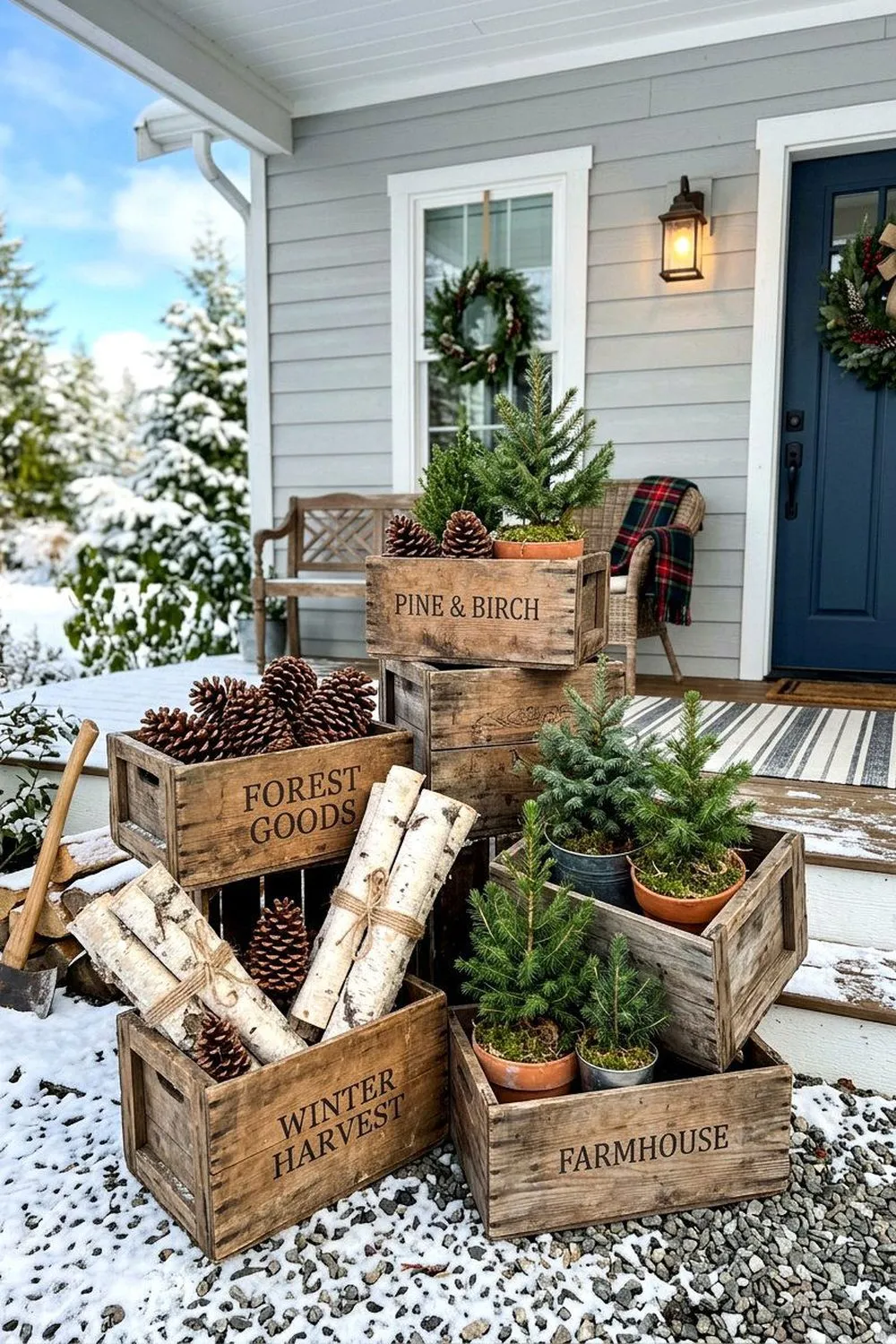
Pinecones in a wooden crate — the forest, carried to the door.
A wooden crate of pinecones beside the door is the porch's cheapest natural decoration: the cones' warm brown suits every door color, the crate's wood echoes the bench, and the whole thing costs a walk in the woods. Fill the crate loosely — a crate packed tight reads as storage, and a crate with room to spare reads as styling.
Styling tip: bake the pinecones briefly on a low heat before they come inside the crate — it opens them up, kills anything living in them, and keeps the porch free of visitors.
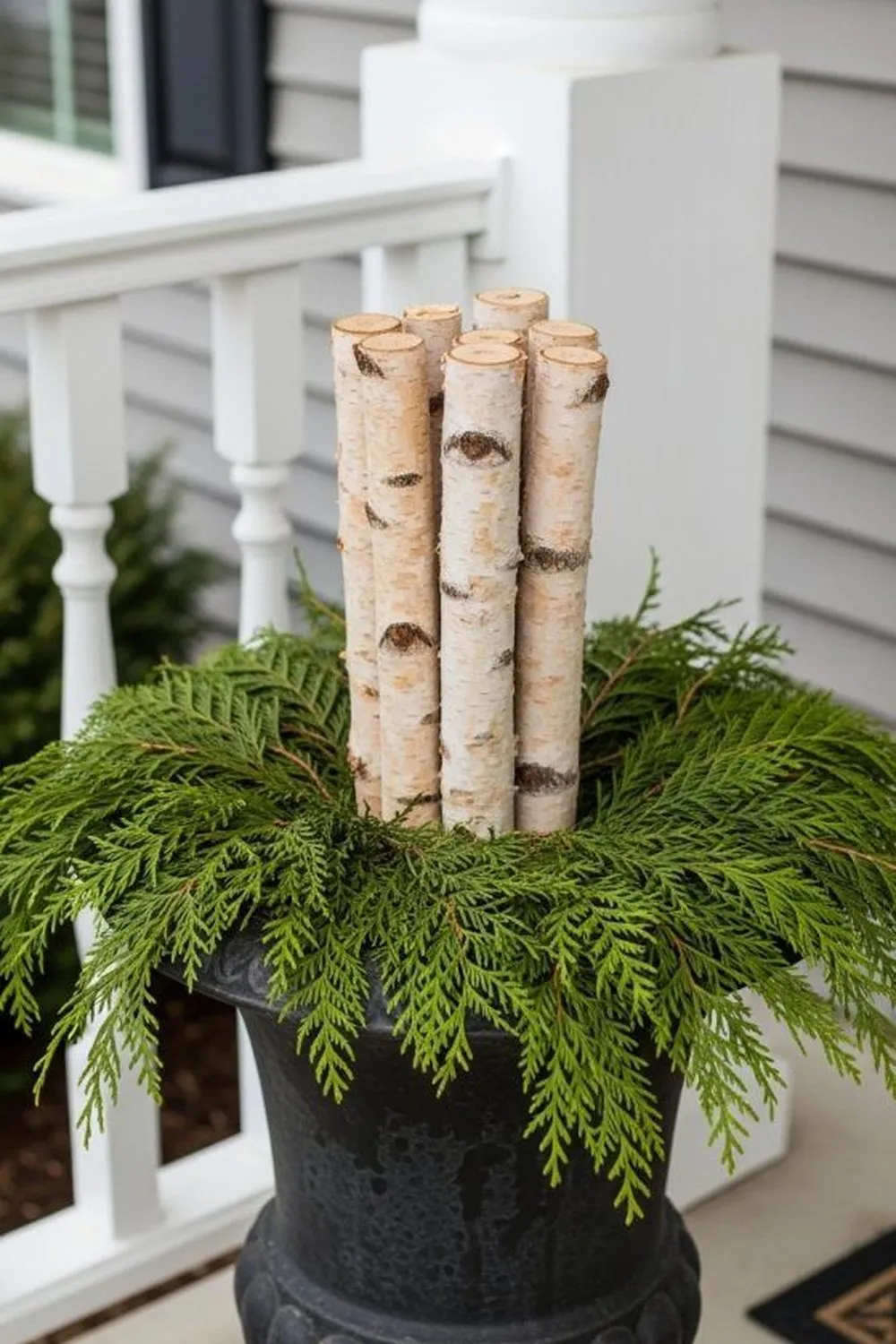
Bare birch in a tall planter — height without a single leaf.
Bare birch branches in a tall dark planter give the porch height no plant can match in winter: white bark against dark metal, thin lines against the door's solid shape, and a silhouette that reads even in the dark. The branches need no water and no care — they are the porch's sculpture, and they hold their shape until spring.
Styling tip: wedge the branches tight with stones at the planter's base — a tall planter of bare branches catches the wind like a sail and tips in the first storm.

Firewood under the bench — the storage becomes the decoration.
A neat stack of split firewood under the porch bench turns storage into decoration: the logs' warm ends repeat the bench's wood, the stack fills the bench's empty shadow, and the porch reads as a house that burns wood rather than a house that stores it out of sight. Stack bark-out and leave air between the rows — damp wood in a tight stack rots instead of drying.
Styling tip: keep the stack a hand's width from the house wall — wood against the wall holds damp against the paint and invites insects indoors.
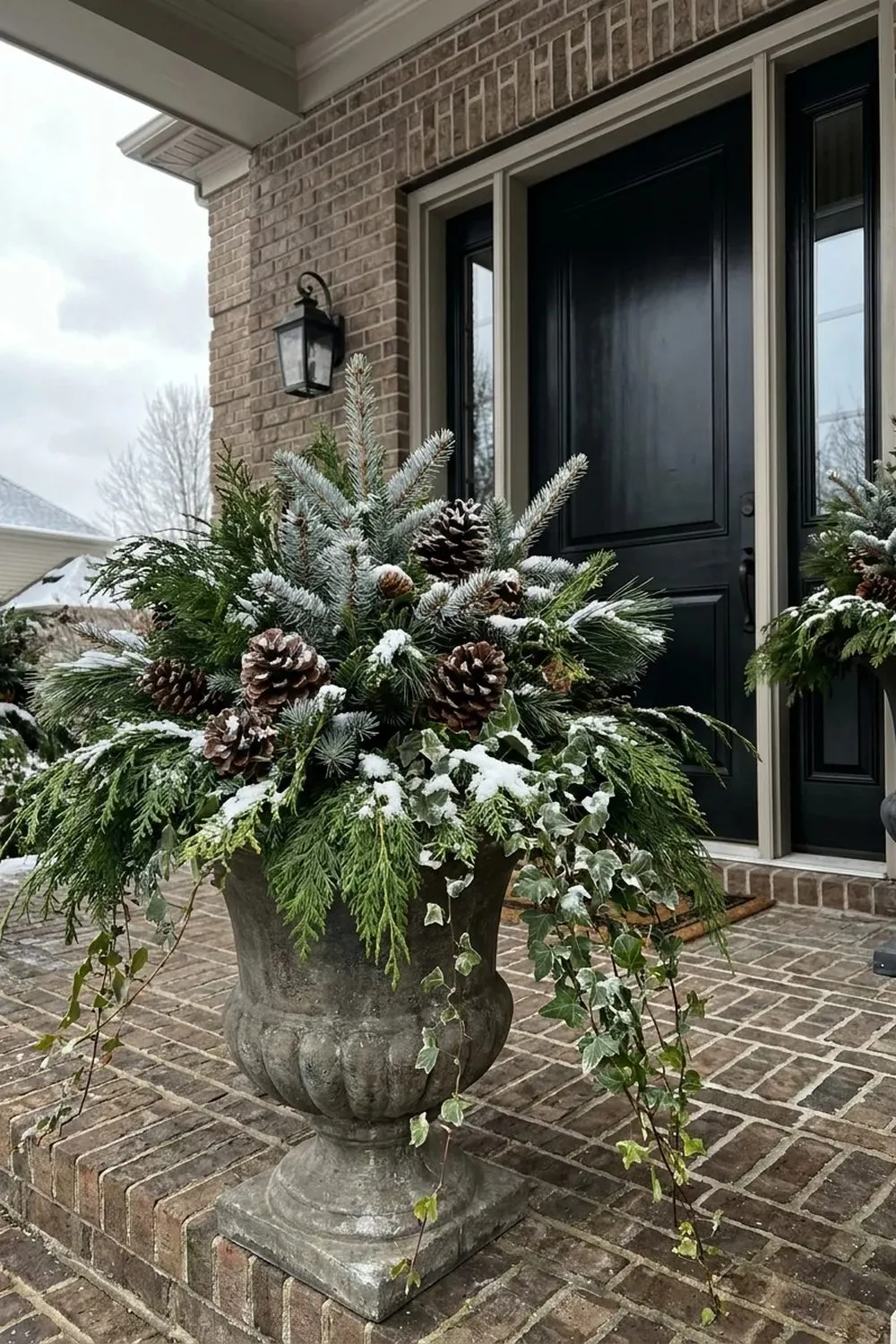
Pine, fir and cedar in stone — the planter that stays green all winter.
A heavy stone planter of pine, fir and cedar is the porch's living decoration: mixed greens in one pot, deep and varied, holding their color through frost that would kill a summer plant in a night. Stone suits the weight of the greens and will not crack in a freeze the way terracotta does — the planter is built for the season it serves.
Styling tip: water the greens once, at planting, and then leave them — winter greens in a stone pot need almost no water, and a soaked pot freezes solid and splits.
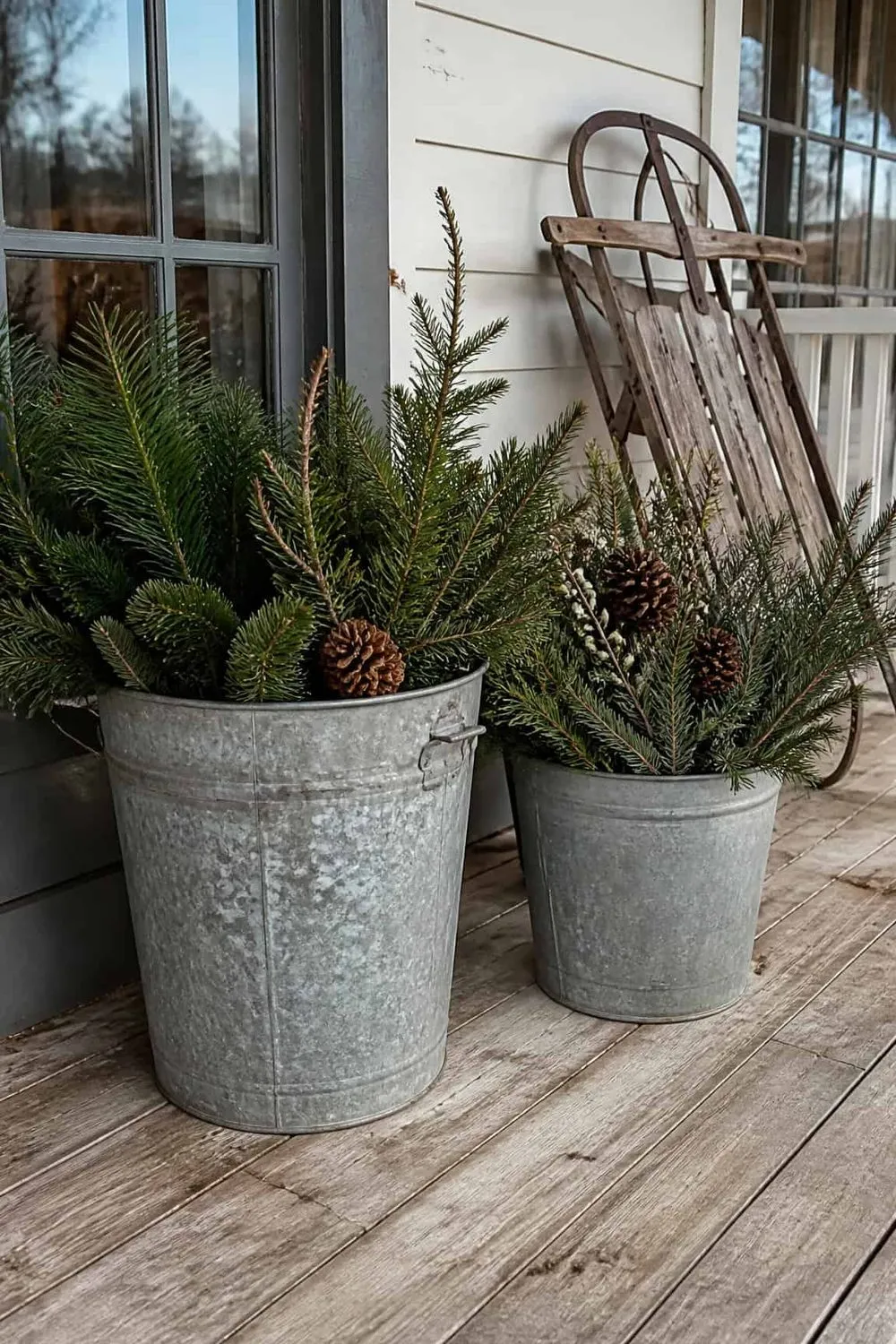
Cut boughs in a galvanized bucket — the porch's green, gathered not bought.
A galvanized bucket of cut evergreen boughs beside the steps is the porch's most gathered-looking decoration: the metal's gray suits the winter light, the boughs spill over the rim like they were just cut, and the whole thing reads as a chore half done rather than a display. Cut the boughs long and let them lean — a bucket of short, upright stems reads as a brush holder.
Styling tip: keep a little water in the bucket and change it weekly — cut boughs drink slowly in the cold, and stale water smells of it by the second week.
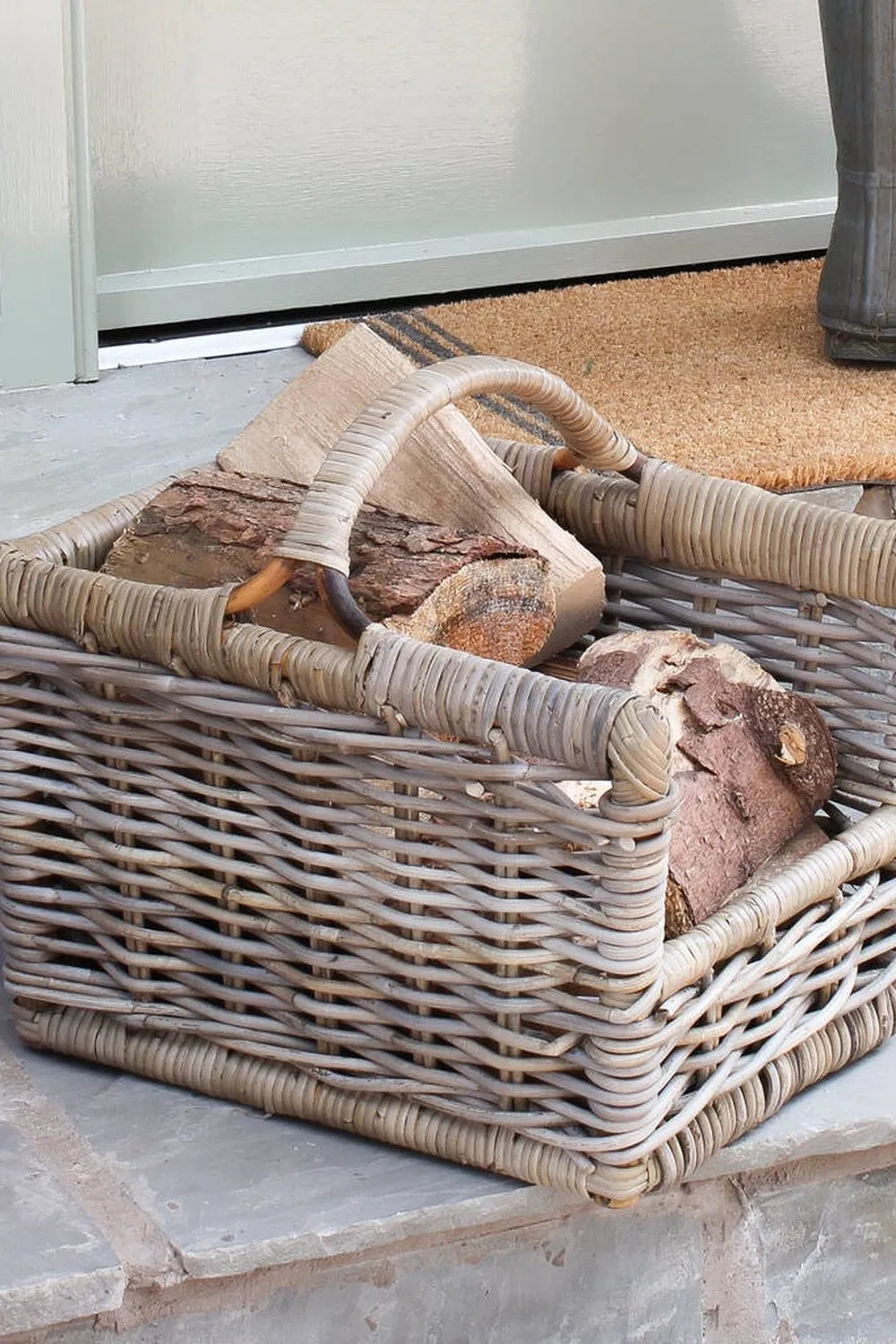
Logs in a basket by the steps — the porch's second basket, and the one that gets used.
A woven basket of split logs beside the steps is the porch's working basket: the logs go in by the armful and come out by the fire, so the basket is never merely decoration. Its warm weave softens the steps' hard edges, and a basket that empties and refills through the season tells the truth about the house — this porch is used, not staged.
Styling tip: keep the basket under the porch roof and off the ground on two short battens — a basket that sits in a puddle rots from the bottom in one wet winter.
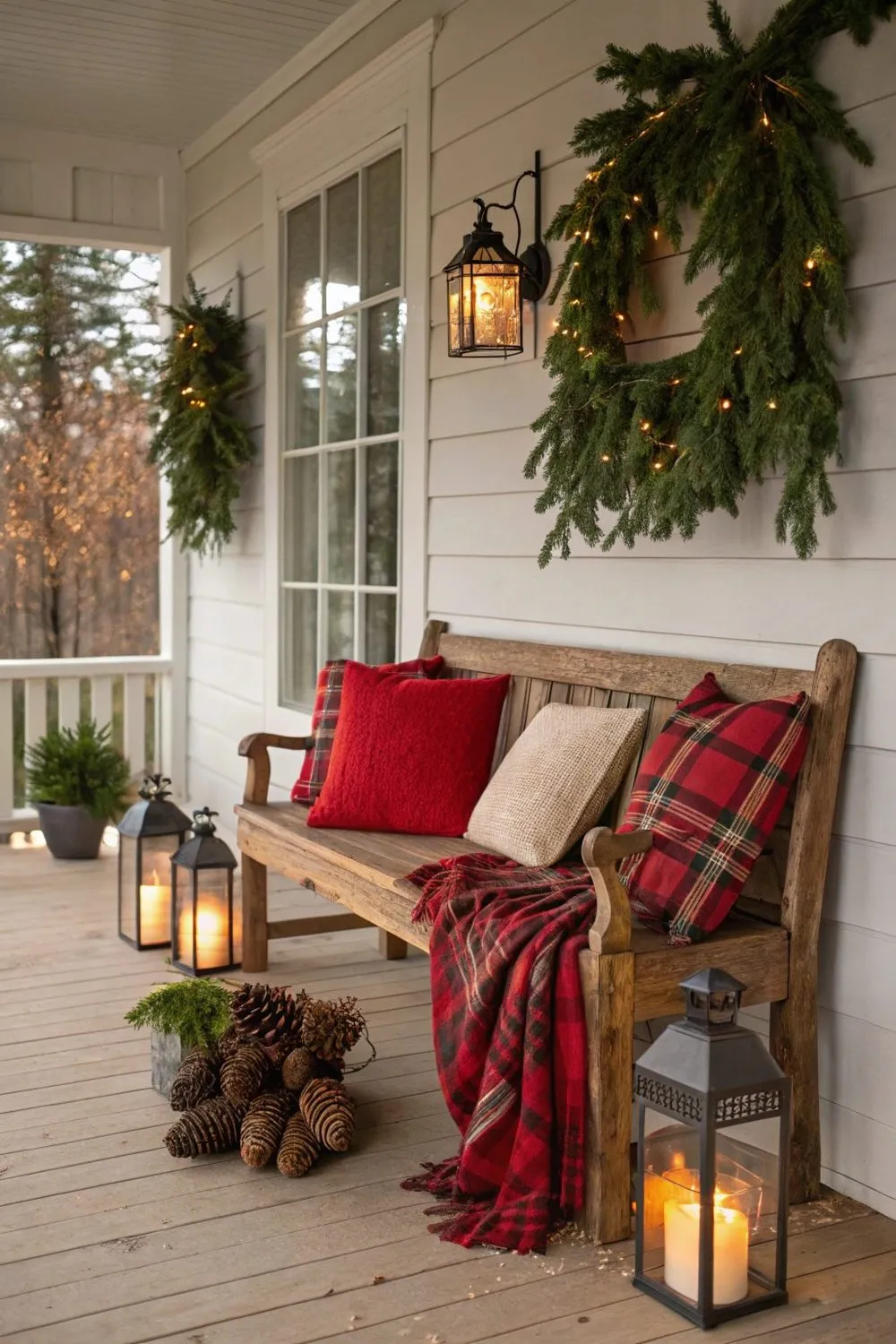
The bench, dressed — throw, cushions and a place to sit that means it.
The wooden bench is the porch's sitting room, and dressing it for winter means three things: a plaid throw over the back, cushions on the seat, and nothing else competing for the space. The bench dressed reads as an invitation; the bench bare reads as a place to put parcels. Keep the dressing to the bench alone — a dressed bench beside bare chairs looks chosen, and a porch dressed everywhere looks crowded.
Styling tip: fold the throw, don't drape it loose — a folded throw stays put in the wind, and a loose one ends up on the steps by morning.
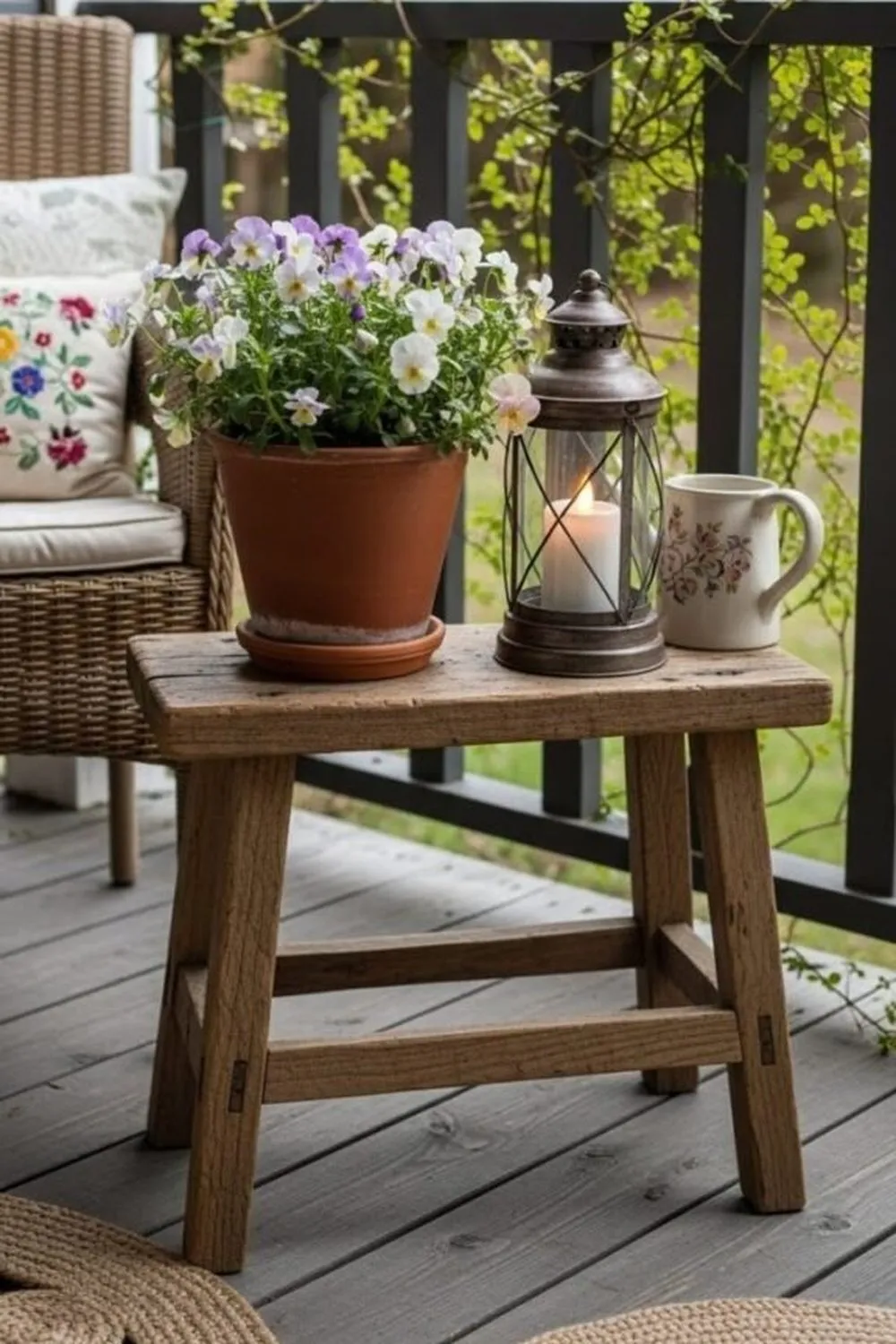
A side table, a lantern and a mug — the porch's smallest still life.
A small wooden side table beside the bench, holding one lantern and one ceramic mug, is the porch's smallest still life: it says someone sits here, it gives the lantern a home off the floor, and it turns the bench from furniture into a place. One mug, one lantern — the table is small, and a crowded side table reads as a shelf that lost its wall.
Styling tip: weight the table with a stone inside its base or choose one with a wide foot — a light side table tips in the first gust and takes the lantern with it.
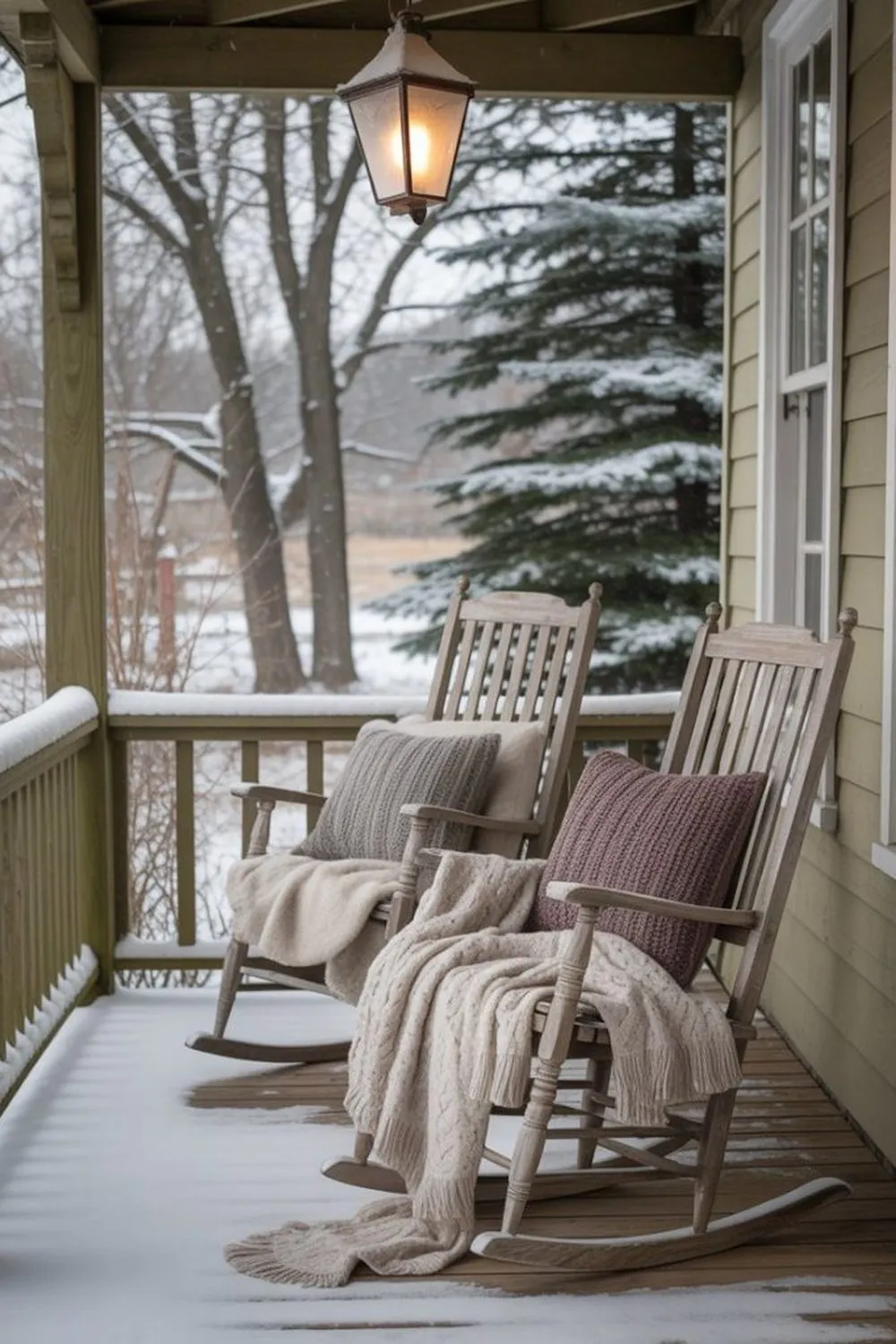
Two rocking chairs facing the street — the porch's conversation, set out in advance.
Two rocking chairs facing the street, sheepskins on their seats, are the porch's conversation set out in advance: they face the world together, they invite sitting without a word, and their slow rock is the porch's own rhythm. A pair reads as company; a single chair reads as someone waiting alone. Set them a little apart, so two people can talk without their elbows meeting.
Styling tip: check the rockers' runners each month — winter damp swells wood, and a rocker that sticks is a chair nobody sits in twice.
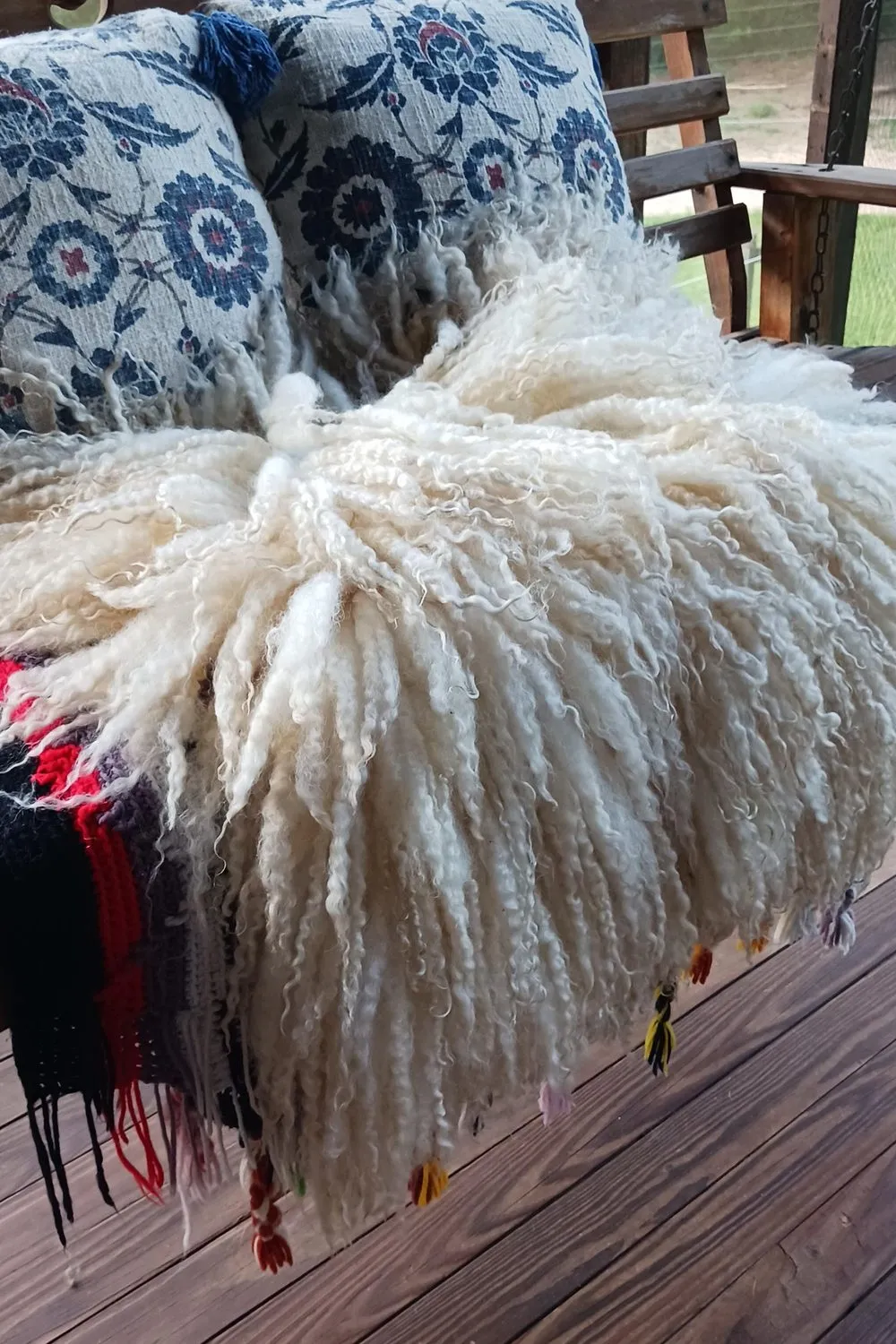
A swing with a wool throw — the porch's slow seat, dressed for the cold.
A wooden porch swing with a folded wool throw over its back is the porch's slowest seat: it moves gently, it holds two, and the throw makes it usable in weather that would empty a bare swing in minutes. The swing needs its chains checked and its hooks solid — a swing is only as safe as the hardware above it, and winter rust hides under paint.
Styling tip: oil the swing's chains and hooks before the first frost — a squeaking swing is a swing nobody uses, and rust seizes a chain silent until it fails.
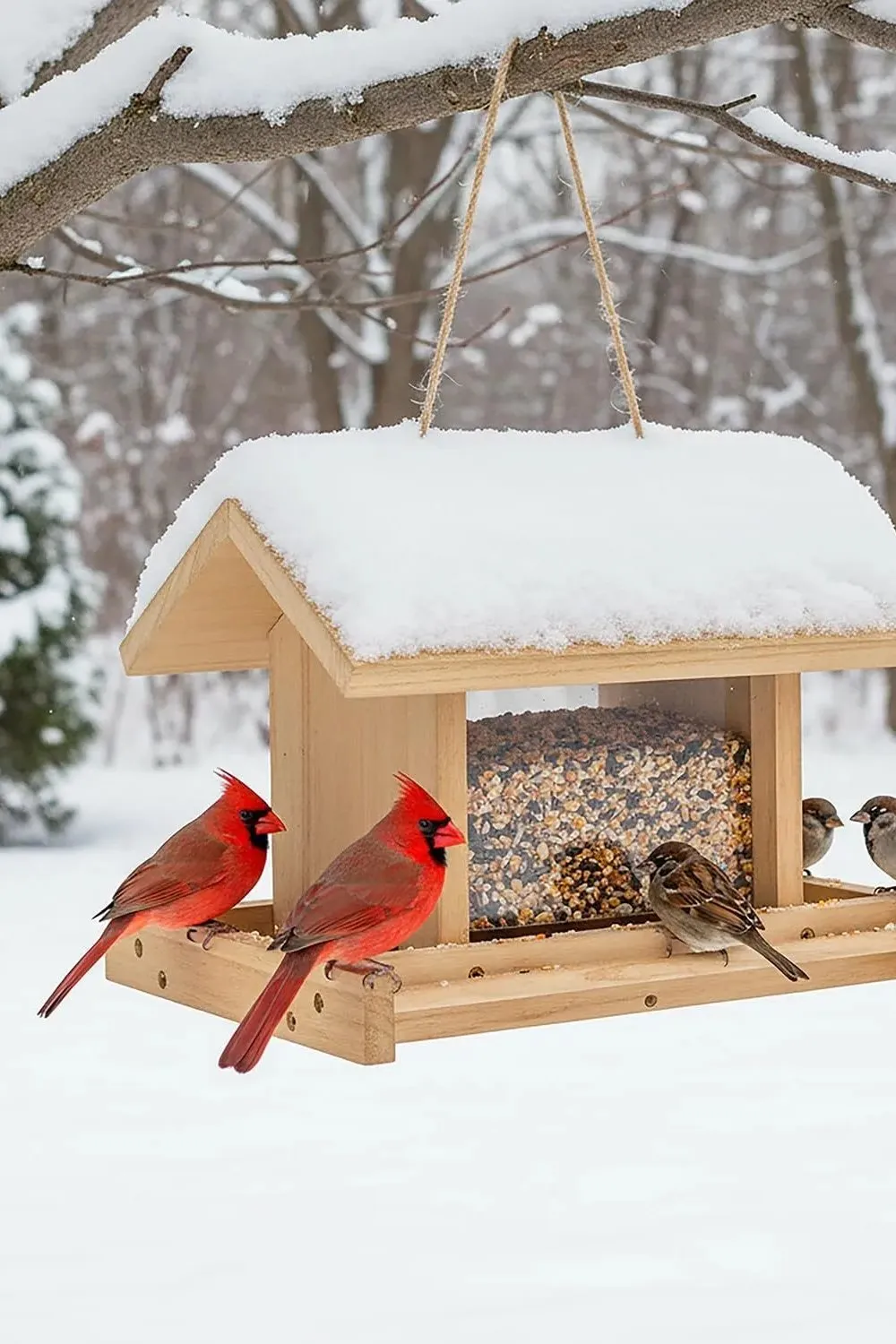
A bird feeder from the beam — the porch gets visitors that are not expected.
A wooden bird feeder hung from the porch beam brings the porch its only moving decoration: small birds through the cold months, arriving for seed and staying for the shelter. The feeder suits the porch's wood and gives the sitting chairs something to watch — the cheapest entertainment a winter porch can buy, and the one that changes every hour.
Styling tip: hang the feeder where it can be seen from the chairs but away from the door — birds scatter every time the door opens, and a feeder by the door feeds nobody.
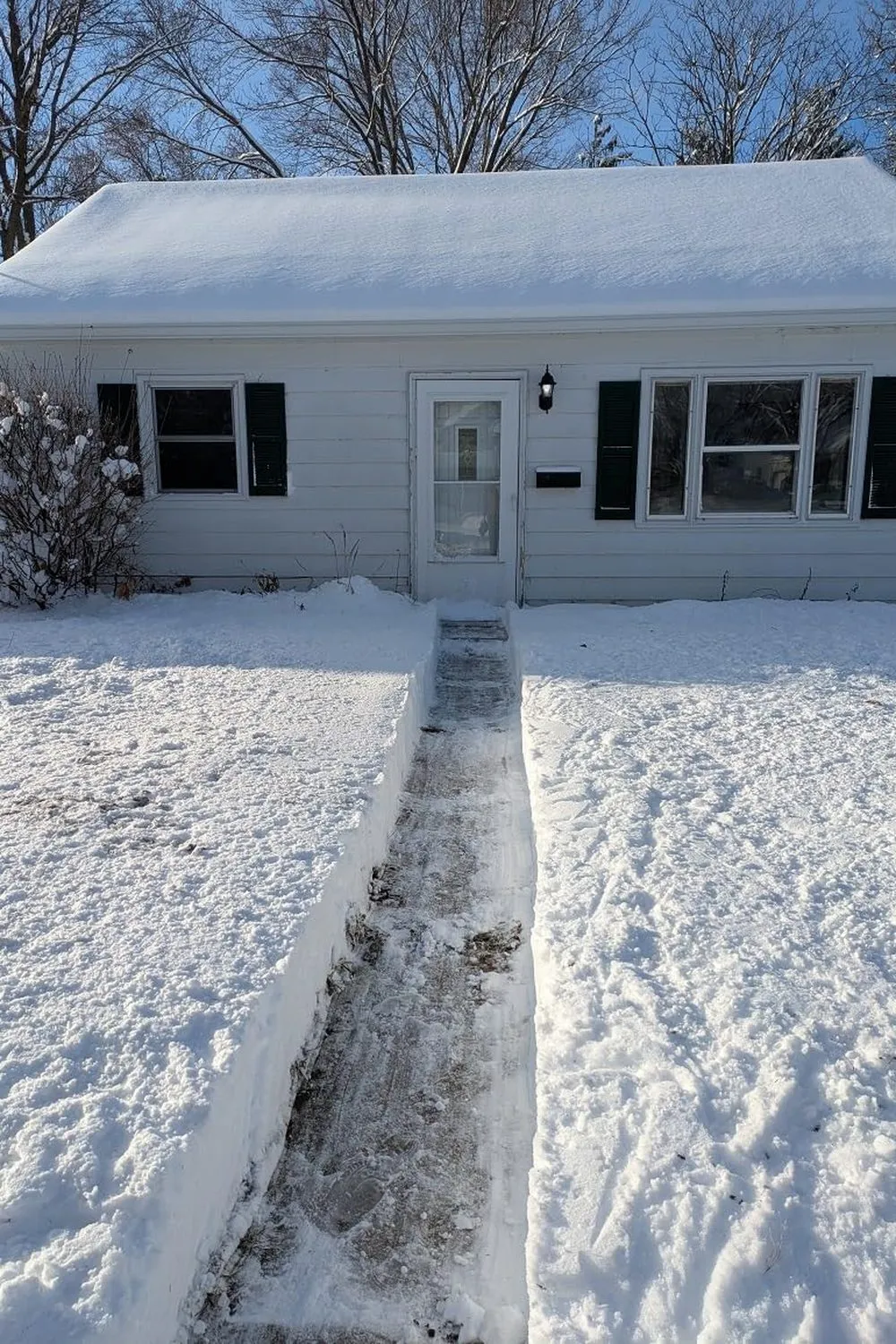
A clear path and a snow-dusted mat — the welcome that winter itself finishes.
The last idea is not an object but a habit: a path swept clear and a welcome mat left to gather its dusting of snow. The swept path says the house is lived in, the snow on the mat says the season is welcome here, and the two together finish the porch in a way no purchase can. Clear the path before the first visitor, not after — a porch that is ready reads differently from one that is catching up.
Styling tip: keep a stiff brush and a bag of grit by the door, not in the shed — the path needs clearing when it snows, and nobody fetches tools in a storm.
Keep the greenery plain and the color calm — evergreen, eucalyptus and cedar with no bows or baubles, deep green and plaid instead of red and gold. Lantern light and wool give the glow that festive shine used to, with no holiday motifs anywhere.
A full fresh evergreen wreath of pine and fir, hung plain on a black metal hanger — no nail in the door, nothing added. Mist it weekly, keep it out of direct sun through a storm door, and it holds its shape for weeks in cold air.
Use tall lanterns with glass on all sides and set them on flat stone, never on a sloped step. Real flames go in the lanterns you watch; flameless candles on timers go in the ones nobody watches, and the glow is the same from the street.
Yes, with cover: throws and cushions come inside when rain is forecast, baskets sit under the porch roof, and outdoor cushion covers with zips dry where indoor ones stay soaked. Wool that sits in a puddle felts, so keep every textile off wet stone.
Stone and galvanized metal — stone will not crack in a freeze the way terracotta does, and metal sheds water instead of holding it. Fill them with pine, fir and cedar greens that stay green all winter with almost no water.
A winter front porch is built the way a good welcome is: in layers, and without rushing — a deep green door, plain evergreen on it, lanterns flanking it, plaid on the bench and a clear path to the mat. Start with the wreath and the lanterns, and let the porch gather its warmth from there. Save your favorite winter front porch decor ideas from this list, and follow TheStylingHub on Pinterest for fresh winter ideas all season long.
Outdoor
Oct 30, 2026
Give guests a festive first impression with christmas front porch decor ideas, from lantern-lined…
Organization
Nov 23, 2026
34 New year home organization ideas — a room-by-room reset for the entryway, kitchen,…

Seasonal
Nov 22, 2026
30 New year wreath ideas — glam gold, silver and black wreaths for the…