
Rooms
32 Winter Dining Room Decor Ideas With Candlelight and Natural Texture
Nov 22, 2026
32 Winter dining room decor ideas — candlelight, natural texture, layered linen and calm…
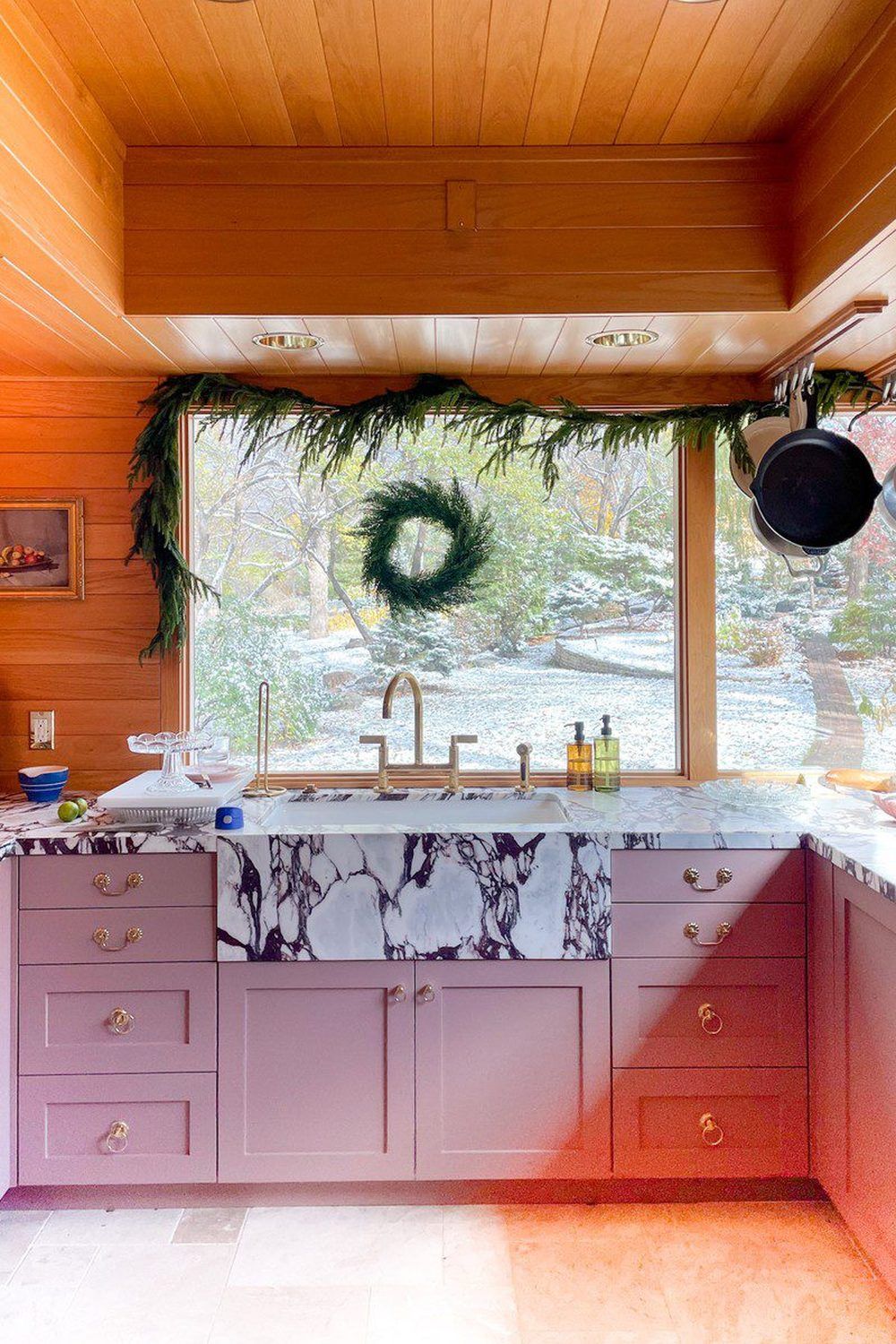
The kitchen works hardest in winter, so it deserves the most warmth — and these winter kitchen decor ideas give it exactly that, without a single festive cliché. Wreaths of plain greenery, candlelight at counter level, open shelves of stoneware and a cocoa station that is always ready turn the room where everyone gathers into the room everyone wants to stay in.
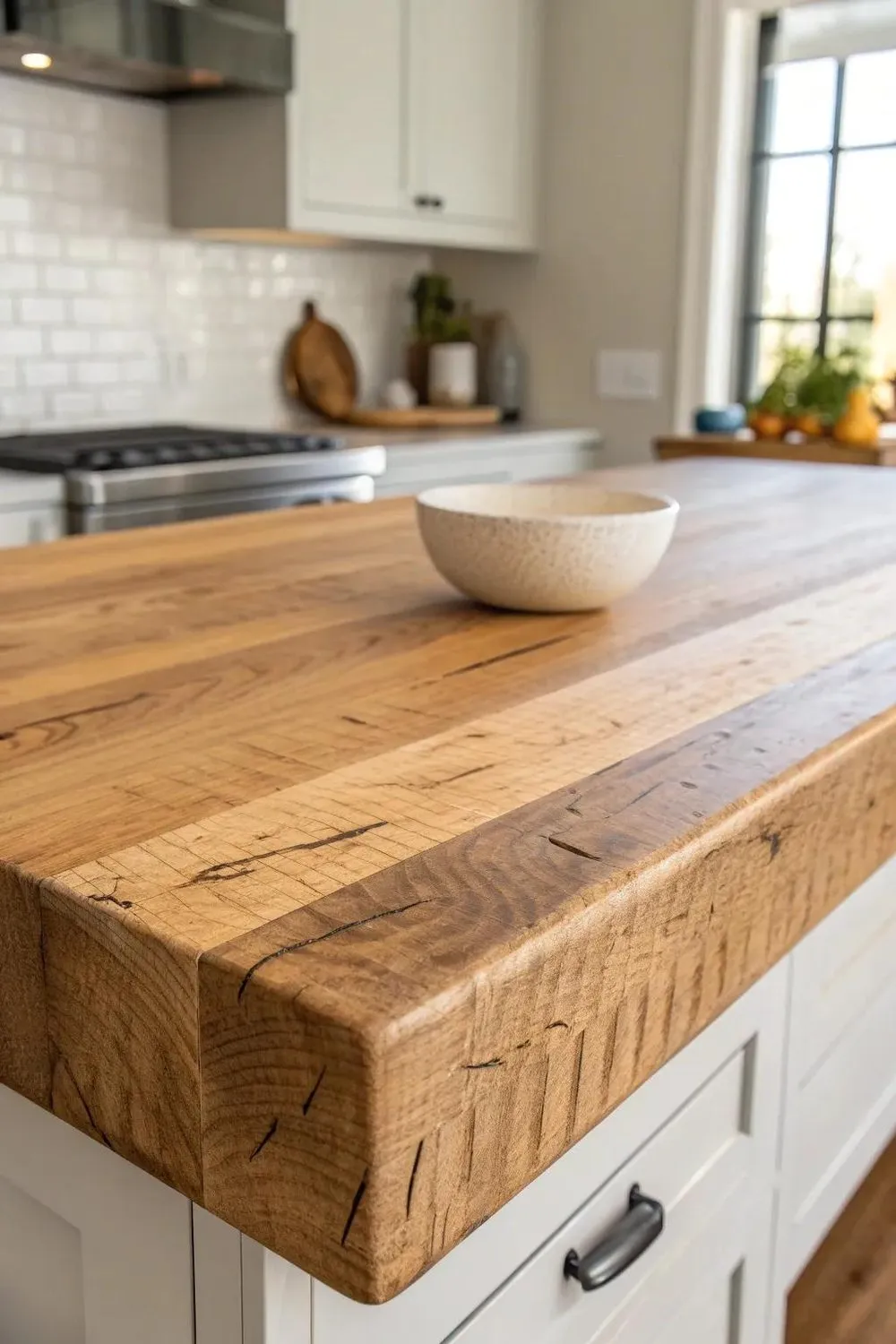
One clear stretch of wood — the island reads calm before anything is set on it.
Winter is the season to clear the island back to wood. Without the usual clutter, the grain becomes the pattern, morning light pools on the polished surface, and the kitchen reads warm before a single thing is cooked. A single stoneware bowl or a low wooden board in the middle is all the dressing a handsome island needs between meals.
Styling tip: feed the wood with a beeswax polish before the season starts — dry winter air dulls worktops, and a polished surface throws lamplight back twice as well.
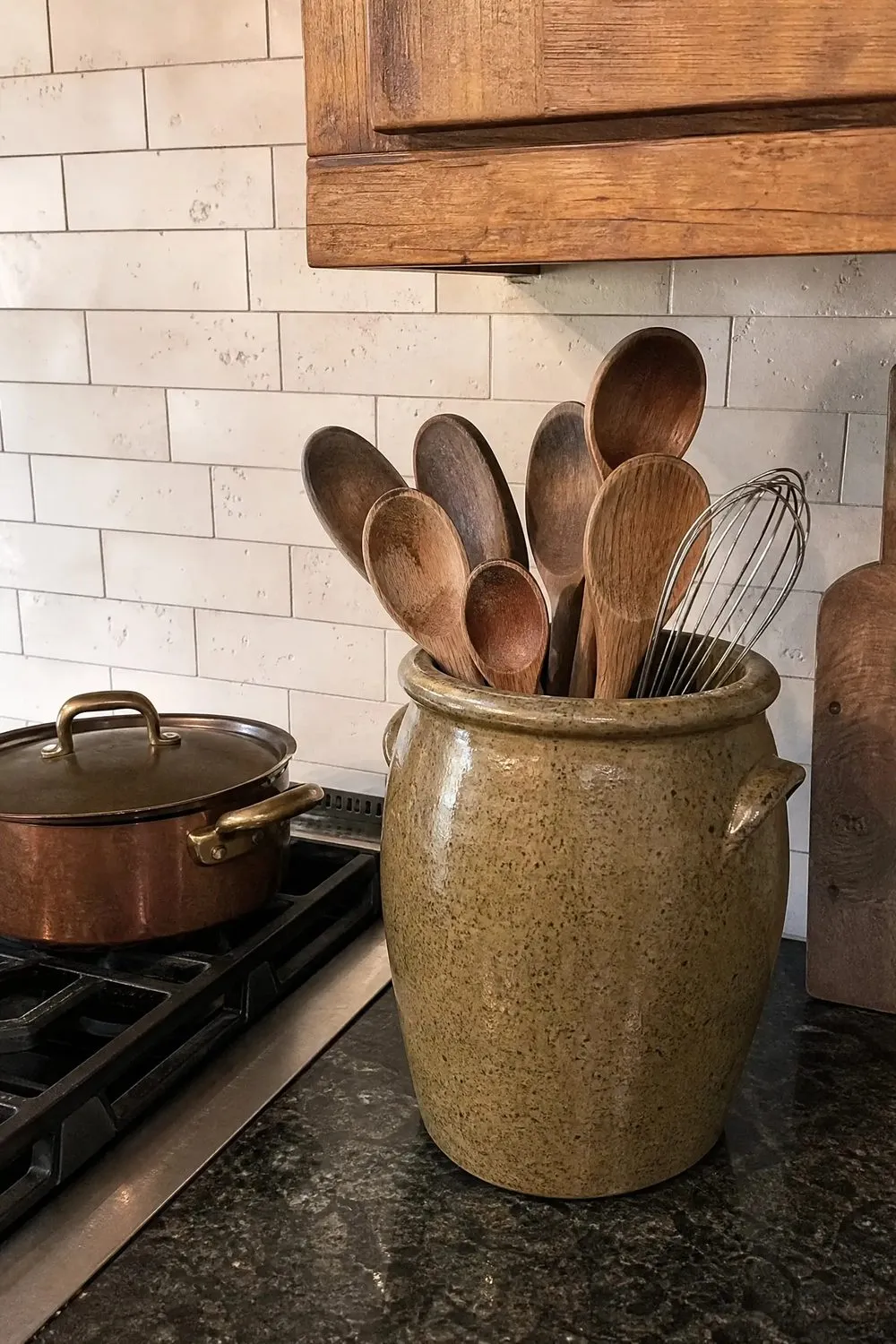
Wooden spoons standing in stoneware — the tools become the decoration.
The most honest kitchen decor is the tools themselves, kept where they are used. A heavy stoneware crock of wooden spoons, spatulas and whisks beside the stove adds height, warm wood tones and a lived-in look, and it keeps the drawer clear for everything else. Choose spoons in mixed woods so the crock reads collected, not matched.
Styling tip: keep the crock to one side of the stove, never behind it — handles stay cool, and nothing leans over a hot burner.
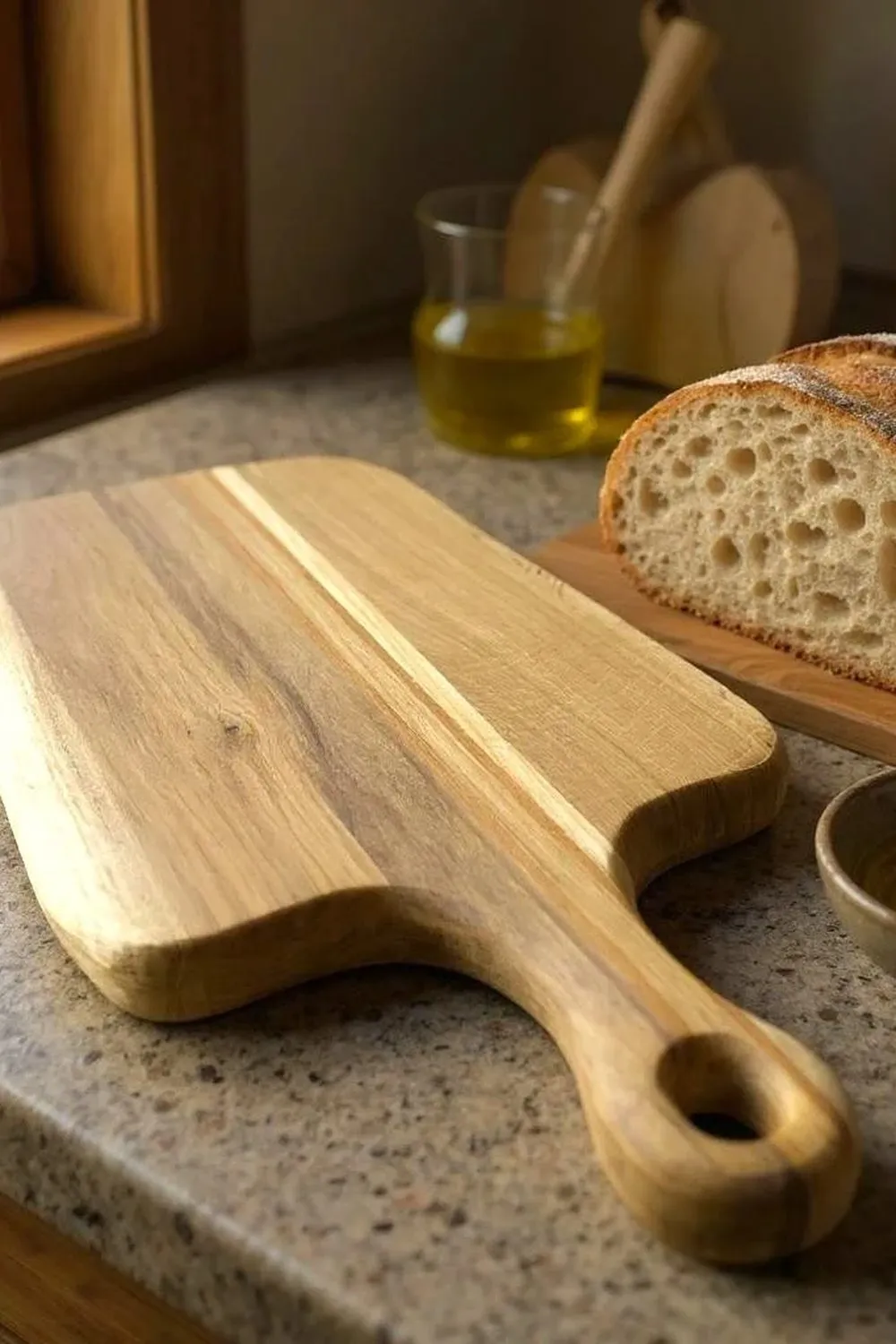
A serving board left out — the kitchen admits it is for feeding people.
A long wooden board kept out on the island is the finishing touch that makes a kitchen feel used rather than staged: it signals slow food, gives bread and cheese a permanent home, and adds a block of warm wood to a room of hard surfaces. A small bowl of salt or a sprig of rosemary on top keeps the board styled.
Styling tip: oil the board once a month through winter — dry air cracks untreated wood, and an oiled board stays dark and handsome.
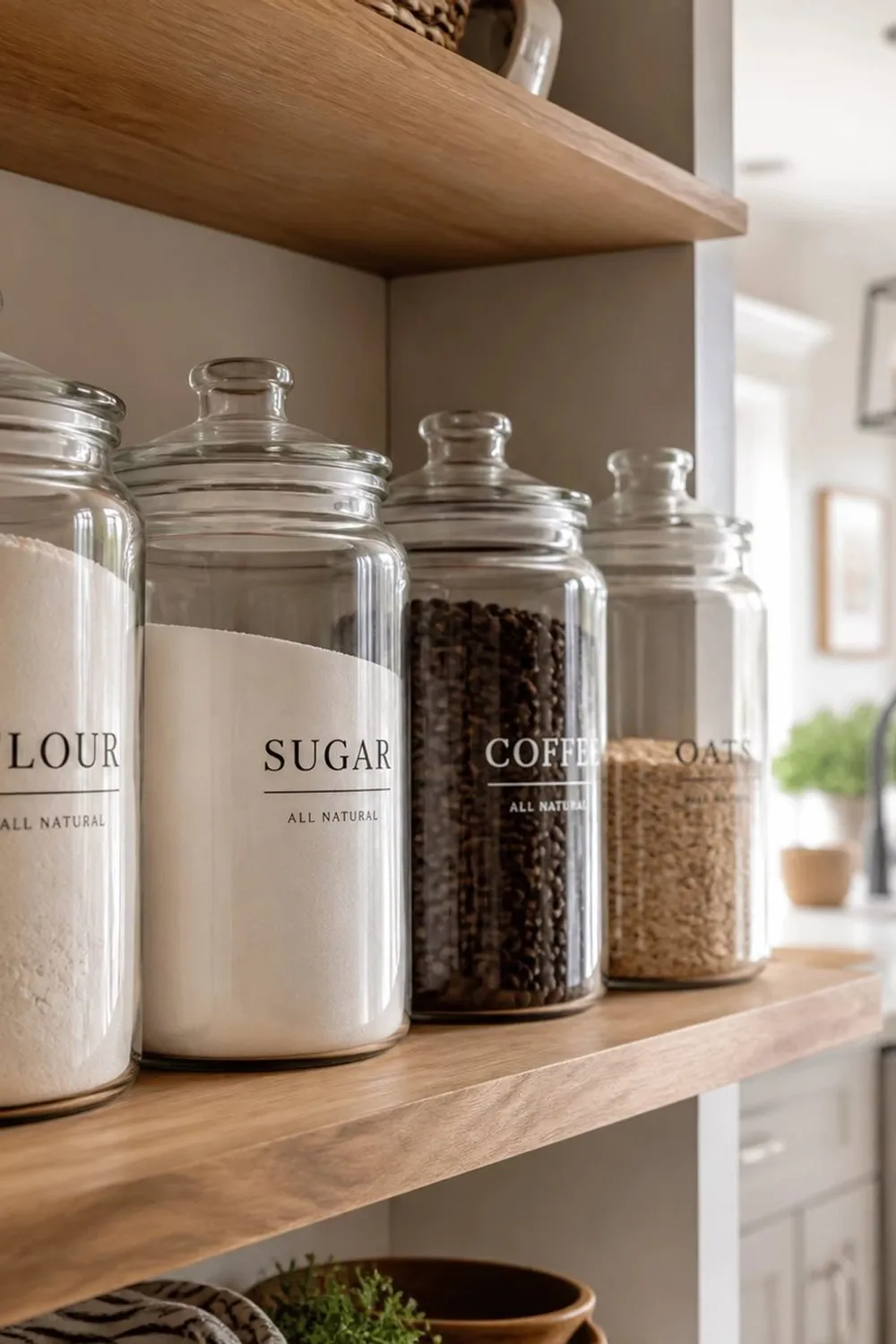
Glass jars of oats and beans — the pantry moves onto the counter, beautifully.
Winter staples deserve to be seen: oats, flour, rice and dried beans in a row of plain glass jars turn the counter into a still life and keep the week's cooking within reach. Matching lids and one repeated jar shape keep the row calm; mixed sizes look like a shop shelf that overflowed.
Styling tip: label the jars on the lid, not the front — the contents stay the decoration and the labels never fight the glass.
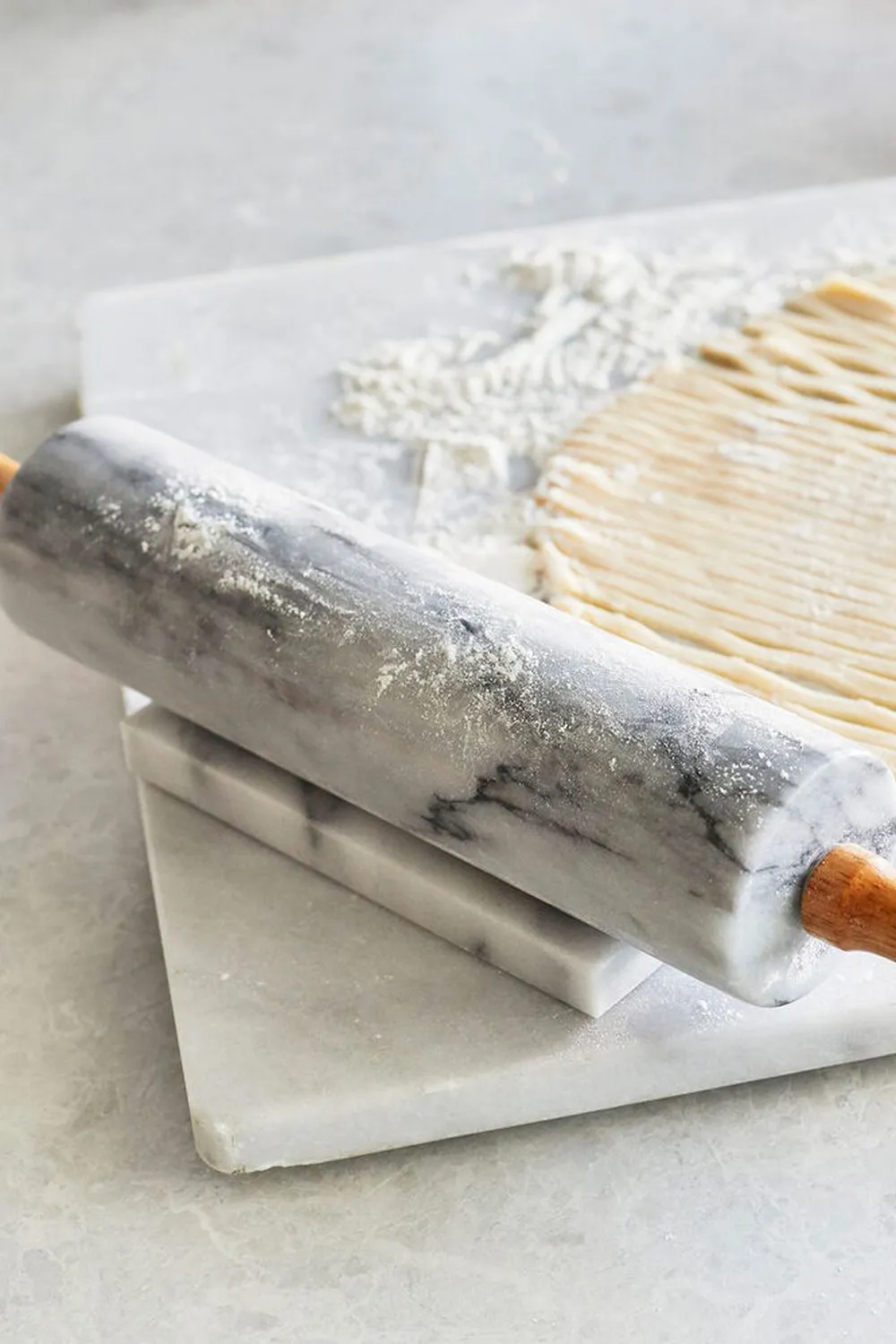
Cold marble, a dusting of flour — winter baking gets its own stage.
A marble pastry slab is winter's quiet luxury: it stays cold, so pastry stays workable, and its pale surface brightens a dark-season kitchen. Left out with a rolling pin and a small flour shaker, it tells the room that baking happens here — and it doubles as a cheese board when the oven is off.
Styling tip: store the slab flat and lift it with both hands — marble chips at the corners, and a chipped slab never sits flat again.
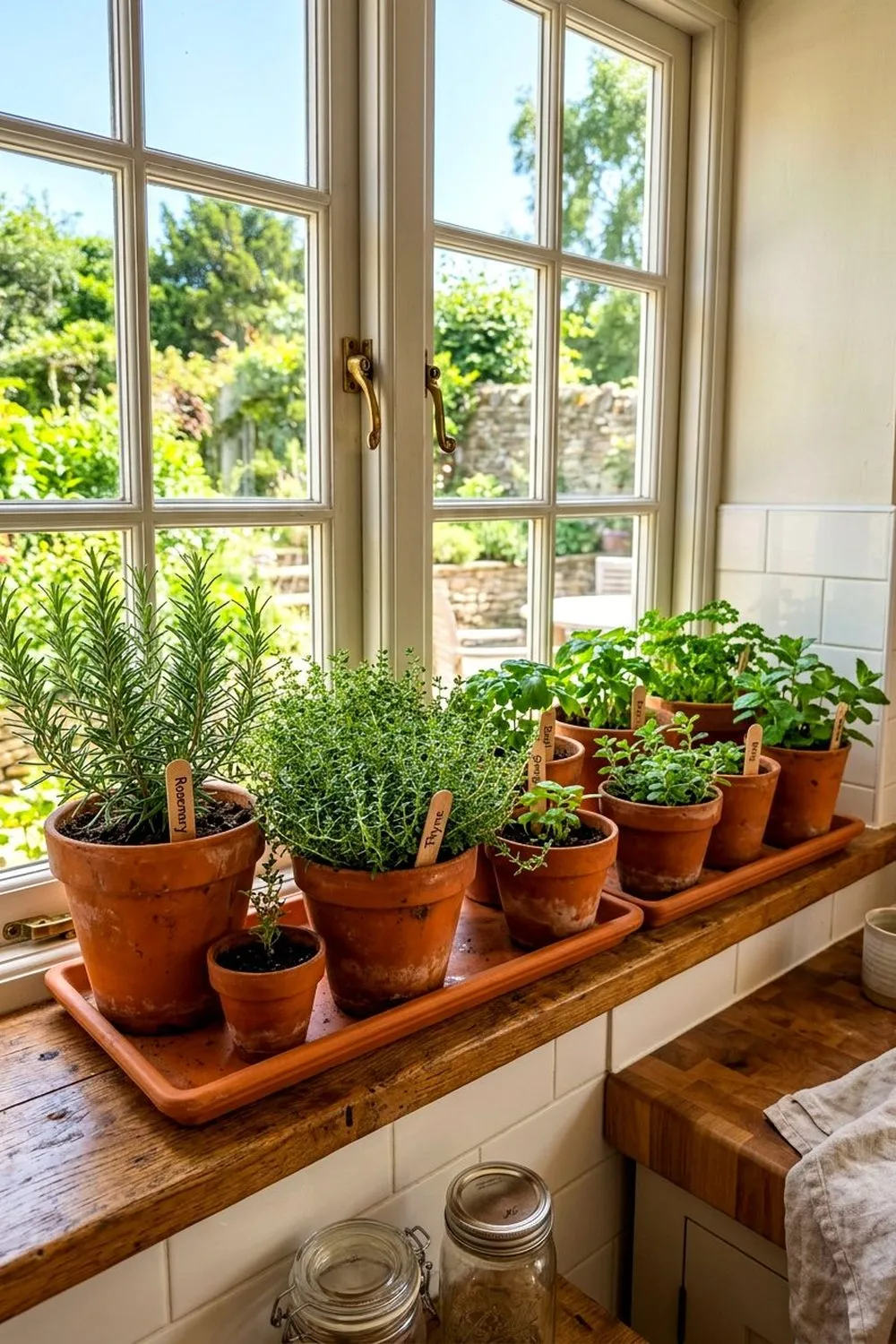
Rosemary and thyme on the sill — green that earns its keep in the cooking.
A row of small terracotta pots on the windowsill is the one green thing a winter kitchen truly needs: rosemary, thyme and parsley within arm's reach of the stove, alive when everything outside is bare. The pots add warm clay color to a room of white and steel, and snipping herbs beats opening a jar every time.
Styling tip: rotate the pots weekly so each side faces the light — herbs lean hard toward a winter window and grow lopsided if left still.
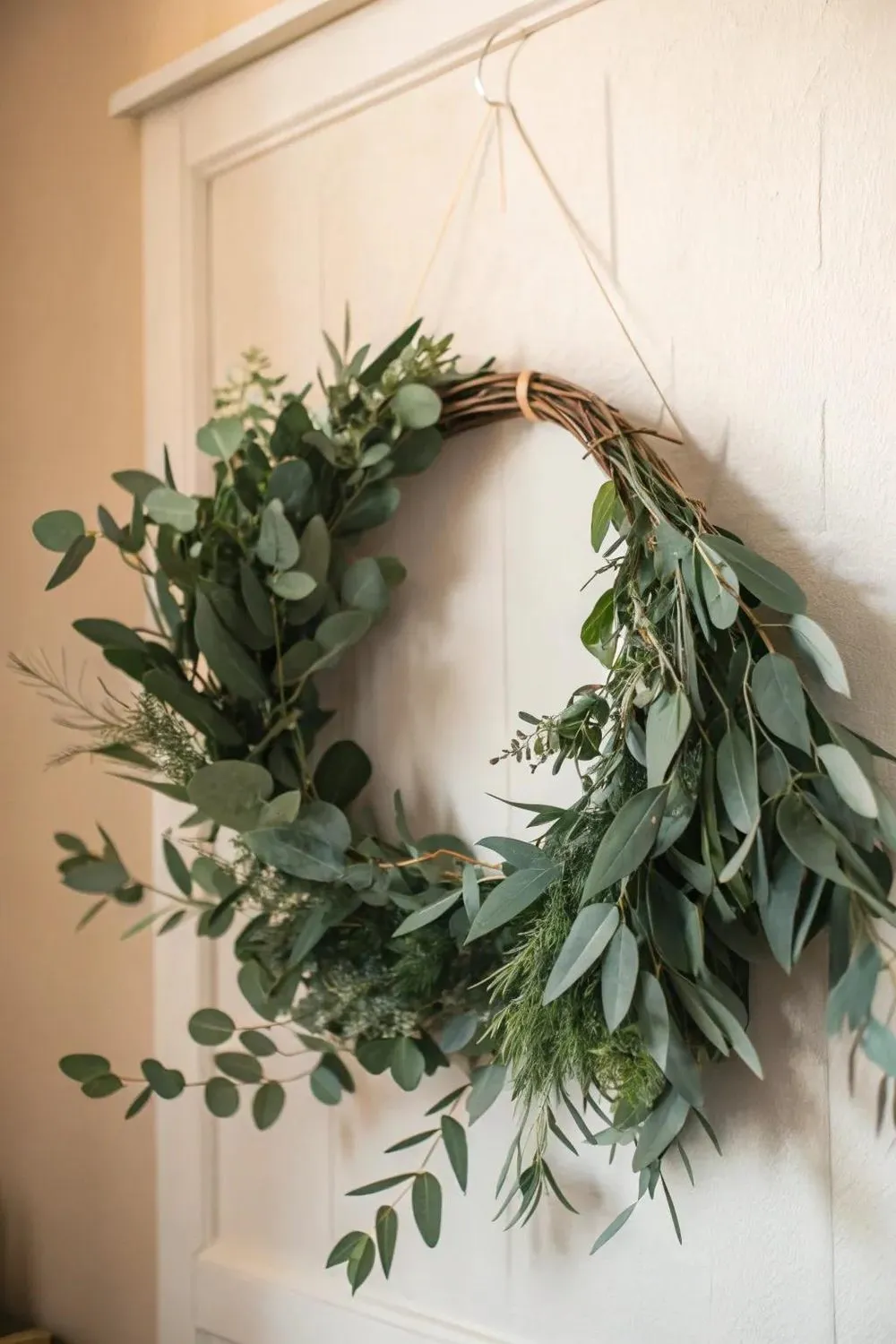
Plain eucalyptus on the pantry door — scent and shape, no decoration needed.
A eucalyptus wreath needs nothing added: its silver-green leaves and clean circle are decoration enough, and its scent drifts out every time the pantry opens. Hung on a painted pantry door with a simple hook, it gives the kitchen a focal point that costs nothing to maintain — dried eucalyptus holds its shape for months.
Styling tip: hang it from a flat metal hook over the door top, not a nail — the door stays unmarked and the wreath lifts off in one hand.
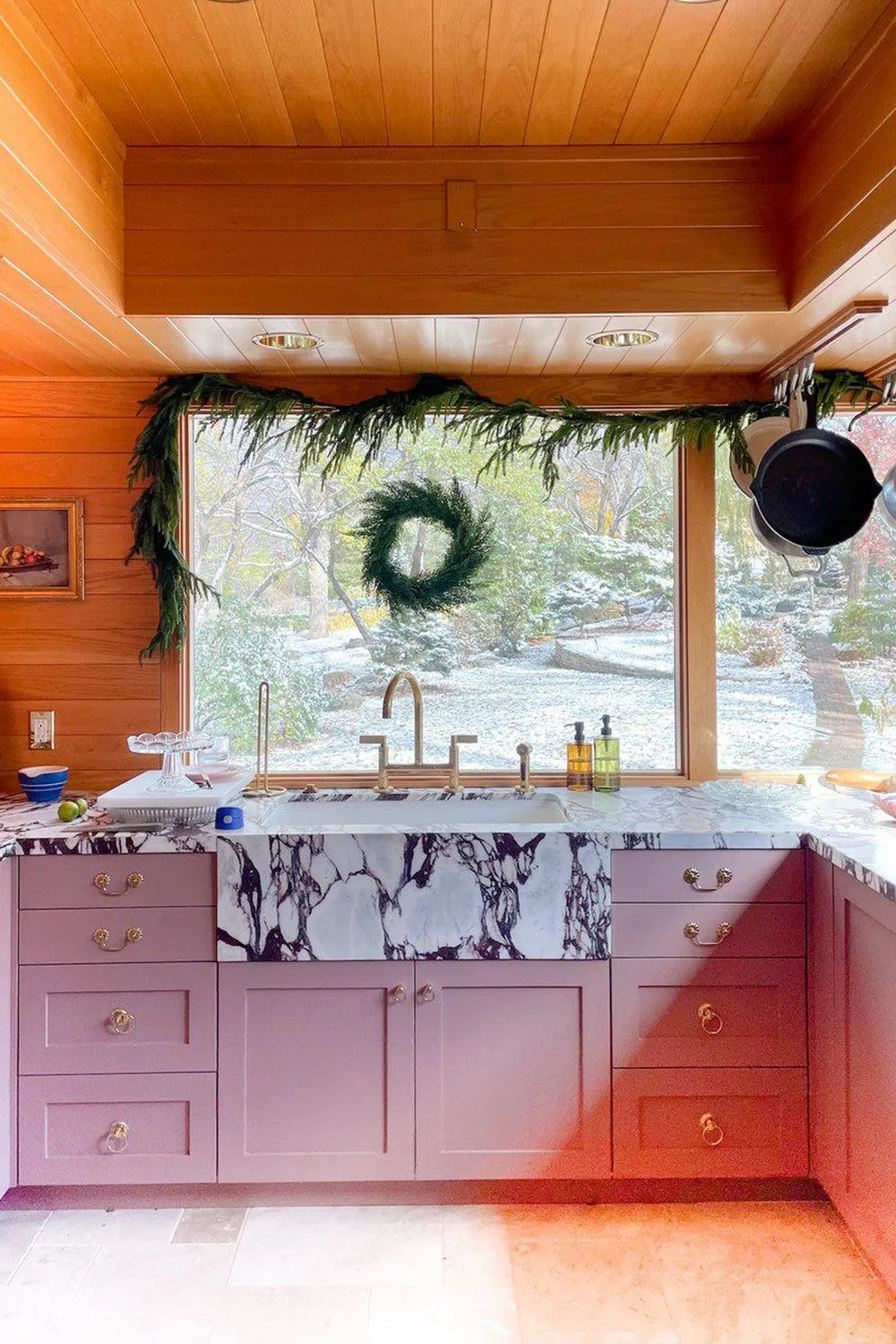
Fresh pine over the sink — the window gets a frame of green.
The window above the sink is the kitchen's picture, and a fresh pine wreath frames it the way a curtain never could. Its deep green reads against pale walls all winter, and the scent rises with the steam from the tap. Keep it plain — no bows, no baubles — so it reads as winter greenery, not a holiday leftover.
Styling tip: mist the wreath lightly once a week and keep it off the glass — condensation drips onto pine and browns the needles where it sits wet.
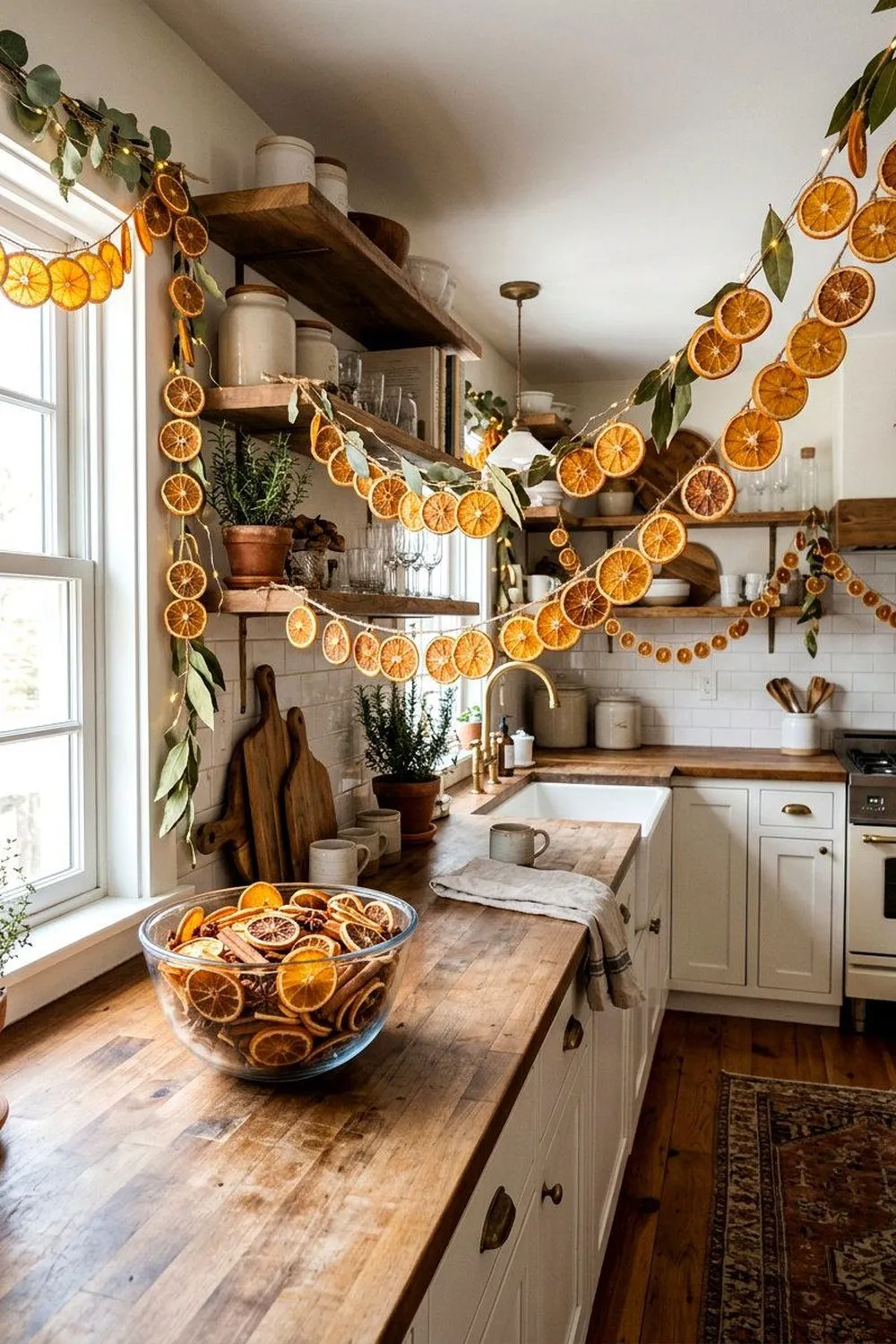
Dried orange and bay along the shelf — color that comes from the pantry.
A garland of dried orange slices and bay leaves is winter color made from kitchen things: amber discs and deep green leaves strung along an open shelf, warm against wood and stoneware. It dries in the kitchen's own heat and smells faintly of citrus for weeks — decoration that started as ingredients.
Styling tip: thread the slices on twine with a large needle and hang the garland with slack, not taut — a gentle drape reads generous, a tight line reads stingy.
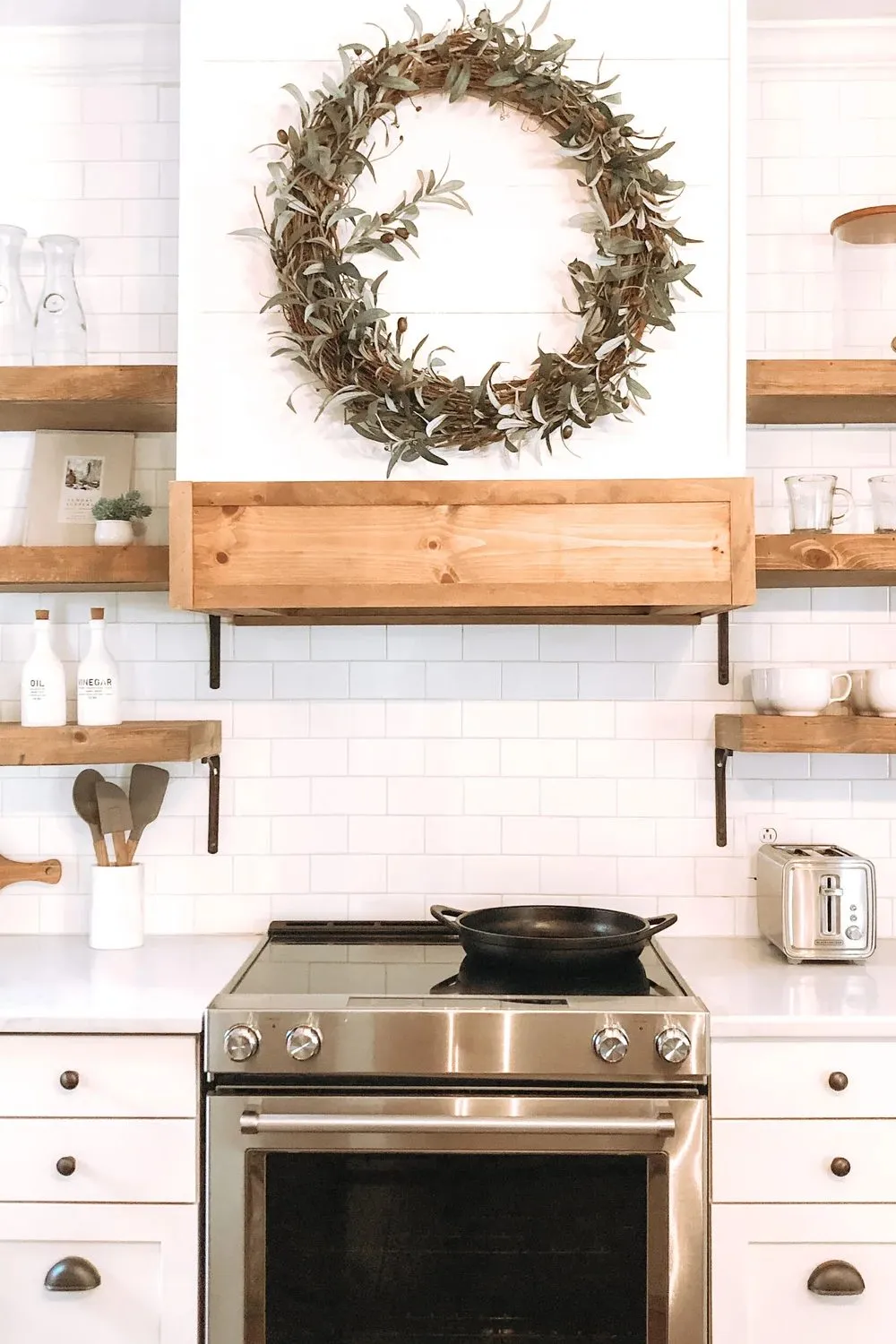
Olive branches on the hood — the plainest green in the room's busiest spot.
The range hood is the kitchen's biggest blank surface, and a small olive-branch wreath is exactly the right scale for it: soft gray-green leaves, a thin circle, nothing competing with the stove below. It draws the eye up and gives the cooking wall a finished look without a single new object on the counter.
Styling tip: use a wreath of dried or faux olive — fresh olive above a hot stove wilts in days, and the hood is the warmest spot in the room.
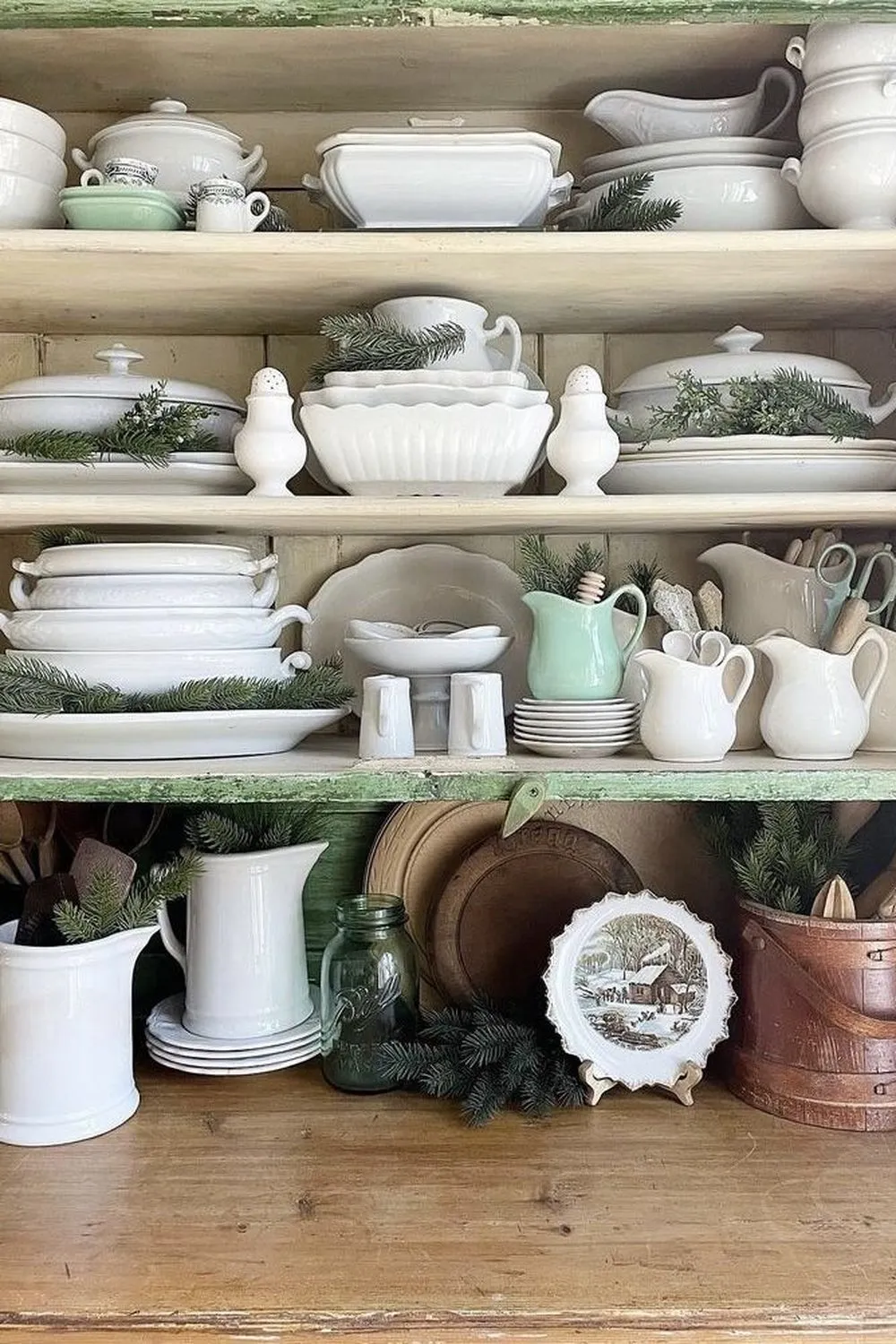
Cedar sprigs between the plates — greenery that costs nothing and changes weekly.
The cheapest winter greenery is a sprig tucked where it is not expected: cedar between stacked plates, a stem laid across the top shelf, a cutting slipped behind the jars. It softens the straight lines of open shelving and brings the outside in for the price of a walk. Replace the sprigs when they dry — a fresh cutting every week or two keeps the shelves alive.
Styling tip: keep cedar clear of the stove and the kettle's steam — heat dries it fast, and dry cedar drops needles into the plates below.
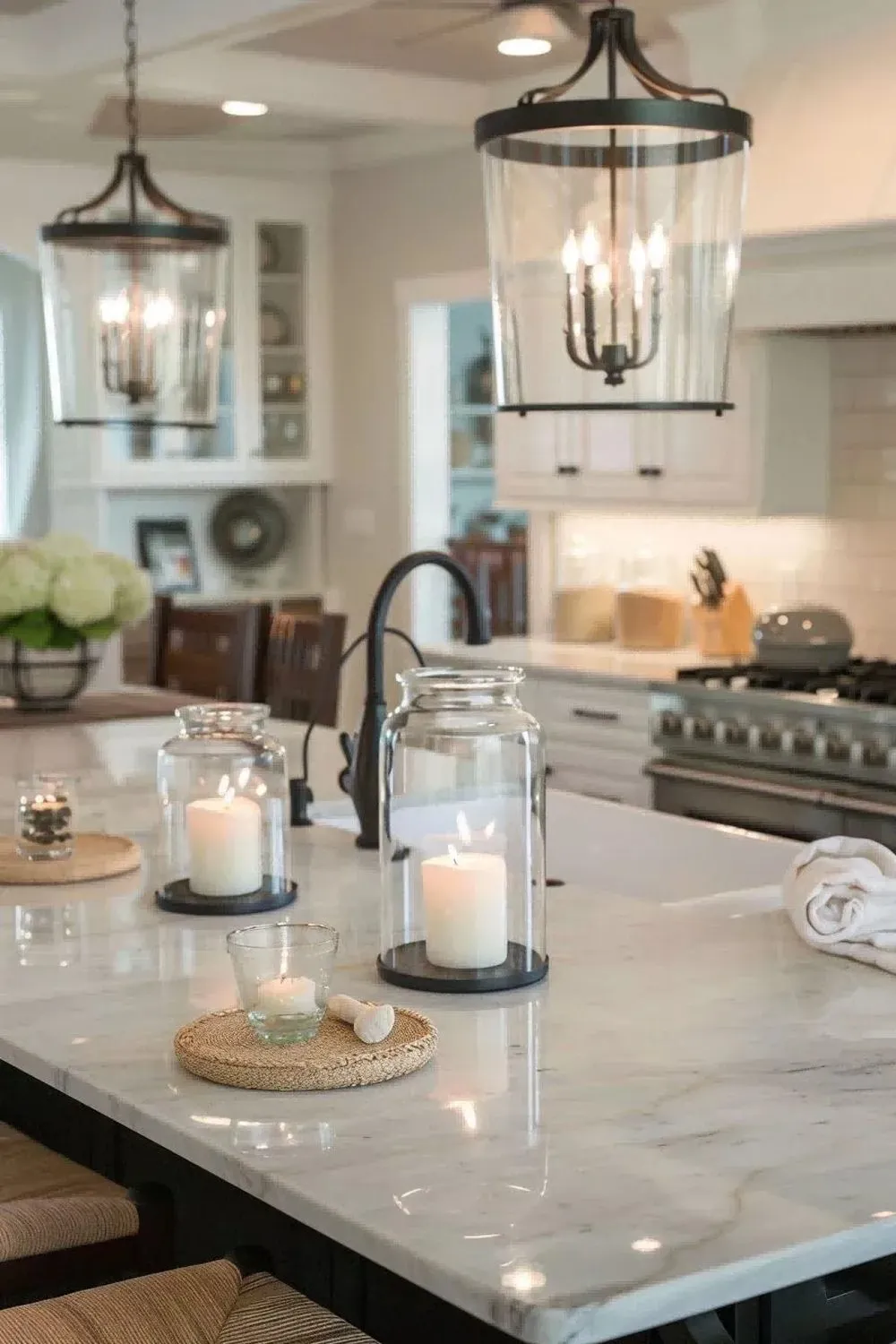
Pillars in hurricanes down the island — the kitchen's evening light, protected.
When the cooking is done, the island's job changes: a row of white pillar candles in tall glass hurricanes turns it into the room's lamp. The glass shields the flames from drafts and passing sleeves, and the glow at counter height makes the whole kitchen feel like a dining room. Set the hurricanes on a wooden board so wax never meets the worktop.
Styling tip: light the candles only when someone is in the room and put them out before bed — real flames are never left burning unattended, and hurricanes hide a flame you forgot.
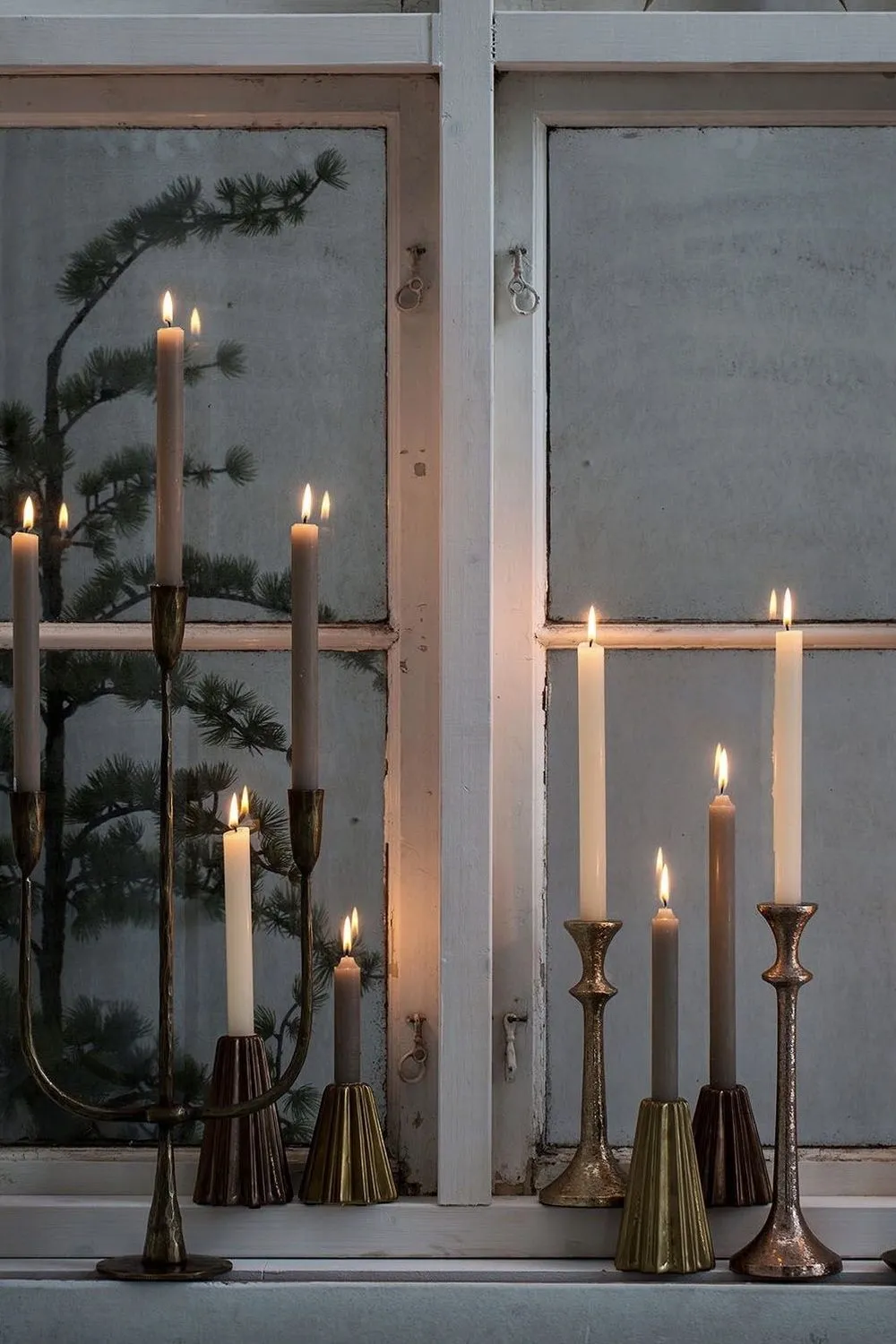
Cream tapers in brass on the sill — winter dusk gets a proper welcome.
A pair of cream taper candles in mixed brass holders on the windowsill is the smallest change with the biggest effect: at dusk the brass catches the last light, the flames double in the glass, and the kitchen glows before a single overhead light is switched on. Mixed heights and mixed holders read collected; a matched pair reads formal.
Styling tip: keep tapers clear of the curtain edge and the herb pots — flames and dry leaves are a bad pair, and winter curtains hang closer than they look.
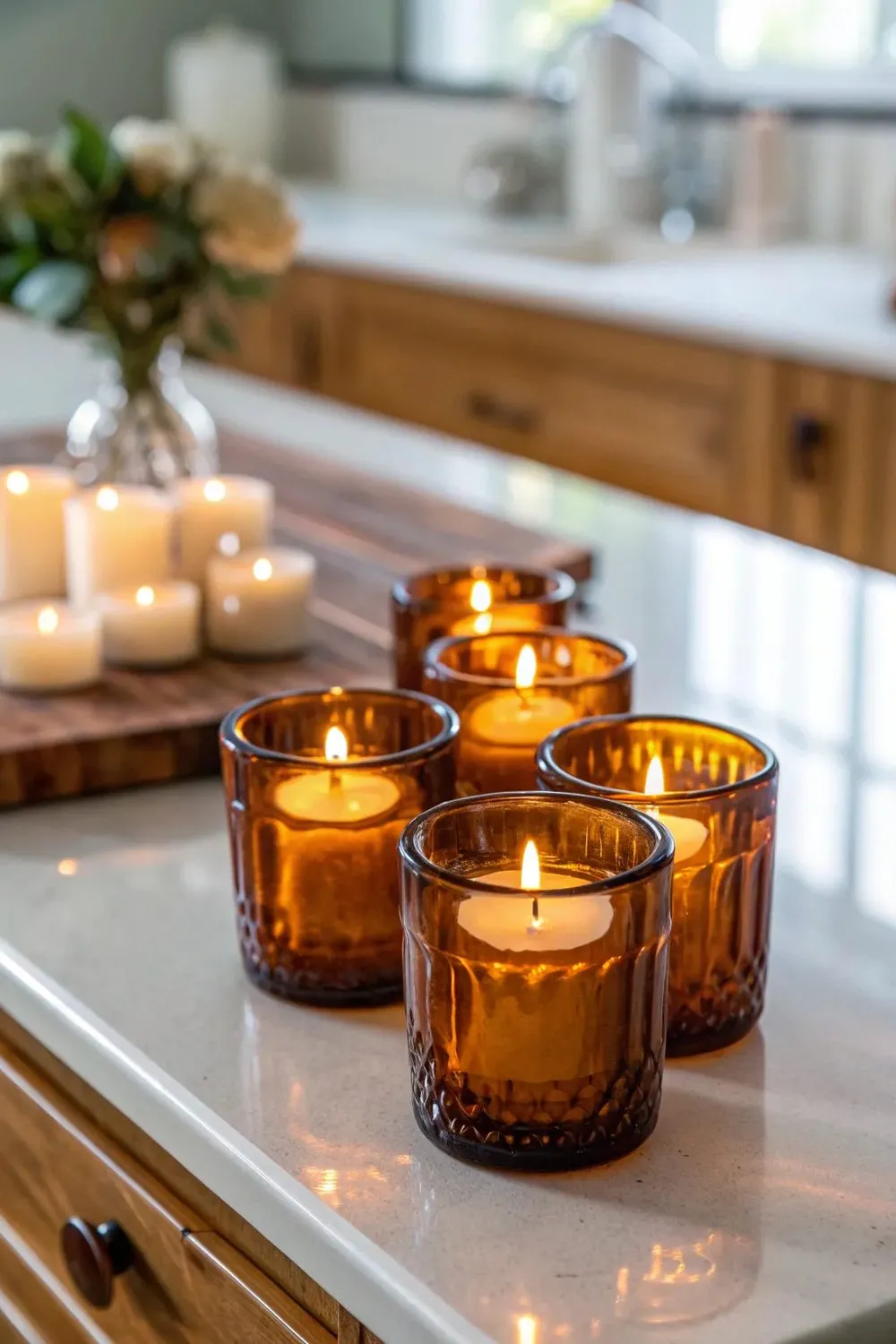
Amber tealights along the backsplash — a low line of warmth behind the cooking.
A row of tealights in amber glass along the backsplash gives the kitchen a low, warm line of light exactly where the work happens. The amber glass turns a plain flame gold, and the row reads as one deliberate gesture rather than a single candle lost on the counter. Keep them on a stone ledge or a metal tray, clear of tea towels and wooden spoons.
Styling tip: use tealights with metal cups inside the amber holders — the cup catches the wax and the glass stays clean enough to reuse all season.
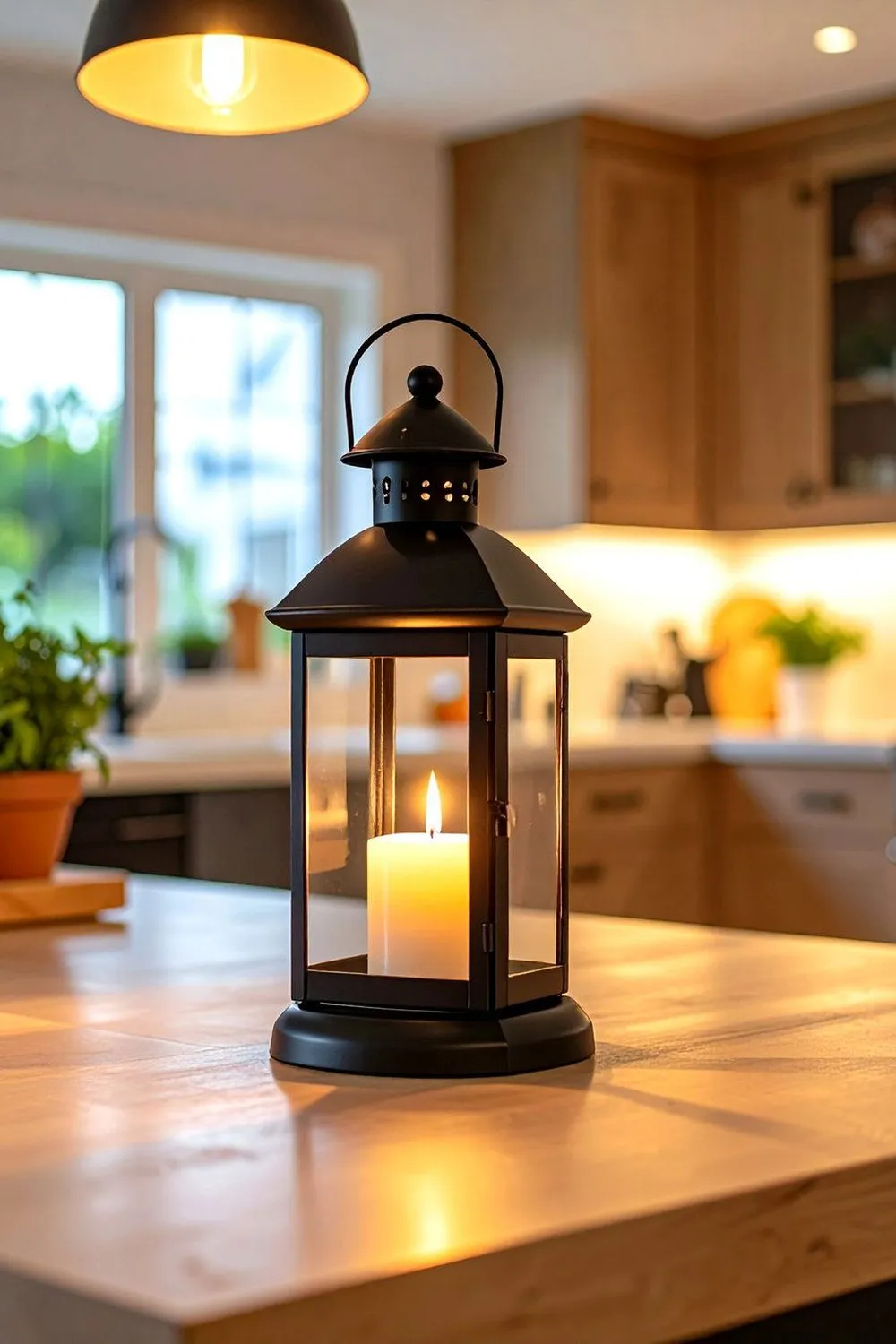
One lantern in the corner — the flame gets a house of its own.
A single black metal lantern with a pillar candle inside is the safest way to keep a real flame on a working counter: the glass keeps out drafts and wandering sleeves, and the lantern itself is handsome enough to stay out all winter. Tucked into the counter's far corner, it lights the room without ever getting in the way of the chopping board.
Styling tip: choose a lantern with a door that opens wide — a fiddly latch means the candle never gets lit, and an unlit lantern is just a box.
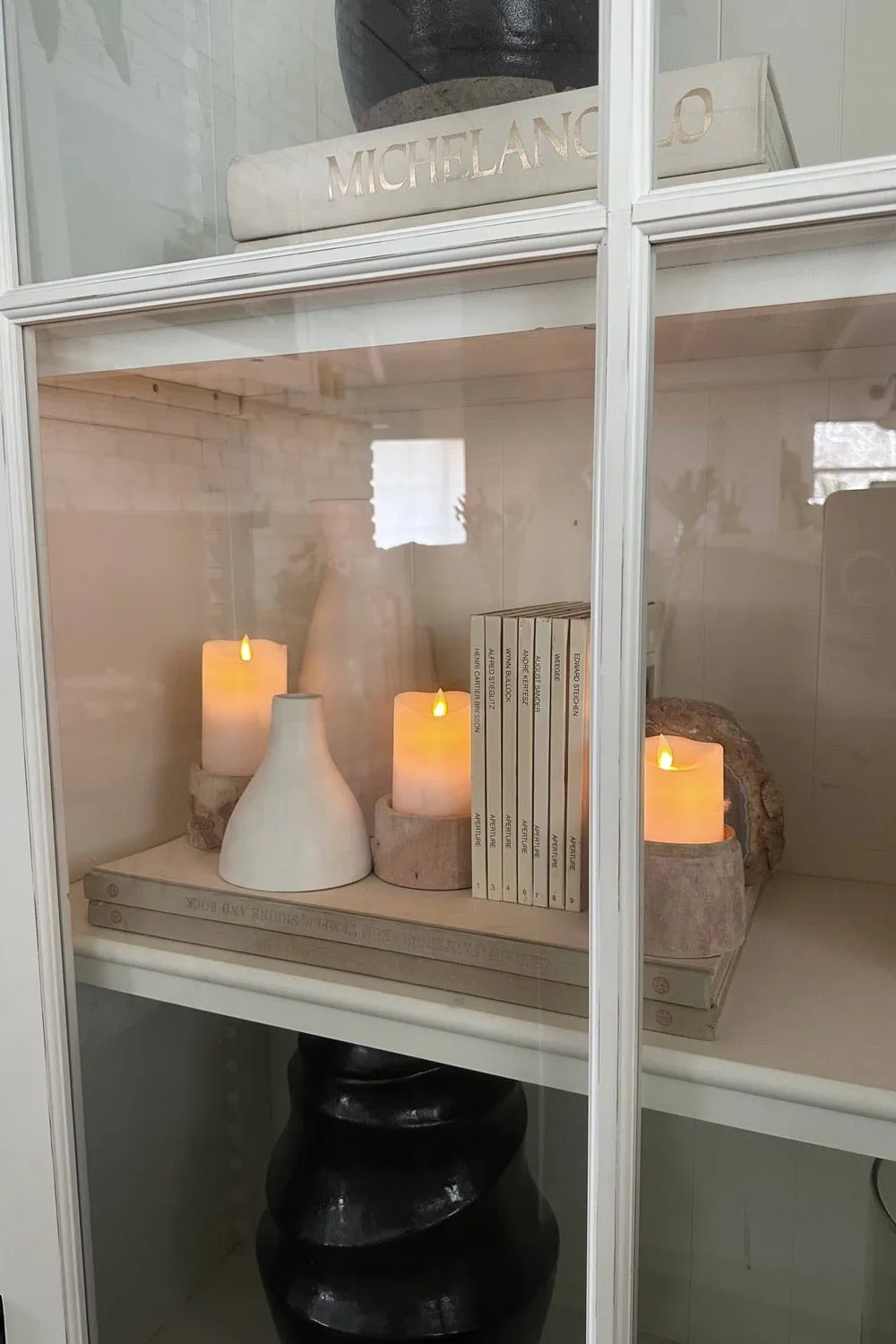
Real glow, no flame — candlelight that can live safely behind glass.
A glass-front cabinet is the one place in a winter kitchen where candlelight can burn all evening without a thought: set two or three flameless pillars on the middle shelf, among the glasses and good bowls, and their glow comes through the panes like a small lit window. There is no soot on the glassware, no flame near the shelf edge, and the timer setting means the light is waiting for you at dusk without anyone striking a match.
Styling tip: choose flameless candles with a warm, flickering flame tip rather than a steady bulb — behind glass the flicker is what sells the illusion, and mixing two heights keeps it from looking staged.
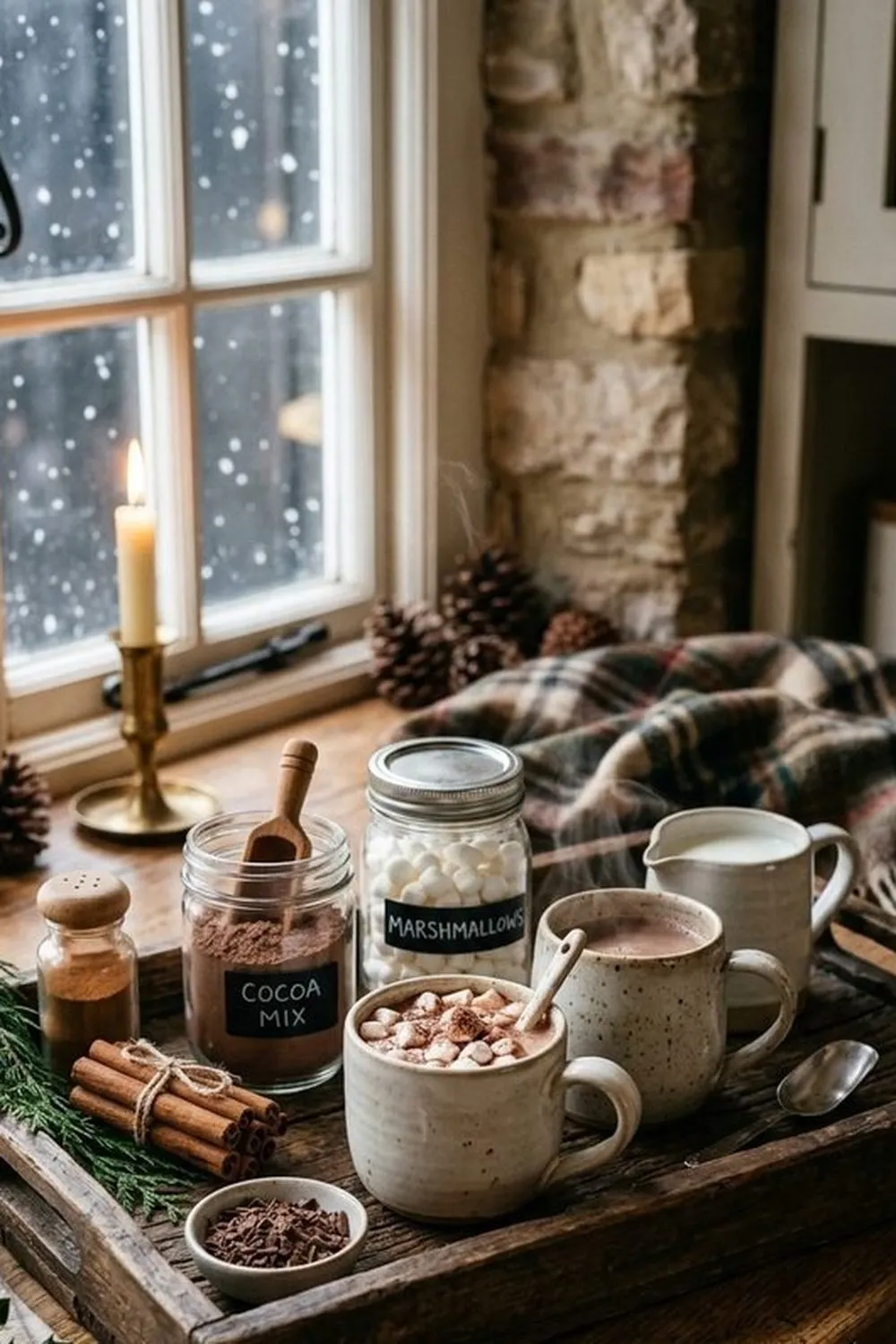
Everything for cocoa on one tray — the station is always ready.
A hot cocoa station is winter's kindest kitchen habit: cocoa, sugar and a small jug on a single wooden tray, so the whole thing lifts off the counter in one hand and lands back when the mugs are empty. The tray keeps the station contained — no jars wandering across the worktop — and makes the corner look deliberately styled instead of merely busy.
Styling tip: keep the tray to the size of a chopping board, not a serving platter — a station that sprawls becomes clutter, and a contained one invites use.
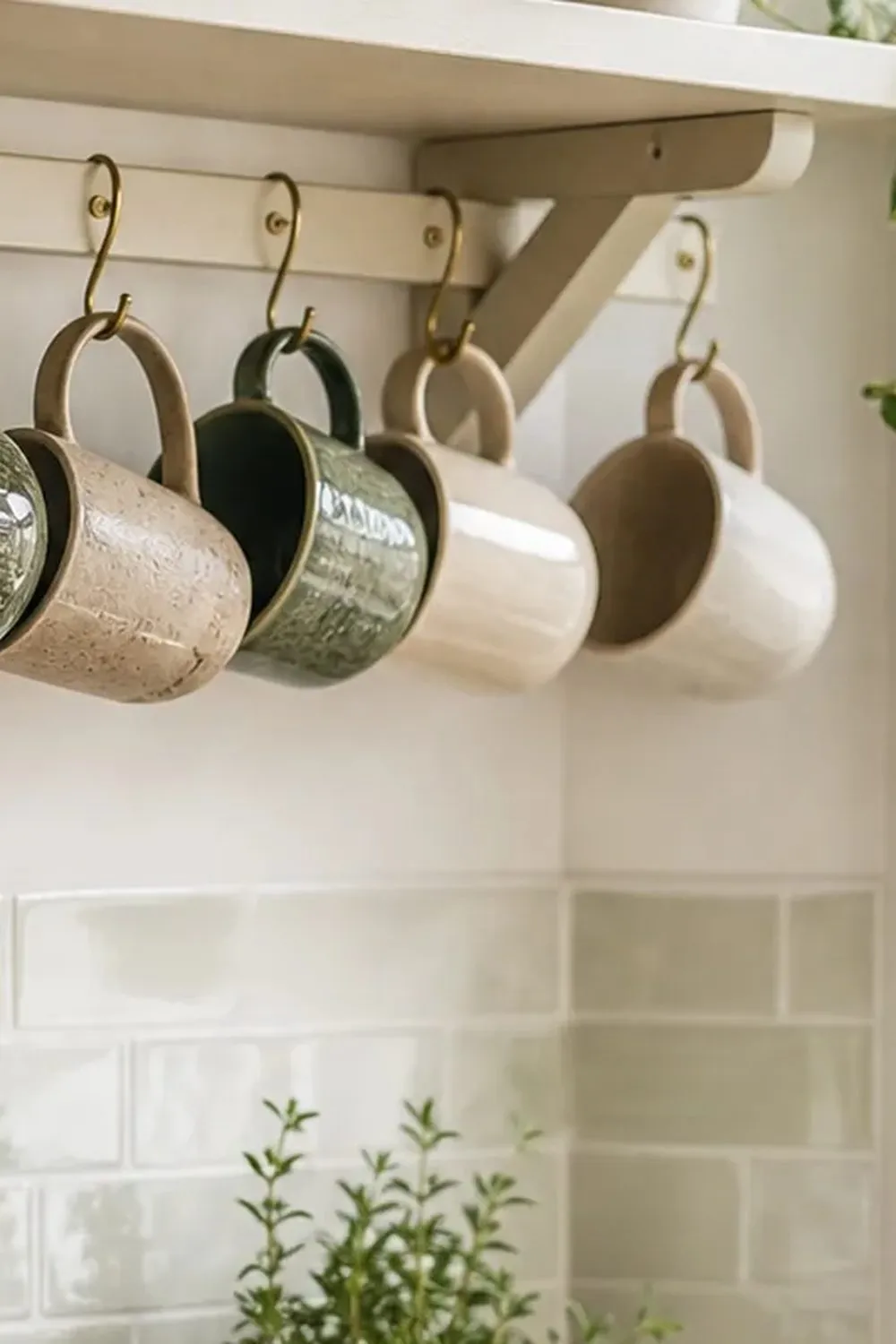
Cream and stone mugs on hooks — the cocoa cups are the decoration.
Mugs hung on hooks under a shelf do two jobs at once: they free a whole cupboard shelf, and they put the kitchen's prettiest ceramics on display. Cream, stone and oatmeal mugs in mixed shapes read collected and warm; a row of identical mugs reads like a canteen. Hang them where the kettle stands, so the walk from hook to hot water is one step.
Styling tip: space the hooks a mug's width apart, not tight — mugs that knock together chip, and a chipped rim is the first thing a lip notices.
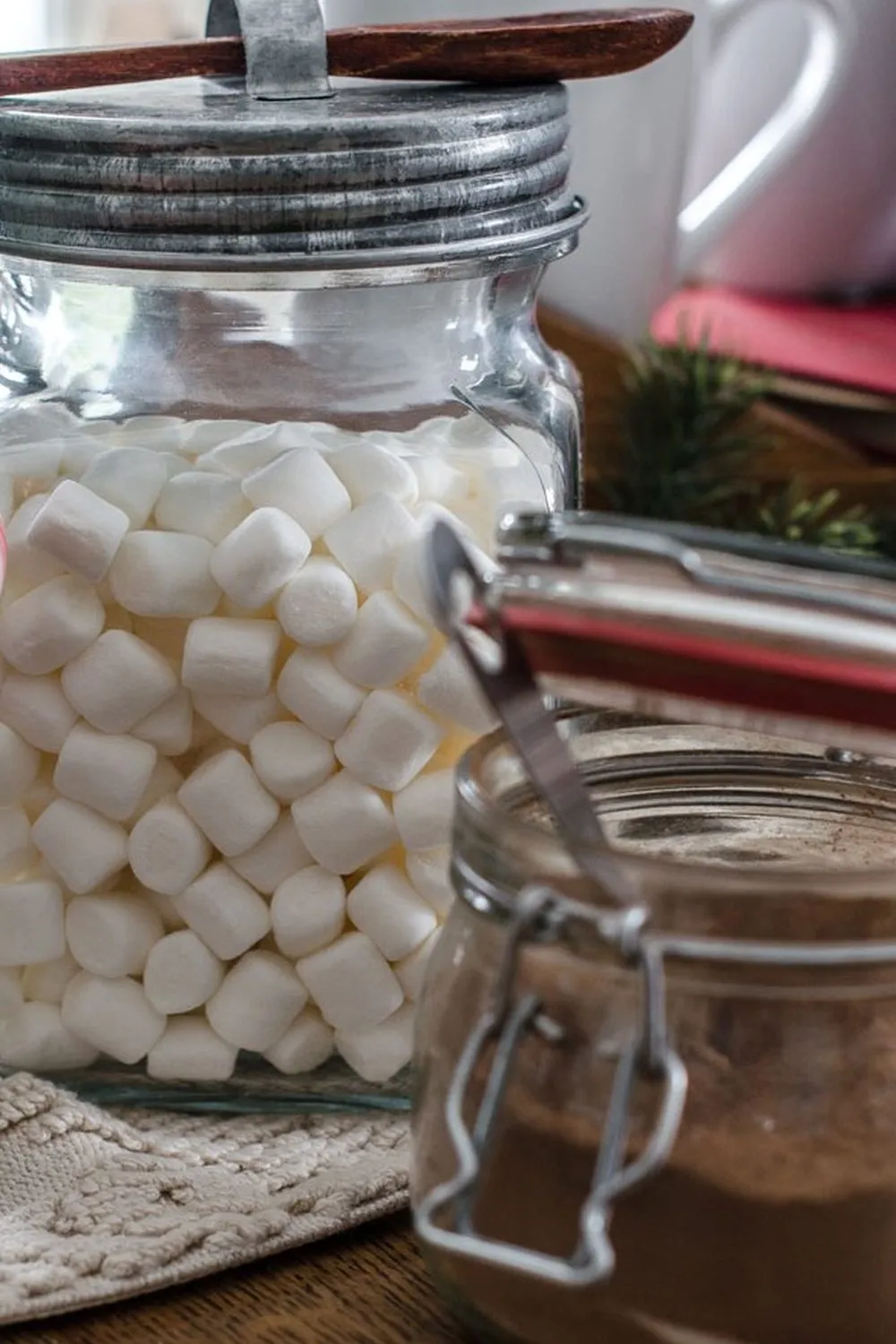
Marshmallows in glass — the sweetest jar on the counter.
A large glass jar of marshmallows beside the cocoa tin is the cocoa station's centerpiece: white, soft and unmistakably for pleasure, it turns a corner of the counter into a promise. Keep the jar sealed tight — marshmallows go stale in damp winter air — and refill it from the pantry bag, never from the box it came in.
Styling tip: put the cocoa in a tin with a tight lid and the marshmallows in glass — the tin keeps the powder dry, and the glass shows off the thing worth seeing.
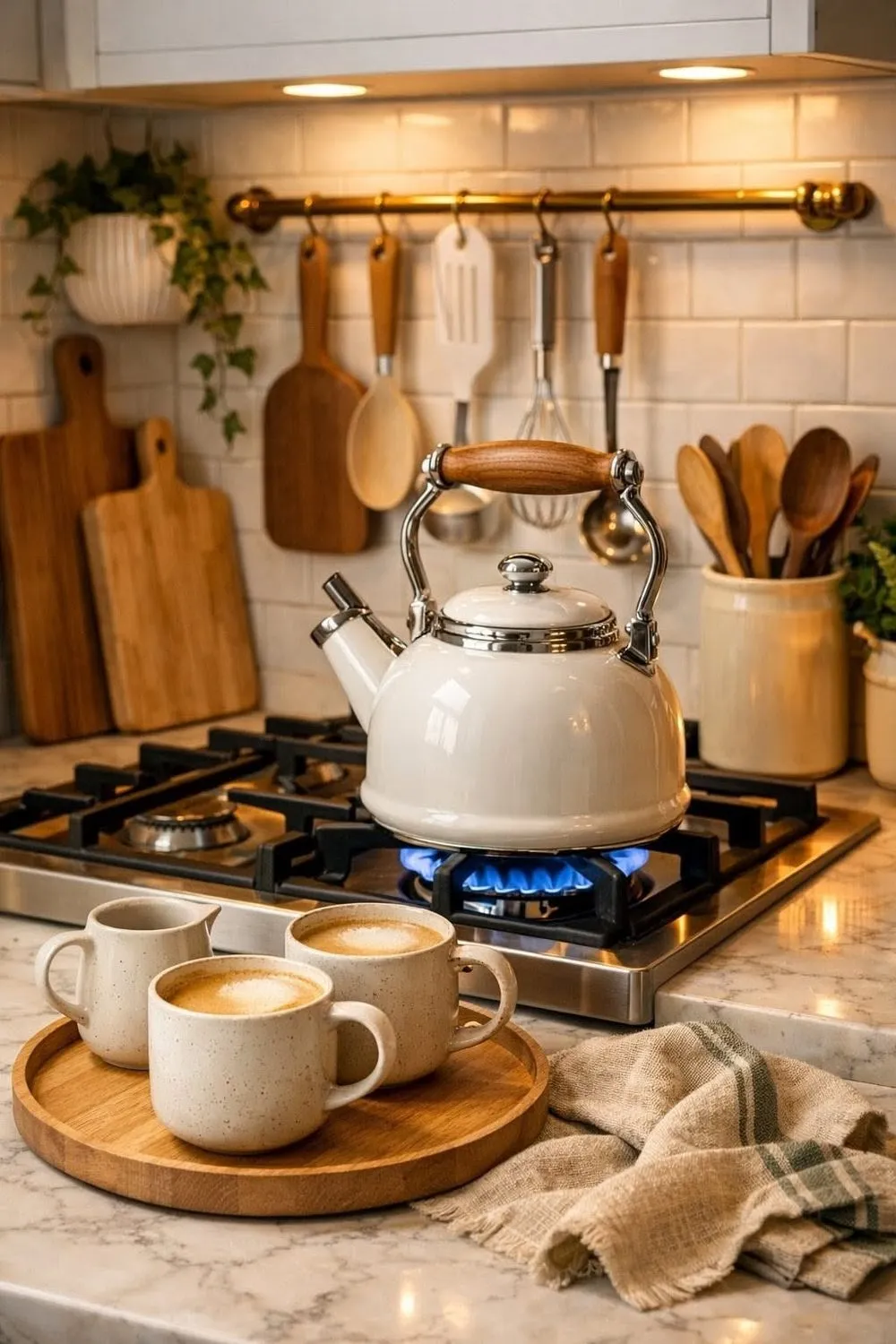
The kettle stays on the stove — hot water is never more than a minute away.
A small enamel kettle kept on the back burner is winter's quiet efficiency: water stays near-hot all evening, so cocoa, tea and the hot water bottle are each a minute away instead of a wait. Choose a kettle in cream or deep green that suits the room — it sits in sight all season, so it earns its looks.
Styling tip: keep the kettle half full, never empty on a lit burner — an empty kettle scorches, and a scorched kettle smells of it for weeks.
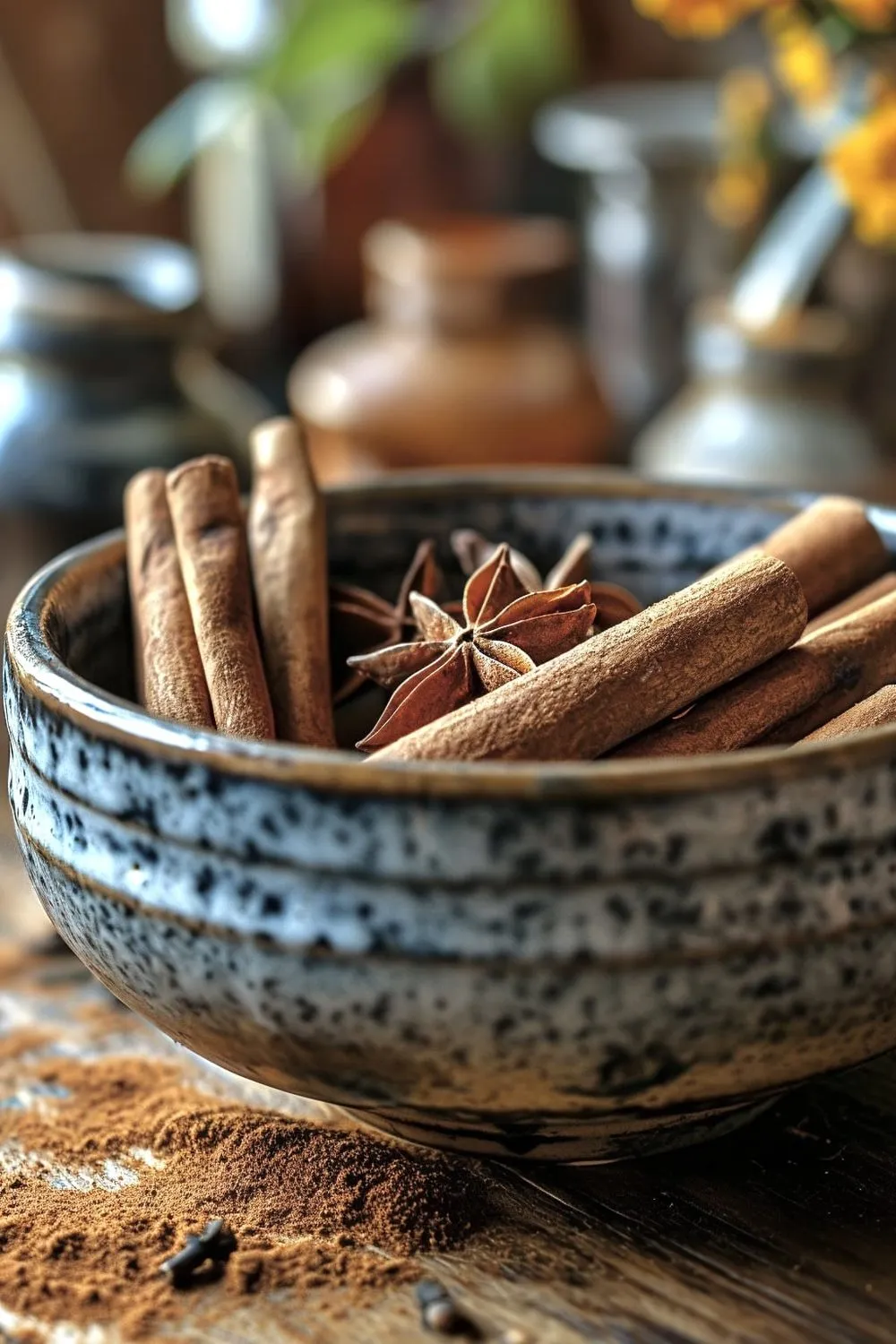
Cinnamon and star anise in a bowl — the spice drawer, out where it can be seen.
A small stoneware bowl of cinnamon sticks and star anise beside the mugs is the cocoa station's finishing touch: it smells of winter before anything is made, and a stick dropped into a mug is the difference between cocoa and an occasion. The bowl costs nothing, keeps for months, and looks like it belongs in a much more deliberate kitchen than it is.
Styling tip: replace the sticks when their scent fades — old cinnamon looks the same as fresh and smells of nothing, so sniff before you trust it.
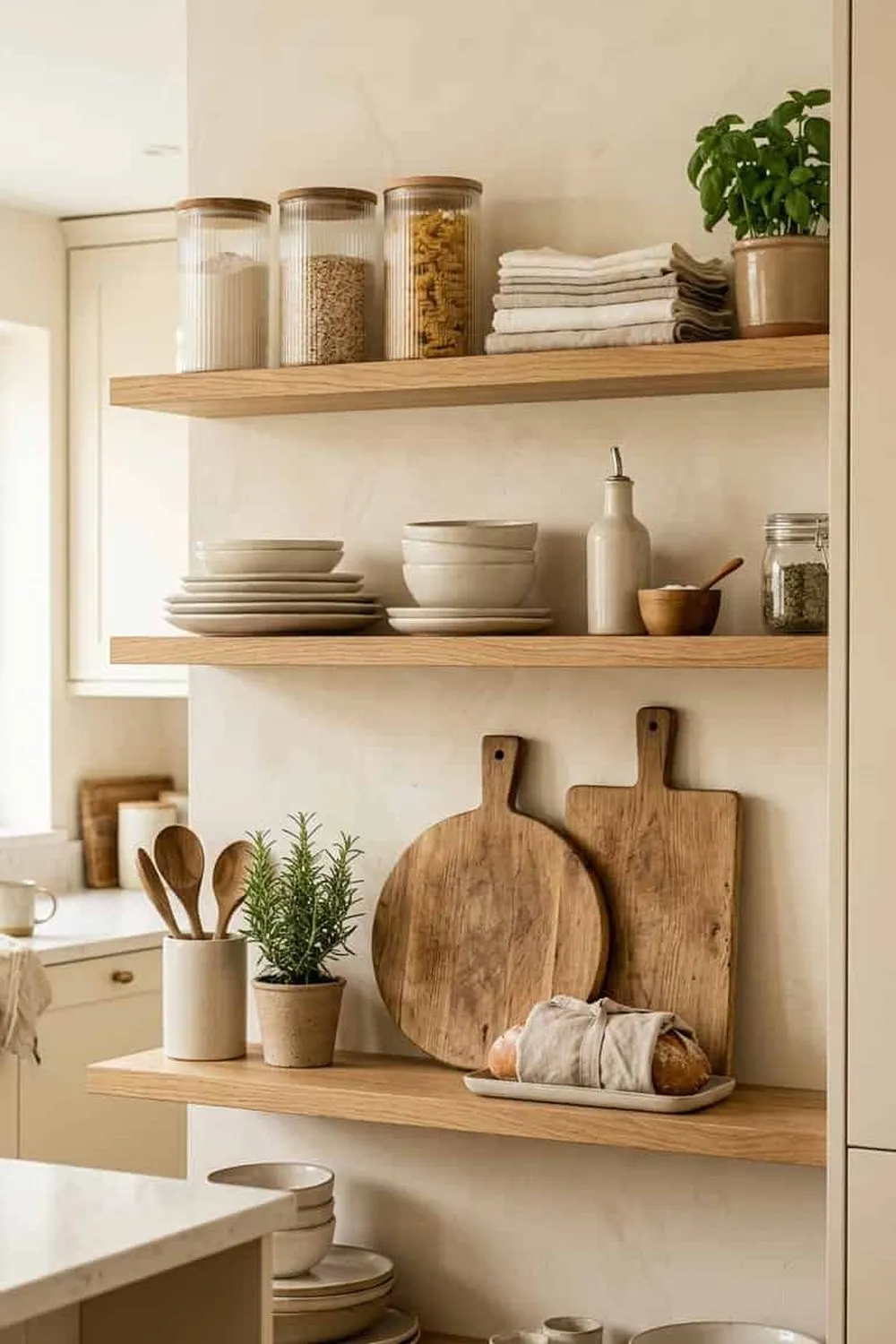
Stoneware stacked in the open — the shelves carry the room's color.
Open shelves of stacked stoneware are the winter kitchen's best wall: plates and bowls in cream, oatmeal and stone do the decorating, and nothing on the shelf is merely for show. Stack by size and keep one color family per shelf — the repetition is what makes a working shelf read as styled rather than stored.
Styling tip: leave one shelf breathing — a shelf packed edge to edge reads as a cupboard with its door off, and a little empty space is what makes the stacks look chosen.
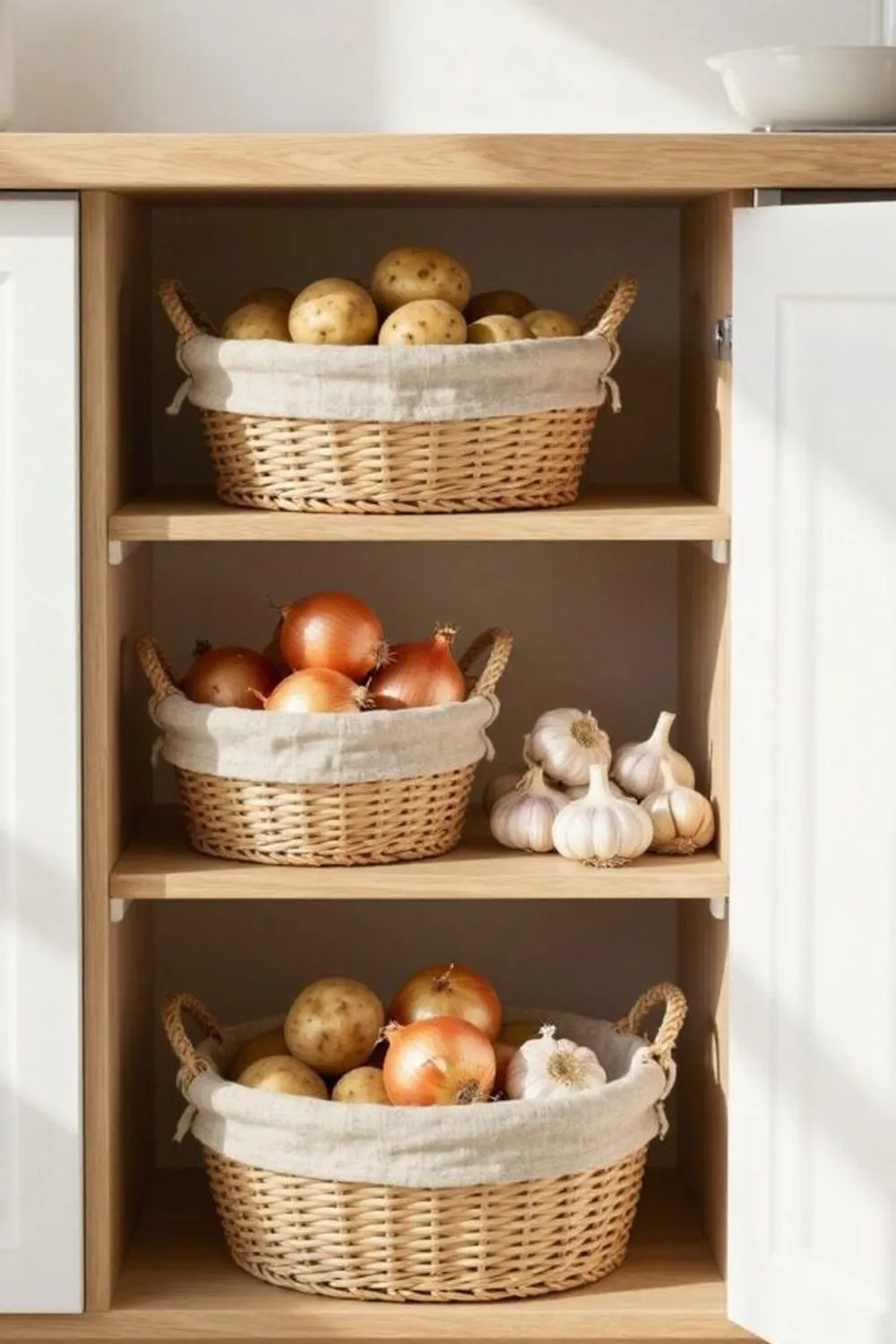
Baskets of onions and squash — the winter vegetables earn a place on the shelf.
Root vegetables belong in baskets, not bags: onions, potatoes and squash in woven baskets on a low shelf stay dry, stay visible, and turn the week's food into the room's texture. The baskets' warm weave softens a room of hard surfaces, and seeing what is there means nothing rots forgotten at the back of a cupboard.
Styling tip: line the baskets with a linen cloth and keep potatoes in the dark — light turns them green, and green potatoes belong in the bin, not the soup.
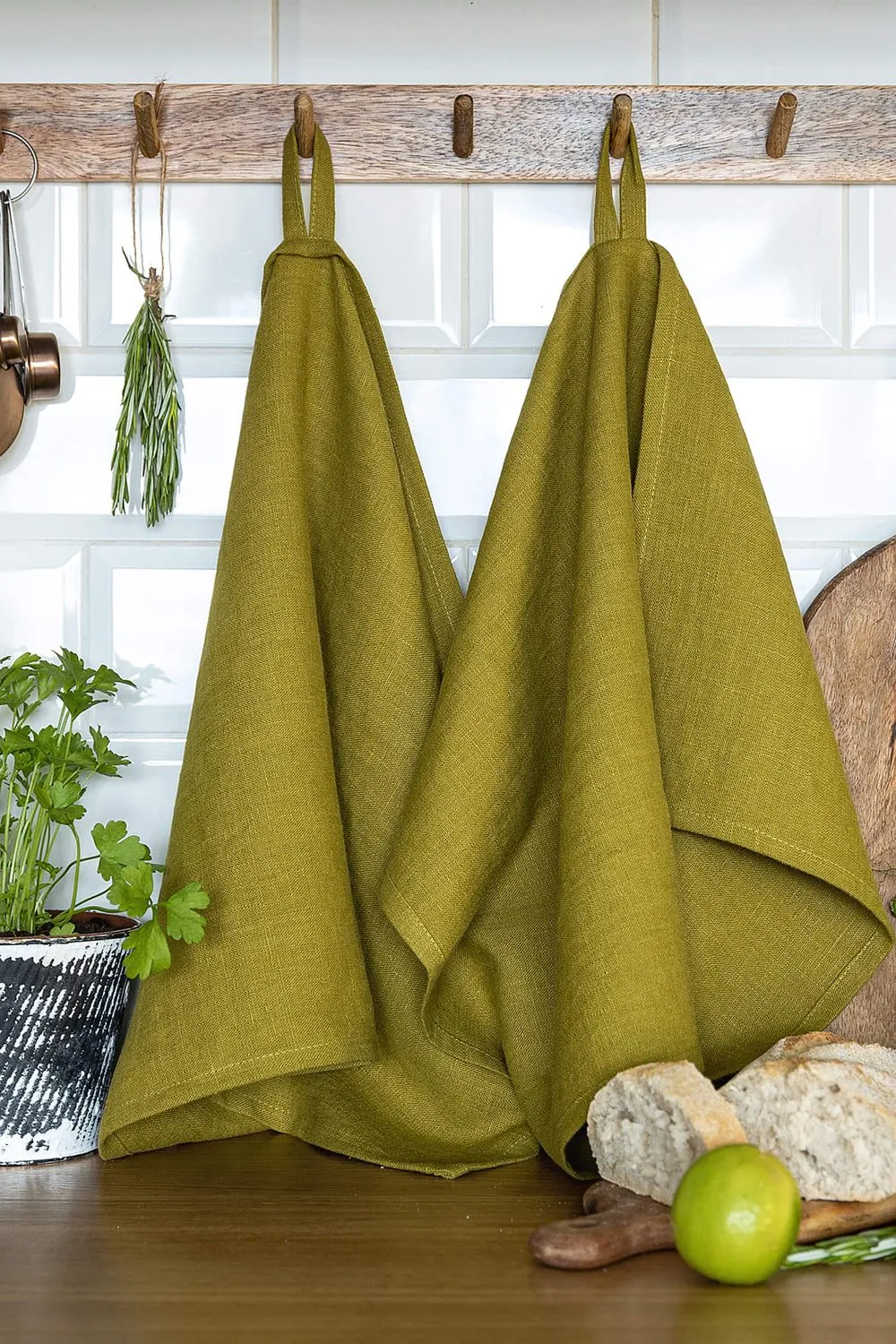
Tea towels in deep green and ink — the smallest textile change in the room.
A row of linen tea towels in deep winter tones is the cheapest color change a kitchen can make: deep green, ink and oatmeal on a rail by the sink, replacing the pale towels of summer. Linen dries hands better than cotton, softens with every wash, and the deep colors hide the winter's cooking stains that pale towels advertise.
Styling tip: hang three and use them in rotation — one in use, one in the wash, one on the rail — so the rail always looks dressed and never threadbare.
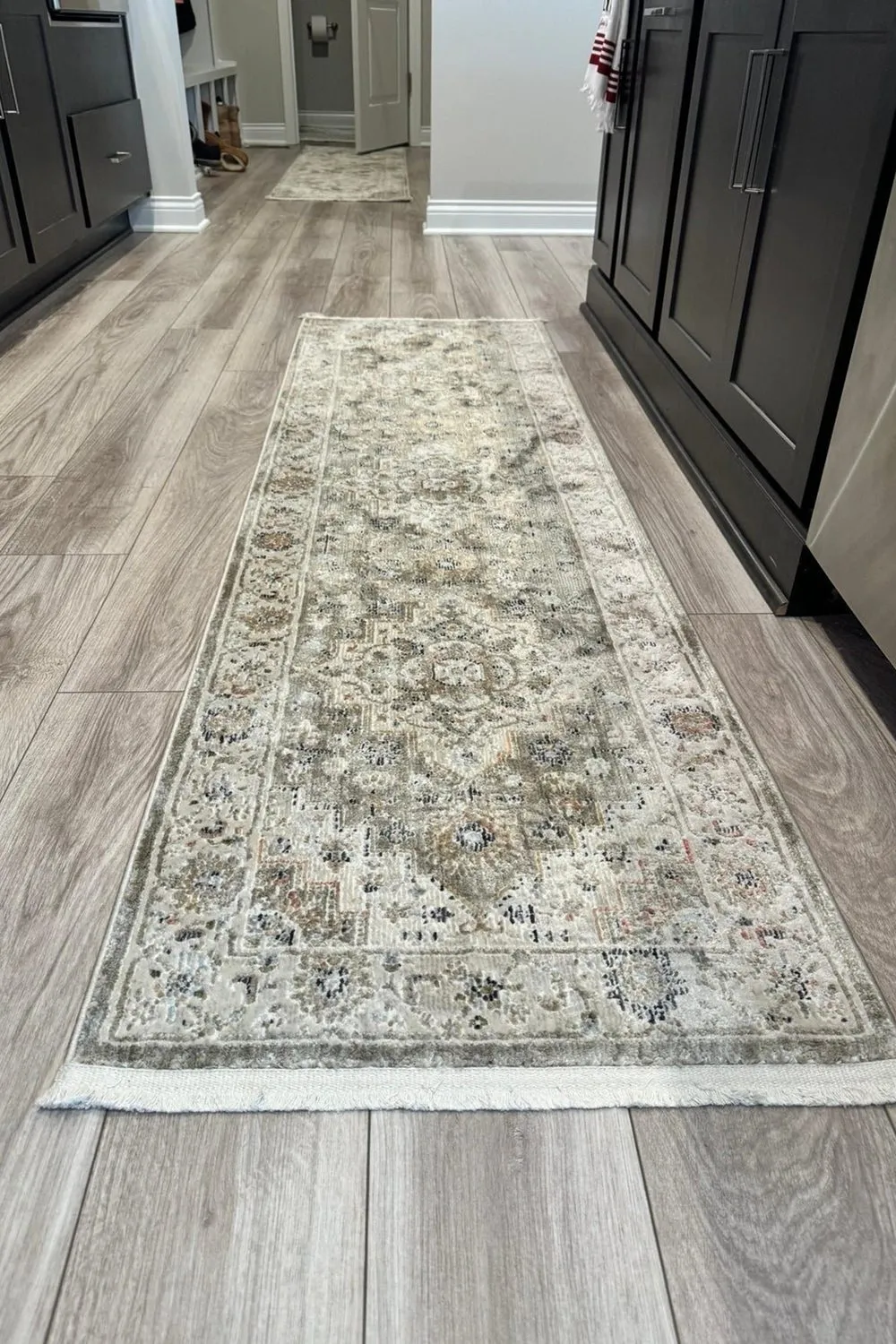
A wool runner down the galley — the cold floor gets a warm spine.
A flat-weave wool runner down the middle of a galley kitchen changes the room underfoot: bare feet stop meeting cold tile at six in the morning, and the muted pattern hides the crumbs between cleanings. Flat weave lets a chair or a step stool slide, and a runner in oatmeal and gray suits every cabinet color it will ever meet.
Styling tip: tape the runner down with rug grippers at both ends — a runner that creeps is a trip hazard in the room where hands are always full.
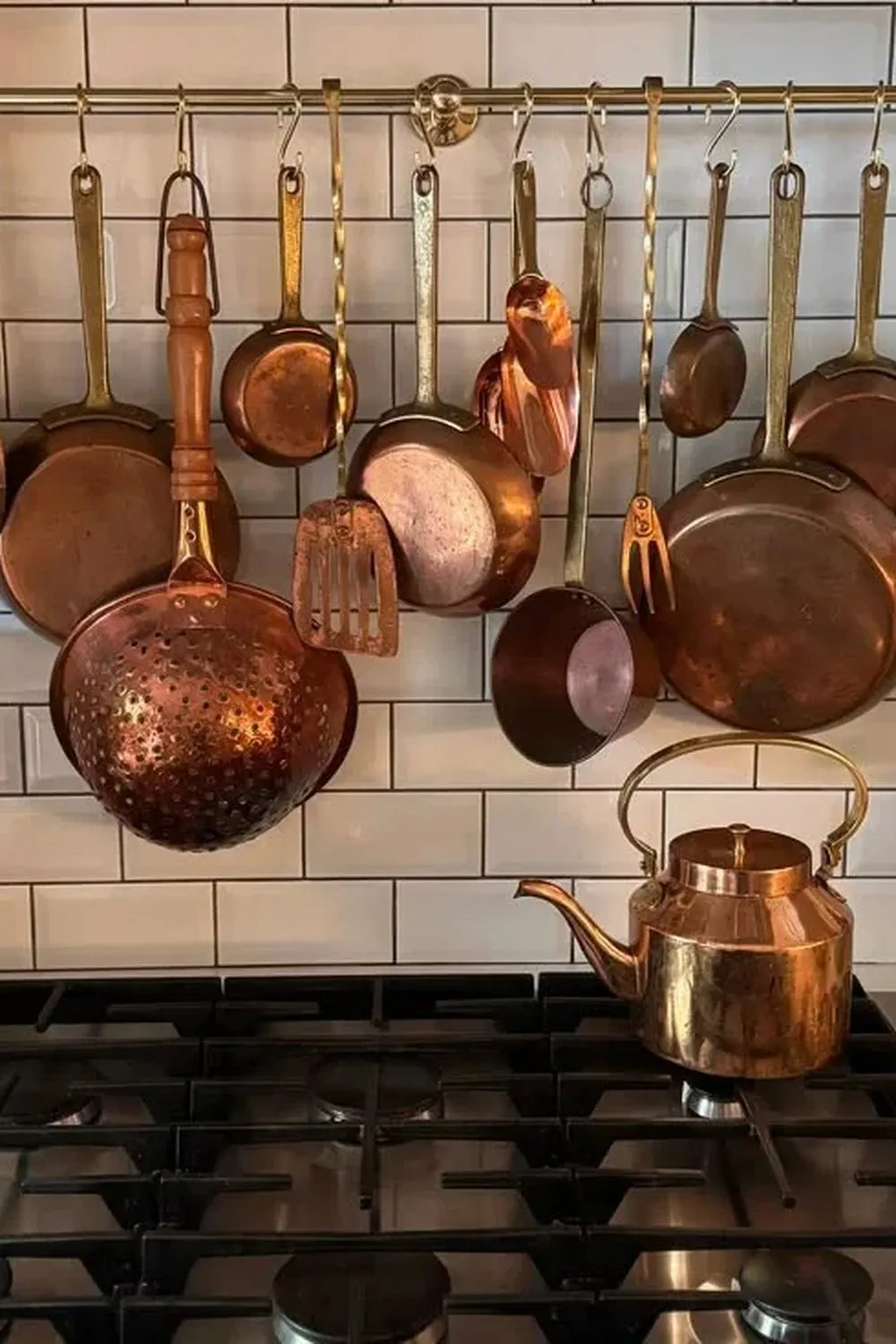
Copper pans on a rail — the cooking wall becomes the display wall.
A copper rail above the stove turns the pans into the kitchen's jewelry: copper and steel hanging in a row, within reach and catching the light, while the cupboard they vacated holds the things that never need showing. The rail needs a solid fixing and hooks that match — a rail that sags under a heavy pan is a repair, not a feature.
Styling tip: hang the pans you use weekly and store the rest — a rail of untouched pans is a dust shelf, and dust on copper shows from across the room.
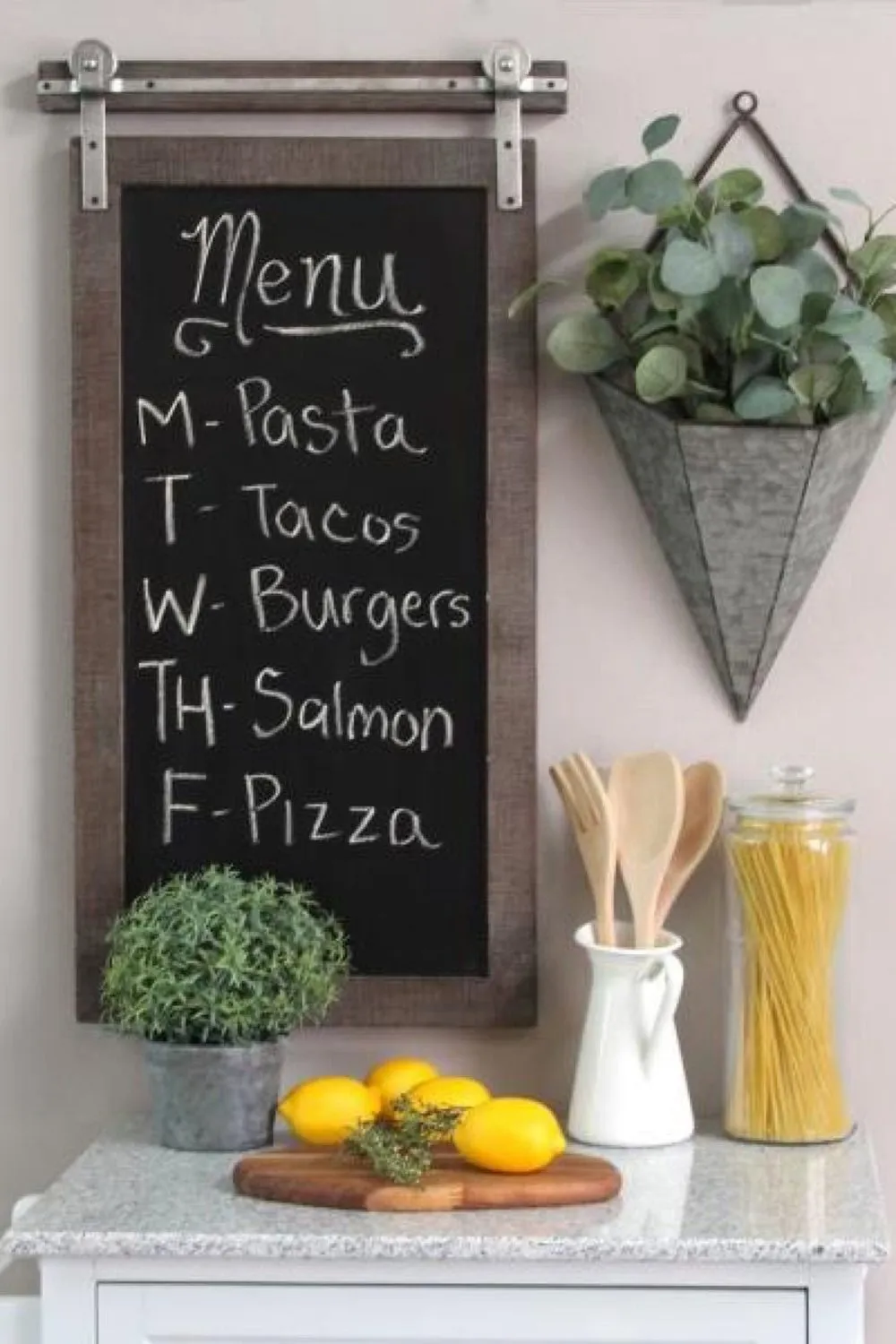
The week's meals in chalk — planning becomes part of the decor.
A small chalkboard on the kitchen wall, listing the week's winter meals in chalk, is planning disguised as decoration: it settles the daily question before it is asked, and the handwritten list gives the room a warmth no printed planner can. Soup on Monday, roast on Sunday — the board makes the week feel considered instead of improvised.
Styling tip: write the board on Sunday evening and wipe it clean with a damp cloth, not a dry one — dry wiping leaves a ghost of every old list behind.
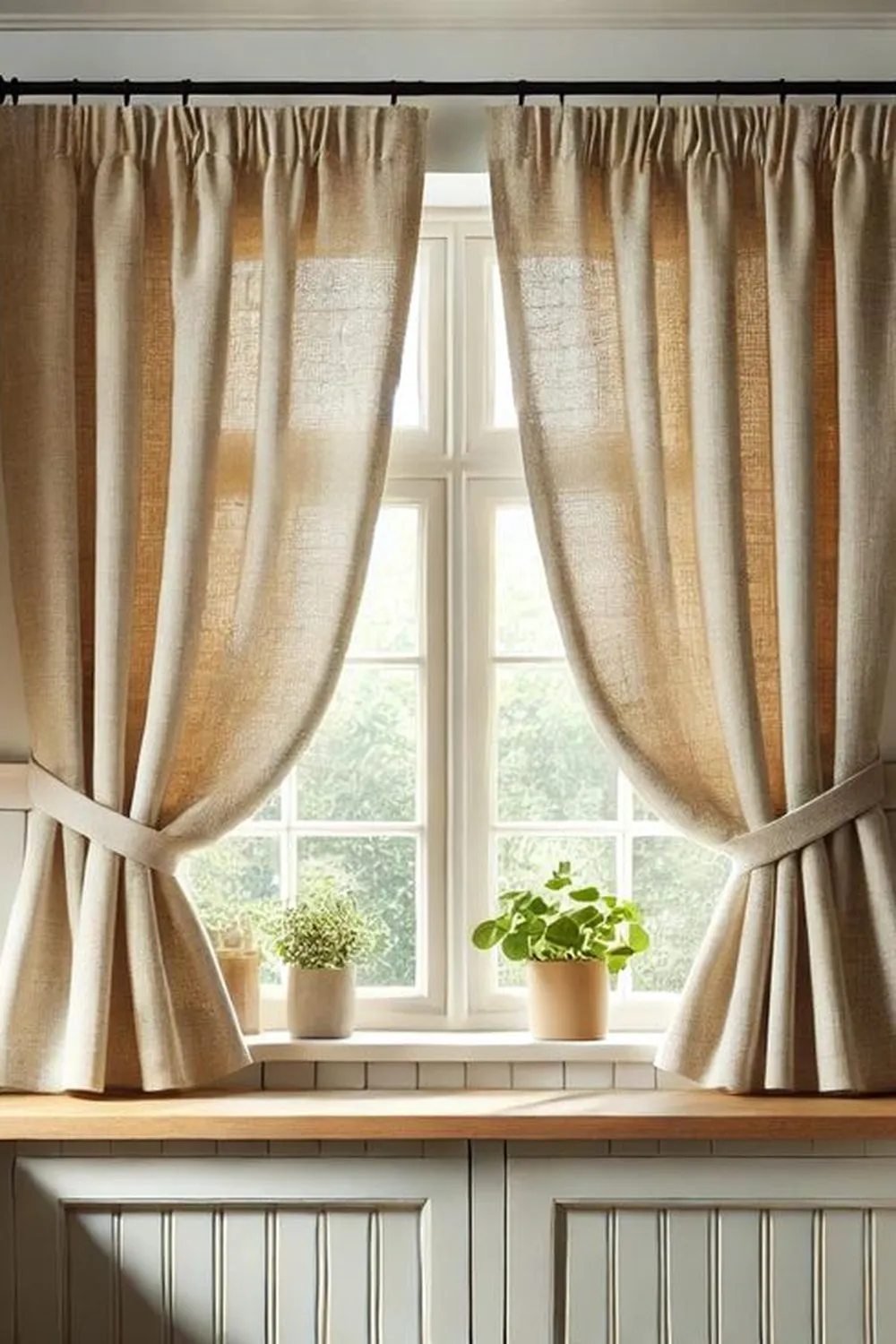
Heavy linen at the kitchen window — the draft stops at the curtain.
A kitchen window loses more heat than any other in the house, and heavy linen curtains drawn at dusk are the honest fix: they stop the draft, soften the glass, and give the sink wall the textile the room is missing. Natural linen in oatmeal or stone suits every kitchen, and a curtain that reaches the sill — not the floor — stays clear of the tap and the washing up.
Styling tip: hang the curtains on a simple wooden rod and draw them at dusk, not at bedtime — an hour earlier keeps the room warmer for the whole evening.
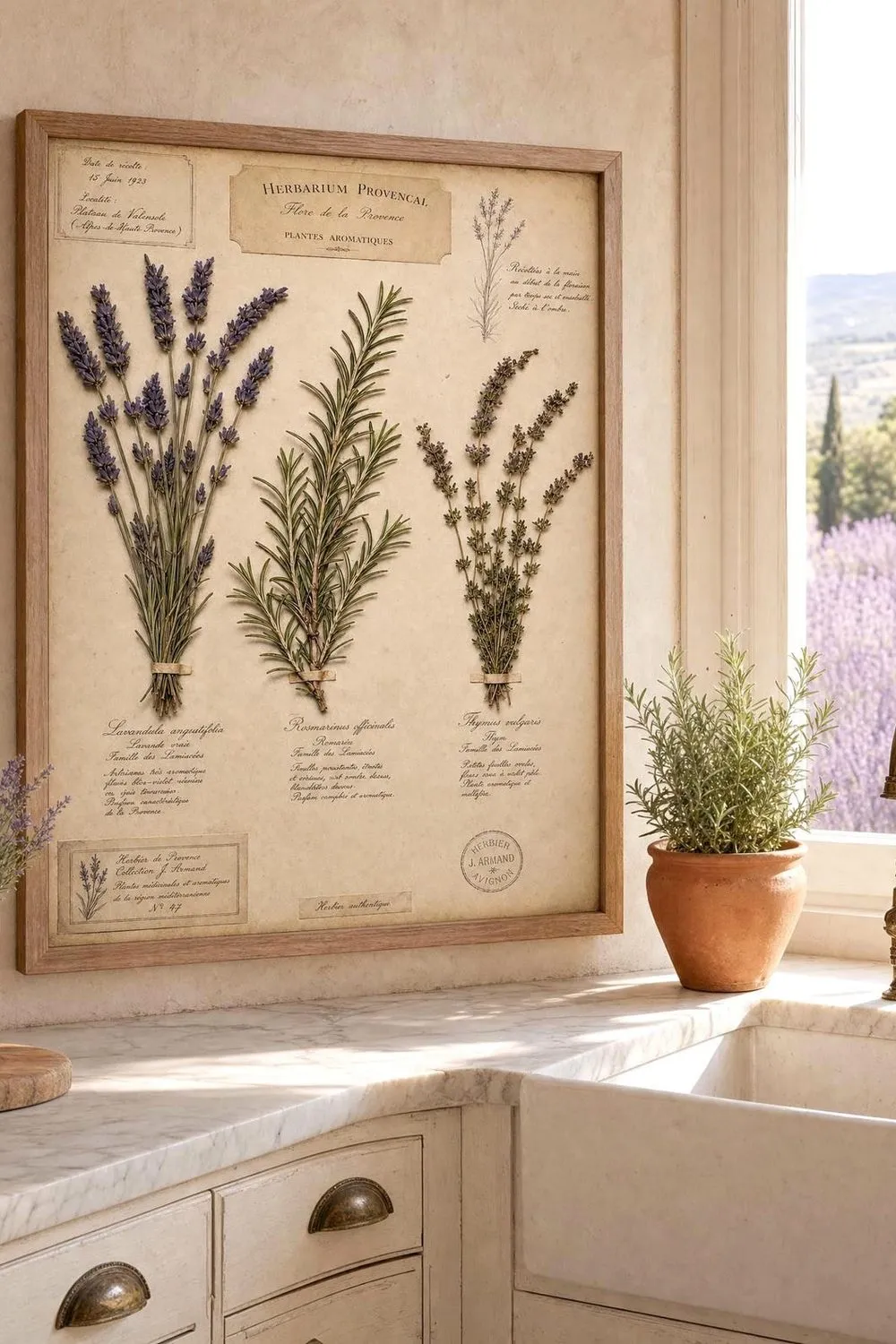
One botanical print above the sink — the wall gets a picture worth washing up to.
The wall above the sink is the view every cook stares at, and a single framed botanical print — rosemary, thyme, bay — is exactly the right picture for it: green on white, calm, and honest about what the room is for. One print in a light wood frame beats a gallery wall here; the sink wall is small, and a crowd of frames competes with the window.
Styling tip: hang the print in a frame with glass and keep it off the steam's path — unglazed paper cockles above a sink within a month.

Oranges and lemons in a wooden bowl — the table's color comes from the fruit bowl.
A wooden bowl of winter citrus on the kitchen table is the room's cheapest centerpiece: oranges and lemons give the table its only strong color in a season of oatmeal and stone, and the fruit gets eaten instead of dusted. Two fruits at most — oranges with lemons, or clementines with bay — a bowl of everything reads as a shop display, and a bowl of two things reads as styling.
Styling tip: turn the fruit every few days and eat the softest first — citrus bruises where it sits, and one soft orange perfumes the whole bowl if left.
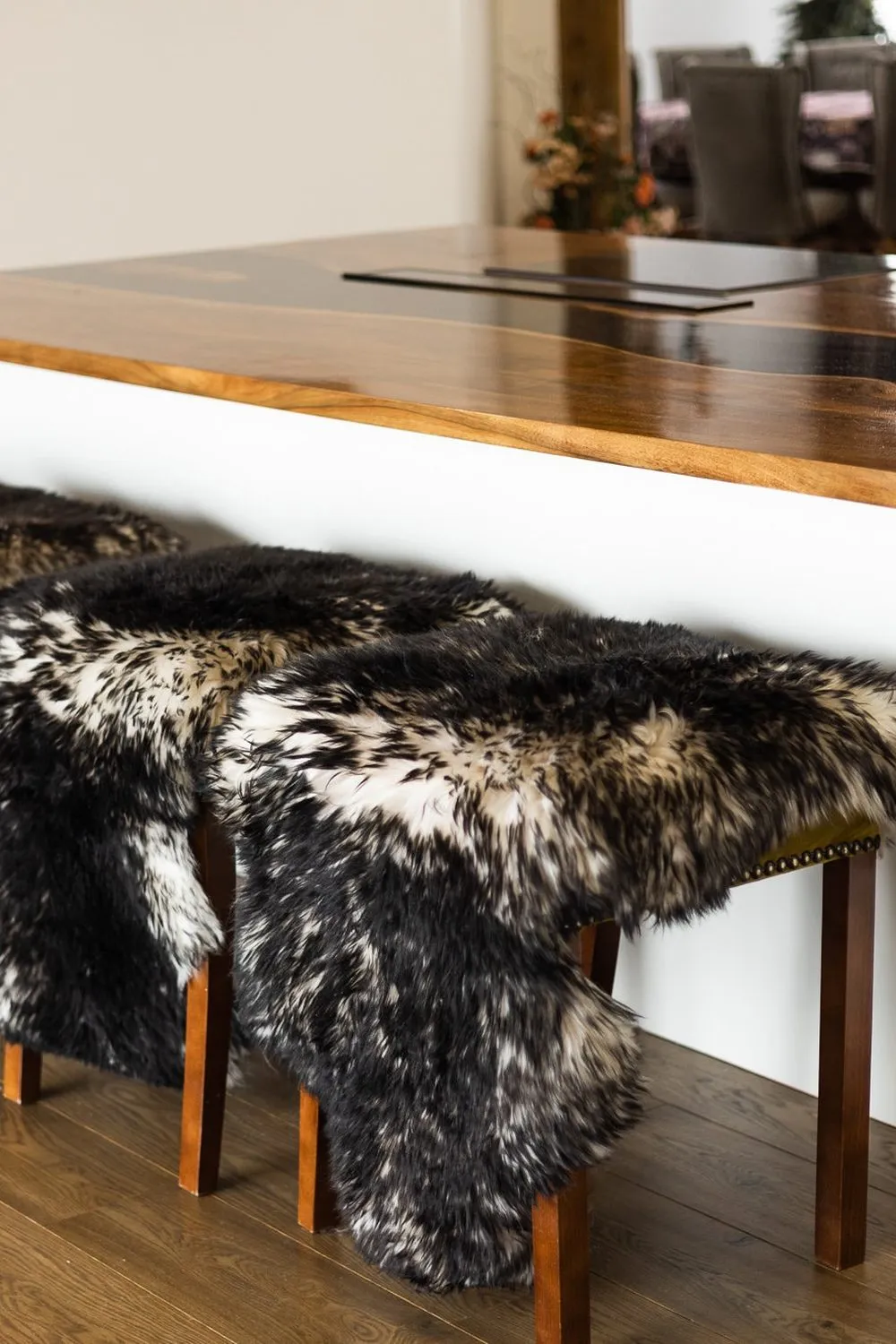
A sheepskin on the stool — the seat you perch on gets the room's softest layer.
The stool at the island is where everyone perches while dinner cooks, and a sheepskin draped over it is the smallest comfort in the room: warm to sit on, soft to lean against, and the one textile that makes a working kitchen feel like a sitting room. One sheepskin, one stool — the rest of the seats stay plain, and the dressed one reads as an invitation.
Styling tip: shake the sheepskin outside once a week and brush it with a wide comb — kitchen sheepskins collect flour dust, and a dusty fleece looks tired fast.
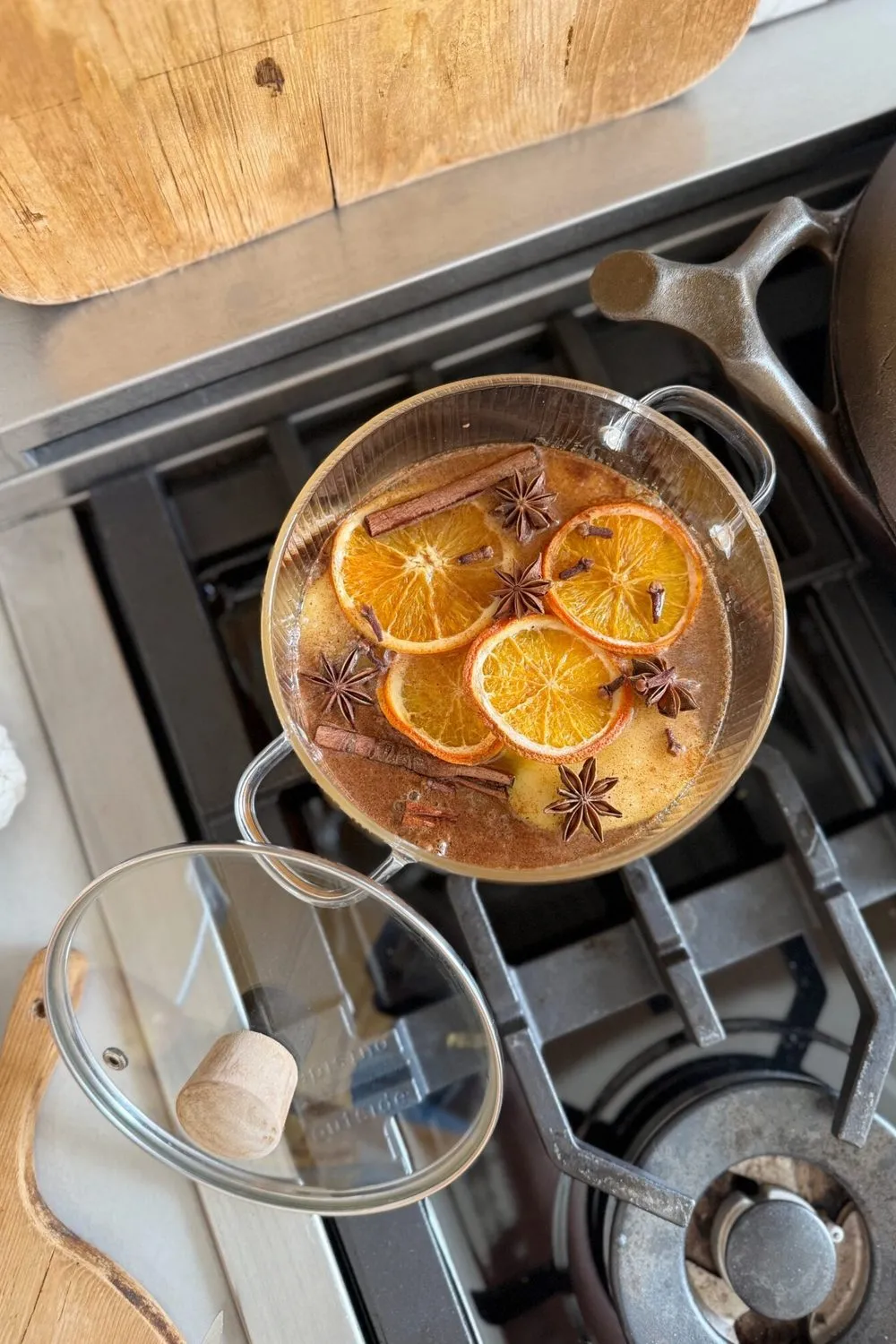
Orange, cinnamon and cloves on the back burner — the kitchen scents itself.
The last layer of a winter kitchen is scent, and a simmer pot does it without a single purchased thing: water, orange slices, cinnamon sticks and cloves on the back burner, kept just below a simmer. The steam carries the smell through the whole house, and the pot costs nothing but the peel that would have been thrown away.
Styling tip: top the water up every half hour and never let the pot boil dry — a dry pot scorches in minutes, and scorched cinnamon smells of it for days.
Keep the greenery plain and the color calm — pine, eucalyptus and cedar with no bows or baubles, deep green and oatmeal instead of red and gold. Candlelight and wool give the glow that festive shine used to, with no holiday motifs anywhere.
On a door or over a window, never over the stove — heat wilts fresh greenery in days. The pantry door, the window above the sink and the range hood (dried or faux only) are the three spots that work.
Layers at counter height: pillar candles in hurricanes on the island, tapers by the window, tealights along the backsplash, with the overheads dimmed to a backdrop. Flameless candles take the glass-front cabinet, where a real flame can never go.
Contain it on one tray — cocoa, sugar and a jug — with the mugs on hooks above and the kettle on the stove. One tray, one corner: the station lifts off in one hand when the counter is needed for cooking.
Yes, with rules: set holders on stone or in glass hurricanes, keep flames clear of tea towels, curtains and dry greenery, use flameless candles near fabric and inside cabinets, and never leave lit candles unattended. Lanterns are the safest choice on a busy counter.
A winter kitchen is built the way a good meal is: in layers, and without rushing — clear wood on the island, plain greenery on the door, candlelight at counter height, a cocoa station that is always ready and wool underfoot. Start with the tray and the candles, and let the room gather its warmth from there. Save your favorite winter kitchen decor ideas from this list, and follow TheStylingHub on Pinterest for fresh winter ideas all season long.
Rooms
Nov 22, 2026
32 Winter dining room decor ideas — candlelight, natural texture, layered linen and calm…
Rooms
Nov 21, 2026
35 Winter bedroom decor ideas — layered bedding, chunky knits, soft lamplight and calm…
Rooms
Nov 18, 2026
Small bathroom decor ideas that make a tiny space feel bigger — light colors,…