
Rooms
35 Winter Bedroom Decor Ideas Full of Layers, Knits and Soft Light
Nov 21, 2026
35 Winter bedroom decor ideas — layered bedding, chunky knits, soft lamplight and calm…
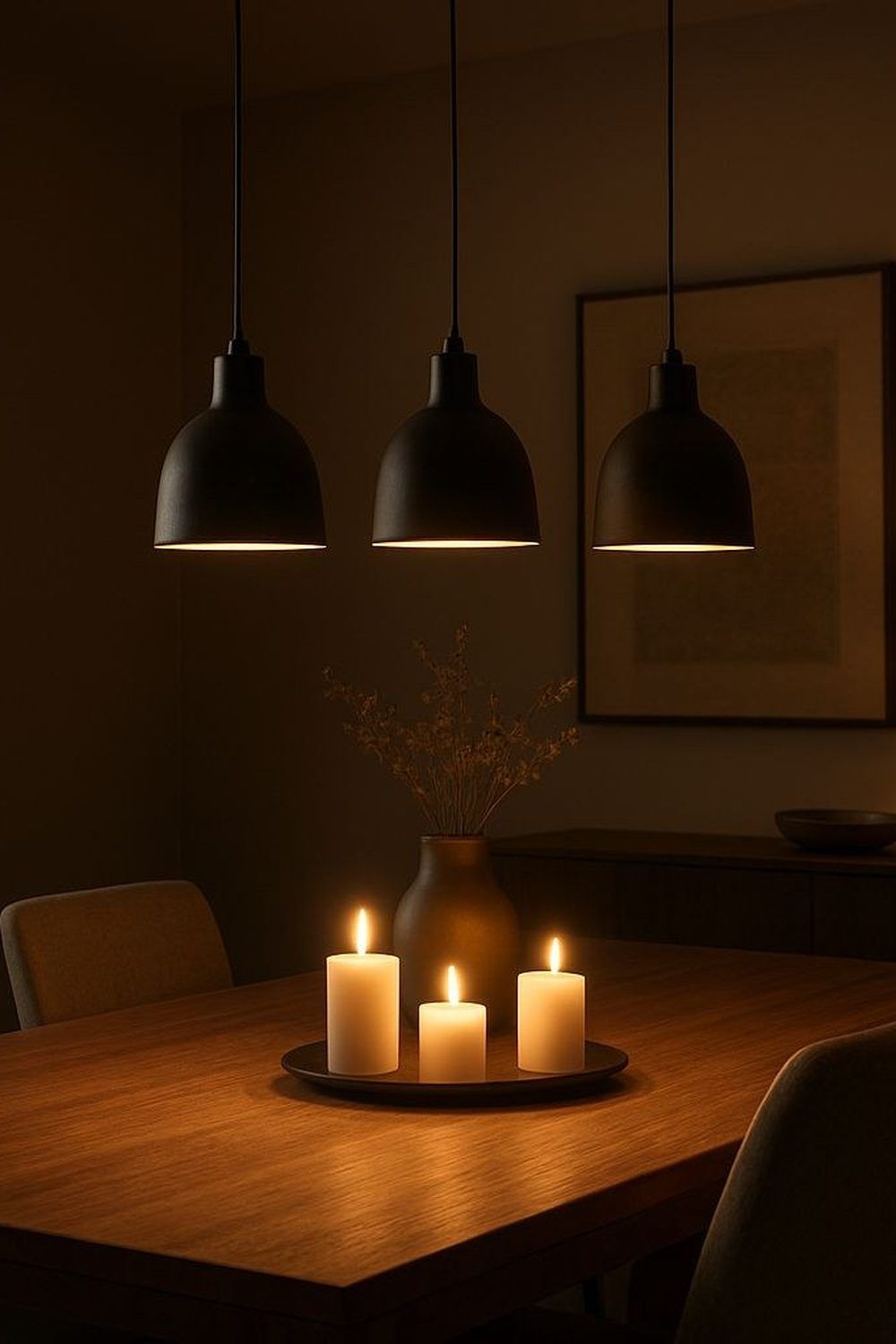
In winter the dining room earns its keep — it is where dark evenings turn into long, slow dinners and the table becomes the warmest seat in the house. These winter dining room decor ideas dress the whole room, not just the tabletop: candlelight, natural texture, layered linen and calm color, built for lingering.
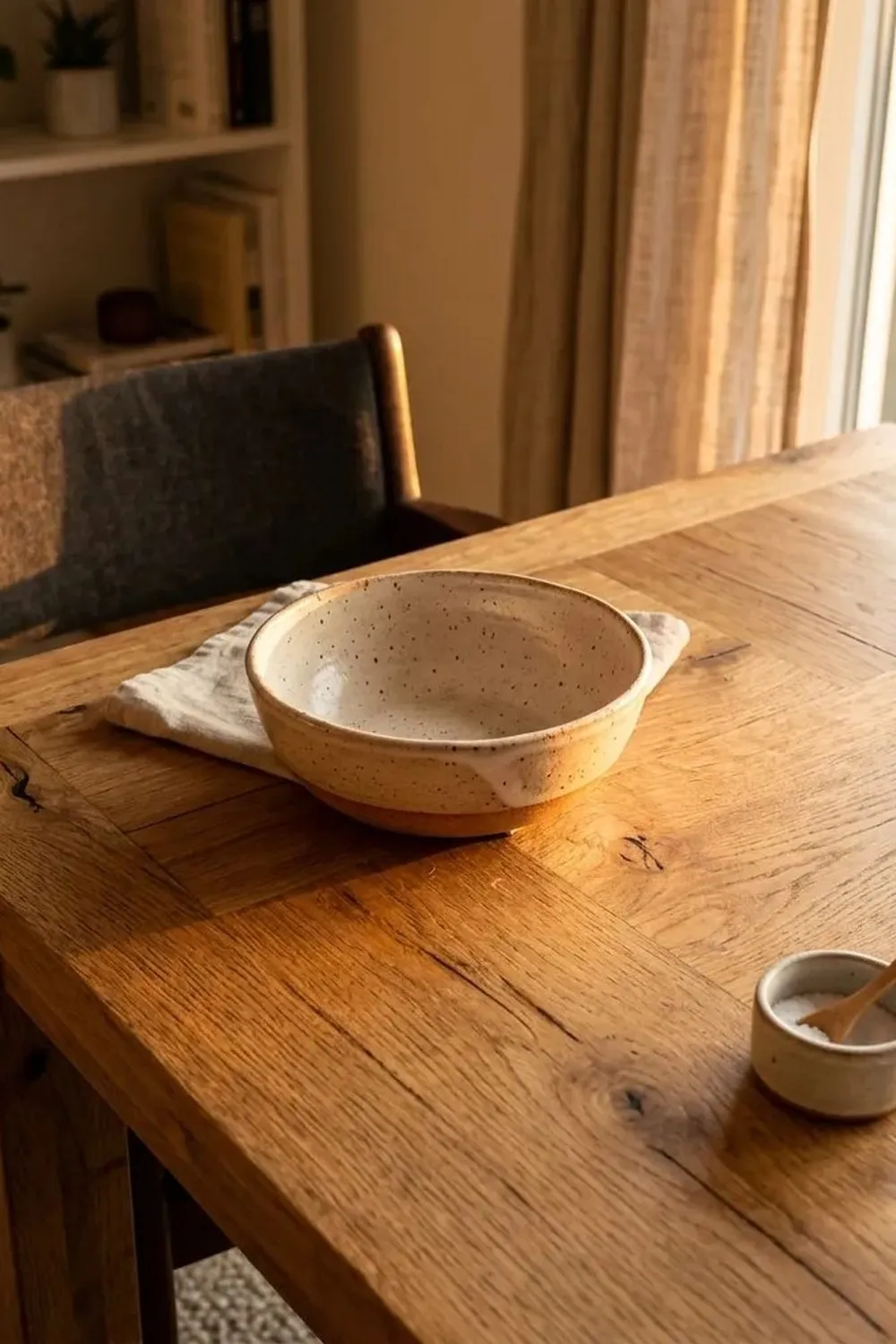
No cloth, no runner — polished wood is the winter table's best surface.
Winter is the season to let a good wooden table show itself. Without a cloth, the grain becomes the pattern, candlelight pools on the polished surface, and the room reads warm before a single thing is set out. A single stoneware bowl or a low wooden board in the middle is all the dressing a handsome table needs between meals.
Styling tip: feed the wood with a beeswax polish before the season starts — dry winter air dulls tabletops, and a polished surface throws candlelight back twice as well.
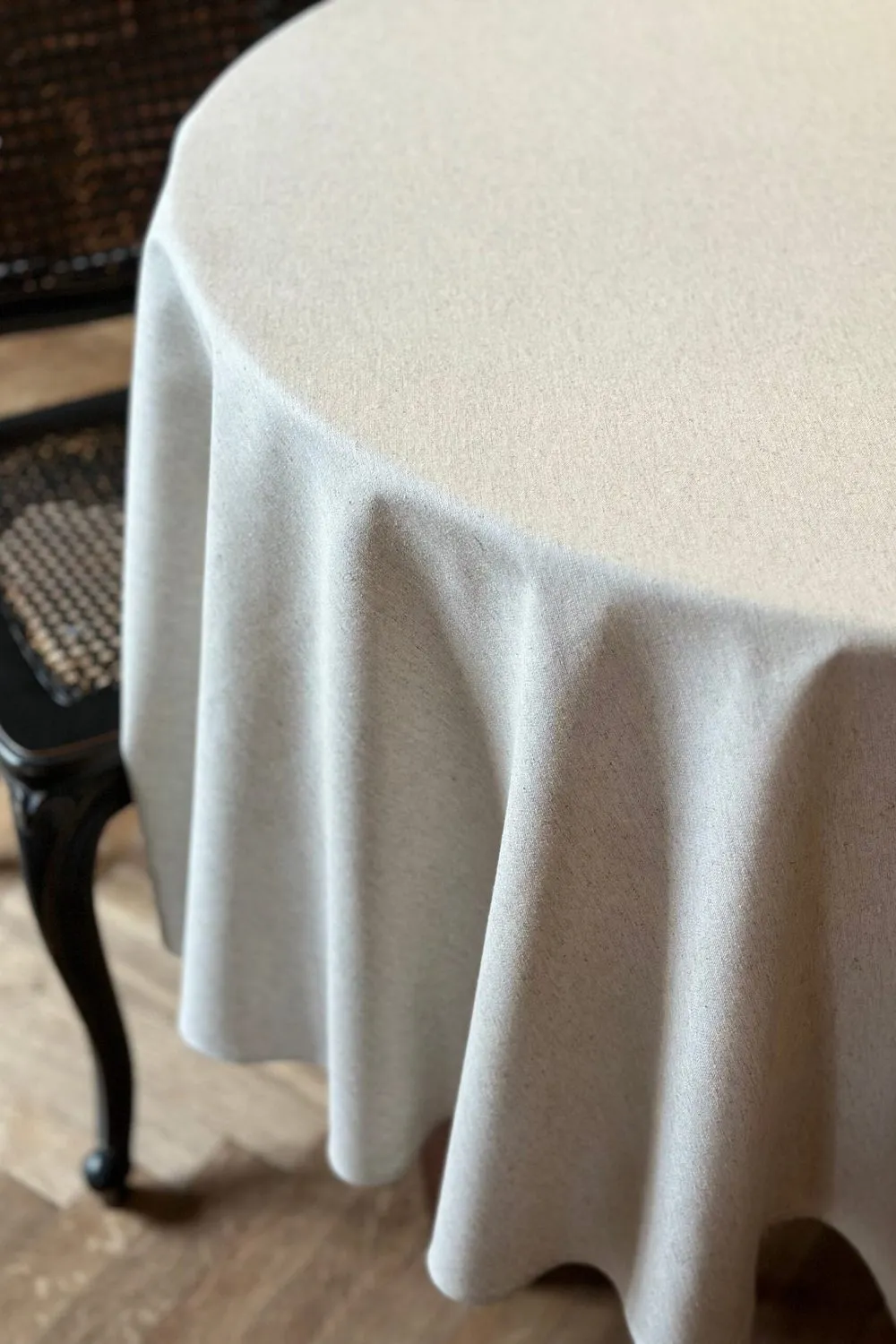
Soft-washed linen, falling long — the table looks dressed without trying.
If the table needs covering, washed linen in oatmeal or stone is winter's answer: softer than white, warmer than gray, and forgiving of every wrinkle — in fact the soft creases are the look. Let it fall long at the ends so the whole table reads as one calm, textured shape in the room.
Styling tip: skip the iron entirely and hang the cloth over the table straight from the line; linen's rumple is what separates it from a stiff formal cloth.
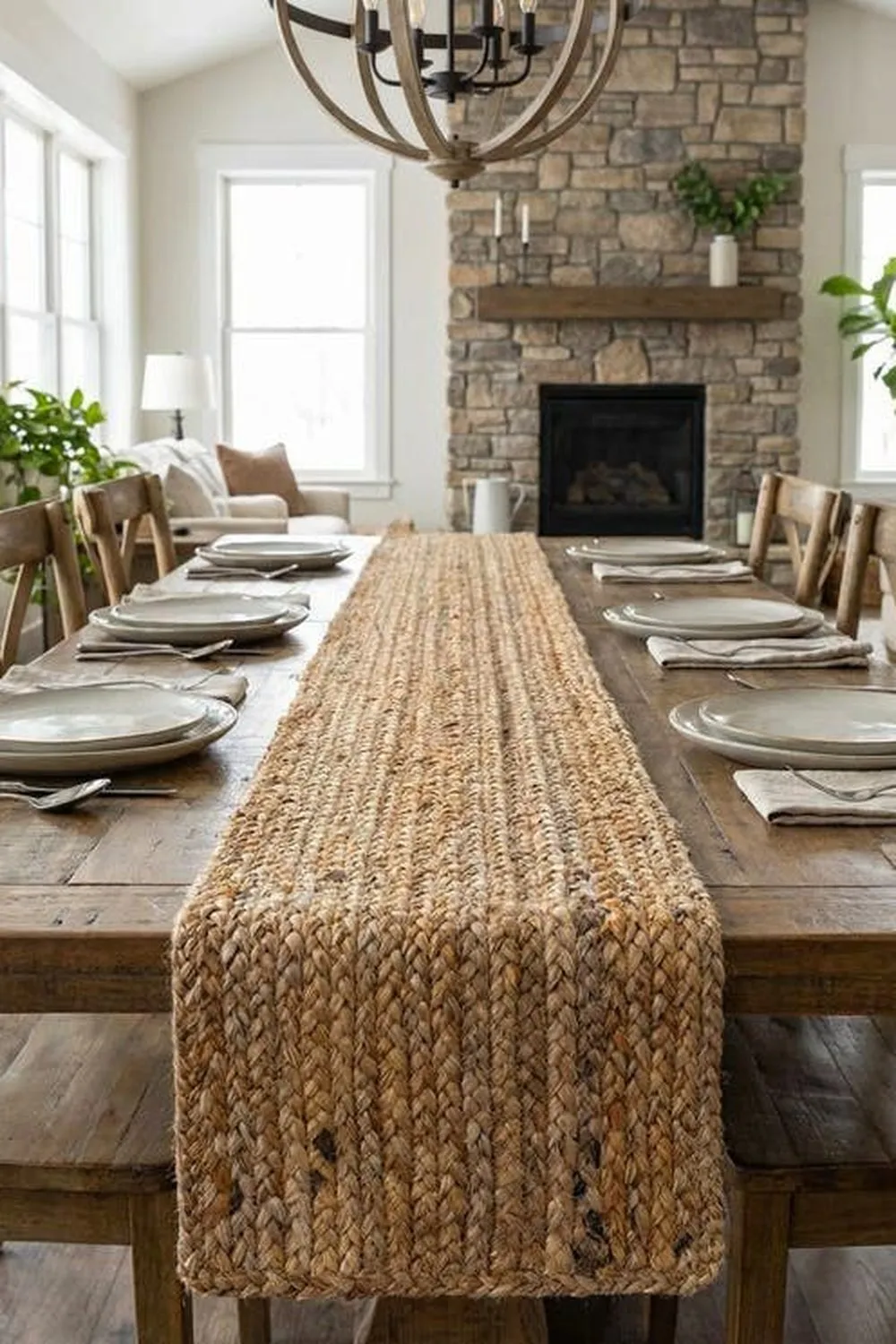
A wool runner instead of silk or sequins — winter texture running the table's full length.
A runner in woven wool or a heavy cotton weave brings the table's center into the season: matte, warm, and quiet under everything set on it. In a plaid muted to grays and creams, or a plain weave with a fringed end, it layers over bare wood or linen without a hint of festive shine.
Styling tip: let the runner overhang both ends by a hand's length — a runner that stops short of the edge looks cut off, while the overhang makes it feel generous.
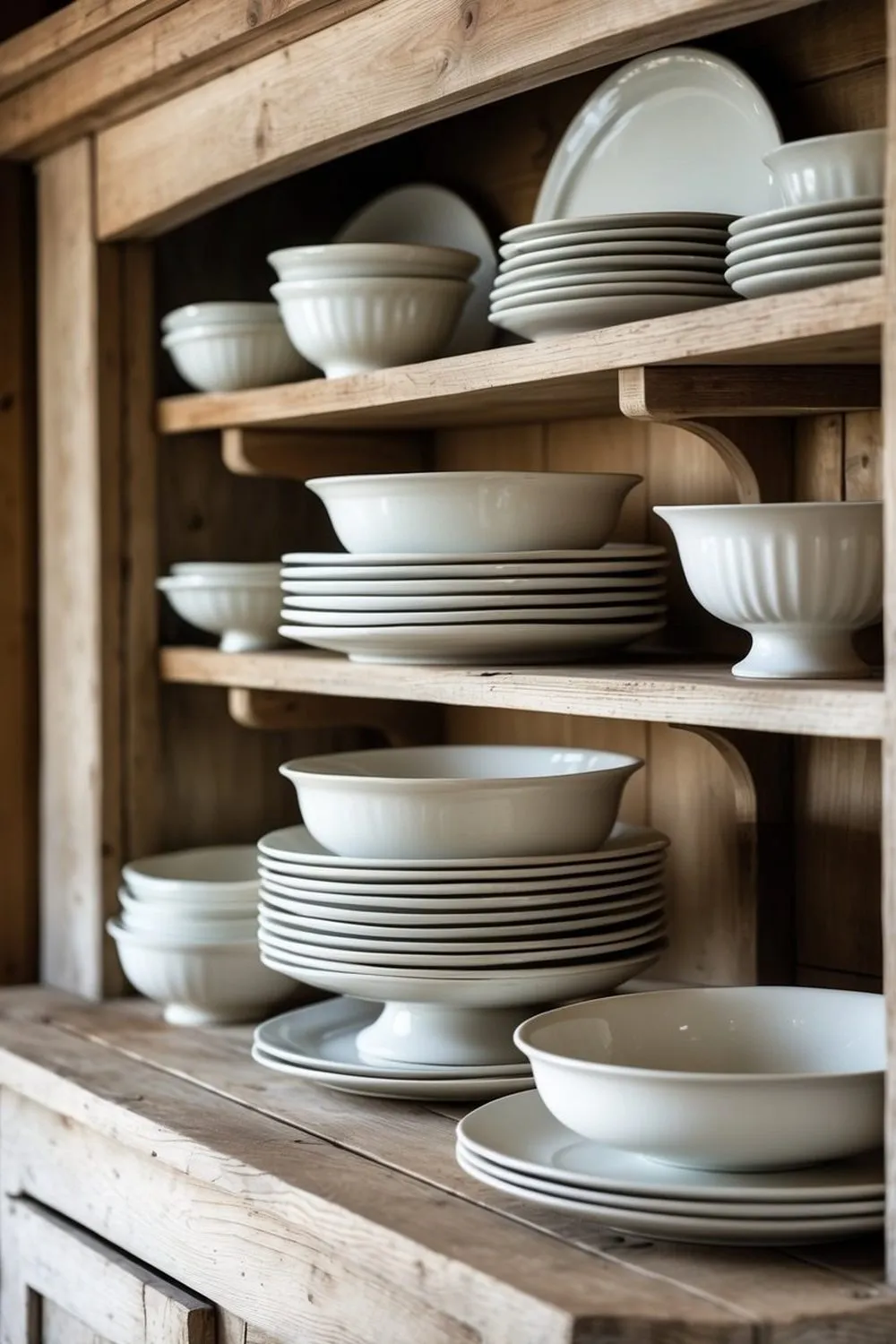
Everyday stoneware, stacked where it can be seen — the room's most honest decoration.
Winter dining uses the heavy dishes: thick stoneware plates, deep bowls, mugs with weight. Kept in open stacks on the sideboard instead of hidden in cupboards, their speckled glazes and uneven rims become the room's texture display — and setting the table takes half the time.
Styling tip: keep the stacks to one glaze family — all cream, all stone gray — so the display reads as a collection rather than a cupboard overflow.
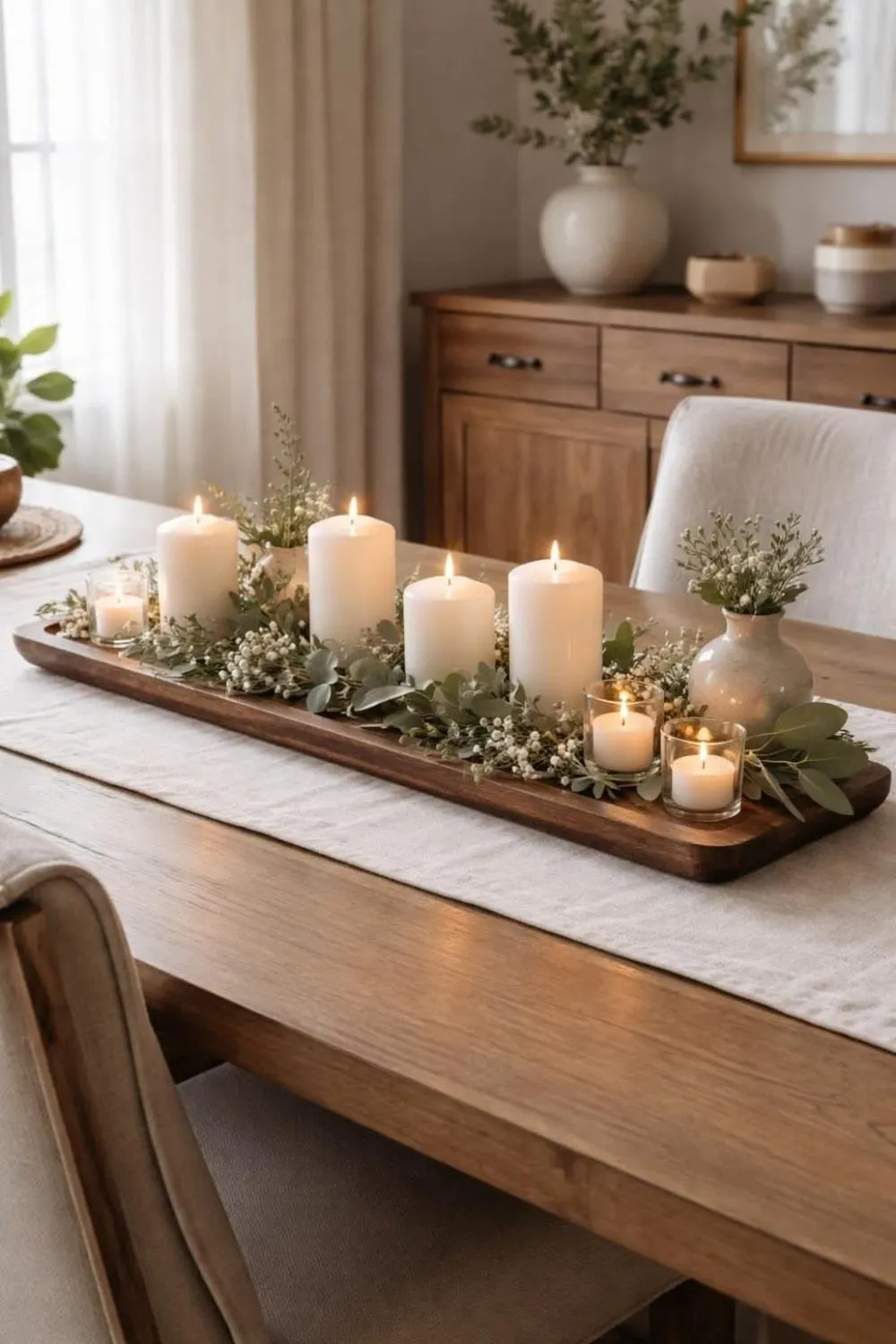
One long board down the middle — everything else on the table has a home.
A long wooden serving board laid down the table's center is the quiet organizer of winter dining: candles, a small vase, the water jug and the bread all land on it, and the rest of the table stays clear. Between meals it still looks styled; during meals it works as hard as any serving piece you own.
Styling tip: choose a board nearly the table's full length — the long line makes even a small dining table read grander and more deliberate.
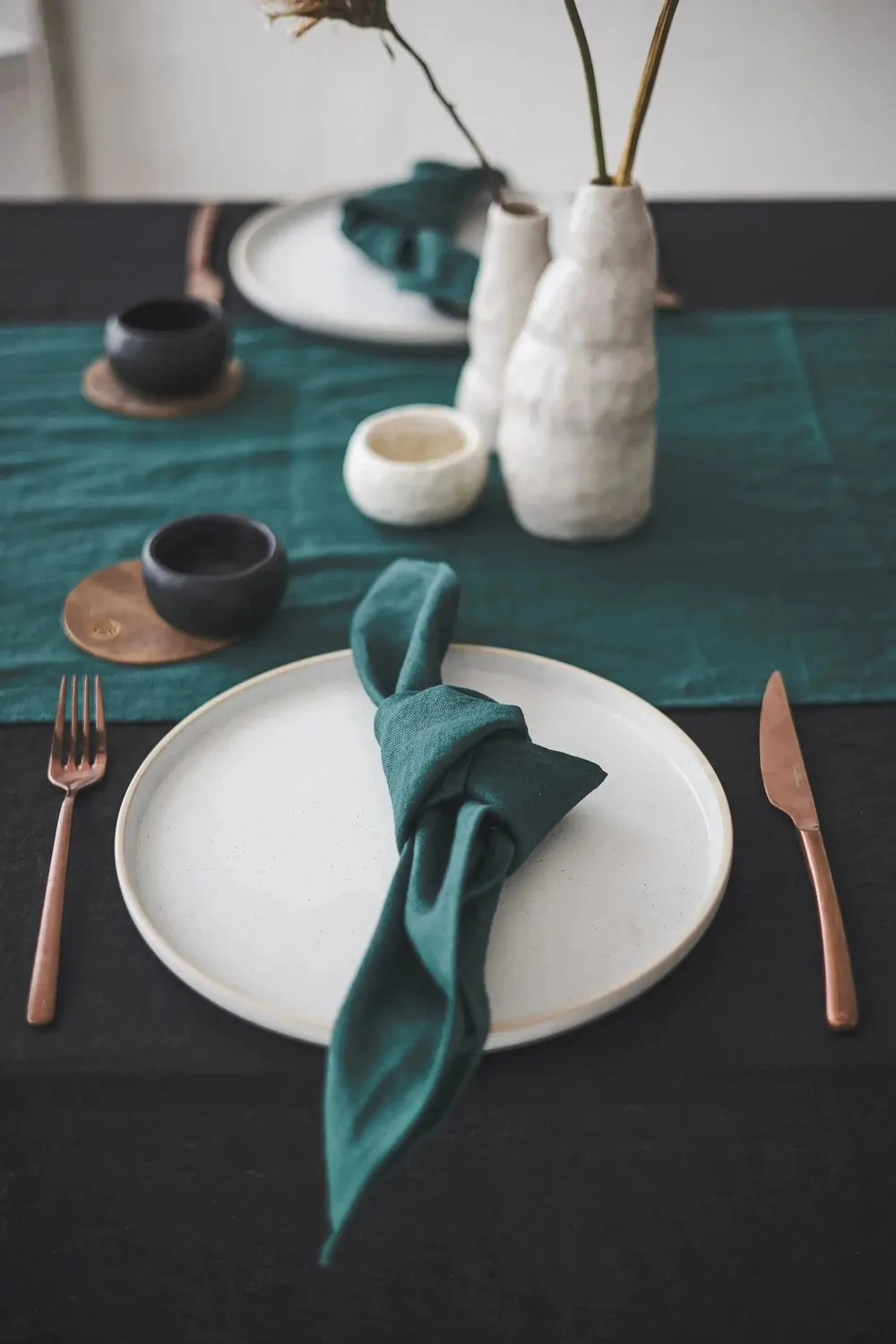
Deep green and ink linen at each place — small folds of color, changed in minutes.
The fastest color change a dining room gets is at each place setting. Linen napkins in forest green, ink navy or oxblood against pale plates and a neutral cloth give the table its winter depth without touching a wall — and they wash, fold and store in a drawer when spring asks for white again.
Styling tip: fold napkins in a simple long rectangle under the fork rather than a fancy shape; winter tables look best under-dressed, and linen's texture does the showing off.
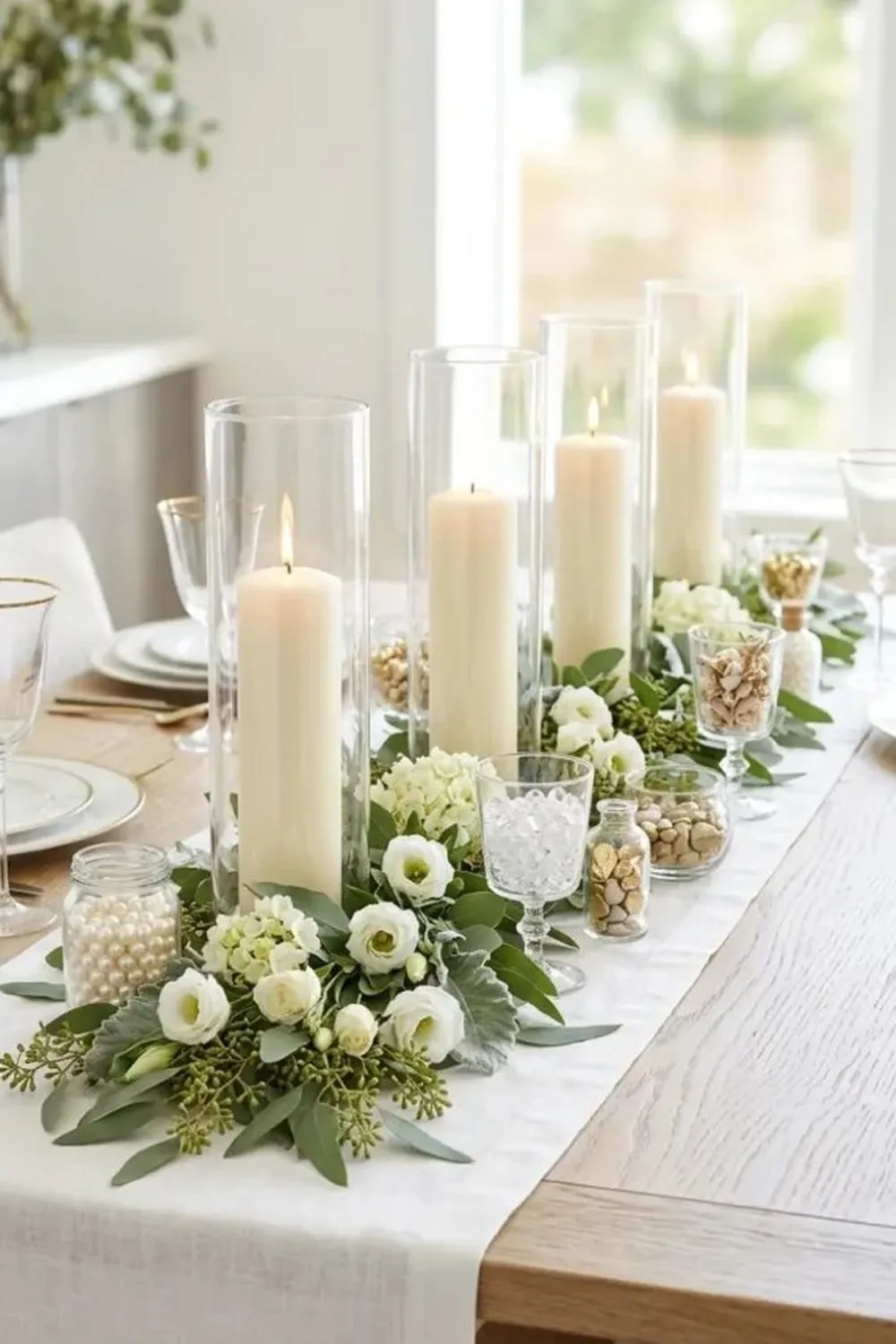
Pillars behind glass — tall flames, no drafts, and light that lasts all evening.
A row of white pillar candles inside glass hurricanes is the dining table's winter backbone: the glass shields the flames from drafts every time someone passes, and the pillars burn for hours without dripping across the linen. Three down a long table or two on a small one give an even, low light that flatters food and faces alike.
Styling tip: keep real flames well clear of napkins, runners and anything paper, set the hurricanes on the wooden board rather than directly on a cloth, and never leave lit candles unattended — blow them out when the table empties.
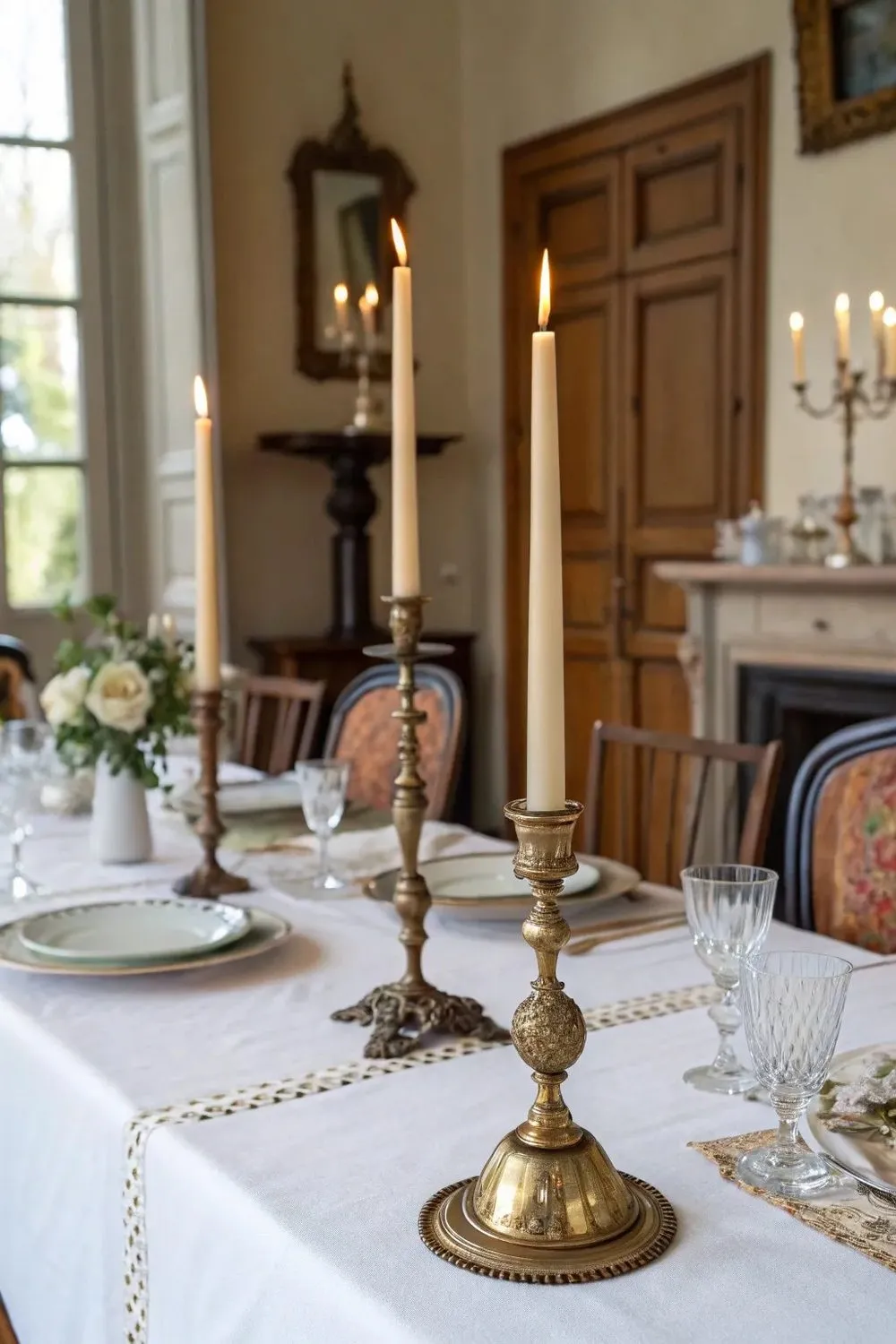
Brass holders, all different — collected candlelight with a warm metal glow.
Tall tapers bring the light up to face level, where it does the most good, and a collected set of brass holders — different heights, different shapes, one warm metal — looks inherited rather than bought in a set. Cream or ivory tapers keep the look wintry and calm against the brass.
Styling tip: vary the holder heights in a gentle rhythm — tall, short, tall — rather than random; the eye reads a pattern and the flames sit at flattering, varied levels.
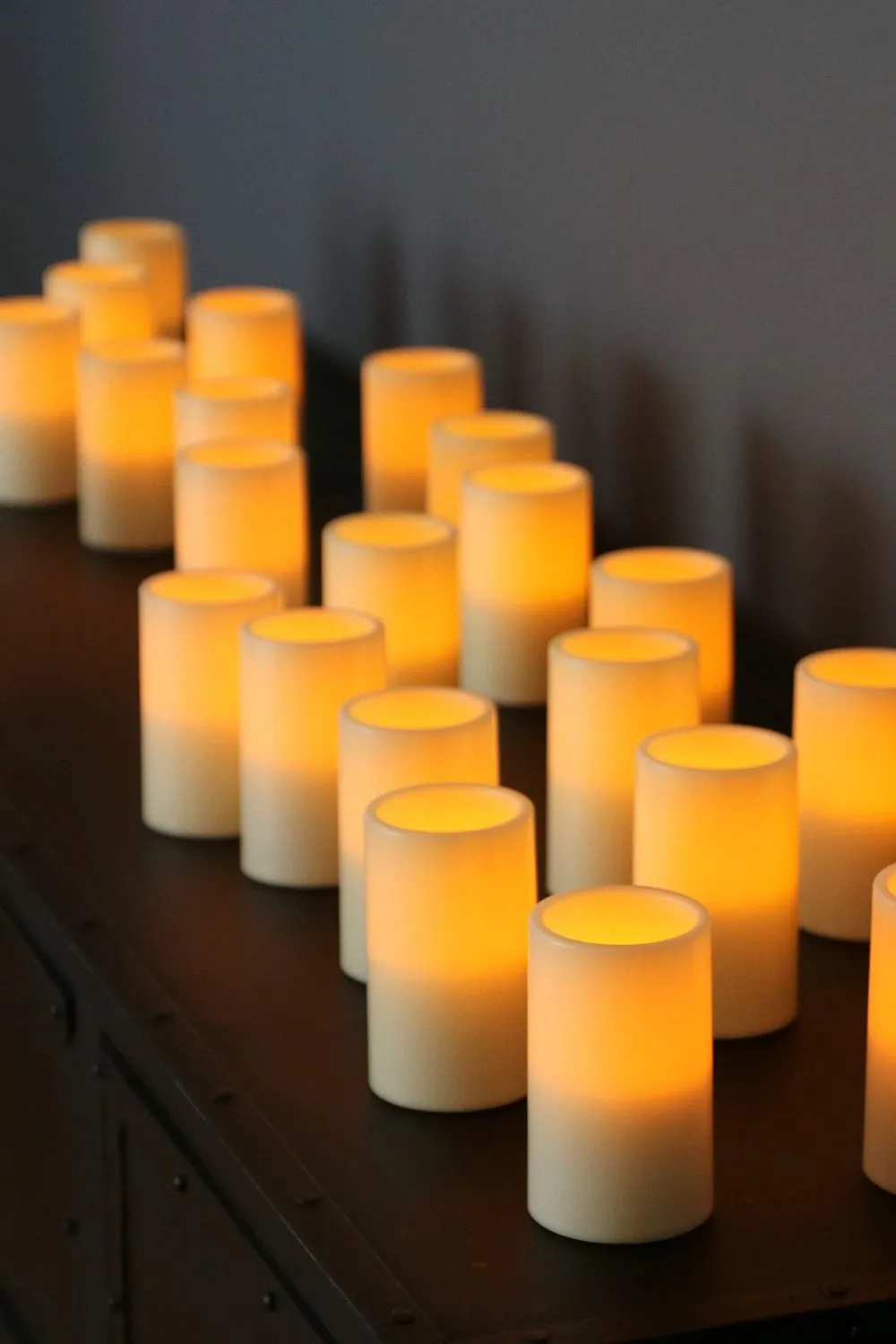
The sideboard glows all evening — flameless pillars on a timer, zero watching.
The sideboard is where the room's background glow belongs, and it is the perfect place for flameless candles: real wax pillars with a flickering LED heart, set on a timer to come on at dusk. They can sit safely near stacked linen and wooden boards where a real flame would need watching.
Styling tip: group flameless pillars in odd numbers and mixed heights on a tray; a tray makes the cluster look placed and keeps the sideboard's serving surface clear.
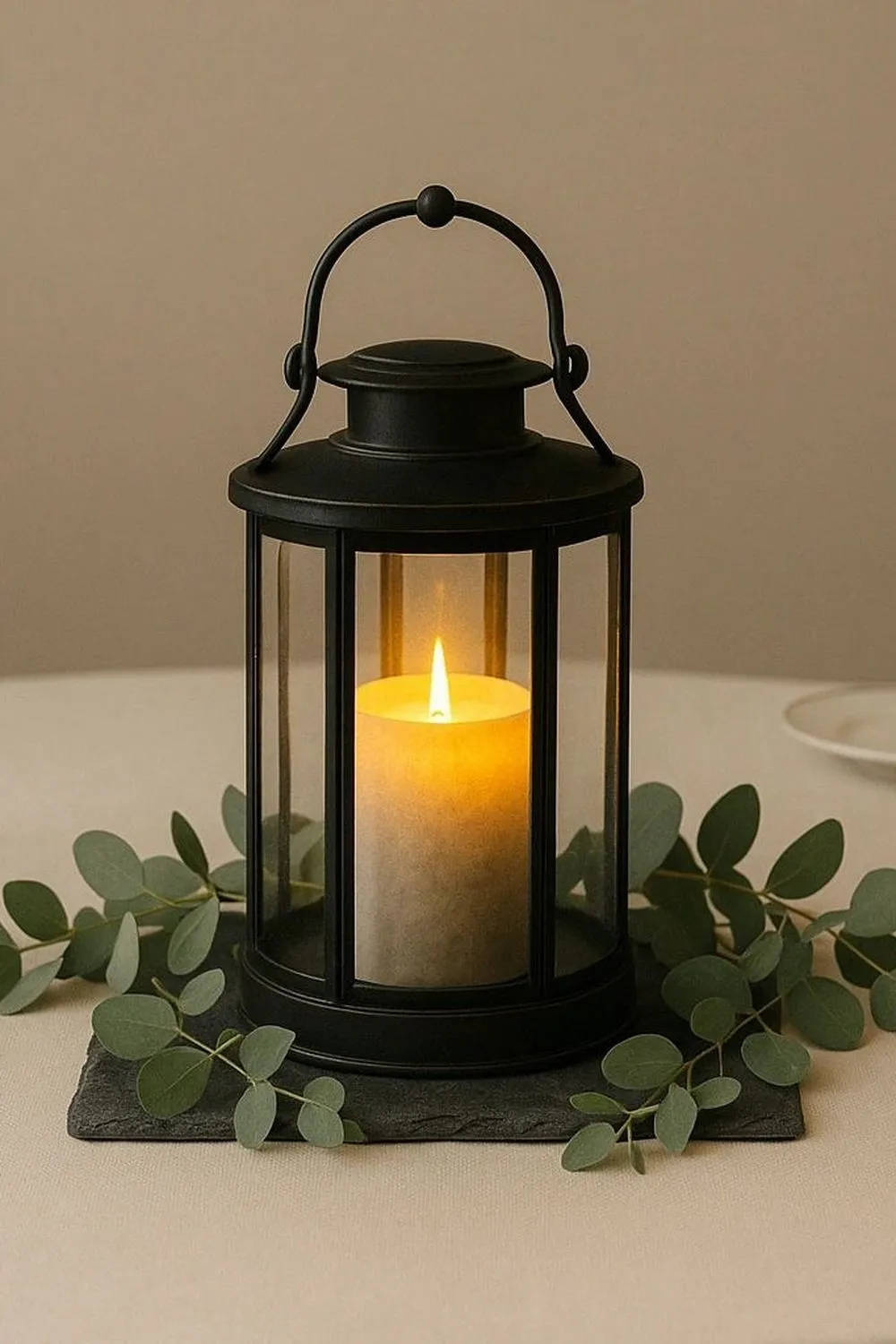
One lantern, glass on all sides — a contained flame with a farmhouse silhouette.
A metal-and-glass lantern at the table's center holds a single pillar candle like a small lit room of its own. The enclosed flame is steadier than an open candle, the black frame adds a strong winter line to the table, and the lantern lifts away in one hand when dishes need the space.
Styling tip: keep the lantern's glass clean inside and out — soot and fingerprints dull the glow more than a weak candle ever will.
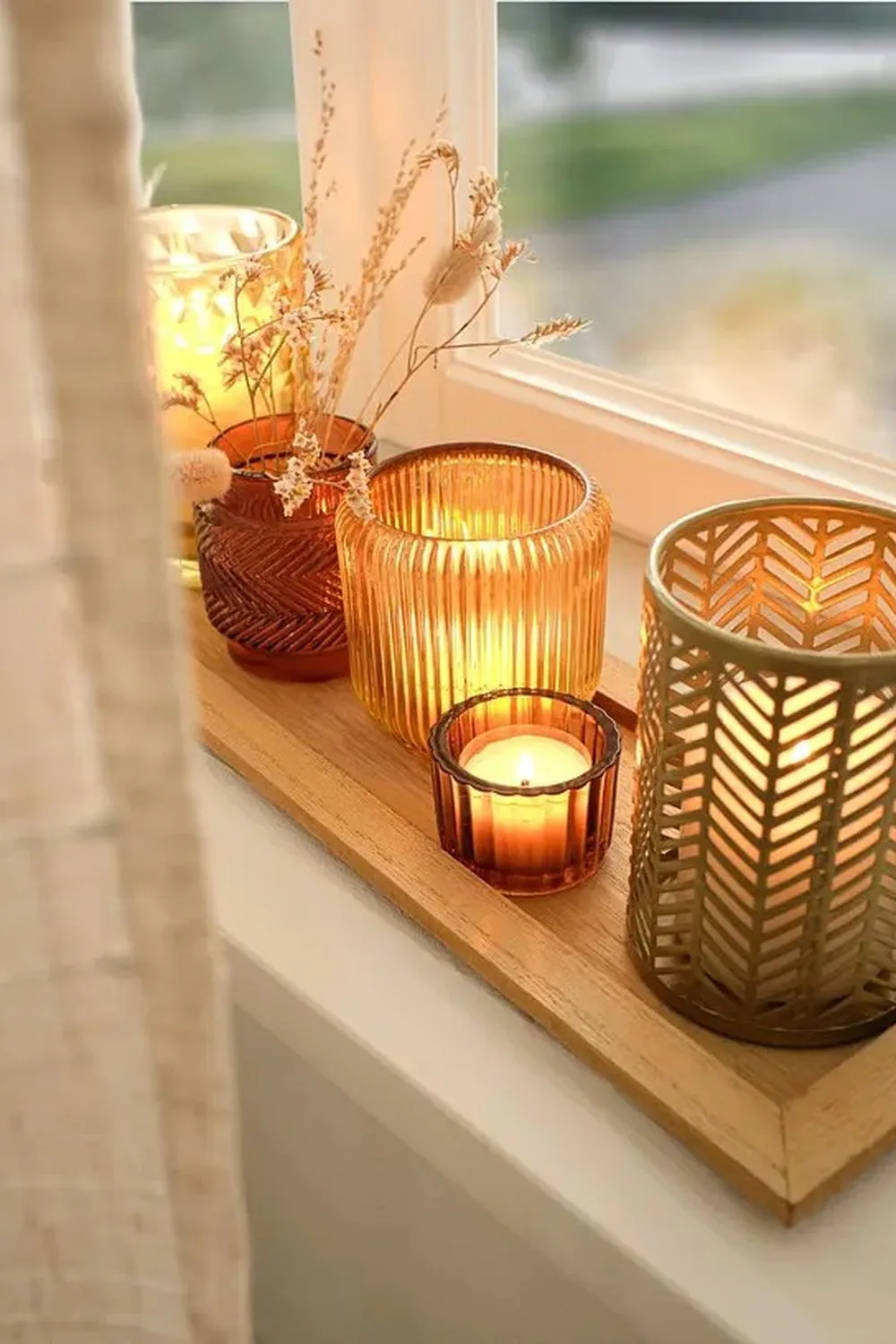
Amber glass on the sill — the window's edge lit like a row of small fires.
When the windows go black at five o'clock, a row of tealights in amber glass holders along the dining room sill turns the glass from a cold void into the room's warmest border. The amber deepens the flame's color, and the reflection doubles every light in the dark glass.
Styling tip: amber glass reads warmest with real tealights, but keep the row on the sill's hard surface away from the curtain hem — or use flameless tealights where fabric hangs close.
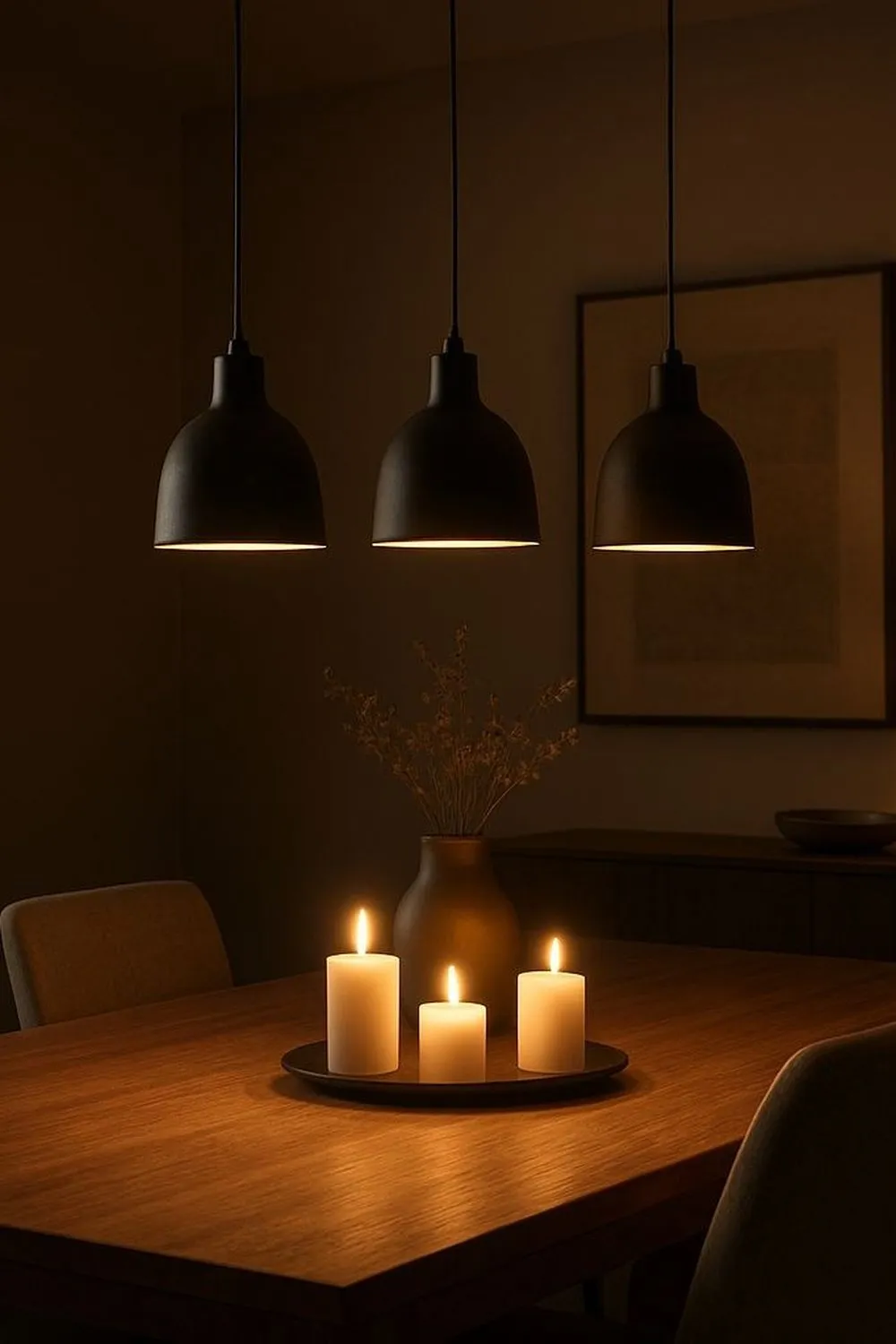
The pendant turned low — overhead light as a backdrop, candles as the stars.
The best winter dining light is layered: the pendant over the table dimmed to a warm background wash, and candles doing the real work at table level. A dimmer swap is a small job that changes every dinner — faces lit from the side and below instead of flattened from above.
Styling tip: put the pendant on a warm bulb (2700K) and set the dimmer so the fixture glows rather than beams; if you can see the bulb's filament clearly, it is about right.
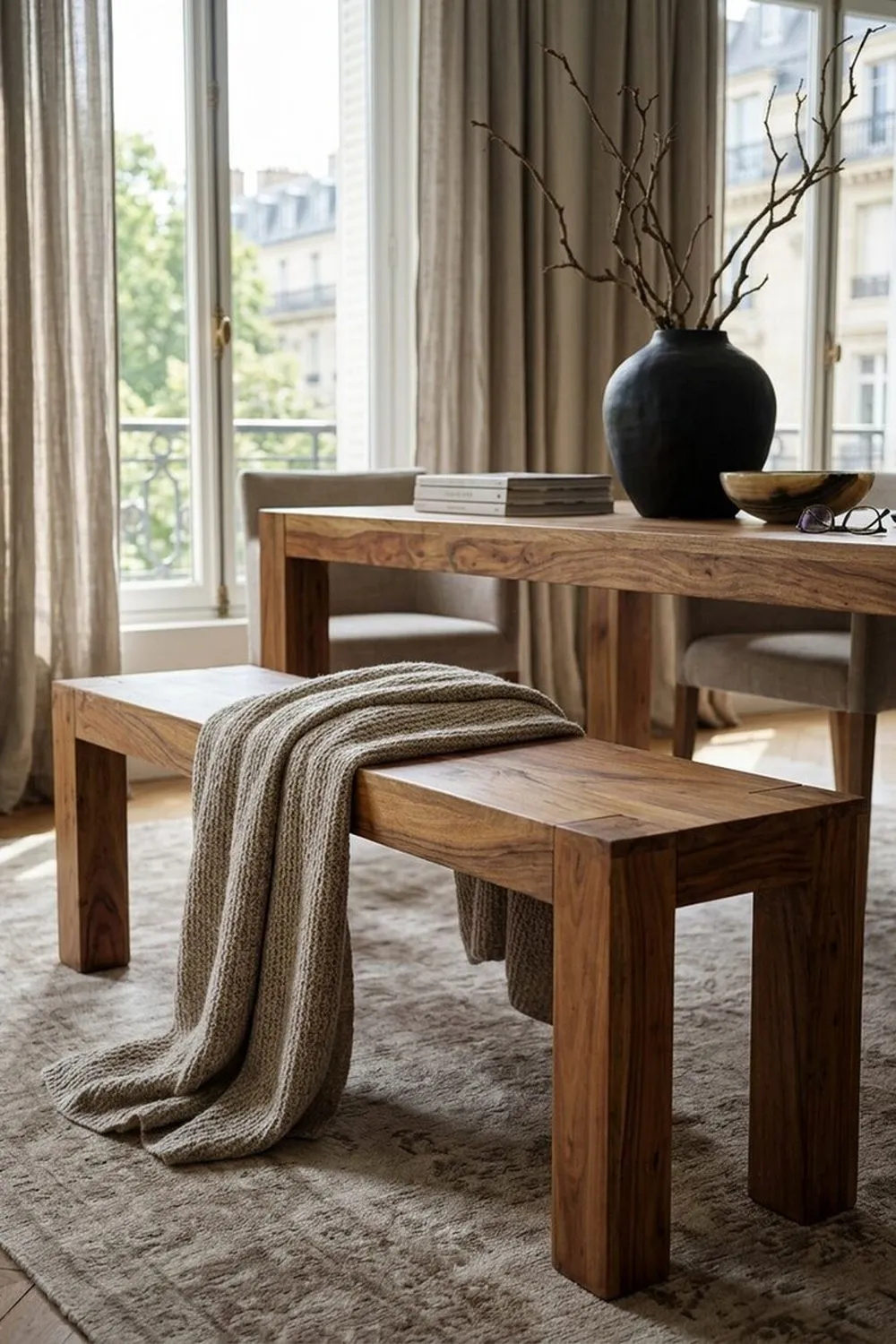
A bench instead of chairs on one side — more seats, more wood, a warmer line.
Swapping the chairs on one side of the table for a solid wooden bench changes the room's whole texture balance: one long run of grain, seating for three where two chairs sat, and a farmhouse ease that suits slow winter meals. A folded wool throw or a long linen cushion softens the seat without hiding the wood.
Styling tip: a bench tucks fully under the table when not in use — in a small dining room that disappearing act buys back real floor space.
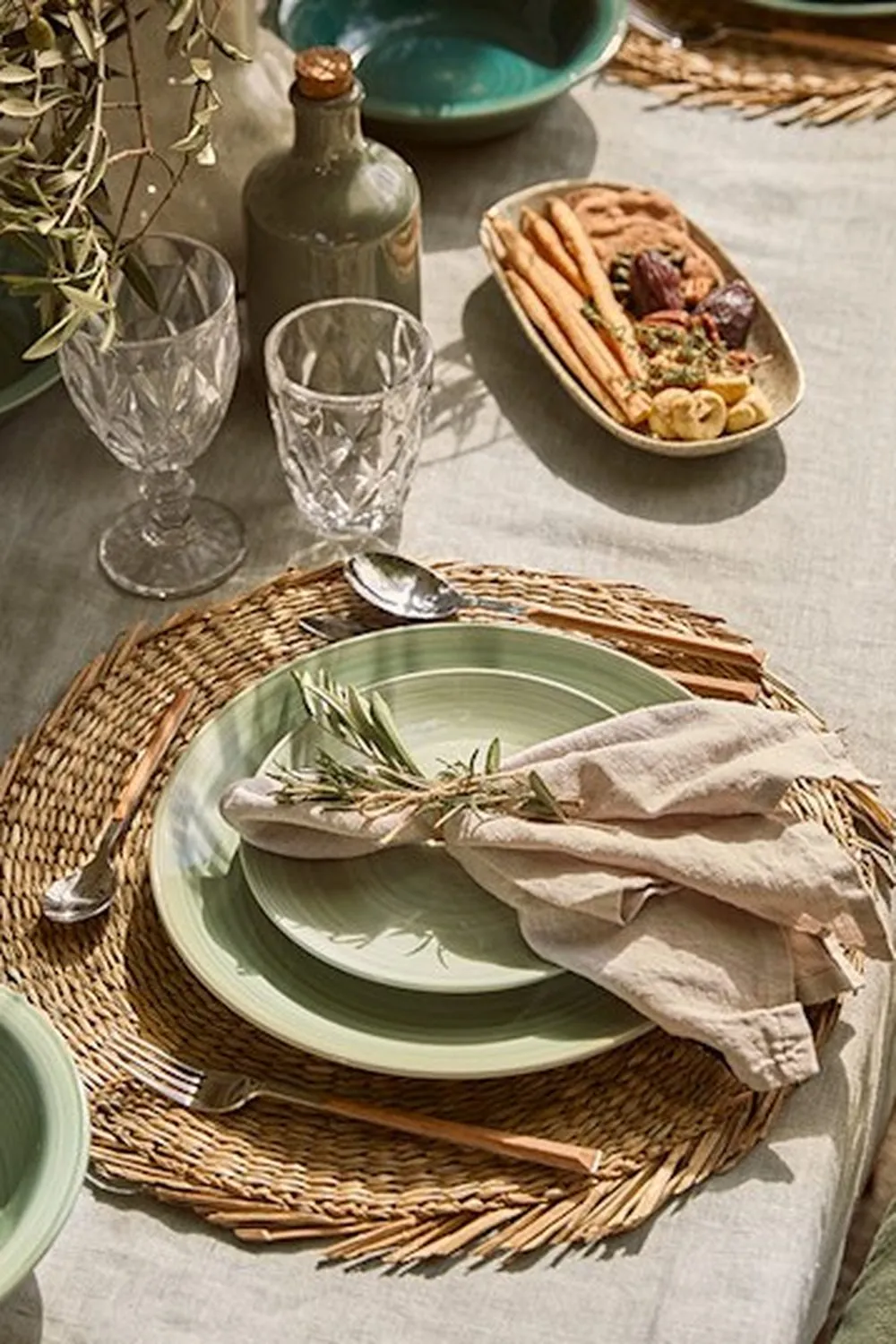
Seagrass under every plate — a woven layer that keeps the setting from feeling flat.
Placemats are the table's texture layer, and woven seagrass or water hyacinth brings a rough, natural weave that linen and stoneware both sit well on. Round mats soften a rectangular table; rectangular mats sharpen a round one. Either way, each place gains a defined, tactile territory of its own.
Styling tip: woven mats shake clean outside and wipe down in seconds — they are the rare pretty layer that is also the most practical one on a winter table.
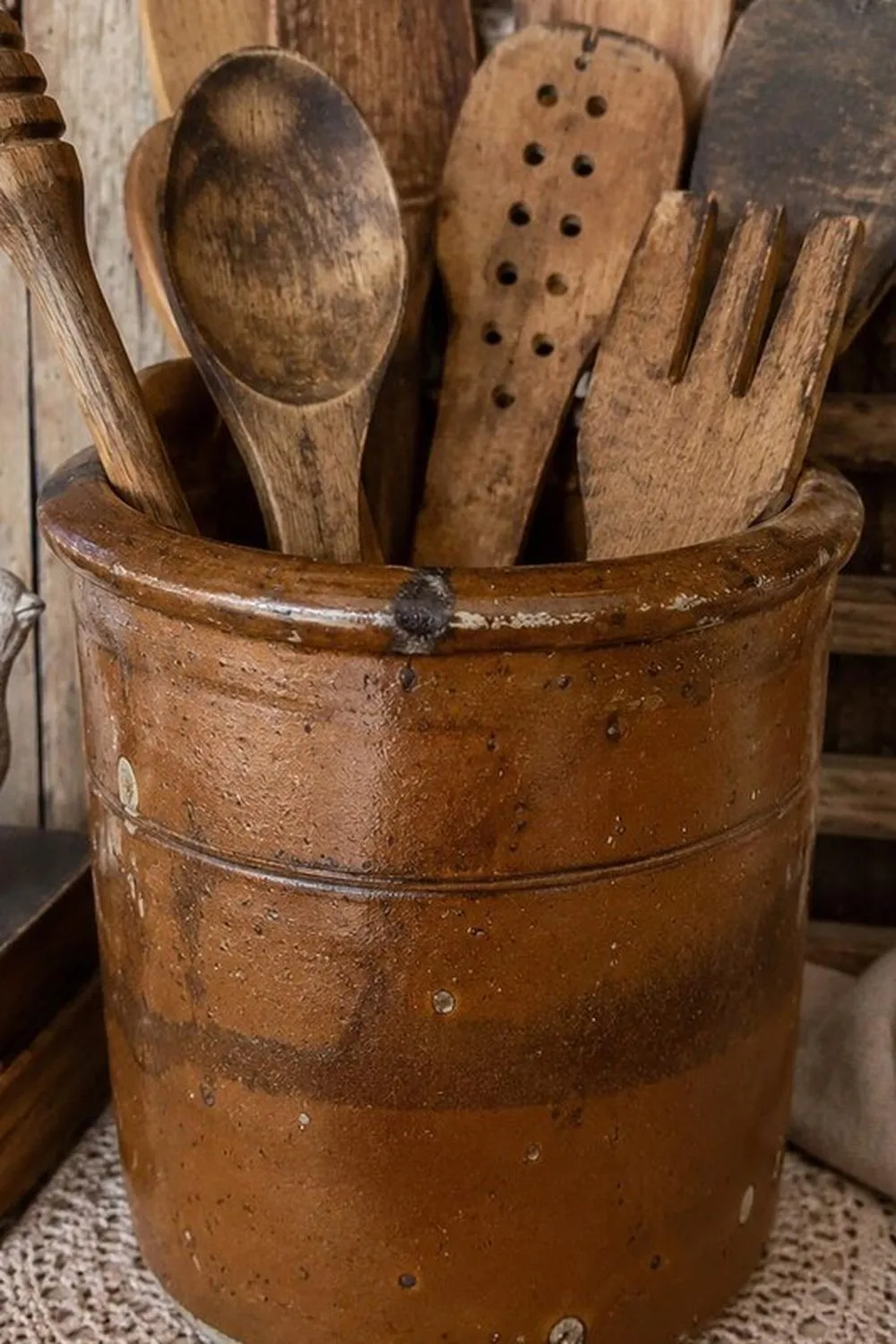
Wooden spoons in a stone crock — the tools of winter cooking, kept as display.
Slow winter food — soups, stews, braises — works with wooden spoons and ladles, and a heavy stoneware crock on the sideboard keeps them in reach and on show. The mix of rough stone and worn wood handles is exactly the material story the whole room is telling.
Styling tip: keep only the spoons you actually use weekly in the crock; a stuffed jar reads as storage, a chosen few read as a collection.
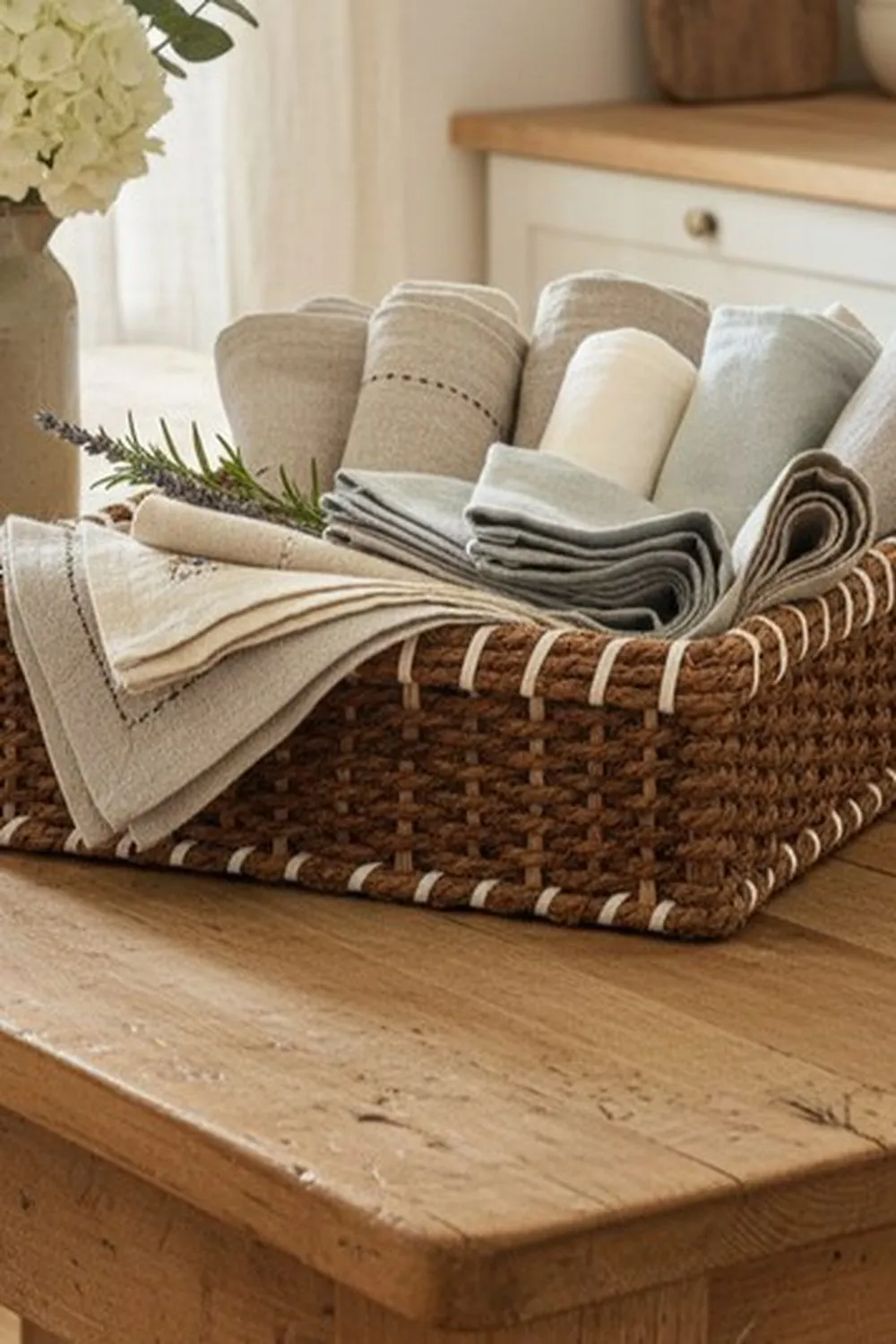
Napkins rolled in a basket — grab one on the way to the table, no drawer required.
A shallow woven basket on the sideboard, filled with rolled linen napkins in cream and soft gray, turns a drawer staple into part of the room's texture. Rolling keeps the linen soft rather than creased, and guests helping themselves to a napkin is the kind of easy detail that makes winter dinners feel unhurried.
Styling tip: roll napkins around nothing and stand them upright in the basket; the spiral ends showing is the prettiest part.
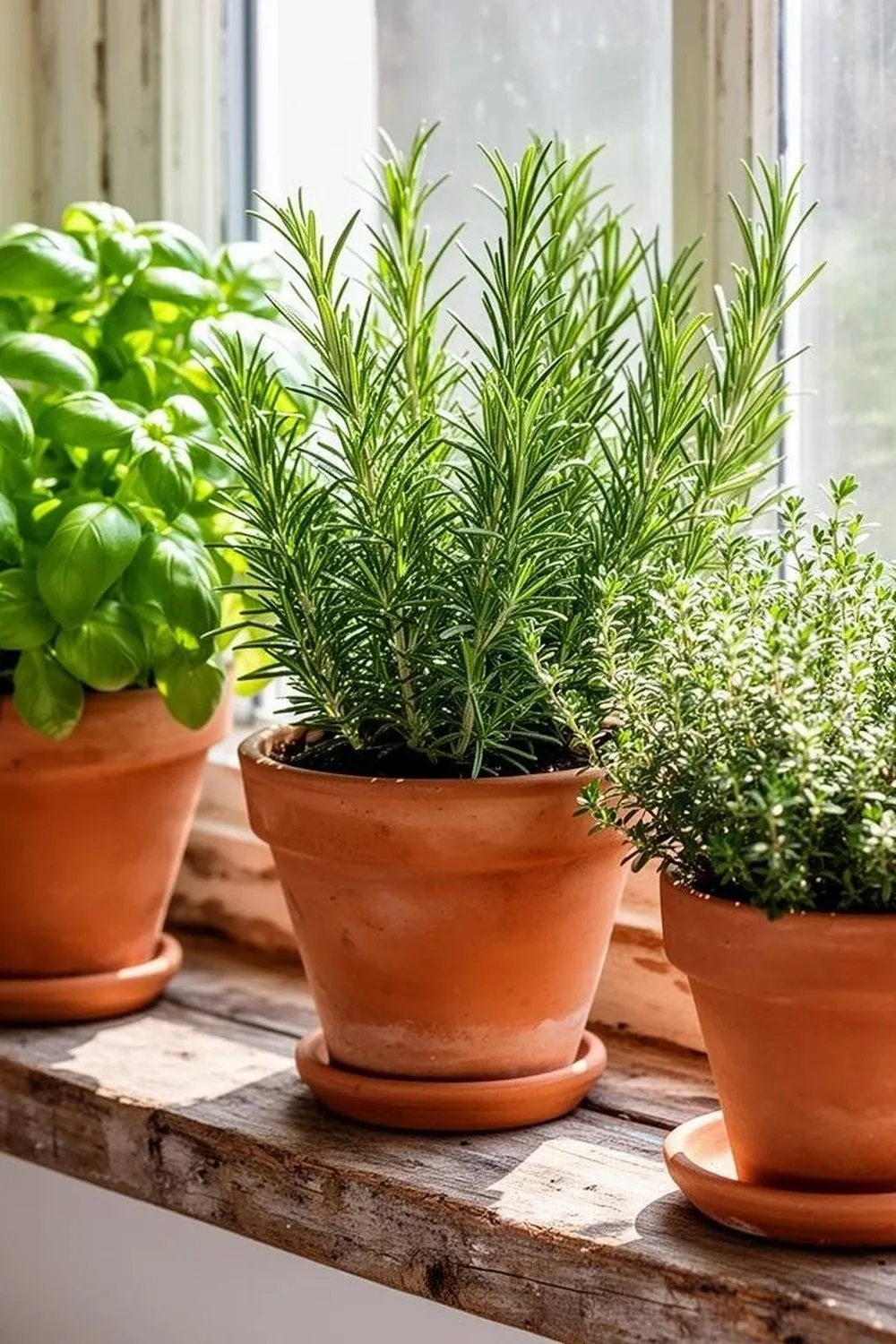
Rosemary and thyme in clay pots — winter green that smells like dinner.
The dining room's greenery can earn its place: rosemary, thyme and sage in small terracotta pots on the sill. The clay's warm, chalky orange-brown is a natural texture in itself, the herbs suit winter cooking, and their scent does quietly what a candle does loudly.
Styling tip: terracotta dries soil fast, especially over a radiator — stand the pots on a wooden tray and water little and often rather than in one weekly flood.
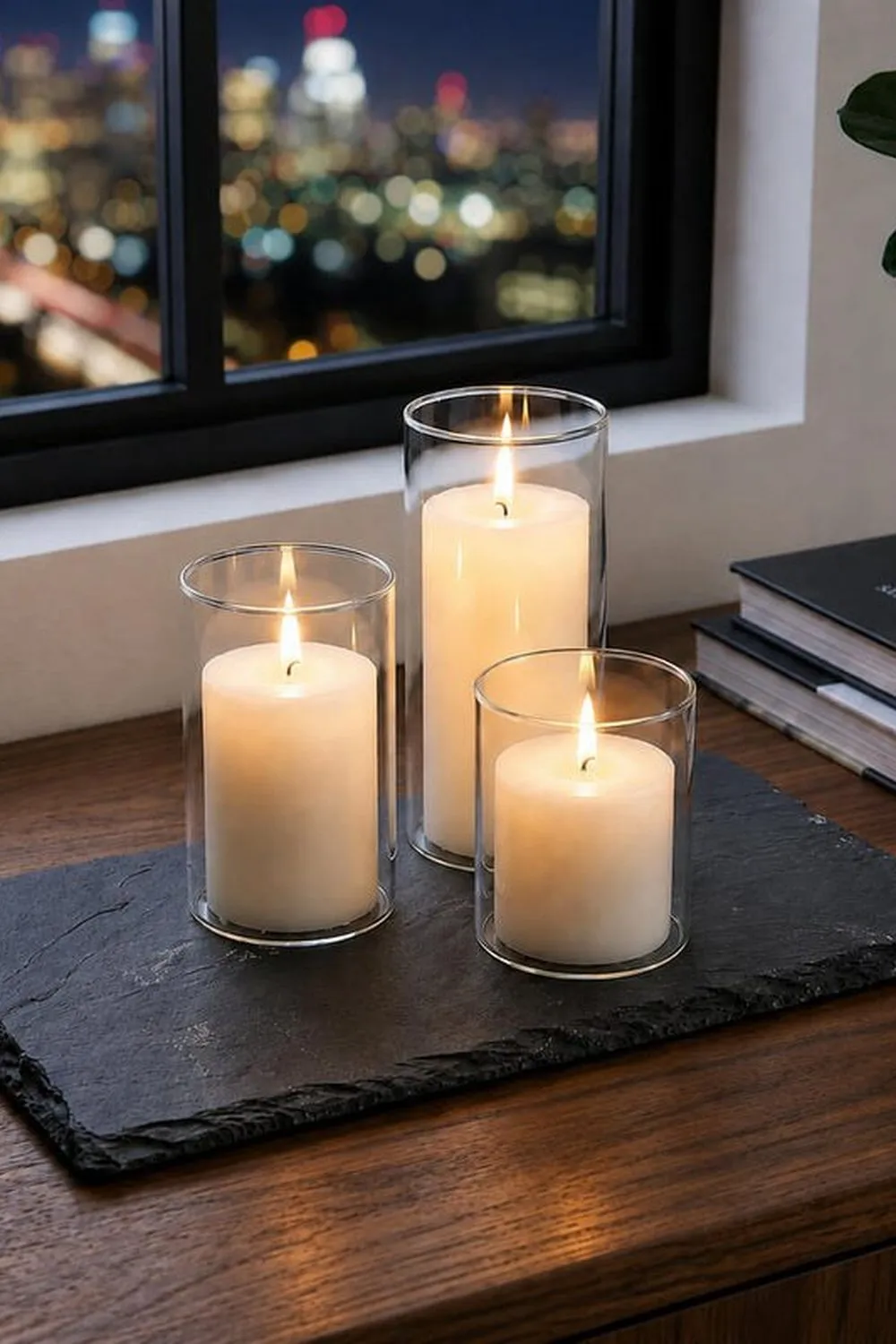
Slate under the flames — a heat-safe base that makes candlelight look deeper.
A dark slate slab laid at the table's center gives candles a proper foundation: stone does not scorch, catches any wax before the linen does, and its near-black surface makes flames look brighter by contrast. It works under hurricanes, tapers in holders, or a single lantern.
Styling tip: stone and slate are the safe bases for real flame on a set table — keep holders on the slab, flames clear of napkins and runners, and candles blown out before the room empties for the night.
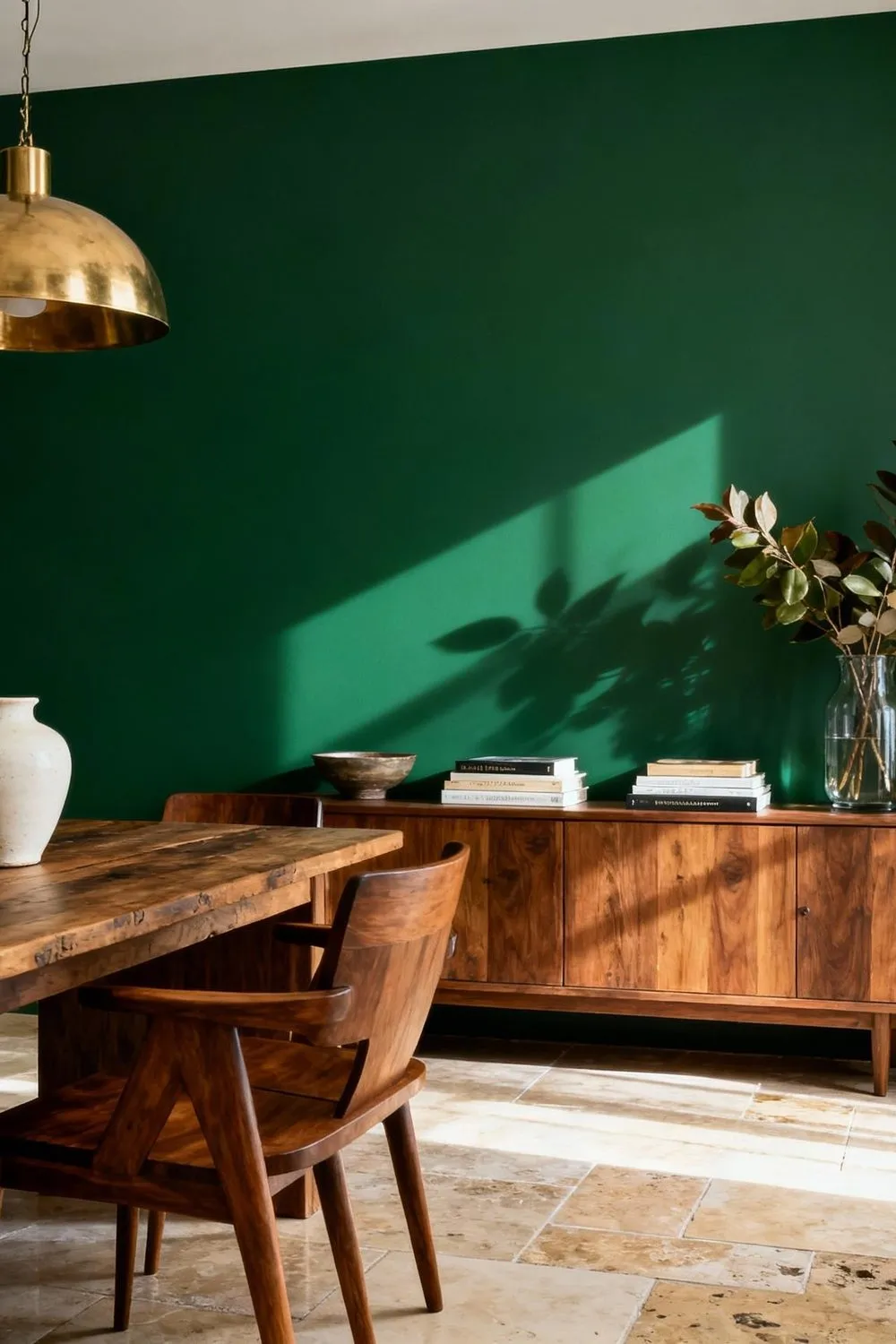
One deep wall, pale wood in front — the sideboard becomes the room's portrait.
Painting the wall behind the sideboard in a deep pine green or ink navy gives the dining room its winter depth: stoneware, brass and candlelight all glow warmer against a dark ground, and the room feels enclosed in the best way once the light drops. One wall is an afternoon's work with an evening's payoff.
Styling tip: carry the deep color onto the wall's baseboard — the unbroken fall of color to the floor is what makes it look architectural rather than painted-on.
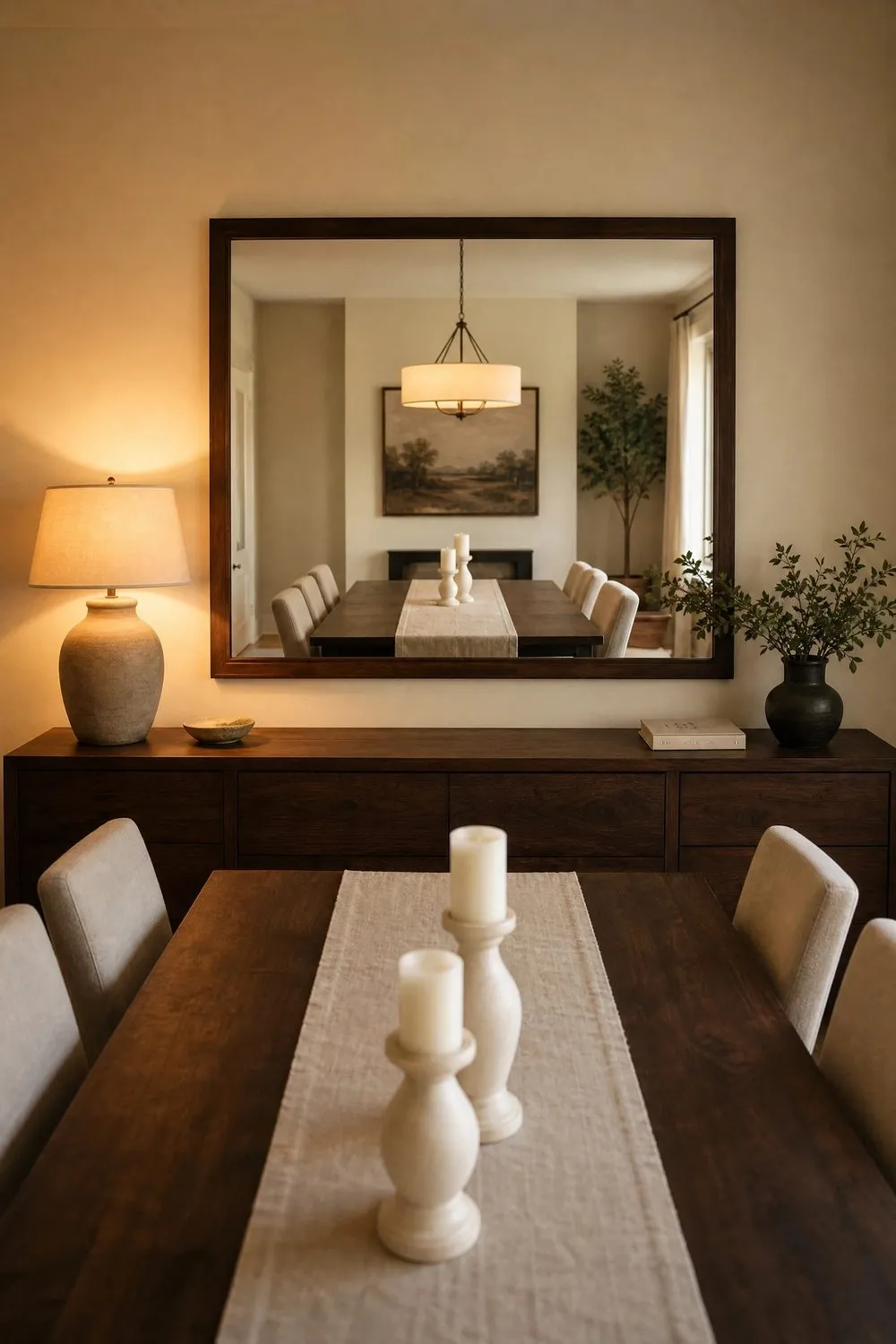
A mirror where the candles can see themselves — every flame burns twice.
A large mirror hung over the sideboard is the dining room's light multiplier: every candle on the table and the sideboard reflects in it, and the room gains a second, softer version of itself. A thin wood or black frame keeps it calm; the glass does all the glittering this room needs.
Styling tip: hang the mirror so it reflects the table, not the ceiling light — sit at the table and check the view before the screws go in.
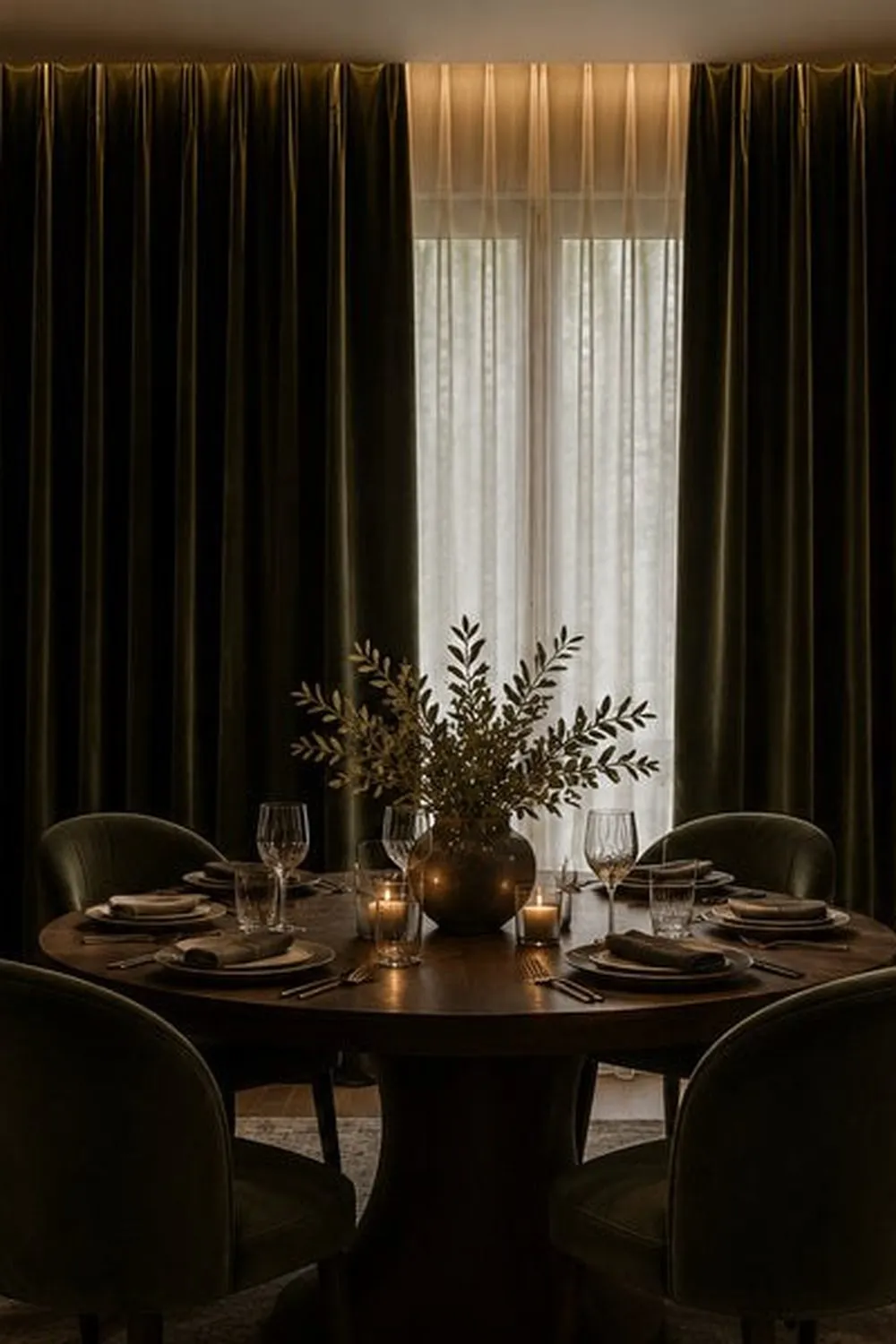
Thick linen drawn against the dark — the room seals itself in for dinner.
Dining room windows are black mirrors by five in winter unless the curtains close. Heavy linen panels — a thick weave in a natural flax tone — drawn at dusk shut out the cold glass, soften the room's sound, and make the candlelit table feel like the inside of a lantern. The drawing of them becomes the evening's first ritual.
Styling tip: curtains that puddle just slightly on the floor read luxurious and block the draft at the sill line; curtains an inch short read like a mistake.
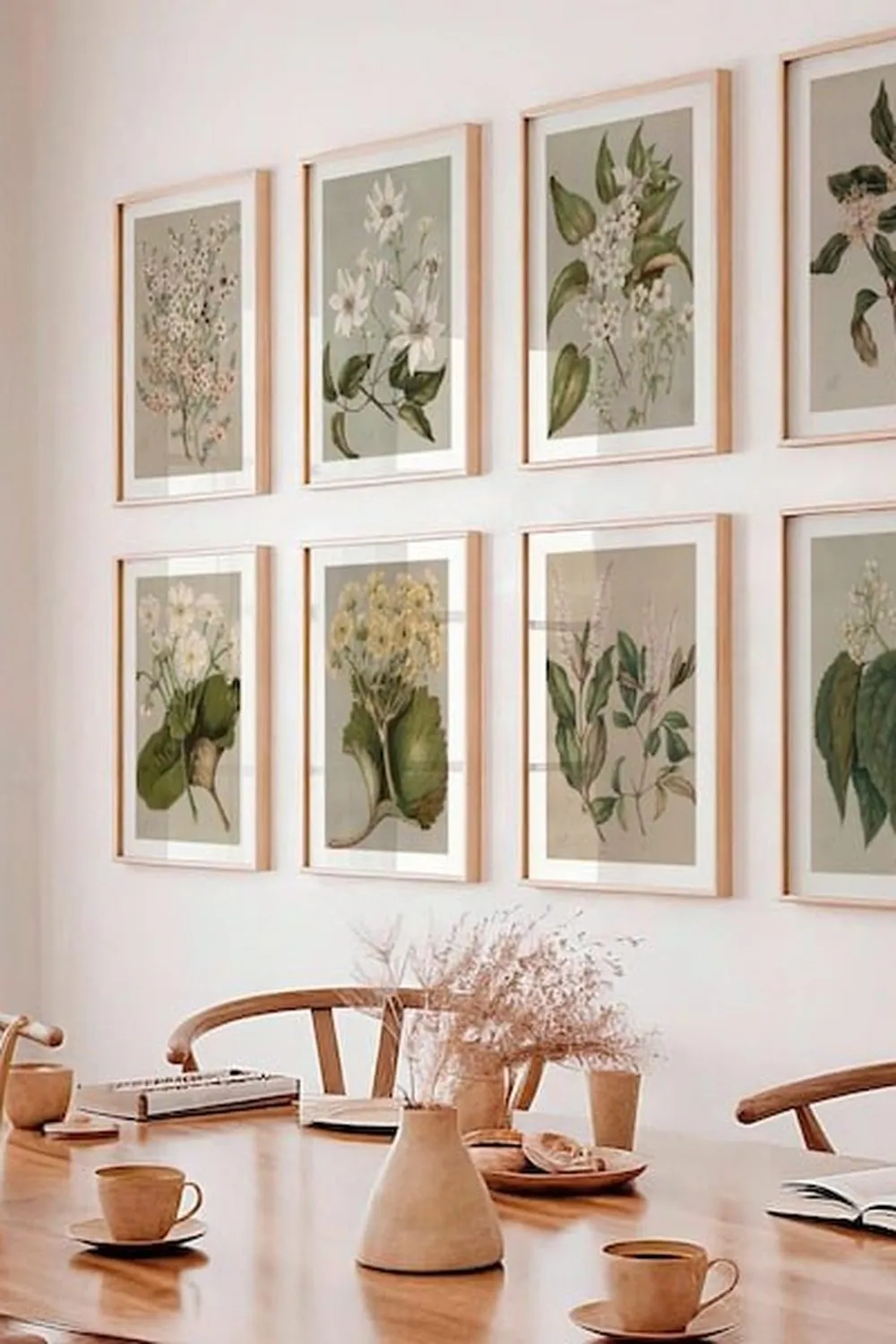
Pressed-fern prints in pale wood — calm walls that still feel like winter.
A row of botanical prints — ferns, seed heads, bare-branch studies — in matching light-wood frames gives a plain dining wall a quiet, wintry subject without color or fuss. The pale frames keep the wall light while the prints' fine lines reward a closer look between courses.
Styling tip: hang a row of three or four at eye level when seated, not standing — dining room art is viewed from a chair, and most of it hangs too high.
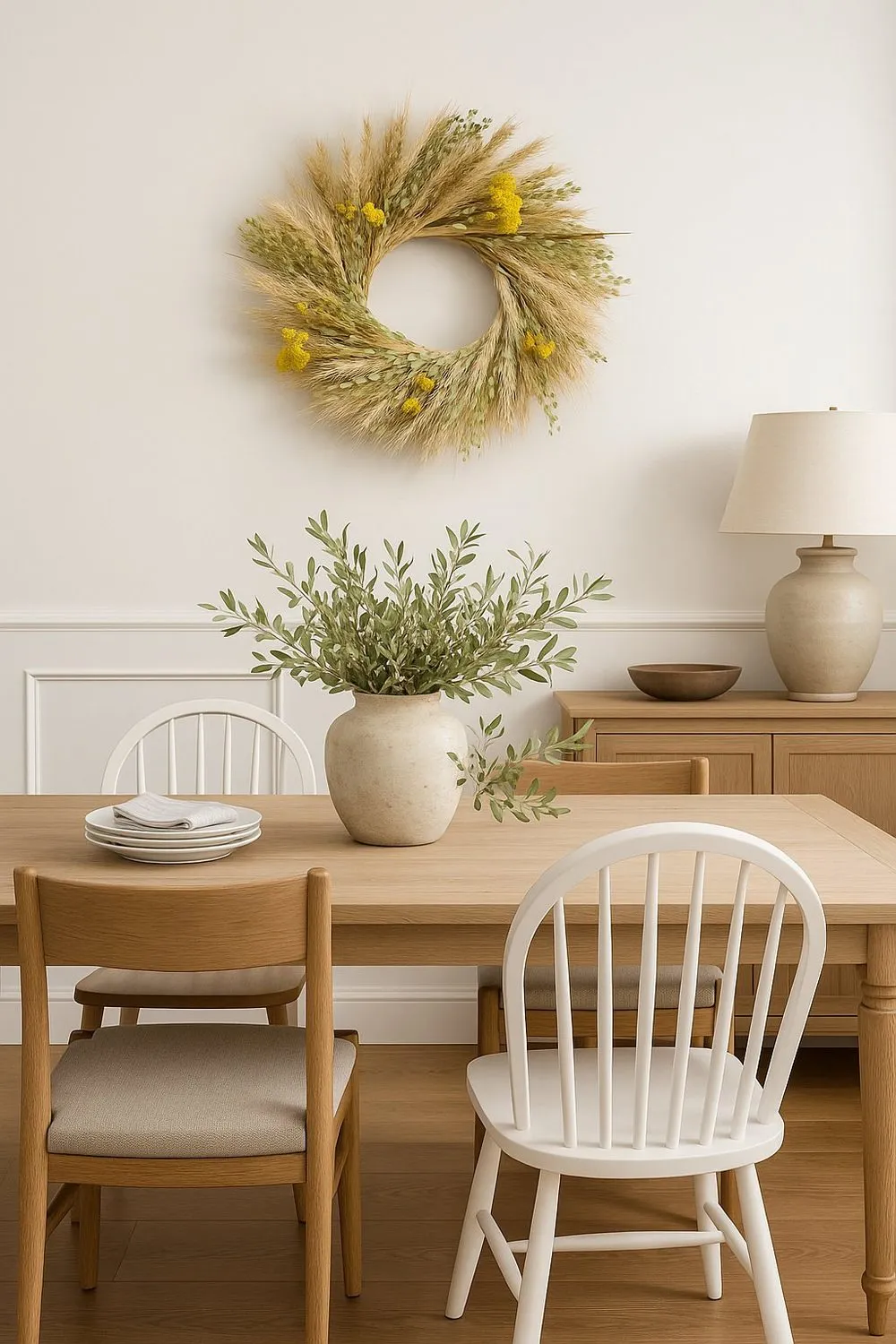
Dried grasses and wheat, nothing wired on — a wreath that belongs to winter, not a holiday.
A wreath of dried grasses, wheat stems and seed heads keeps the round, welcoming shape on the dining room wall while dropping every festive signal: no baubles, no bow, no red or green. Its pale, feathery texture suits the room's linen and wood, and it lasts the whole season without dropping needles.
Styling tip: hang the dried wreath inside, away from the candle wall — dried grasses are fragile near steam and table traffic, and a spot over the sideboard keeps it safe and seen.
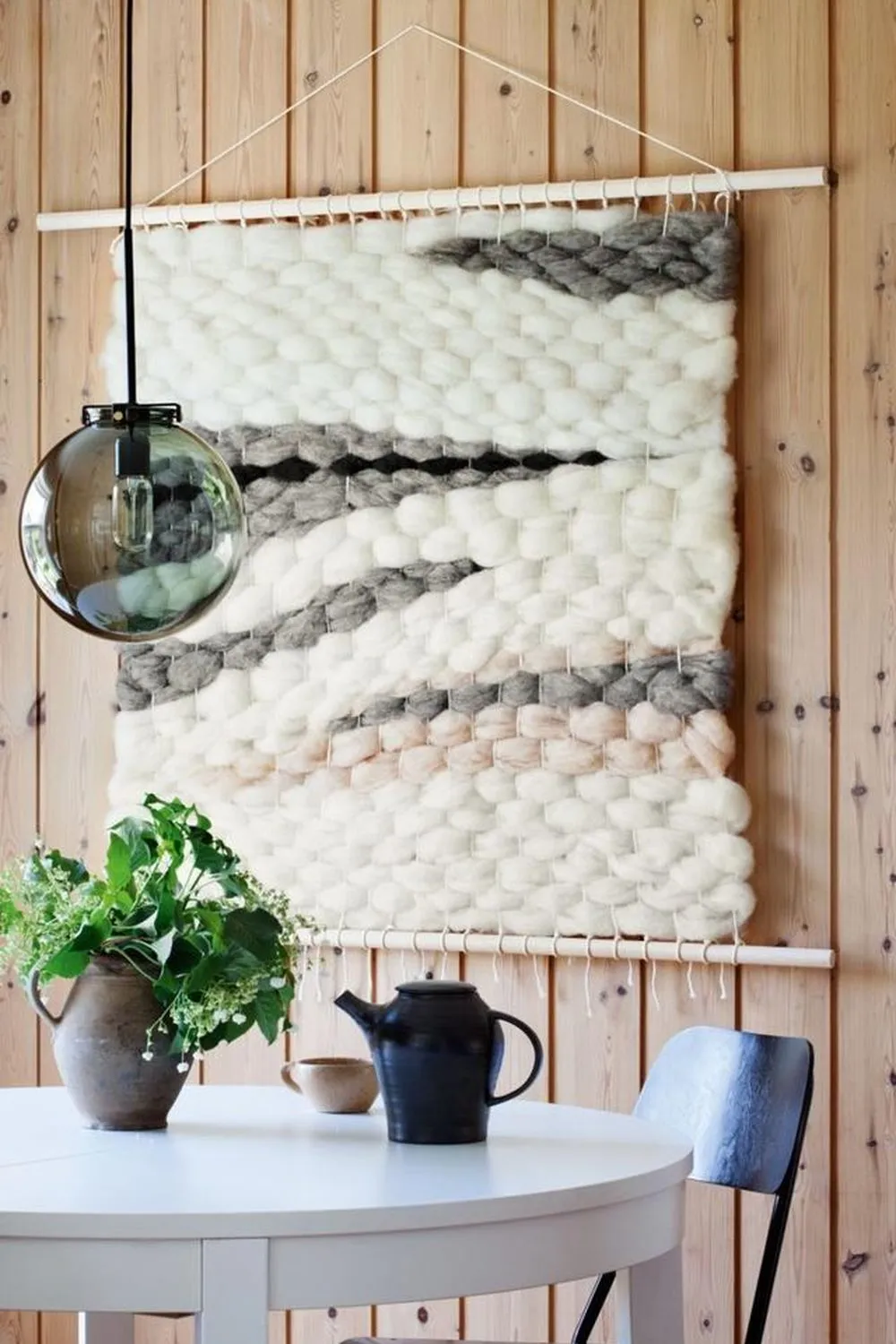
Soft textile on the wall — the room sounds warmer, not just looks it.
A woven wall hanging or a simple wool tapestry panel does something paint cannot: it softens the room's echo. Dining rooms are full of hard surfaces, and one large textile in cream, gray and oatmeal tones takes the clatter out of dinner while adding the same natural texture the table wears.
Styling tip: hang the textile from a plain wooden dowel rather than a metal rod — the wood keeps the piece in the room's material family.
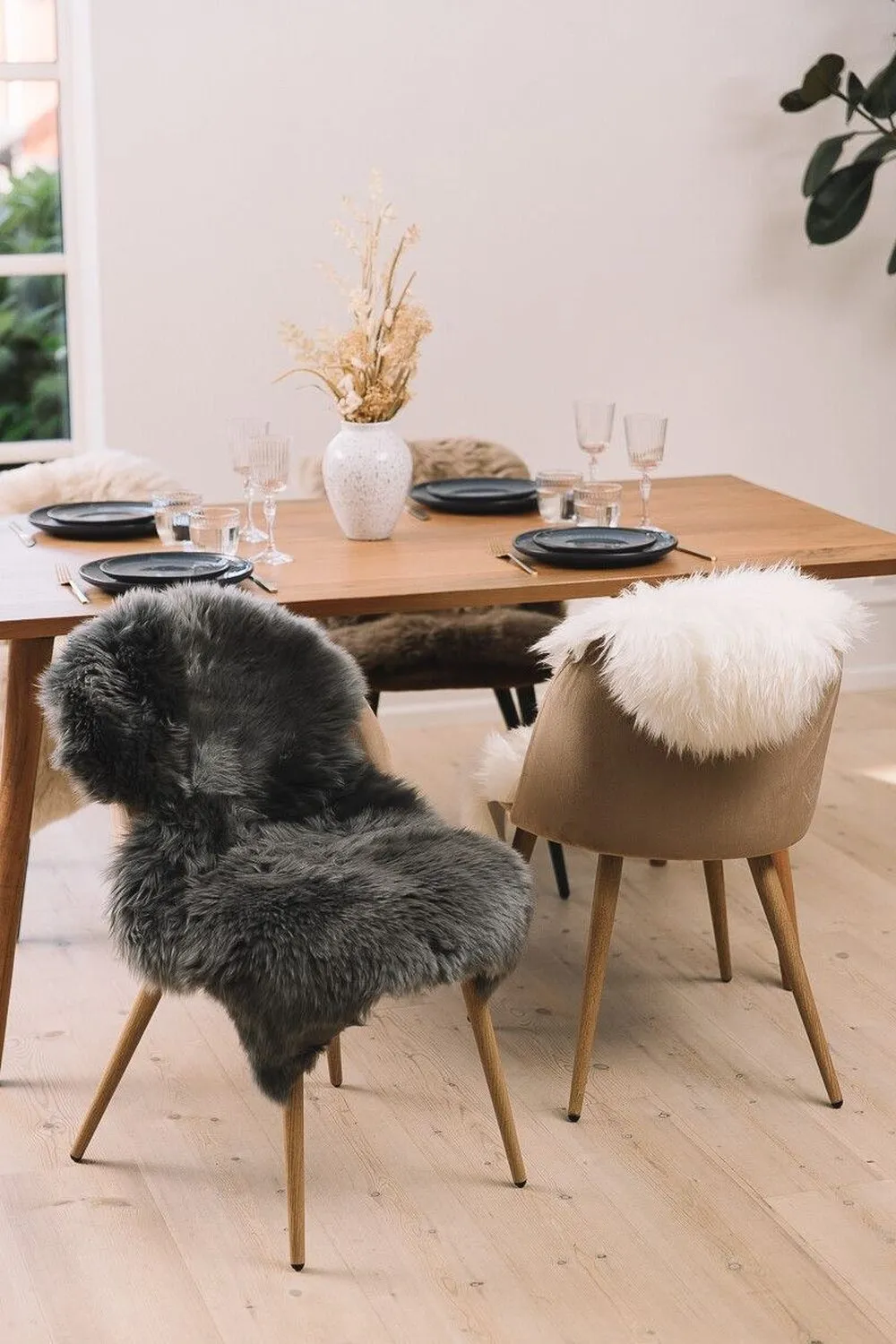
One sheepskin per chair back — hard dining chairs turn into the seats nobody leaves.
Dining chairs are the coldest furniture in the room: bare wood or cane against a winter back. A sheepskin draped over each chair back softens the seat, warms the sitter, and gives the table a ring of pale, deep-piled texture that photographs like a Scandinavian winter postcard.
Styling tip: real or good faux both work — what matters is the size; the skin should cover the chair back and spill a little onto the seat to look generous.
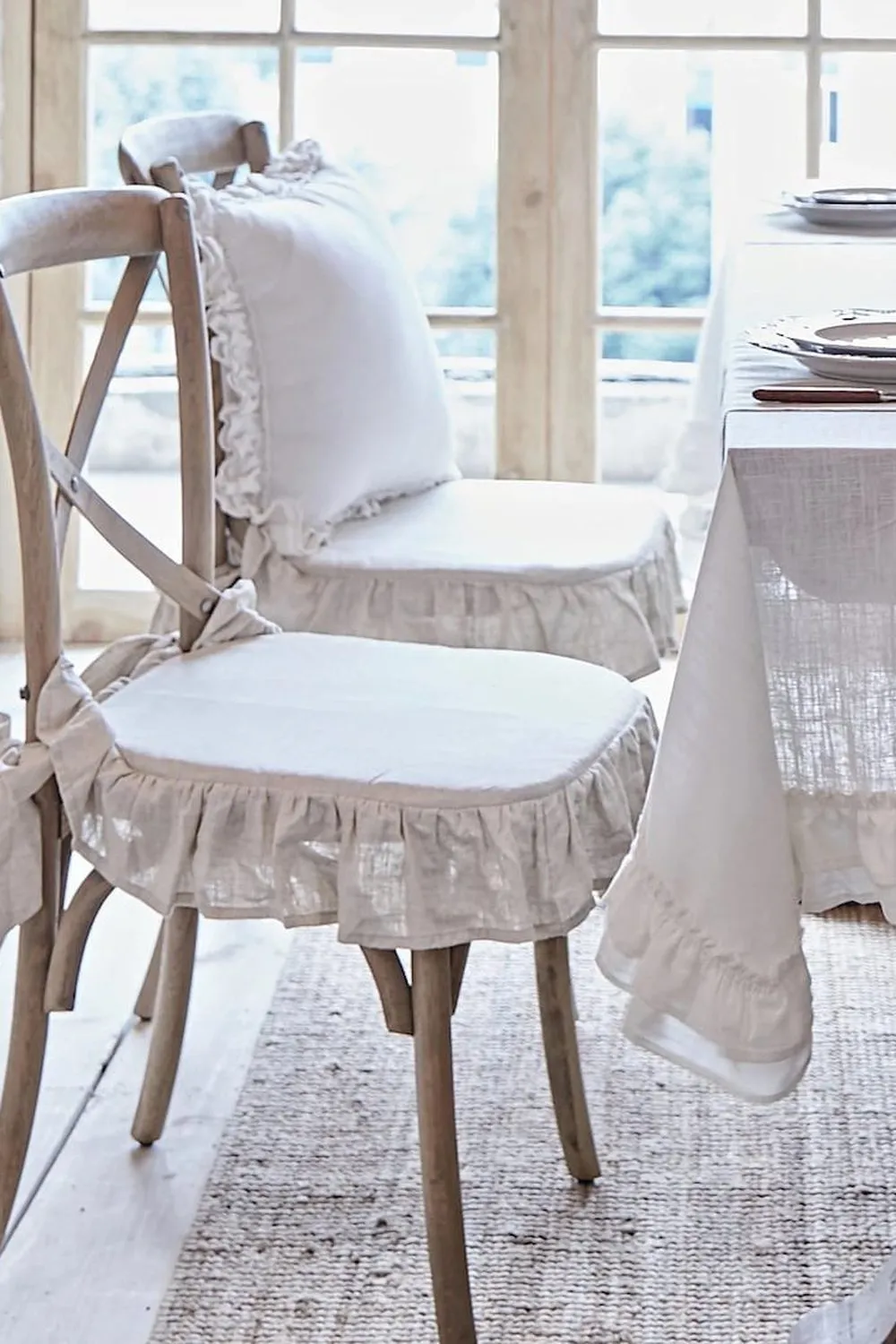
Flat linen pads, tied at the corners — comfort that still looks tailored.
Where a sheepskin is too much, a tied-on seat pad in washed linen is the tailored answer: a flat cushion in oatmeal, stone or soft gray that stays exactly where it is tied and adds a quiet layer of color to a run of wooden chairs. They come off in seconds for shaking and washing.
Styling tip: match the pads to the tablecloth or the curtains rather than the chairs — a repeated fabric across the room is what makes it look designed.
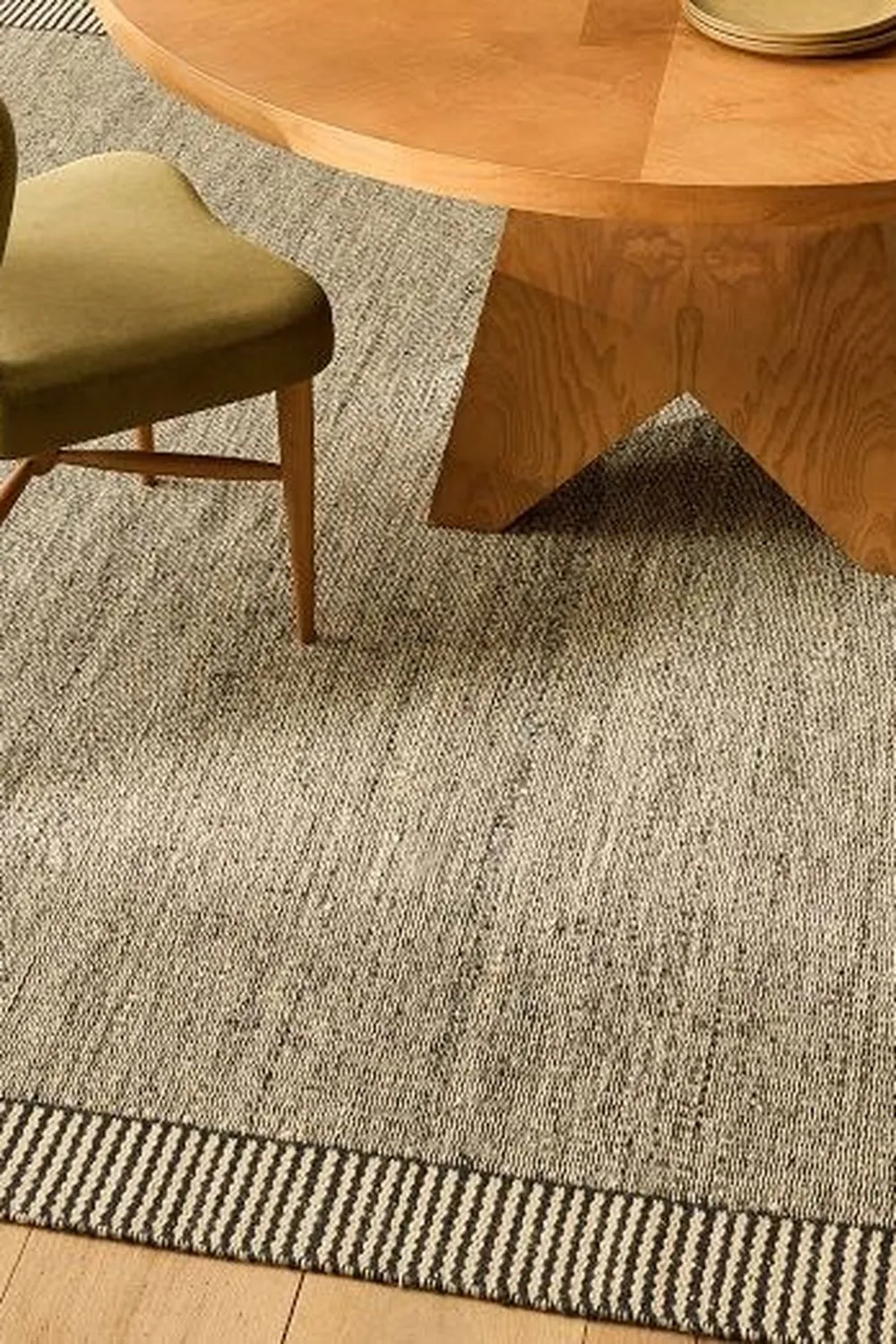
A rug sized for chairs that move — flat weave, muted pattern, warm feet.
A rug under a dining table has one job most rugs fail: chairs must slide on it. A flat-weave wool rug in a muted pattern does it — warm underfoot, thin enough for chair legs, and forgiving of crumbs and the odd splash in a way a pale pile never is. It also draws the whole setting into one defined island in the room.
Styling tip: size the rug so every chair stays on it even pulled out for sitting — roughly two feet beyond the table on all sides; a chair half-off a rug rocks and annoys all winter.
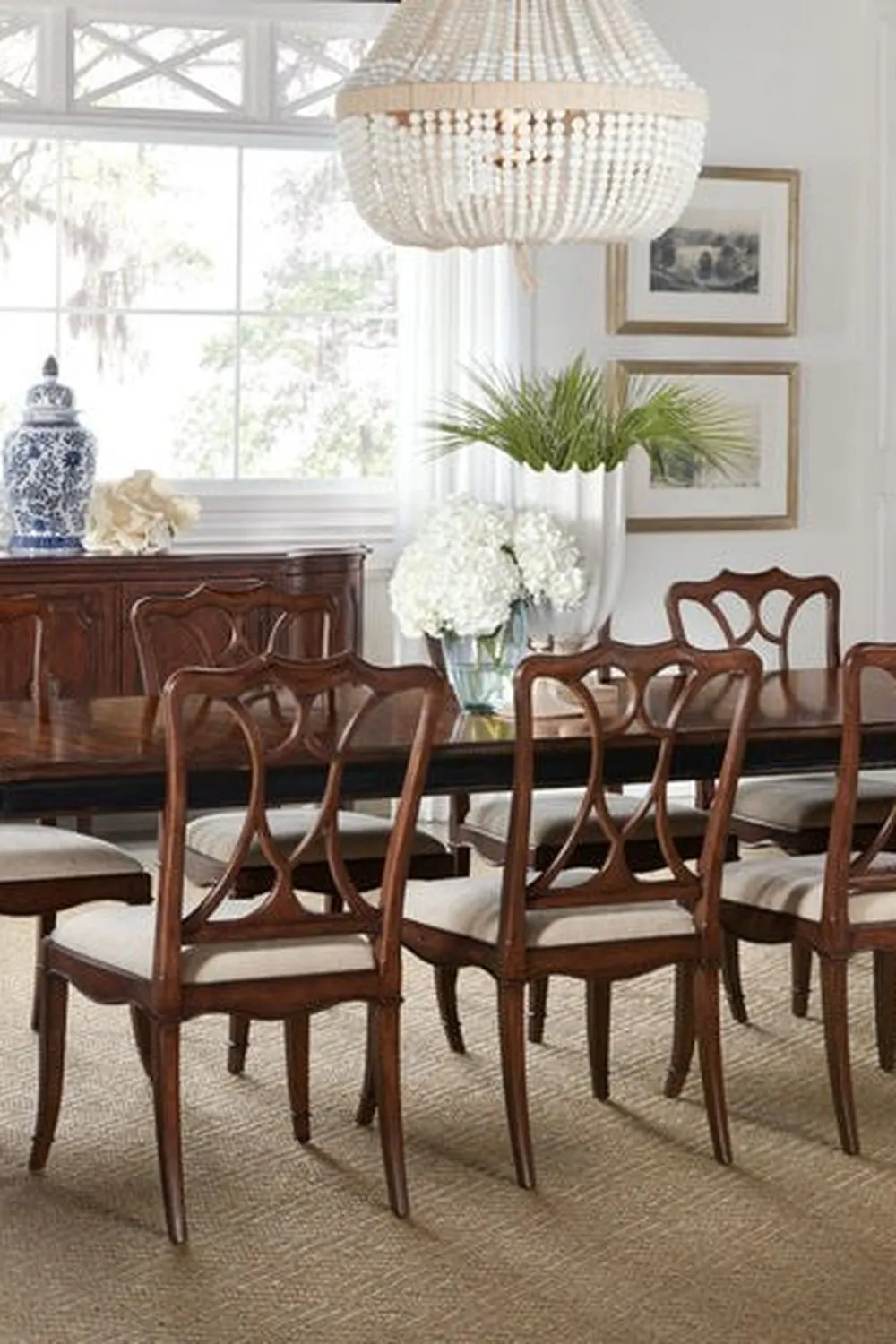
Two soft chairs at the ends, wood along the sides — the table's head and foot get dressed.
Upholstered host chairs at the two ends of the table give the room its vertical accents and its most comfortable seats in one move. In a calm linen or a deep velvet, they frame the table's length, soften its hard lines, and make the everyday side chairs look like a deliberate supporting cast.
Styling tip: host chairs in a deeper tone than everything else at the table become the room's color anchor — pick them after the wall color, not before.
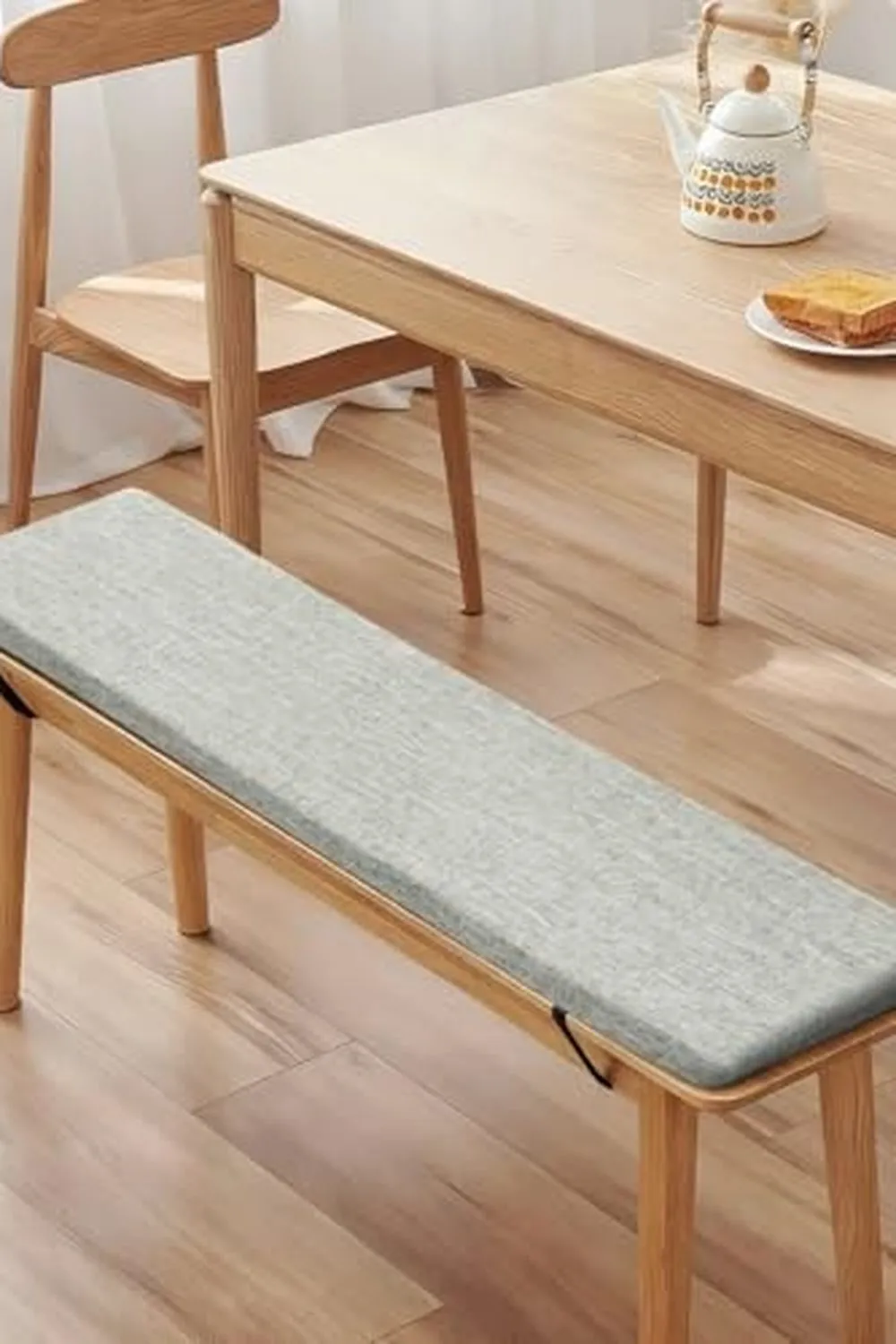
One long cushion the bench's full length — seating that invites a second helping of evening.
If the bench from earlier in this list is in place, a single long cushion in washed linen finishes it: no gaps, no shuffling small pads, just one soft line of gray or cream that makes bench seating as comfortable as any chair. In winter it also stops the bench feeling like the coldest seat at the table.
Styling tip: choose a cushion with a removable, washable cover — bench seats sit under serving dishes and earn their spills.
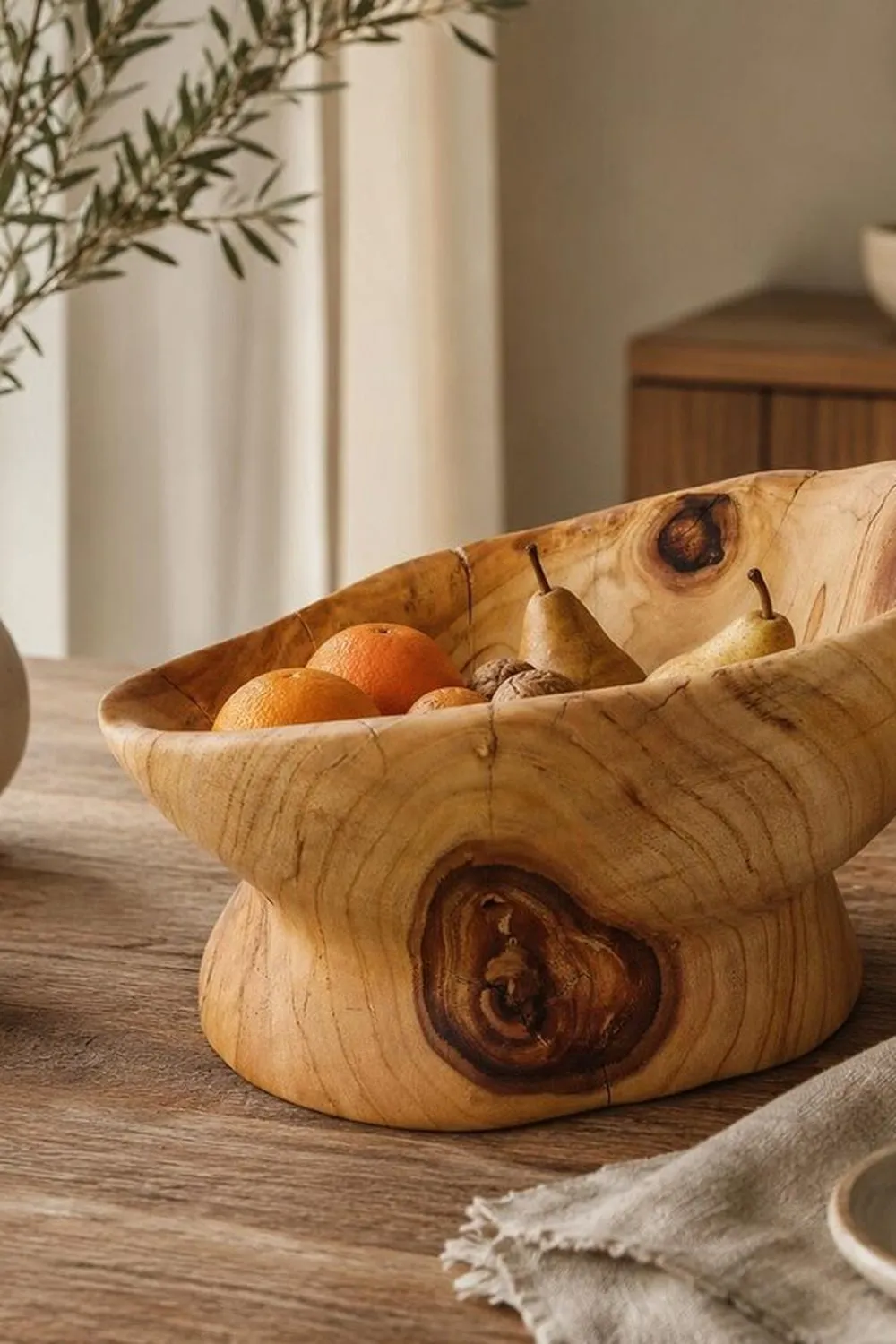
Fruit and nuts in a turned-wood bowl — a centerpiece that is also dessert.
A wooden bowl heaped with pears and walnuts in their shells is the winter table's most honest ornament: natural color, real texture, and at the end of dinner it turns into part of the meal. It sits happily on the table all week without wilting, dripping or asking for anything.
Styling tip: mix two fruits at most — pears with walnuts, or oranges with bay leaves — a bowl of everything reads as a fruit shop, a bowl of two things reads as styling.
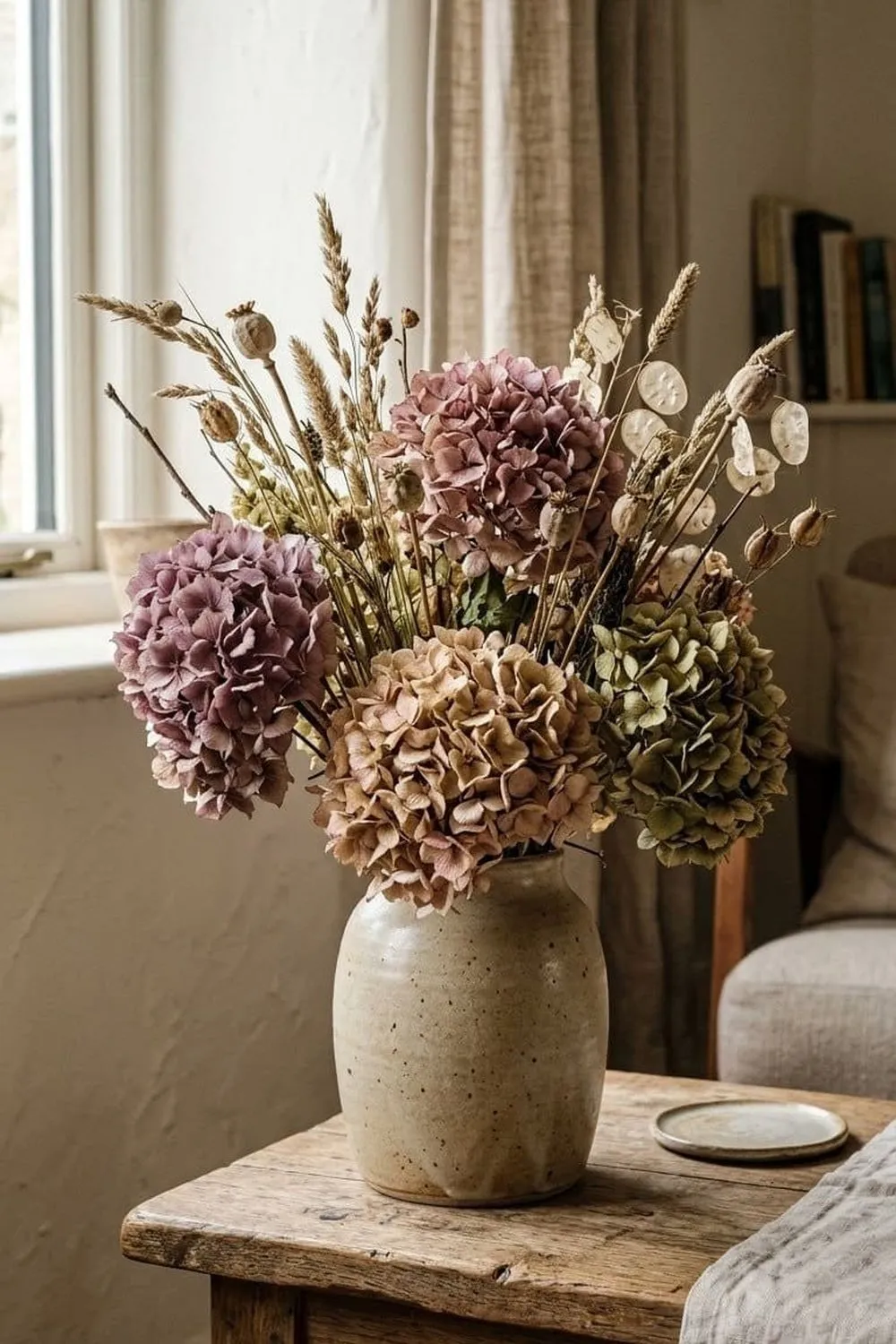
Dried hydrangeas, faded to parchment — flowers that hold their shape all winter.
Fresh flowers are a short commitment in winter; dried hydrangea heads are a long one. Their papery petals fade to cream, blush and parchment tones that sit perfectly with linen and stoneware, and a tall vase of them on the sideboard gives the room height and softness with no water to change.
Styling tip: dried stems are brittle — arrange them once, generously spaced, and dust with a hairdryer on cool from a distance rather than handling them.
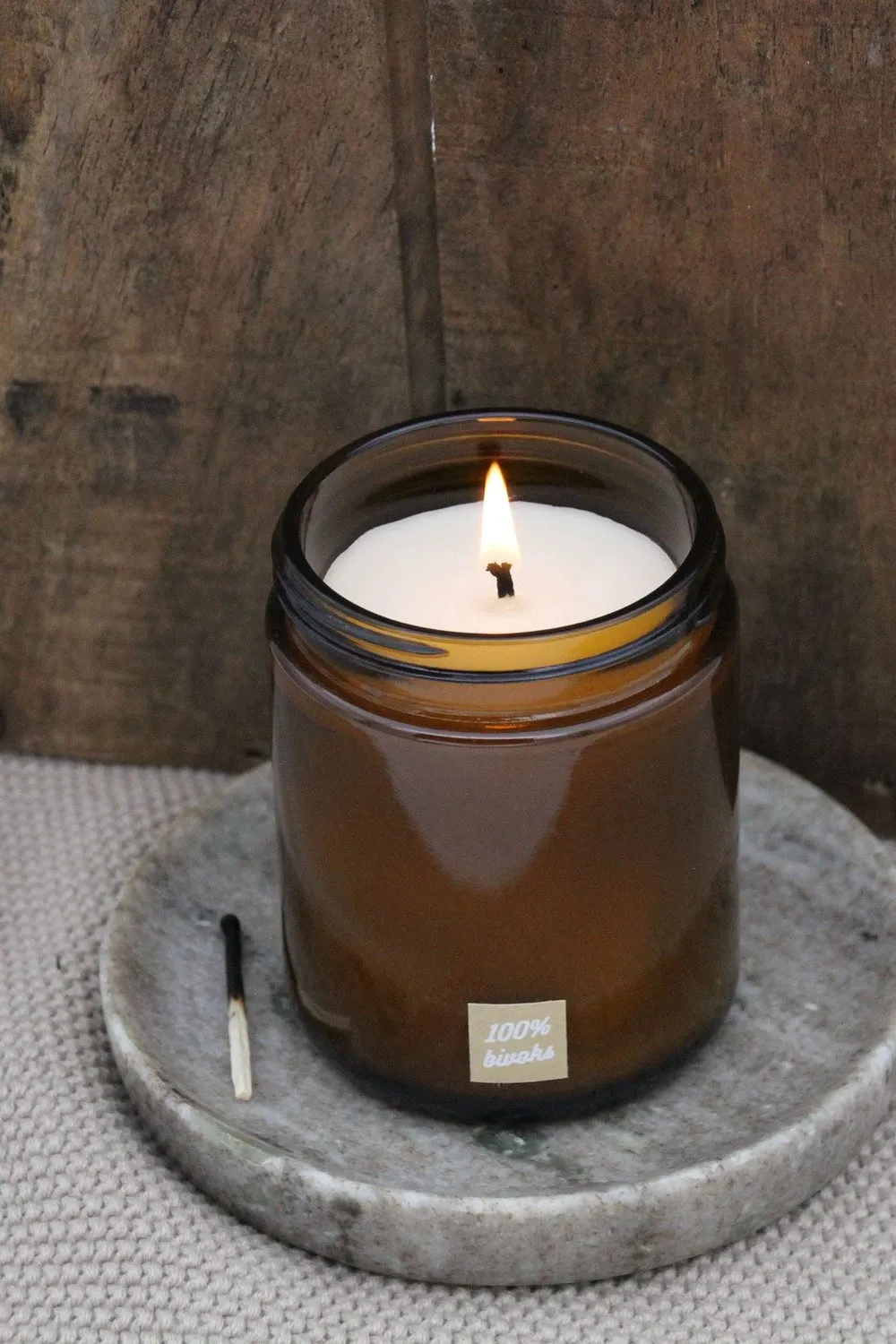
One beeswax candle, lit when the plates clear — the room's scent changes with the course.
The last layer of a winter dining room is scent: a natural beeswax candle in an amber glass jar, lit on the sideboard once dinner is done. Its honeyed smell belongs to the season without a trace of festive spice, and the amber glass glows in keeping with the table's candlelight.
Styling tip: keep the candle on a stone or metal tray on the sideboard, well clear of curtains, napkins and stacked linen, and put it out before leaving the room — real flames are never left burning unattended.
Swap festive shine for natural texture — bare wood, washed linen, stoneware and wool — and keep color calm: deep green, ink, oatmeal and stone. Candlelight gives the glow that tinsel used to, with no holiday motifs anywhere.
A flat-weave wool rug, sized about two feet beyond the table on every side so chairs stay on it when pulled out. Flat weave lets chairs slide, and a muted pattern hides crumbs between cleanings.
Draw heavy curtains at dusk, add sheepskins or seat pads to the chairs, dim the pendant and light candles. Covering cold surfaces — glass, bare wood, hard seats — changes how warm the room feels more than any new object.
Yes, with rules: set holders on a stone or slate base, keep flames clear of napkins, runners and curtains, use hurricanes where drafts or passing sleeves are a risk, and never leave lit candles unattended. Flameless pillars are the safe choice near fabric.
Something low, natural and useful — a long wooden board with candles and a small vase, or a wooden bowl of pears and walnuts. It should look styled on an empty table and move aside in one hand when dinner lands.
A winter dining room is built the way a good dinner is: in layers, and without rushing — linen and wood on the table, candlelight at face level, deep color on one wall, warmth underfoot and over every chair back. Start with the curtains and the candles, and let the room gather its texture from there. Save your favorite winter dining room decor ideas from this list, and follow TheStylingHub on Pinterest for fresh winter ideas all season long.
Rooms
Nov 21, 2026
35 Winter bedroom decor ideas — layered bedding, chunky knits, soft lamplight and calm…
Rooms
Nov 18, 2026
Small bathroom decor ideas that make a tiny space feel bigger — light colors,…
Rooms
Nov 18, 2026
31 Winter bathroom decor ideas for 2027 — spa-calm towels, candles, eucalyptus, wood and…