

Seasonal
32 New Year Balloon Decor Ideas: Arches, Number Balloons and a Midnight Drop
Nov 21, 2026
32 New year balloon decor ideas — arches, garlands, giant number balloons and a…
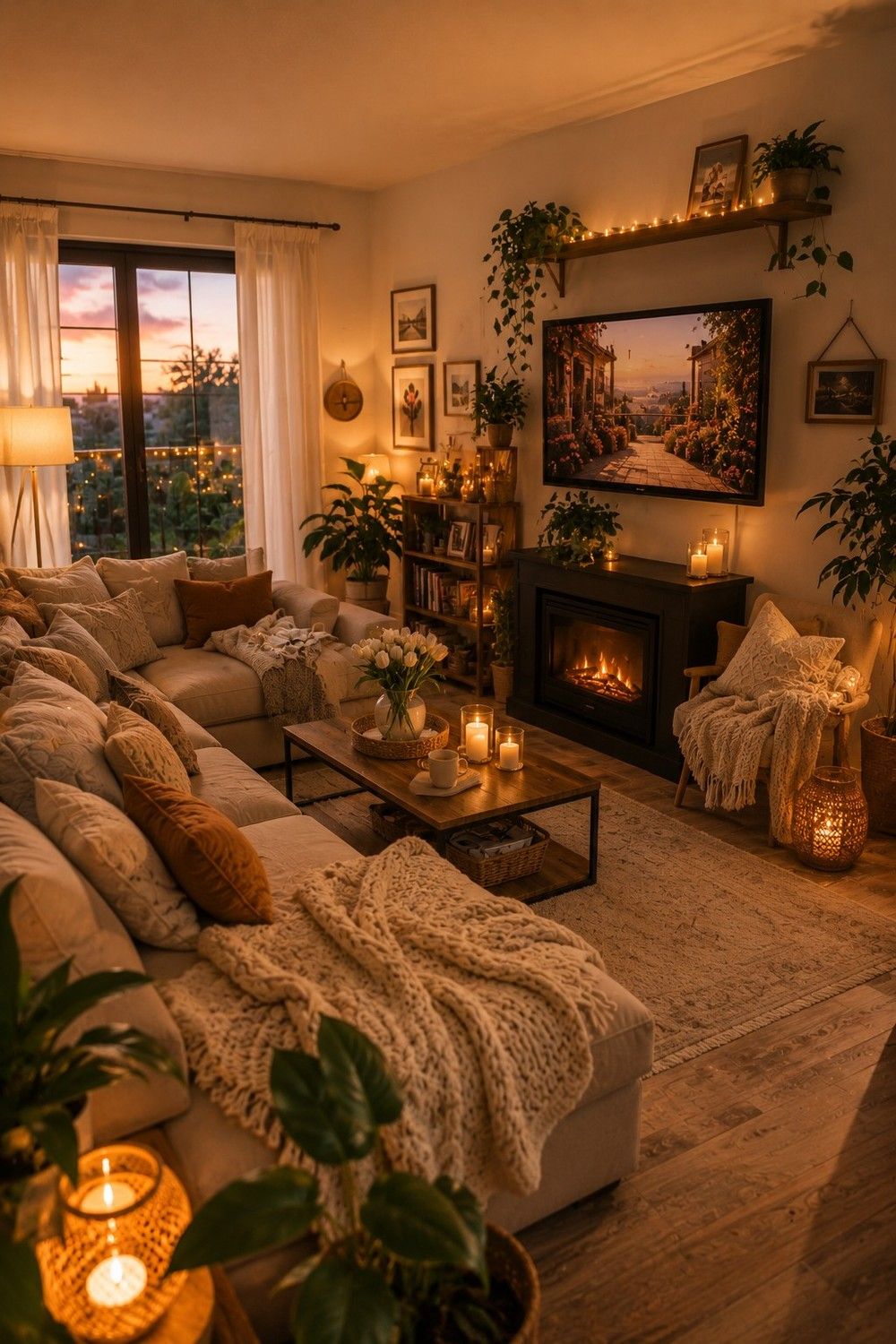
The living room carries winter: long evenings, cold light outside, everyone gathered in one warm place. These 33 cozy winter living room decor ideas layer it up without any Christmas leftovers — thick throws, knit cushions, candlelight, wood and wool, soft light in every corner. Nothing festive, nothing fussy, just a room that feels warmer the moment you walk in.
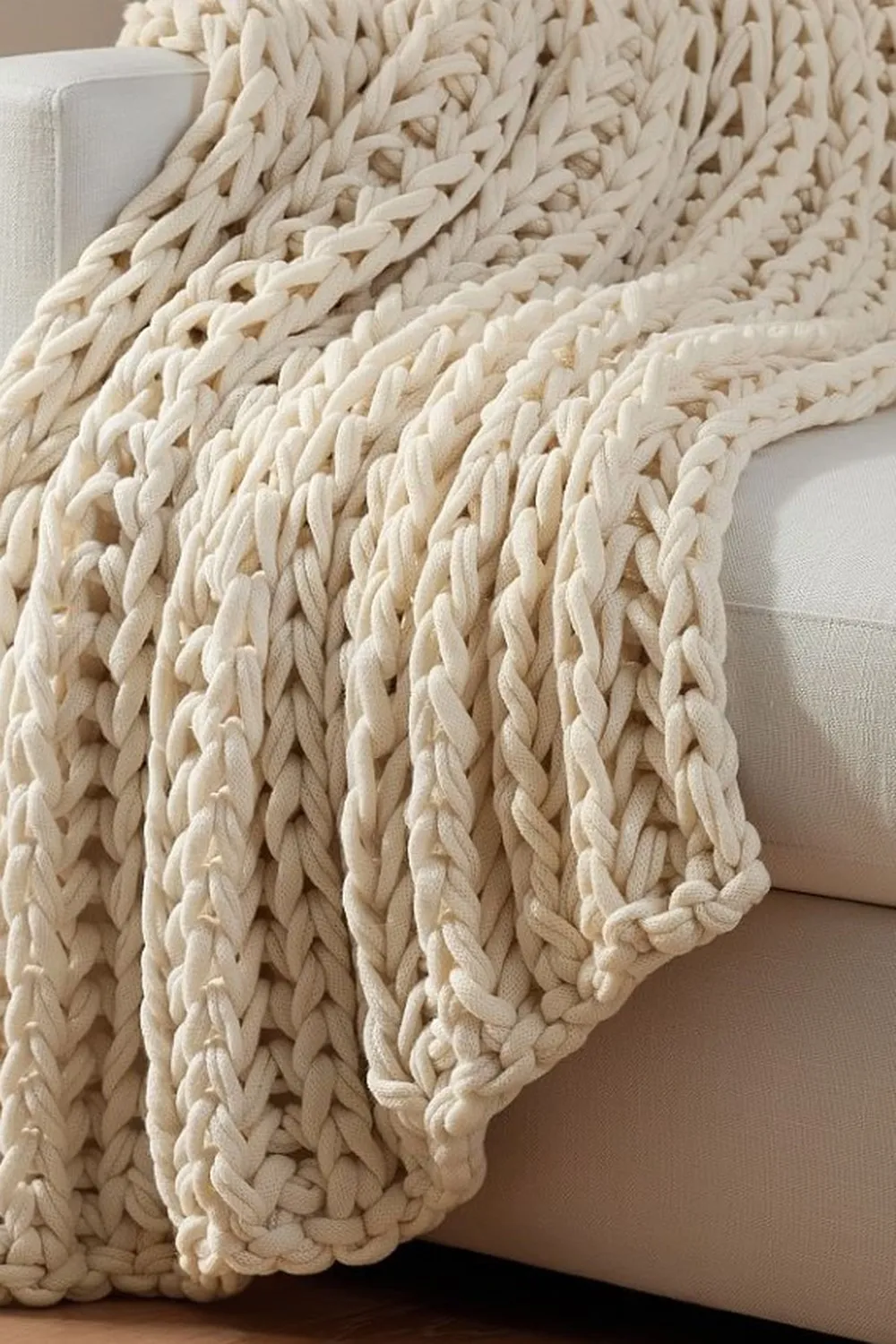
A thick cream knit, folded over the sofa arm — the first layer, and the one hands reach for.
Start where every cozy winter living room starts: one genuinely thick throw. A chunky knit in cream, draped over the sofa arm rather than folded away, changes the room twice over — it softens the sofa's outline the moment you look at it, and it puts warmth literally within arm's reach of the seat everyone fights for. Choose a knit with visible, oversized stitches; the texture is the decoration.
Styling tip: drape it over the arm nearest the door, where people sit down first. A throw that has to be fetched from a cupboard is storage; a throw on the arm is an invitation.
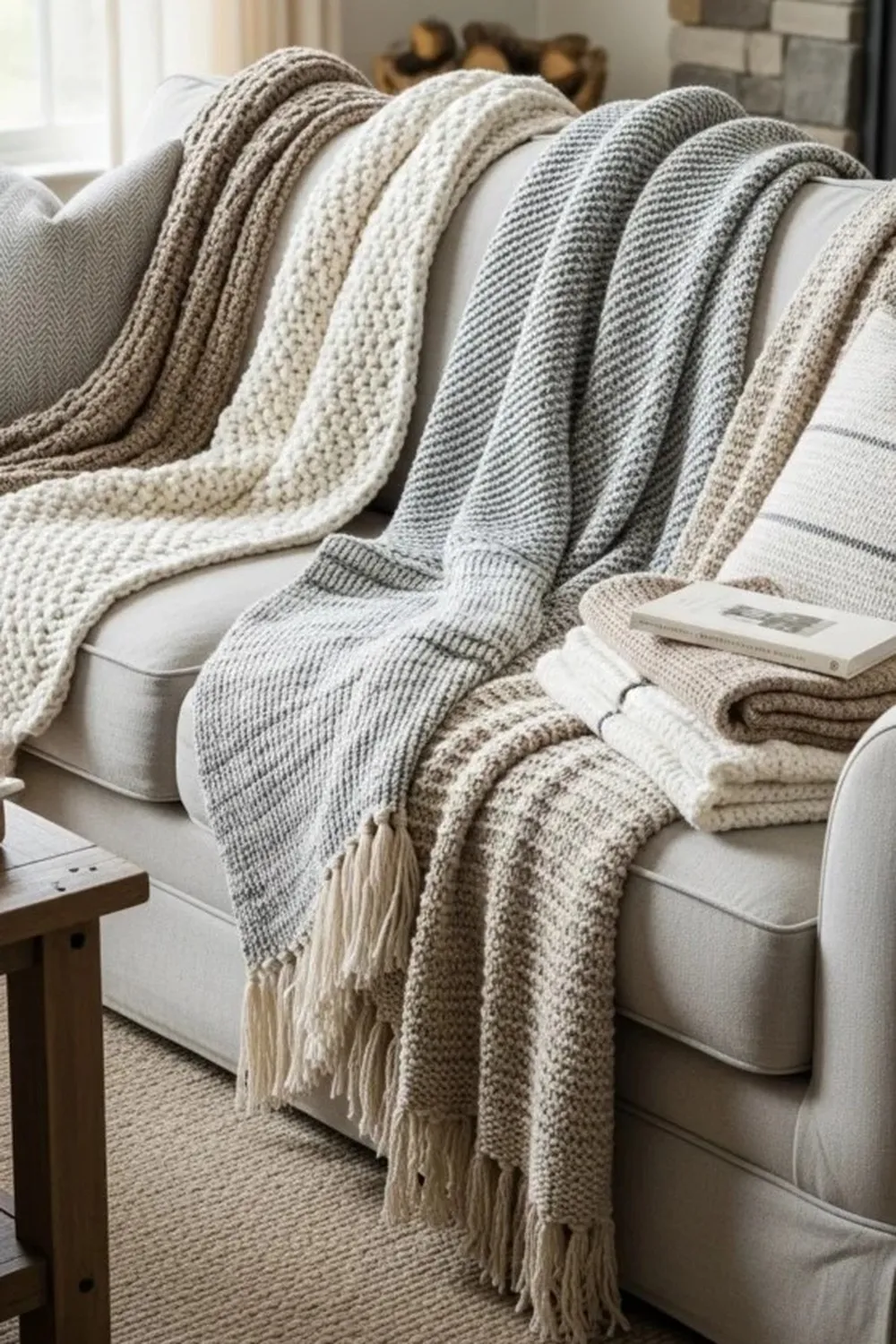
Three throws, three pale tones, one sofa back — layering that looks collected, not matched.
Instead of one throw in one color, layer three in the pale winter palette — cream, oat and soft gray — folded over the back of the sofa so each tone shows as a band. The effect is depth without pattern: the sofa reads warmer and more deliberate, and because the tones are neighbours rather than matches, the arrangement looks collected over time instead of bought in a set.
Styling tip: fold each throw to a different width before layering, the widest at the back. Even bands look like a shop display; uneven bands look like a home.
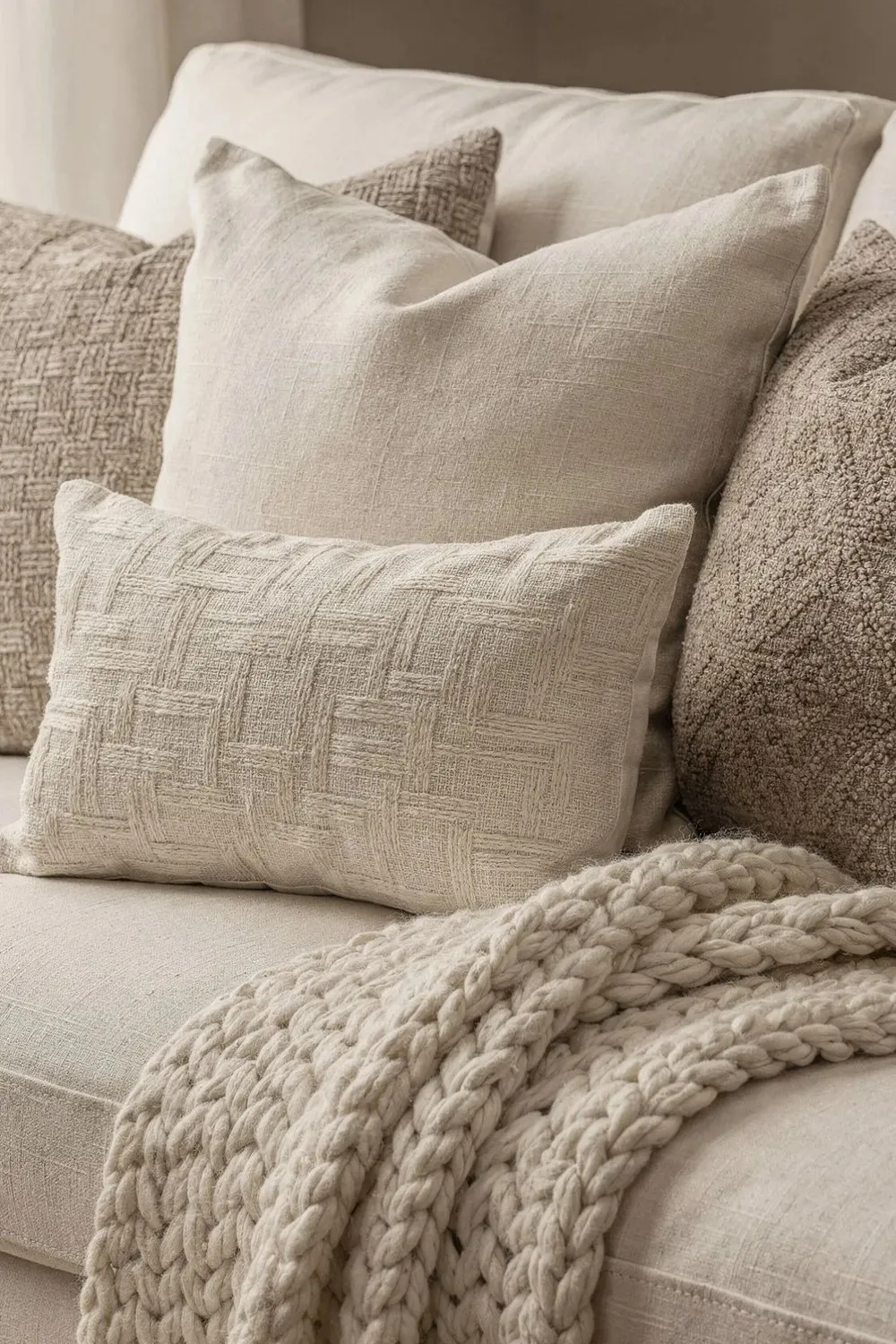
Knit beside linen: texture doing the talking while the colors stay quiet.
Keep the cushion colors almost silent and let the fabrics argue instead: cable-knit cushions beside plain washed linen, one smooth, one deeply textured. In a winter living room the eye reads texture before color, so a sofa of knits and linens in the same pale family feels rich where a row of identical cushions feels flat. Mix two knits to every one linen for balance.
Styling tip: keep all the cushion covers in one color family and vary only the weave. The moment a bright color joins, the calm of the mix is gone.
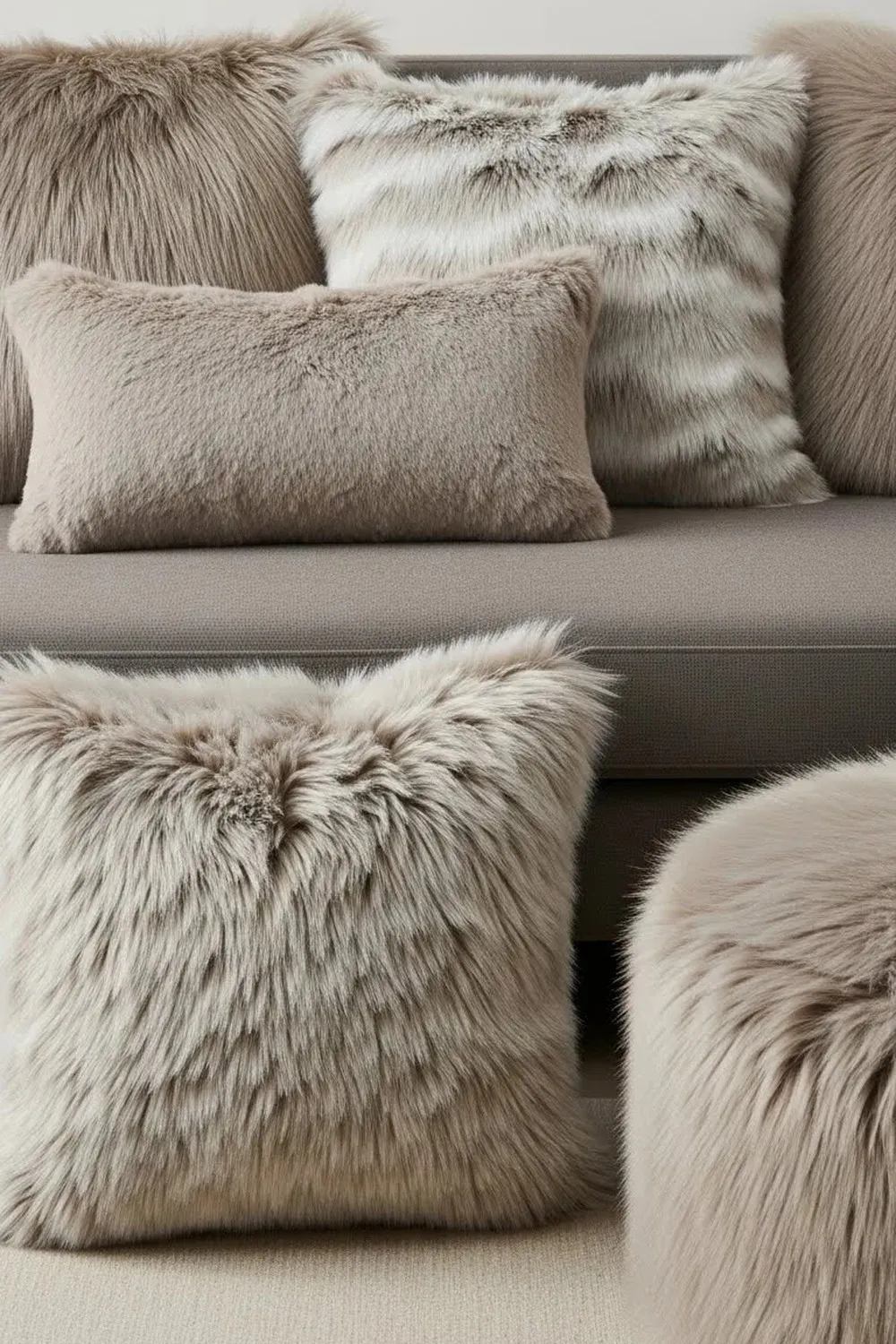
Softness at both ends — faux fur where elbows and shoulders actually rest.
Bookend the sofa with a faux-fur cushion at each end. The ends are where shoulders lean and elbows settle, so that is where the softest texture earns its place; the middle cushions can stay plainer and harder-wearing. Faux fur also catches low winter light better than any flat fabric, giving the sofa two soft highlights even on a gray afternoon.
Styling tip: match the fur's tone to your lightest throw, not to the sofa. The cushions should read as part of the layering, not as part of the furniture.
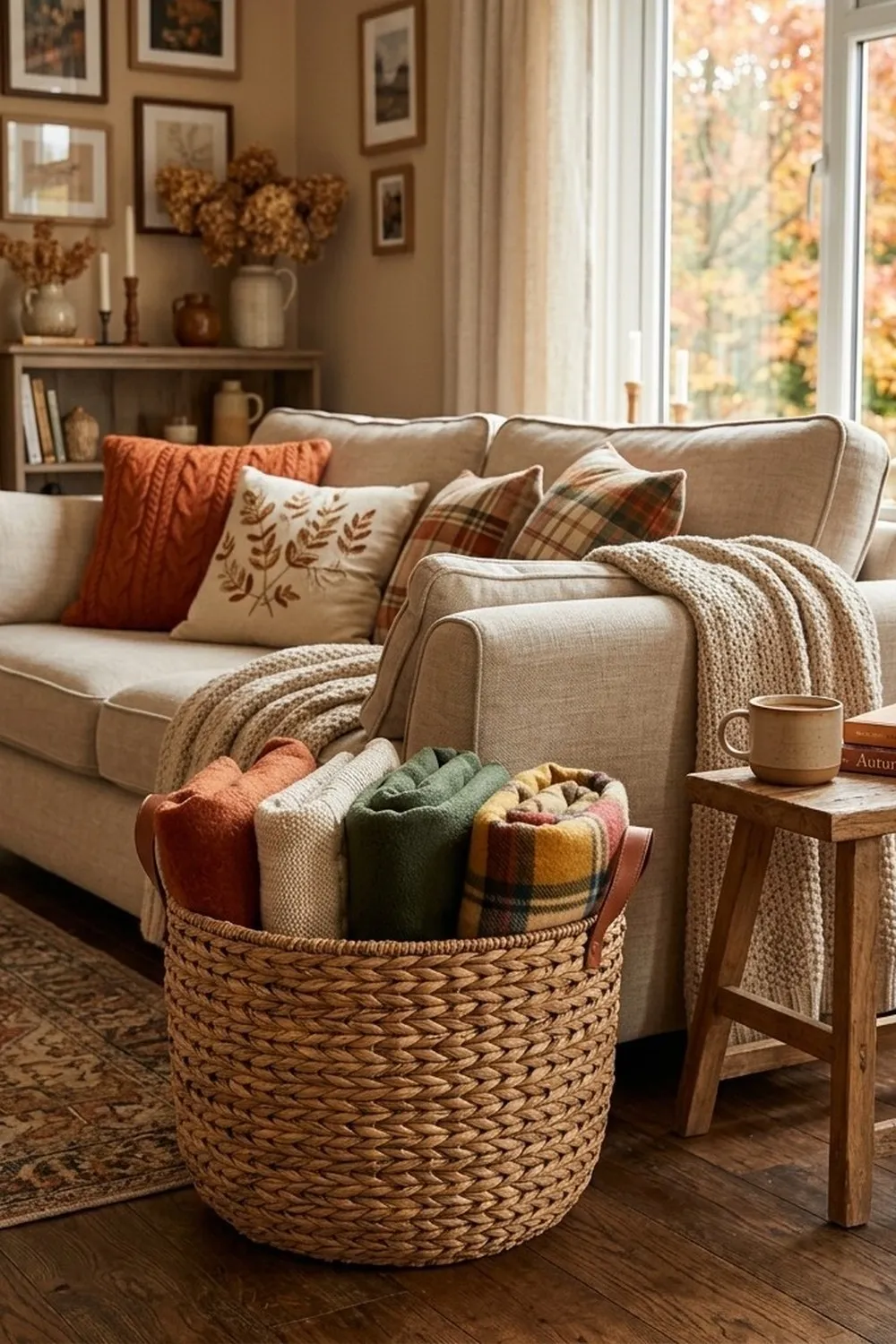
Blankets in a basket, not a cupboard — warmth kept where the sitting happens.
A woven basket of folded wool blankets standing beside the sofa solves the oldest winter problem: the blankets are always in another room when the film starts. Rolled or folded with their edges showing, the blankets become part of the room's texture story — wool against wicker against the sofa's fabric — while staying exactly where cold evenings need them.
Styling tip: roll the blankets instead of folding them. Rolls show more texture, fit more blankets in the same basket, and pull out without unfolding the whole pile.

Velvet in rust and deep gold: the room's warmest color, kept to the cushions.
Every calm winter palette needs one deep note, and velvet cushions carry it best. Rust, deep gold or a dark olive in velvet gives the pale room its warmth and its depth, and velvet's pile shifts with the light — brighter by the window, darker by the fire. Keep the deep color to the cushions only, so it stays an accent and never becomes a scheme.
Styling tip: two deep velvet cushions are enough on a three-seat sofa. Add a third and the accent becomes the theme, and the room loses its calm.
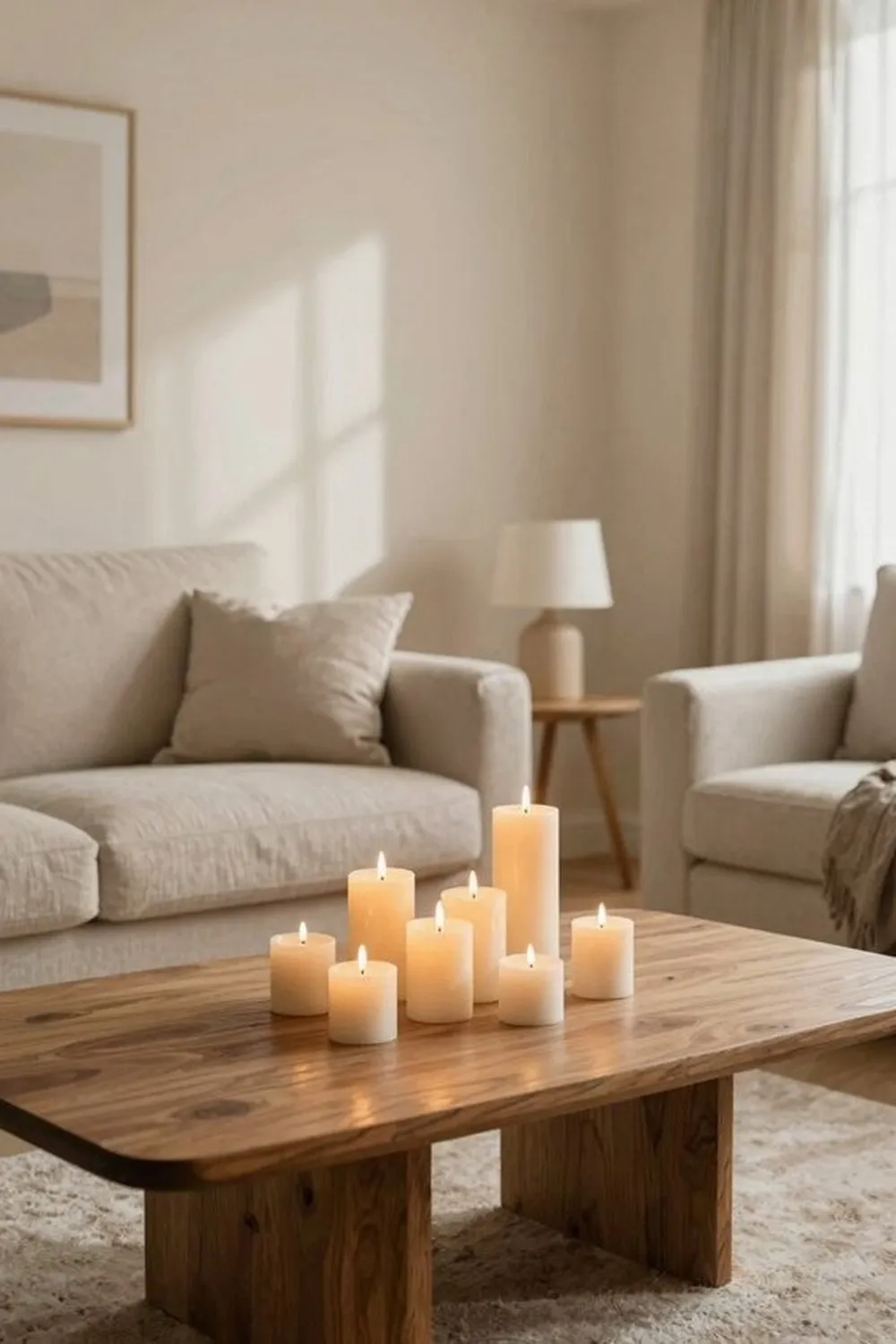
Candles at three heights on the coffee table — the room's low, warm heart.
Cluster pillar candles at three different heights on the coffee table and you have built the room's second fireplace: a low, warm center that every seat faces. Pillars are the right candles for winter — they burn for hours, their wide flames hold steady in draughts, and their cream wax suits the palette without any colored glass or scent jars competing for attention.
Styling tip: odd numbers and uneven heights — three or five pillars, never a matched pair at the same height. Symmetry looks staged; a small skyline looks lived in.
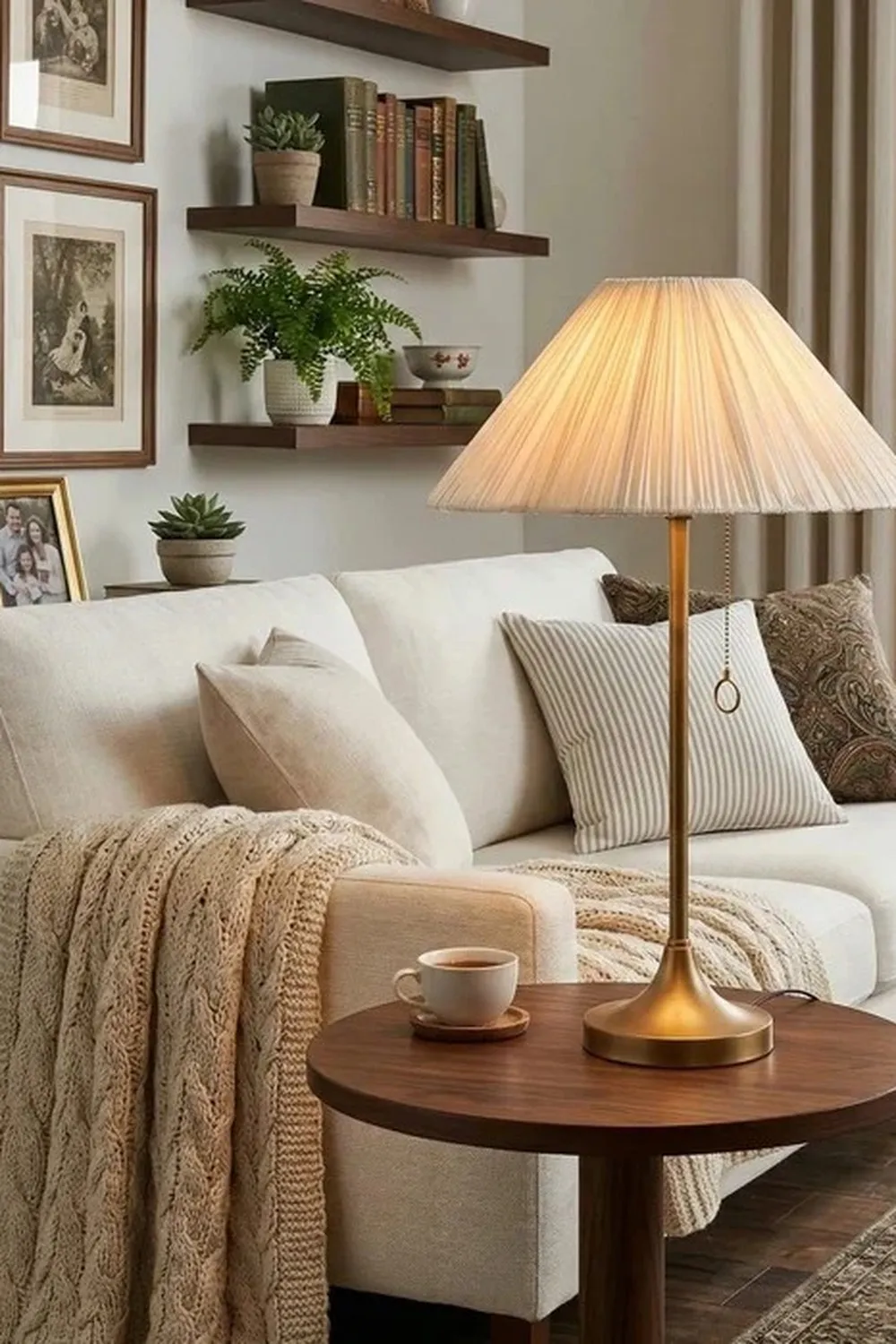
One warm lamp, linen shade, low light — the corner that makes the whole room feel lit.
One table lamp with a linen shade does more for a winter living room than any ceiling light: it pools warm light at sitting height, exactly where faces and books are. Choose a shade in natural linen and a warm-white bulb; the linen filters the light the color of candlelight, and the corner beside the sofa becomes the room's most inviting seat after dark.
Styling tip: put the lamp on the darkest corner's side table, not the brightest. A lamp's job in winter is to rescue a corner, not to decorate an already bright one.
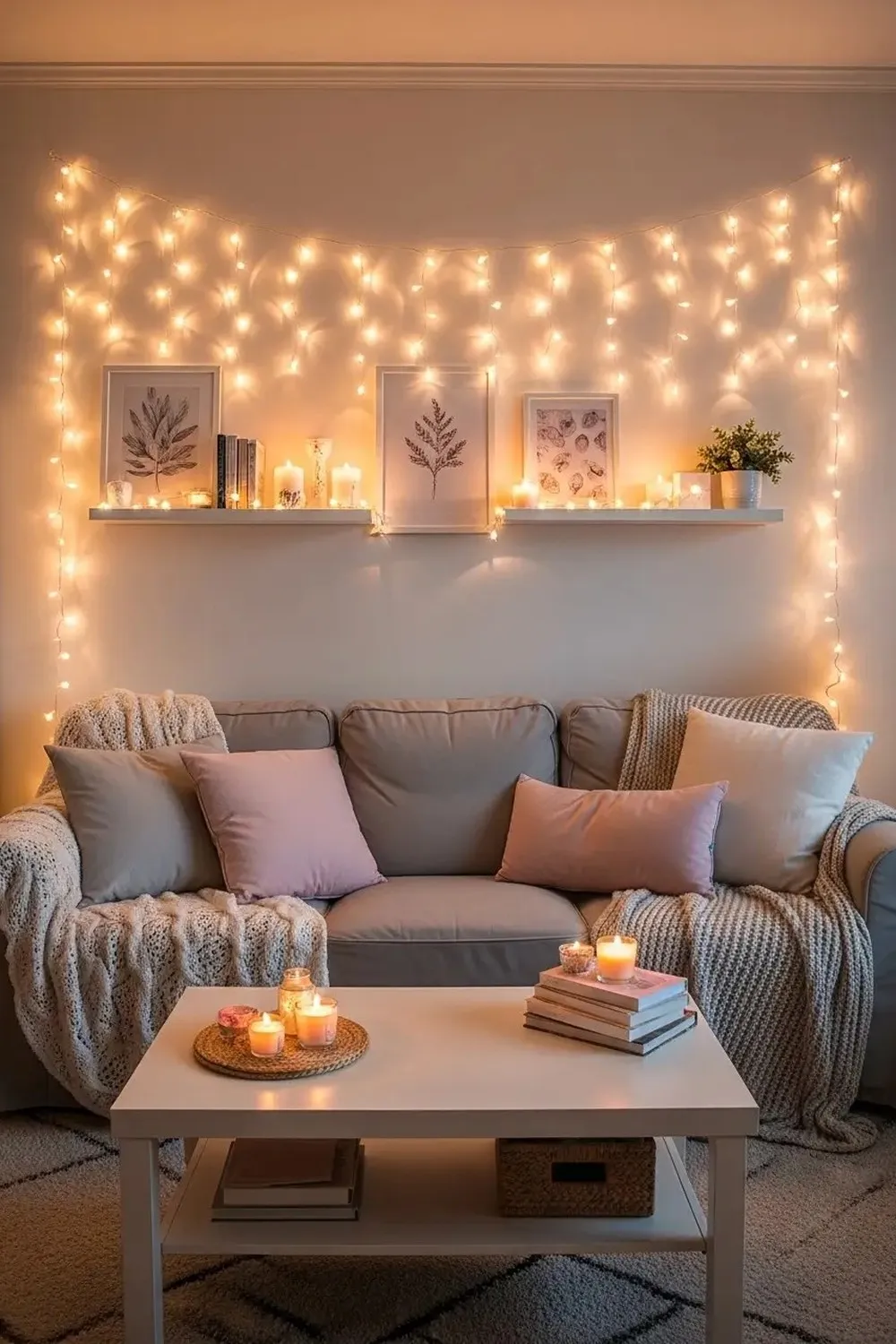
Fairy lights on a shelf, not a window — glow at eye level, where the room is lived in.
Fairy lights survive January when they move off the window and onto a shelf. Strung loosely along a bookcase or a picture shelf, warm-white lights sit at eye level and thread a soft glow through the room's everyday objects — books, frames, a plant — so they read as winter light rather than leftover festivity. Keep them sparse and warm; density is what makes them look seasonal.
Styling tip: weave the string behind objects, not in front of them, so the light appears to come from inside the shelf. Hidden wire, visible glow.
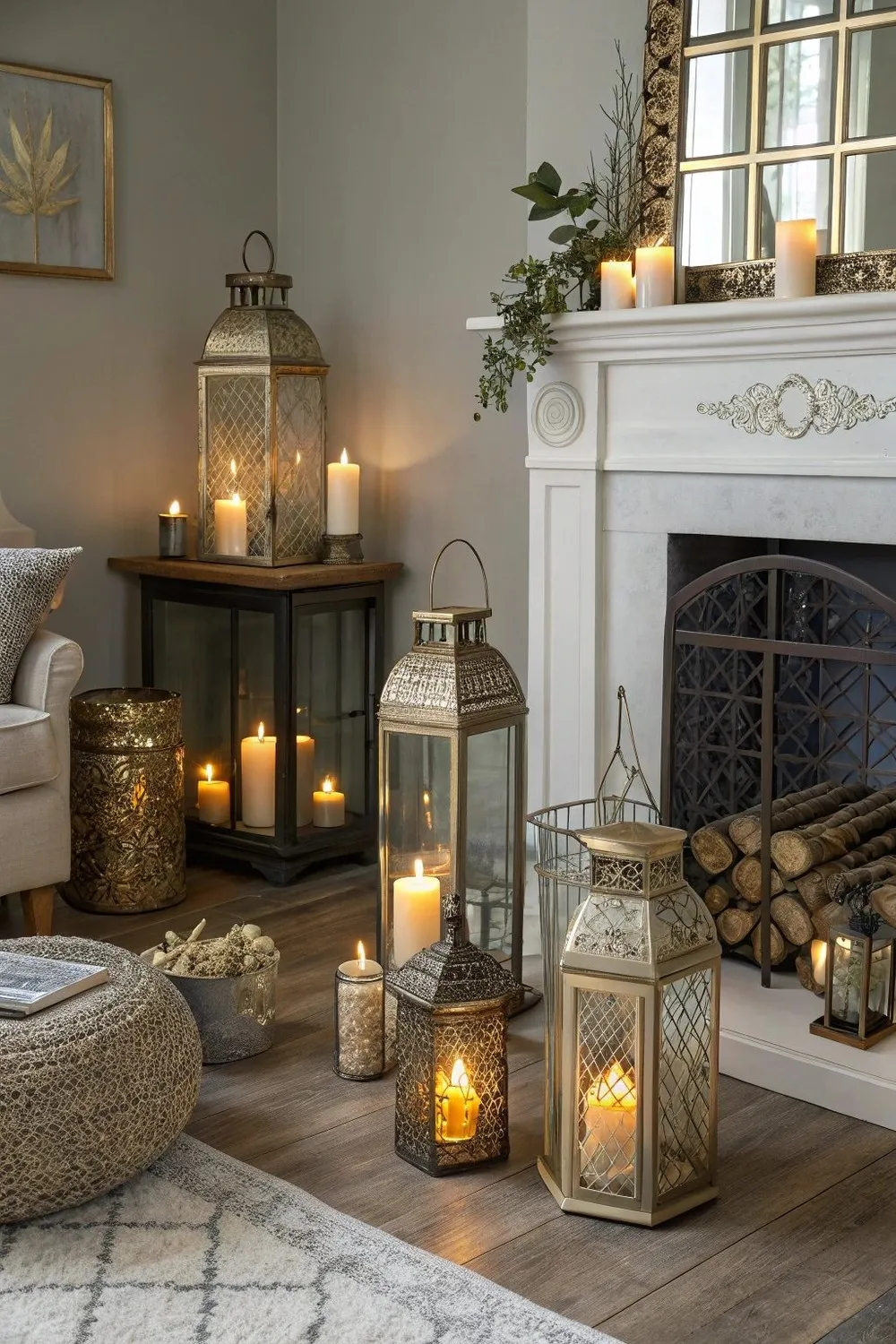
Lanterns on the floor: candlelight that stays low and spreads across the boards.
Two lanterns on the floor beside the fireplace put candlelight at ground level, where it spreads across the floorboards and under the furniture in a way table candles never reach. Floor light is the secret of every room that feels warm in a photograph: it fills the low half of the room, the half that lamps leave dark. Use lanterns with glass panels so the flames stay safe near the hearth rug.
Styling tip: pair one tall lantern with one short one, both in the same finish. Matching heights look like a shop set; a step down looks placed.
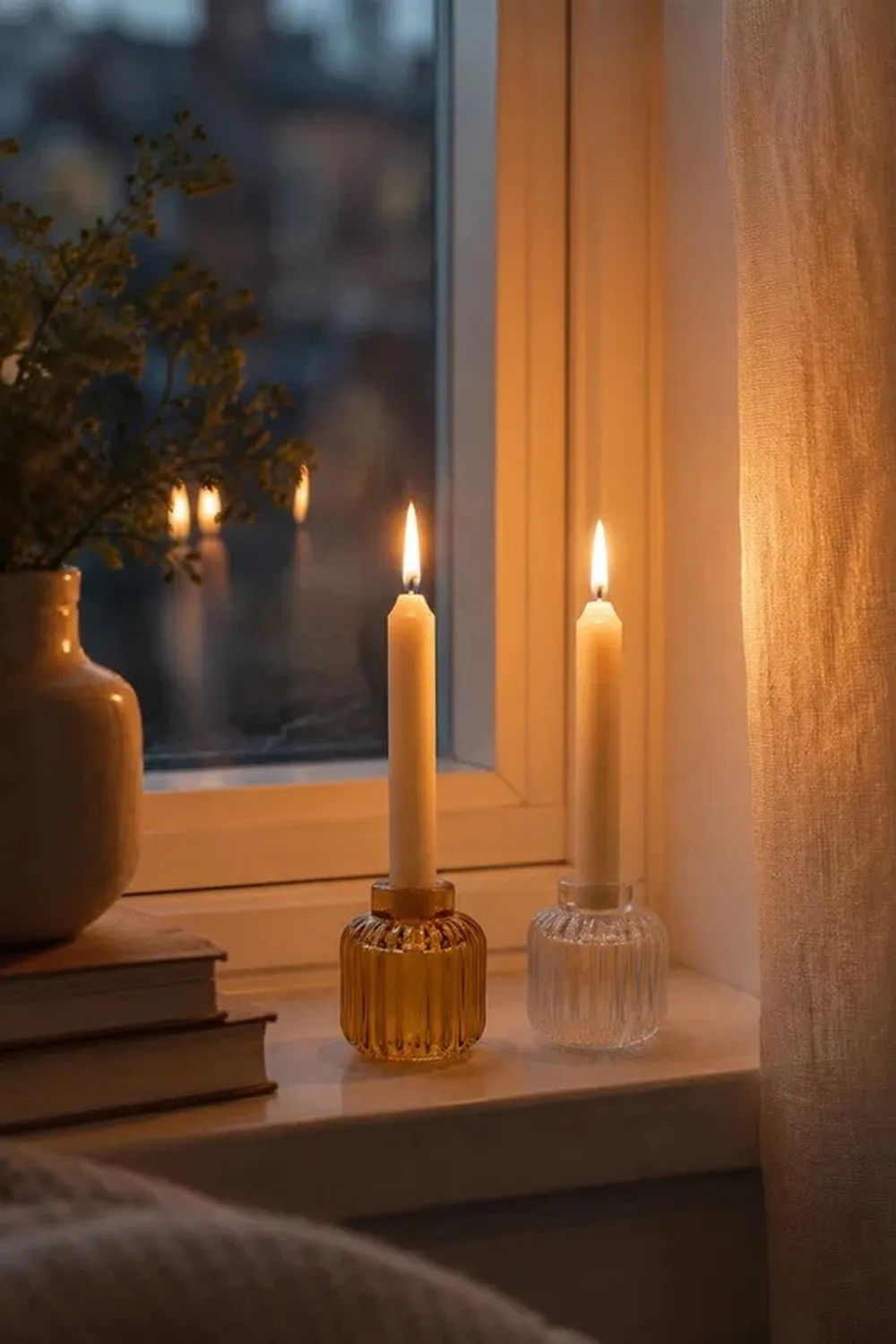
Candles on the sill as the light goes — the window becomes a lamp of its own.
A row of candles in simple glass holders on the windowsill turns the coldest surface in the room into a light source at exactly the hour it goes dark. From inside, the flames double in the glass; from outside, the house looks inhabited and warm. It is the cheapest transformation in this article — three holders, three candles, one sill — and the one guests mention.
Styling tip: keep the holders plain glass and identical. The row's rhythm is the decoration; mixed jars break it.
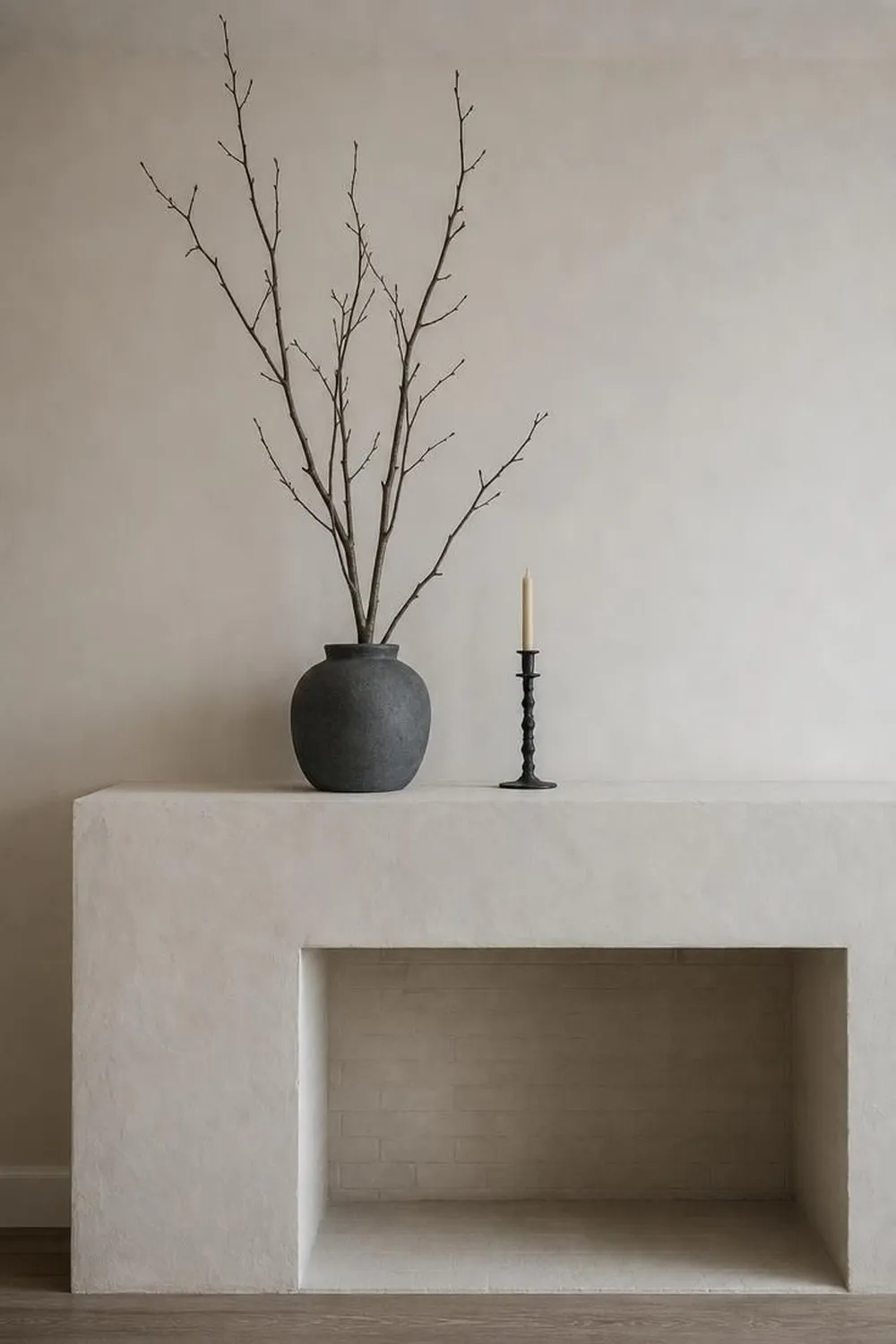
One vase, bare branches, an empty mantel — January calm, not a display.
After a season of dressed mantels, the bravest winter move is an almost bare one: a single tall vase of bare branches and nothing else. The empty shelf around it is the point — the room breathes, the branches draw one clean line of shadow, and the fireplace wall becomes calm instead of busy. Choose branches with real structure, twisted or budded, and let them stand tall.
Styling tip: if bare feels too bare, add one low stack of books at the far end — nothing more. The mantel should hold two objects at most.
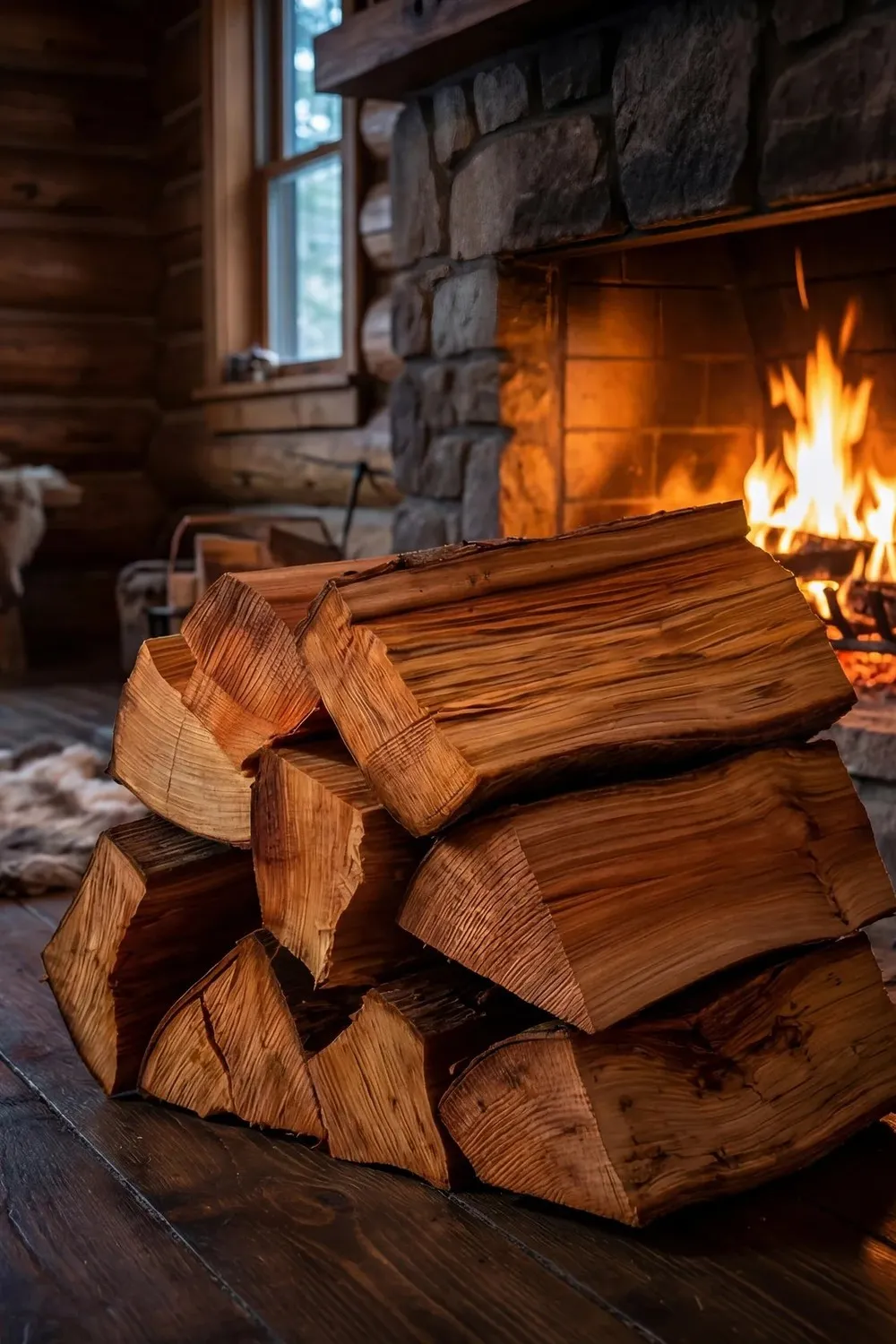
Logs stacked like a wall beside the fire — fuel as decor, honest and warm.
Stack the firewood properly — ends out, rows tight — beside the fireplace, and the fuel becomes the fireplace wall's texture. A neat log stack brings the deepest winter material of all into the room: real wood, in quantity, with its bark and rings showing. It also keeps the evening's fires effortless, which is its own kind of comfort.
Styling tip: stack to one side only, and leave the other side of the hearth clear. A fireplace flanked on both sides looks like a shop hearth display.
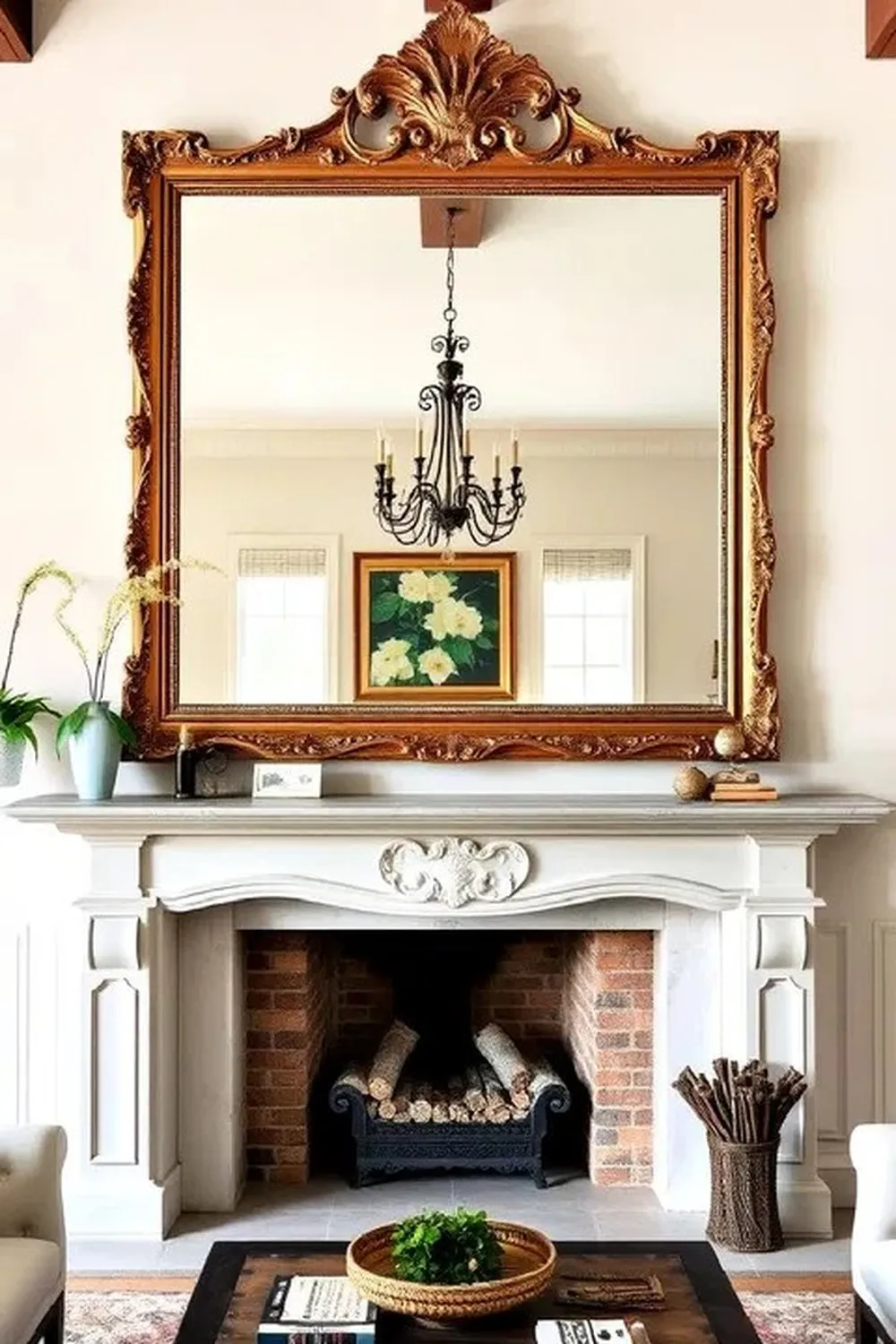
A mirror over the mantel: the room's light, doubled, without one more lamp.
Hang one large mirror over the mantel and every light source in the room doubles — candle flames, the lamp's pool, the fire itself. In winter, when the room is lit more than it is daylight-lit, a mirror is a lighting decision as much as a decorative one. Choose a frame with presence — gilt, wood or aged metal — and let the reflection do the rest of the work.
Styling tip: angle nothing and center it exactly. A mantel mirror earns its keep by reflecting the room's warmest view — check what it shows from the main sofa before fixing it.
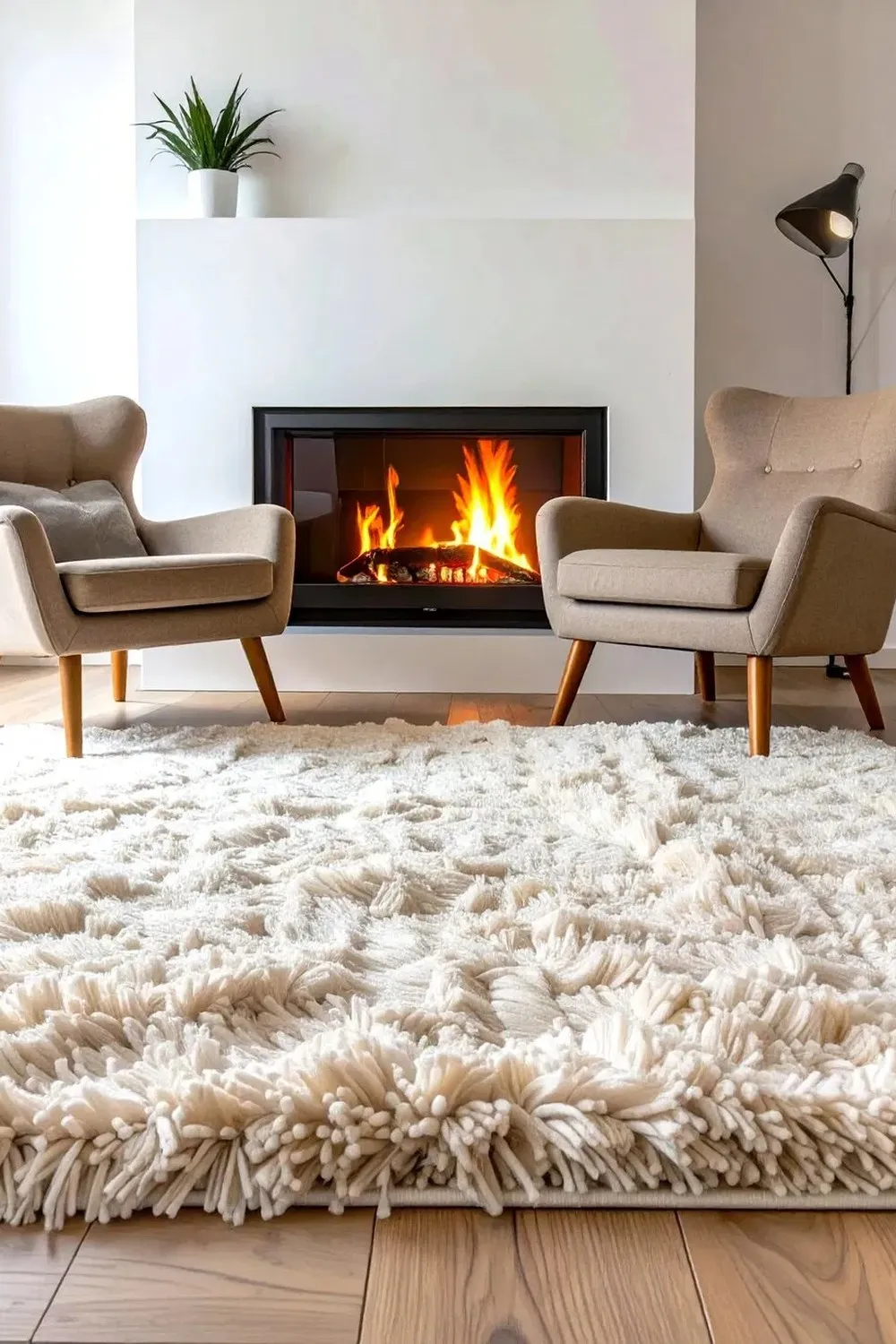
Thick wool at the hearth — the floor in front of the fire, made for sitting on.
A thick wool rug in front of the hearth makes the warmest square meter of the house sittable. It marks the fireside as a place, not a passage — somewhere for cushions on the floor, a dog, a tray of tea — and its pile holds the fire's heat underfoot long after the flames settle. Natural wool tones keep it in the palette; thickness is what makes it luxury.
Styling tip: size the rug to the hearth's width plus a cushion's depth each side. Too small and it reads as a mat; generous reads as a fireside room of its own.

Eucalyptus in a jug: green that smells of winter and asks for nothing.
Eucalyptus is winter's easiest greenery: silvery, architectural, and content to sit in a plain ceramic jug for weeks. On a side table it gives the room a living note without flowers' color or fuss, and its scent does quiet work every time someone sits down beside it. Fresh or dried both work; dried lasts the whole season.
Styling tip: use fewer stems than feels right — five to seven. Eucalyptus reads expensive when it is sparse and sculptural, crowded when it is bushy.
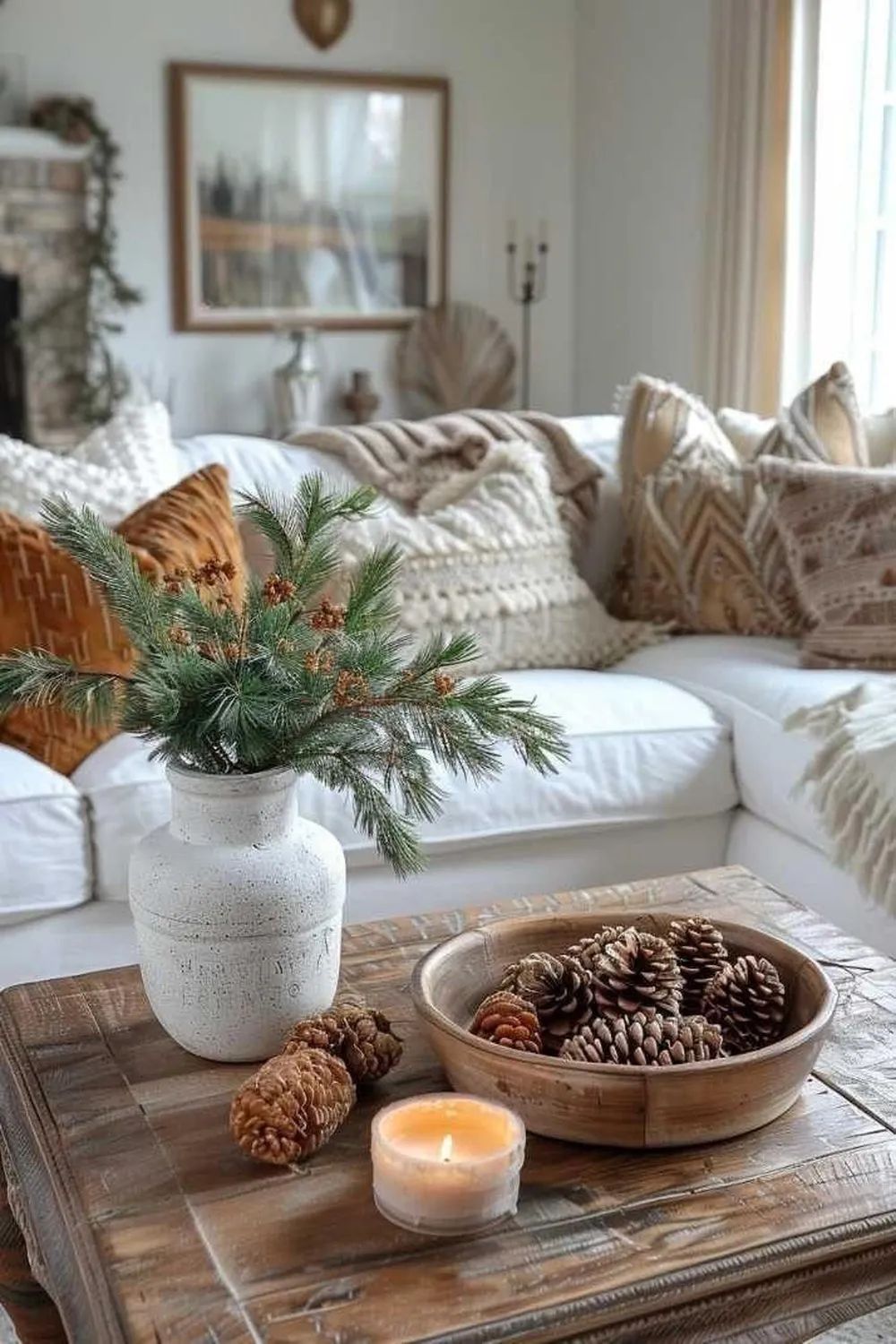
Pinecones in a wooden bowl — the table's natural centerpiece, no arranging needed.
Fill a wooden bowl with pinecones and the coffee table has its winter centerpiece: natural, sculptural, and impossible to arrange badly. Pinecones bring the woods indoors in the palette's own browns, and the bowl keeps them corralled into one calm object instead of scattered styling. Gathered cones cost nothing; bought ones cost little. Either way, this is the season in a bowl.
Styling tip: mix two sizes of cone and let a few sit proud of the rim. A bowl filled level looks packed for storage; a heaped bowl looks gathered.
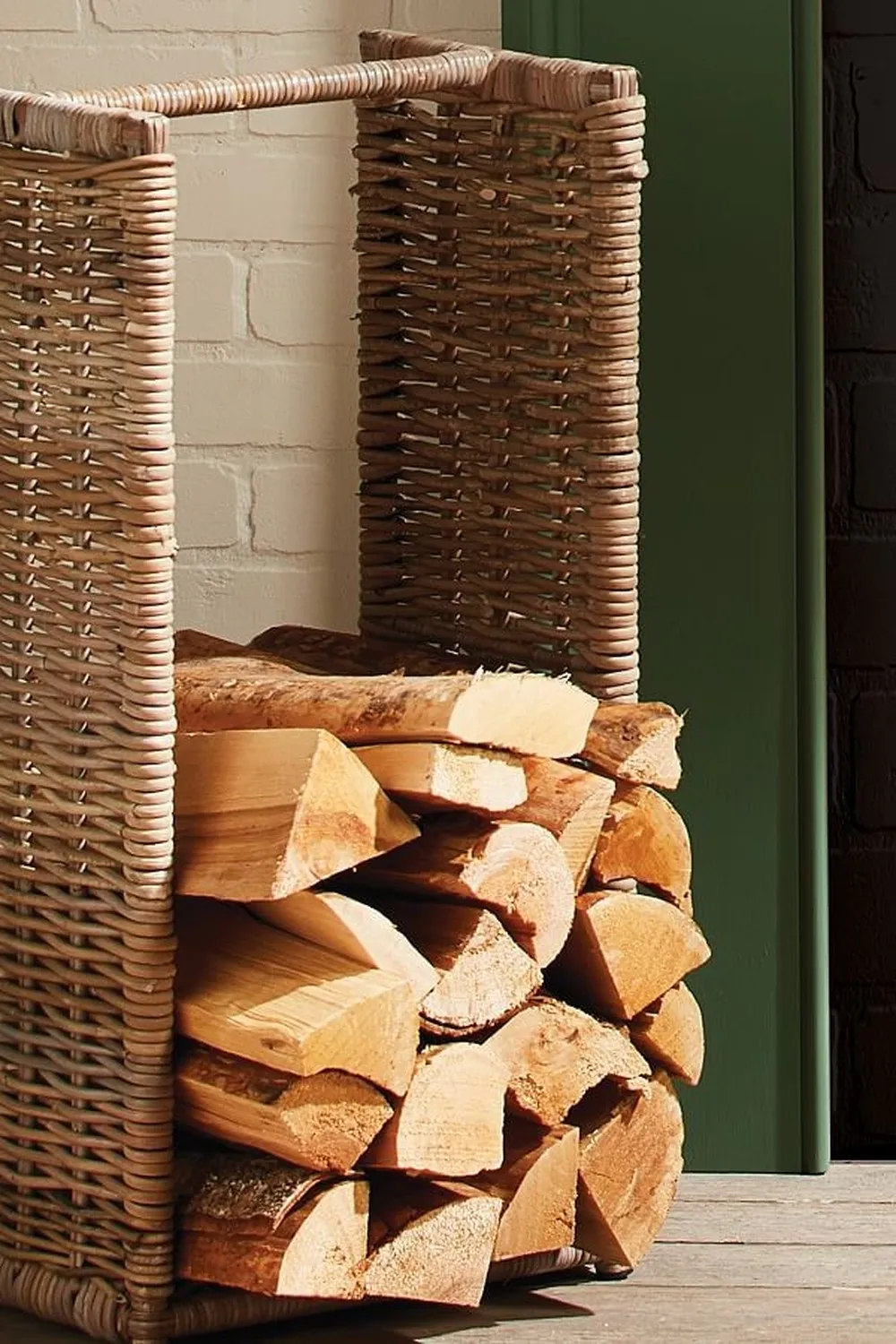
Firewood in a woven basket — the room's working corner, looking intentional.
A woven basket of firewood standing in the corner keeps the working end of winter handsome: logs visible, bark contained, and the trip from woodpile to hearth shortened to one lift. Woven texture against cut log ends is the whole winter palette in one corner — and a full basket reads as abundance, the feeling every cozy room is really selling.
Styling tip: choose a basket with handles and a close weave. Firewood sheds bark constantly; an open weave sheds it all over the floor.
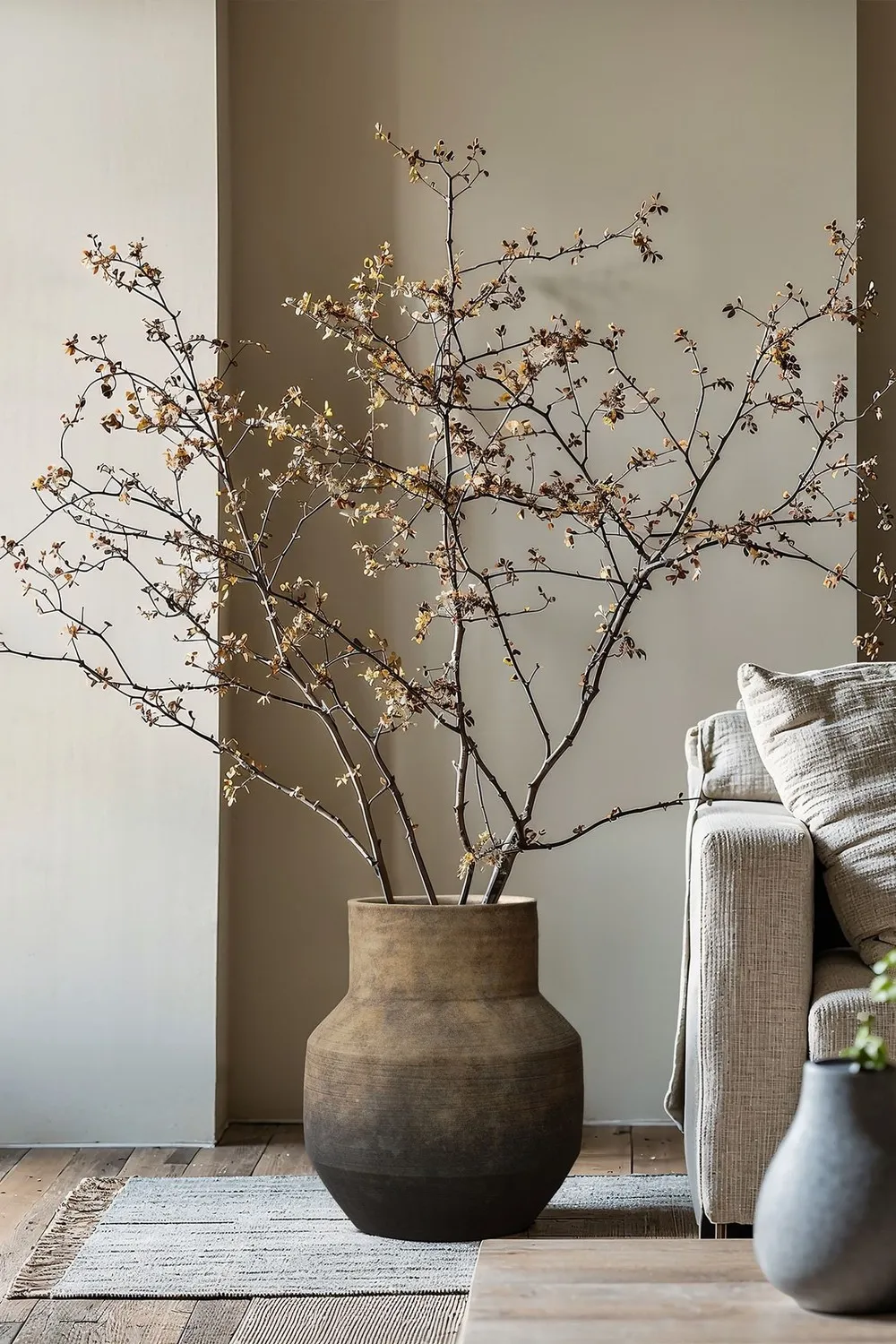
Bare branches in a floor vase: height and shadow for the corner nothing else fills.
Every living room has one corner too narrow for furniture and too empty to ignore; a tall floor vase of dried branches is made for it. The branches give the corner height, movement and shadow-play when the lamps come on, and they ask for nothing all winter. Willow, birch or any twisted bare stem works — the silhouette is the decoration.
Styling tip: the vase should reach at least knee height and the branches should clear the ceiling picture line. Short branches in a tall corner look like an apology.
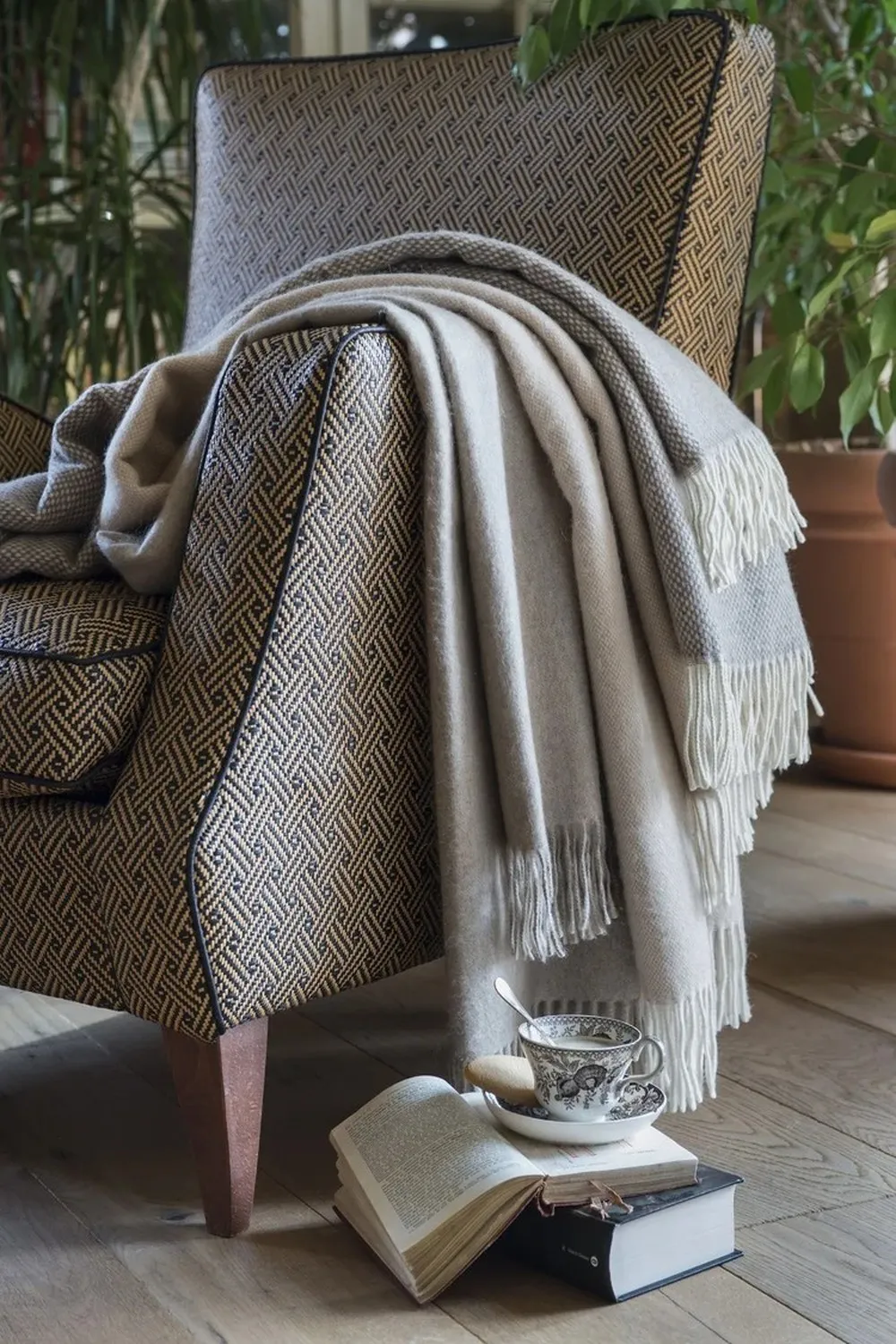
Wool over the reading chair — one chair, dressed for long winter evenings.
Dress the reading chair as its own small room: a wool throw over its back, a book waiting, the lamp close. A single chair styled completely reads as an invitation in a way a whole styled sofa cannot — it promises an hour, not just a seat. Wool is the right fiber here; it is the warmest layer per inch and it belongs to winter reading like paper belongs to books.
Styling tip: fold the throw lengthways over the chair back so both ends hang. It frames the chair and keeps the wool off the seat until it is wanted.
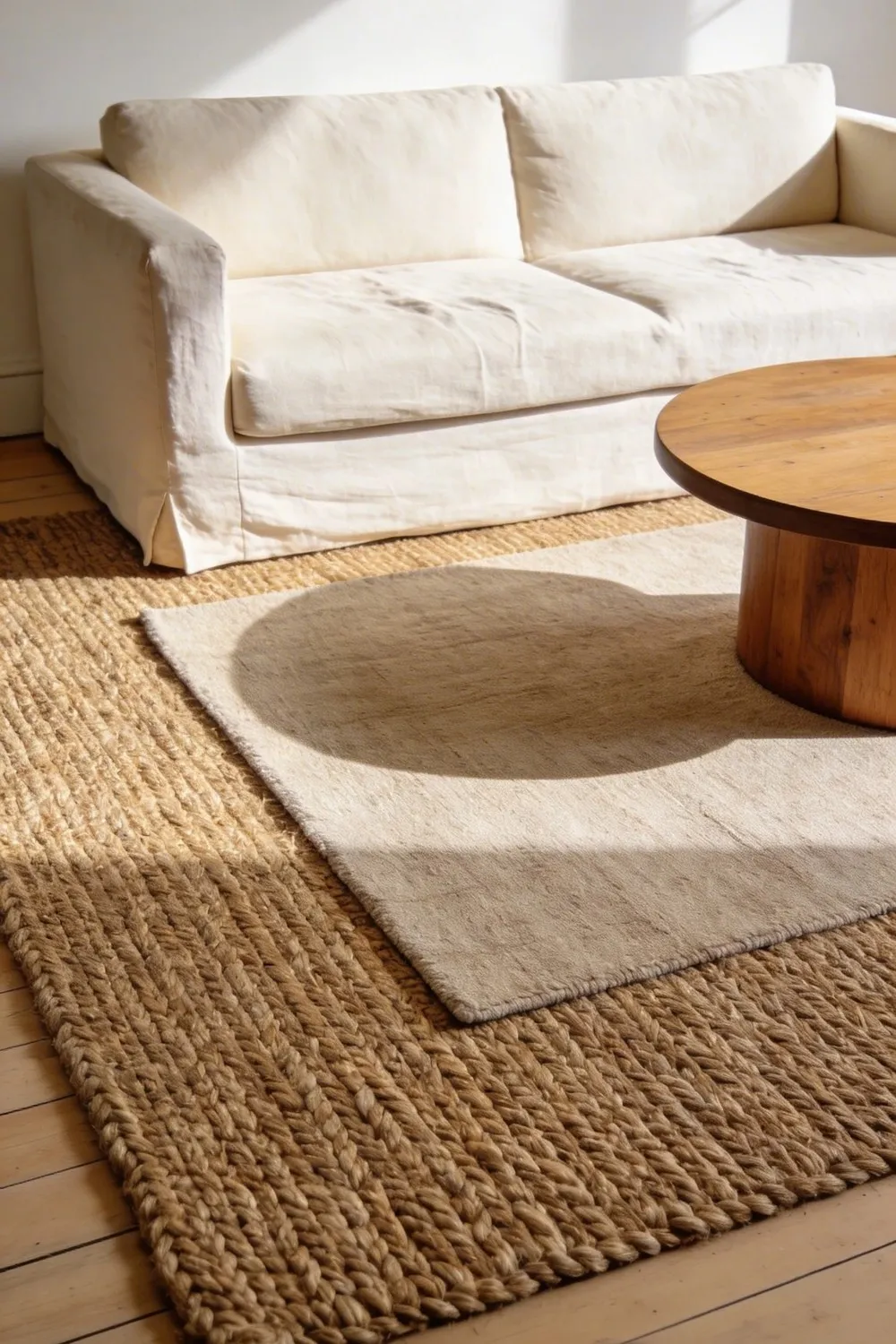
Wool over jute: two rugs, one floor — softness on top, texture underneath.
Layer a soft wool rug over a larger jute one and the floor gets both comfort and structure: jute's rough weave frames the seating area and hides a multitude of floor sins, while the wool on top is what feet actually meet. The layered edge — wool ending, jute continuing — is a deliberate, styled line that makes the whole seating zone look planned.
Styling tip: let the jute show by at least a hand's width on every side. If the wool covers it edge to edge, you have bought two rugs and hidden one.
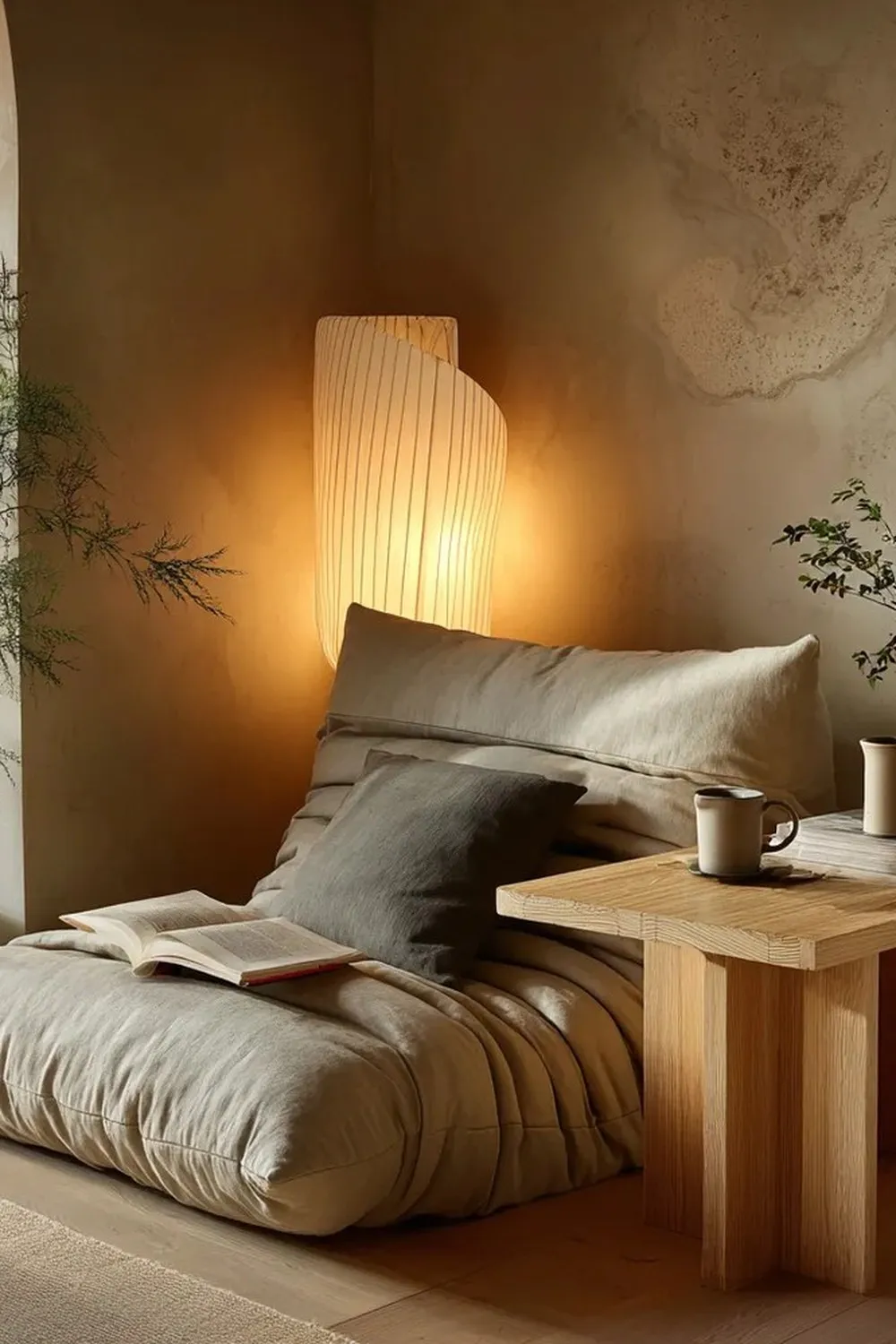
A floor cushion and a lamp: a nook made from a corner and almost nothing.
Build a reading nook from almost nothing: one large floor cushion, one lamp, one corner. Floor-level seating changes how a room is used in winter — it is where teenagers, dogs and book-finishing adults end up — and a cushion beside a warm light source makes the corner feel designed rather than leftover. Add the wall as your backrest and a throw within reach.
Styling tip: choose a cushion in the room's deepest tone. A nook is a small room of its own, and the deep color is what separates it from the rest of the floor.
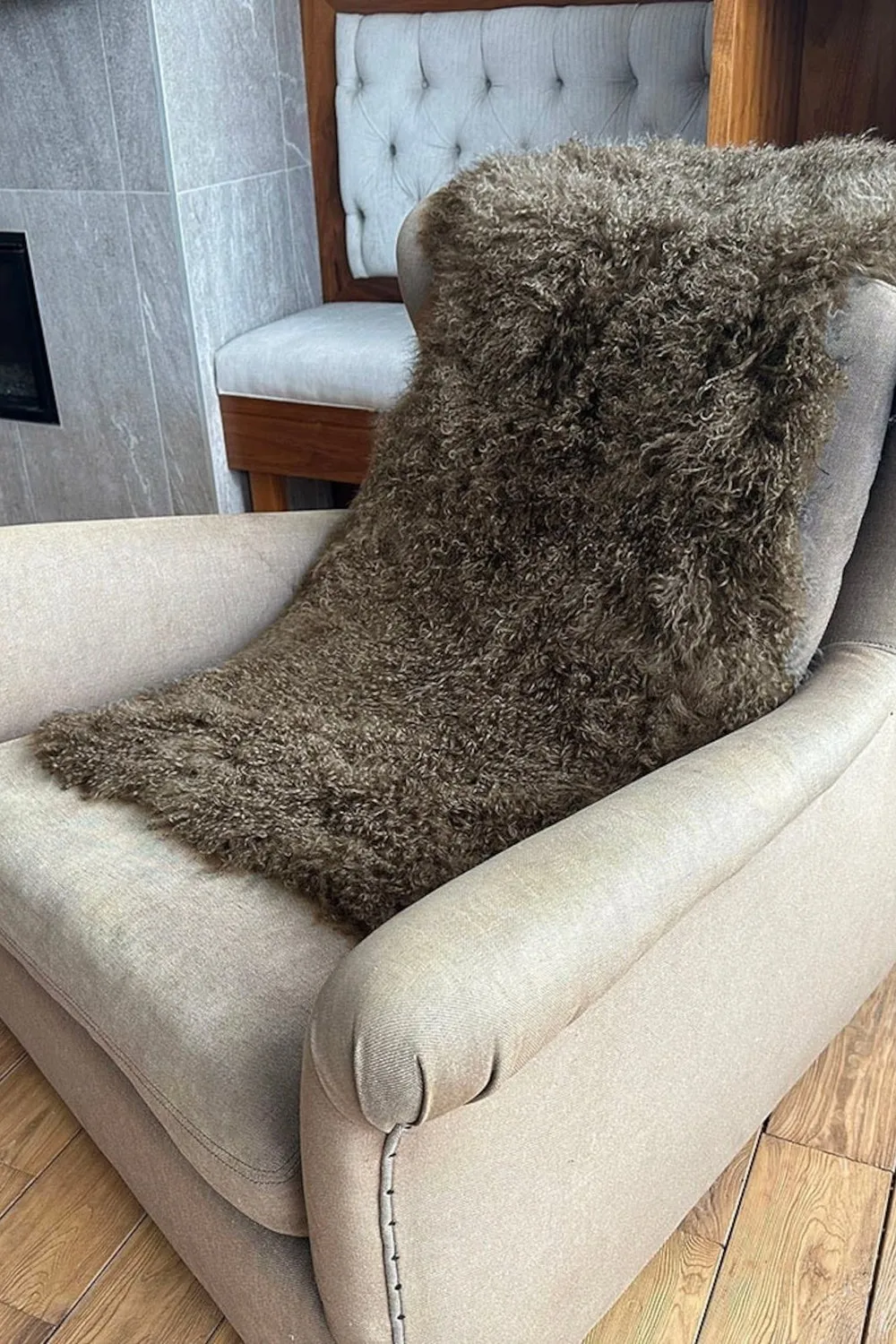
Sheepskin over the chair back — the seat that is always the warmest one.
Drape a sheepskin over the back of the armchair and that chair becomes the warmest seat in the house — the one everyone negotiates for. Sheepskin brings the deepest texture in the winter palette and a literal layer of insulation where shoulders rest. It also softens a worn chair instantly, covering the tired fabric at the top where chairs age first.
Styling tip: let the skin fall naturally, edges uneven. A sheepskin arranged symmetrically looks like upholstery; one thrown looks like comfort.
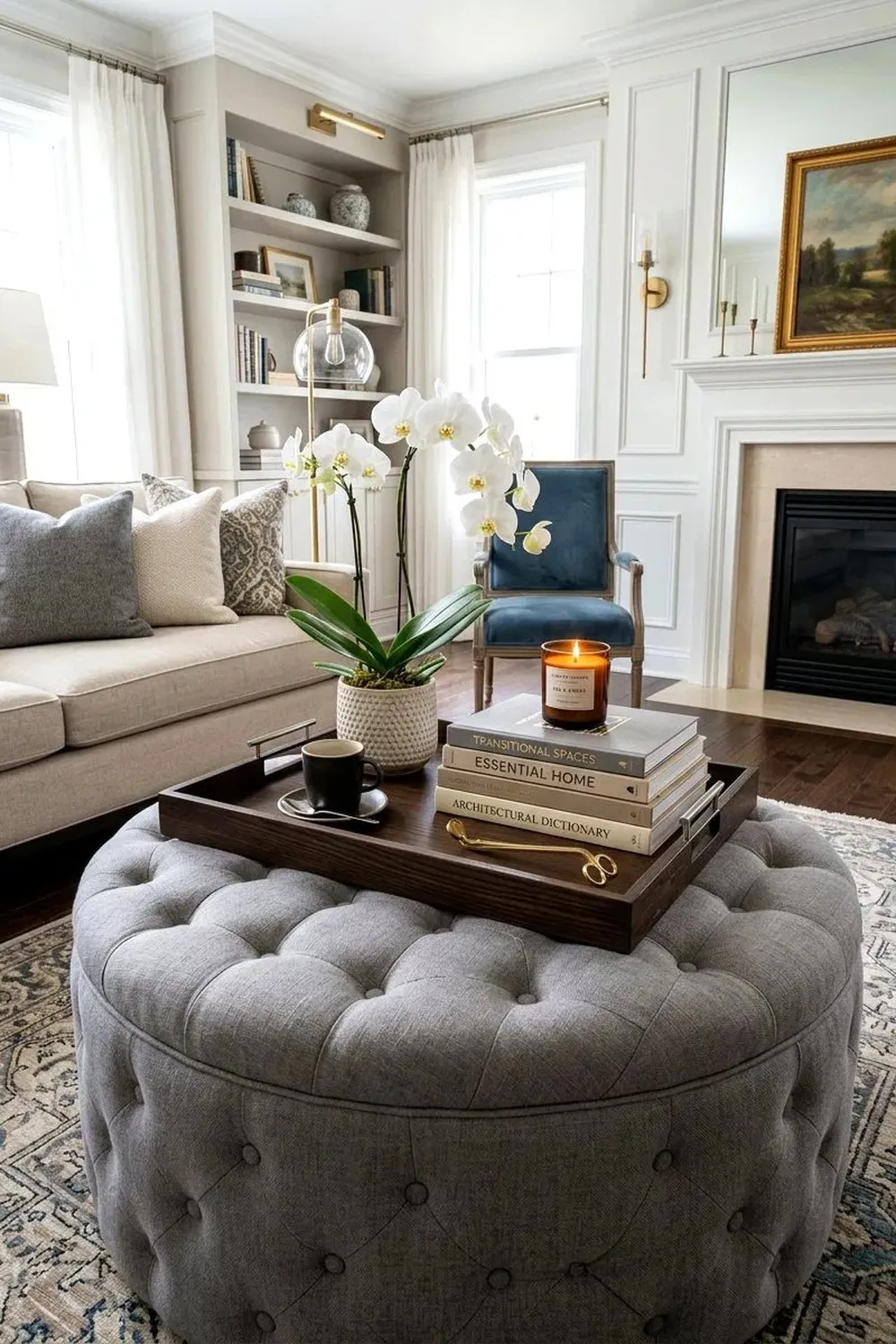
An ottoman with a tray: footrest by evening, table by candlelight.
An ottoman earns its floor space twice in winter: feet up on it all evening, and — with a wooden tray set on top — a steady table for a candle, a book and a mug exactly where the sofa sitters need them. The tray is the discipline: it keeps the ottoman's soft top useful, and it lifts off in one hand when the footrest is wanted back.
Styling tip: keep the tray small enough to leave a third of the ottoman free. A tray that covers the whole top has just built you a wobbly coffee table.
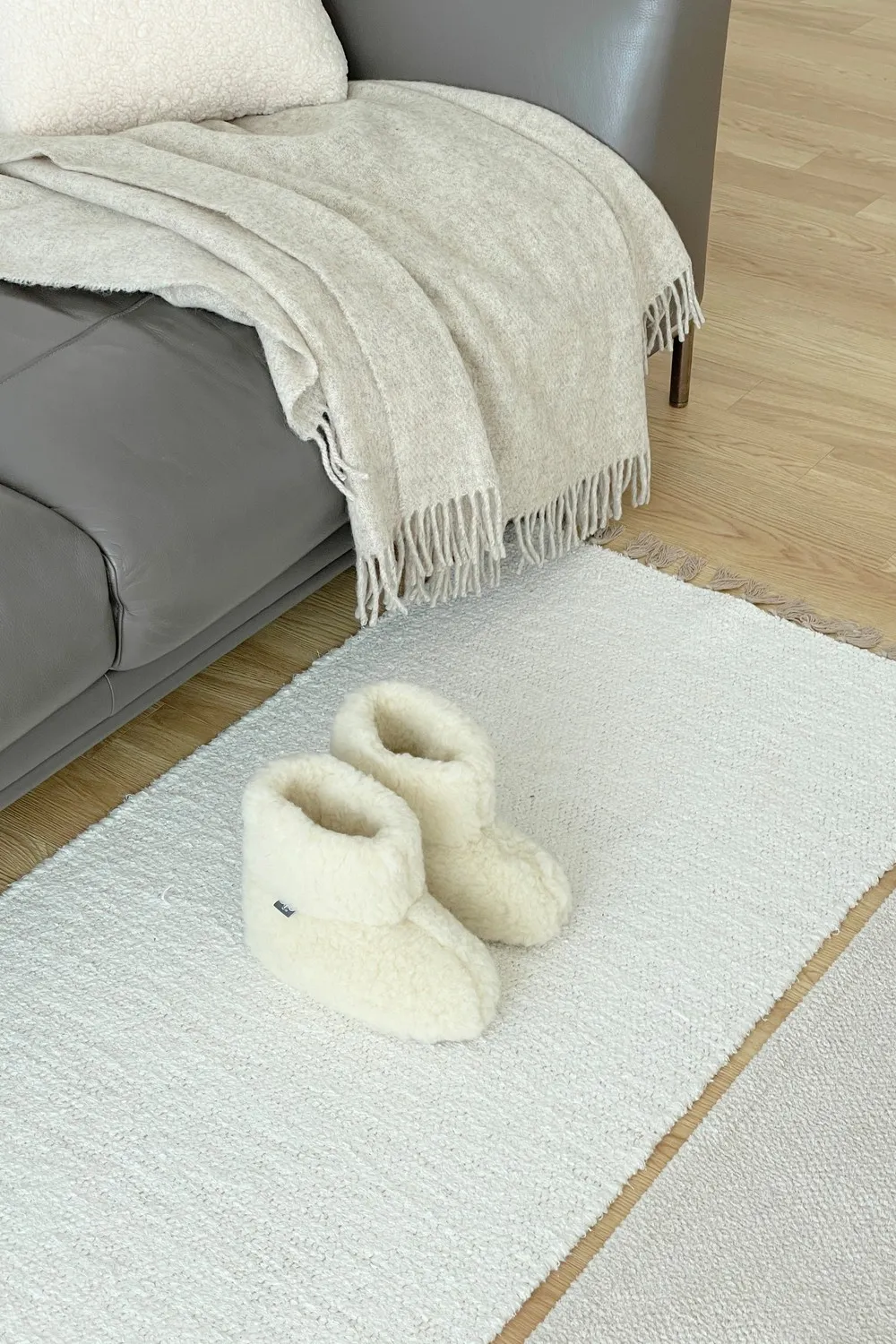
Slippers waiting by the sofa — the smallest invitation in the room.
The smallest idea in this article and maybe the most honest: a pair of wool slippers and a throw waiting at the end of the sofa. It is decor as hospitality — the room visibly ready for someone to be comfortable in it. Choose slippers in a winter texture, wool or sheepskin-lined, and the little vignette holds its own visually as well as practically.
Styling tip: keep one pair, neatly placed, in the palette's tones. A drift of family footwear is a hallway problem, not a styled corner.
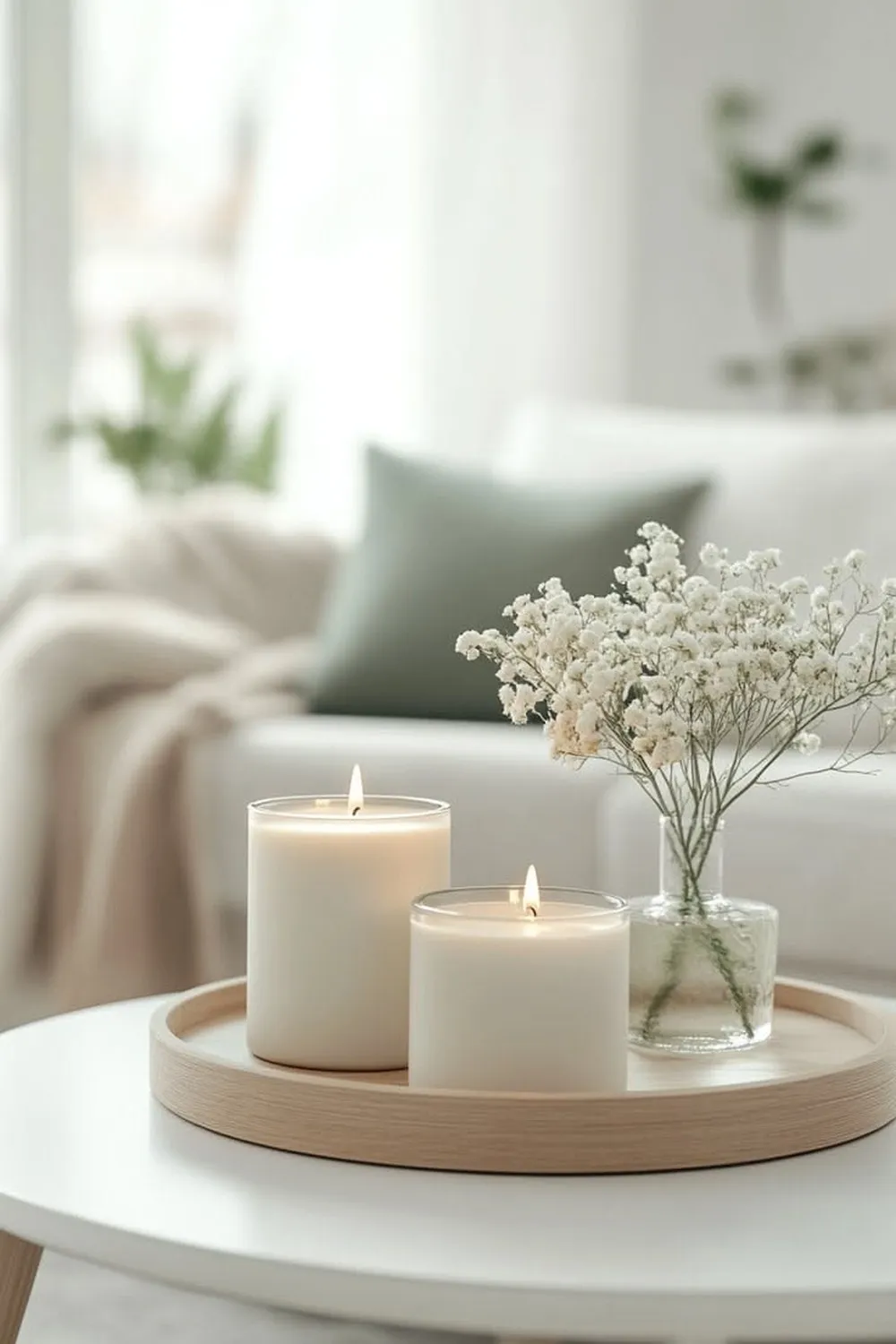
One wooden tray holding the small things — the coffee table, corralled into calm.
Put a wooden tray on the coffee table and gather the small things into it — a candle, a small vase, the remote, the coasters — and the table stops looking scattered and starts looking styled. The tray draws a boundary the eye reads as intention. Everything outside it stays clear, which is what makes a lived-in table read as calm instead of cluttered.
Styling tip: the tray should hold no more than three kinds of thing. A tray is a corral, not a storage box with better PR.

Books stacked, candle on top — the side table's whole decoration, in one pile.
A short stack of books with a small candle on top is the side table's complete winter styling: height, texture, and one warm light, built from things already in the room. Cloth-bound or plain-covered books in the palette's tones keep it calm; the stack also lifts the candle to a safer, more visible height than the table surface alone.
Styling tip: three to five books, largest at the bottom, spines turned the same way. It should look like reading, paused — not like a bookshop window.
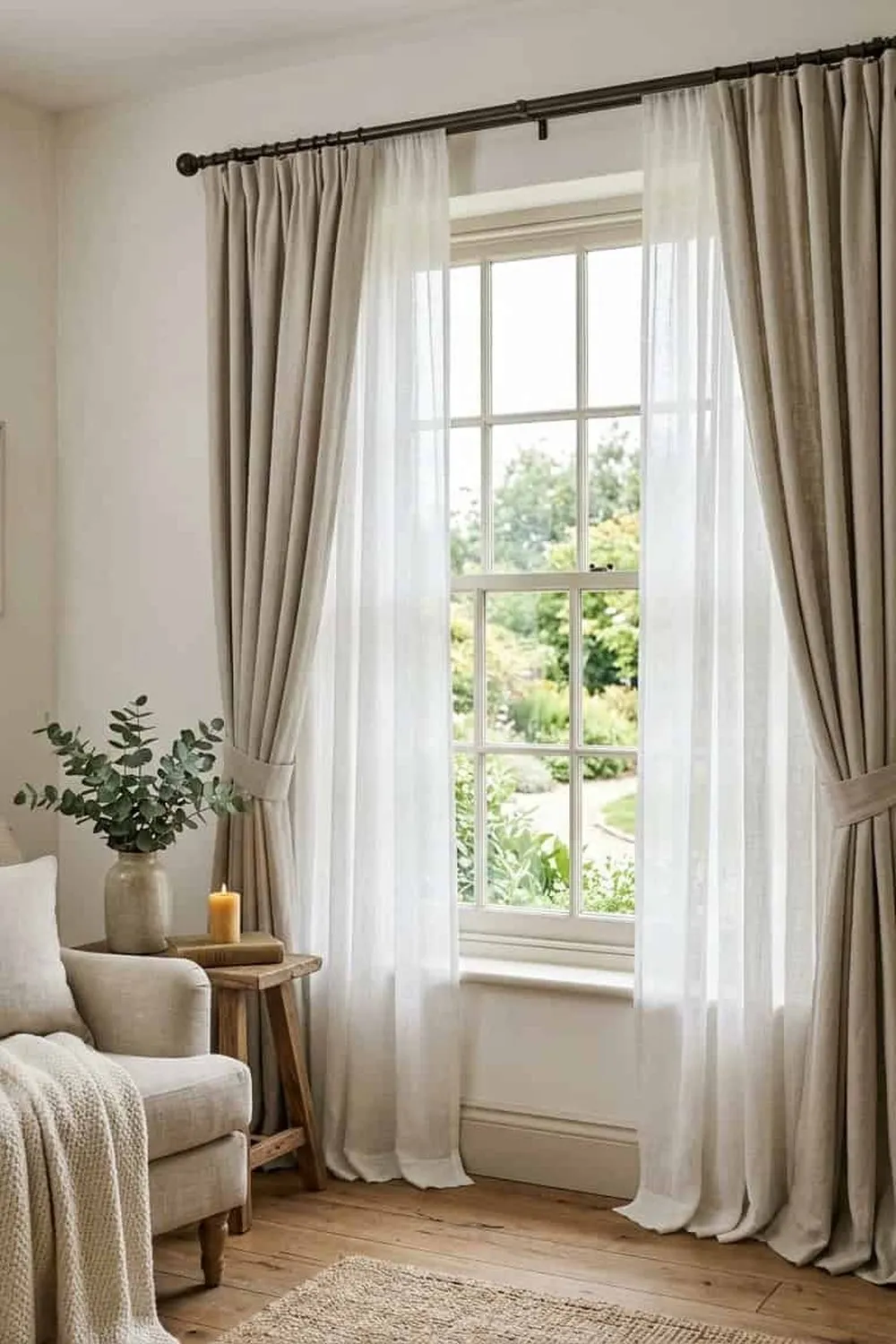
Sheer over linen at the window: daylight softened, cold glass hidden.
Layer sheer curtains over linen drapes and the window works in both directions: by day the sheer softens the hard winter light into something gentle, and by evening the linen drawn over it hides the cold black glass that makes rooms feel exposed after dark. The double layer also adds real insulation at the room's coldest surface — beauty doing practical work.
Styling tip: hang both layers on one double rod, linen outside, sheer inside. The sheer should be the layer you see from the sofa.
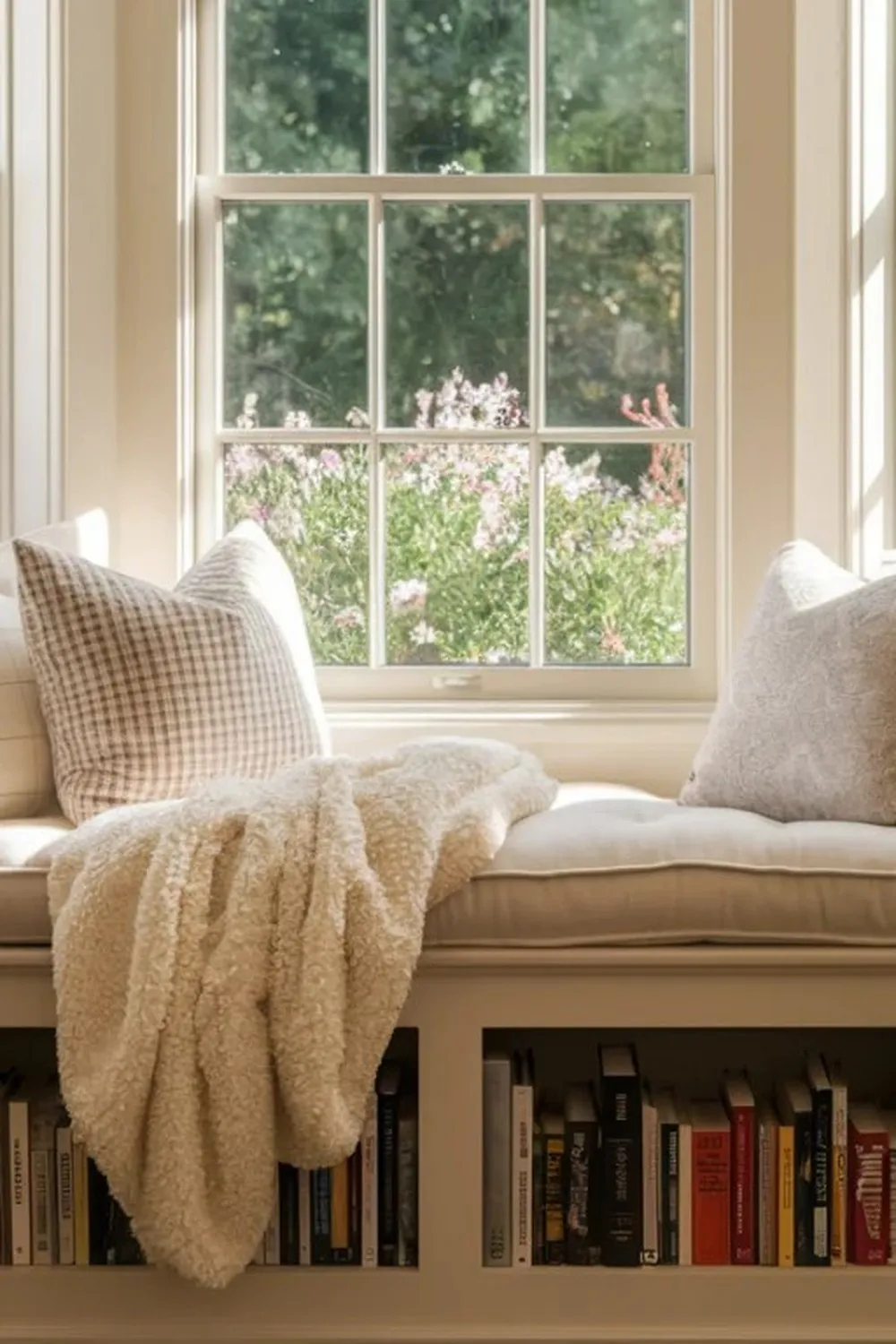
Cushions and a throw on the window seat — the coldest seat, made the coziest.
A window seat in winter is the coldest seat in the room — unless it is the most layered one. Cushions along its back, a folded throw at one end, and it becomes the seat for morning coffee and watching weather: close to the light, wrapped against the glass. Layer it more generously than the sofa; it has the draught to fight.
Styling tip: put the thickest cushion against the window side, as insulation you sit against. Comfort at a window seat is mostly about the cold at your back.
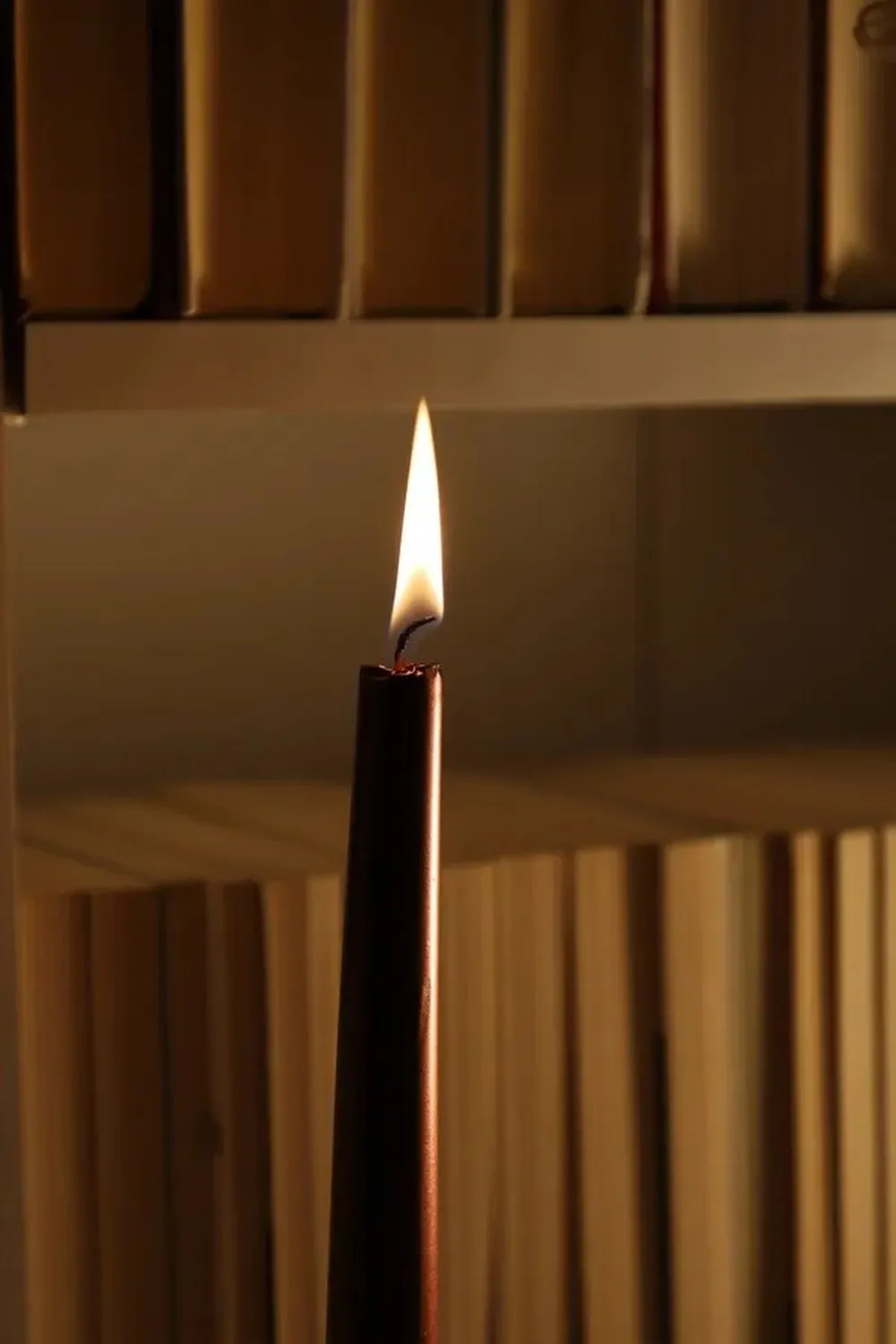
One candle among the books — the shelf's quietest glow.
Set one candle — real in a glass holder, set safely, or a good flameless one — among the books on a shelf, and the bookcase joins the room's low lighting scheme. A single point of glow inside a shelf of spines gives the wall depth after dark, the way one lit window gives a street life. Restraint is everything here: one candle, one shelf.
Styling tip: place it a third of the way along a middle shelf, not dead center. Asymmetry is what makes it look found rather than installed.
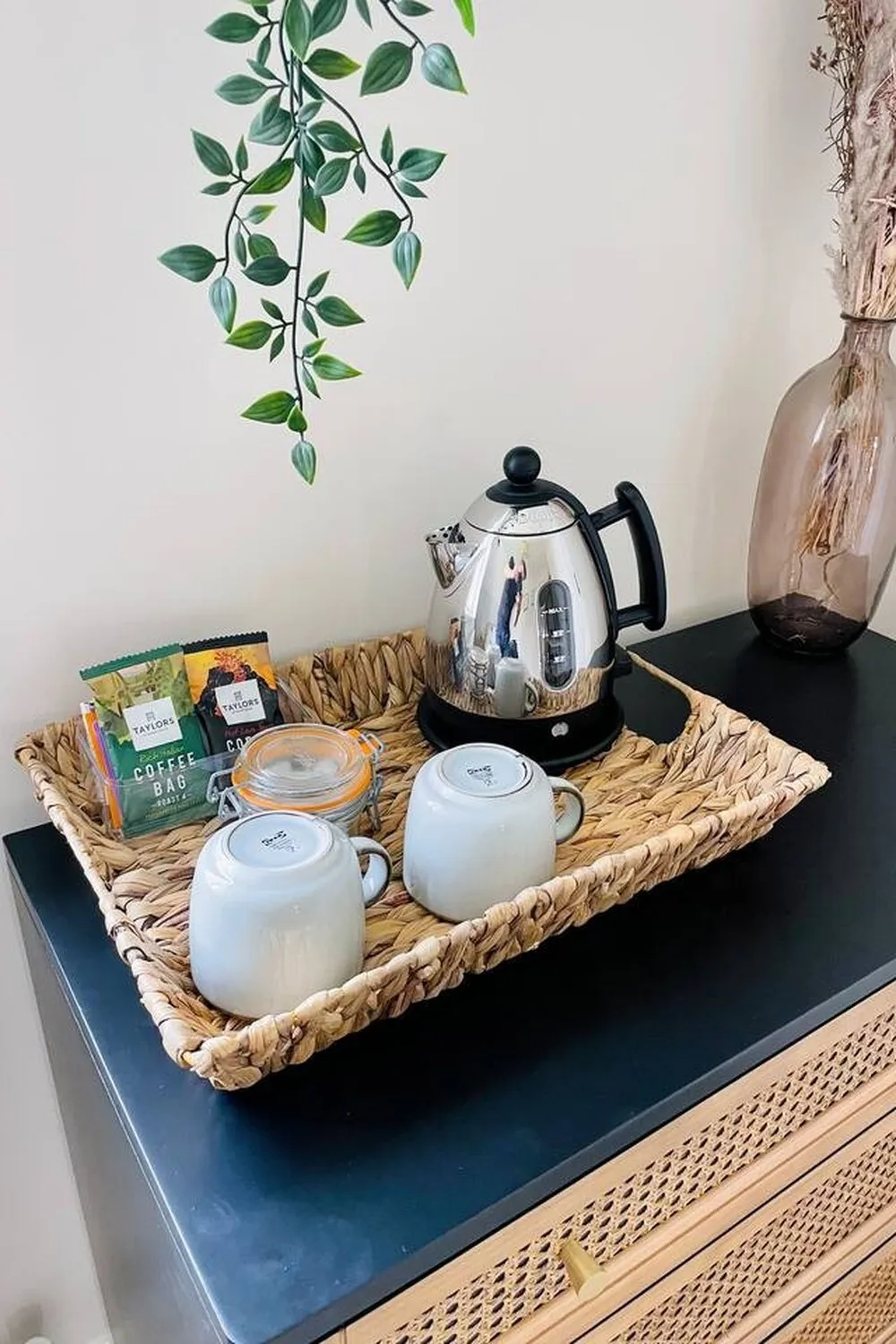
Mugs on the sideboard: hot drinks kept in the room, not fetched from the kitchen.
Set up a small mug station on the sideboard — mugs, a small kettle or a flask, tea and cocoa within reach — and winter evenings stop breaking for kitchen trips. As decor it is a still life with a purpose: ceramics in the palette's tones, arranged on the room's most underused surface. Guests read it instantly, and help themselves, which is the warmest thing a room can offer.
Styling tip: corral the station on a tray or board, like the coffee table's. A station with edges looks styled; one spread loose looks like washing up.
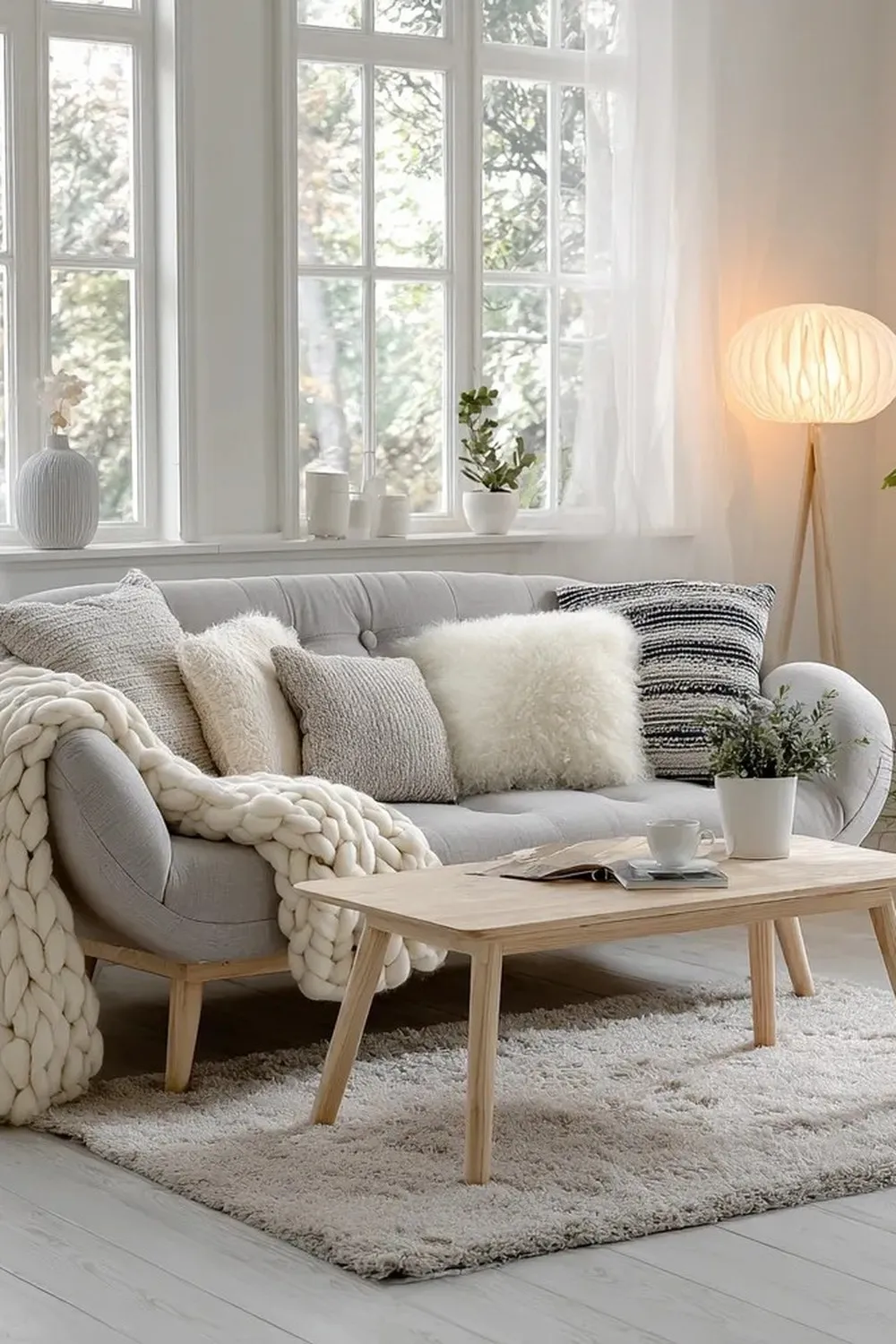
Cream, wood and soft gray across the whole room — one palette, everywhere, nothing shouting.
Step back and give the whole room one warm palette — cream, oat, soft gray, natural wood, and the single deep accent you chose for the cushions. When every layer in this article shares those tones, the room reads as one calm decision instead of thirty small ones, and the eye rests everywhere it lands. Palette discipline is the difference between a cozy room and a merely full one.
Styling tip: test any new purchase against the palette at the door, literally. If it does not sit with the cream, wood and gray already in the room, it does not come in.
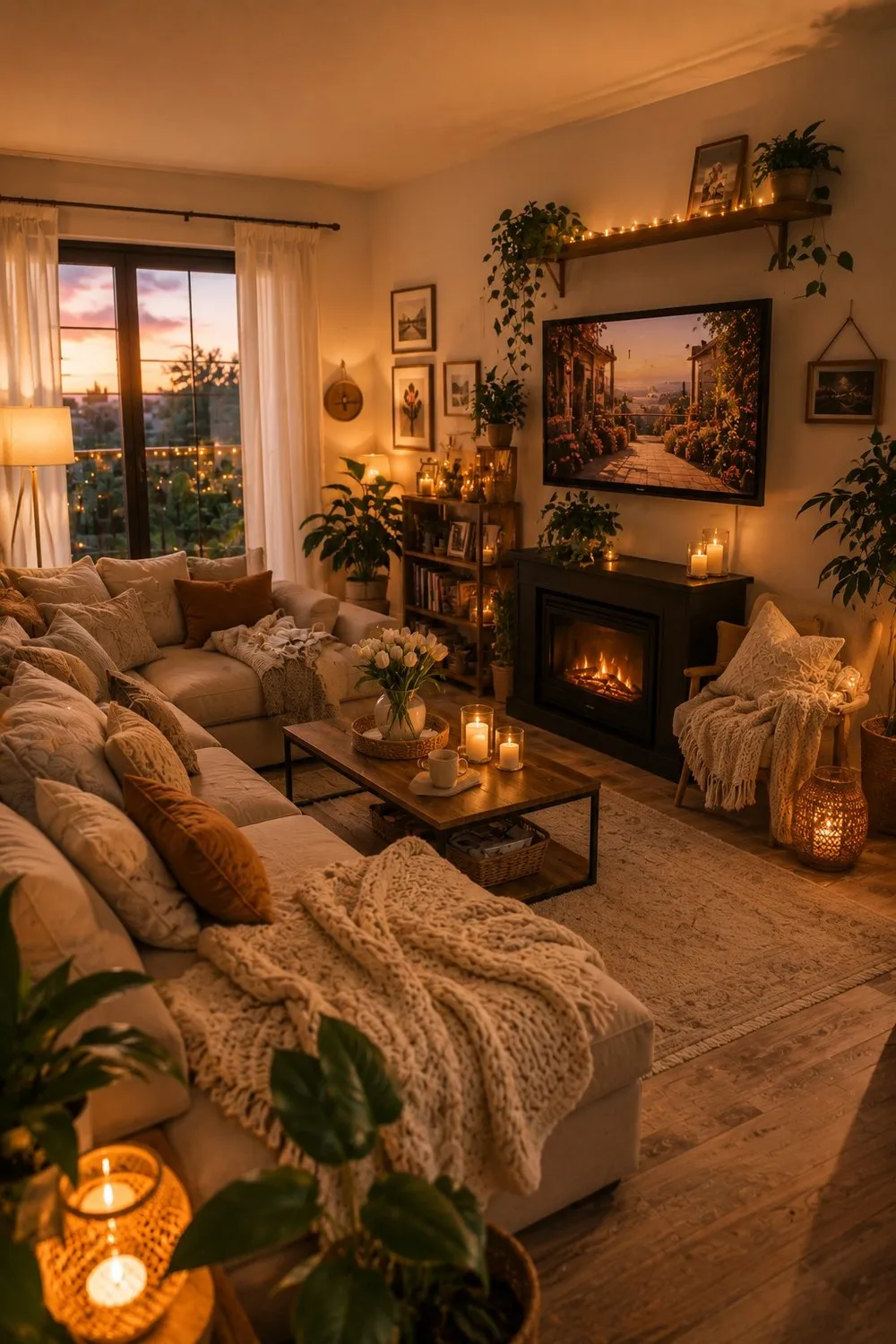
Throws folded, candles lit, lamps low — the room reset for the evening in five minutes.
End the list with the ritual that keeps it all working: the five-minute evening reset. Throws folded back over arms, cushions plumped, candles lit, lamps on and overheads off — the room you styled in daylight becomes the room you sink into at dusk. A cozy winter living room is not a look you finish; it is a small daily act of putting the warmth back on.
Styling tip: do the reset before dinner, not after. The room should be glowing and ready when you come back to it, not waiting for you to build it.
Layer throws and cushions in knit, wool and velvet, light candles at low heights, and add natural winter texture — eucalyptus, pinecones, bare branches. Warmth comes from texture and low light, not from festive color.
Cream, oat, soft gray and natural wood, with one deep warm accent such as rust or deep gold in the cushions. Pale warm tones hold the light; the dark accent gives the room depth.
Two or three throws (one draped, one folded, one in the basket) and five to seven cushions on a three-seat sofa. Beyond that the sofa stops being a seat and starts being a display.
Yes, kept warm-white and placed on a shelf or along a mantel rather than around a window — they read as winter light, not festive light, when they are low, warm and sparse.
One chunky knit throw, a basket of blankets by the sofa, and a cluster of pillar candles on the coffee table. Three moves, all under the cost of one new cushion set, and the room changes the same evening.
A cozy winter living room is not decorated, it is layered: throws within reach, light kept low, wood and wool under hand, and one calm palette holding it all together. Start with the sofa, add the light, dress the floor — and let the room do the rest. Save your favorite cozy winter living room decor ideas from this list, and follow TheStylingHub on Pinterest for fresh winter room ideas all season long. Next, take a look at new year centerpiece ideas for more ideas in the same spirit.
Seasonal
Nov 21, 2026
32 New year balloon decor ideas — arches, garlands, giant number balloons and a…

Seasonal
Nov 19, 2026
32 January decor ideas for 2027 — a calm, light reset after Christmas: cleared…
Seasonal
Nov 20, 2026
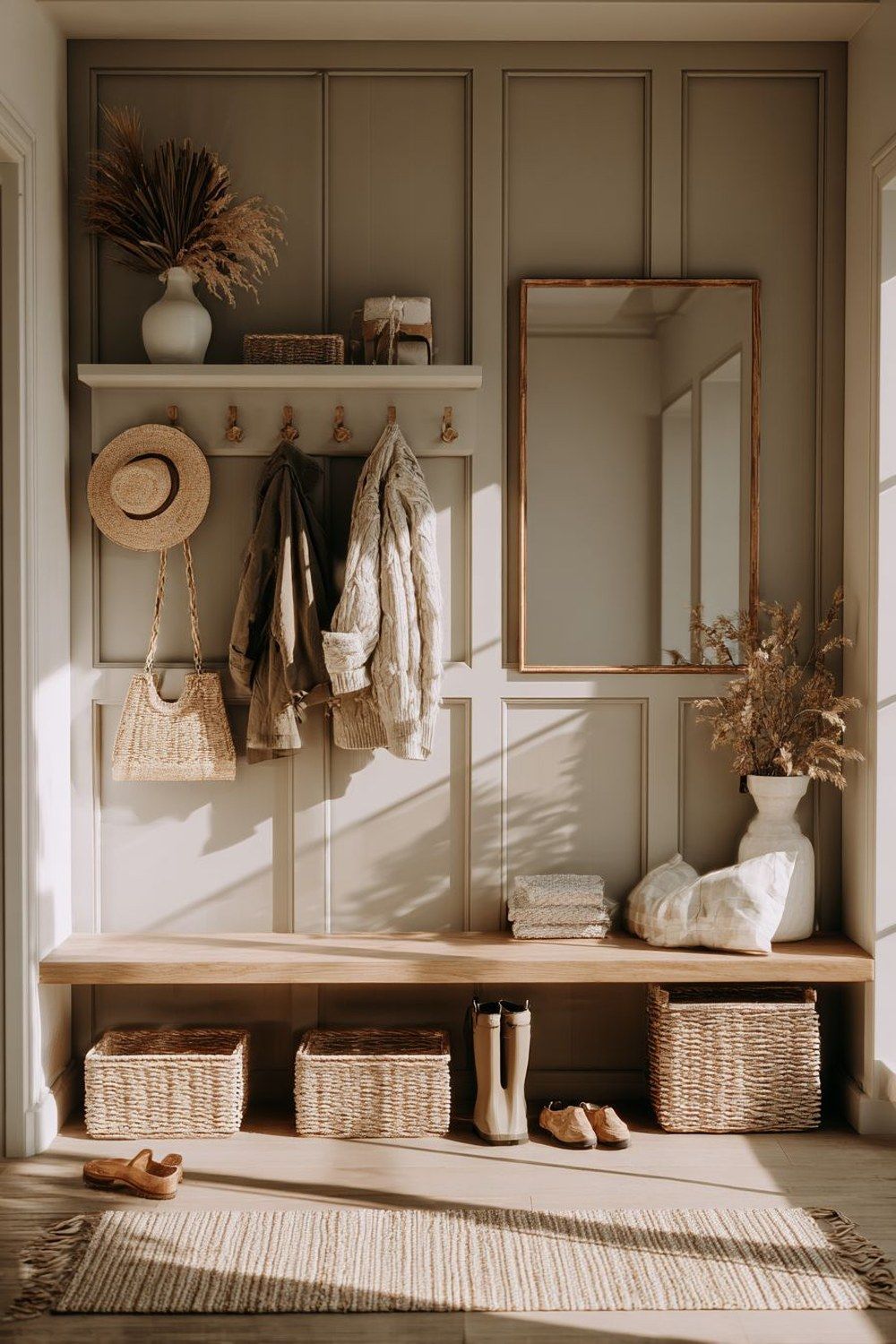
30 Winter entryway decor ideas — lanterns, plaid, wool, bare branches and warm light…