
Seasonal
32 New Year Balloon Decor Ideas: Arches, Number Balloons and a Midnight Drop
Nov 21, 2026
32 New year balloon decor ideas — arches, garlands, giant number balloons and a…
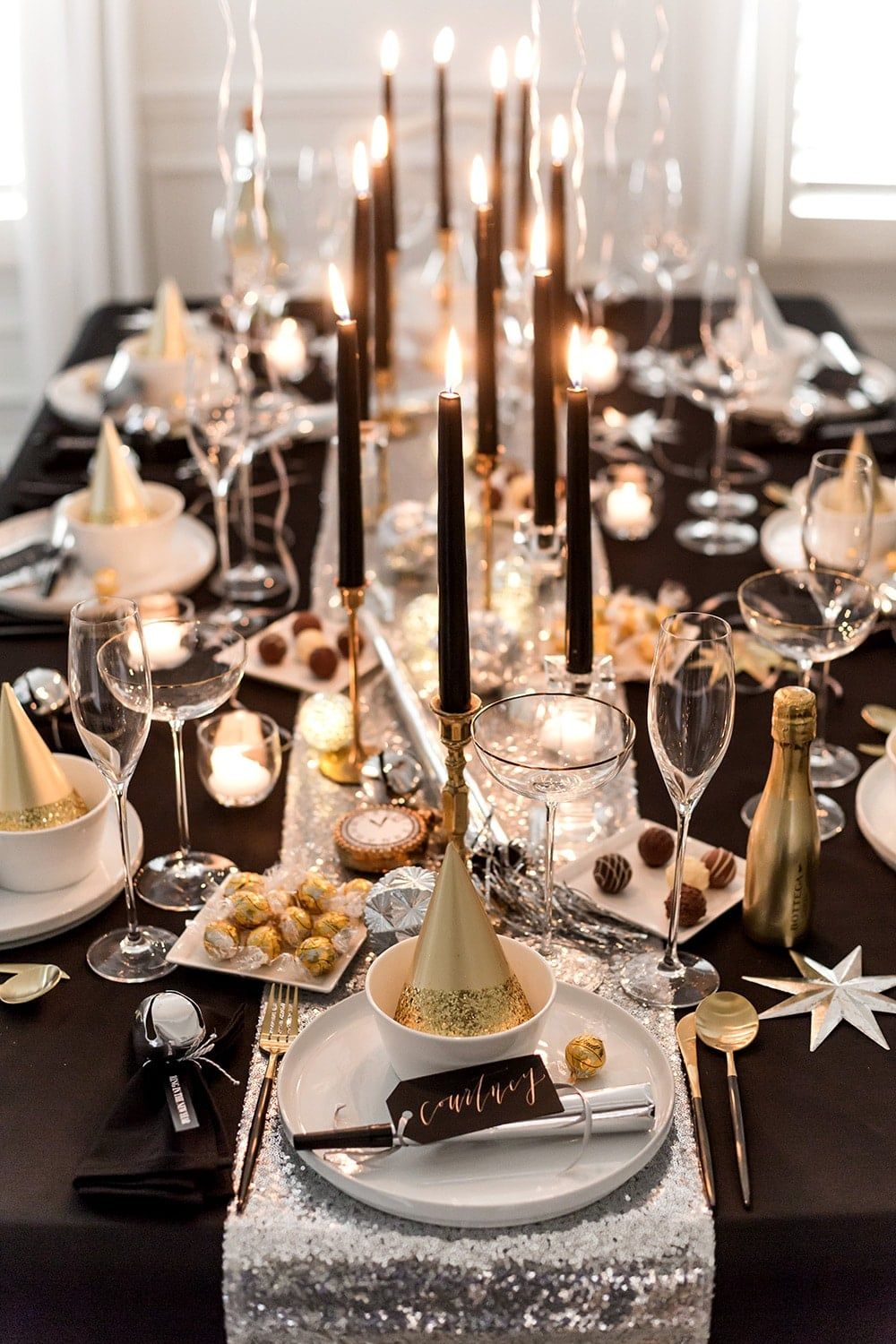
The centerpiece is the table's one moment: the thing every eye finds first and every photograph frames. These 34 new year centerpiece ideas keep it to the center — candle clusters, gold vases, clock faces, mini balloons and glittering trays — in gold, black, white and silver, built to look just as good at midnight as at dinner.
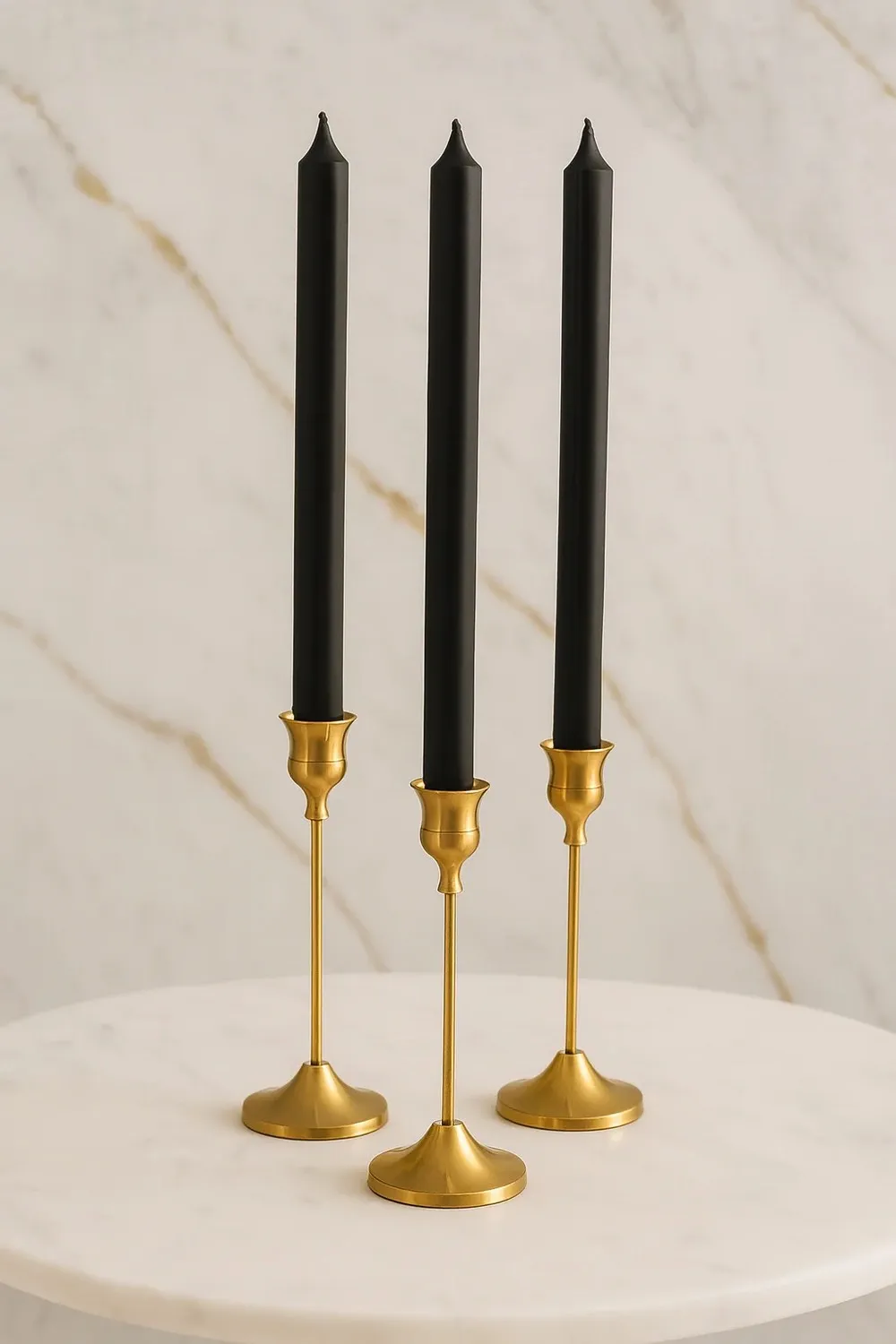
Black tapers in gold holders — the palette's sharpest pairing, standing at the center.
Start the list with the palette at its sharpest: black taper candles standing in gold holders. The black gives the centerpiece its drama and its height; the gold holders catch the flame and throw it back. Group them in a tight cluster at the very center of the table, odd numbers only, and the whole table reads glamorous before a single plate is laid.
Styling tip: vary the taper heights by trimming, not by holder size. Same holders, different candle heights — the cluster looks grown, not bought.
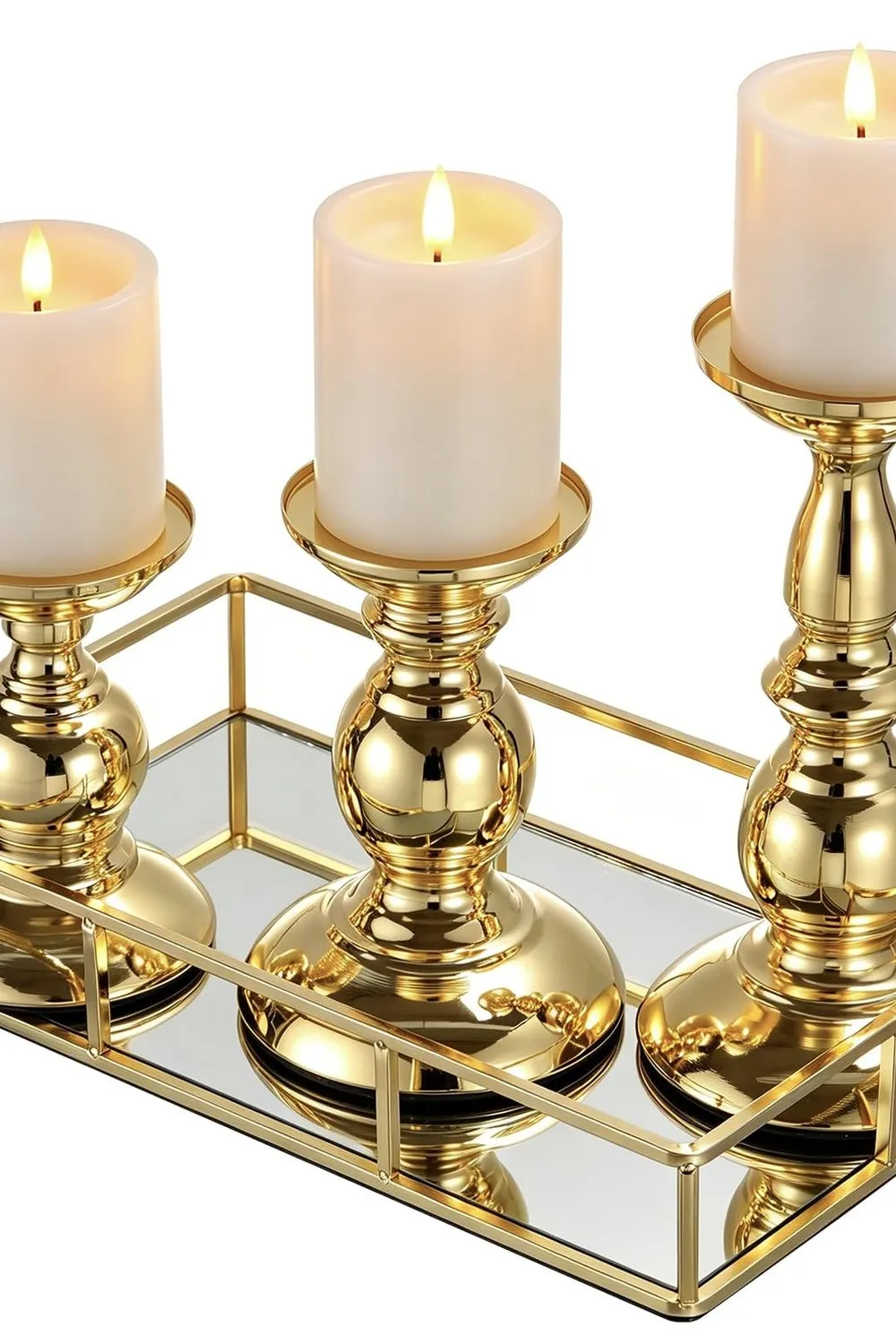
Three pillars, three heights, one gold tray — candlelight with architecture.
Set white pillar candles at three heights on one gold tray and the centerpiece builds itself: the tray draws the boundary, the pillars make a small skyline, and the flames sit at three levels so the light moves. Pillars are the practical choice for a long night — they burn for hours without dripping wax across the tablecloth.
Styling tip: keep the pillars white or ivory whatever the rest of the table does. White candle wax is the palette's breathing space between the gold and the black.
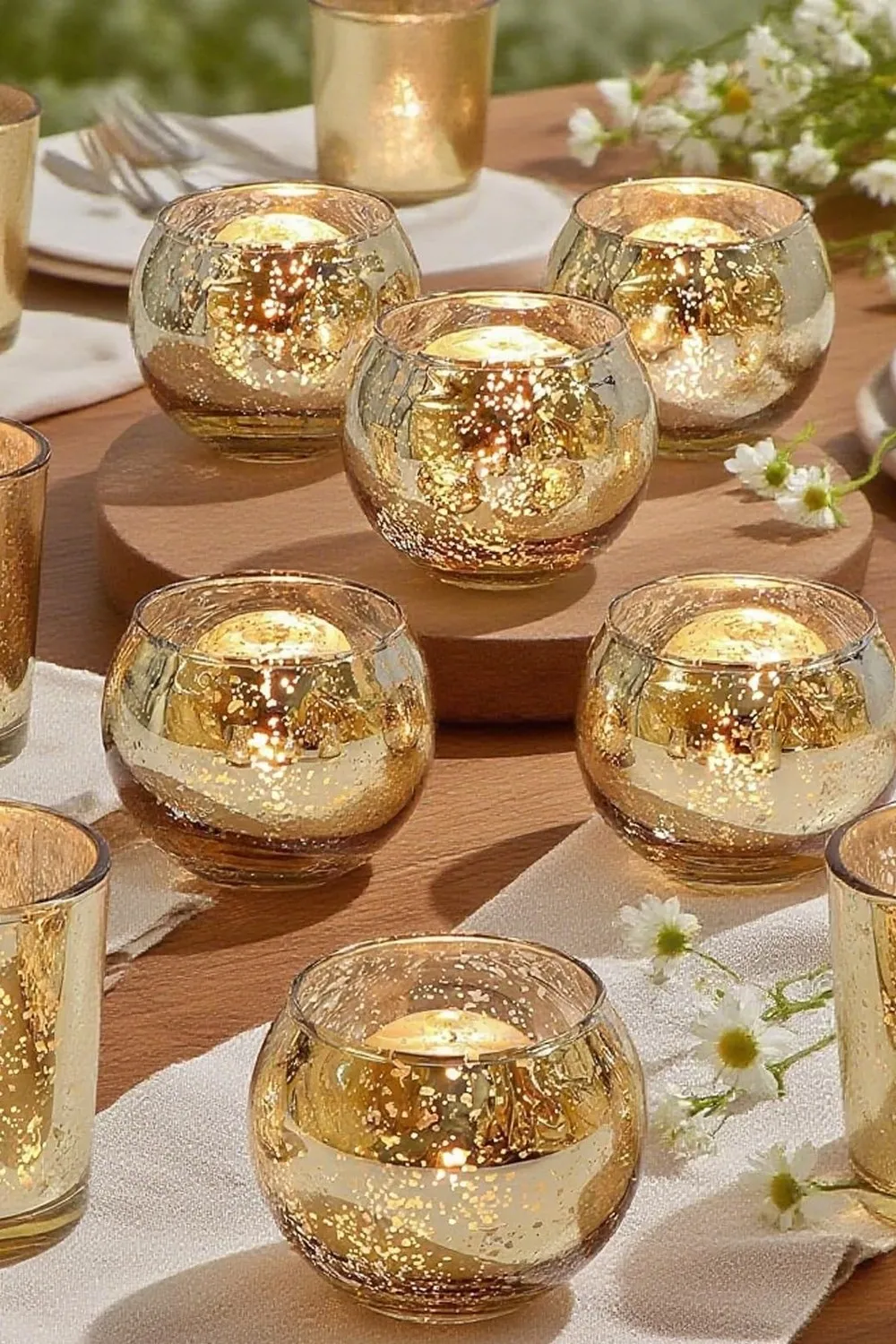
A row of mercury glass, each holding one small flame — light multiplied, not enlarged.
Line tea lights in mercury glass holders down the center of the table and you get light multiplied instead of enlarged: a dozen small flames, each softened by the mottled silver glass, making a river of glow guests can talk across. Mercury glass is made for New Year — it sparkles unlit and glows lit, and a row of it costs less than one statement vase.
Styling tip: space the holders a hand's width apart, no closer. A tight row looks like a runway; a spaced row looks like candlelight.
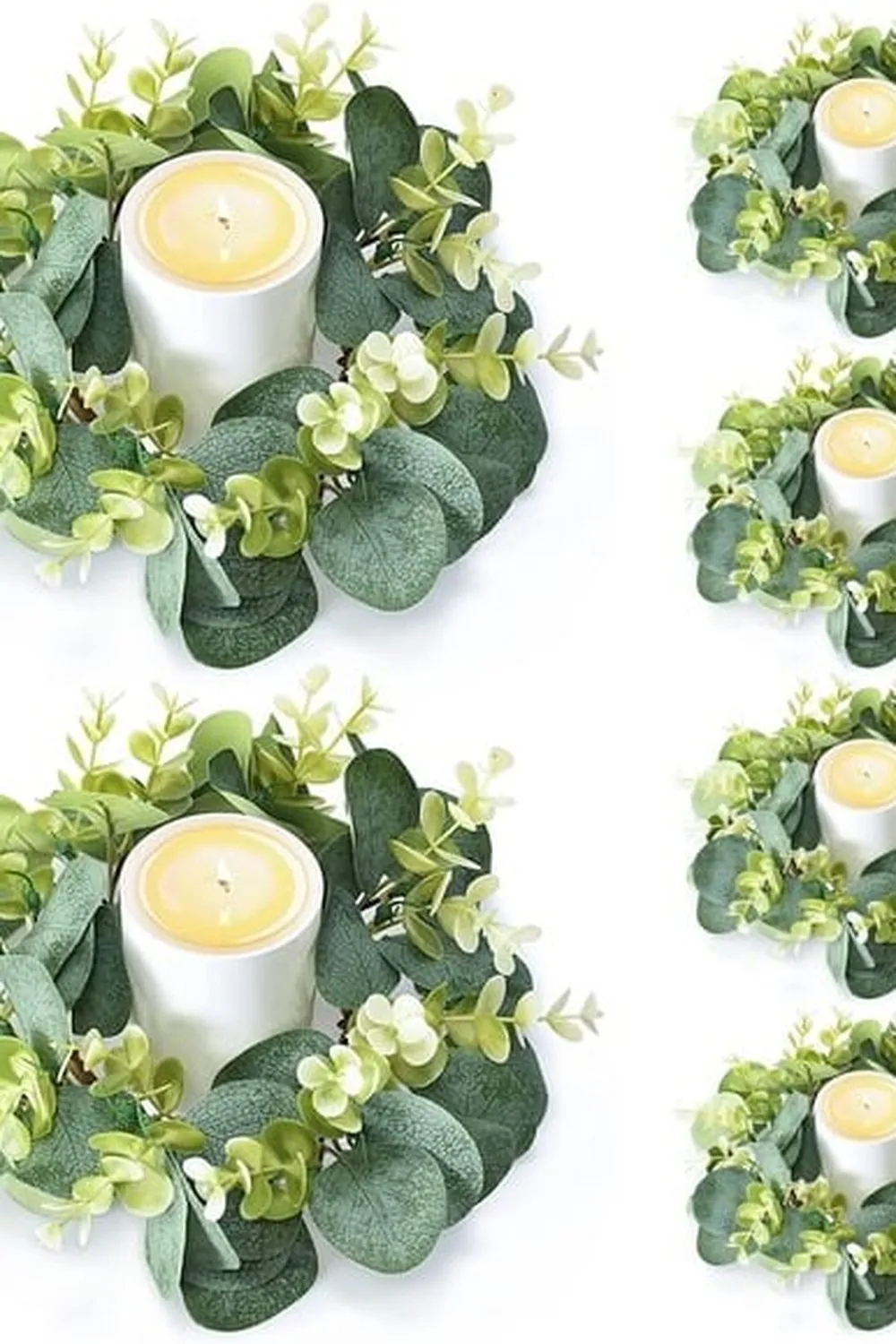
Candles ringed with eucalyptus: green softening the gold, scent doing the rest.
Ring a cluster of candles with loose eucalyptus sprigs and the hardest palette of the year — gold, black, silver — gets one soft, living note. The silvery green sits naturally beside mercury glass and gold, and the scent does quiet work all evening. Keep the sprigs flat on the table around the holders, never near the flames.
Styling tip: use fresh eucalyptus the day of the party if you can; dried keeps its shape but loses the scent, and the scent is half this idea.
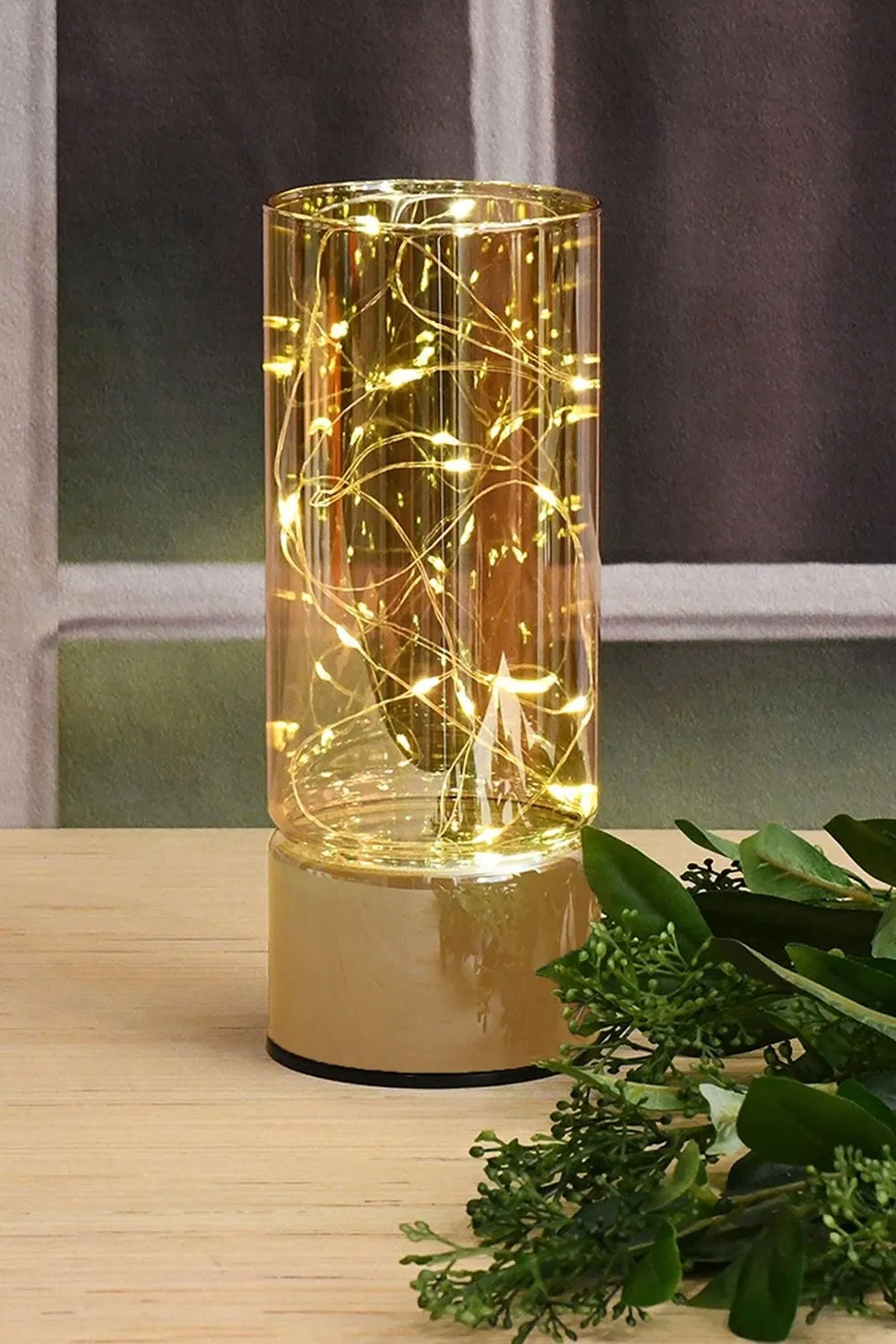
Fairy lights inside a hurricane: the centerpiece that is a lamp.
Fill one tall glass hurricane with a coil of warm fairy lights and the centerpiece becomes a lamp: steady glow, no flame to guard, and light that lasts past midnight without a single relight. The glass magnifies the tiny bulbs into something that reads as treasure — especially once the room lights go low for the countdown.
Styling tip: choose warm-white lights, never cool white. Cool light turns gold decor gray; warm light makes the whole center glow like candlelight.
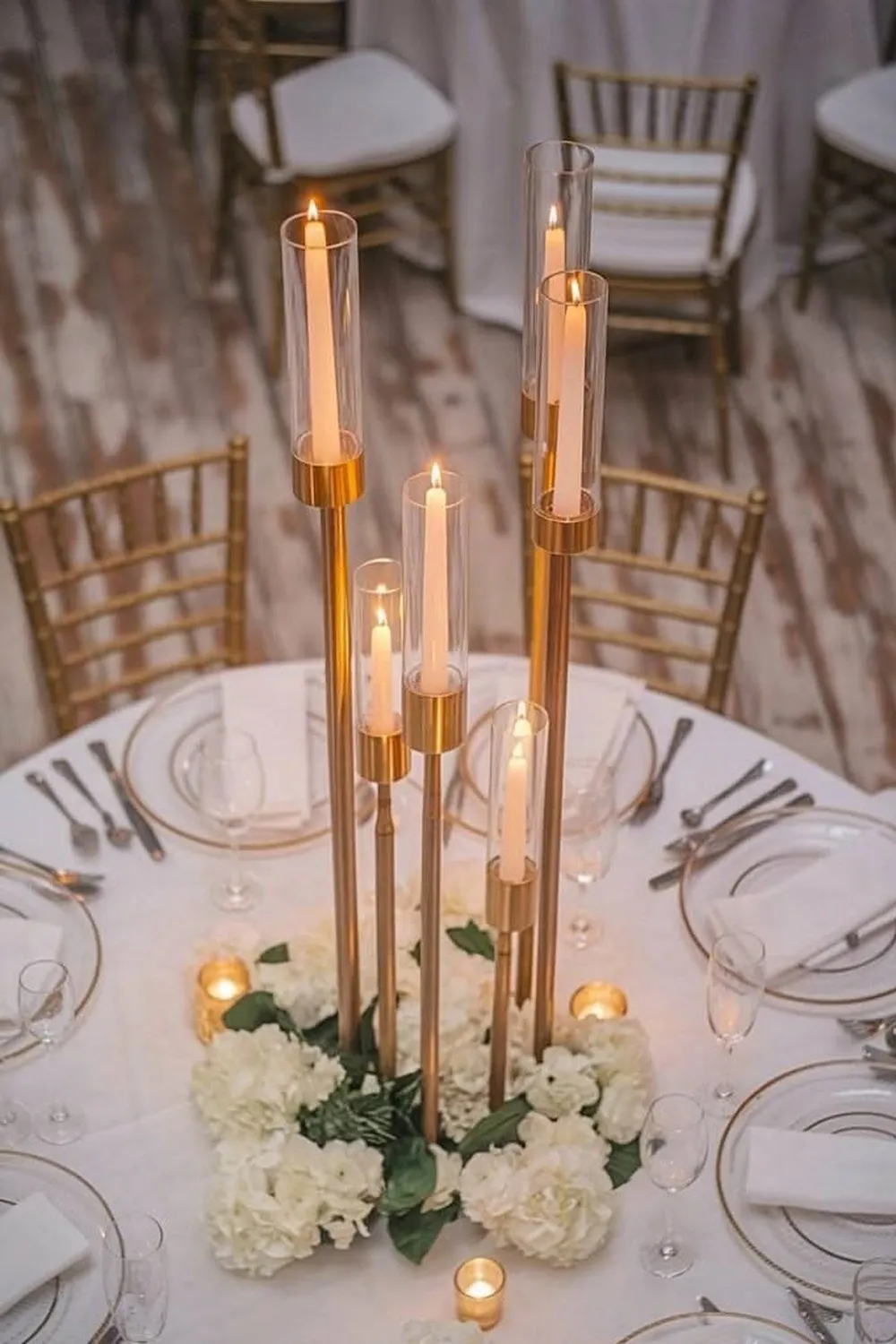
Gold candlesticks, tall and plain — height at the center without any clutter.
A pair or trio of tall gold candlesticks is the classic centerpiece for a reason: height at the center, elegance without clutter, and a silhouette that reads across a whole room. Let one candle burn early so a little wax runs — that lived-in drip is what separates a styled table from a showroom one. Keep everything else on the table low so the candlesticks own the skyline.
Styling tip: if the candlesticks are tall, keep them narrow. Height impresses; width blocks faces, and New Year is a talking holiday.
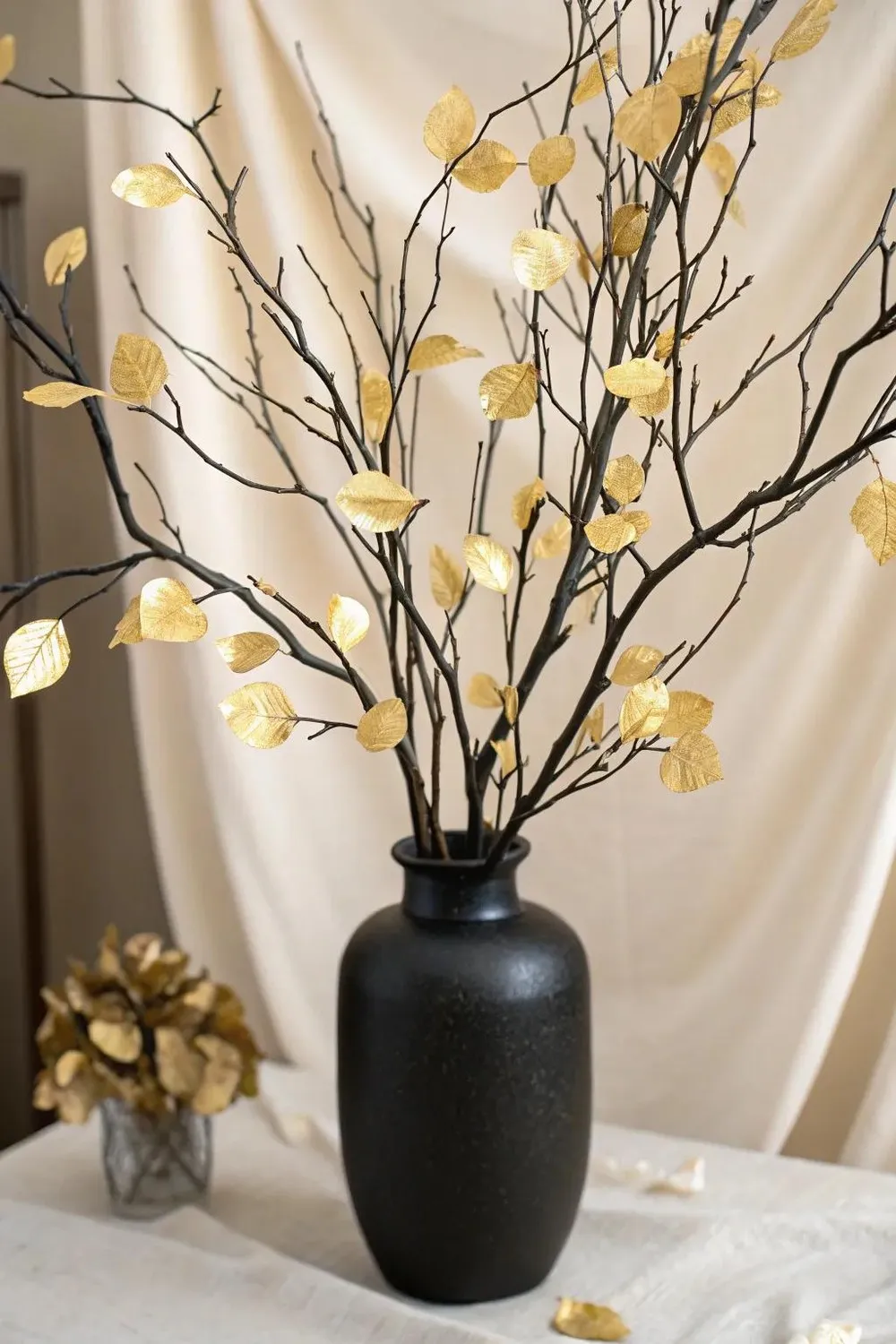
Gold leaves on black branches in a black vase — height, shine and shadow in one stem.
Stand black branches dressed with gold leaves in a matte black vase, and the centerpiece becomes sculpture: dark twigs, shining leaves, long shadows thrown in the candlelight. Branches like these are sold ready-made for winter decor, and they give a long table the height that flowers give a wedding, without a single bloom.
Styling tip: keep the vase matte and plain. The leaves are the shine; a glossy vase would argue with them.
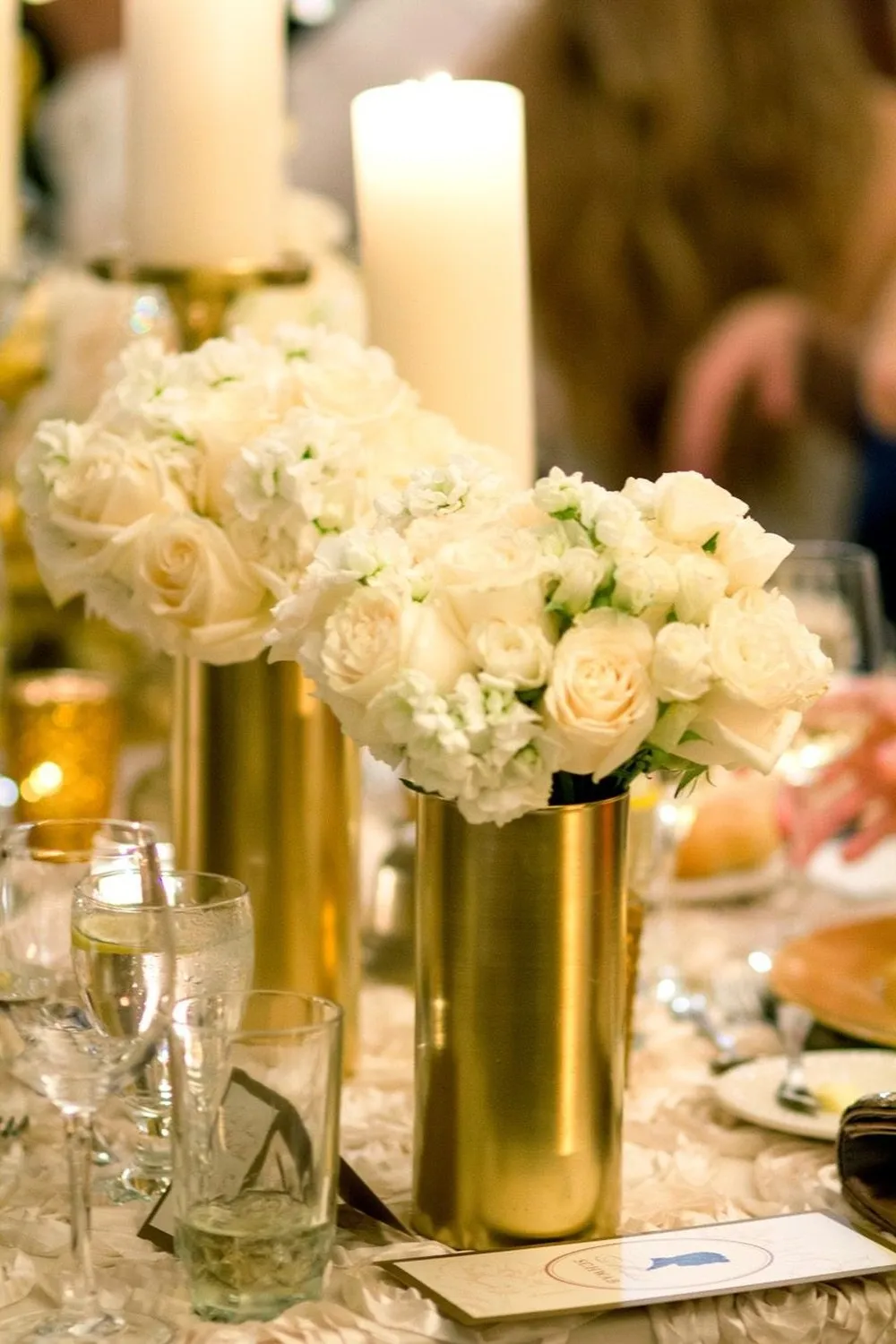
White roses, gold vase: the softest centerpiece in the whole list.
For the softest center in the list, fill a gold vase with white roses. The flowers bring the one organic, romantic note to a palette of metal and glass, and white — not red, not blush — keeps them inside the New Year scheme. A low, tight bunch reads more luxurious than a tall loose one, and keeps sightlines open across the table.
Styling tip: strip every leaf below the waterline and keep the bunch all one color. A single stray pink rose turns the arrangement from palette to accident.
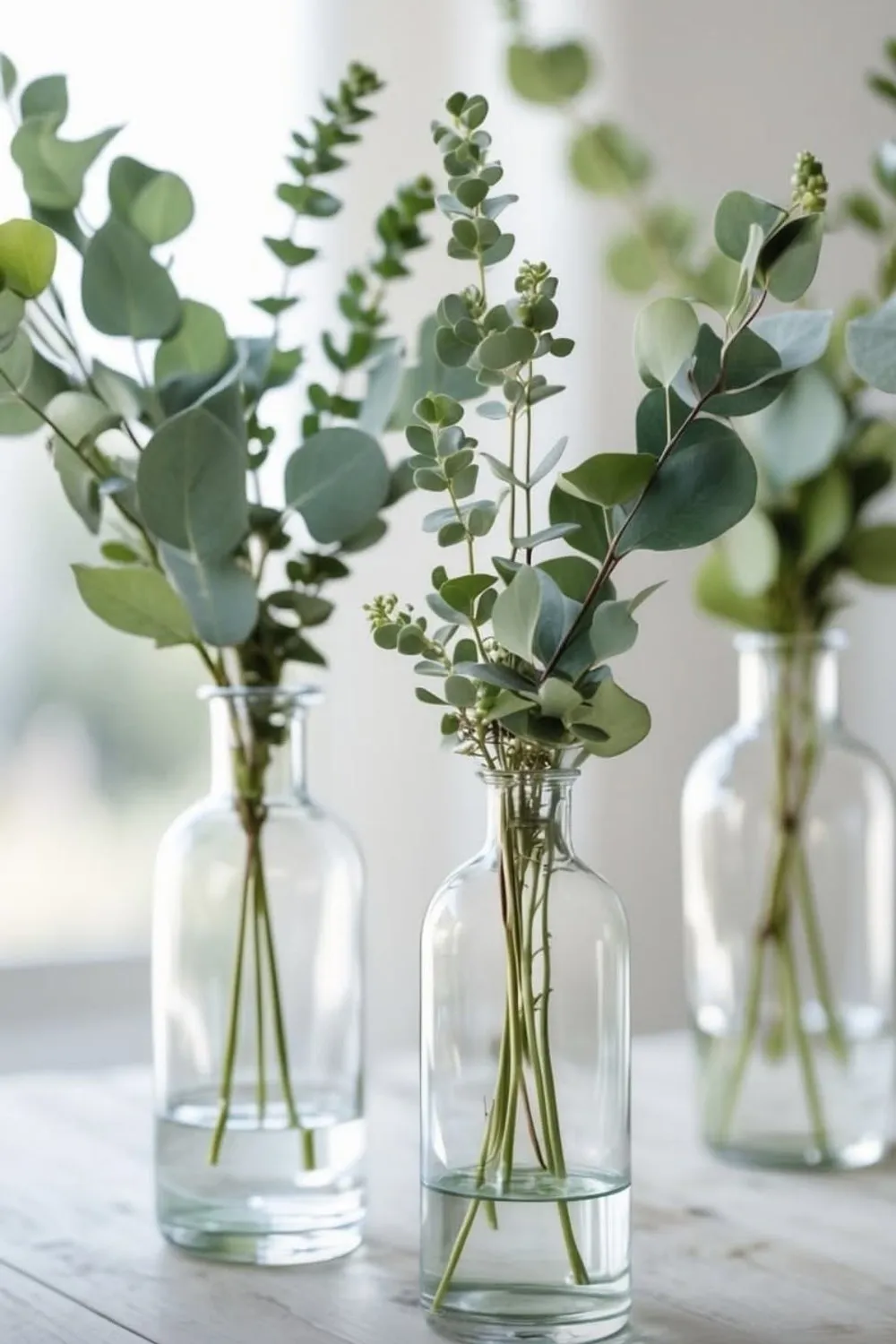
Bud vases in a line, one stem each — a centerpiece that walks down the table.
Instead of one big arrangement, walk a cluster of small bud vases down the center of the table, one stem in each — a white rose here, a gold-sprayed twig there, a sprig of eucalyptus between. The centerpiece becomes a rhythm instead of a lump, guests see flowers at their own seat, and a long table gets covered for the price of one bouquet.
Styling tip: mix the vase heights and finishes — glass, gold, black — but keep every stem in the palette. The variety belongs in the vessels, not the colors.
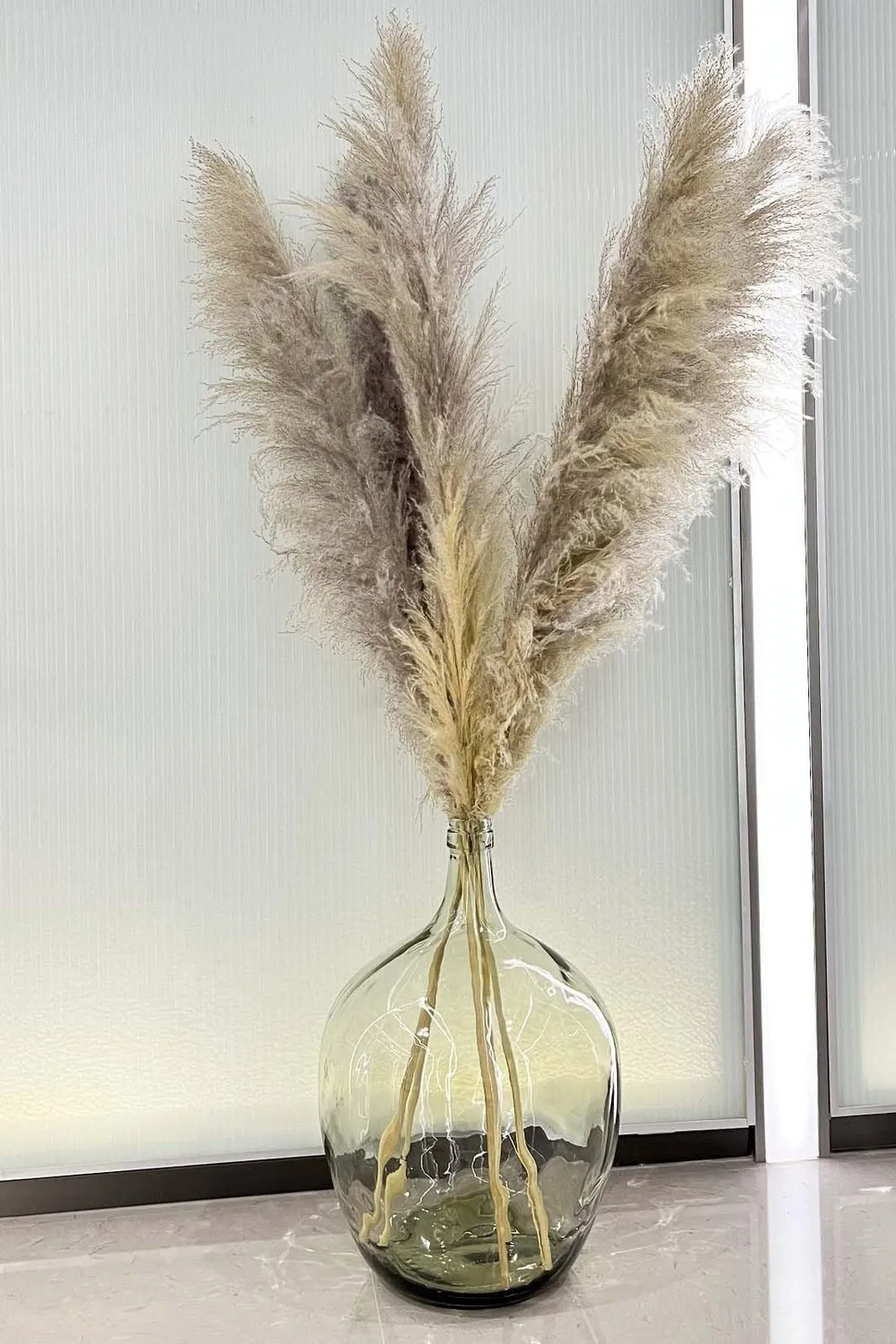
Pampas in tall glass: softness rising above the plates.
Stand pampas plumes in a tall glass vase for the centerpiece with the most movement: the feathery heads catch every draught and every light change, glowing cream against the dark room. Pampas is the texture the metallic palette needs — soft where everything else is hard, matte where everything else shines.
Styling tip: shake the plumes gently outdoors before arranging them so loose fibers fall outside, not over the food. Never spray dried pampas with hairspray or any aerosol — dried grasses are flammable, so keep the vase well away from candle flames.
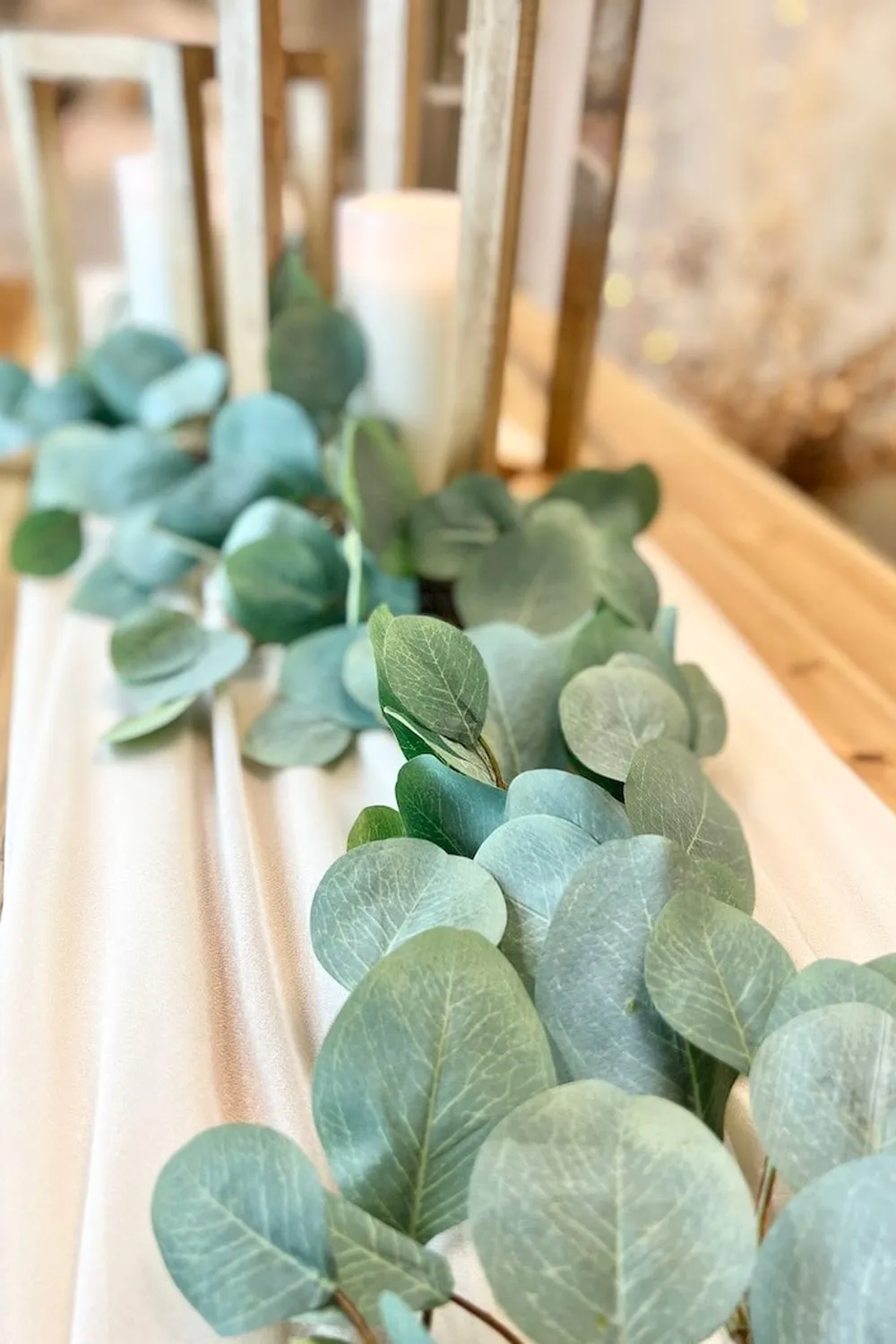
Eucalyptus down the center: the runner is the centerpiece.
Lay a eucalyptus garland straight down the center of the table and let the runner be the centerpiece. It grounds every object placed on it — candles, vases, the clock — in one green line, and it suits a long table better than any single arrangement. Weave a few gold baubles or tea lights into the leaves and the garland joins the palette.
Styling tip: let the garland fall a little over both ends of the table. A runner that stops dead at the edge looks measured; one that spills looks styled.
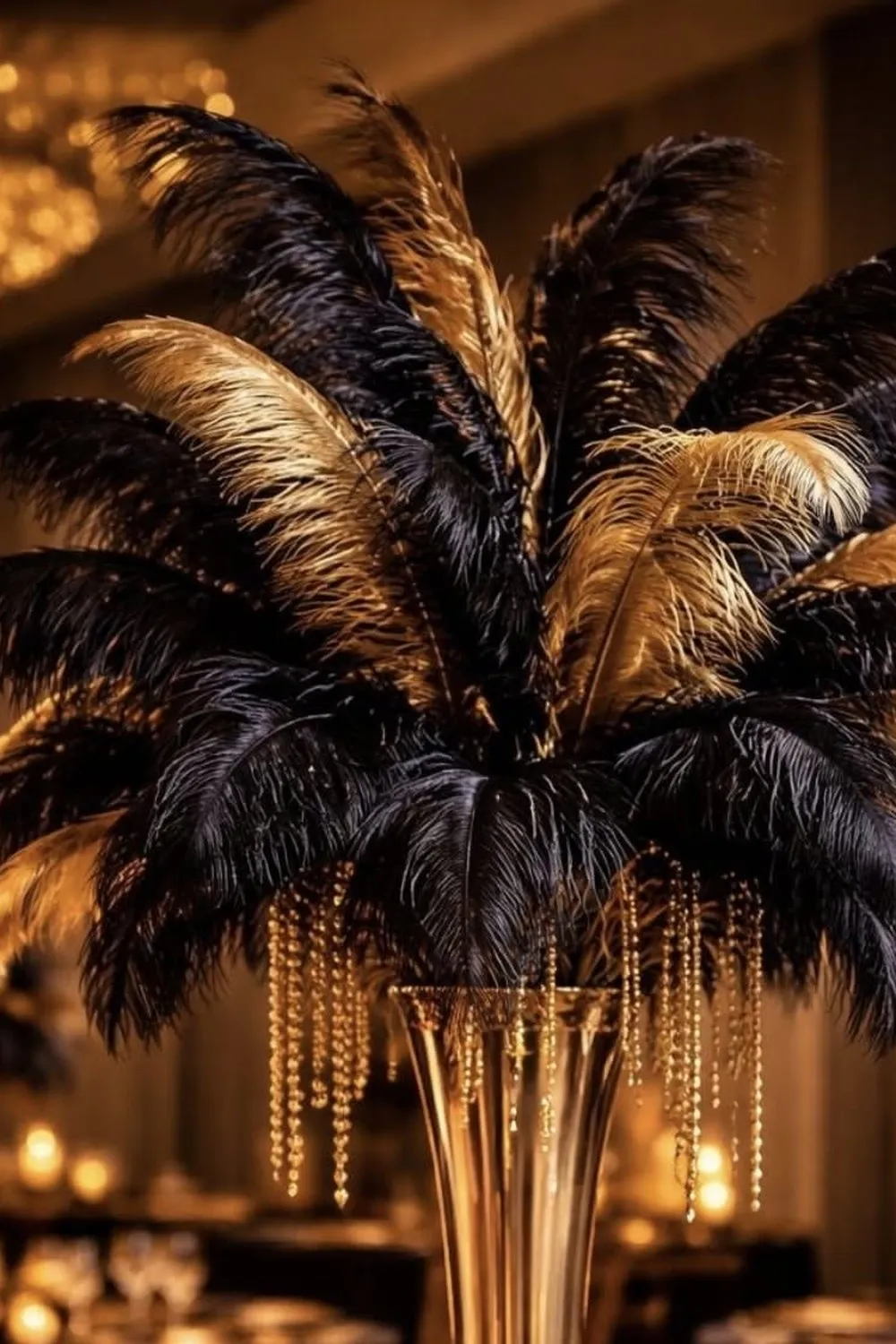
Feathers over gold — the centerpiece with movement in every plume.
Fill a gold trumpet vase with black and gold feathers for the centerpiece with real theatre: plumes that move when anyone passes, shimmer when the light catches them, and weigh nothing at all. Feathers are the glam shortcut — they give height and drama at a fraction of a flower arrangement's cost, and they never wilt before midnight.
Styling tip: keep feathers to two colors — black and gold here. A third color makes it fancy dress; two make it decor.
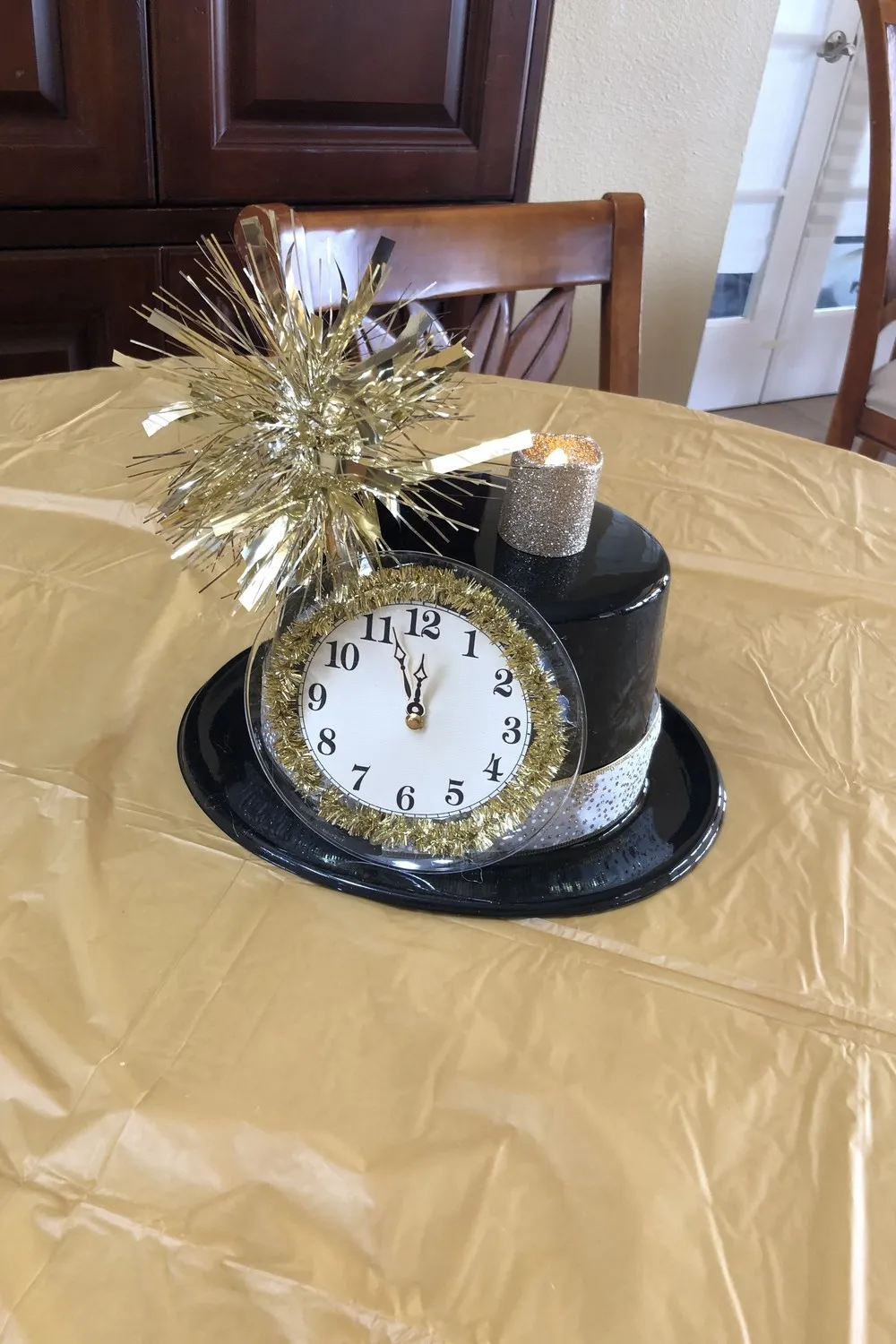
A clock face at the center, hands near midnight — the night's whole meaning, standing up.
Stand one decorative clock face at the center of the table, hands set near midnight, and the centerpiece tells the night's whole story. No other object says New Year this directly. Prop it on a small stand or lean it against the vase behind it, ring it with tea lights, and every guest who glances at the center checks the time that matters.
Styling tip: set the hands to five to midnight, not midnight itself. The anticipation is the decoration; midnight will arrive on its own.
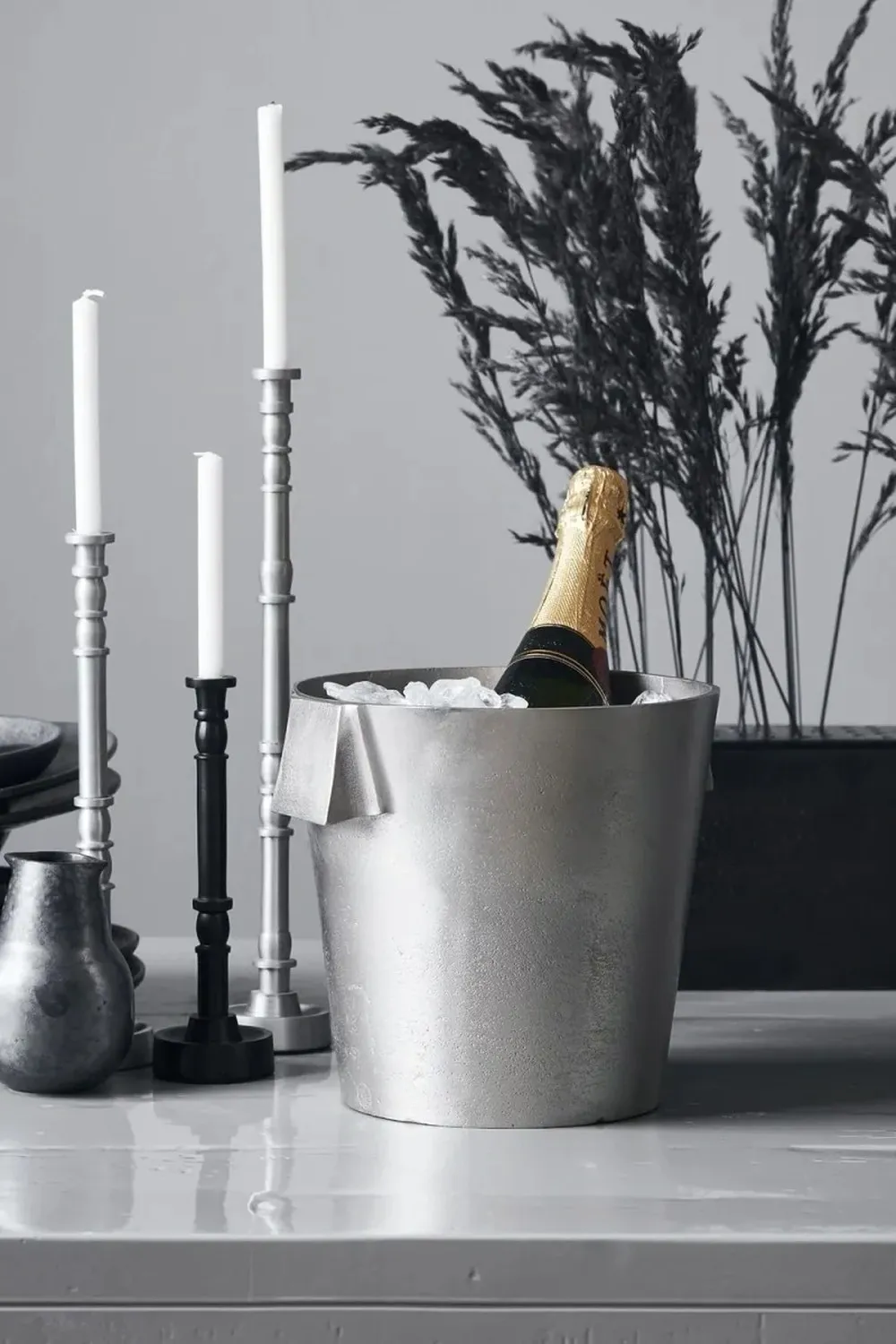
The bottle on ice at the center of the table — midnight, already chilling.
Put the midnight bottle at the center of the table: a champagne bottle standing in a silver ice bucket, tall white candles in mixed silver and black holders standing guard beside it. The bucket earns its place hours before the toast — it is the centerpiece all evening, sculpture in silver with the bottle's gold foil as its one gleam — and at twelve it simply changes jobs.
Styling tip: chill the bottle before guests arrive and keep a second in the fridge. The centerpiece bottle is for the photograph and the first pour; its backup keeps the night moving.
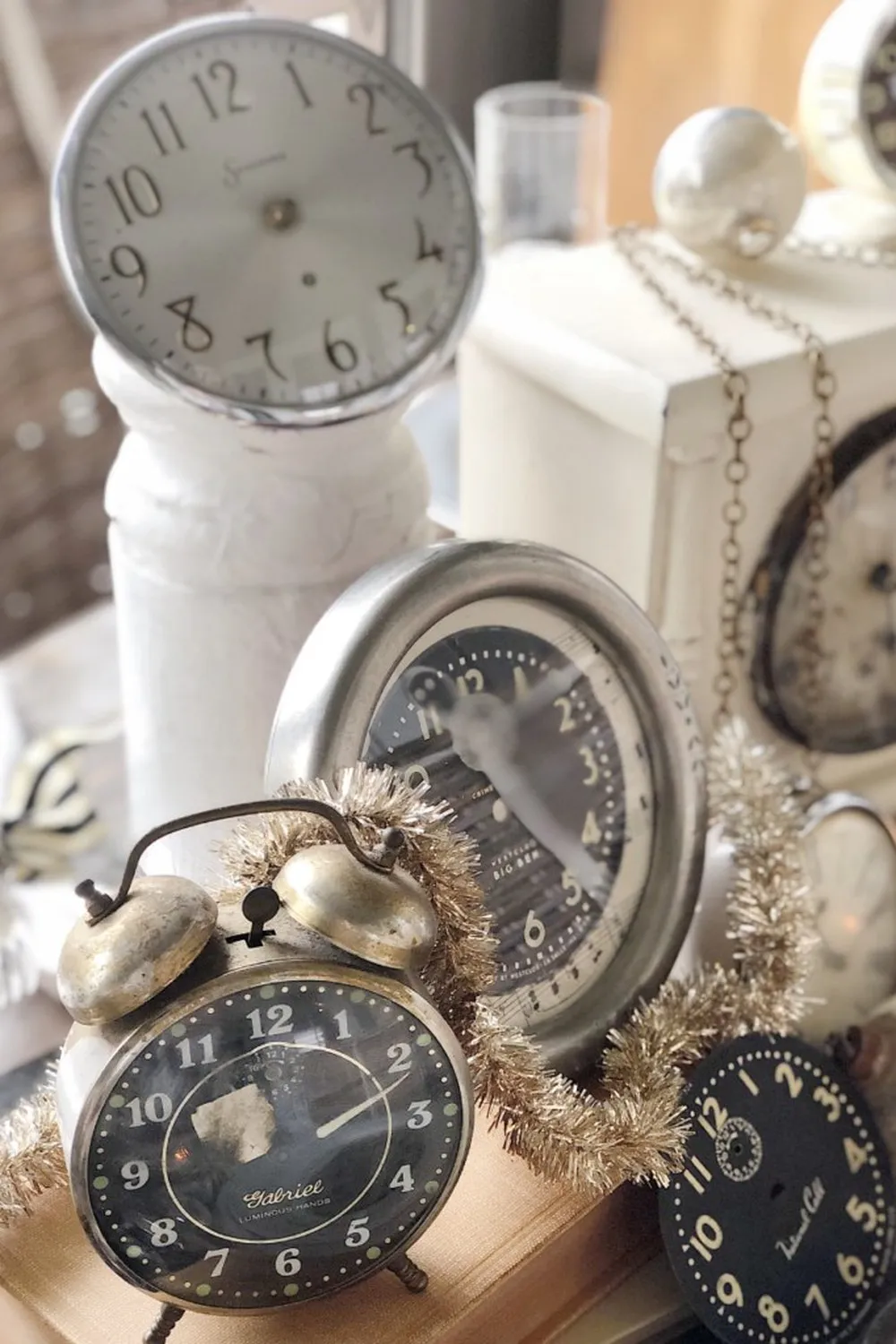
Small clocks in a row, all near midnight — time, repeated down the table.
Repeat the clock idea down the table: a row of small decorative clocks, every one set near midnight, marching along the center between the candles. Repetition is what makes it decor instead of clutter — one small clock is an object; five in a row are a theme. Mix sizes slightly so the row has rhythm.
Styling tip: set each clock a minute or two apart, counting down the row toward the center. A tiny detail nobody notices consciously — and everybody photographs.
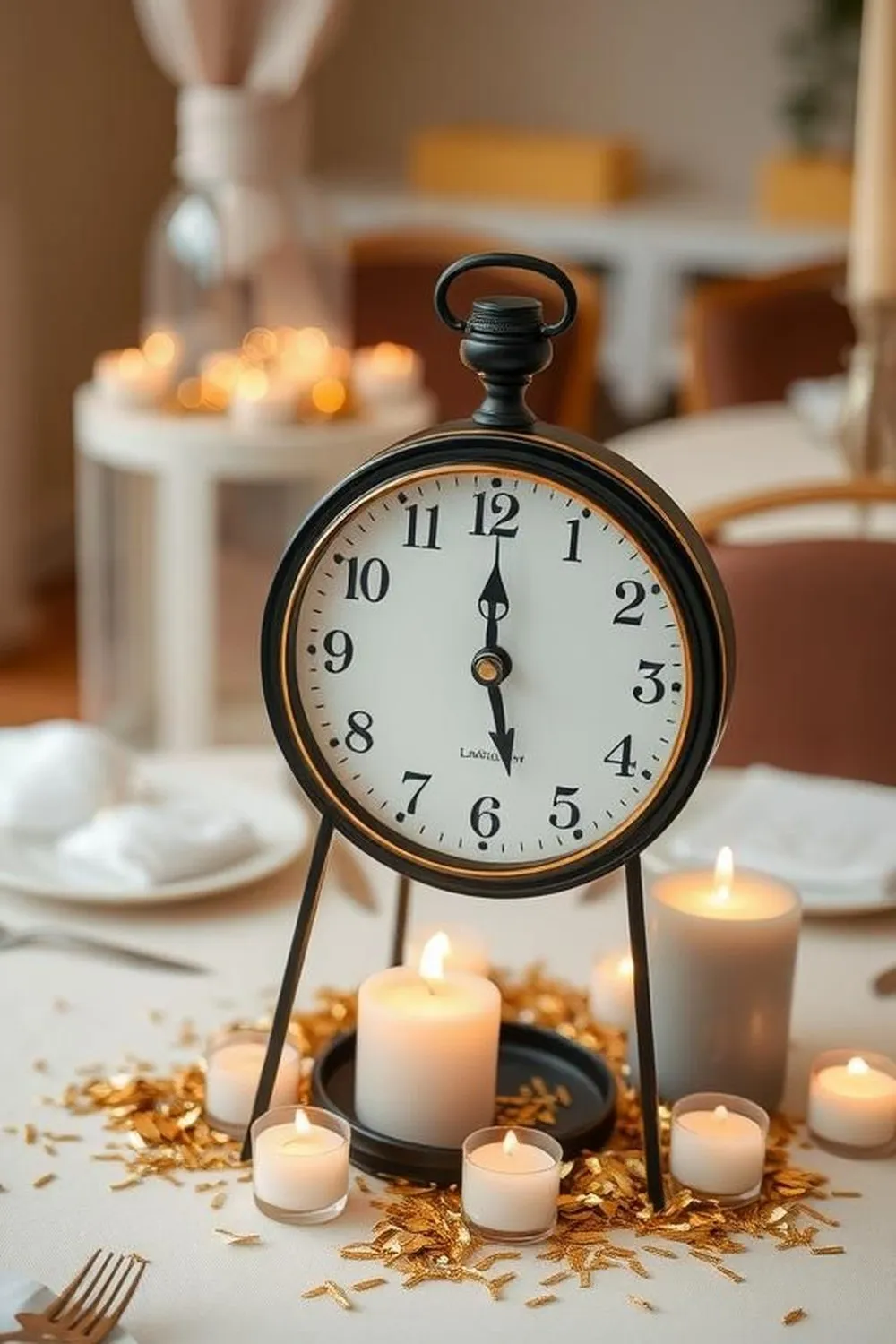
A pocket-watch clock standing over its own ring of candles — the countdown, lit.
Stand one oversized pocket-watch clock at the center — the vintage kind on a little stand, its face tall enough to read across the table — and ring its base with lit candles and a scatter of gold confetti. The clock is the meaning of the night and the candles are its frame; set the hands near midnight, and every guest who looks at the centerpiece checks the only time that matters.
Styling tip: keep the candles low — pillars and tea lights — so the clock face stays the tallest thing at the center. The ring should glow, not compete.
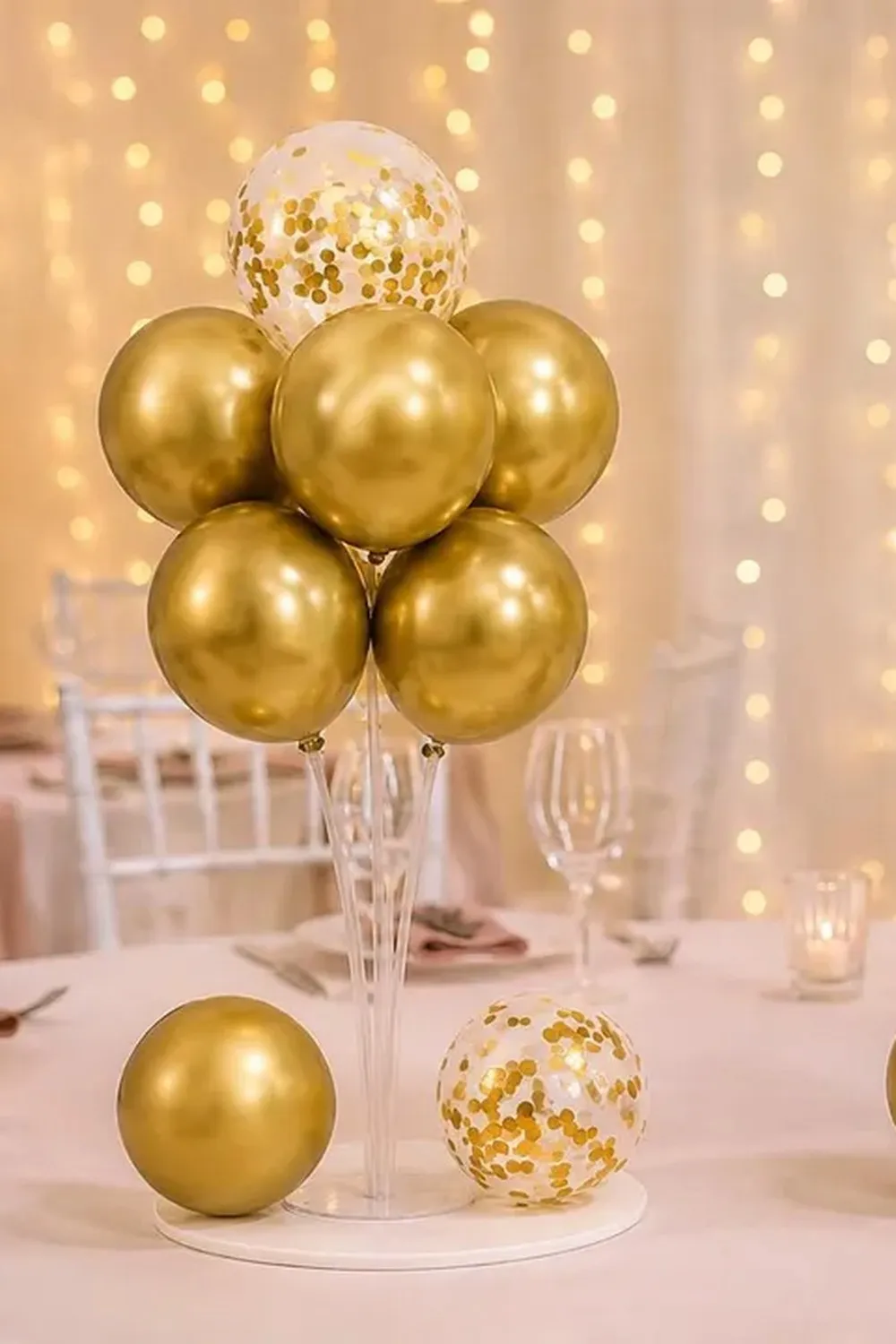
Mini balloons on a stand — the centerpiece that floats above the candles.
Cluster small metallic gold balloons — with one or two clear confetti balloons among them — on a clear centerpiece stand, and the center of the table gains height without a single heavy object. The stand keeps the bunch exactly where it belongs, the balloons catch candlelight like baubles that float, and the whole thing weighs less than the vase it replaces.
Styling tip: keep the balloons small and the bunch tight — five to seven at most. Mini balloons read as decor; full-size balloons read as a children's party.
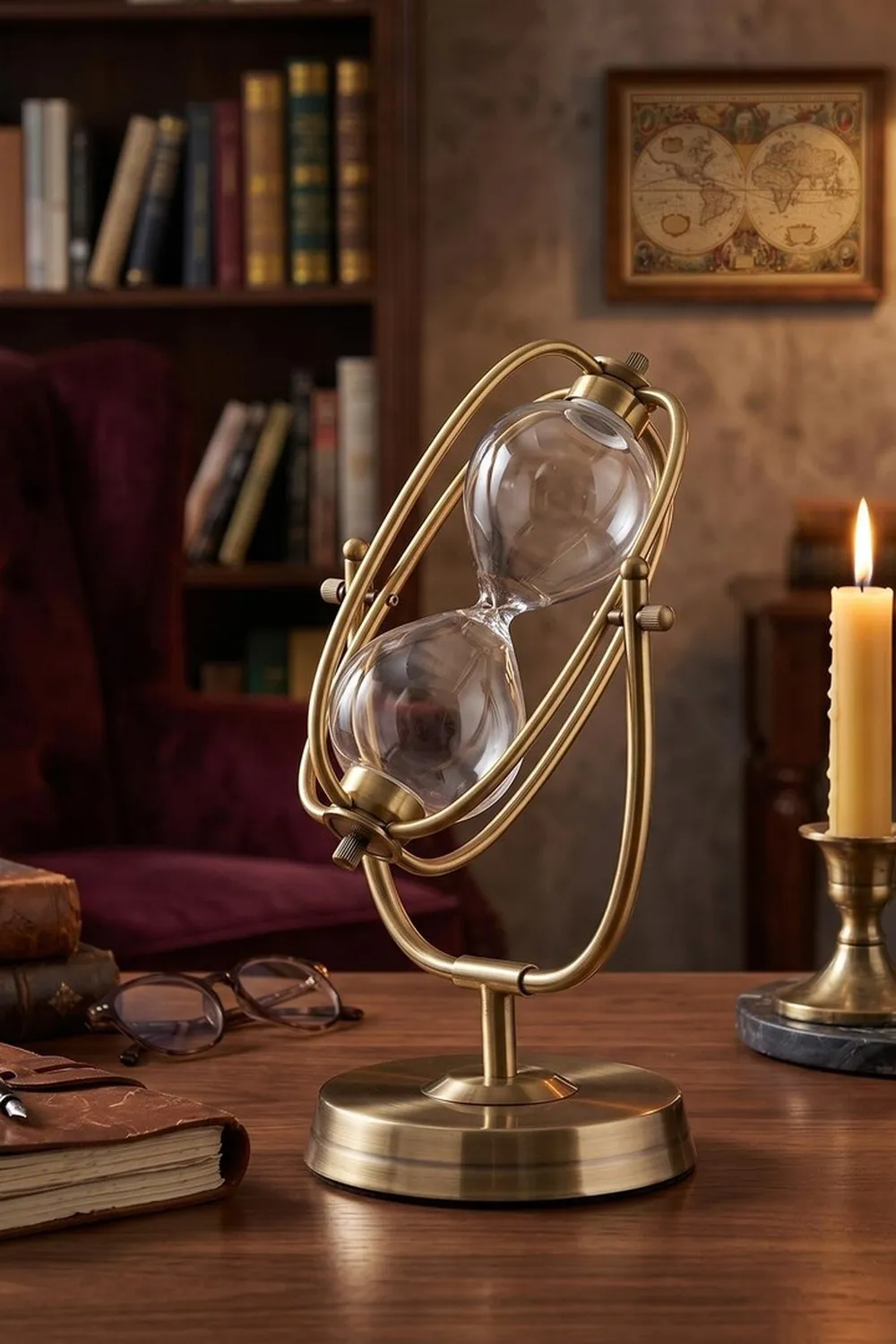
An hourglass beside the flame — the year's last sand, running.
Set a brass hourglass beside the candles and give the centerpiece its quietest symbol: time itself, visible and running. The turning glass belongs to New Year the way the clock does — but softer, older, and strangely calming among all the glitter. Turn it when the last hour begins and let it run down toward midnight.
Styling tip: choose an hourglass that runs for about an hour if you can find one. Started at eleven, it becomes the table's second countdown.
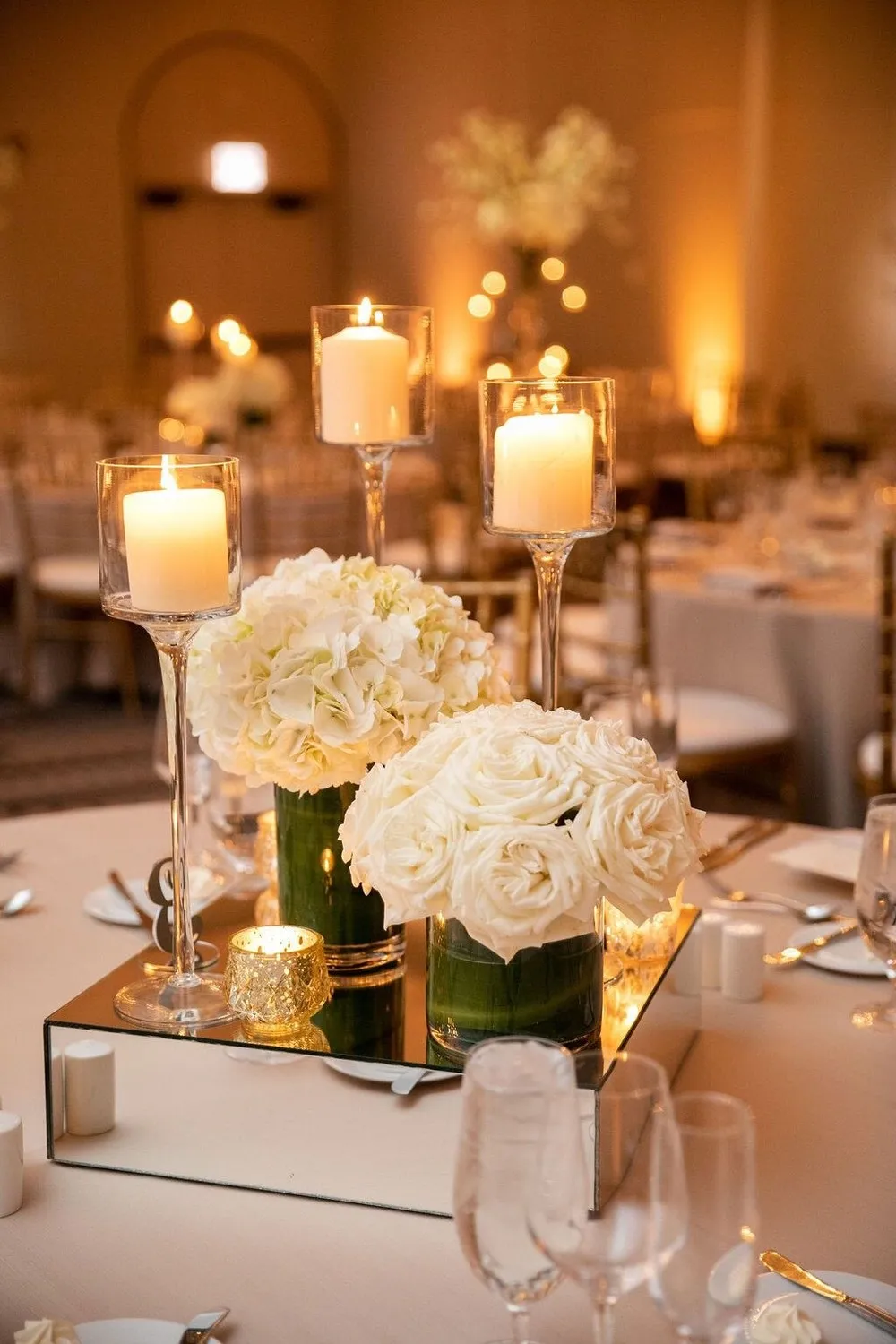
A mirrored tray under the candles — every flame, doubled.
Put the candles on a mirrored tray and every flame burns twice. The mirror throws candlelight back up into the holders and out across the table, and it turns a simple cluster into something that looks professionally styled. A mirrored base is the single hardest-working object in this article — it upgrades whatever stands on it.
Styling tip: clean the mirror last, after everything is placed. Fingerprints only show once the candles are lit — which is exactly when everyone is looking.
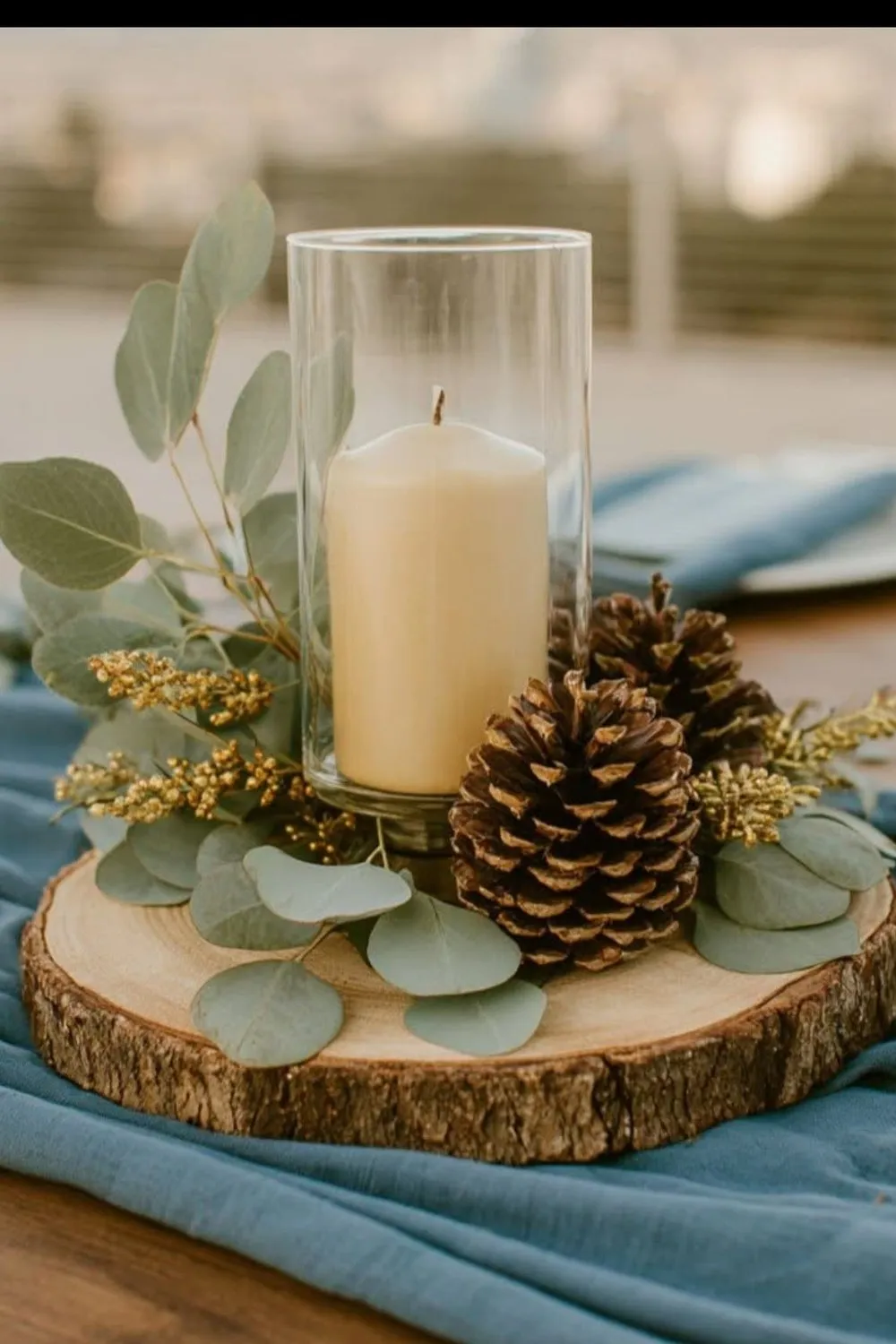
A wood slice as the base: the centerpiece grounded in something natural.
Set the candles and greenery on a wooden slice and the glam palette gets grounded: bark edge, visible rings, one honest piece of tree under all the gold. The contrast is the point — rustic base, glittering top. Treat the slice as decoration only, though: wood is not heat protection, and a hot candle jar can scorch it or worse. Stand every candle on a heat-resistant, non-combustible trivet or metal tray (on the slice or beside it), keep flames well clear of the greenery, and never leave a lit candle unattended.
Styling tip: choose a slice wide enough to hold the whole cluster with room to spare. Objects crowded to a base's edge look like they are falling off a raft.
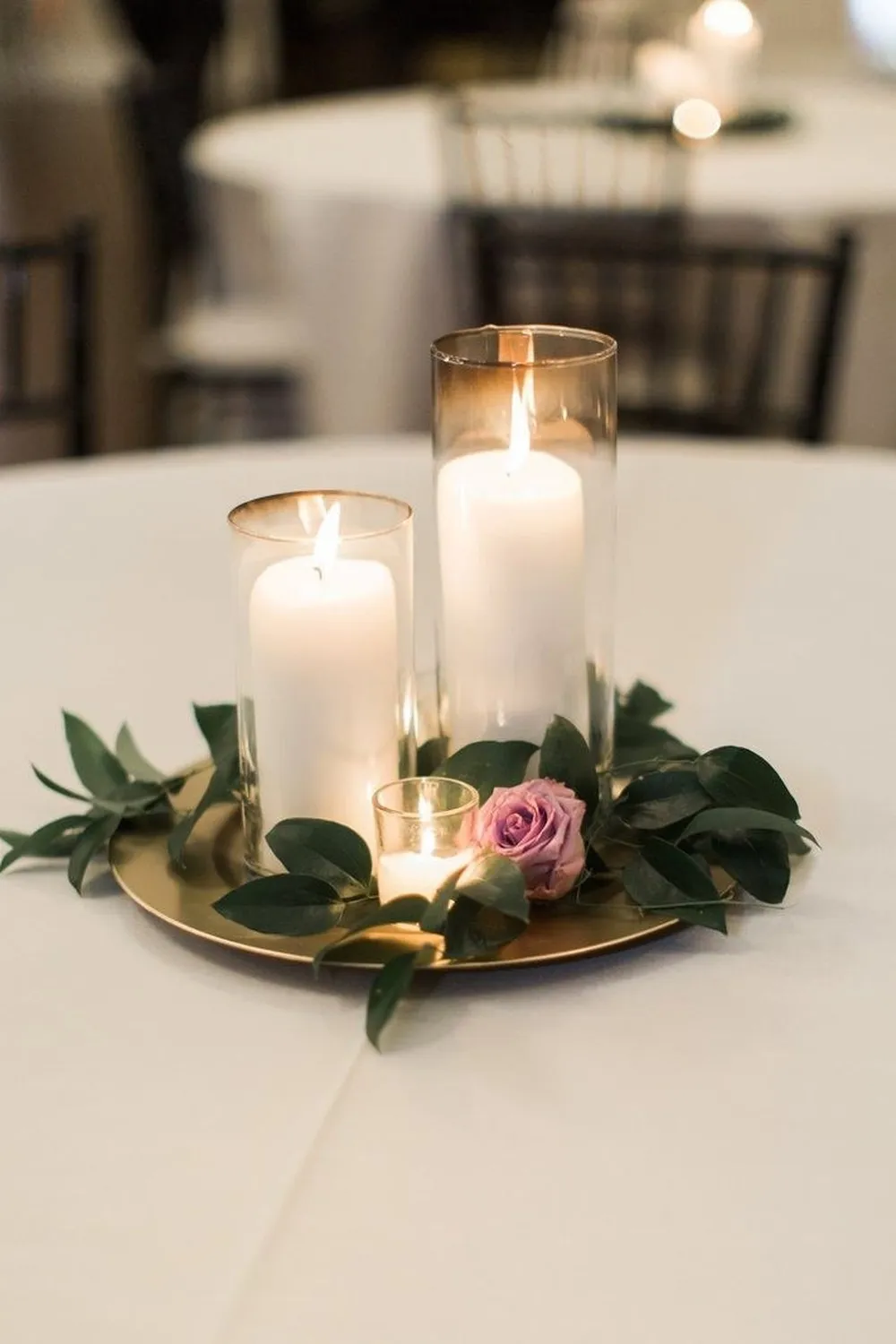
A gold charger holding the whole center — the base is the statement.
Use one gold charger the way it was never intended: not under a plate, but at the center, as a platter holding candles, baubles and a sprig of green. The charger's wide gold disc draws the cluster into one gleaming circle and gives a small centerpiece the footprint of a large one. It is also the cheapest base in this article — most homes already own chargers.
Styling tip: this charger belongs to the center only. If the place settings also have gold chargers, the center one stops being a statement — use a mirror or tray there instead.
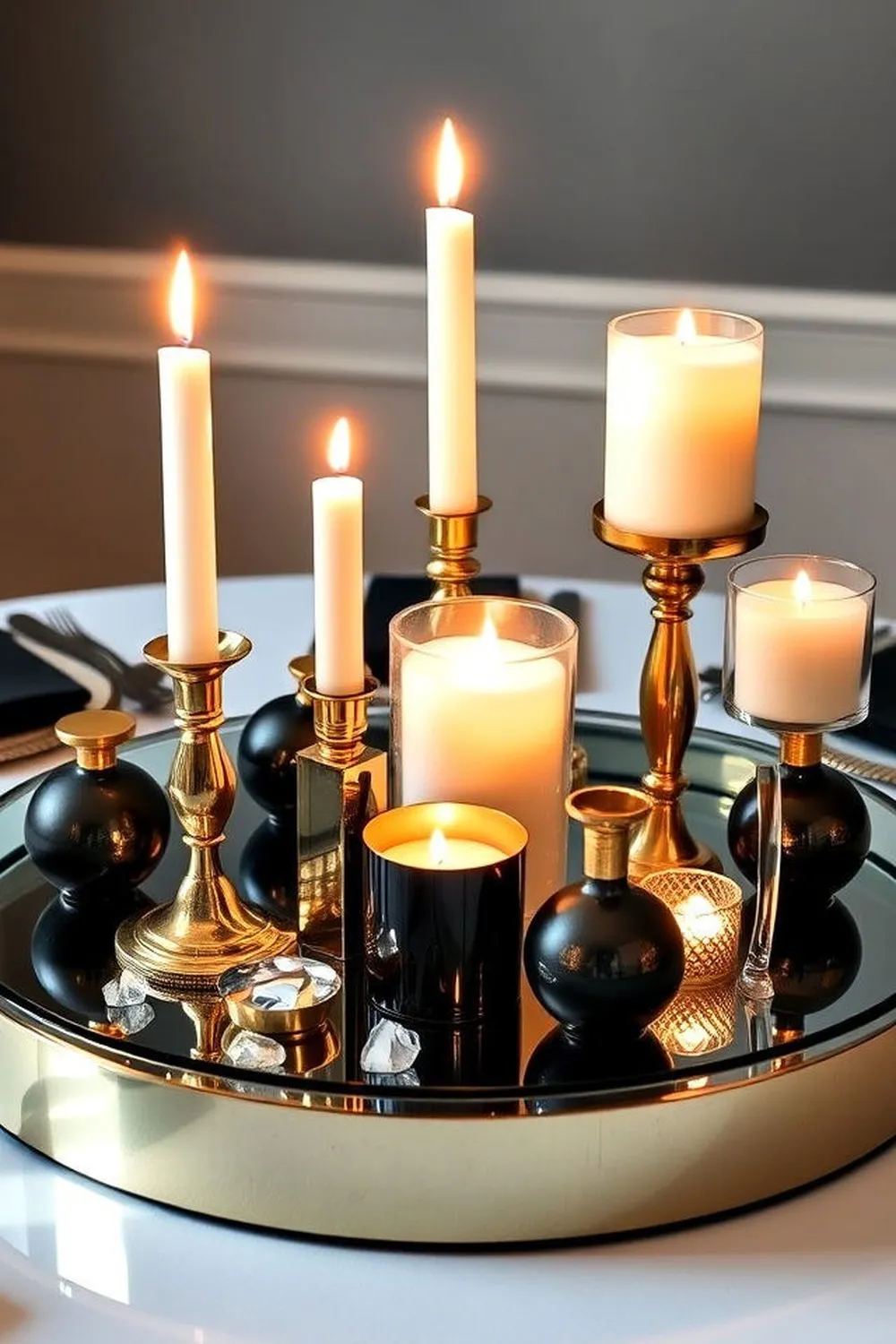
Black tray, gold edge — the frame that makes the centerpiece look finished.
A black tray with gold edging is a picture frame for the centerpiece: it pulls scattered objects into one composed group and gives the cluster a hard, elegant outline against the tablecloth. Black is the palette's anchor color, and a tray is the easiest way to get a large, flat area of it at the center without a cloth change.
Styling tip: leave a margin of empty tray visible around the objects. The black border showing is what makes it read as framed, not stored.
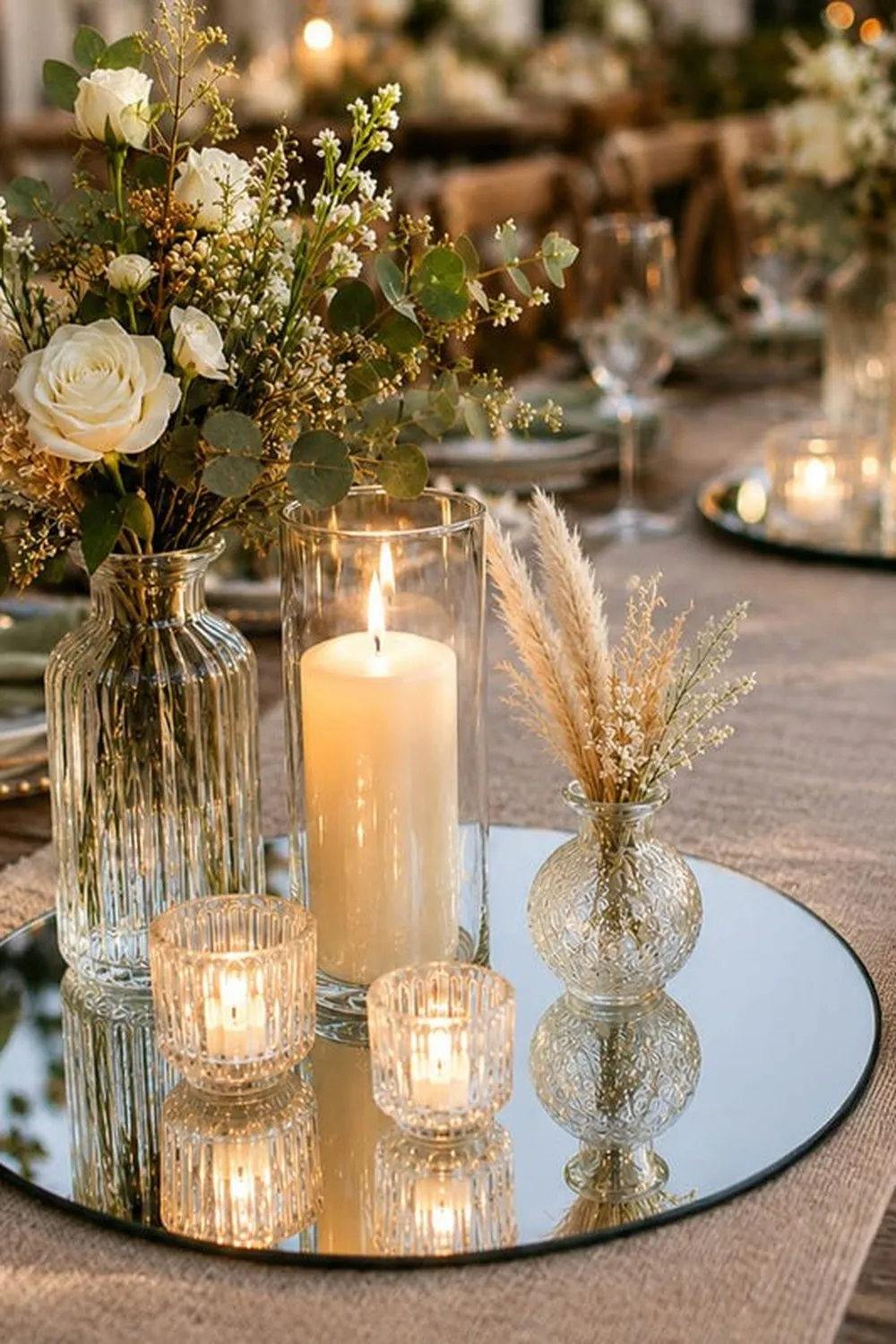
A round mirror under everything — the table reflected back at itself.
Lay a round mirror flat as the centerpiece base and stand the candles and greenery directly on the glass. Where the mirrored tray doubles the flames, a bare mirror doubles everything — stems, baubles, the whole arrangement — and from a seated angle the centerpiece appears to float on light. Any plain round mirror works; frameless reads most modern.
Styling tip: raise one object on a small glass or book inside the arrangement. A centerpiece built at two levels reflects twice as interestingly as a flat one.
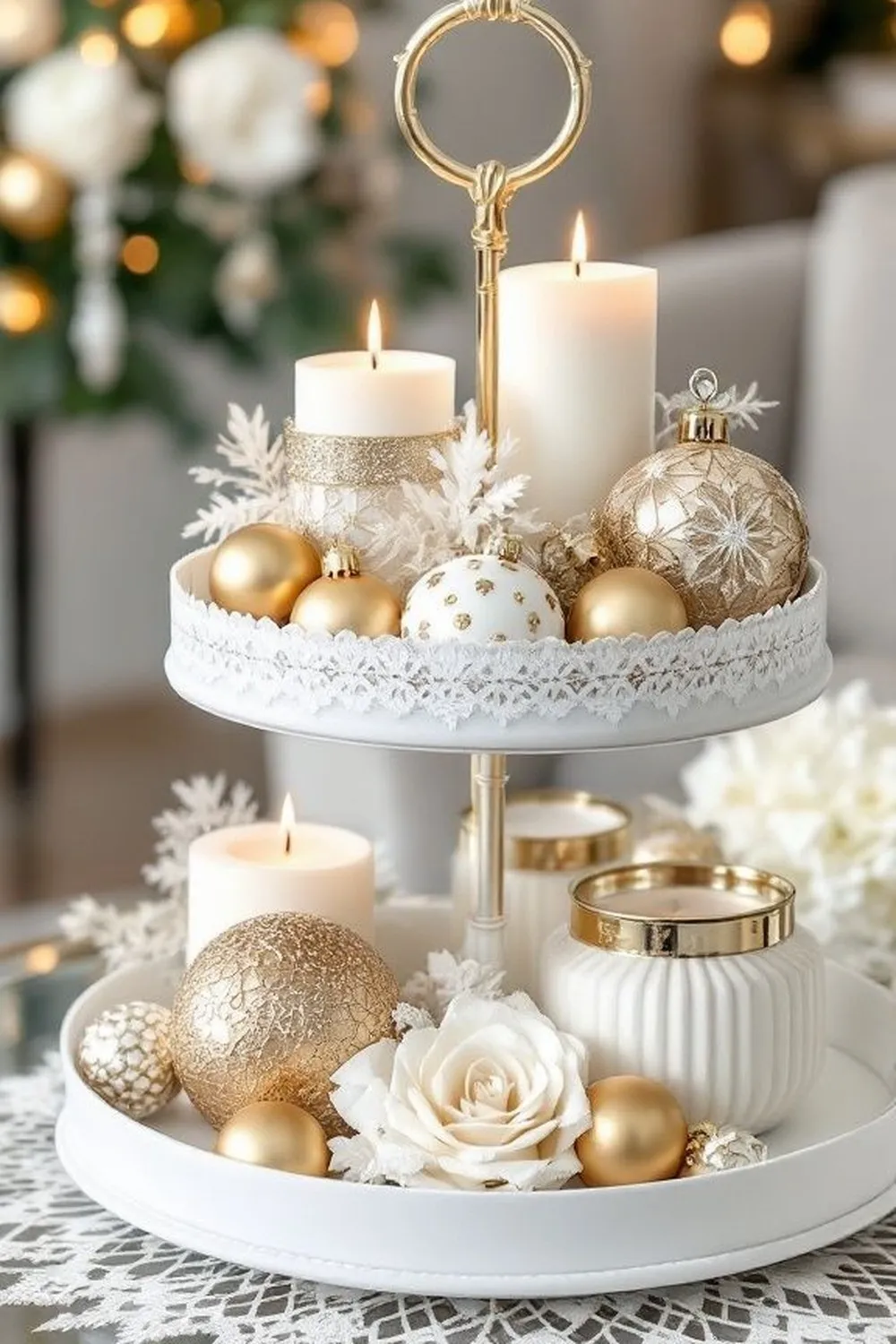
A tiered stand at the center: the centerpiece that climbs.
Build the centerpiece upward on a tiered stand: candles on one level, gold ornaments on another, a clock or the foil numbers at the top. A tower suits a round table where a long arrangement cannot go, and it gives every seat a different view as the stand turns in the mind's eye. Keep the heaviest pieces low and the glitter high.
Styling tip: odd objects per tier — three, five, three. Even counts on a stand look like stock-taking; odd counts look like styling.
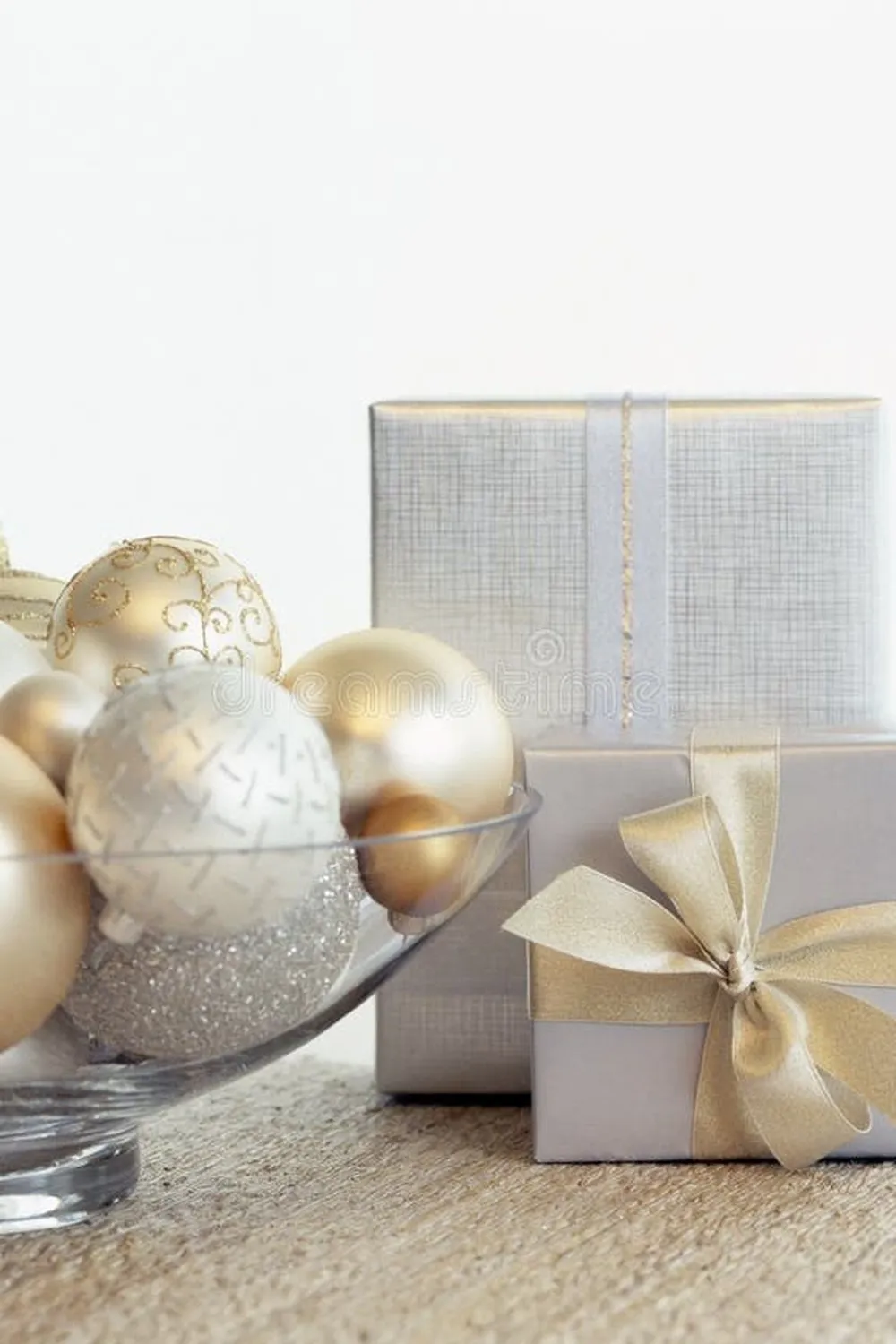
Gold baubles in glass — the centerpiece you build by pouring.
Pile gold baubles into a clear glass bowl and the centerpiece is built by pouring: no arranging, no skill, just shine heaped on shine. Mix matte, glossy and glitter finishes so the pile catches light at every angle, and let the bowl be generous — a heaped bowl reads as abundance, a half-filled one as leftovers.
Styling tip: put one string of battery fairy lights through the pile before the last layer of baubles. The bowl will glow from inside once the room darkens.
Confetti around the base — the centerpiece spilling onto the table, on purpose.
Scatter metallic confetti — gold first, with silver and black through it — in a loose halo around the centerpiece base, and the arrangement stops ending at its edges: it spills, deliberately, onto the table. The scatter connects the center to the place settings without any object in between, and it is the fastest glam in this article: thirty seconds, one handful, whole table transformed.
Styling tip: scatter thickest at the base and thinner as it spreads, like it fell there. An even sprinkle looks like cleaning up; a fading scatter looks like a moment.
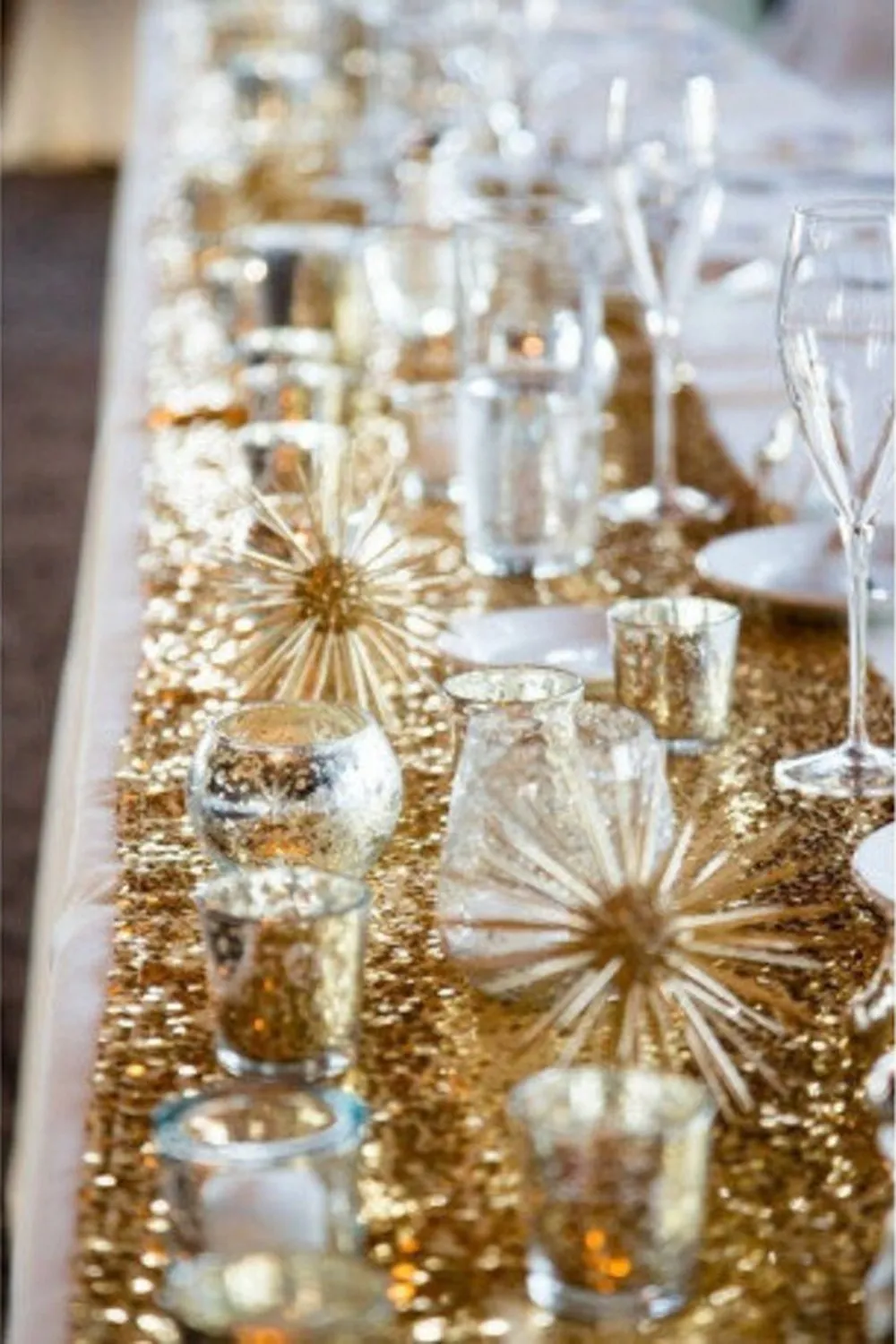
Sequin under the center: the table itself glittering beneath the candles.
Run a gold sequin runner under the centerpiece and the table itself joins the arrangement: every candle flame multiplies across a thousand sequins, and plain objects placed on it look dressed. The runner also defines the centerpiece's territory on a big table — everything on the sequins is the center; everything off them is dinner.
Styling tip: if a full sequin runner feels like too much, fold it double under the centerpiece alone. Same glitter, half the commitment.
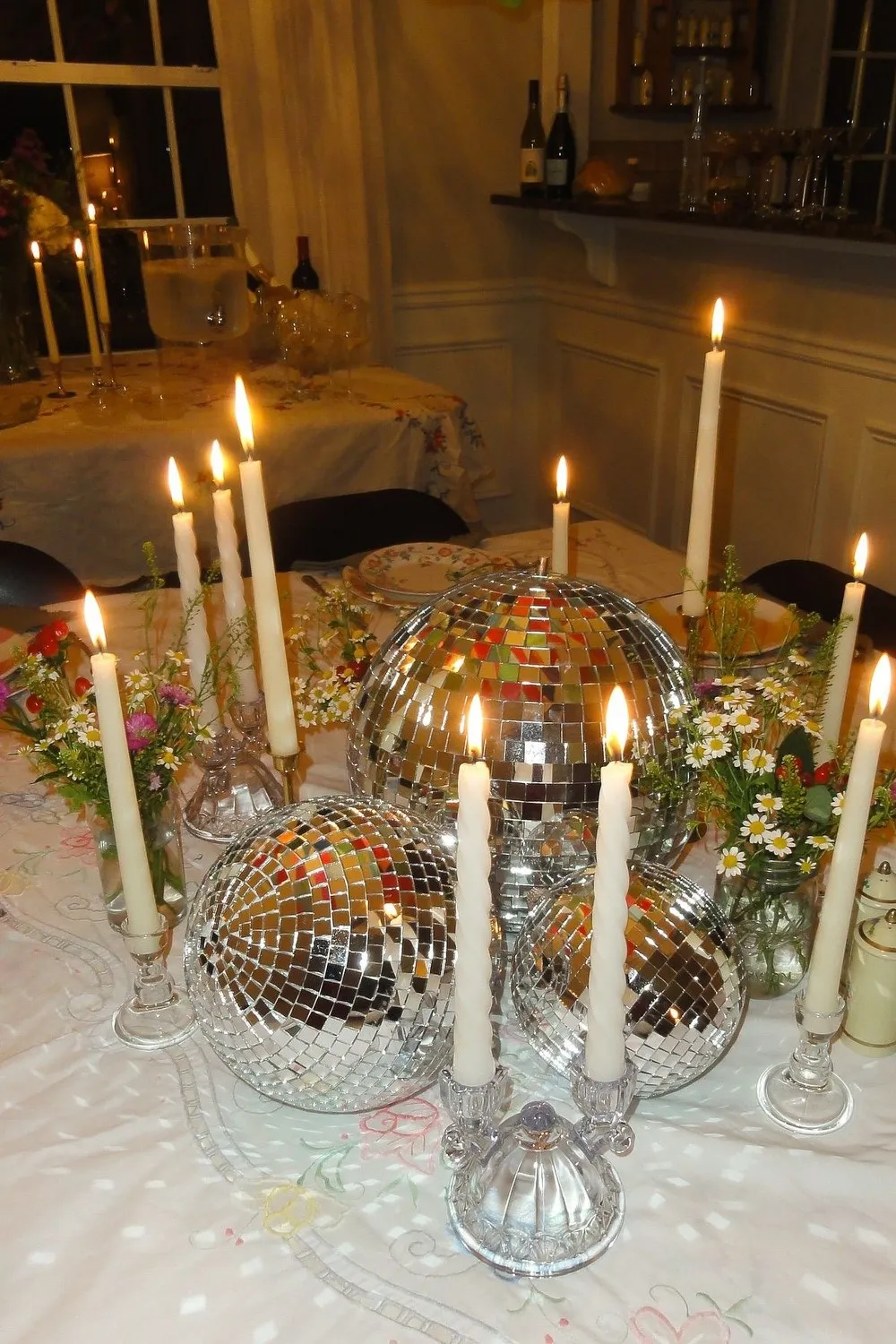
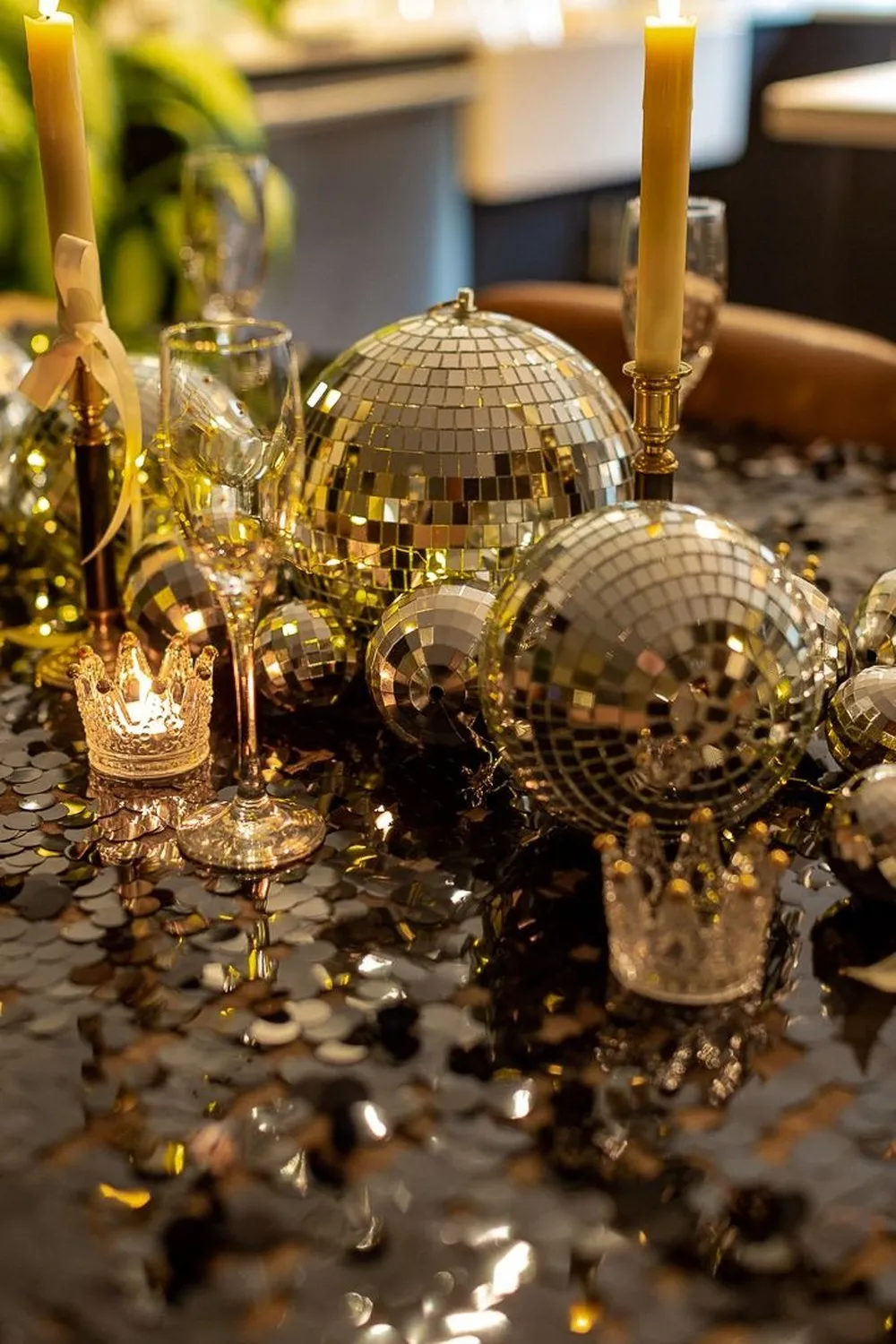
One disco ball at the center — the party's mirror, sitting on the table.
Set one disco ball at the center of the table, candles around its base, and let it do what it has done at every good party since the seventies: throw the room's light everywhere. A table-sized disco ball is playful and glamorous at once, and in candlelight it moves even when nothing touches it — every flame flicker becomes a scatter of sparks.
Styling tip: one medium ball beats three small ones here. The centerpiece should be a single confident object, not a litter.
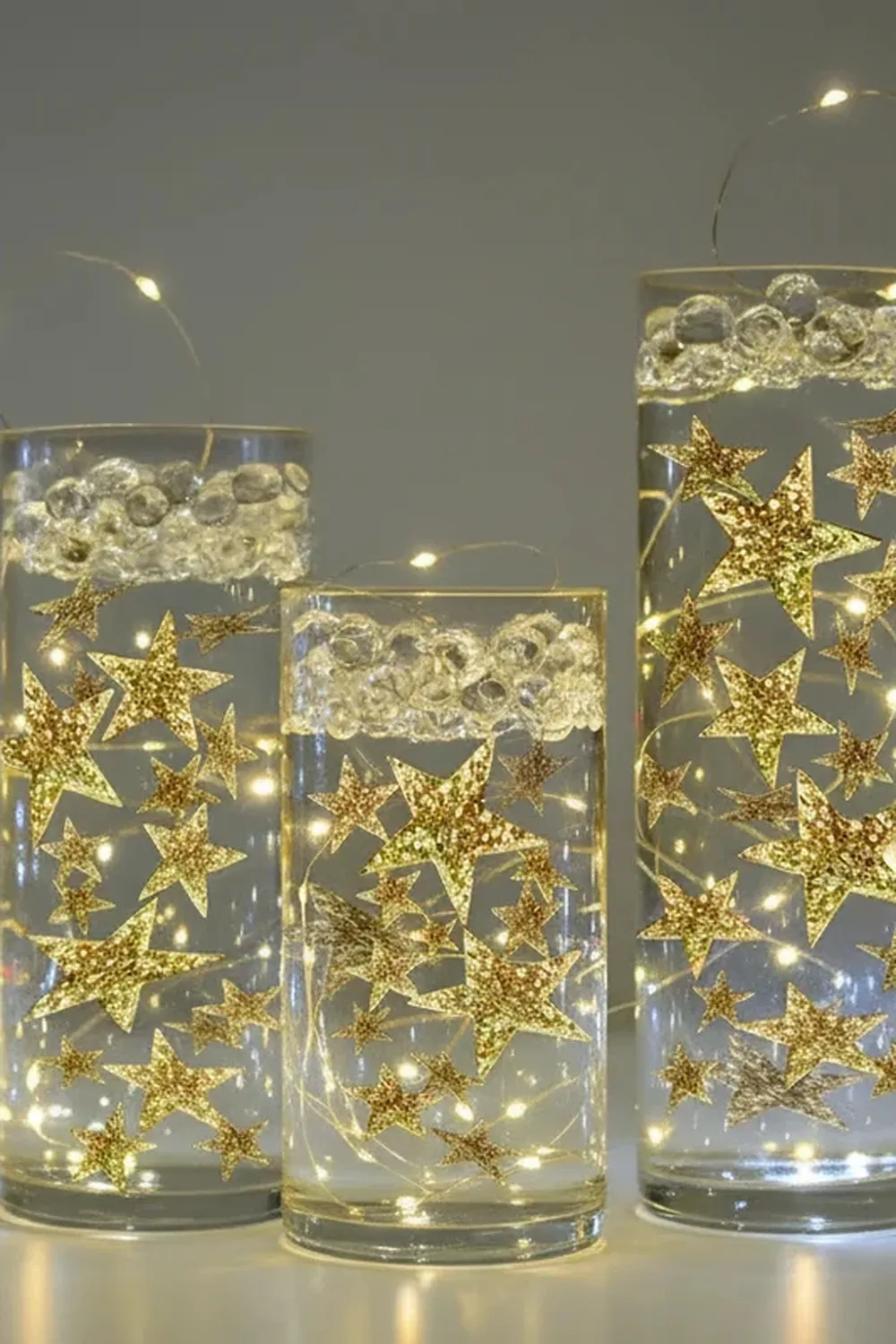
Stars in glass: the centerpiece that holds its own sky.
Fill a glass hurricane vase with gold star ornaments and you have a centerpiece that holds its own sky: stars suspended in glass, catching candlelight from the holders around it. Stars are New Year's own shape — midnight, wishes, the year turning — and kept gold and inside glass, they stay elegant instead of festive.
Styling tip: mix two star sizes and stop filling at two-thirds. The empty glass at the top is what makes the stars read as floating.
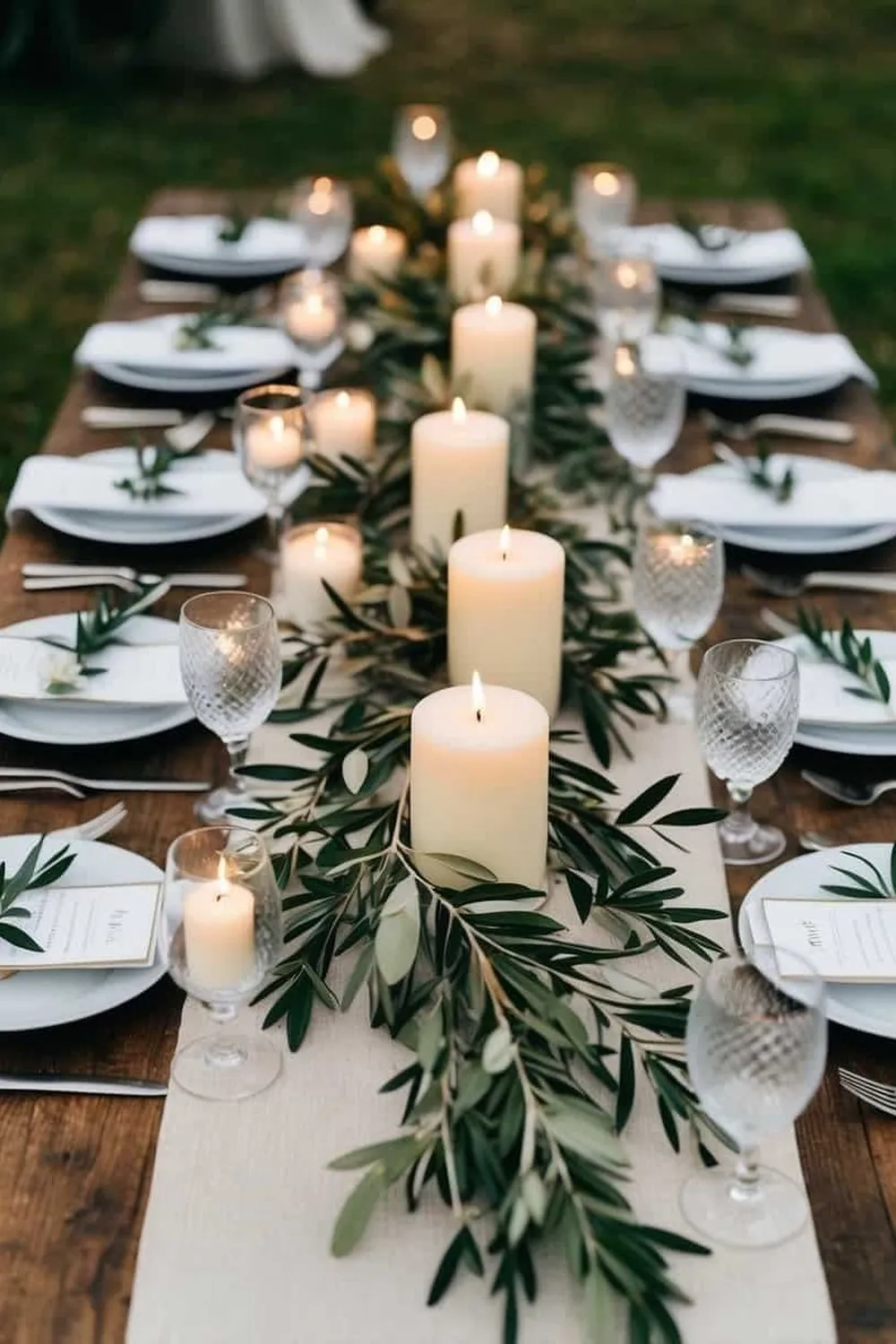
Low and long, down the whole table — a centerpiece guests can talk across.
Shape the centerpiece low and long — a line of candles and greenery running the table's length, nothing rising above a wine glass — and you have the kindest centerpiece a dinner can have: full glamour, zero blocked faces. This is the arrangement for a table where the conversation matters as much as the countdown.
Styling tip: repeat one element at even intervals — a candle, a bauble, a candle — all the way down. Rhythm is what makes a long centerpiece look designed rather than accumulated.
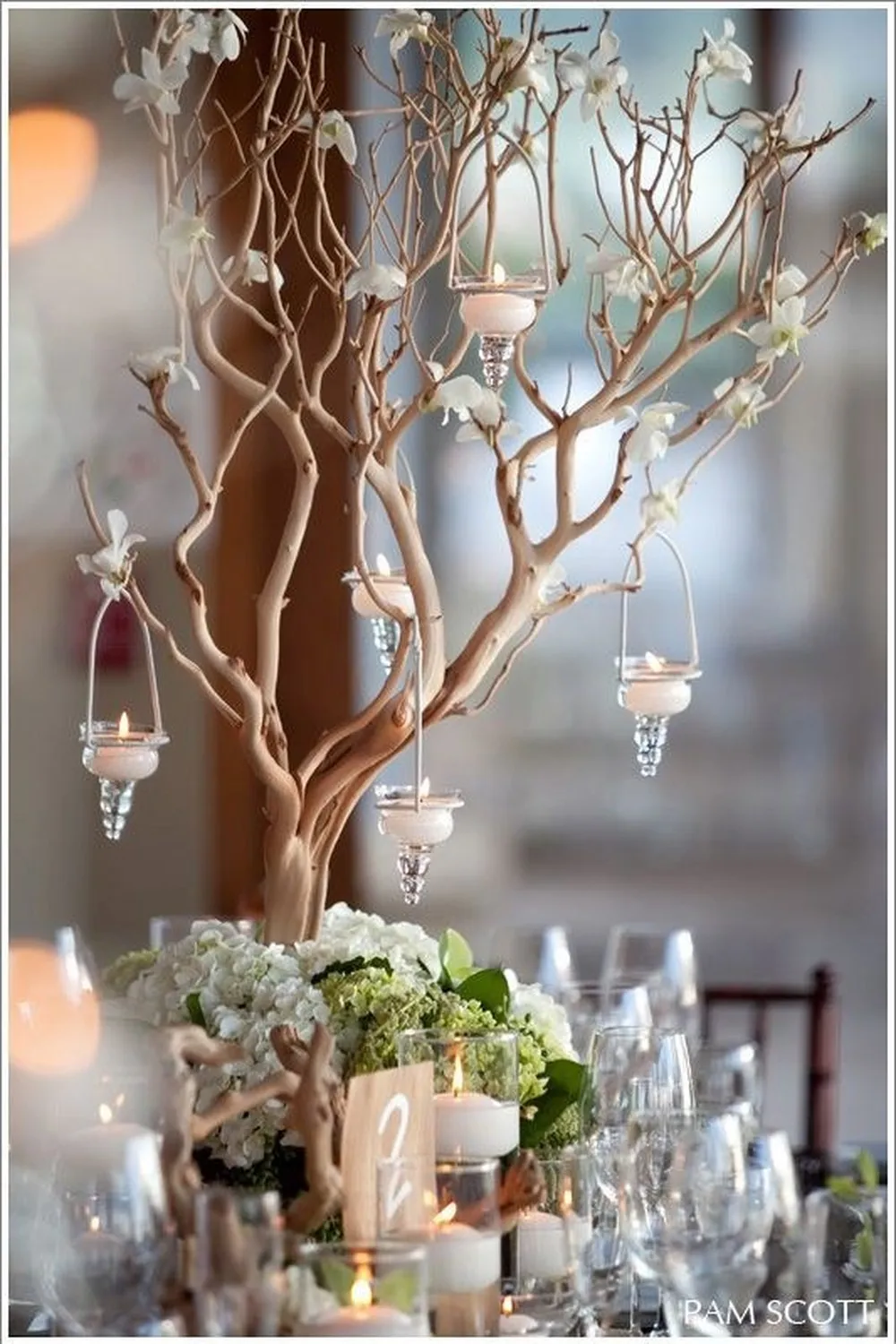
Tall branches and tall candles — the centerpiece for a table that wants drama.
For a big table in a big room, go tall: branches and tall candles rising well above head height when seated, arranged narrow so guests see through and around the stems. Height is drama, and New Year is the one night drama is the brief. Anchor it on a tray or mirror so the tall arrangement still reads as one object.
Styling tip: tall means tall and thin — if a guest cannot see the person opposite between the stems, thin it out. Drama that blocks faces becomes an obstacle by the main course.
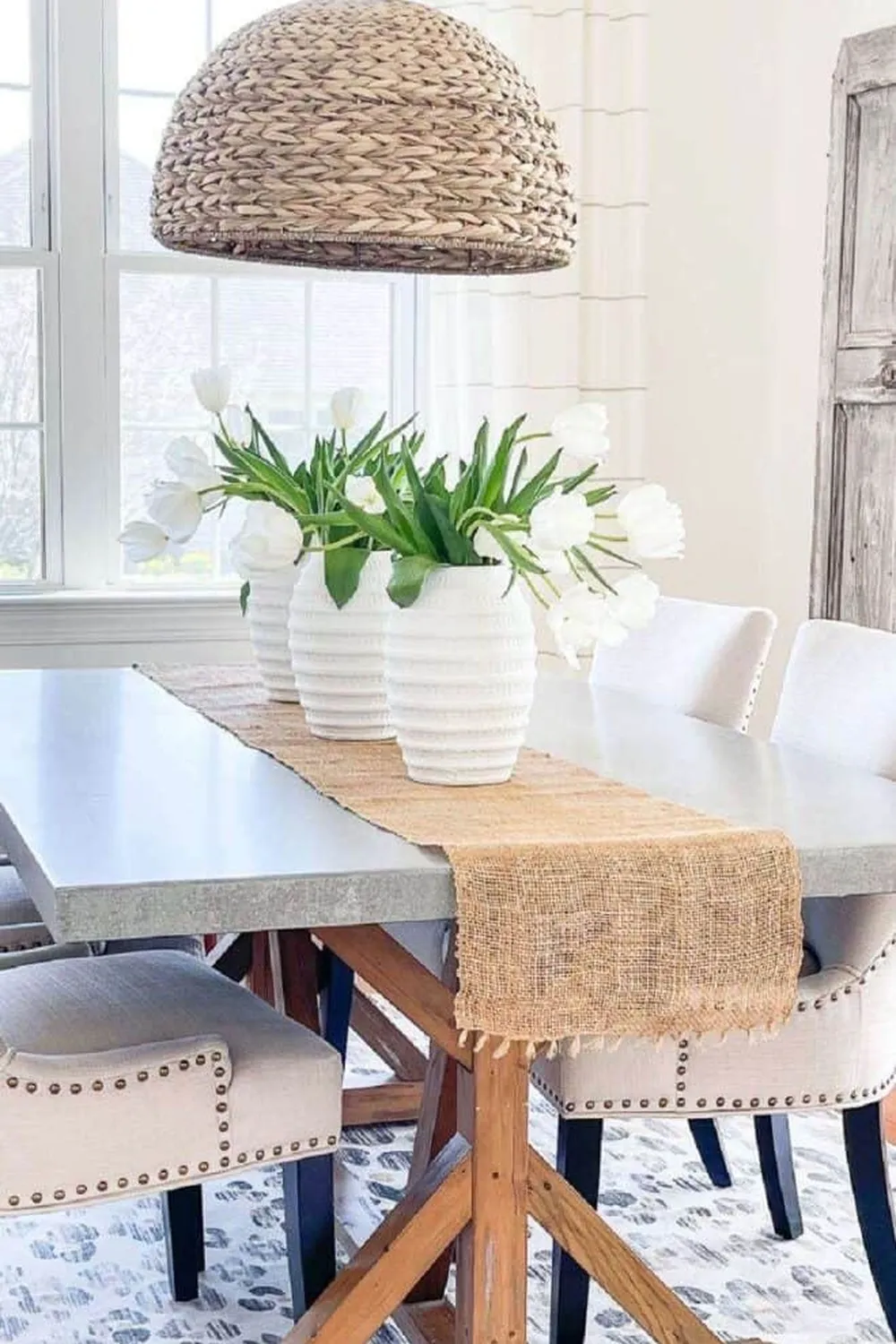
Three small centers instead of one big one — repetition down the table.
Divide the centerpiece into three small matching ones, spaced evenly along the table: each a candle cluster, a small vase, a bauble or two, built to the same recipe. Every guest sits near a center instead of craning at one, the long table gets rhythm, and if one gets knocked at midnight, the other two carry on.
Styling tip: build all three at once, object by object, so they truly match. Three similar-but-different clusters look like three separate decisions.
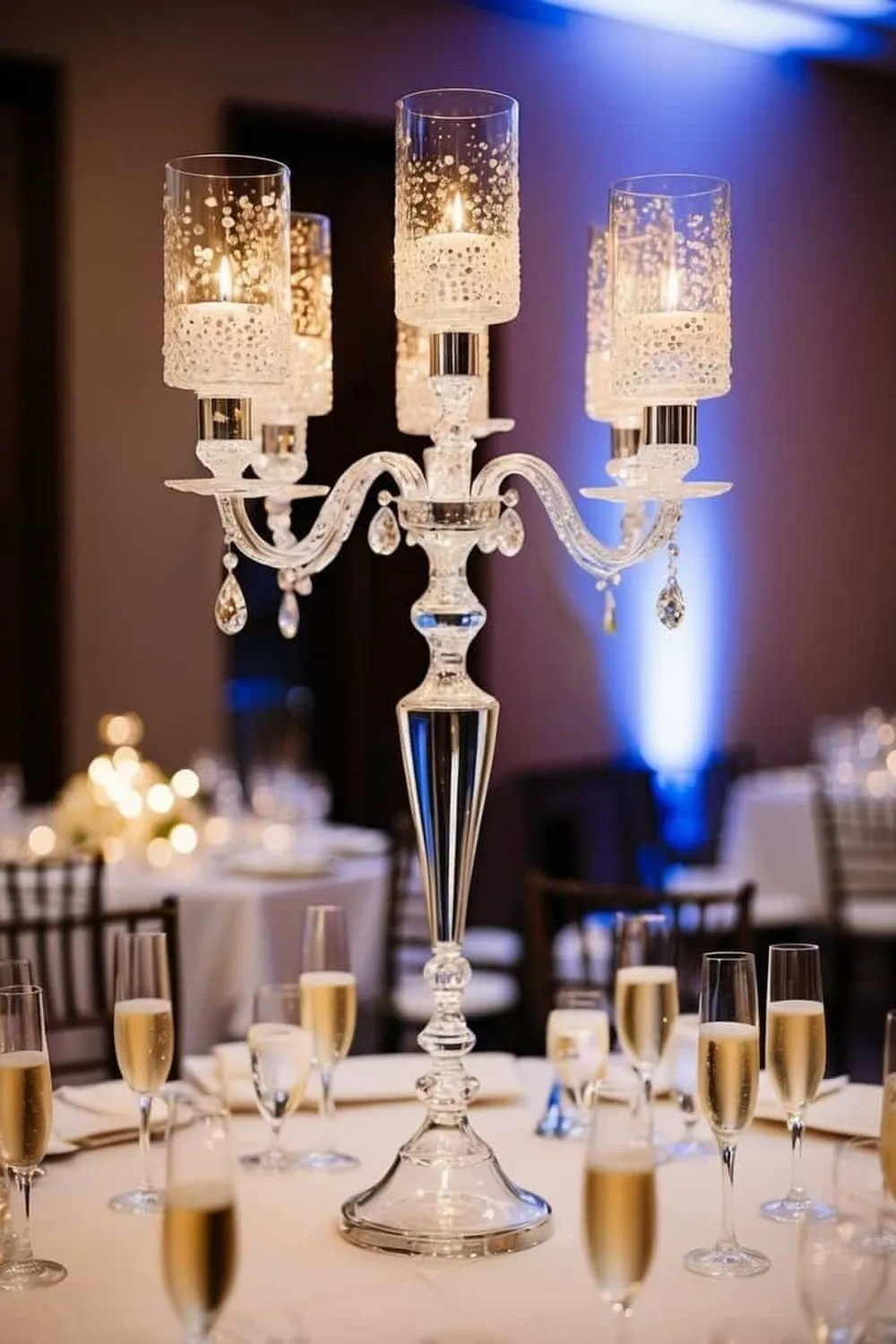
Glasses among the candles — the centerpiece that is also where the toast begins.
Build the centerpiece around the midnight moment itself: champagne glasses standing among the candles at the center, ready to be filled where everyone can reach them. The centerpiece stops being only decoration and becomes the toast station — beautiful all evening, essential at twelve. Keep the glasses empty and upright until the countdown; they are decor until they are not.
Styling tip: use the best glasses you own here, even if dinner used plainer ones. The toast glasses are the ones in every photograph.
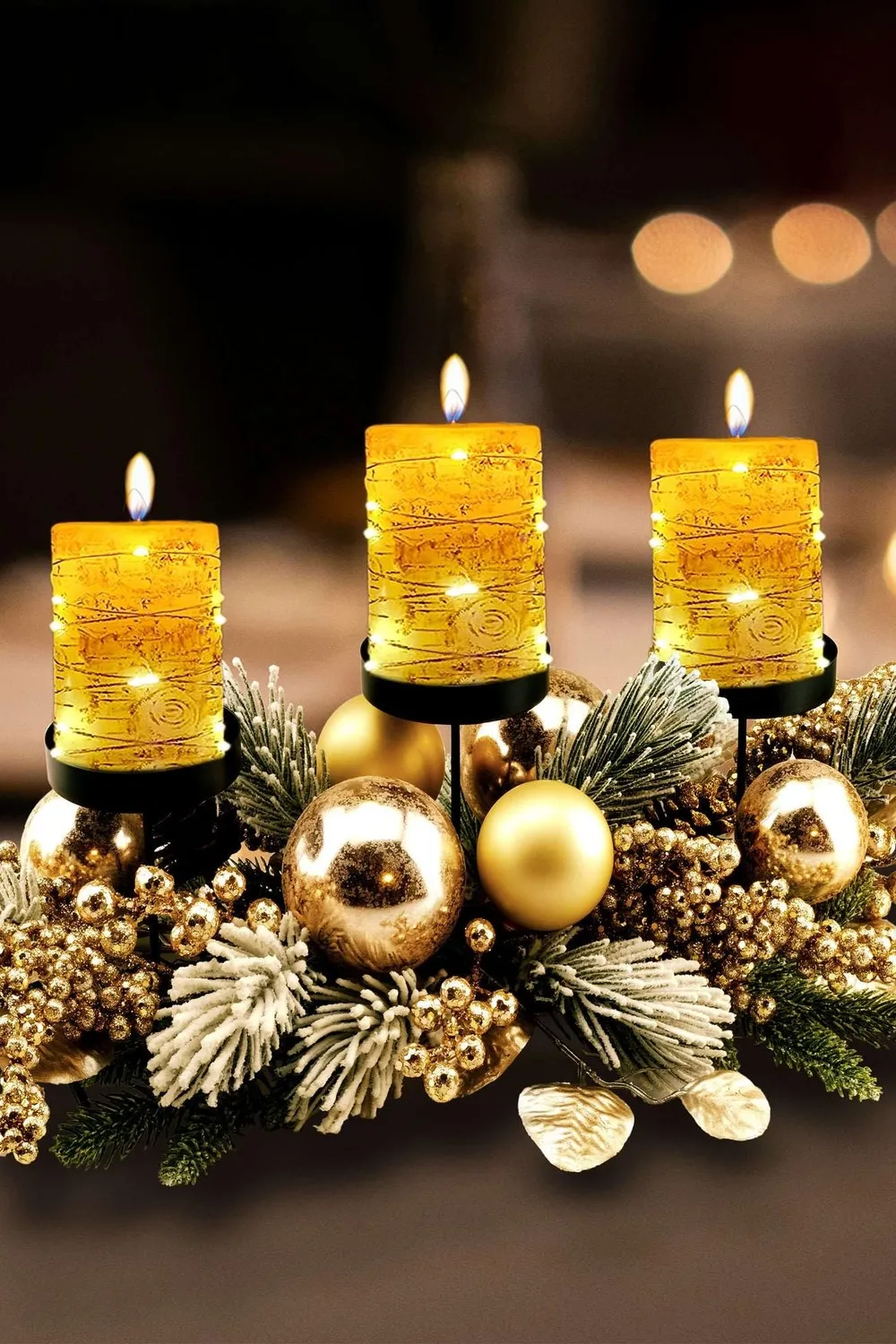
Everything gold at the center — one color, four finishes, the table's boldest middle.
End with the boldest discipline of all: an all-gold centerpiece. Gold candles, gold vase, gold baubles, gold tray — one color in four finishes, matte, gloss, glitter and mirror. Monochrome is what makes it luxurious rather than loud: the eye reads texture and light instead of color, and the center glows like something poured rather than placed.
Styling tip: the finishes must genuinely differ — if everything is the same shiny gold, the arrangement flattens into one blob of glare. Contrast of finish is the whole trick.
Low enough to talk across — under about 30 cm for a dinner table — unless it is a single tall stem arrangement guests can see around. Tall and narrow works; tall and wide blocks the table.
The centerpiece is the one arrangement at the table's center; the tablescape is the whole table — place settings, chargers, glasses and all. This guide is centerpieces only — place settings and the full table setting are a separate topic.
Yes, with the flames clear of any stems or paper and the candles in proper holders on a tray. Keep eucalyptus and feathers well away from open flames, and never leave lit candles unattended.
One mirrored tray or gold charger as the base, three candles at different heights, and one gold element — baubles, branches or a small clock. The base and the repetition do the expensive-looking work.
Yes, in palette only: gold, black, white and silver, the same as the room. The centerpiece can be the most glittering thing on the table — it is allowed to outshine the room, as long as it stays in the same colors.
A new year centerpiece is a small stage at the middle of the table: candles, a vase, a clock near midnight, gold catching the light. Keep it to the center, keep it in the palette, and let it glow when the room goes low. Save your favorite new year centerpiece ideas from this list, build the center first, dress the table around it, and let midnight find a table that was ready. For more seasonal inspiration, follow TheStylingHub on Pinterest, where we pin fresh party, room and color-story ideas all season long. You might also enjoy christmas living room decor ideas — it pairs beautifully with this one.
Seasonal
Nov 21, 2026
32 New year balloon decor ideas — arches, garlands, giant number balloons and a…
Seasonal
Nov 19, 2026
32 January decor ideas for 2027 — a calm, light reset after Christmas: cleared…
Seasonal
Nov 20, 2026
30 Winter entryway decor ideas — lanterns, plaid, wool, bare branches and warm light…