

Seasonal
32 New Year Balloon Decor Ideas: Arches, Number Balloons and a Midnight Drop
Nov 21, 2026
32 New year balloon decor ideas — arches, garlands, giant number balloons and a…
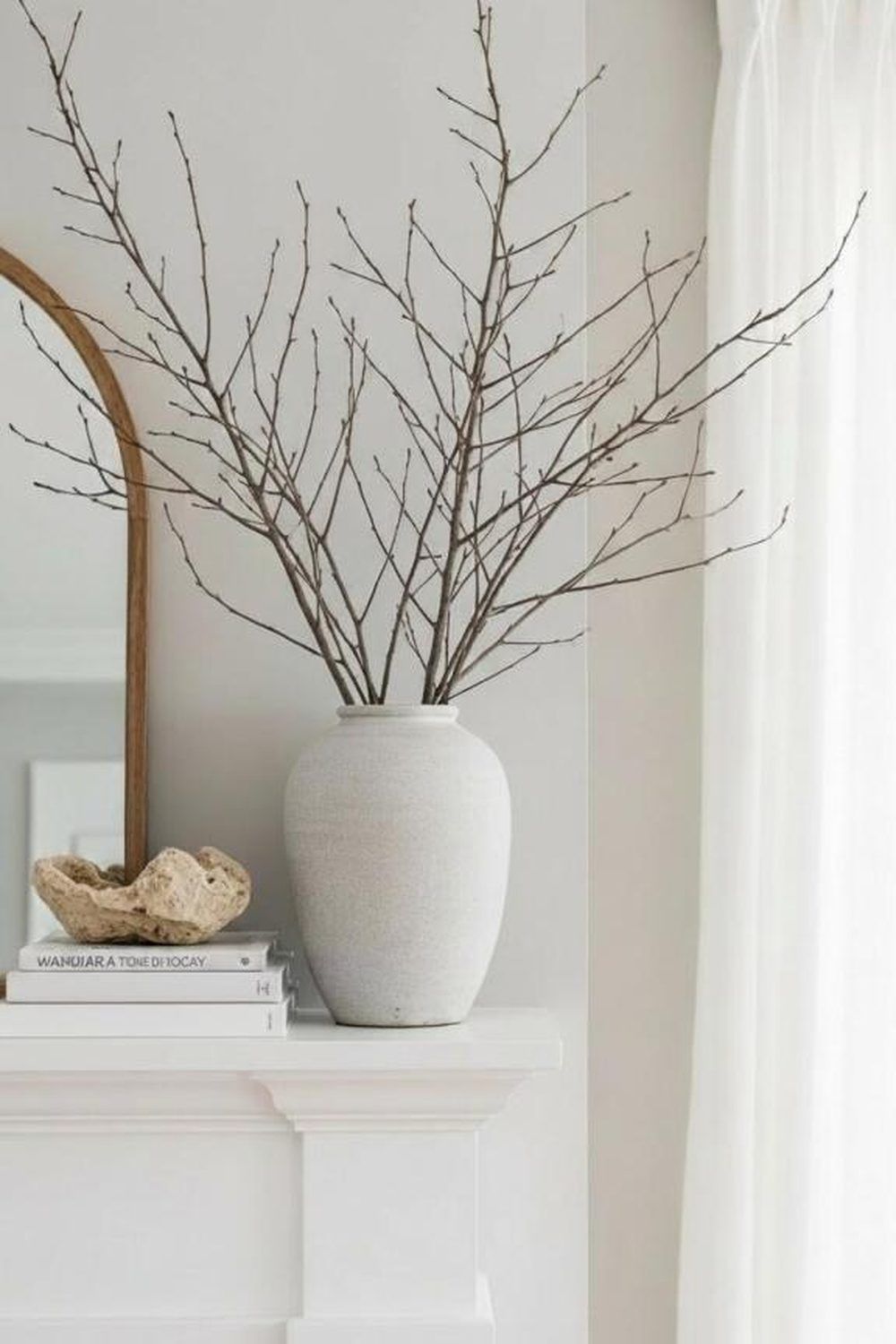
January is the month the house exhales. The tree is down, the glitter is gone, and what is left should feel light, calm and easy to live in. These 32 January decor ideas are a fresh start, not a new project — cleared surfaces, soft neutrals, winter light and a little fresh greenery, so the house feels new again without buying a roomful of things.
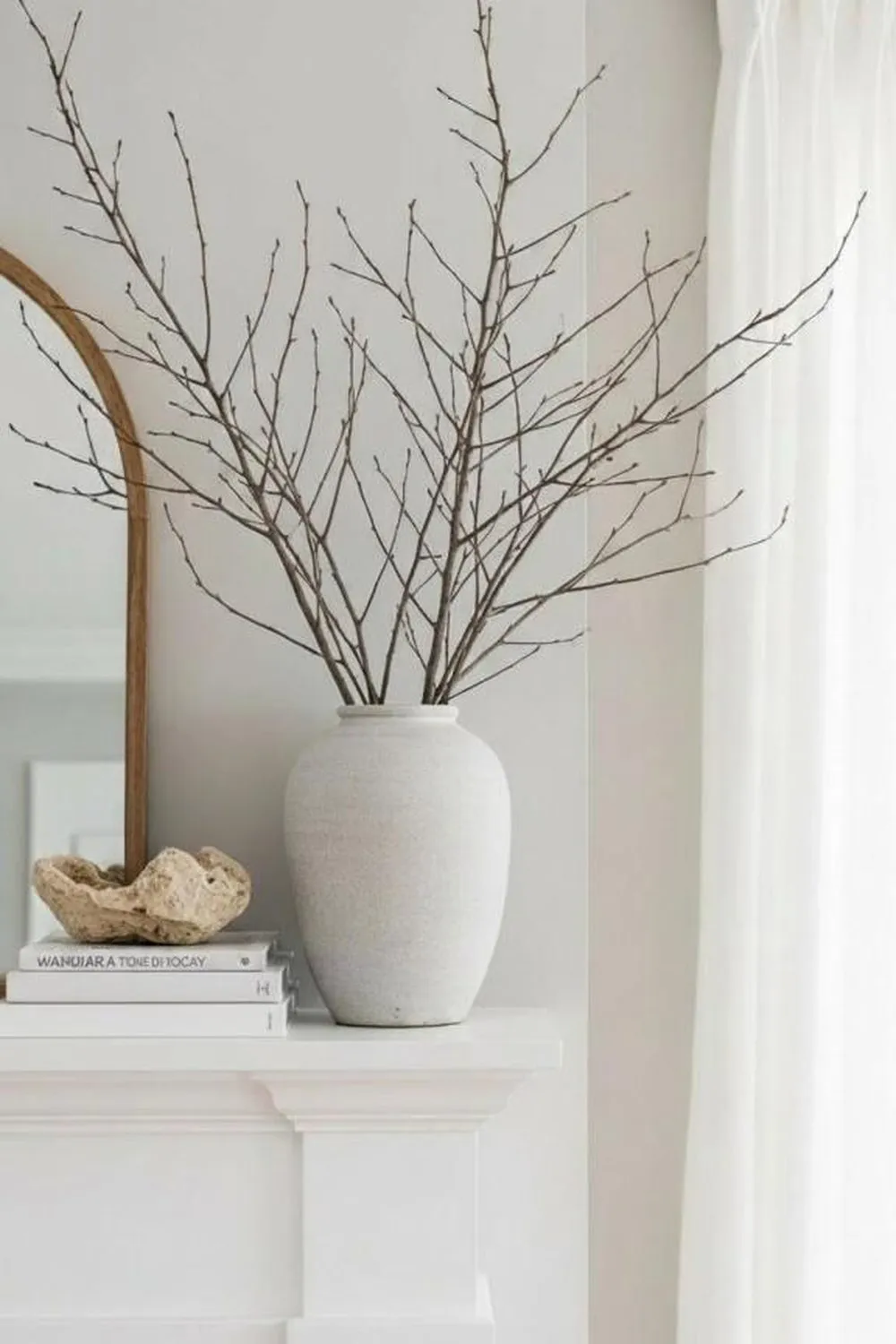
A cleared mantel, one white vase — the whole January reset in a single image.
After weeks of garlands and stockings, the bravest January move is a mantel with almost nothing on it. One white vase, a few bare branches, and a stretch of empty shelf either side — the fireplace becomes the calmest spot in the house instead of the busiest. The emptiness is the decoration; it lets the room breathe again.
Styling tip: wipe the mantel down before you style it — dust and glitter hide in the corners after Christmas, and a clean surface is half the fresh feeling.
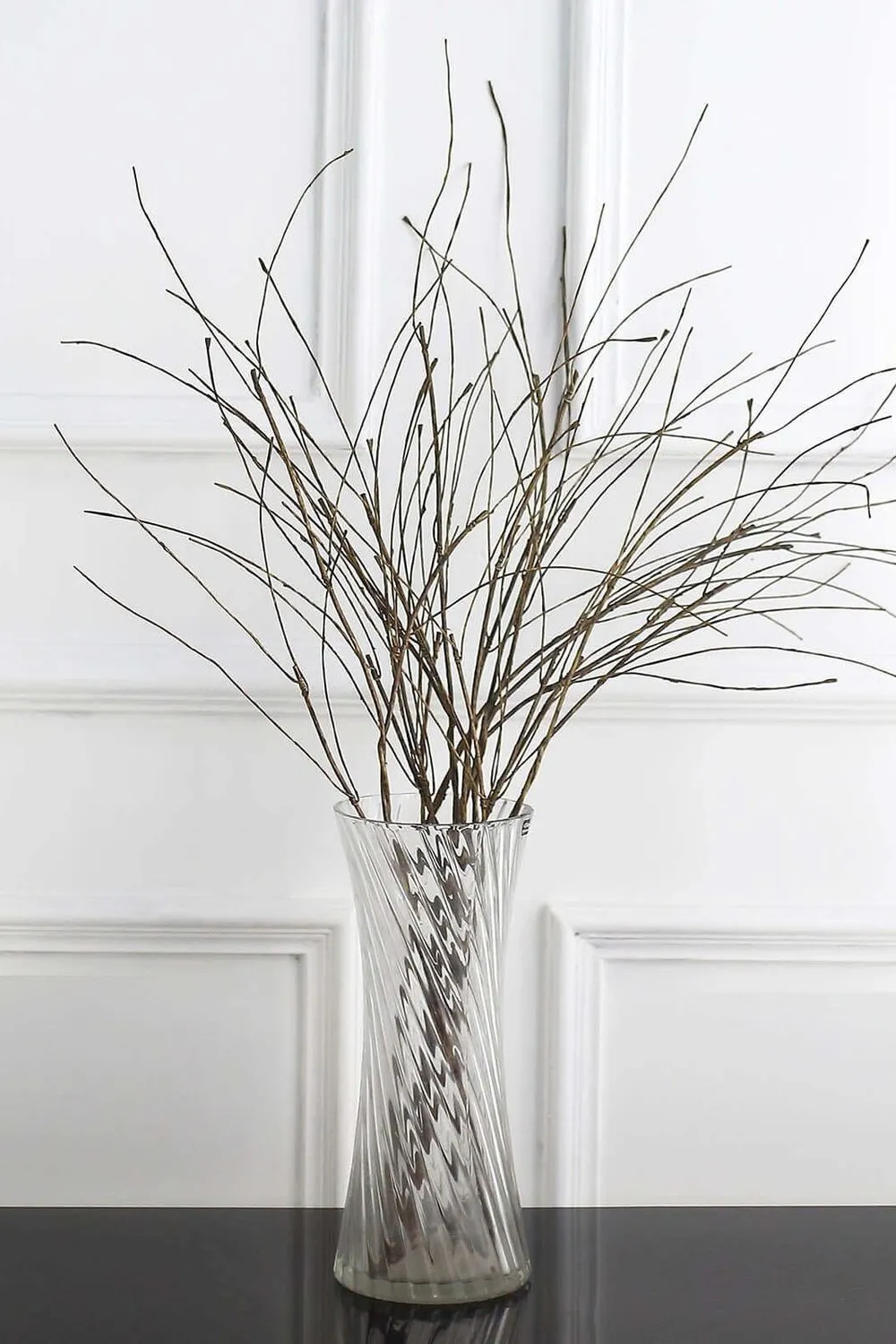
No ornaments, no lights — bare branches are winter enough on their own.
Bare branches are January's answer to the Christmas tree: the same winter silhouette, with nothing hanging on it. A tall glass vase keeps the arrangement light — you see the stems and the water line, not a heavy pot — and it works on a console, a dining table or the corner of a kitchen counter.
Styling tip: cut branches at different heights and let one lean longer than the rest; a slightly uneven arrangement looks gathered from a walk, not bought in a shop.
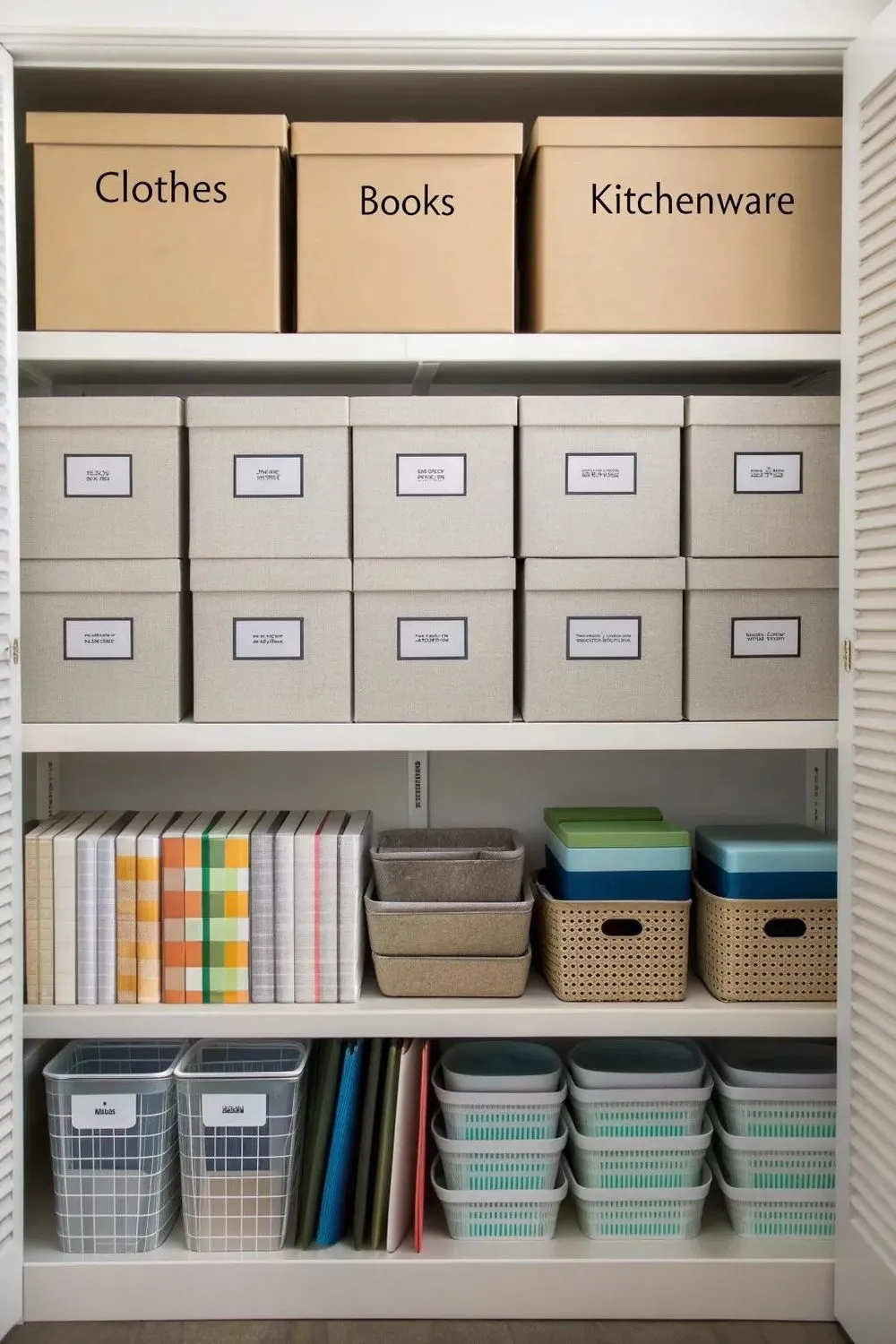
Christmas packed away properly — labeled boxes, nothing shoved in a bag.
The reset starts with how Christmas leaves the house. Decorations packed into labeled boxes — one for the tree, one for the table, one for the doors — stack neatly on a cupboard shelf and make next December calmer before it even starts. This year's packing is next year's decorating, done early.
Styling tip: write the label on two sides of each box, so it reads whichever way the box lands on the shelf — and add one line for anything that needs replacing while the sales are on.
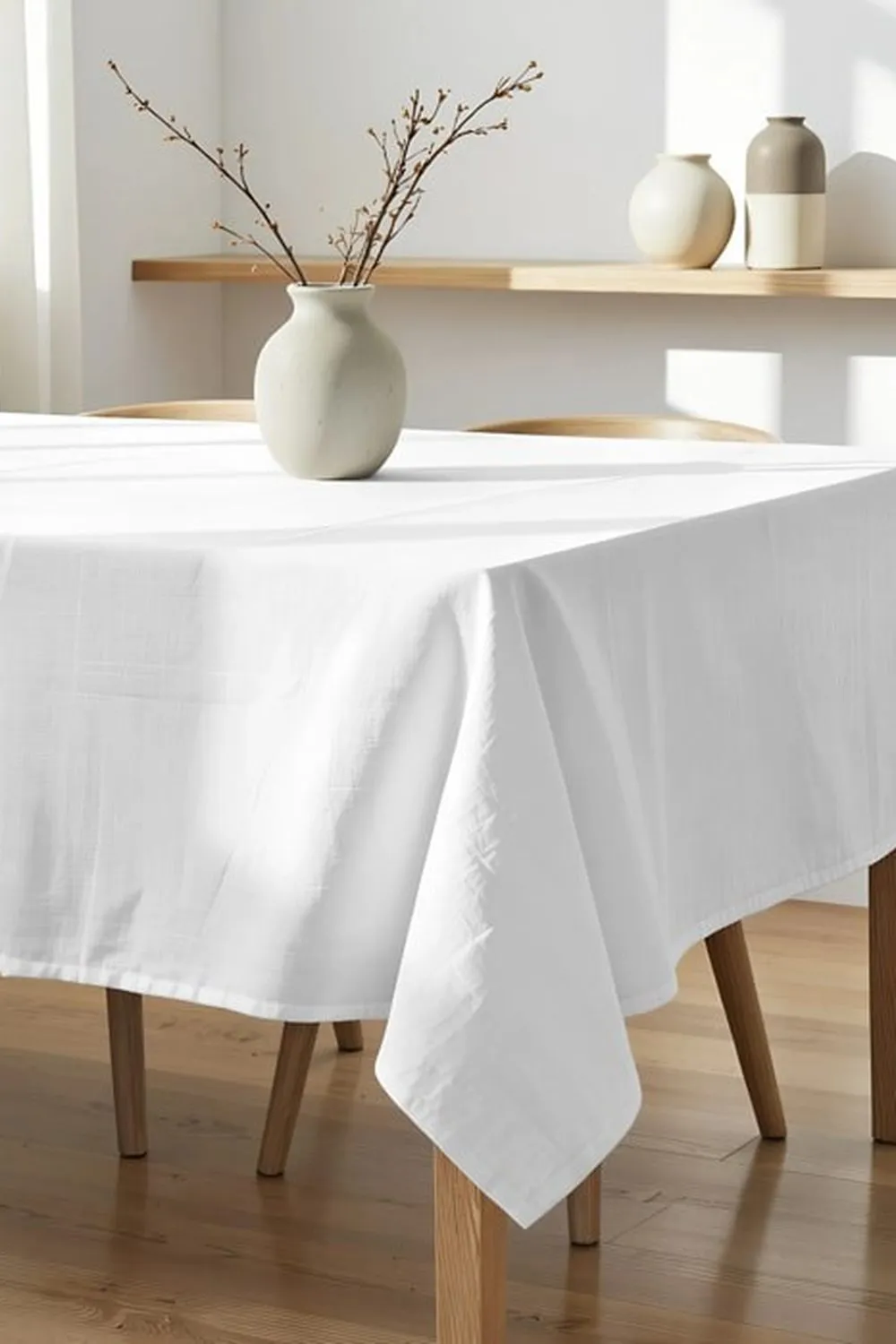
The festive cloth comes off, plain white linen goes on — the table looks new.
Nothing dates a dining room like the Christmas cloth still on the table in the second week of January. Swap it for plain white linen and the room changes temperature: meals look fresher, the table photographs cleaner, and a single vase in the middle is suddenly enough decoration for the whole surface.
Styling tip: let the white cloth fall long at the ends and keep the centerpiece to one vase — the contrast between the generous cloth and the single object is what looks styled.
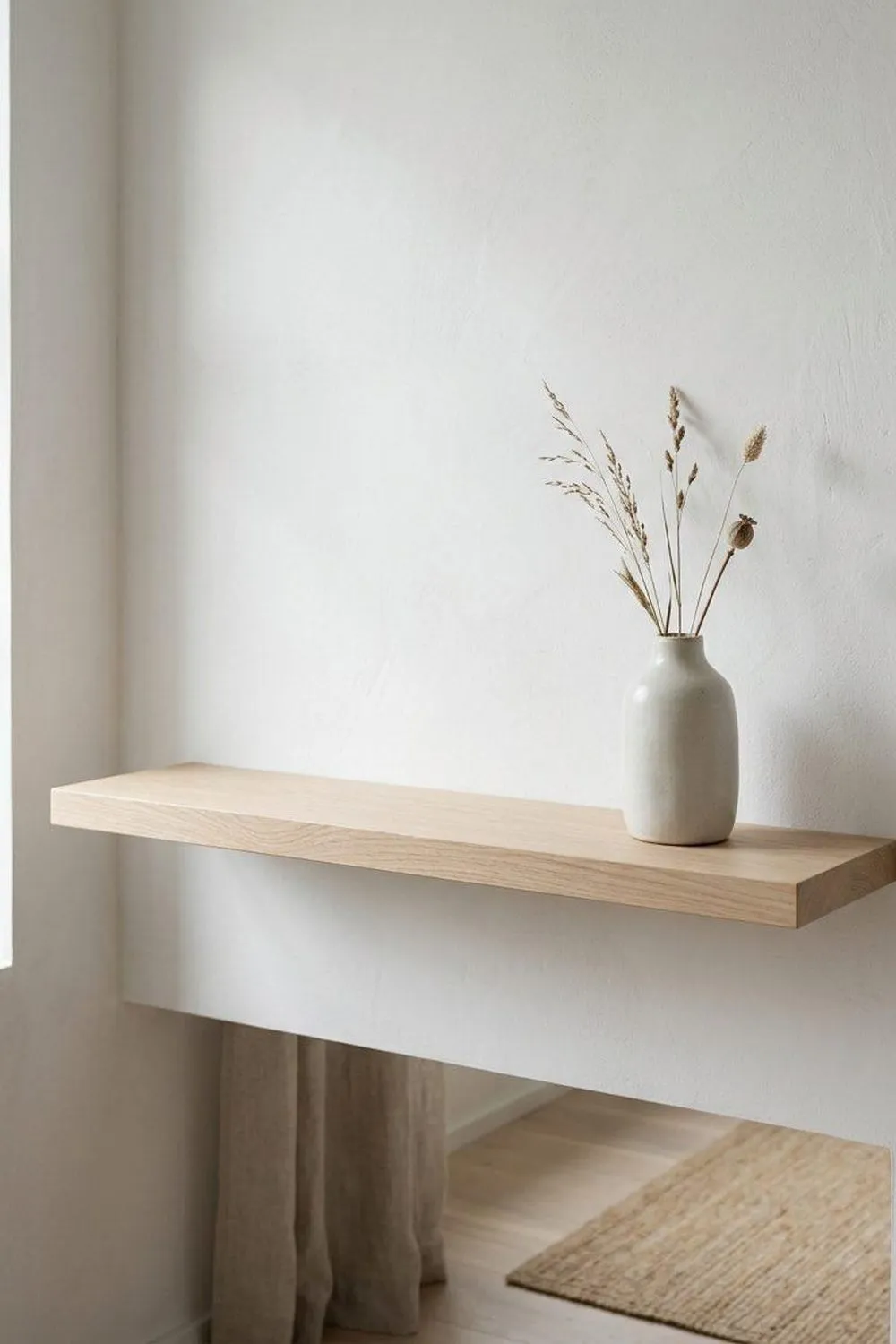
An empty shelf is not unfinished — in January it is the calmest thing in the room.
Every styled shelf in December carries three or four objects; January's version carries one. A small vase at one end and bare wood for the rest of the run gives the eye a rest and makes the single object look chosen rather than leftover. It is the cheapest idea in this list — it costs one clear-out.
Styling tip: bare shelves collect dust faster than full ones, visually speaking — a quick weekly wipe keeps the emptiness looking deliberate instead of forgotten.
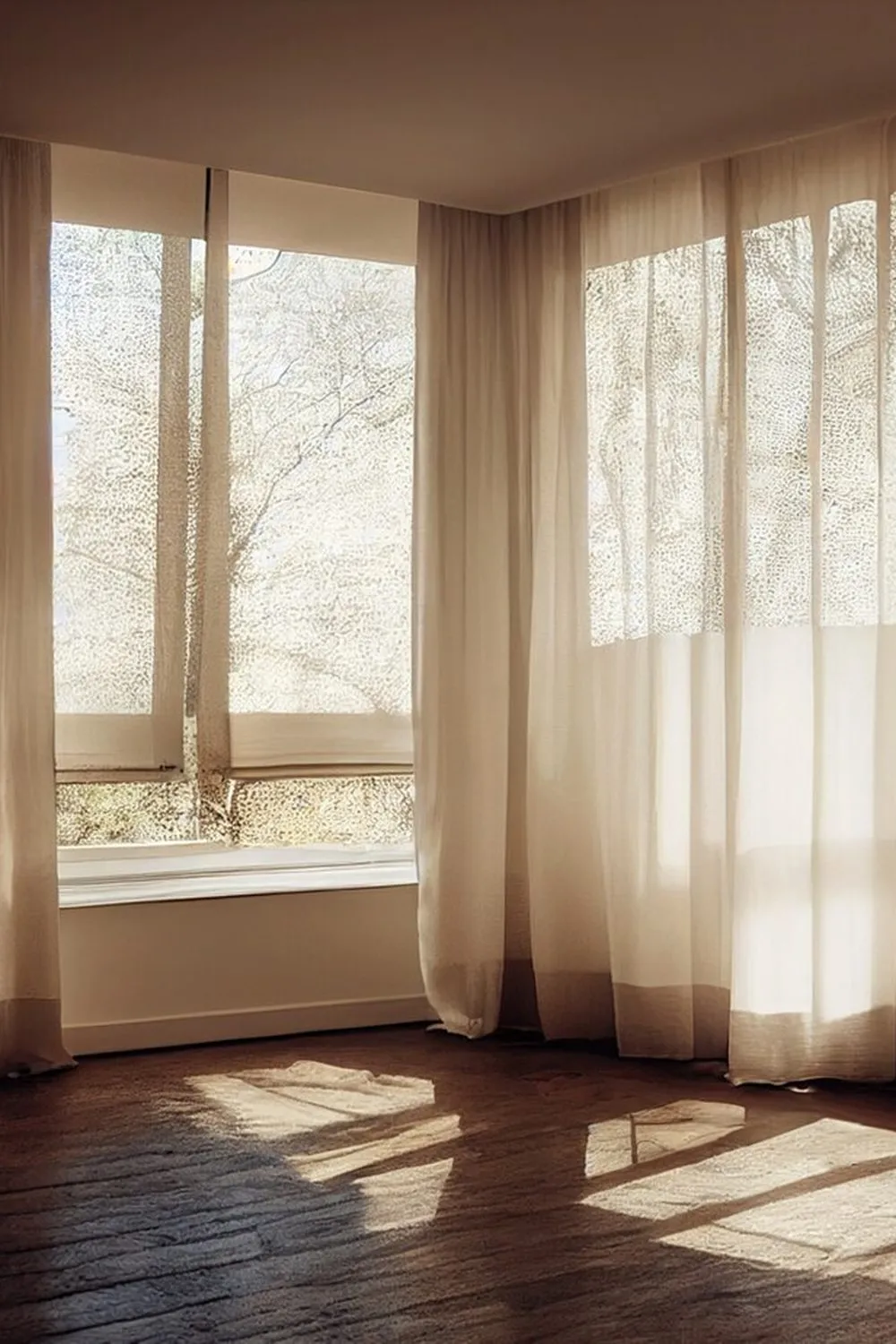
Heavy festive curtains down, sheer white up — the room gets its daylight back.
January light is weak enough without heavy curtains drinking half of it. Sheer white panels soften the glass, hide a gray view, and let every scrap of daylight through — rooms feel bigger at breakfast time, which is exactly when January needs the help. If the heavy curtains were the festive ones, the swap does double duty.
Styling tip: hang sheers a few centimeters wider than the window frame so they stack onto the wall, not the glass — the window reads larger and the light loss is minimal.
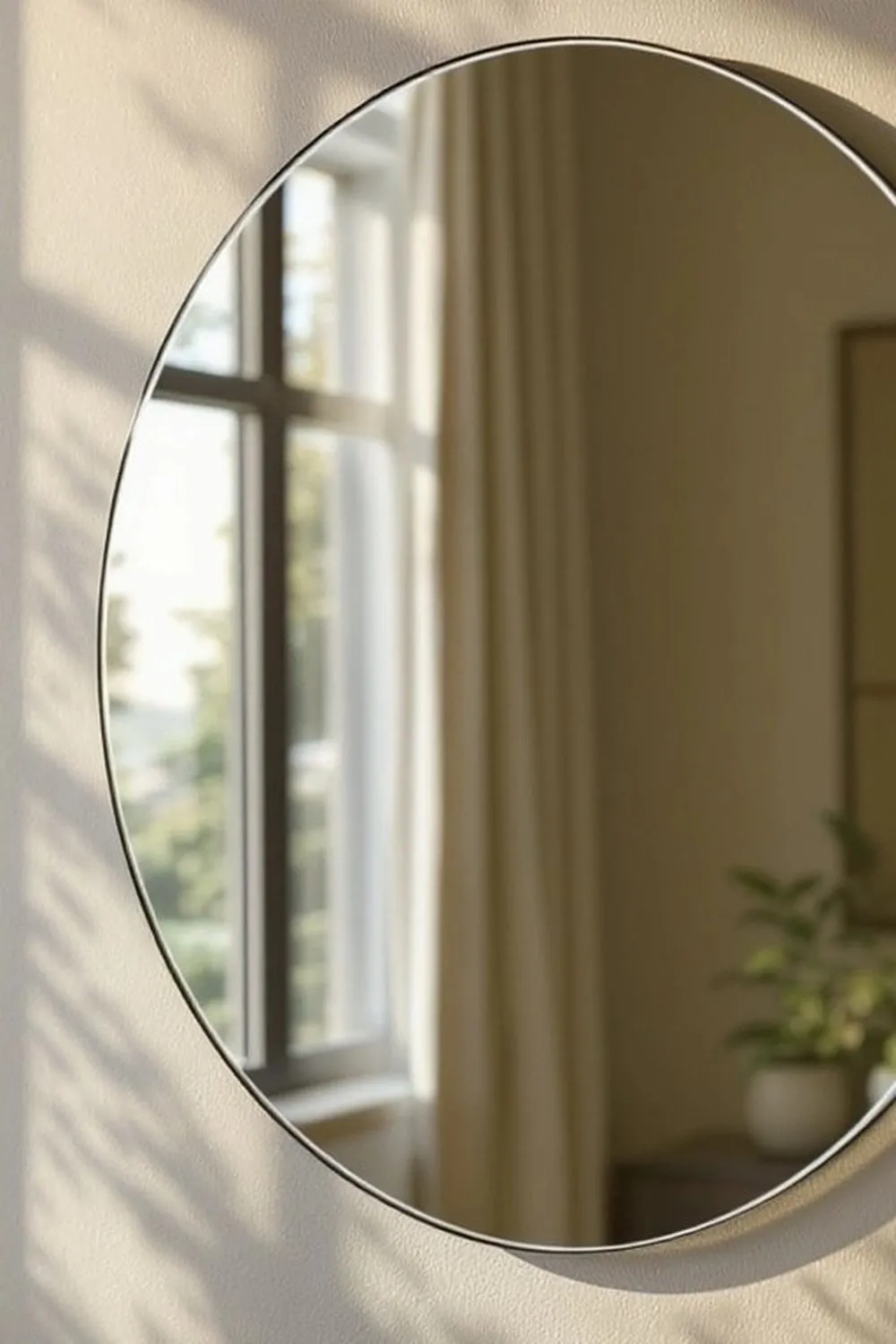
One mirror opposite the window does more than a new lamp ever will.
A mirror hung opposite the brightest window is the oldest decorator's trick there is, and January is when it earns its keep: whatever daylight the day offers gets thrown back into the room instead of dying on the far wall. A round mirror softens all the straight lines of a post-Christmas tidy room.
Styling tip: hang it at the height where it reflects the window, not the ceiling — sit in the room's main chair and check what the mirror actually shows before fixing it.
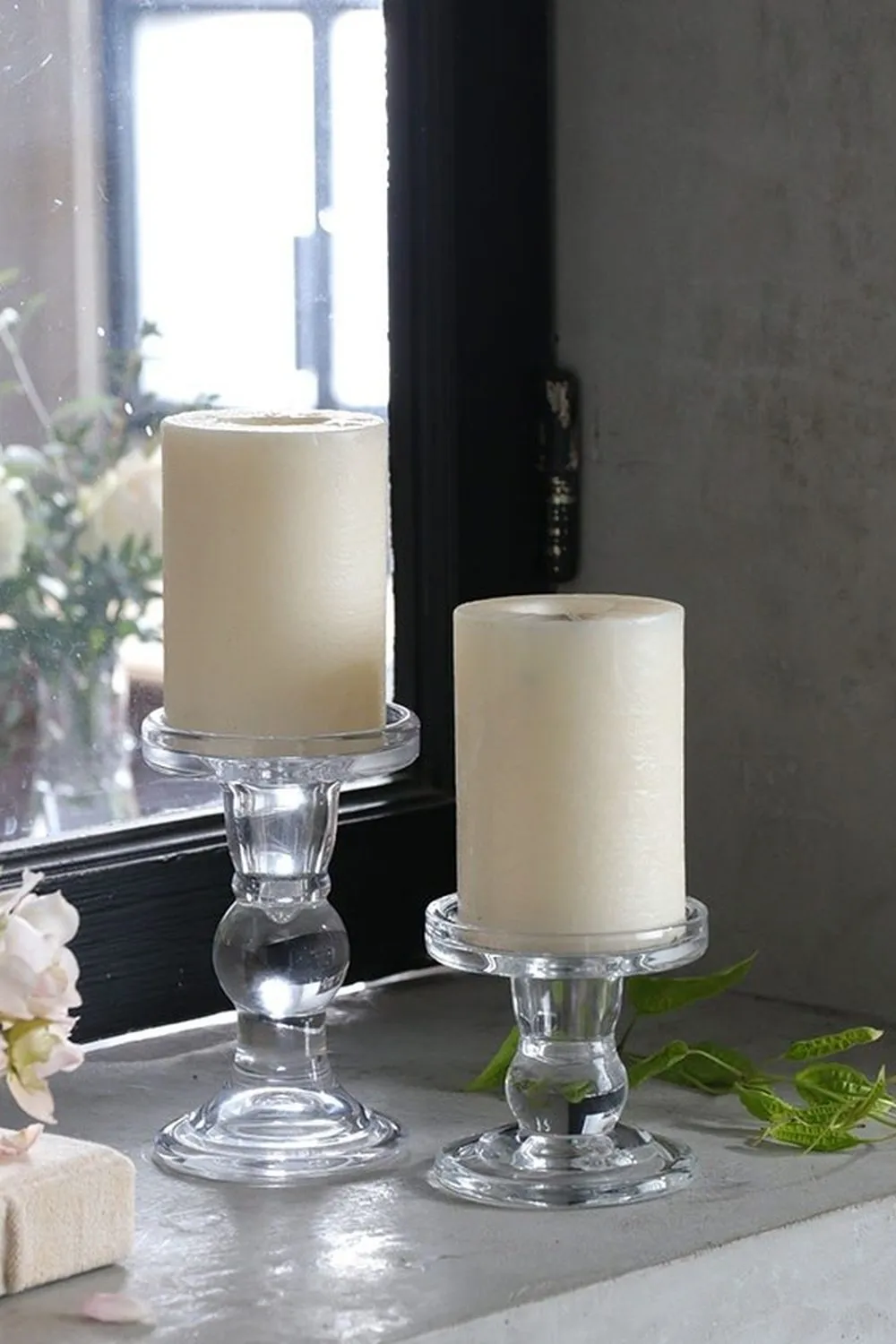
Plain white candles, clear glass — light without color competing with it.
Candles do not have to retire with the Christmas boxes. Plain white pillars in clear glass holders belong to winter, not to the festival — on a windowsill they catch the last of the afternoon light and then take over from it at dusk, with no color competing against the pale room.
Styling tip: group three holders of different heights on one sill rather than spreading singles around the house; a cluster reads as an arrangement, a scatter reads as leftovers.
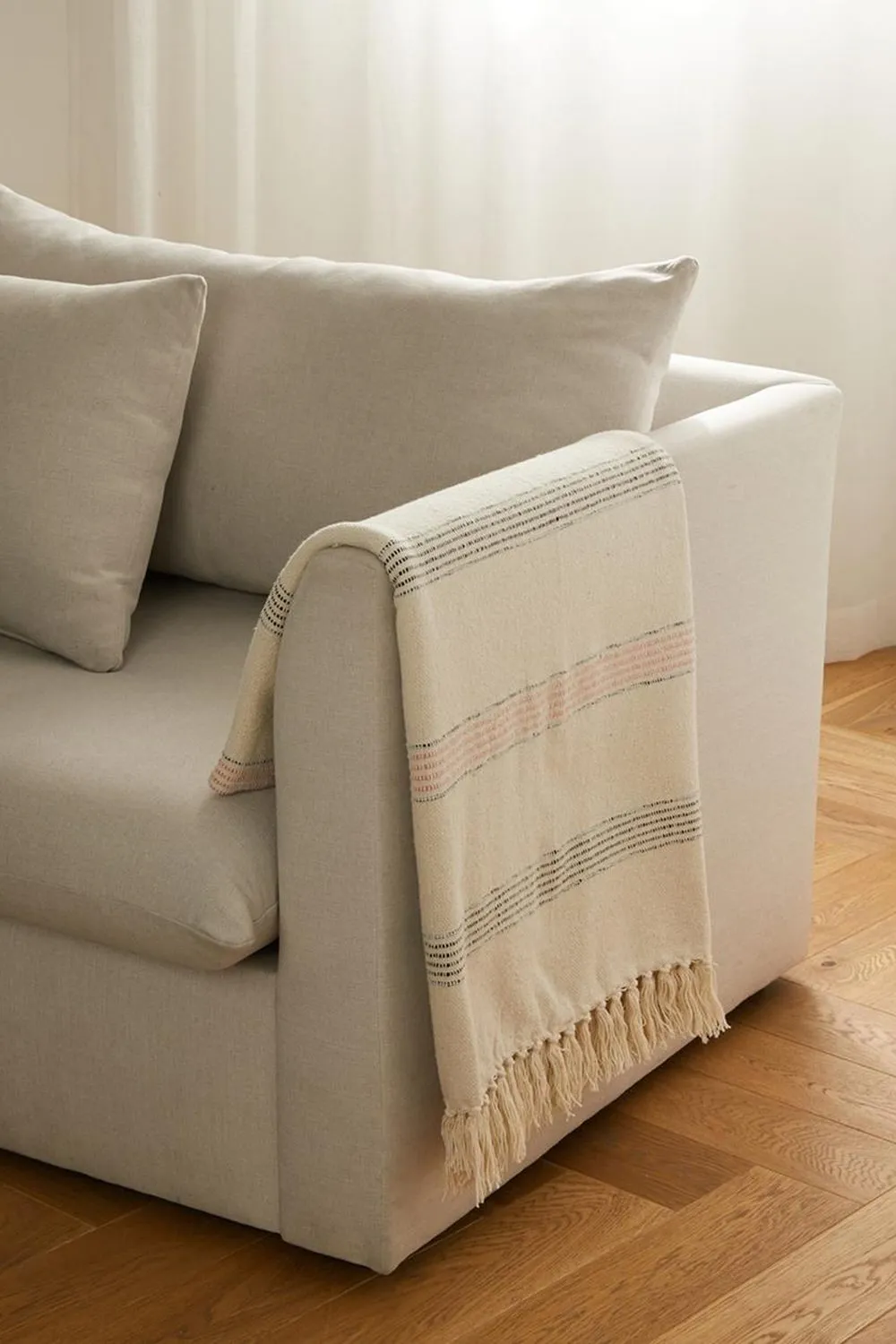
Cream, not red — one folded throw changes the whole sofa's mood.
The festive throw goes into the wash and into the cupboard, and a cream one takes its place — folded, not draped. A neat fold over the sofa arm is a small signal that the house has been reset on purpose: the softness stays, the season changes. It is also the fastest full-sofa refresh there is.
Styling tip: fold the throw in thirds lengthways so it sits flat and narrow on the arm; a puffy fold slides off and looks like laundry waiting to happen.
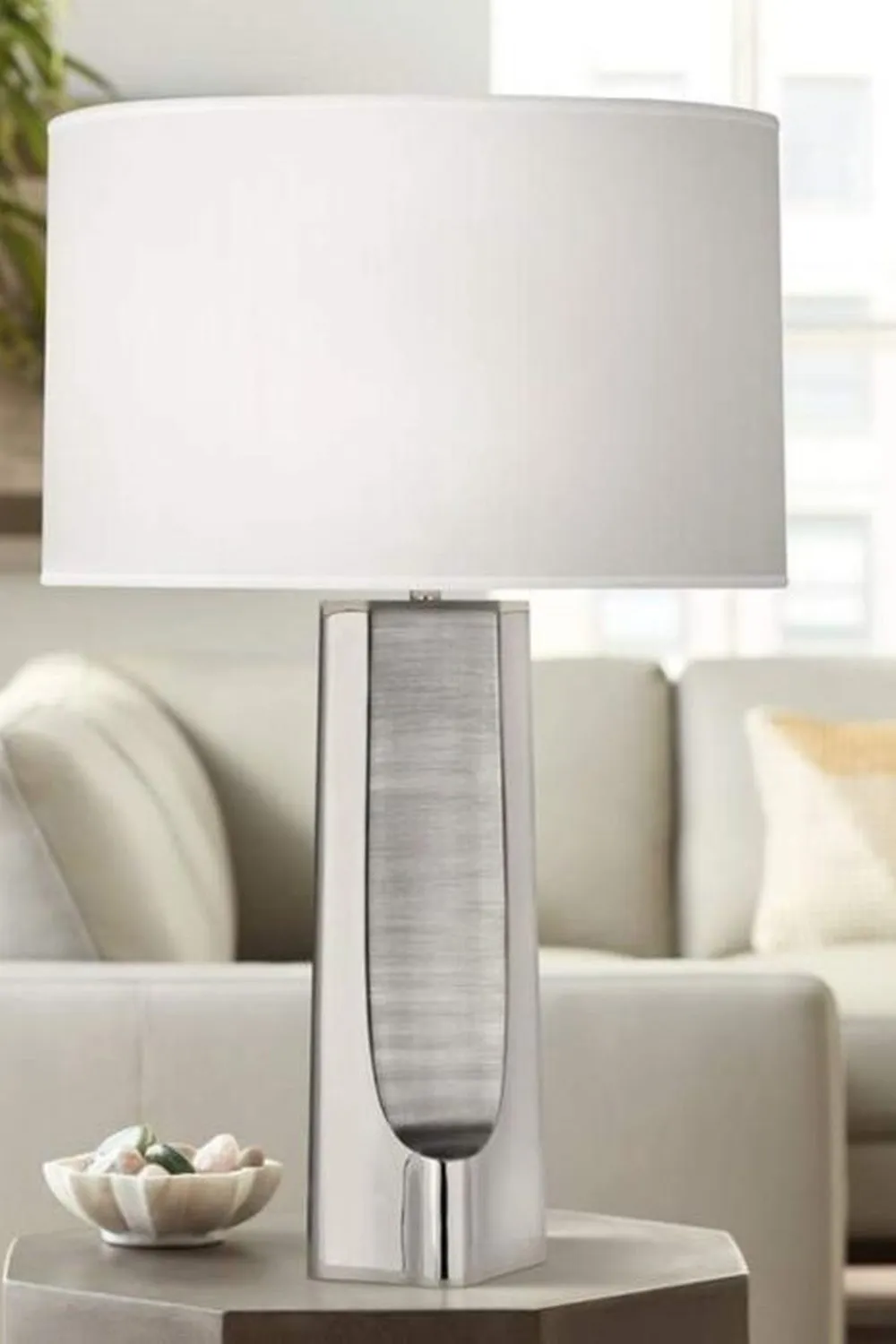
Cool metal, white shade, warm bulb — January light, done simply.
Warm metals everywhere can keep a room feeling like December. A brushed-nickel lamp base with a plain white shade cools the palette down a degree and matches the pale, silvery light outside the window — while a warm bulb inside the shade keeps the glow kind rather than clinical.
Styling tip: keep metal finishes to two per room at most — nickel lamps with, say, a black-framed mirror still work, but three or four metals start to look accidental.
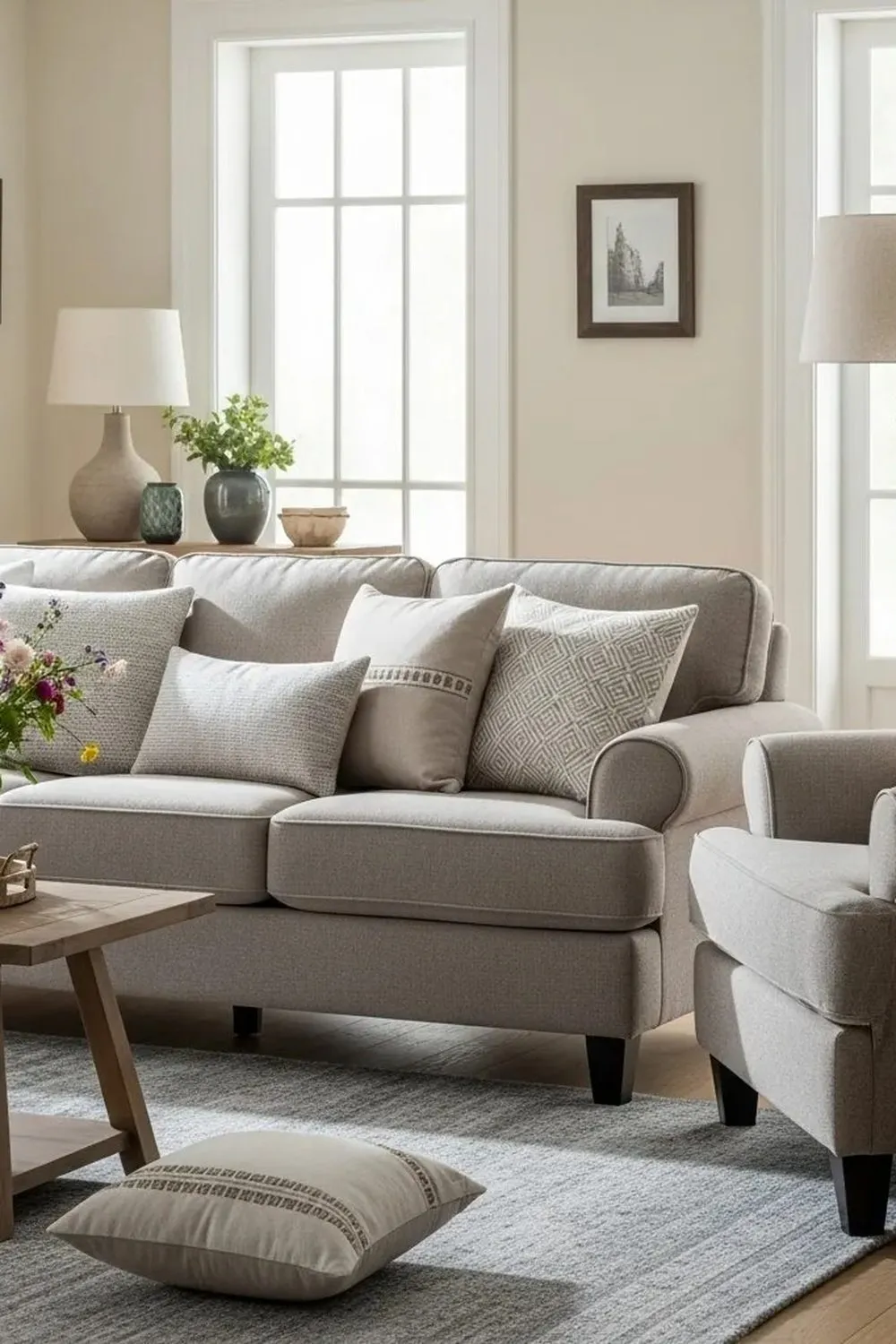
Cream and soft gray — the palette January actually feels like.
If December is red and gold, January is cream and soft gray. The reset does not need new furniture — it needs the festive cushions, throws and table pieces swapped for the neutral ones already in the cupboard. What remains is a room that matches the light outside: pale, quiet and easy to add to later.
Styling tip: keep one warm element in the mix — a wood side table or a woven basket — so gray reads calm rather than cold.
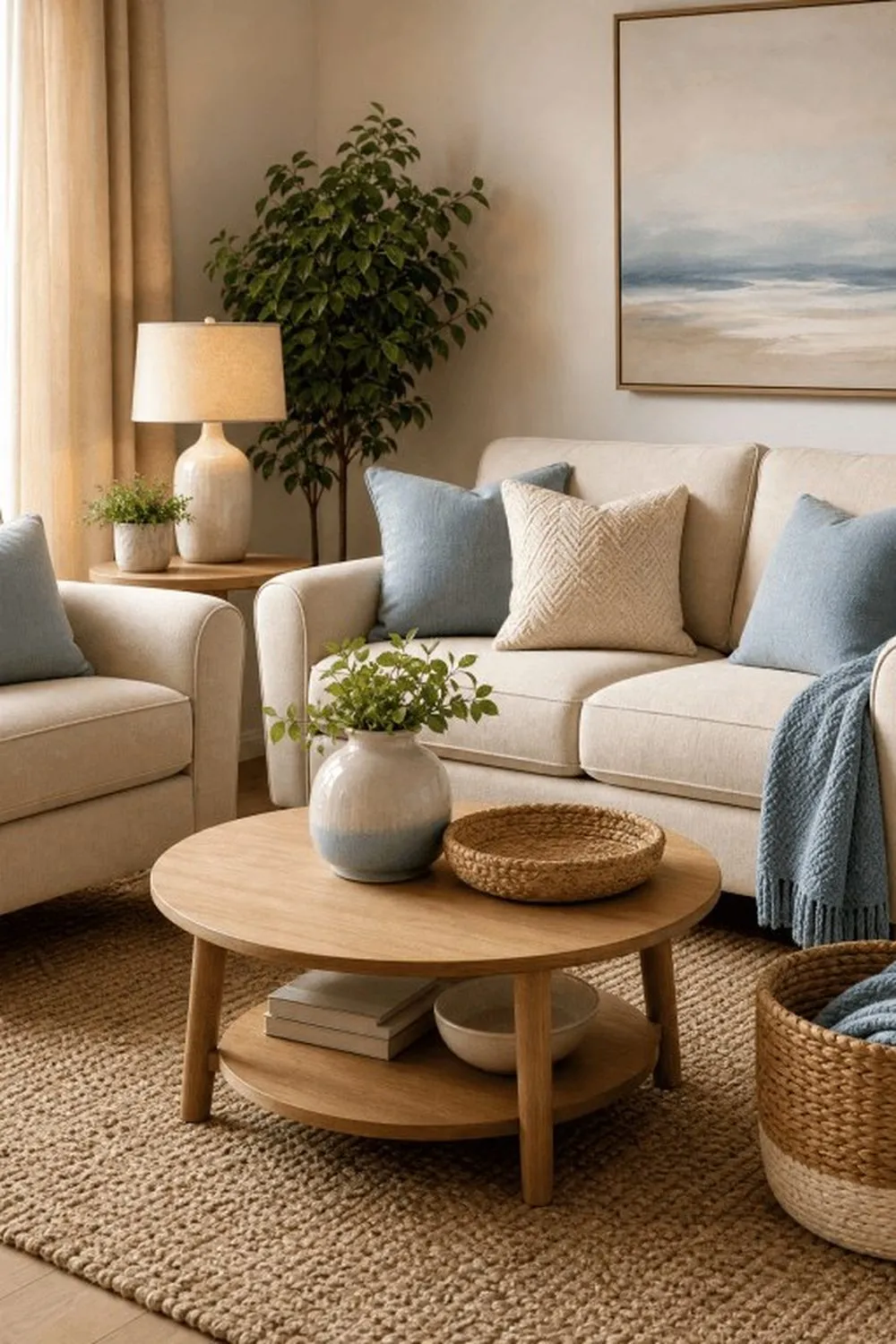
Pale blue is winter light in cushion form — cool, calm, never cold.
Pale blue is the one color that feels like January itself: the color of a clear winter morning. Two cushions in a washed, dusty blue on a beige or cream sofa lift the whole arrangement without a single festive note, and they carry the room through to spring untouched.
Styling tip: choose blue with a gray base, not a bright sky tone — greyed blues sit calmly with neutrals, bright blues shout over them.
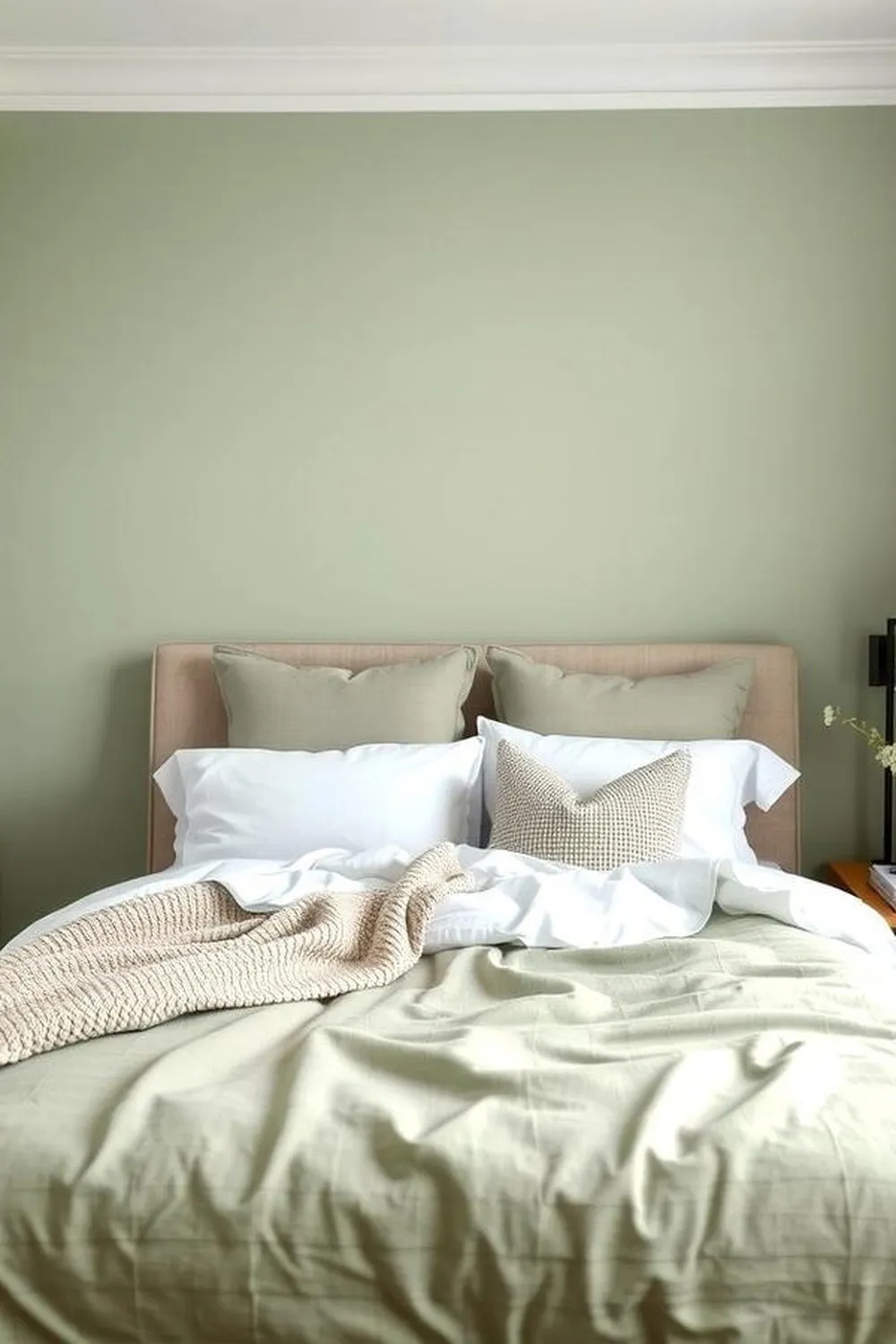
Sage green bedding makes the bedroom feel rested before you even get in.
The bedroom reset is mostly laundry: festive or dark winter bedding off, sage green on. Sage sits exactly between green and gray, so it feels fresh without feeling cold, and it flatters the pale January light that bedrooms get first thing. White pillows keep the bed looking crisp, hotel-style.
Styling tip: if a full set feels like a big change, start with just the pillowcases in sage over white bedding — the bed reads new for the price of two pillowcases.
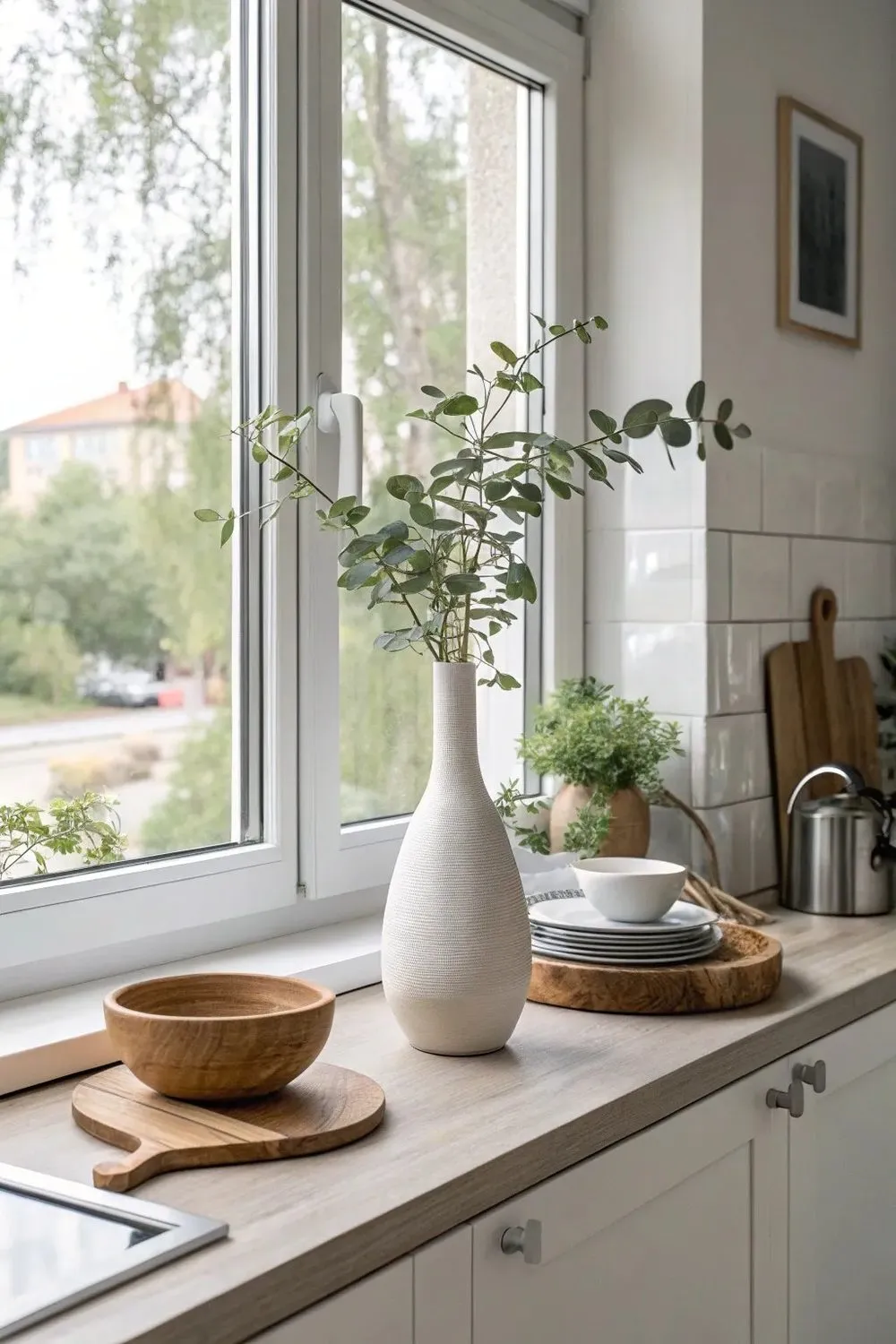
White and light wood — the kitchen looks clean because it is clear.
The January kitchen is a cleared one: counters emptied back to the few things used daily, those few in white and light wood. A wooden board, a white crock for utensils, one small vase of greenery — the counter looks like a magazine kitchen mostly because there is so little on it.
Styling tip: the rule is one object per counter run, plus the things that earn their place daily (kettle, board). Everything else goes in a cupboard for a month — most of it will not be missed.
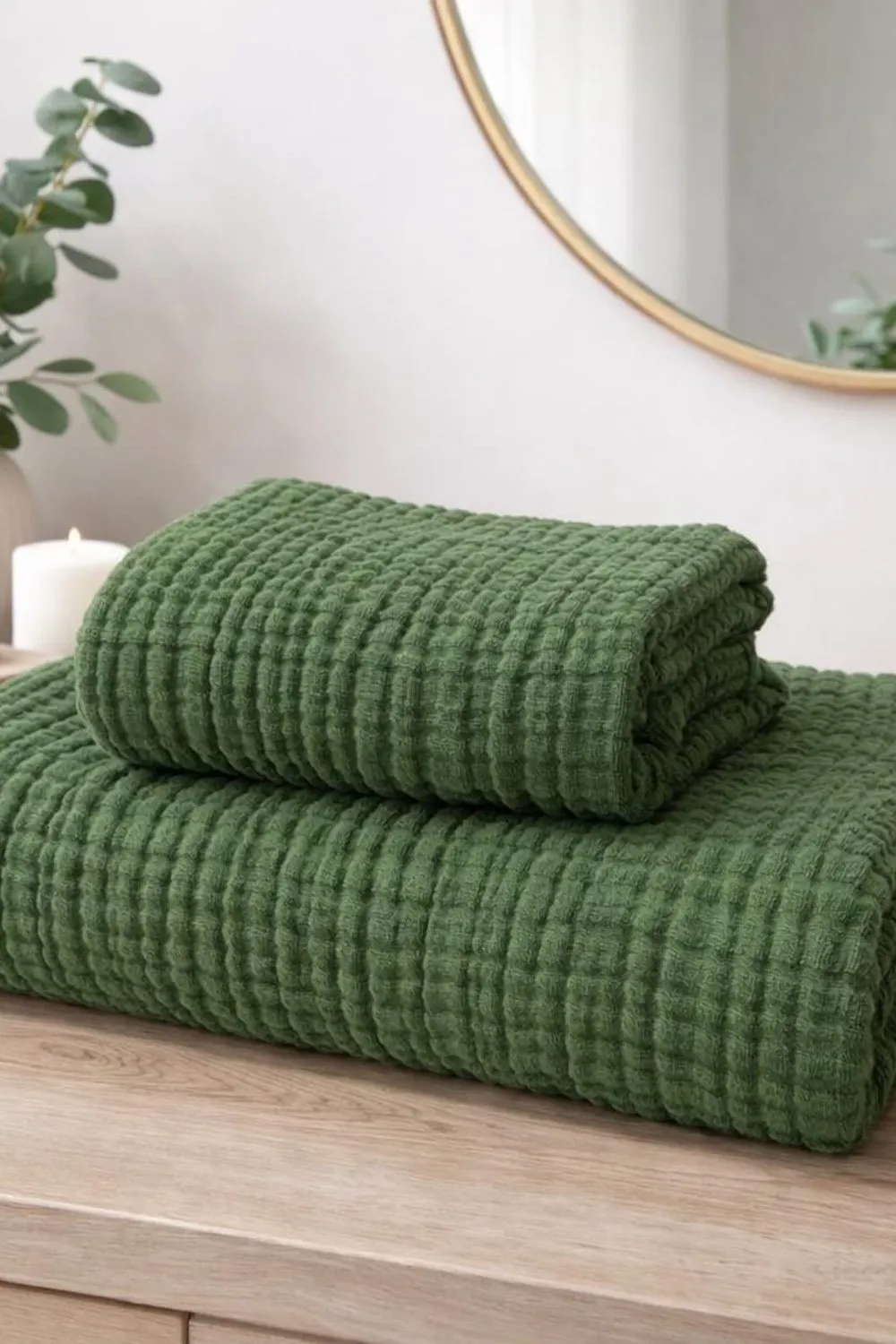
One muted green, repeated twice — towels and a stem of eucalyptus is enough.
Bathrooms reset fastest of all: a set of towels in one muted green and a jar with eucalyptus stems by the basin. The color appears exactly twice, which is what makes it look designed — once is an accident, twice is a palette. Everything else stays white, and the room looks like a small spa.
Styling tip: hang one towel folded over the rail and roll the spares in a basket; folded and rolled textures together make a plain bathroom look styled.
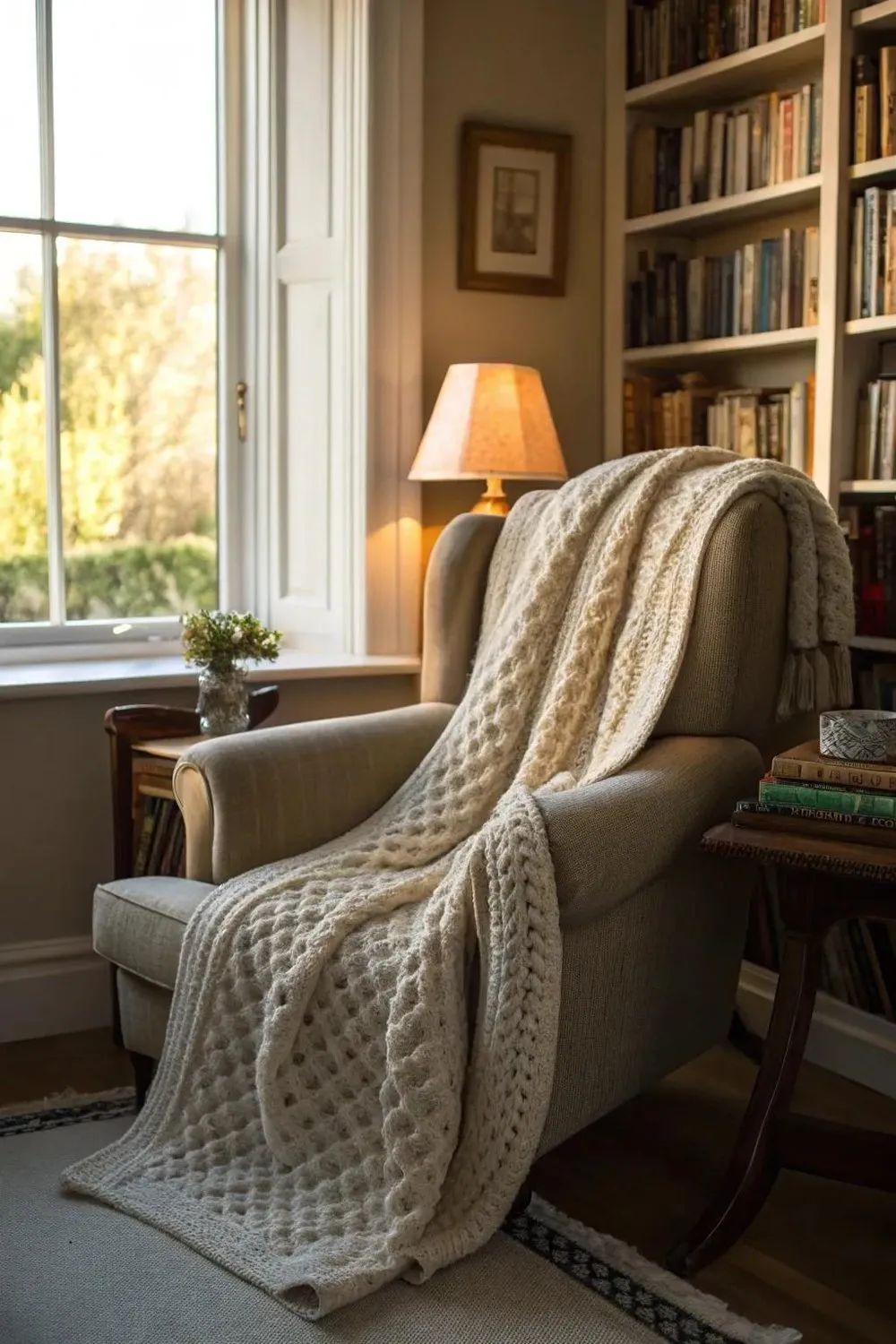
Chunky cream knit — cozy, but nothing about it says Christmas.
January still needs blankets; it just needs them without the reindeer. A chunky cream knit over the reading chair keeps the cosiness and drops the theme — the texture does all the work that color used to do. Beside a window with a book on the arm, it is the month's best corner.
Styling tip: drape the throw over one corner of the chair back rather than the whole chair — a corner drape shows the knit pattern and looks placed, not abandoned.
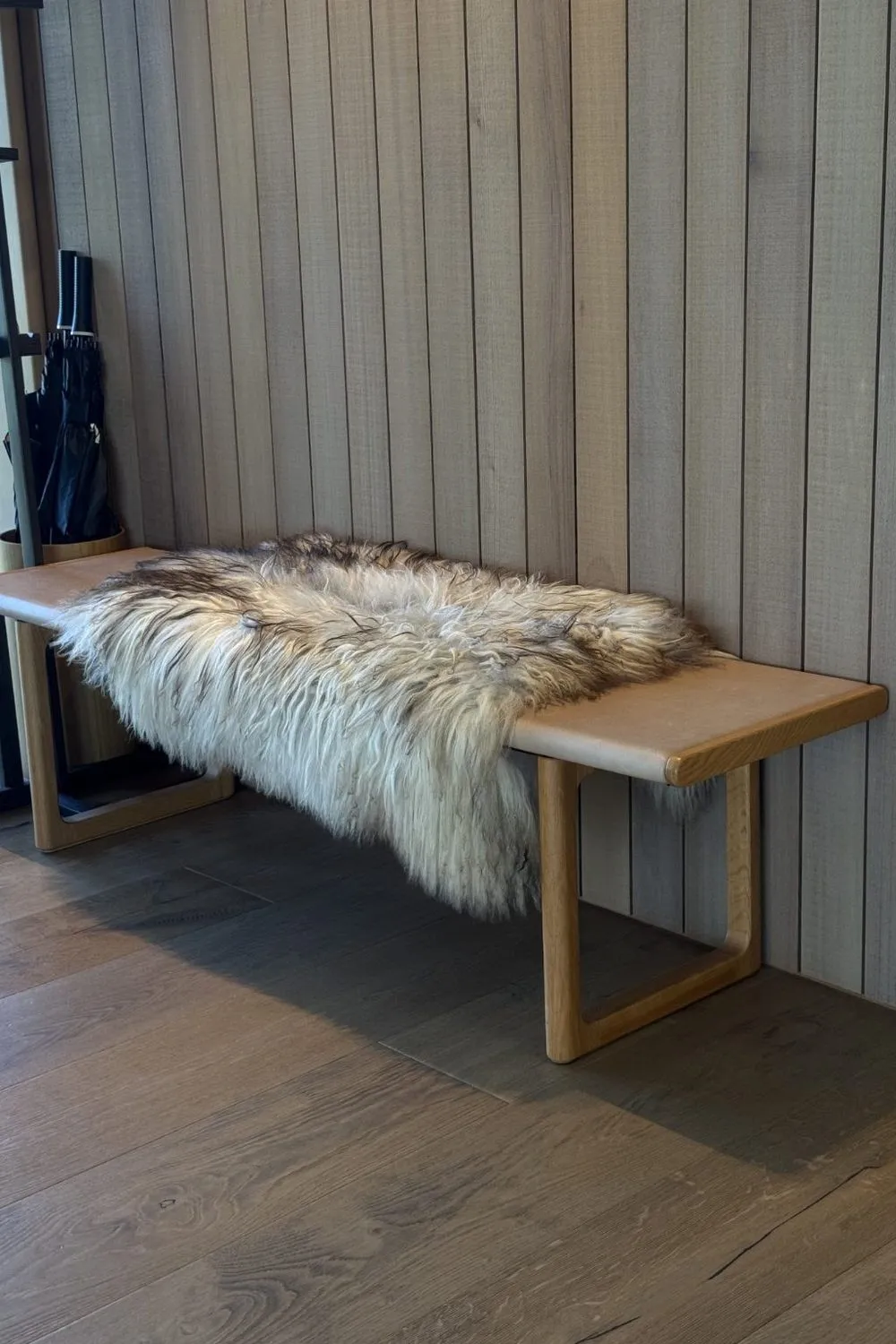
Sheepskin on plain wood — warmth you can see from the doorway.
A sheepskin over a plain wooden bench is winter texture at its simplest: one natural material, no pattern, no color story to manage. It softens a hard seat in a hallway or at the foot of a bed, and it can move rooms in seconds when a spot feels bare.
Styling tip: shake a sheepskin outside once a week and brush it with a pet brush — two minutes keeps the pile fluffy instead of flat through the whole winter.
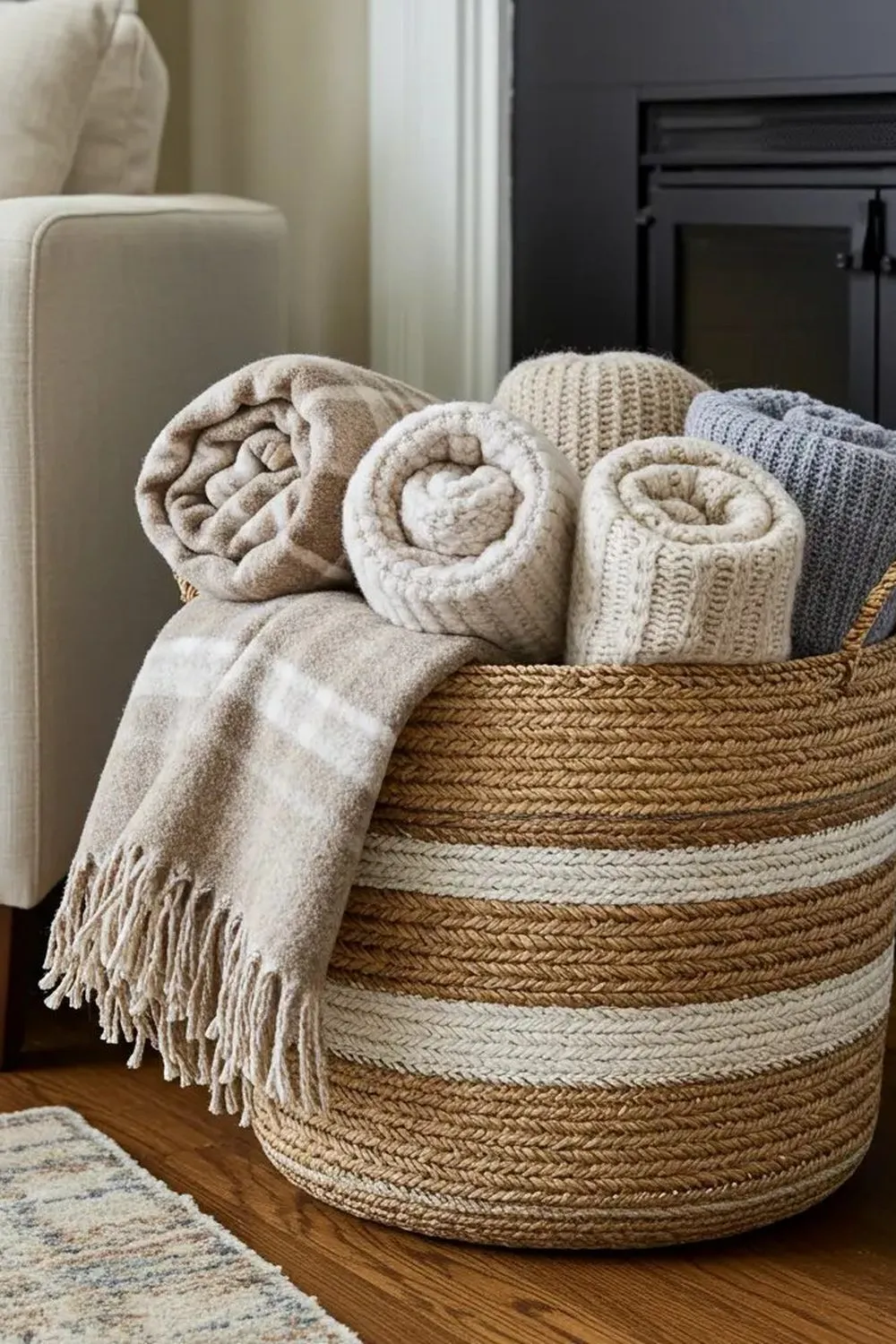
Blankets rolled, not folded in a pile — the basket is the decor.
The blankets still live by the fire, but in January they live tidily: rolled into a woven basket, ends out, so the collection looks like a display instead of a nest. Rolling also means the blanket you want comes out without unfolding three others onto the floor.
Styling tip: roll blankets in shades of one color family — creams and greys together, for instance — the basket then reads as a palette, not a jumble sale.
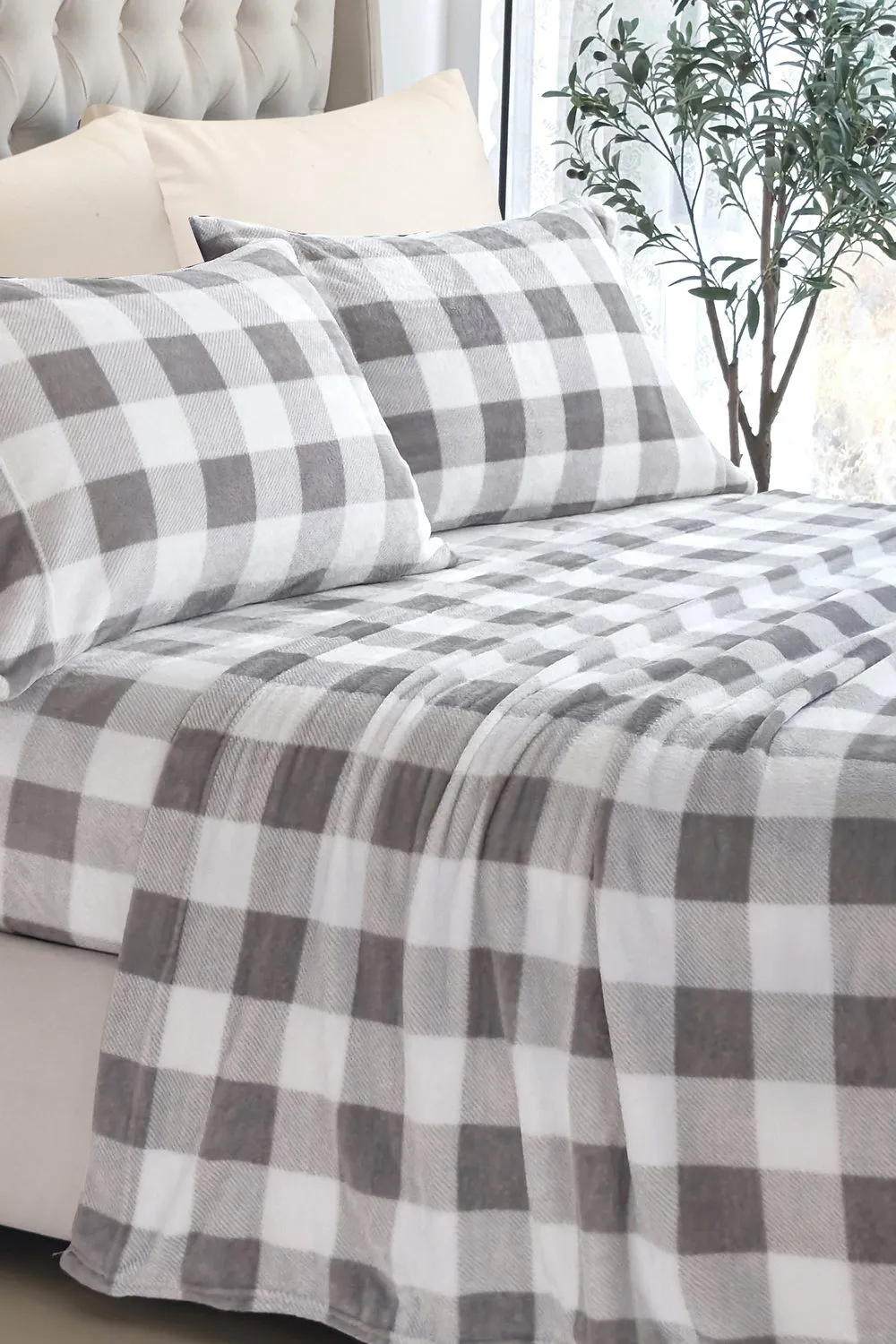
Flannel in white and gray — warm to sleep in, calm to look at.
Flannel is the practical heart of January bedding — warmer than cotton at 3 a.m. — and in soft white and gray it keeps the calm palette the bedroom reset started. The brushed texture looks matte and restful in daylight, which is more than can be said for shiny winter satins.
Styling tip: wash flannel inside out and skip the fabric softener; the fibers stay brushed and warm instead of going flat and slippery.
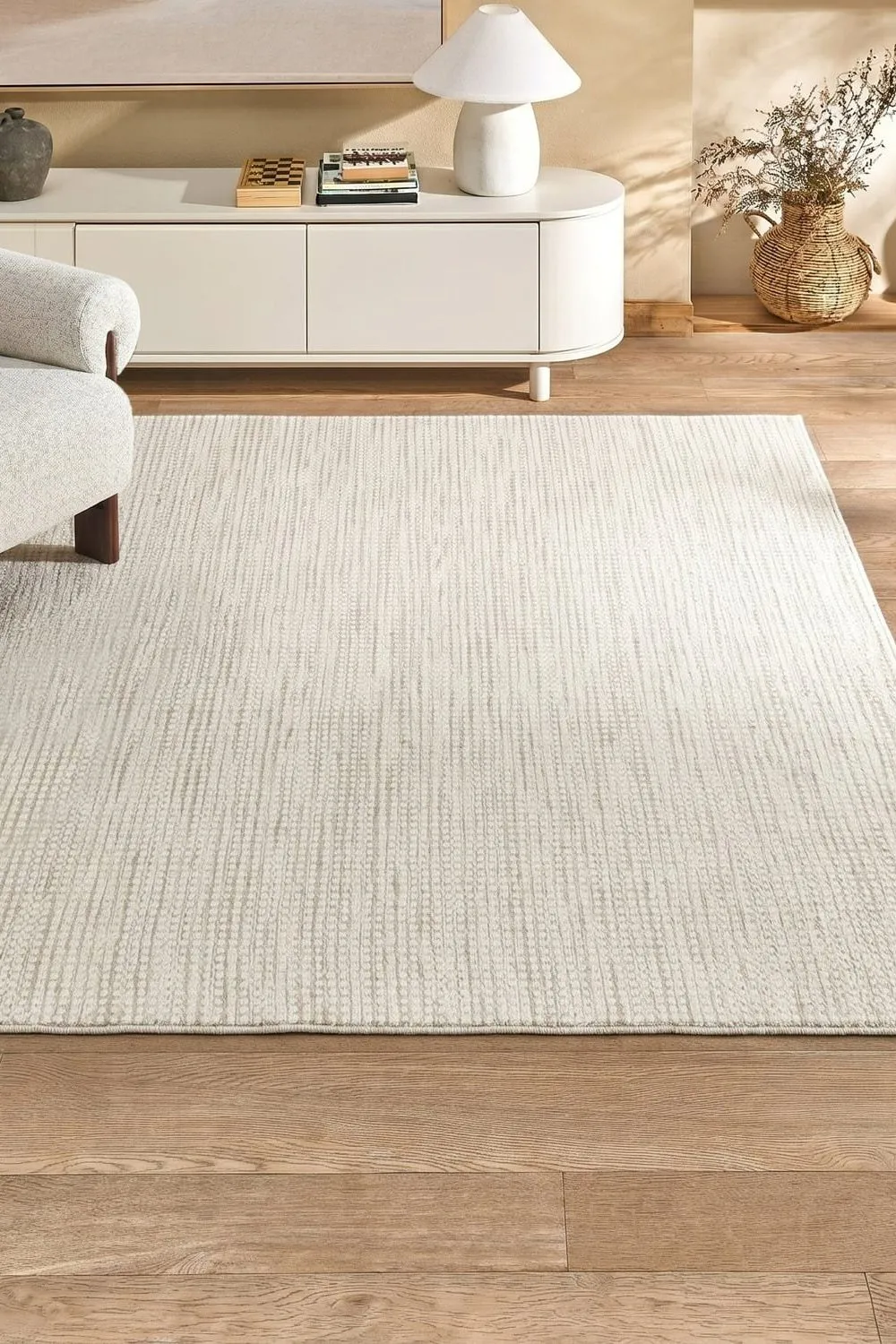
One wool rug over bare wood — the floor feels warmer instantly.
Bare wood floors are beautiful and, in January, cold in every sense. One cream wool rug under the coffee table or beside the bed puts warmth exactly where feet land, and the pale layer lightens the whole floor plane of the room without paint, paper or effort.
Styling tip: leave a border of wood visible all round the rug — a rug that nearly touches the walls looks like a carpet that failed; a border looks like a choice.
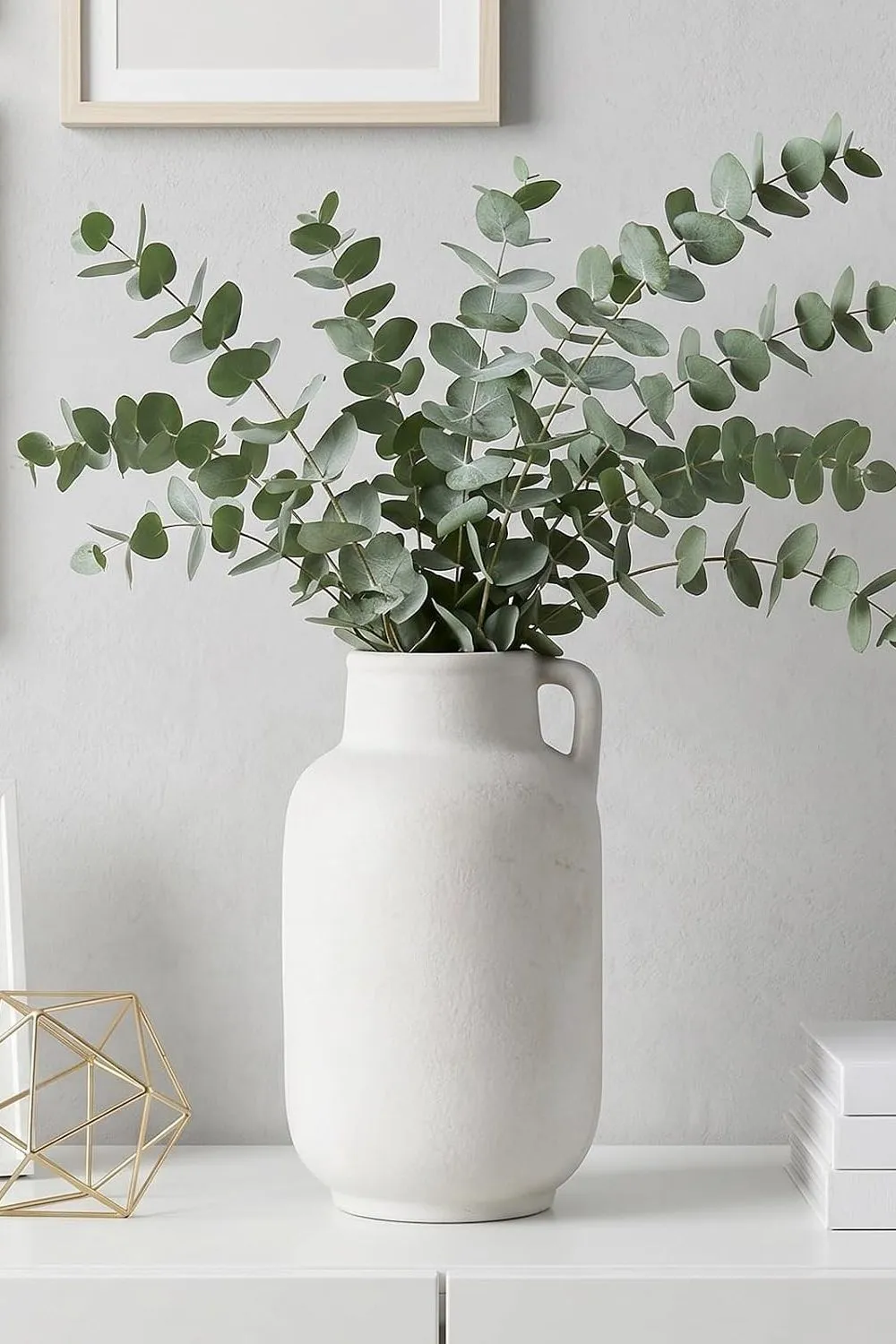
Eucalyptus in a jug — the one green stem January always suits.
If January allows one green thing on the console, make it eucalyptus. The gray-green leaves match the month's palette exactly, the stems last for weeks in water and dry gracefully after that, and a ceramic jug keeps the arrangement soft where glass would feel bare.
Styling tip: strip the leaves from the bottom third of each stem before arranging — leaves sitting in water shorten the life of the whole bunch.
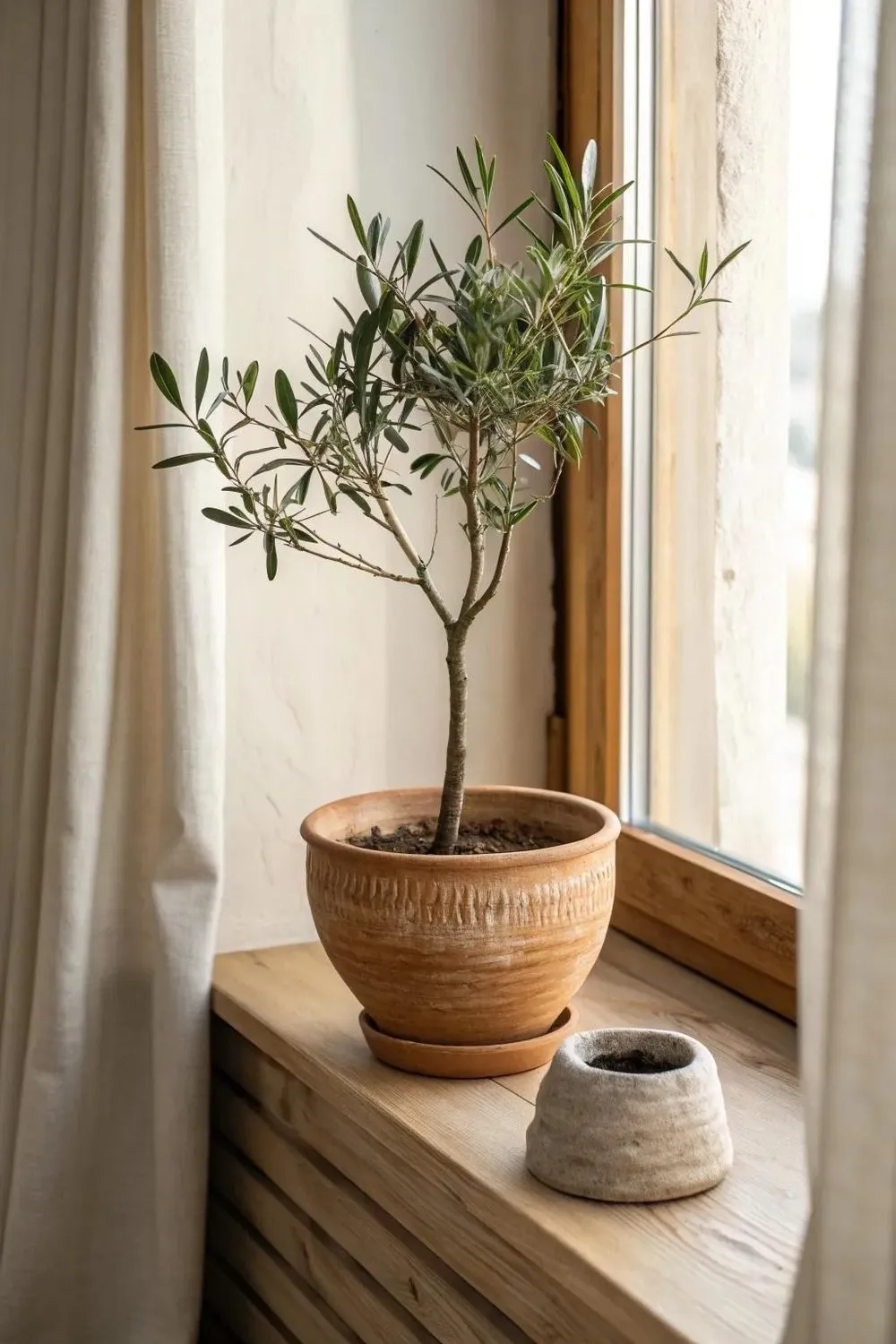
An olive tree by the window — green that lasts past January.
A small olive tree is the grown-up January plant: silvery leaves, a real trunk, nothing cute about it. In a terracotta pot by the brightest window it gives the room a living thing to look at through the gray weeks, and unlike cut stems it is still there, bigger, in spring.
Styling tip: olives sulk if they dry out completely or sit in soggy soil — water little and often, and give the pot a saucer so the sill stays dry.
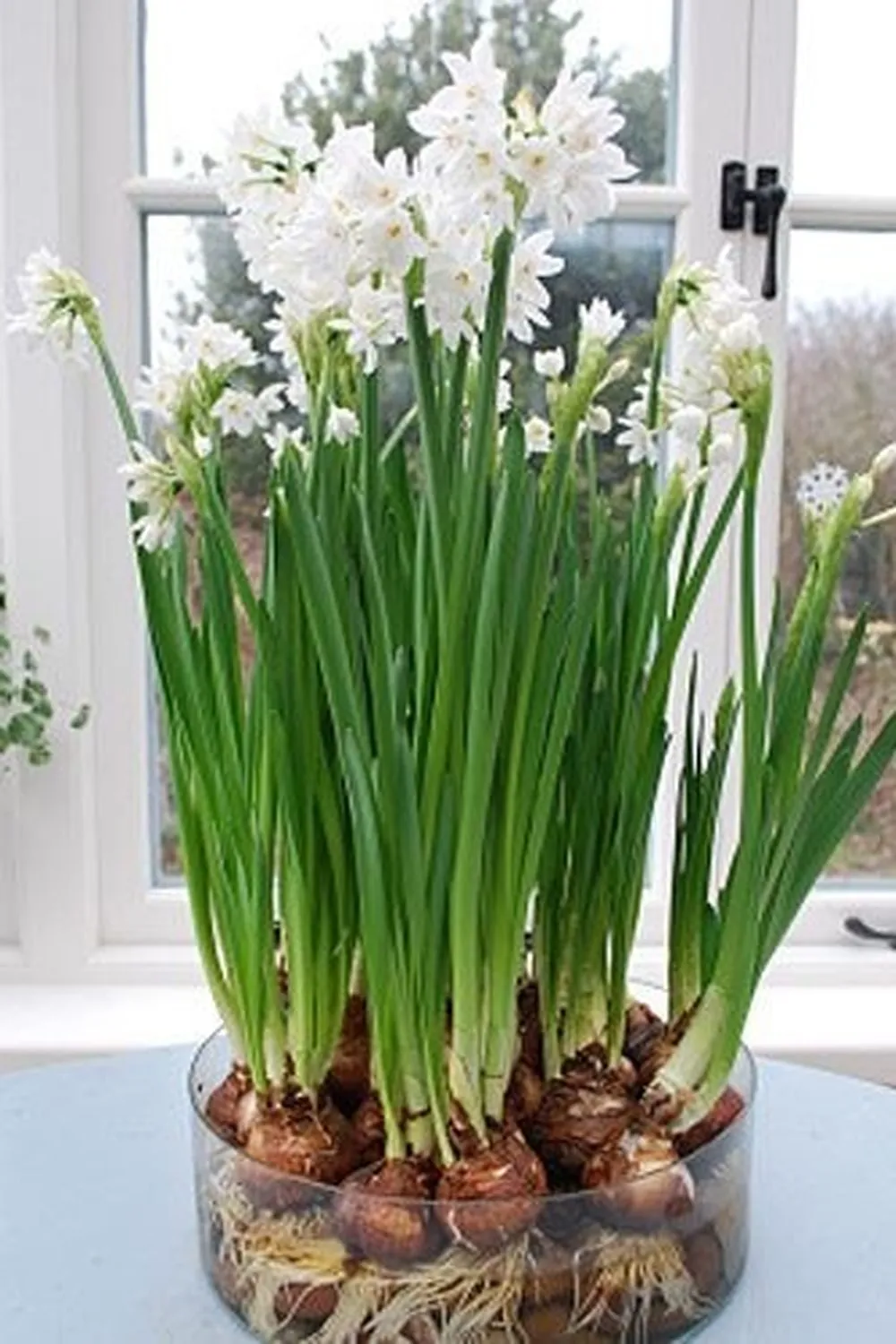
Paperwhites are January's own flower — white, simple, grown on the sill.
Paperwhites are the one flower that belongs to January rather than despite it: forced indoors on pebbles and water, they bloom white and plain while the garden is still asleep. In a glass bowl on the windowsill the whole process is visible — roots, stems, buds — which is half the pleasure.
Styling tip: a teaspoon of vodka in the water keeps paperwhite stems shorter and sturdier, so the blooms stand instead of flopping over the bowl.
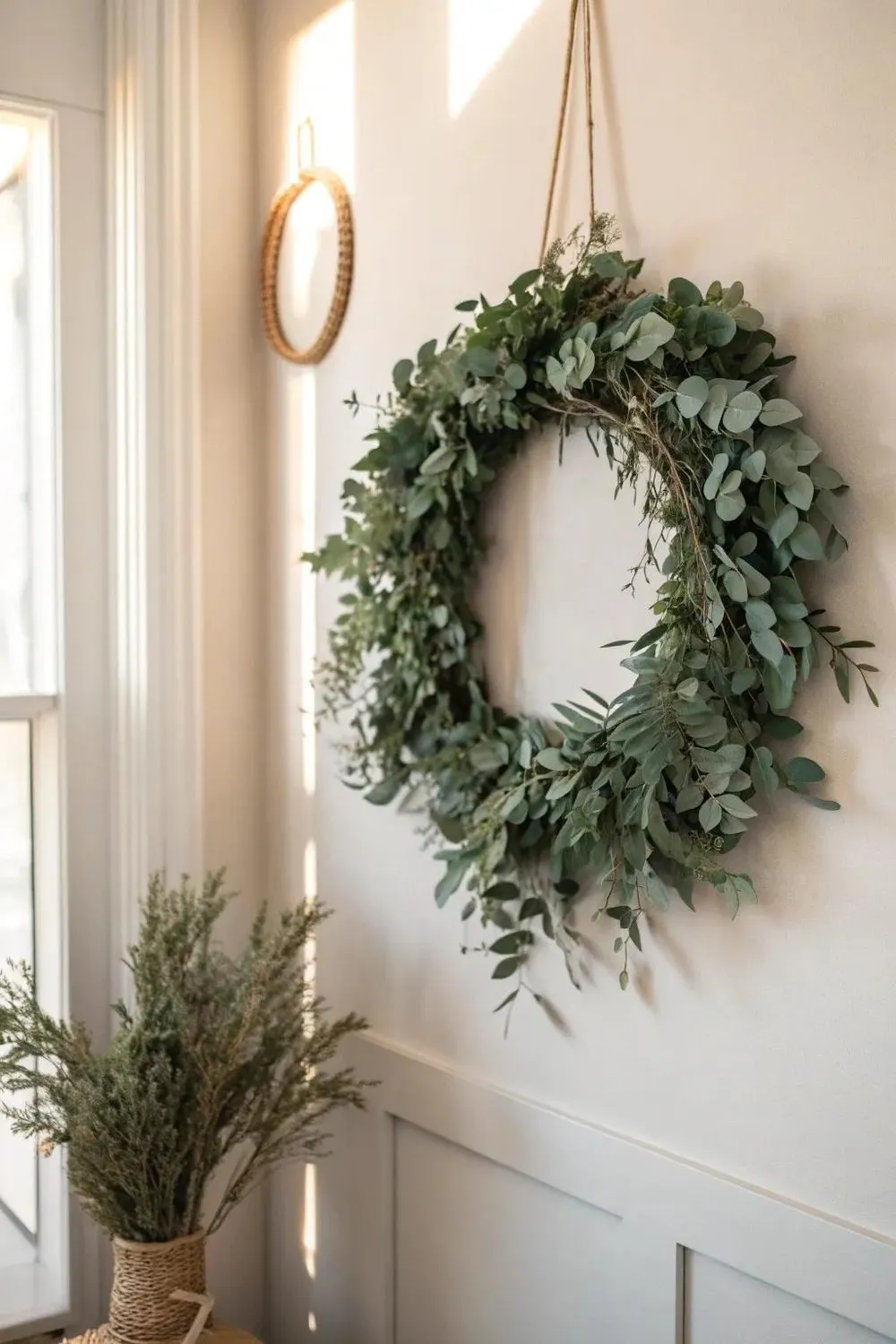
Just eucalyptus, no berries, no bow — a wreath that is winter, not festive.
A wreath does not have to retire in January — it has to change. Plain eucalyptus, nothing wired to it, no berries and no bow, reads as winter greenery on an interior wall or a plain door. It keeps the shape the house got used to in December and drops every festive signal.
Styling tip: hang the plain wreath inside, where December's wreath never went — over a mantel or on a kitchen wall; a new position stops it reading as the Christmas wreath that stayed up.
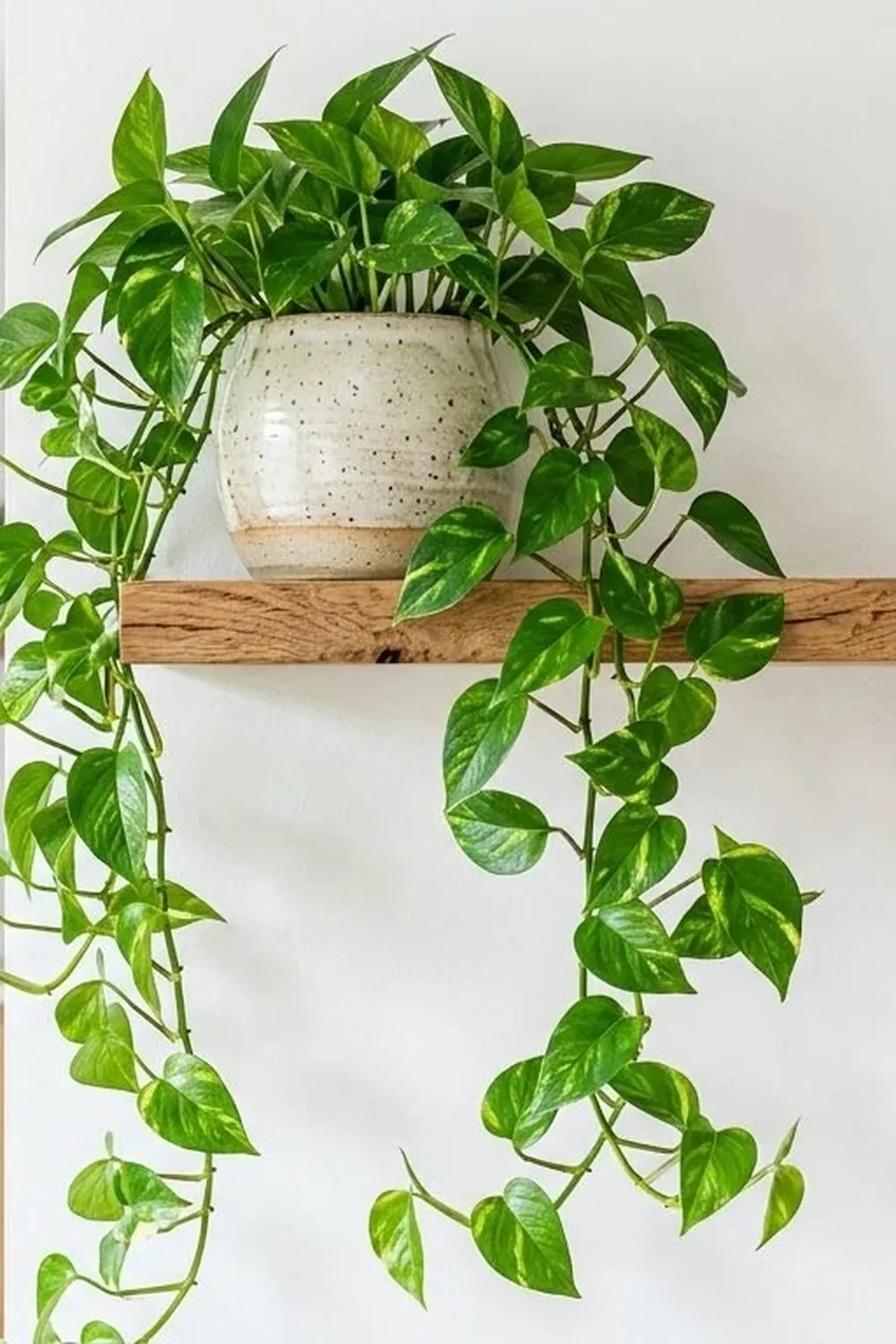
One trailing plant softens a whole shelf — and asks for almost nothing.
High shelves look stark after a clear-out; a trailing pothos fixes that with one pot. The vines soften the shelf edge, the green lifts the neutrals, and the plant famously survives January neglect — low light, irregular watering, radiators underneath. It is the easiest living decor on this list.
Styling tip: let one or two vines trail long and trim the rest shorter; varied lengths look natural, a uniform curtain of vines looks like a hedge.
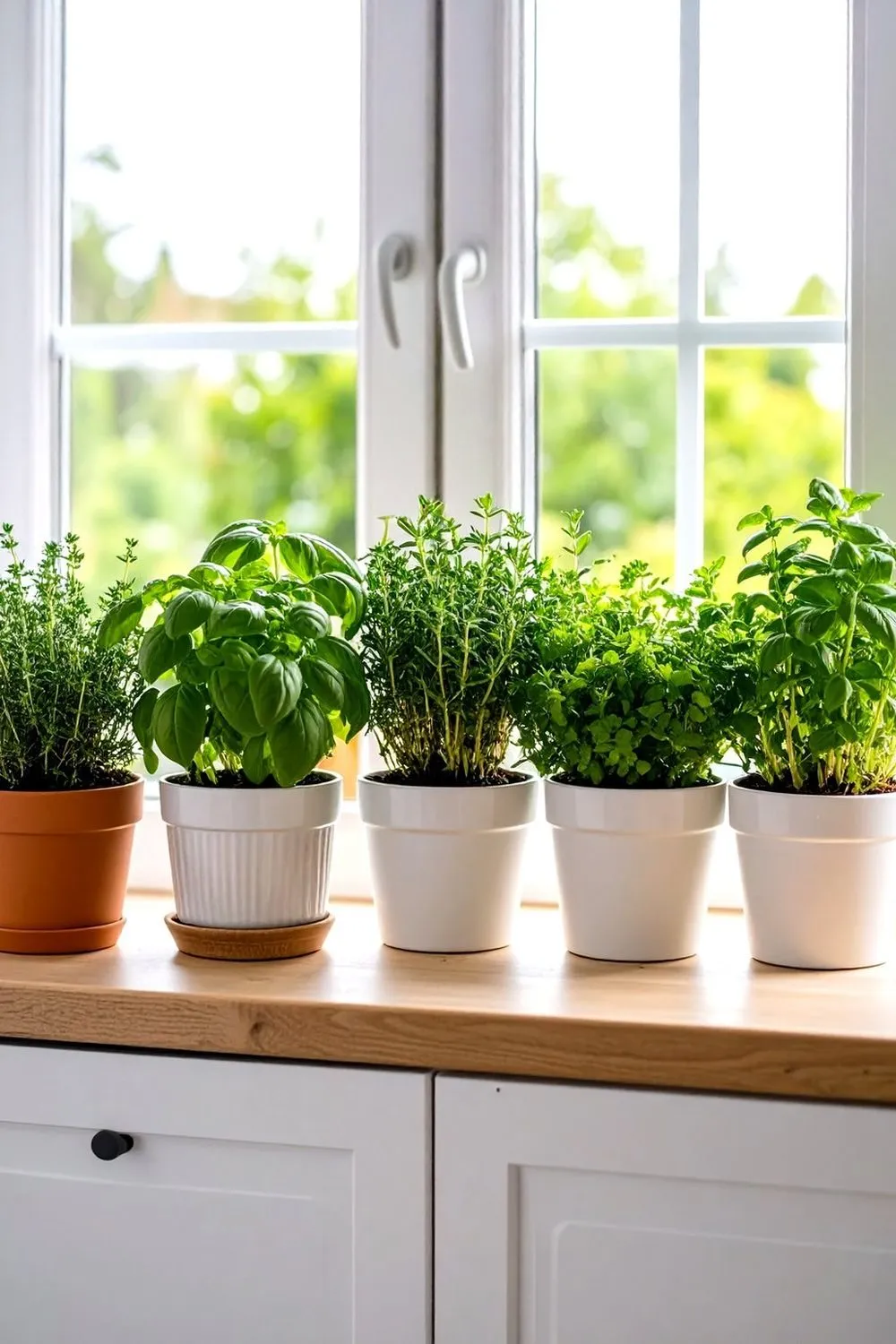
Herbs on the sill — green, useful, and alive in the middle of winter.
A row of herb pots is January greenery that earns its place: basil, parsley and mint on the kitchen sill look fresh, smell clean, and go into the cooking that January evenings are made of. Small terracotta or white pots in a row read as a collection, not clutter.
Styling tip: supermarket herb pots are several plants crowded in one — split them into two or three pots each and they will live for months instead of a fortnight.
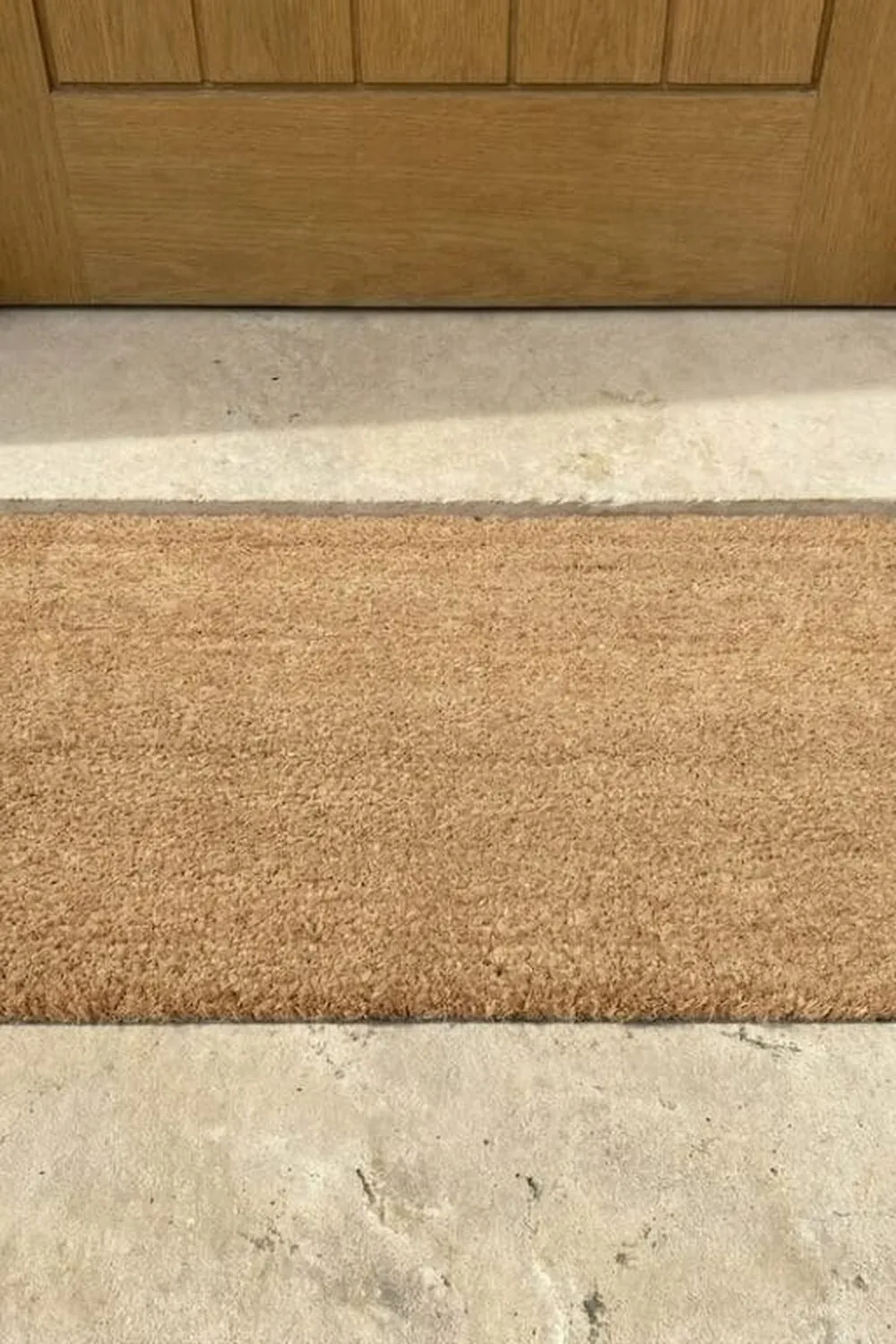
Plain coir, no pattern — the doorway starts January clean.
The Christmas doormat, with its message and its mud, is the first thing January should retire. Plain natural coir says nothing and does everything: it scrapes boots, hides grit in its fibers, and sets a calm tone at the door that matches the reset happening inside the house.
Styling tip: size the mat to the door's full width, not two-thirds of it — a full-width mat looks fitted and keeps the whole step cleaner.
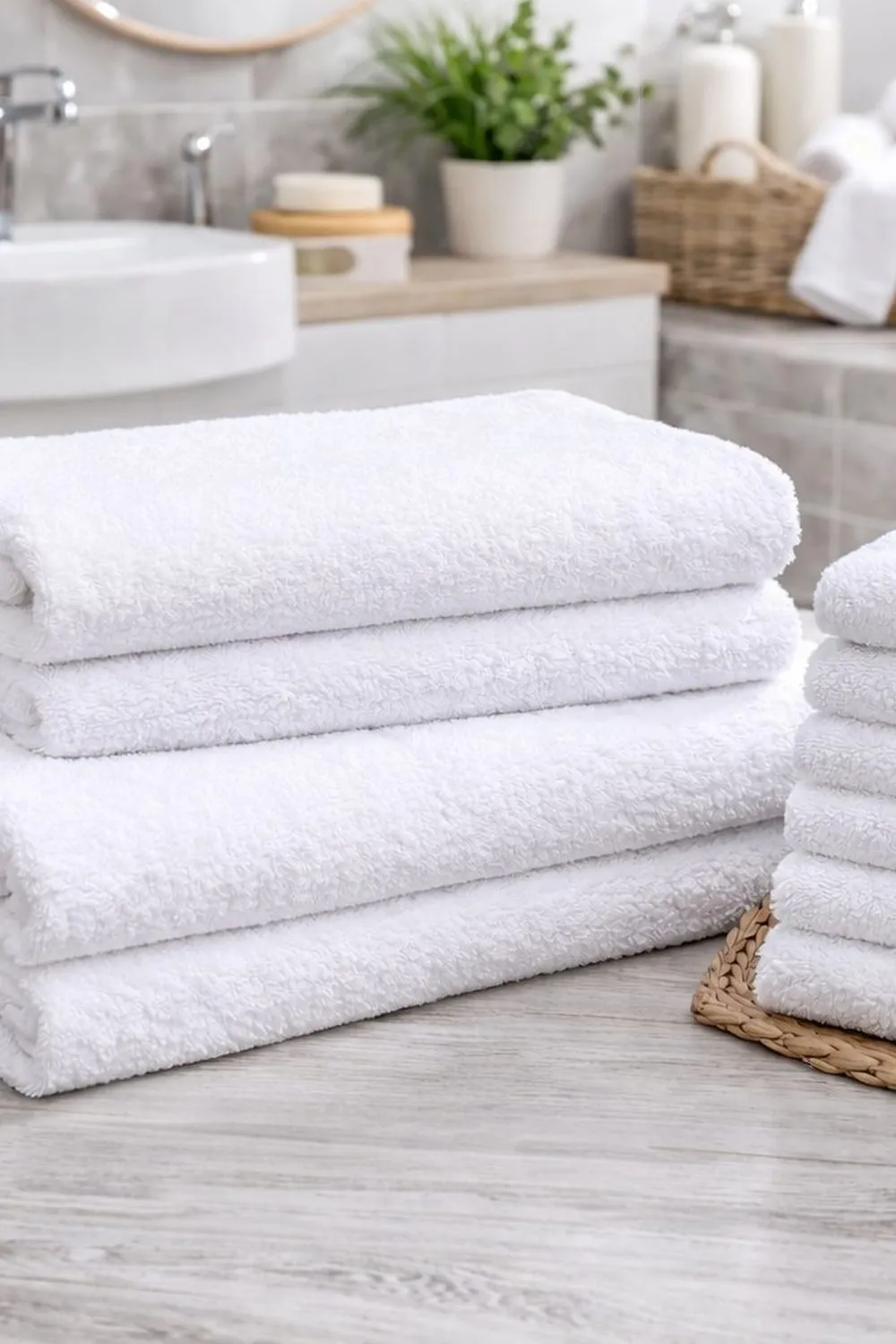
White towels, folded the same way — a five-minute refresh that shows.
No new purchases: the January bathroom refresh is the best white towels, washed hot, folded identically and stacked where they can be seen. Uniform folding is a tiny thing that the eye reads as order — it is why hotel bathrooms feel calm even when they are smaller than yours.
Styling tip: fold towels in thirds lengthways before stacking, so no raw edges show; a stack with hidden edges looks like a shop display.
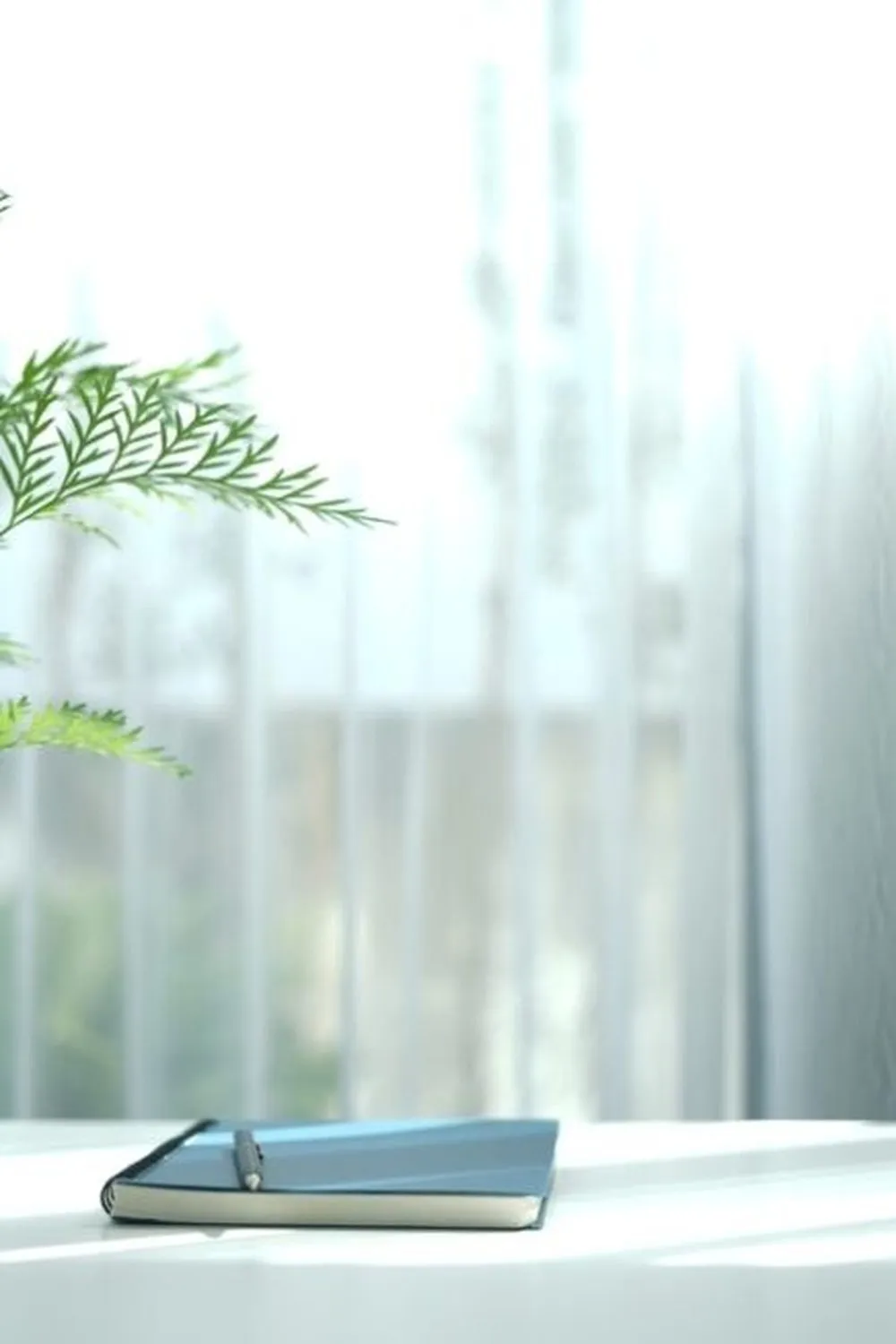
A clear desk is a January resolution that actually fits on a desk.
The desk reset is ruthless and small: everything off, then three things back — the laptop, one small plant, one closed notebook. Work feels different at a clear desk in January; the surface itself becomes the resolution, kept one day at a time instead of promised for the year.
Styling tip: give the things you removed one drawer or one box, not the desk's corners — if the overflow has a home, the clear top survives past the first busy week.
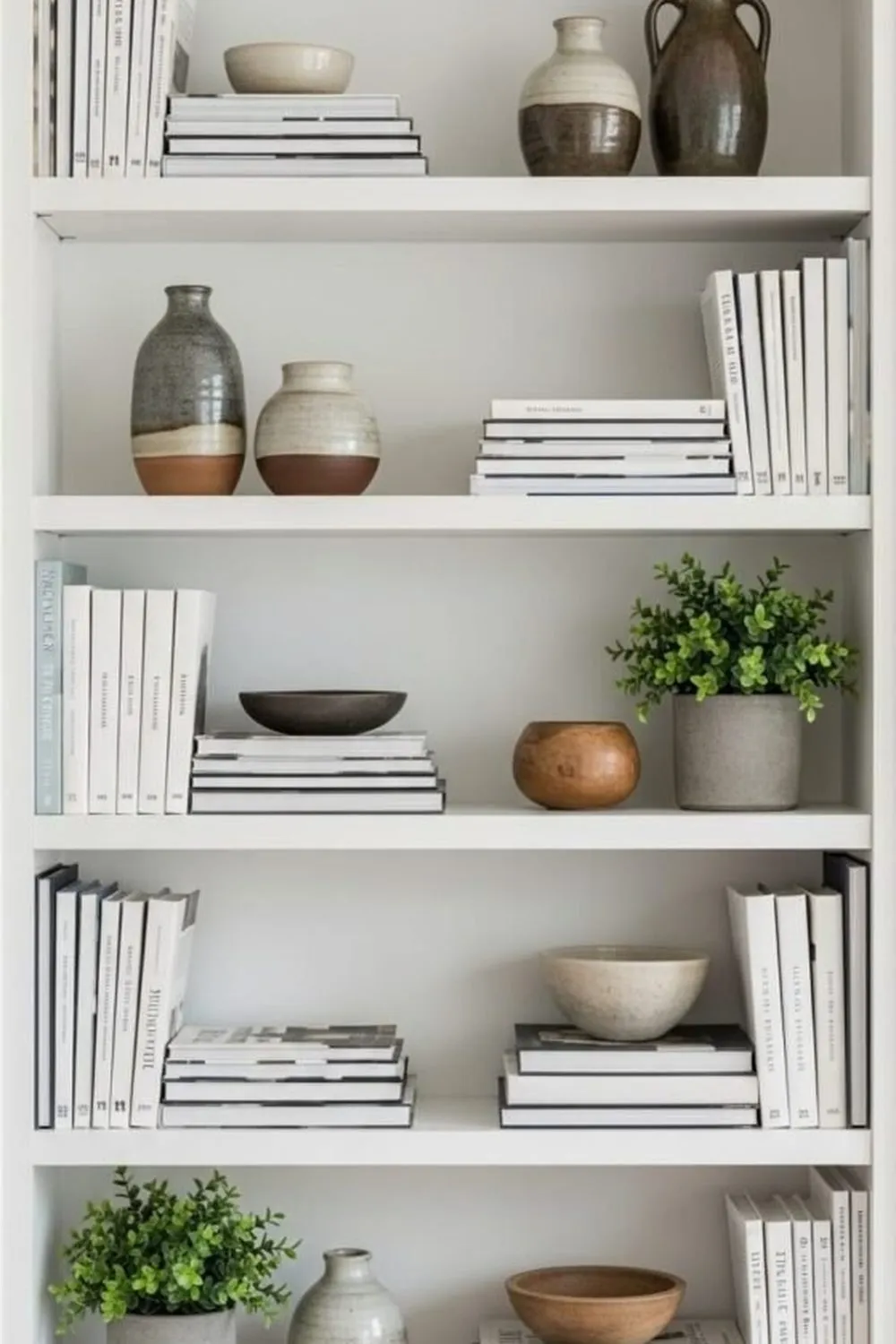
Books with breathing room — the shelf looks styled, not stuffed.
A January bookshelf edit takes twenty minutes: books grouped in runs, a gap, a small vase, another run. The gaps are the styling — they turn storage into display and make the shelf feel curated rather than crammed. A few books will leave for the donation box, which is the point.
Styling tip: turn one short stack of books horizontal inside a gap — the flat stack breaks the rhythm of spines and gives the vase something to sit beside.
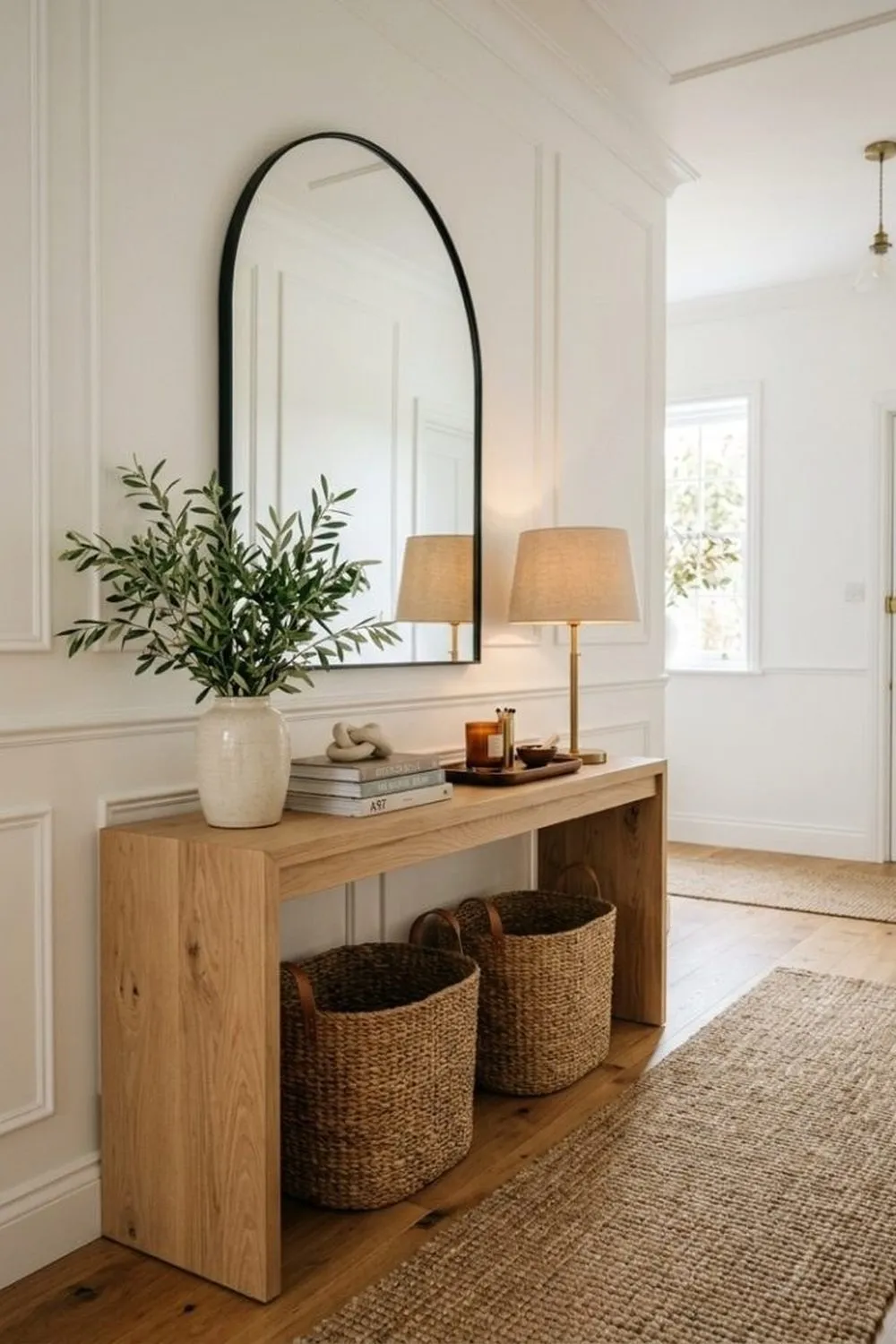
One lamp, one vase — the hallway stops shouting and starts welcoming.
The hallway console collects everything in December. January's version holds two things: a lamp for warm light at coming-home height, and one small vase, empty or with a single stem. Keys and post get a drawer or a bowl below the surface, not the surface itself.
Styling tip: if the console has no drawer, put one lidded box on the lower shelf for post and keys — hidden storage keeps the two-object top honest.
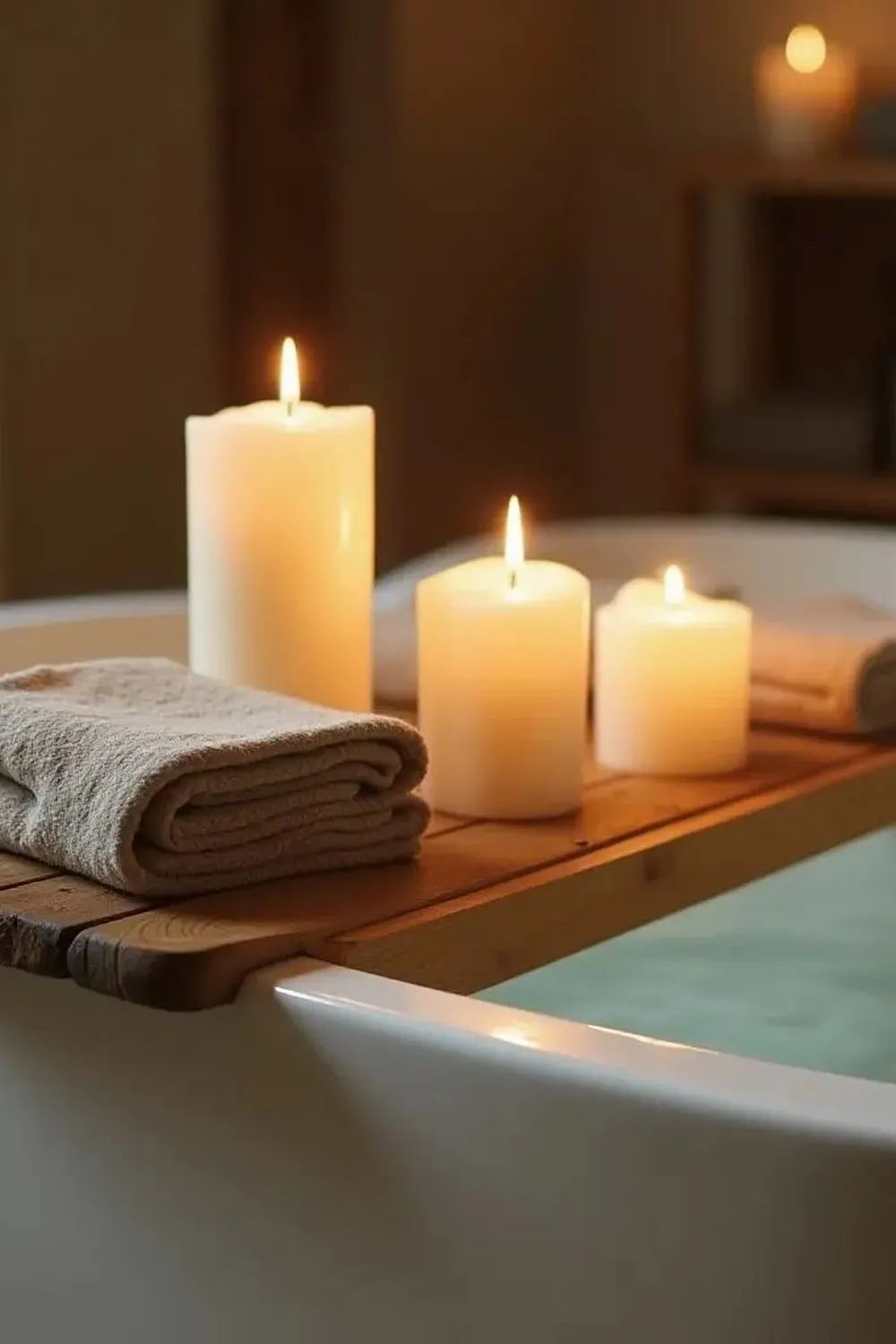
Tray, candles, towel — January evenings, slowed right down.
The reset is not all discipline. A wooden tray across the bath with candles and a folded towel turns the plainest bathroom into January's best evening plan — warm water, low light, nothing festive and nothing to buy. It is the reward the clear-out earns.
Styling tip: keep the tray stored dressed — candle, towel and a small plant live on it in the corner, so the whole ritual is one lift away on any evening.
By the first full week of January for most homes — then give the rooms a day or two completely bare before adding anything back. The bare interval is what makes the reset feel real.
Cream, soft gray, sage green and pale blue, with natural wood. They match pale winter light and feel fresh rather than festive; save red and deep green for next December.
Texture instead of theme — chunky knits, wool rugs, sheepskin and flannel bedding in neutral colors give the warmth without a single festive pattern.
Eucalyptus stems, bare branches, a potted olive tree, trailing pothos, herbs on the sill and forced paperwhite bulbs — all winter-true, none of it festive.
The free ones: clear every surface to one object, swap in the plain white tablecloth and towels, and pack Christmas into labeled boxes. Add a bunch of eucalyptus when you can.
A January home does not need more things; it needs fewer, better-chosen ones — light let back in, surfaces cleared, one green stem where the garland used to be. Start with the mantel and the table, and let the calm spread room by room. Save your favorite january decor ideas from this list, and follow TheStylingHub on Pinterest for fresh winter ideas all season long.
Seasonal
Nov 21, 2026
32 New year balloon decor ideas — arches, garlands, giant number balloons and a…
Seasonal
Nov 20, 2026
30 Winter entryway decor ideas — lanterns, plaid, wool, bare branches and warm light…
Seasonal
Nov 17, 2026
34 New year centerpiece ideas for 2027 — candle clusters, gold vases, clock faces,…