
35 Christmas Home Decor Ideas: A Room-by-Room Guide
The homes that feel most magical at Christmas are rarely the ones with the most decorations — they are the ones where every room belongs to the same celebration — and these 35 christmas home decor ideas form a route through the house, entryway to bedrooms, tied together by deep green, warm cream and natural wood.
Entryway & Living Room
1. The Anchor Tree: Placed Where the House Gathers
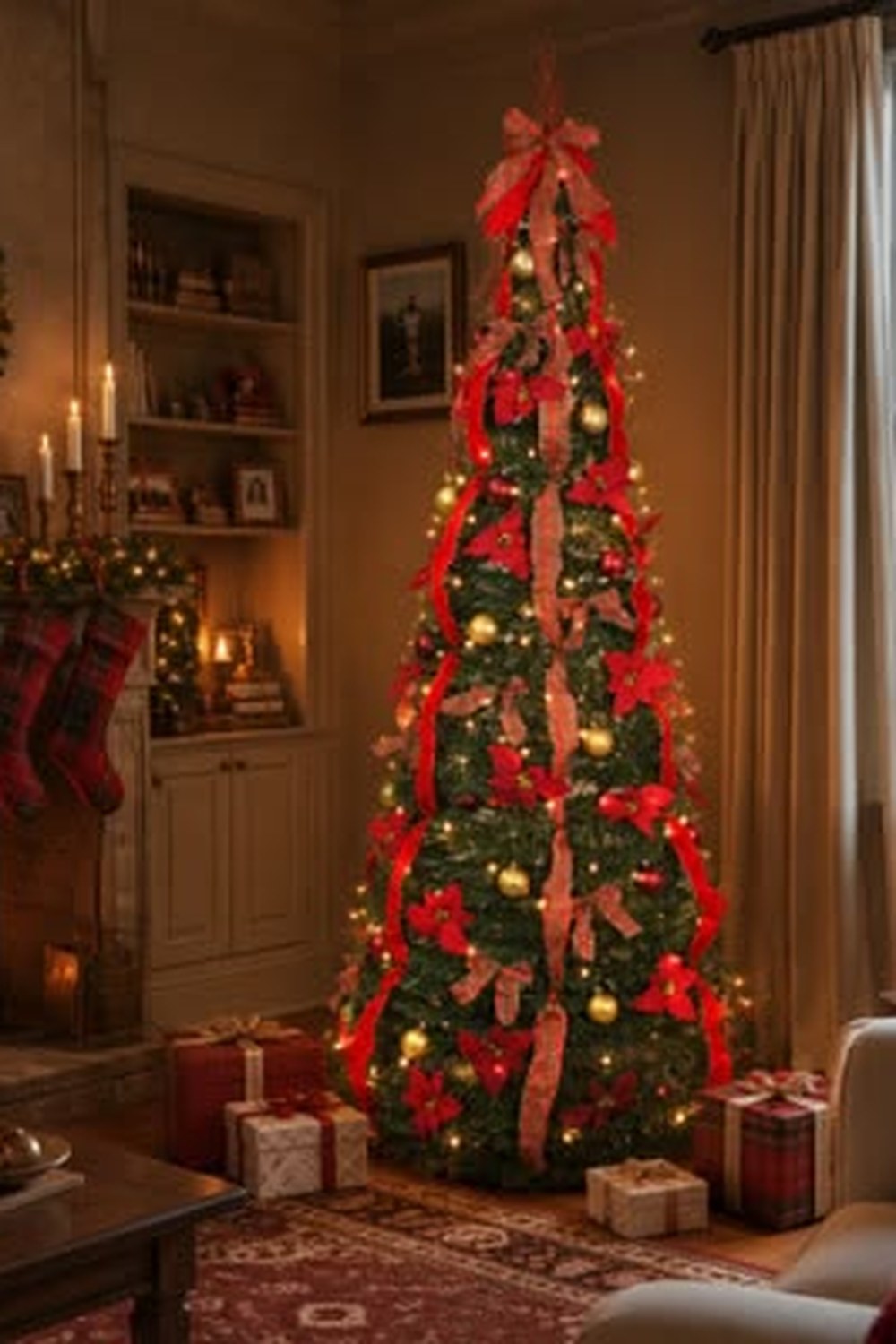
Every home needs one anchor — the tree goes where the family actually spends its evenings.
Start the tour with the biggest decision: the tree stands in the room where people gather most, visible from a doorway if you can manage it, so its glow spills into the hall. Dress it inside the house palette — deep green branches, cream and wood ornaments, your one accent colour in the baubles and ribbon — because this tree sets the scheme every other room will echo.
Styling tip: decorate the side of the tree that faces the doorway first and fullest. It is the view guests get on arrival and the one in every photograph; the wall side can stay simpler.
2. The Doorway Welcome: A Wreath and a Styled Console
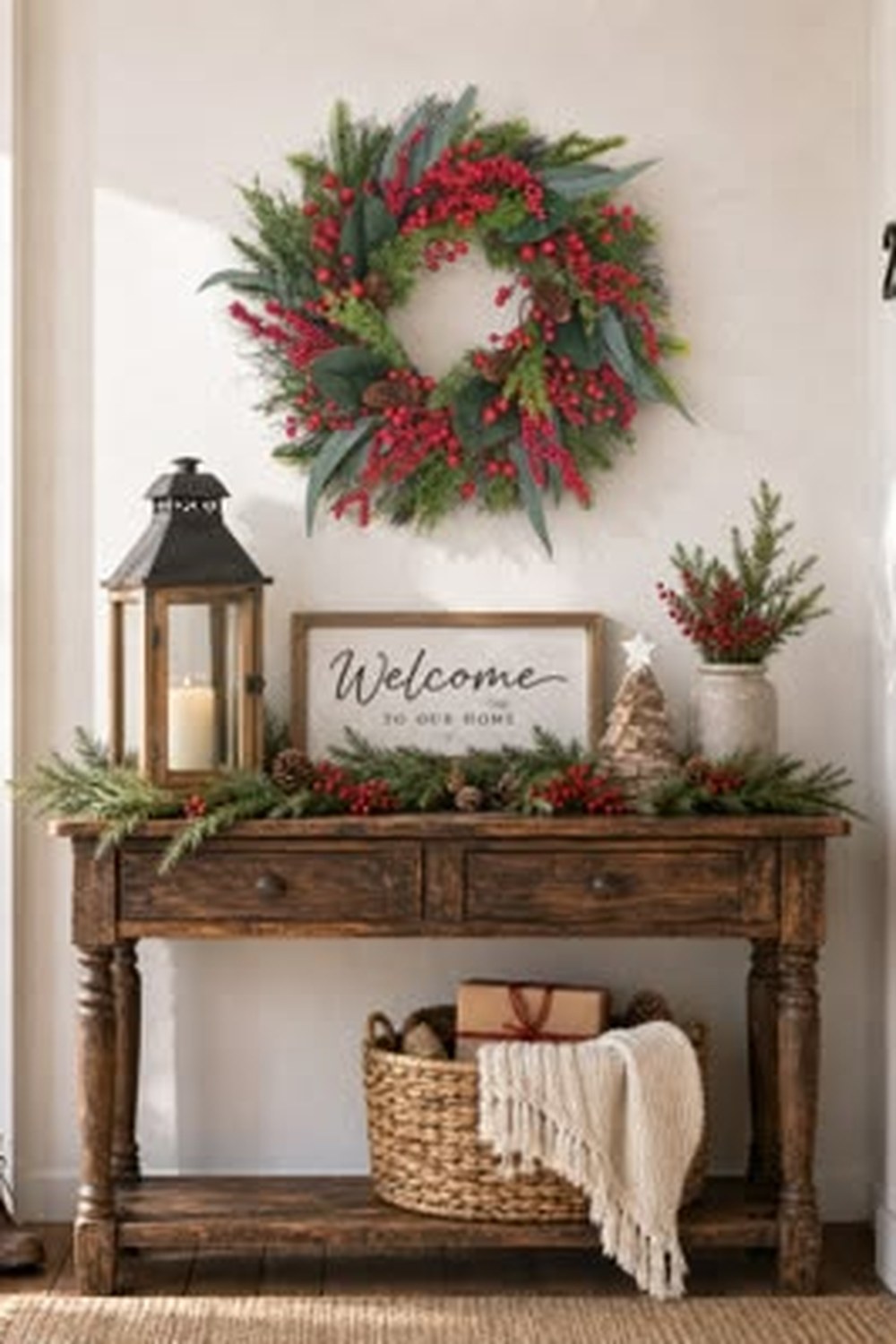
The first ten seconds decide the feeling — the door and the hall table do that work.
Hang a full, plain greenery wreath on the front door — one accent ribbon bow if your scheme asks for it — then style the entryway console or hall table as the scheme in miniature: a lantern with a cream candle, a woven basket for gloves and scarves, one sprig of greenery. Guests should be able to guess the house's palette before they reach the tree.
Styling tip: put the lantern candle on a timer. A lit welcome at the door on dark afternoons is the cheapest luxury in this whole guide, and it works even when you are out.
3. The Mantel Garland: The Living Room's Green Horizon
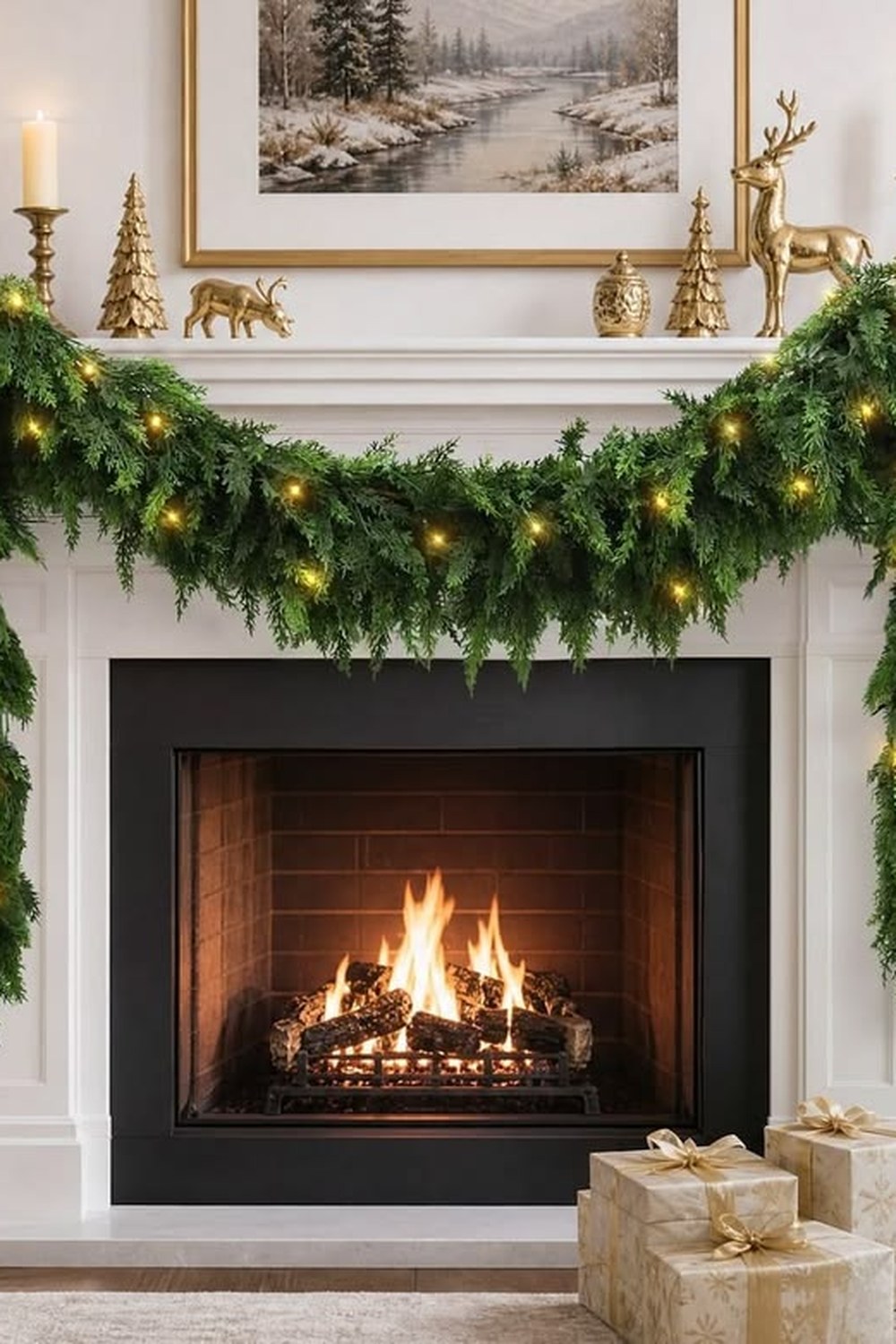
One long garland across the mantel echoes the tree and frames the room's second fire.
Run a single generous garland along the mantel with one soft swag, hang cream or knitted stockings in a quiet row beneath it, and group candles at one end. Keep the garland's dressing inside the palette — pinecones, wooden beads, the same accent ribbon as the tree — so mantel and tree read as one composition rather than two competing displays.
Styling tip: let the garland's ends trail unevenly, one longer than the other. The deliberate asymmetry keeps a dressed mantel looking like a home, not a showroom.
4. The Sofa Swap: Cushions and Throws in the House Palette
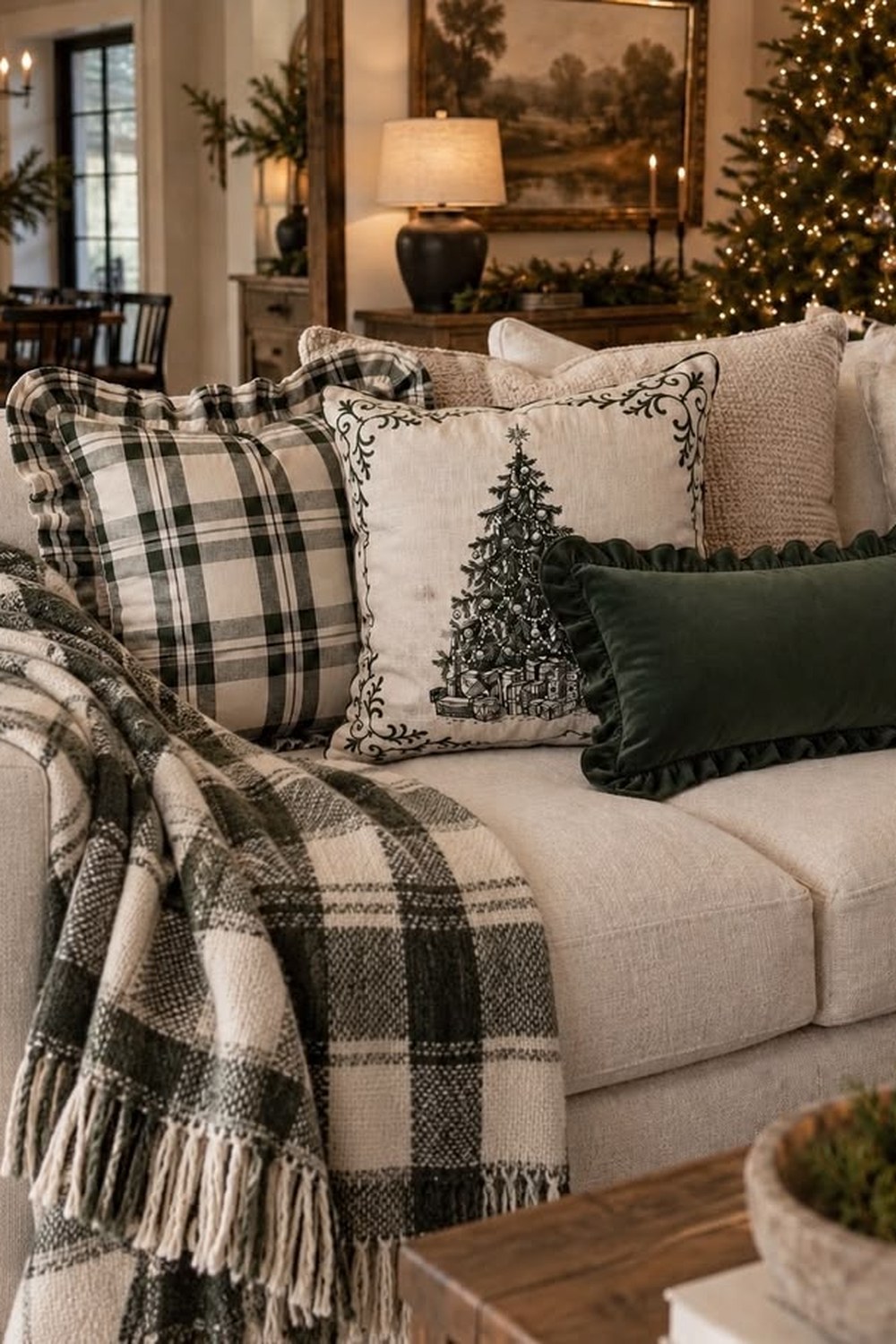
No new sofa needed — two cushion covers and one throw pull the seating into the scheme.
Swap in cushion covers in your palette — a deep green velvet, a cranberry plaid, a cream knit — and drape one chunky throw over the sofa arm. The seating is where guests actually sit inside your decorating, and changing its colours takes five minutes, costs little, and makes the whole living room feel dressed rather than merely decorated around the edges.
Styling tip: buy covers, not cushions. They store flat in January, wash after the season, and the same inners can wear spring colours later — the most budget-friendly habit in this guide.
5. The Coffee Table Tray: A Small Scene That Lifts Away
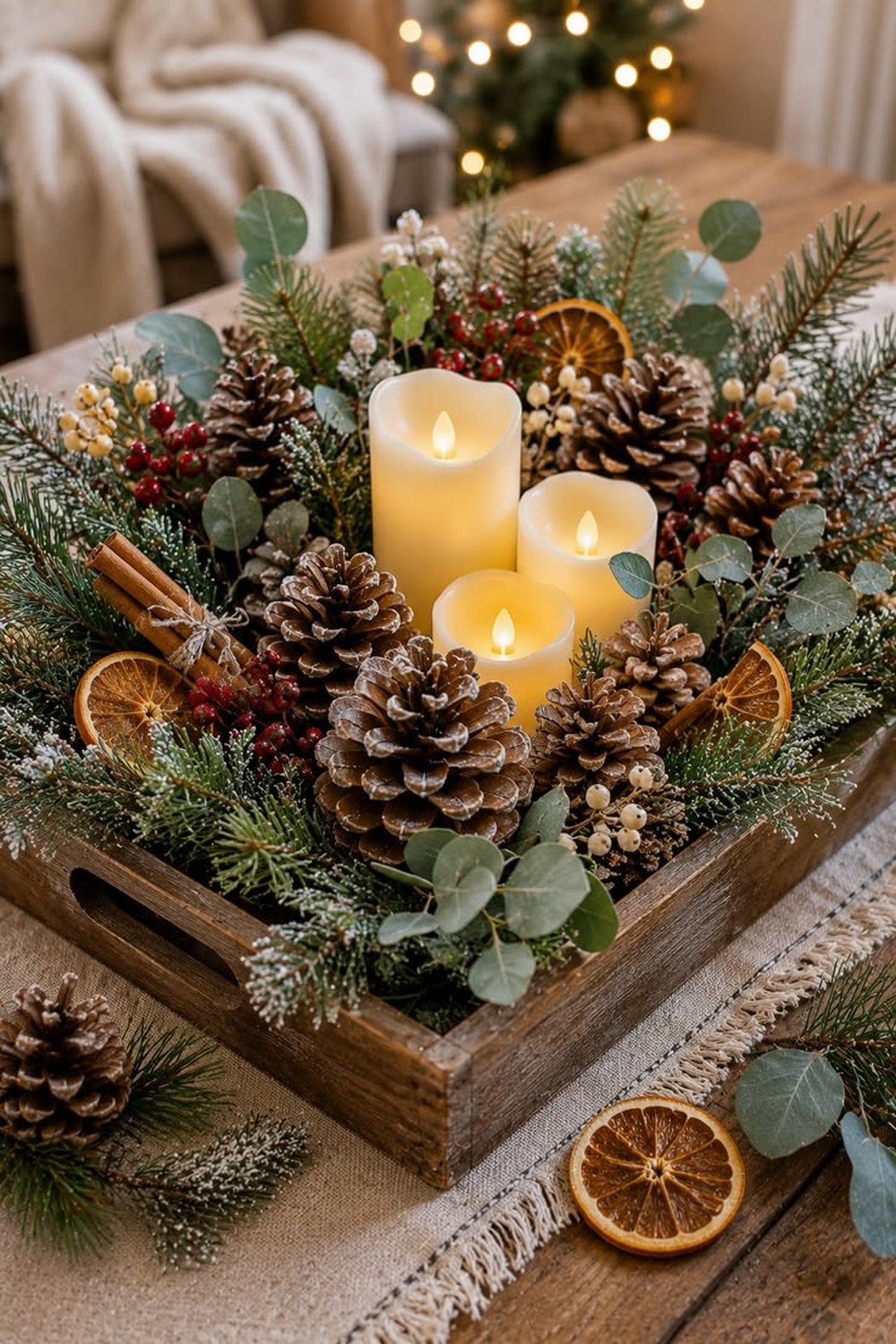
One tray holds the coffee table's whole decoration — candles, cones and green, nothing loose.
Set a wooden or woven tray at the centre of the coffee table and keep the display on it: three cream candles at different heights, a small bowl of pinecones, one sprig of greenery or a few baubles in the palette. Contained on a tray, the arrangement looks styled instead of scattered, and it lifts off in one move when the table is needed for games, gifts or feet.
Styling tip: keep one element of the tray scented — a beeswax candle or a few cinnamon sticks among the pinecones. The living room's scent layer starts here (there is more on scent in the finishing touches).
6. The Dressed Window: Paper Stars and One Wreath
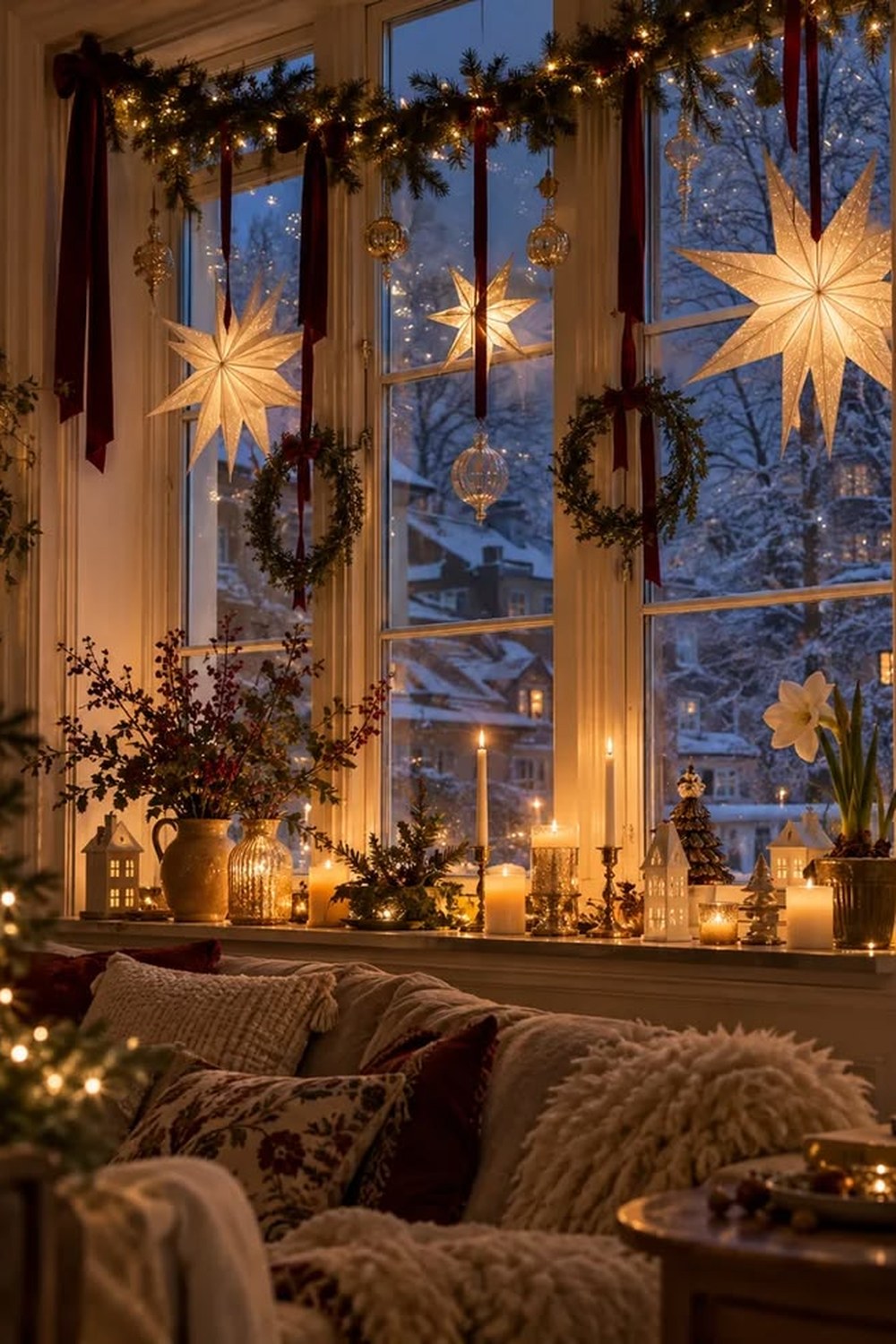
Windows are decorated for two audiences — the room in daylight, the street at dusk.
Hang white or cream paper star lanterns in the living room windows and one plain wreath at the centre of the largest pane. From inside, the stars frame the winter view; from outside, the lit stars and the dark green circle are the house's festive greeting. Use the same paper stars in one bedroom window later in the tour, and the house reads as one idea from the street.
Styling tip: put all the window stars on one timer schedule. When every window lights at the same moment at dusk, the whole house seems to exhale at once.
7. The Hearth Basket: Logs, Lanterns and Stockings' Companions
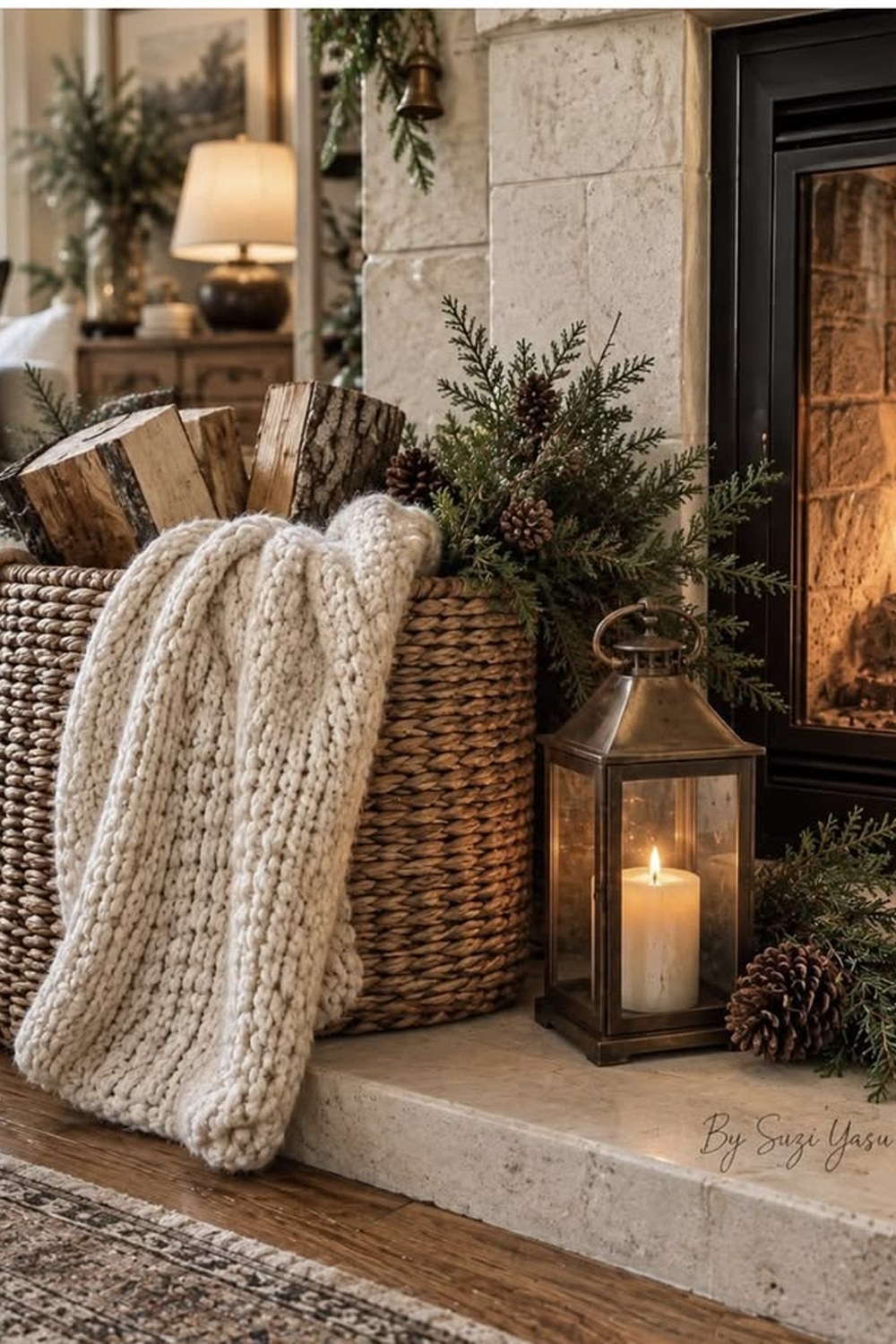
Style the floor in front of the fire and the whole fireplace wall comes into balance.
If you have a fireplace — working or not — fill a woven basket with pale logs, group two glass lanterns with cream pillar candles on the hearth, and fold one wool throw over the basket's edge. The mantel garland above, the stockings between, and this warm cluster below make the fireplace a finished three-layer composition, and homes without a fire can borrow the same arrangement around a stove or a candle cluster.
Styling tip: limit the hearth to three elements — basket, lanterns, one textile. Fireplaces attract clutter all month; discipline at floor level is what keeps the scene serene.
Kitchen & Dining Room
8. The Low Table Centrepiece: Greenery You Can Talk Over
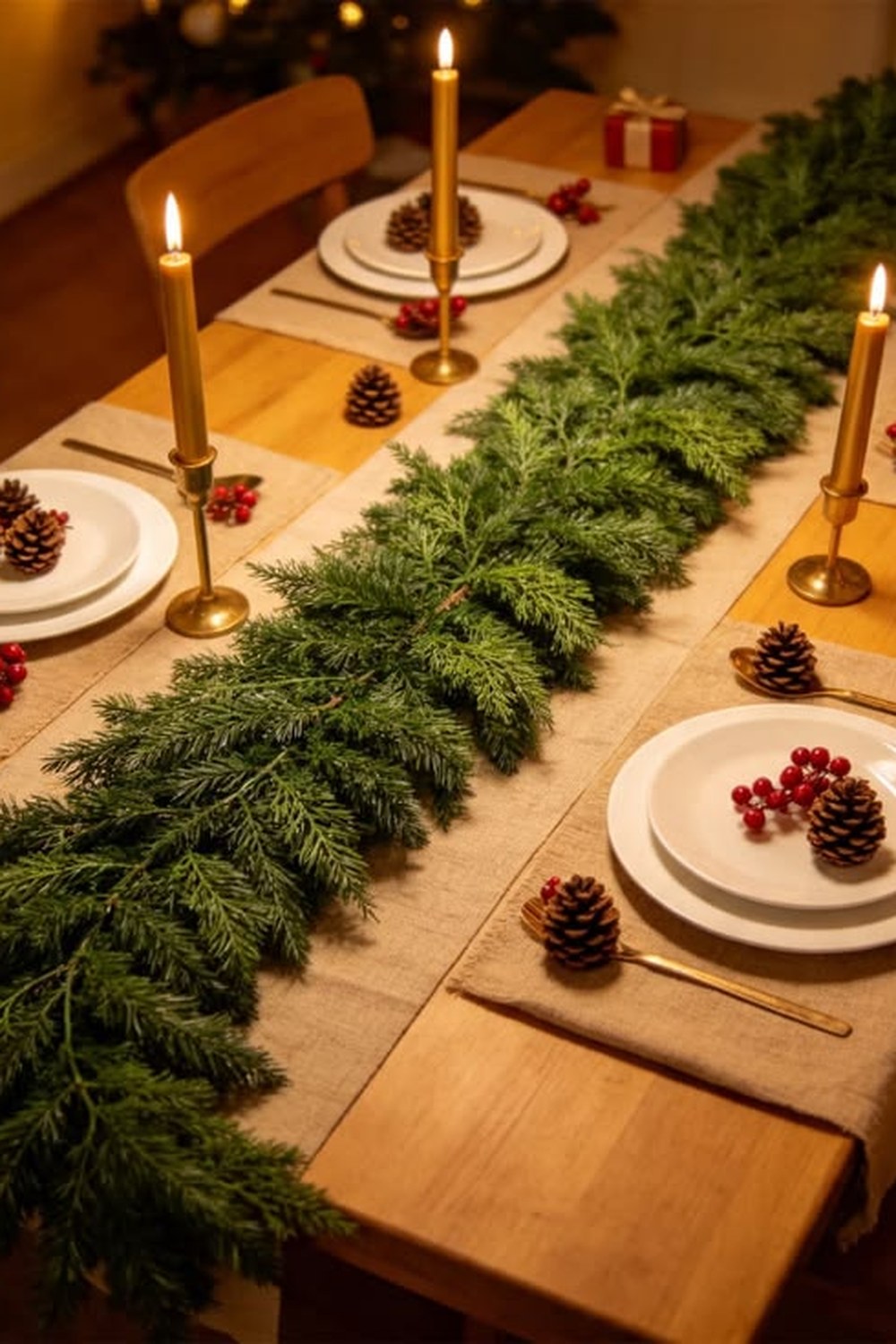
The dining table's rule: festive along the middle, clear at every seat.
Lay a natural linen runner down the table's centre and build a low, loose line of greenery along it — overlapping branches rather than a fixed garland — with pinecones tucked in and cream candles in clear glass holders between them. It echoes the mantel garland, stays below eye level so conversation flows over it, and dismantles in minutes when the table needs its full width.
Styling tip: assemble the centrepiece on the runner itself, not the bare table. The whole arrangement lifts off in one piece — the single most practical trick for a table that hosts both decor and dinner.
9. The Dressed Place Setting: A Sprig at Every Seat
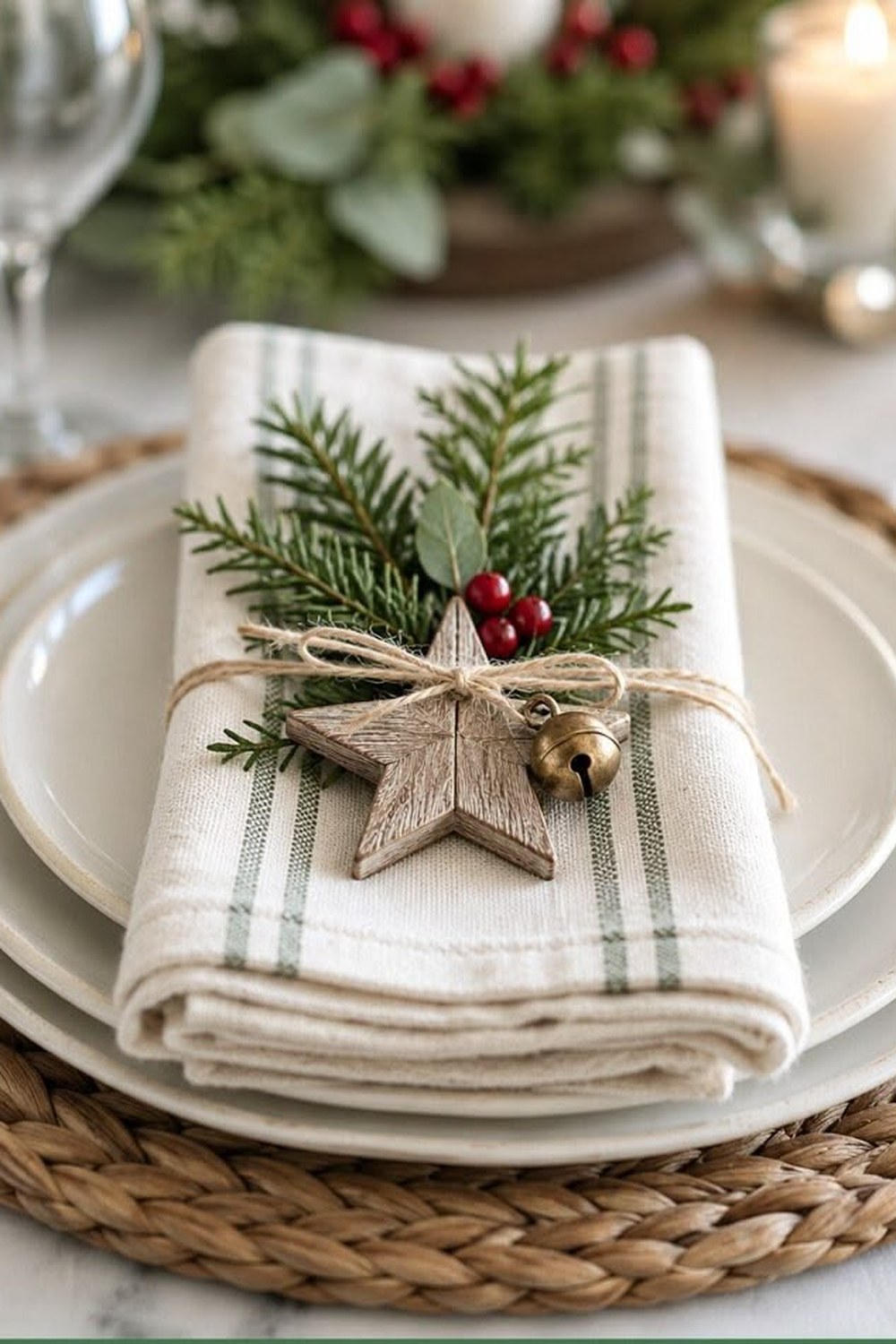
Guests sit down inside the scheme — one small green detail on every plate.
Set each place with your best everyday stoneware or china on woven placemats or wooden chargers, then fold linen napkins, tie each with twine from the same roll used on the tree, and tuck in a sprig of rosemary or fir. The repeated sprig-and-twine detail costs almost nothing, photographs beautifully, and quietly ties the dining room to the wreath on the door.
Styling tip: cut all the twine and sprigs in one batch before you start. Identical small bundles make the settings read as a design; mismatched ones read as a last-minute thought.
10. Mini Wreaths on the Kitchen Doors: Green Circles in a Row
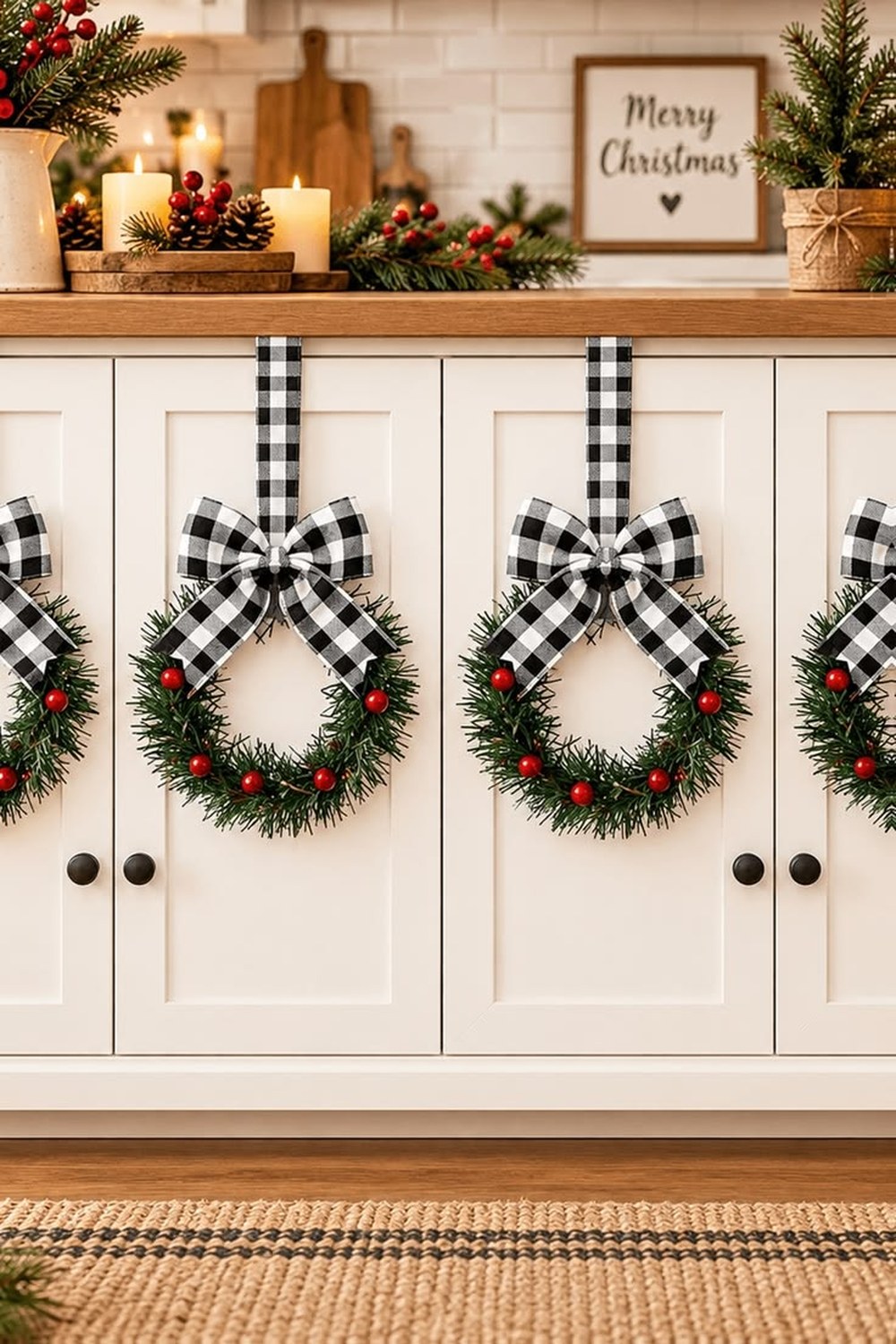
Cupboard doors are the kitchen's blank wall — a row of small wreaths dresses them in ten minutes.
Hang a small greenery wreath on each upper cabinet door, looped on ribbon over the door's top edge and fixed flat inside. The kitchen decorates up high and on its doors, which keeps every worktop free for actual cooking — the one rule kitchen Christmas styling must never break. Choose wreaths plain or with tiny bows in the house accent colour.
Styling tip: keep mini wreaths light and all at exactly the same height. On a run of doors, alignment is the entire effect — one drooping wreath undoes the row.
11. The Dressed Dresser: Shelves That Join the Season
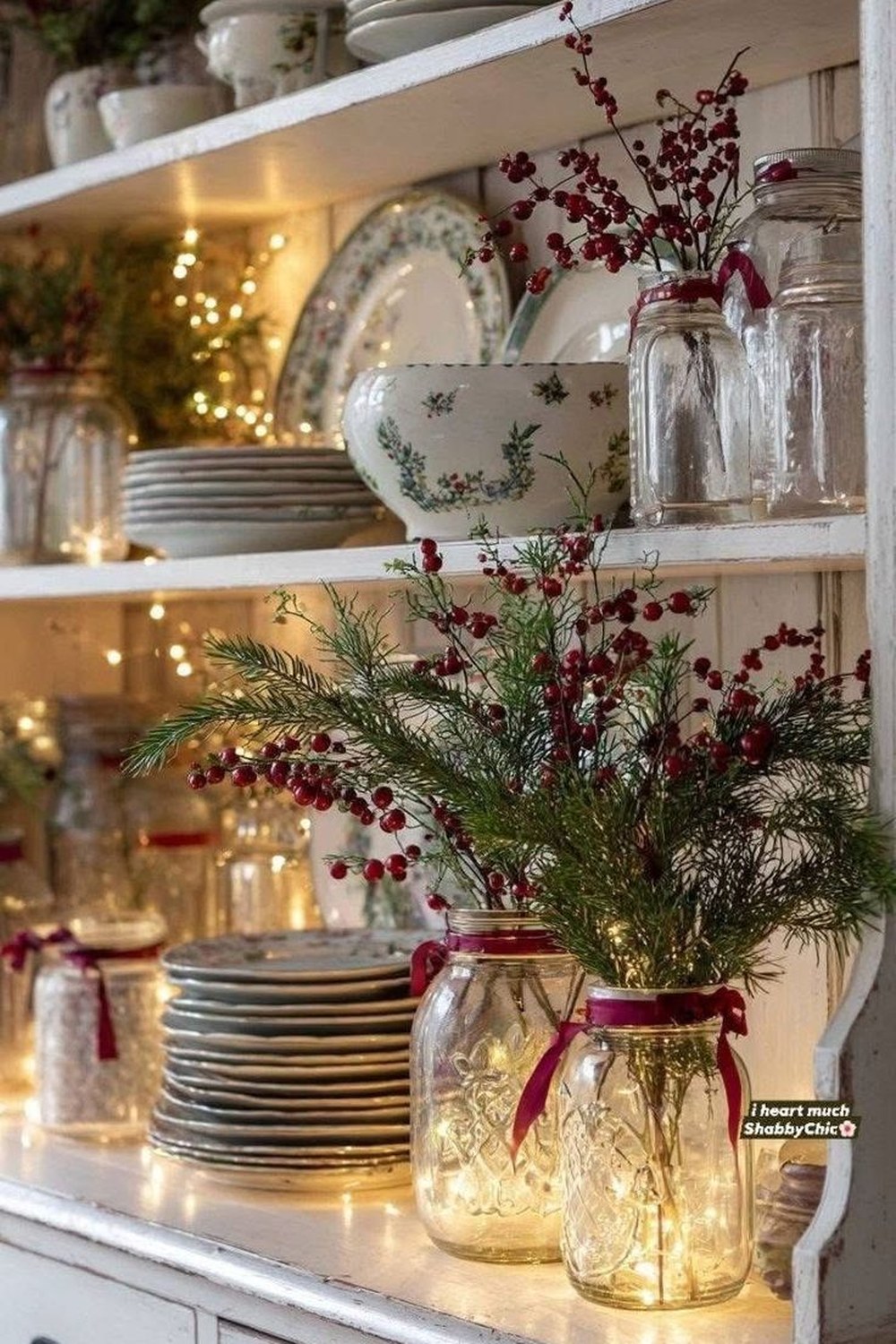
Open shelves and dressers are display furniture — Christmas asks only for a light edit.
Where the kitchen or dining room has a dresser or open shelving, tuck sprigs of greenery behind the everyday bowls, stand a cluster of small bottle brush trees or one tiny potted tree at one end, and thread a battery fairy light strand along the shelf front. The shelves carry the season at display height while counters stay clear, and the warm dishes you use daily become part of the styling.
Styling tip: edit by thirds — roughly a third festive, two-thirds the things you genuinely use. A shelf cleared entirely for decoration becomes a shelf you resent by the second week.
12. Chair-Back Wreaths: The Dining Chairs Join In
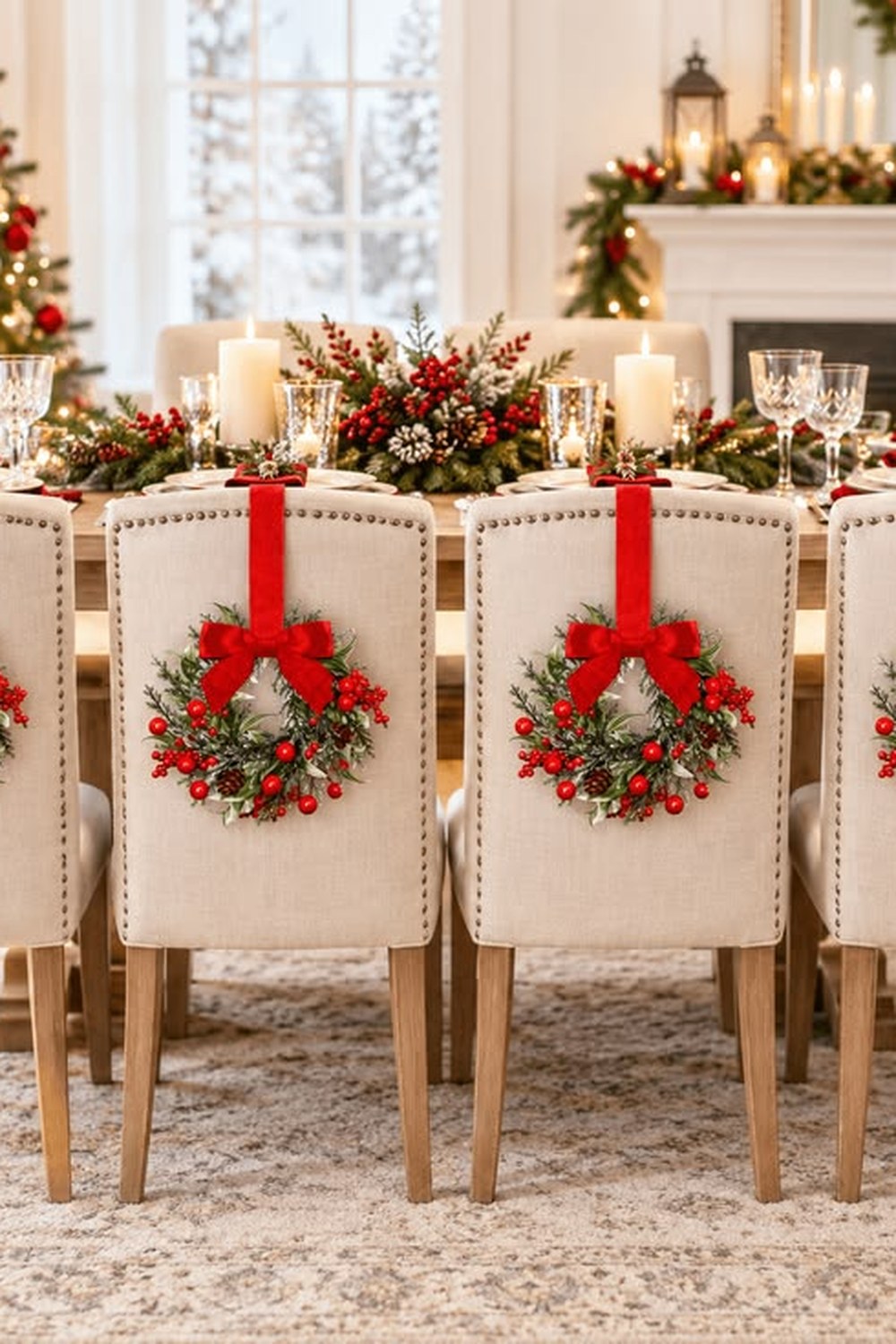
Eight small wreaths transform a dining set — repetition does what one big piece cannot.
Tie a miniature wreath or a simple bow of your scheme's ribbon to the back of each dining chair, all at the same height. Seen from the doorway, the row of small green circles frames the dressed table and makes the whole dining room feel considered. It takes twenty minutes, stores in one small box, and works on any chairs with a slat or post to tie to.
Styling tip: match the ribbon to the bows on the tree and mantel. The same ribbon appearing in three rooms is exactly the repetition that makes a house feel designed as a whole.
13. The Sideboard Scene: Candles, Glass and One Small Landscape
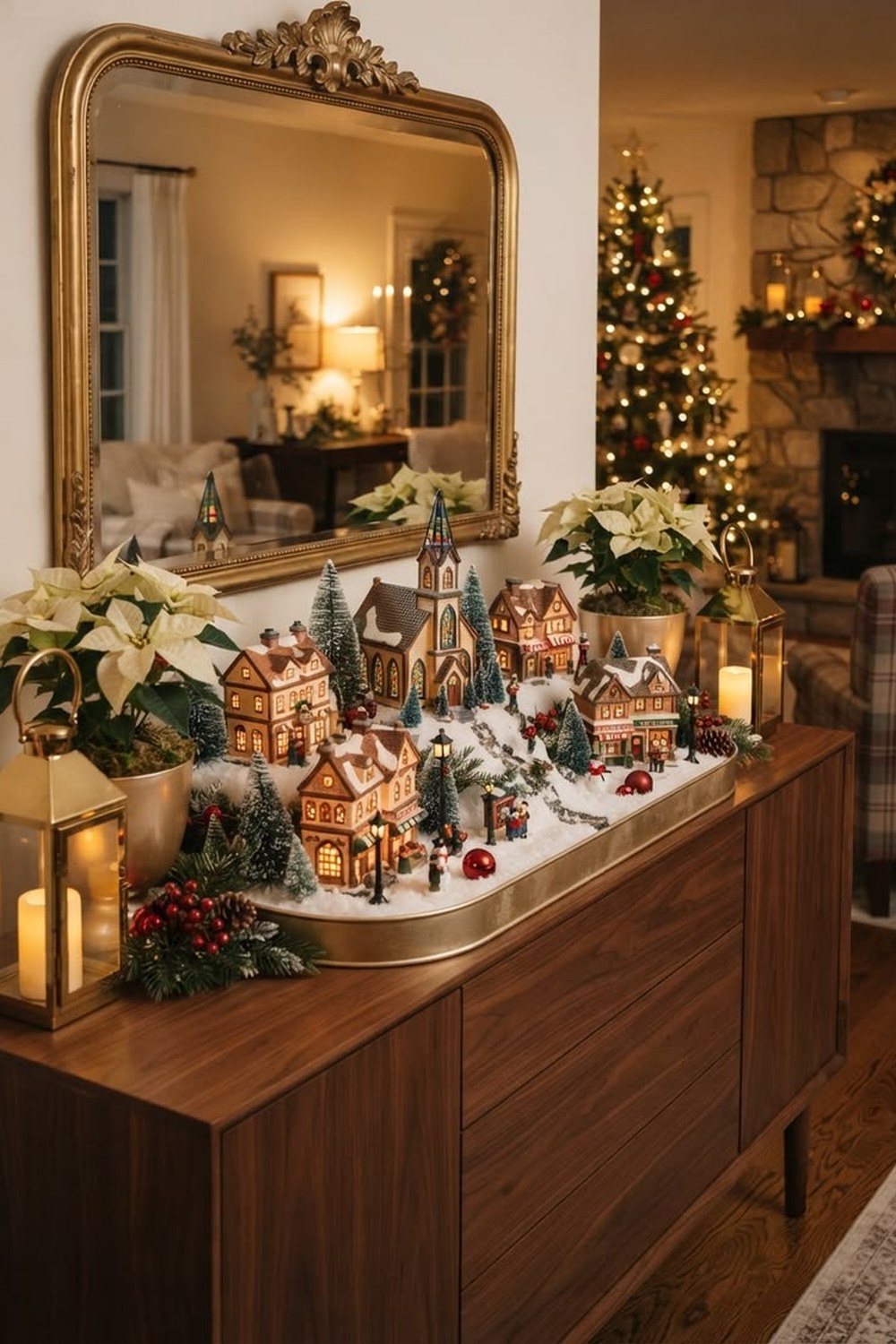
The sideboard is the dining room's stage — give it the one display the table cannot hold.
Style the sideboard or buffet with a grouped scene: candles in glass hurricanes at one end, baubles from the palette heaped in a footed glass bowl or under a cloche, and — if you keep one — a small ceramic village or a cluster of miniature trees along its length. This is where the dining room's sparkle lives, safely off the table, glowing at seated eye level all evening.
Styling tip: group in threes and leave real gaps of empty surface between groups. A sideboard covered edge to edge reads as storage; a sideboard with breathing space reads as styling.
14. The Kitchen Corner Tray: Festive Where the Cooking Happens
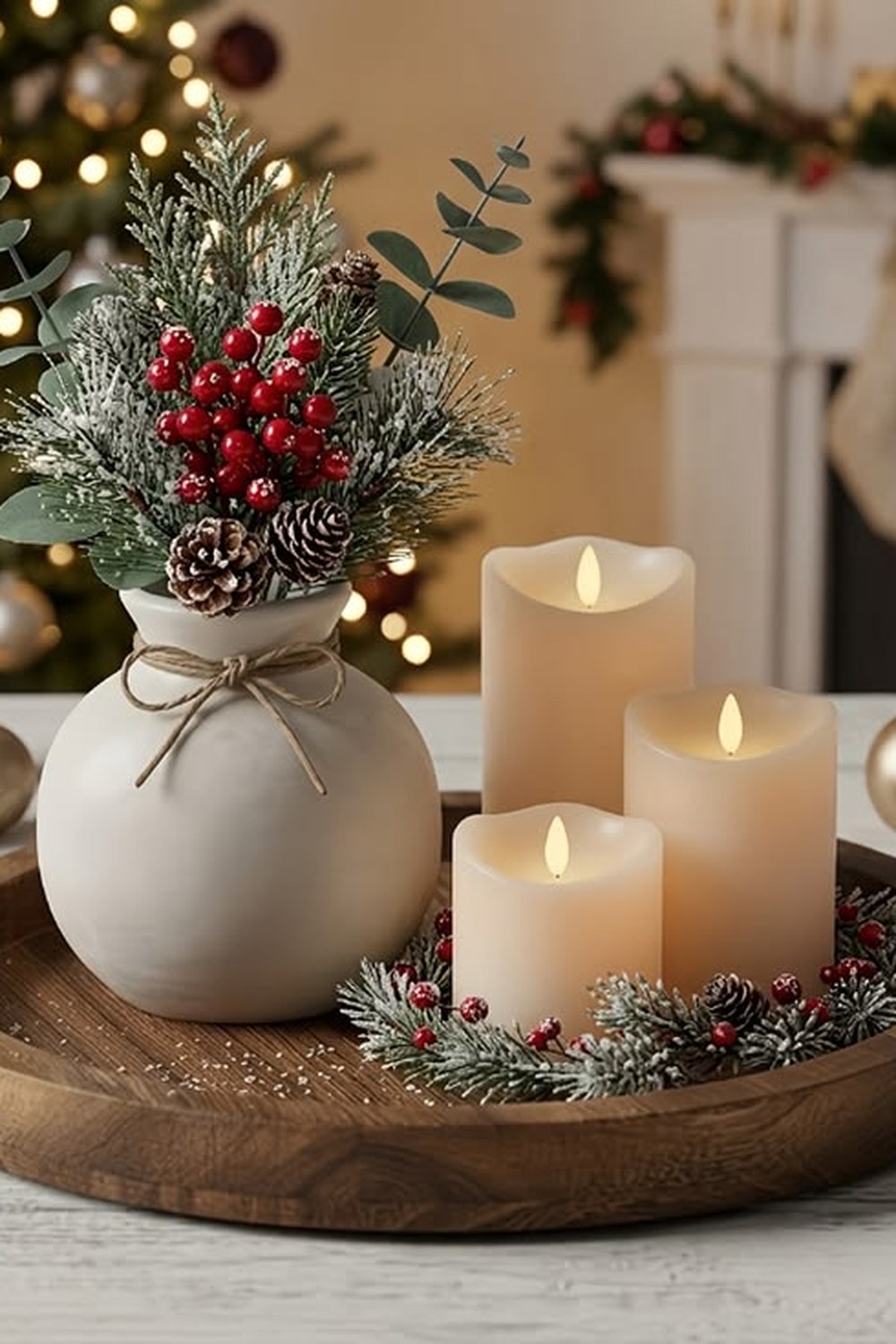
One tray in the kitchen's least-used corner — the display that never blocks a chopping board.
Gather the season's kitchen pleasures onto a single tray in a quiet corner: festive mugs, a jar of biscuits or sweets, a small candle, one sprig of greenery behind. It works as a self-serve hot drinks point for the whole month, looks like the styled corners all over your saved photos, and occupies one tray's footprint in a spot the worktops never miss.
Styling tip: site the tray near the kettle but off the main prep run — the dead corner between kettle and wall is classic. Everything on it should be usable, not just decorative.
Bedrooms
15. The Dressed Bed: Festive Layers, Same Palette
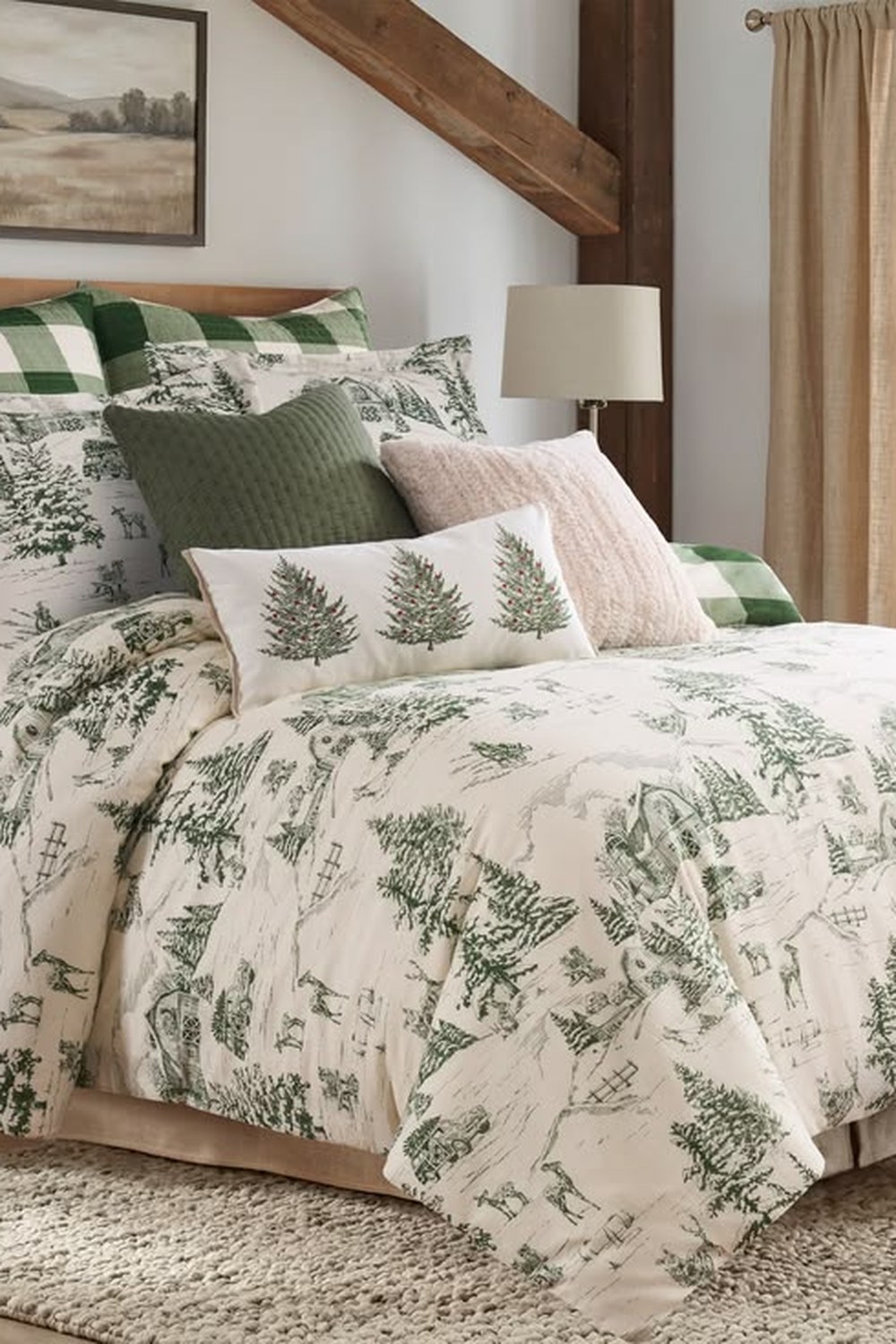
The bedroom joins the scheme through textiles alone — no ornaments required.
Dress the bed in white or cream linen, fold a throw in your palette's deep green or accent plaid across the foot, and swap in two cushions in the house colours. The room feels festive purely through colour and layering, sleep stays peaceful, and the bed echoes the sofa textiles downstairs so the house's story continues up the stairs.
Styling tip: keep Christmas in the bedroom to textiles and one or two objects. A bedroom dressed like a living room disturbs rest; a bedroom in the same colours, quietly, extends the calm.
16. The Bedside Mini Tree: A Small Glow by the Lamp
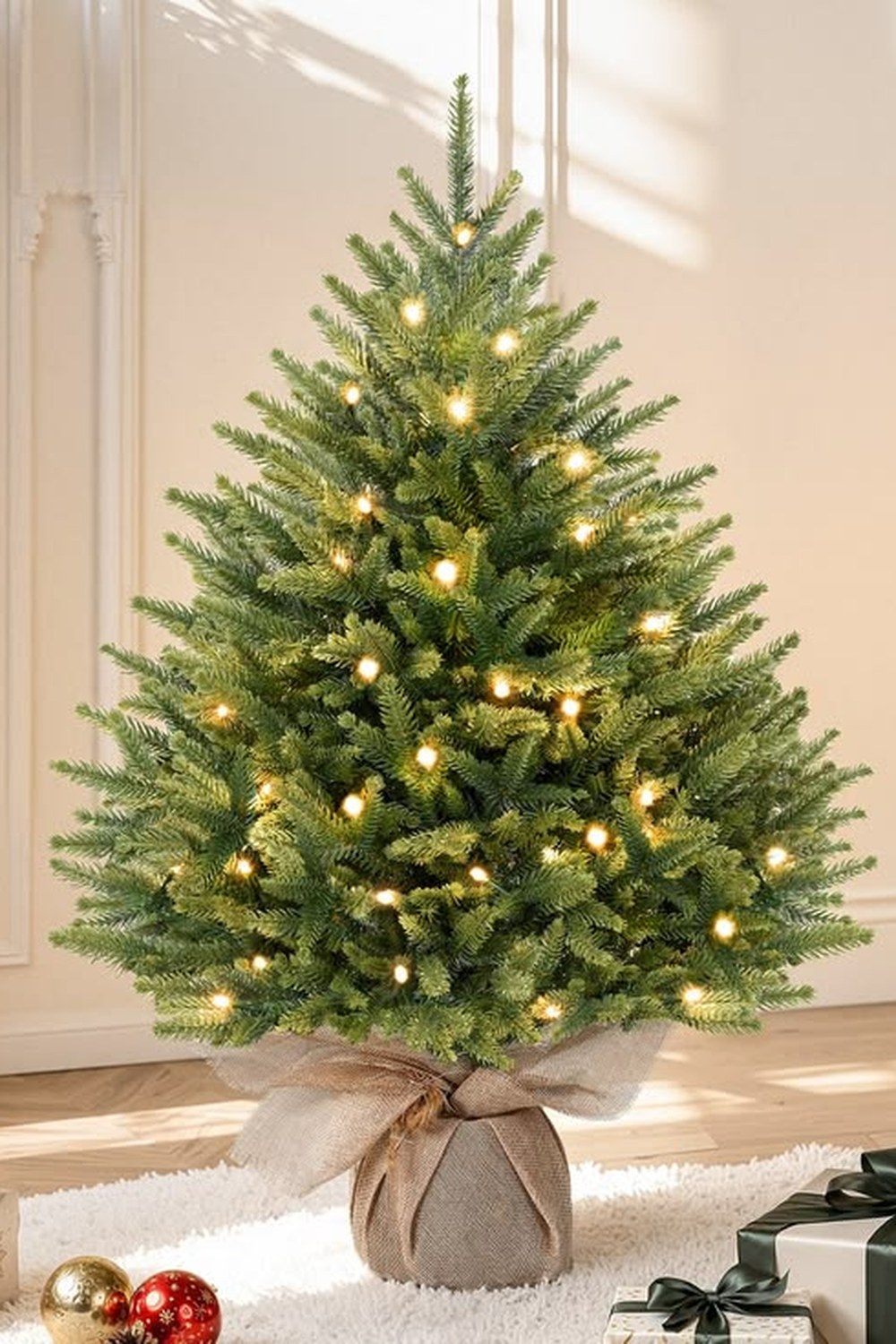
A tabletop tree on the nightstand — the gentlest festive wake-up in the house.
Stand a small potted tree in a ceramic or woven pot on the bedside table, wound with one strand of warm fairy lights on a timer and dressed with two or three wooden or paper ornaments at most. In the main bedroom it makes December mornings softer; in the guest room it is the single touch that makes visitors feel expected rather than accommodated.
Styling tip: dress the mini tree only in the house palette's quietest members — wood, paper, cream. At this scale, three natural ornaments look designed; a handful of bright ones looks like the tree's leftovers.
17. The Headboard Garland: The Bedroom's Mantel
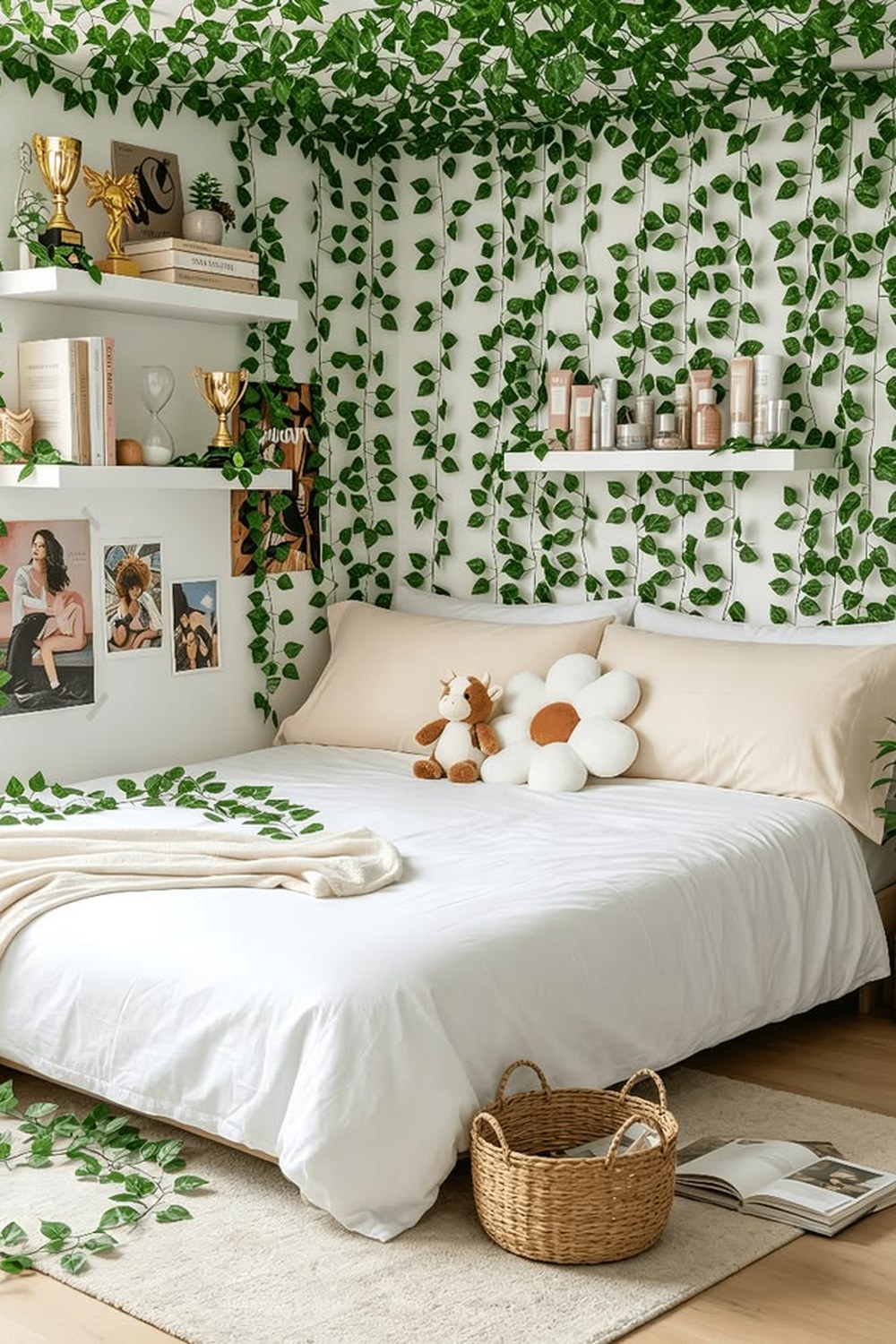
Every bedroom has a mantel substitute — the headboard, draped in one slim line of green.
Run a slim garland along the top of the headboard or the wall line above it, weave in warm fairy lights, and add nothing else — no baubles, no bows. Waking under soft green and a faint glow is the quietest festive feeling in this whole guide, and it frames the dressed bed below into one complete picture.
Styling tip: fix the garland securely with removable hooks and keep greenery clear of the pillows. The look should crown the bed, never shed on it.
18. The Dresser Top: A Vignette in Three Objects
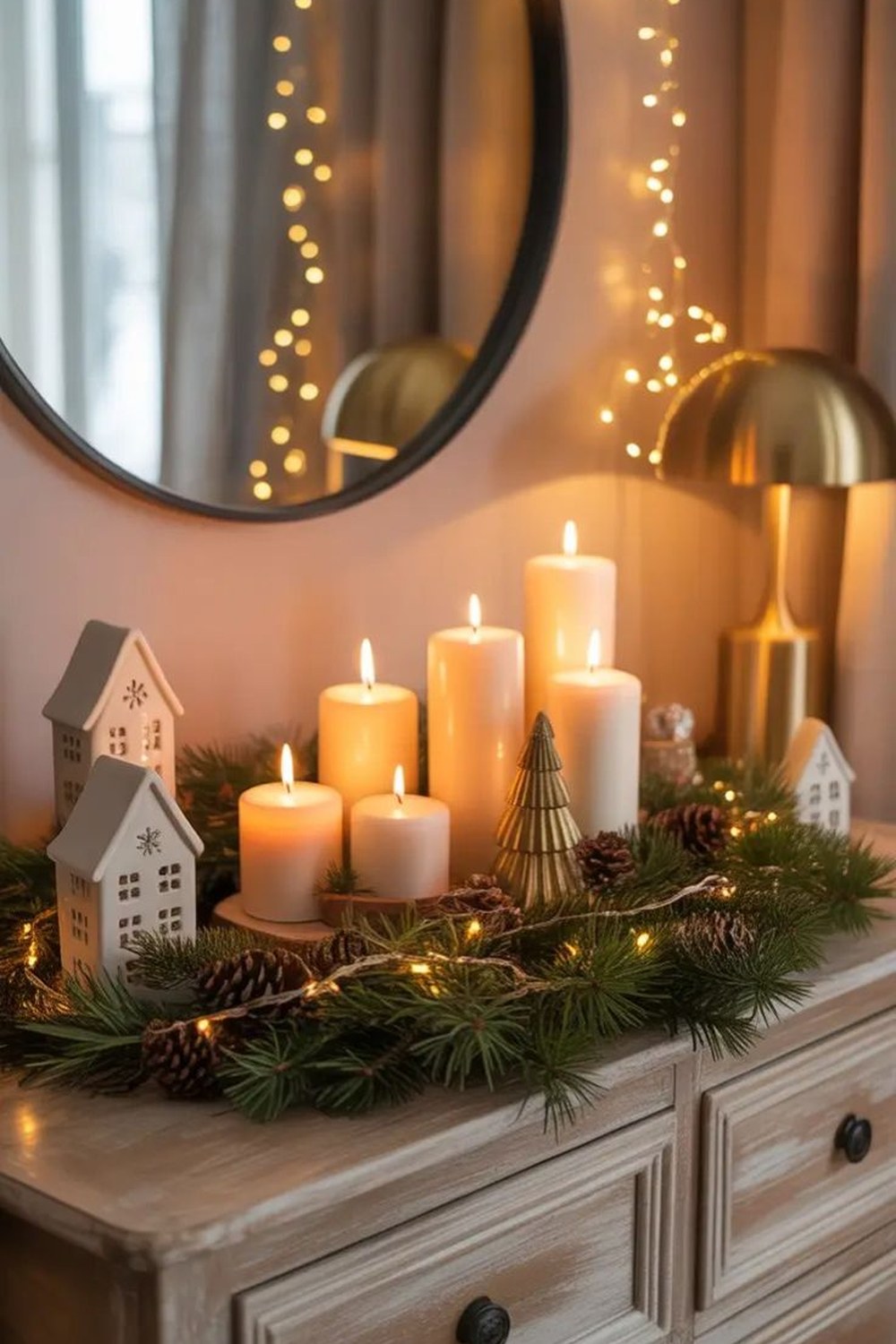
Mirror, candle, one green thing — the bedroom dresser dressed in three moves.
Hang a small plain wreath on the bedroom mirror or lean it against the wall, set one candle in a holder beside a small stack of books, and lay a single sprig of greenery across the dresser top. Three objects, all in the palette, and the room's second surface joins the scheme. Restraint matters most in bedrooms, where every object is seen last at night and first in the morning.
Styling tip: choose the dresser's candle in the room's scent family (see the finishing touches) — the bedroom is where scent reads strongest, so let it match the story the rest of the house tells.
19. The Children's Bedroom: Paper Chains and Felt
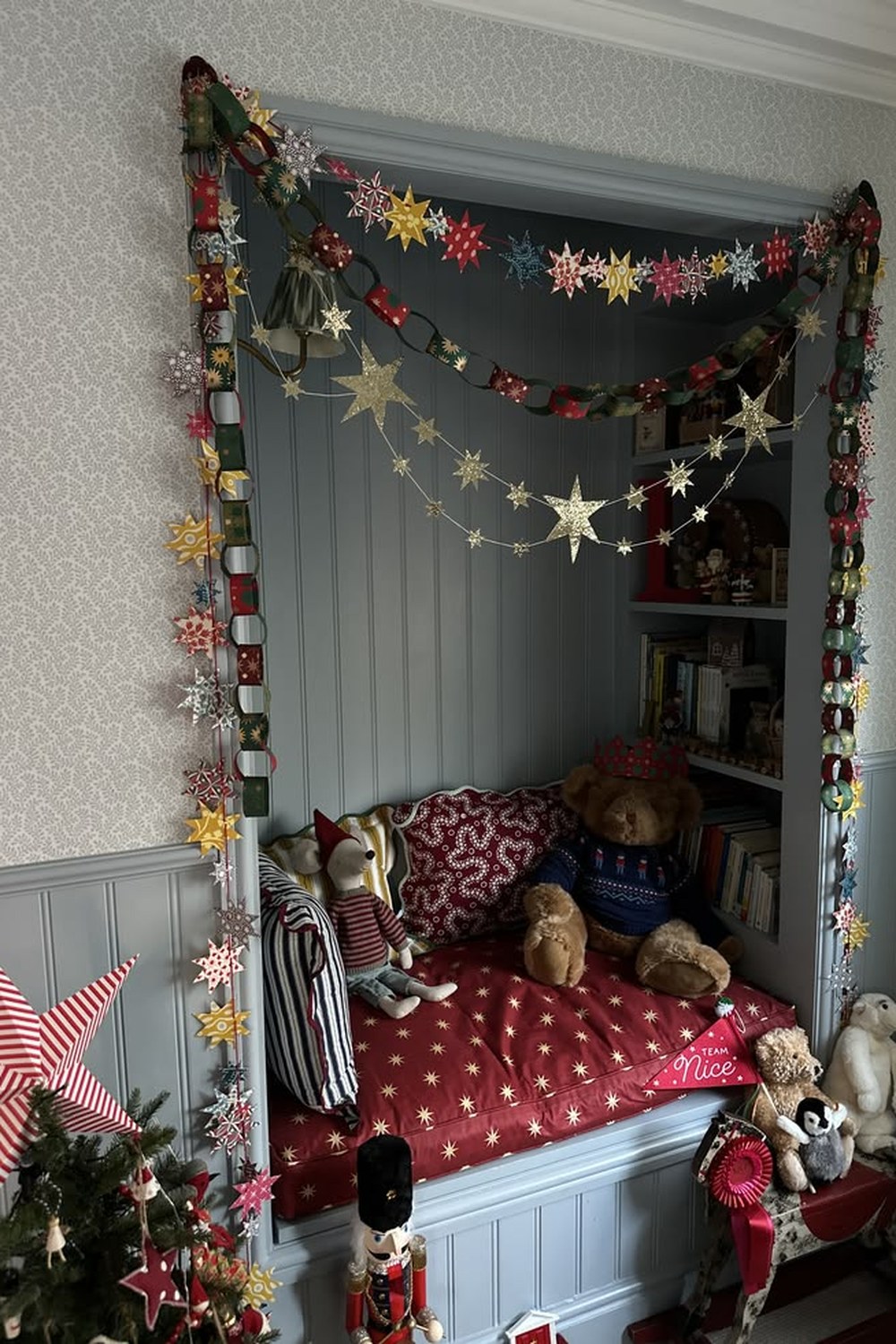
Small hands get the unbreakable Christmas — paper, felt and things they helped to make.
Give children's rooms the handmade end of the scheme: paper chains they strung themselves across a shelf or window, a small tree dressed in felt and wooden ornaments, a festive cushion cover on the bed. Nothing here can shatter, everything can be touched, and a chain a child made carries more Christmas than any shop display in the house.
Styling tip: keep one element in the house palette — green chains among the coloured ones, or the cushion in the scheme's plaid. The room stays theirs, but it still belongs to the same house.
20. The Guest Room Welcome: A Tray That Says We Expected You
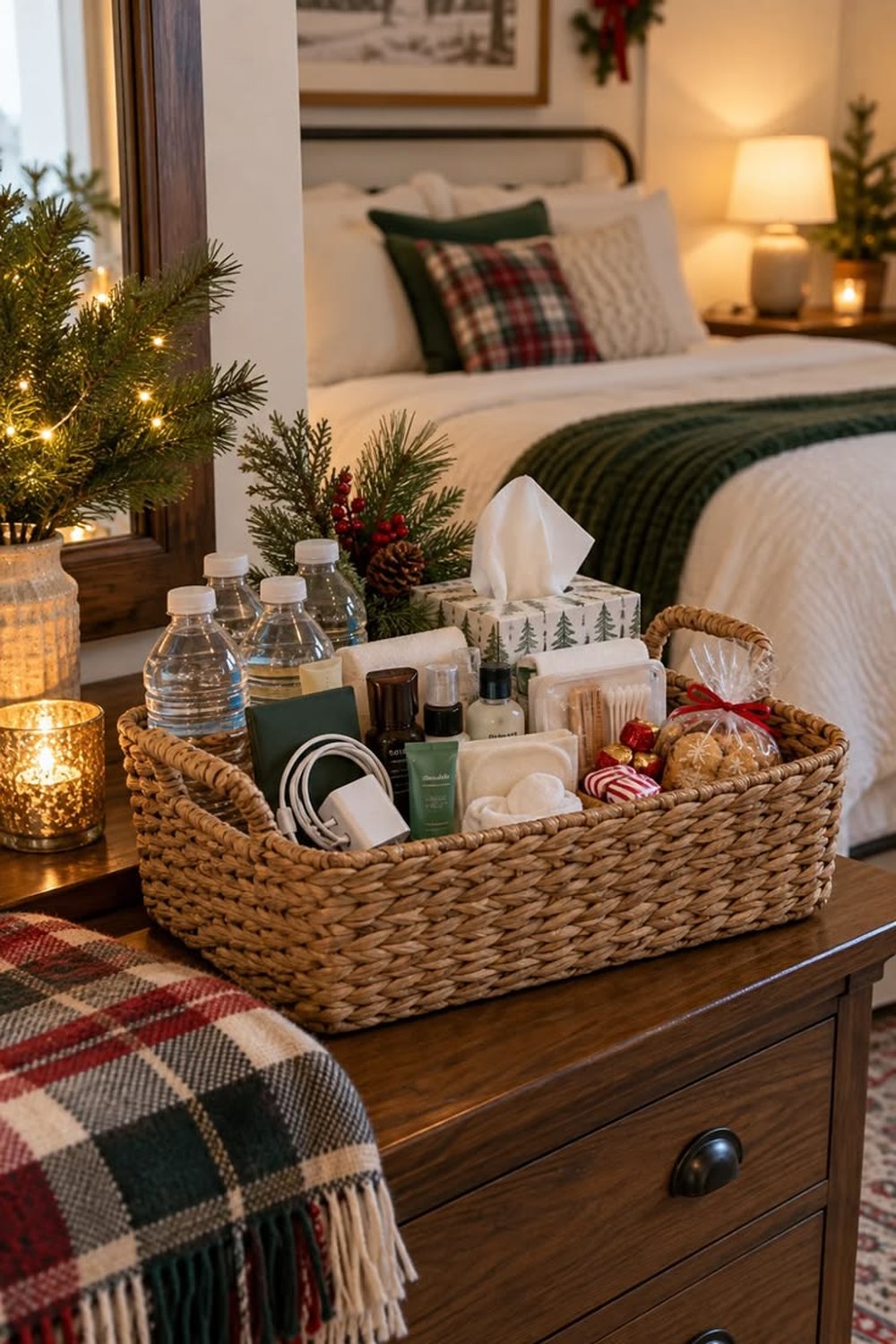
Guests remember the small room most — a water carafe, a candle and one wreath on the door.
Prepare the guest room like the rest of the tour, briefly: bedside mini tree or a sprig in a jar, a small wreath on the inside of the door, and a tray with a water carafe, a candle and a folded spare throw. None of it is expensive; all of it says the visit was planned for. The guest room is where a whole-home scheme proves it was about people, not photographs.
Styling tip: light the candle and switch on the mini tree before guests arrive, then leave both. Arriving to a room already glowing is the warmest welcome a house can give.
21. The Bedroom Window: A Wreath Looking Out
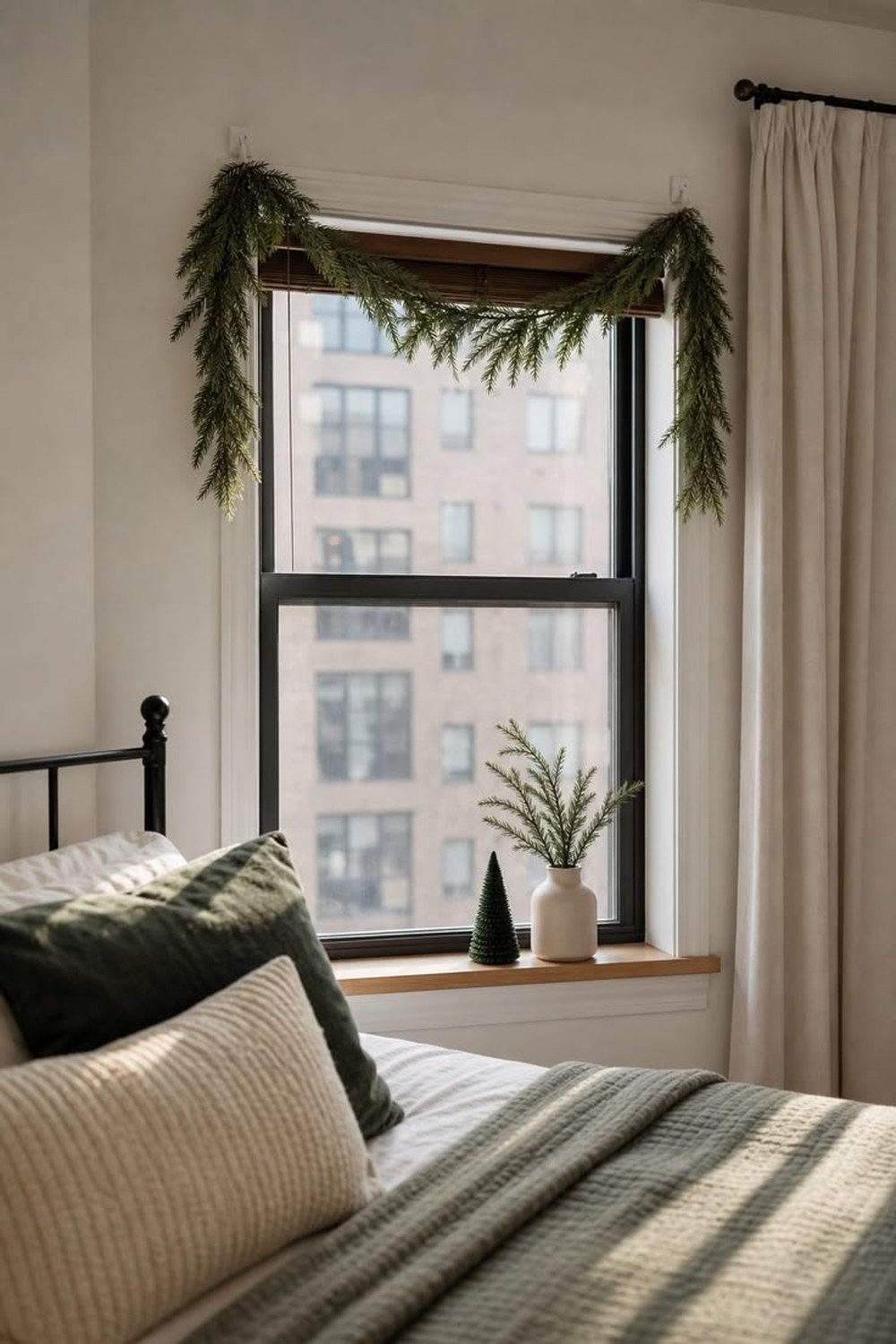
One wreath in the bedroom window repeats the living room's stars — the house, consistent from the street.
Hang a plain greenery wreath at the centre of the main bedroom window on a ribbon from the frame, echoing the paper stars downstairs. From inside it frames the winter view; from outside it tells the street that the decorating went all the way through the house, not just the rooms guests see first. If you hang only one bedroom decoration beyond the bed, make it this.
Styling tip: use the same ribbon as the front door wreath for the hanging loop. Street-facing details in one fabric make the whole facade look planned from the pavement.
Bathrooms, Hallways & Stairs
22. The Staircase Garland: The Tour's Connecting Thread
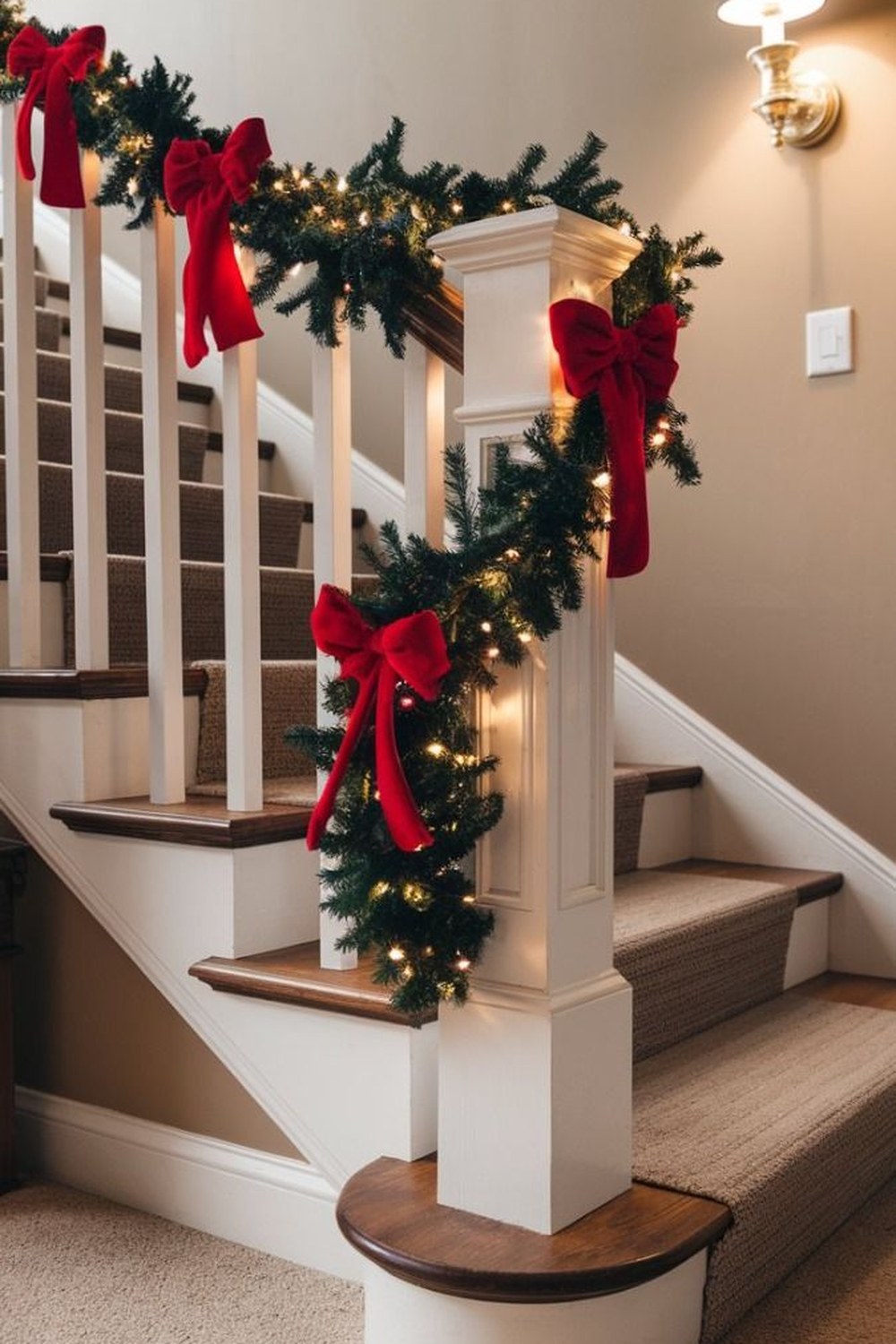
The stairs carry the scheme between floors — a garland here literally connects the tour.
Wind a greenery garland along the banister, fixed to the outer face and underside of the rail so the handrail's top stays clear for hands, with bows of the house ribbon at each swag and battery fairy lights woven through. It is often the most-photographed Christmas view in a home, and dressed in the same greenery and ribbon as the mantel, it makes upstairs and downstairs one scheme.
Styling tip: keep every tread completely bare and every light battery-powered. Staircase decor belongs on the rail and the wall, never underfoot and never on a trailing cable.
23. The Landing Moment: One Small Scene on the Way Up
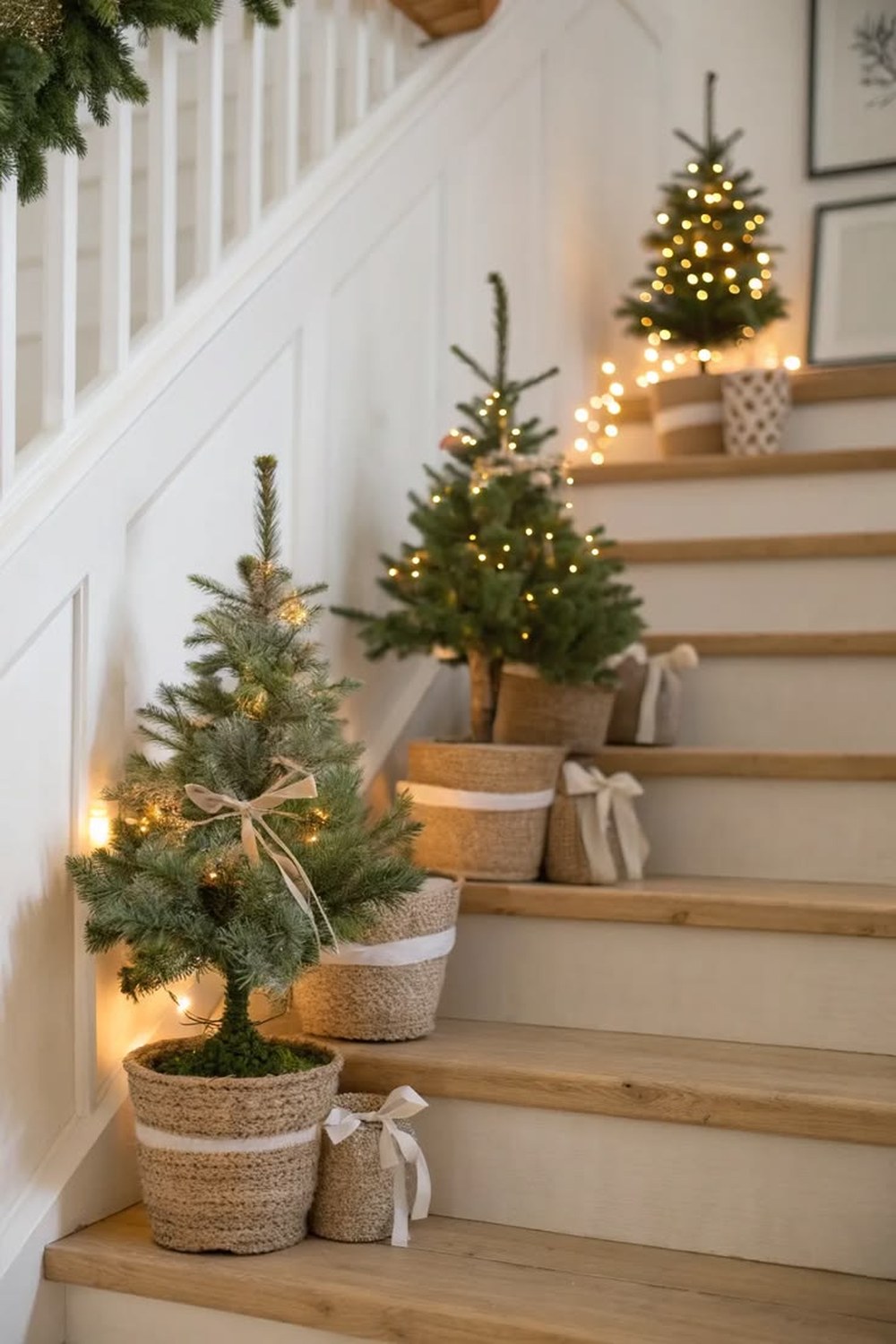
A landing is a pause in the house's story — give it one small scene, not a storage corner.
Where the stairs turn or meet the upper hall, place a single vignette: a small potted tree or a vase of branches, a lantern with a flameless candle on a timer, perhaps a basket of spare throws. It is seen in passing a dozen times a day, so its job is a brief lift, not a display — and it stops the landing becoming December's dumping ground for wrapping and bags.
Styling tip: keep the scene tight against the wall and the walkway fully clear. A landing decoration that narrows the path will be dismantled by the first armful of laundry.
24. The Hallway Console: A Mirror, a Garland, a Bowl
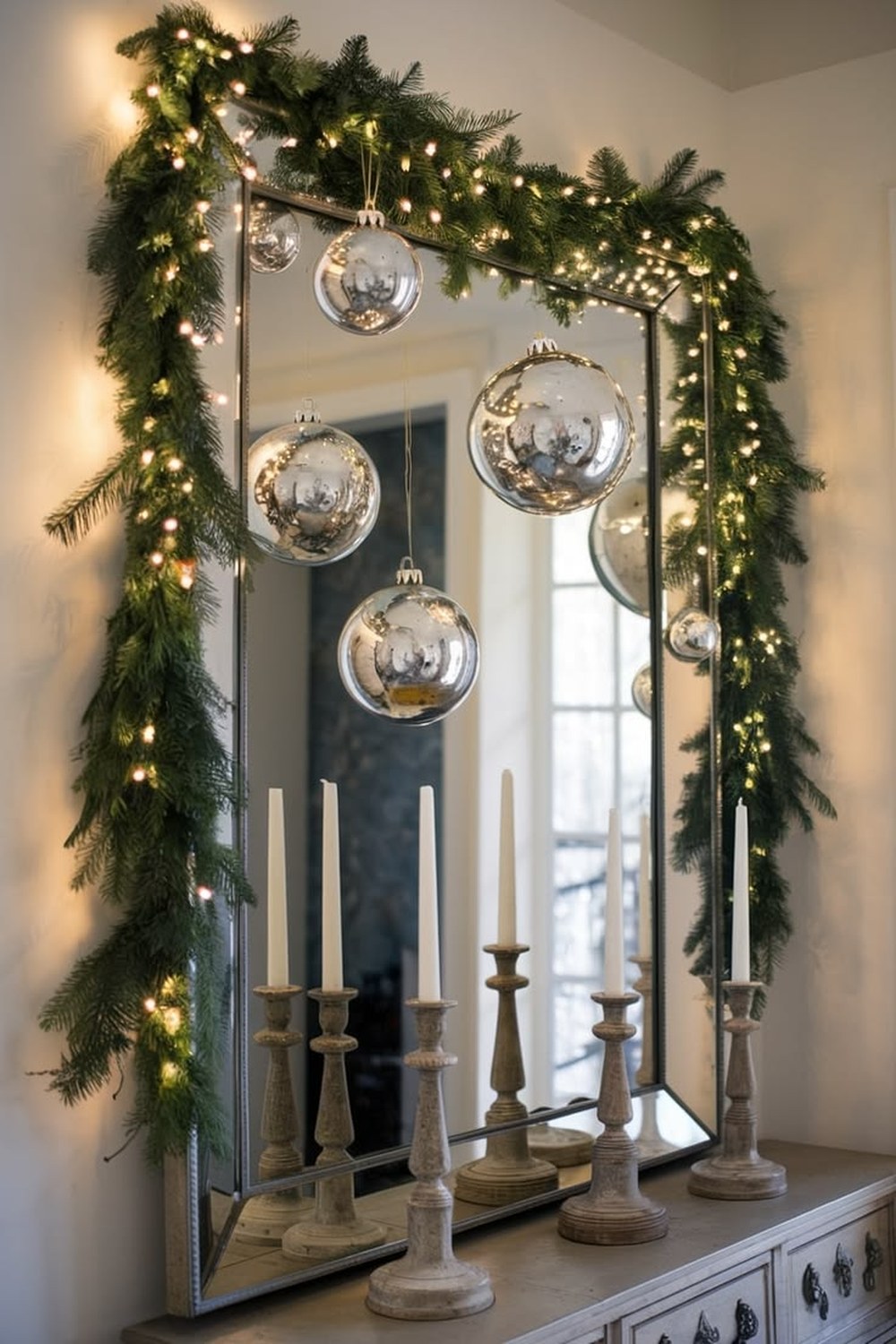
The upper hall deserves the entryway's trick repeated — a slim garland and one bowl of shine.
Style the landing or hallway console as a quieter echo of the entryway: a slim garland along its back edge or across the mirror above it, one lantern, and a bowl holding a few baubles in the palette. Hallways are the rooms nobody decorates and everybody walks through; one styled surface here doubles the sense that the whole house was considered.
Styling tip: hang the garland across the mirror's frame rather than the wall. The reflection doubles the greenery and the lantern light, and there is nothing to fix or damage.
25. Wreaths on Interior Doors: The Scheme, Repeated Quietly
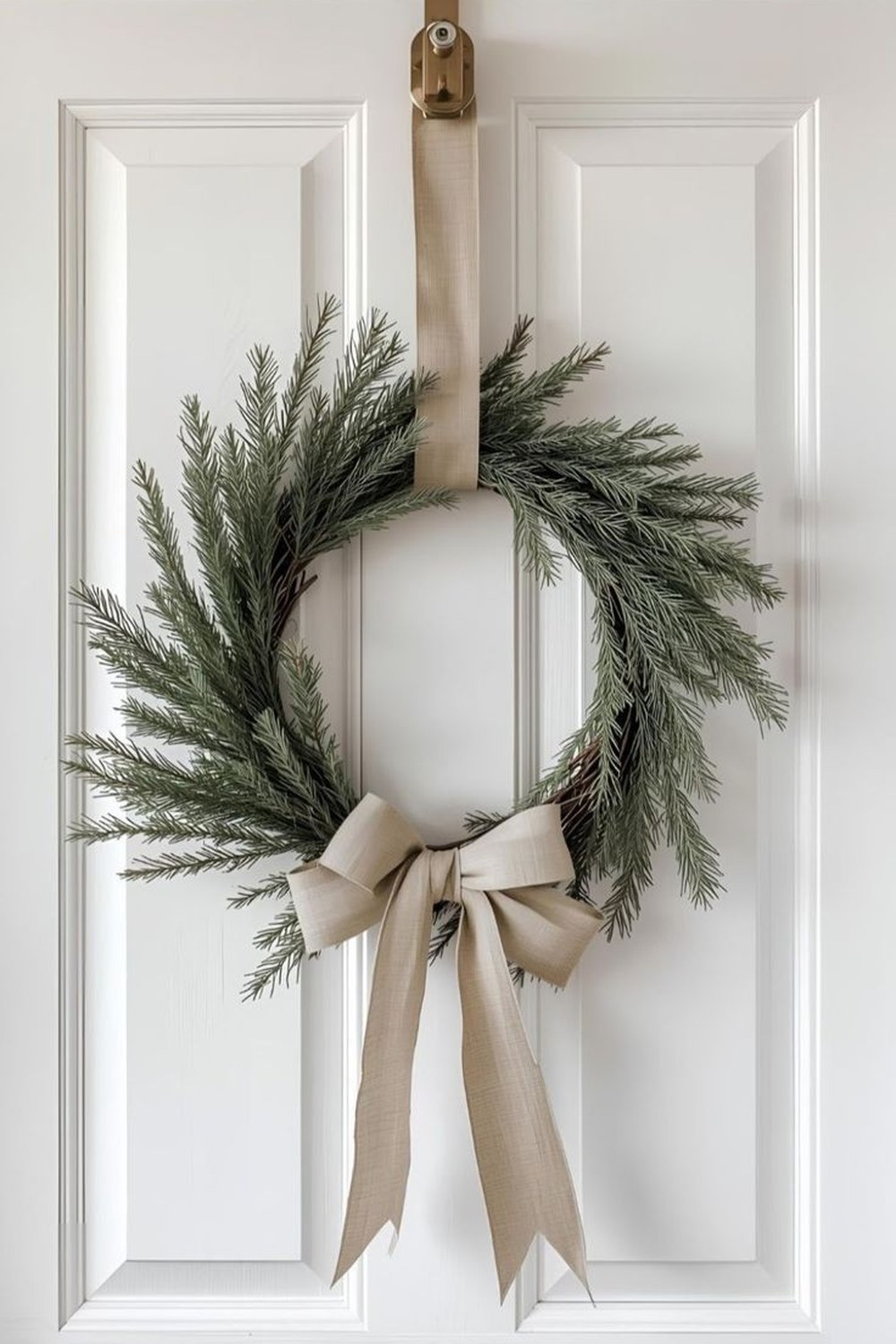
One wreath per landing door is too many; one on the hall's main door carries the whole corridor.
Hang a plain greenery wreath on a ribbon looped over the hallway's most-seen interior door — the bathroom or the main bedroom door. Against pale paint the dark green circle reads almost like a painting, and it greets everyone moving between rooms. Small sprigs or mini wreaths can mark other doors if you love the look, but the single full wreath is the statement.
Styling tip: use double-faced ribbon in the house fabric, because both sides of an interior door are seen. The ribbon's back is half the display here.
26. The Bathroom Refresh: Eucalyptus, Towels and a Candle
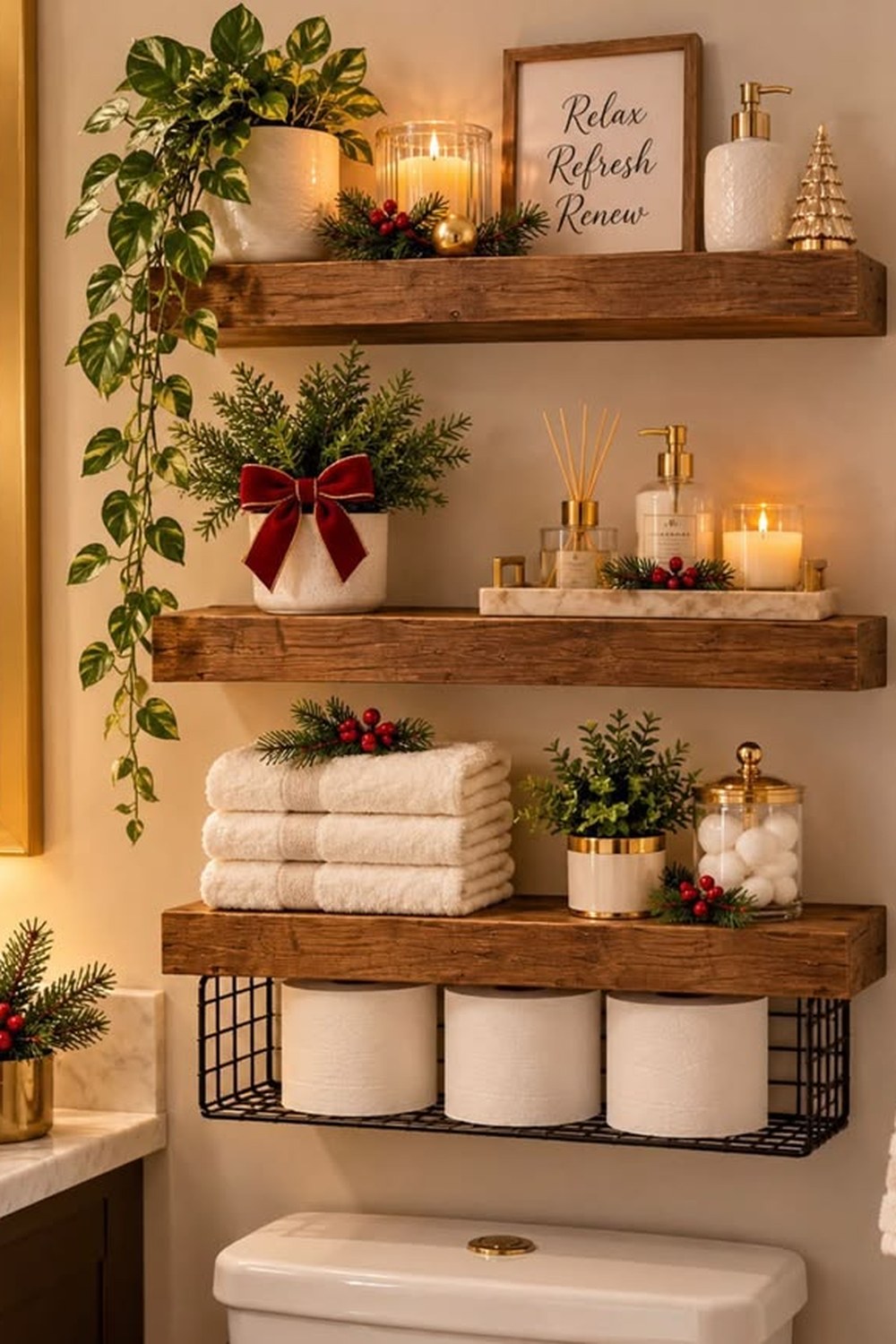
The bathroom needs no ornaments — scent, steam and one green bundle do the season.
Tie a bundle of fresh eucalyptus to the shower head or stand it in a jar by the basin, where the steam releases its scent at every shower. Fold the best cream or white towels where they show, tie one with the house ribbon, and set a single candle on the shelf. Guests using this room will register the Christmas in about three seconds, through scent more than sight.
Styling tip: let scent do the decorating here rather than objects. Bathrooms are small and wet; greenery that perfumes and towels that layer beat any bauble in this room.
27. The Bathroom Mirror Wreath: A Mini Above the Basin
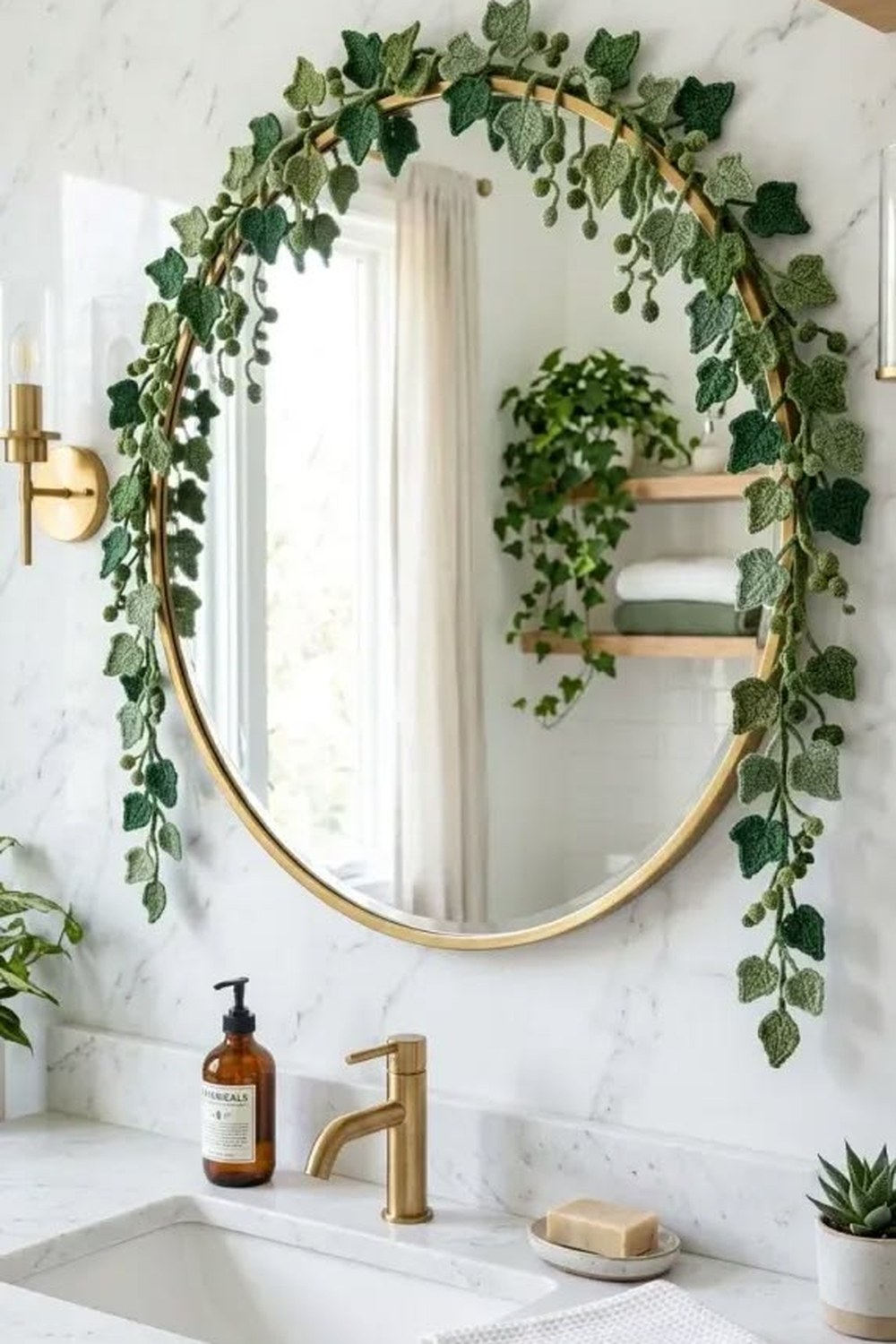
The smallest wreath in the house, hung where it is seen at closest range.
Hang a miniature greenery wreath — plain, or with the tiniest accent bow — on the bathroom mirror from a suction hook or a ribbon over the frame. Reflected candlelight and green at face height turn the most functional room in the house into part of the celebration, and the scale suits a room where every other surface is working hard.
Styling tip: keep bathroom wreaths faux or hardy dried greenery, hung clear of splash range. Steam is kind to eucalyptus and fir, unkind to delicate dried flowers and glued ornaments.
28. Lanterns in the Hall: Light at Floor Level
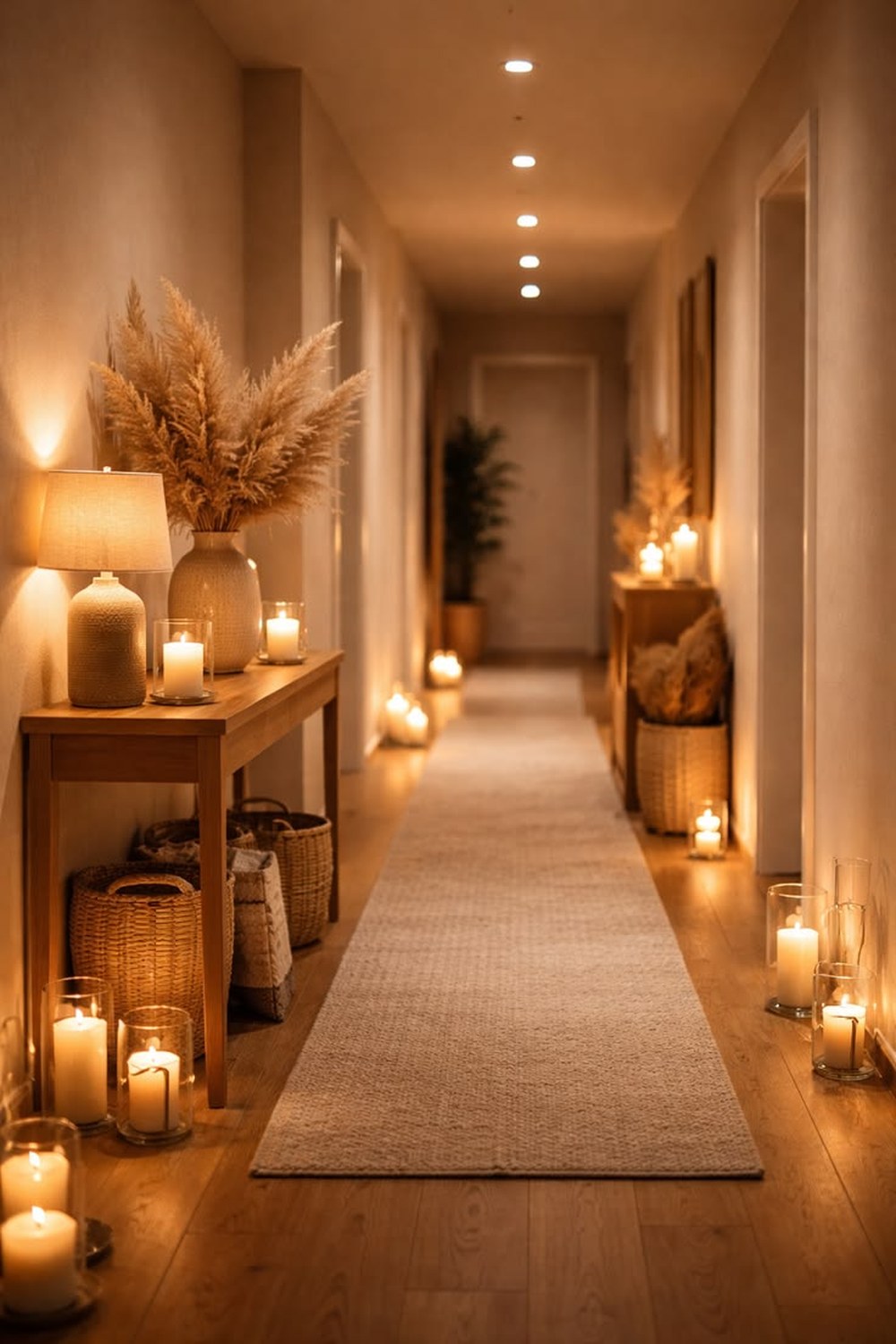
Halls have no mantel and no tree — give them light low down, where it pools and guides.
Set one or two lanterns with flameless candles on timers at the hallway's turn or beside the console, and let their glow pool across the runner. Floor-level light makes narrow halls feel wider and warmer in the evening, links the entryway to the stairs, and needs no socket, no fixing and no supervision.
Styling tip: match the lantern finish to the entryway's lantern. The same lantern at both ends of the hall makes the passage feel like one planned room, not two accidents.
Whole-Home Finishing Touches
29. One Palette, Every Room: The Cohesion Rule
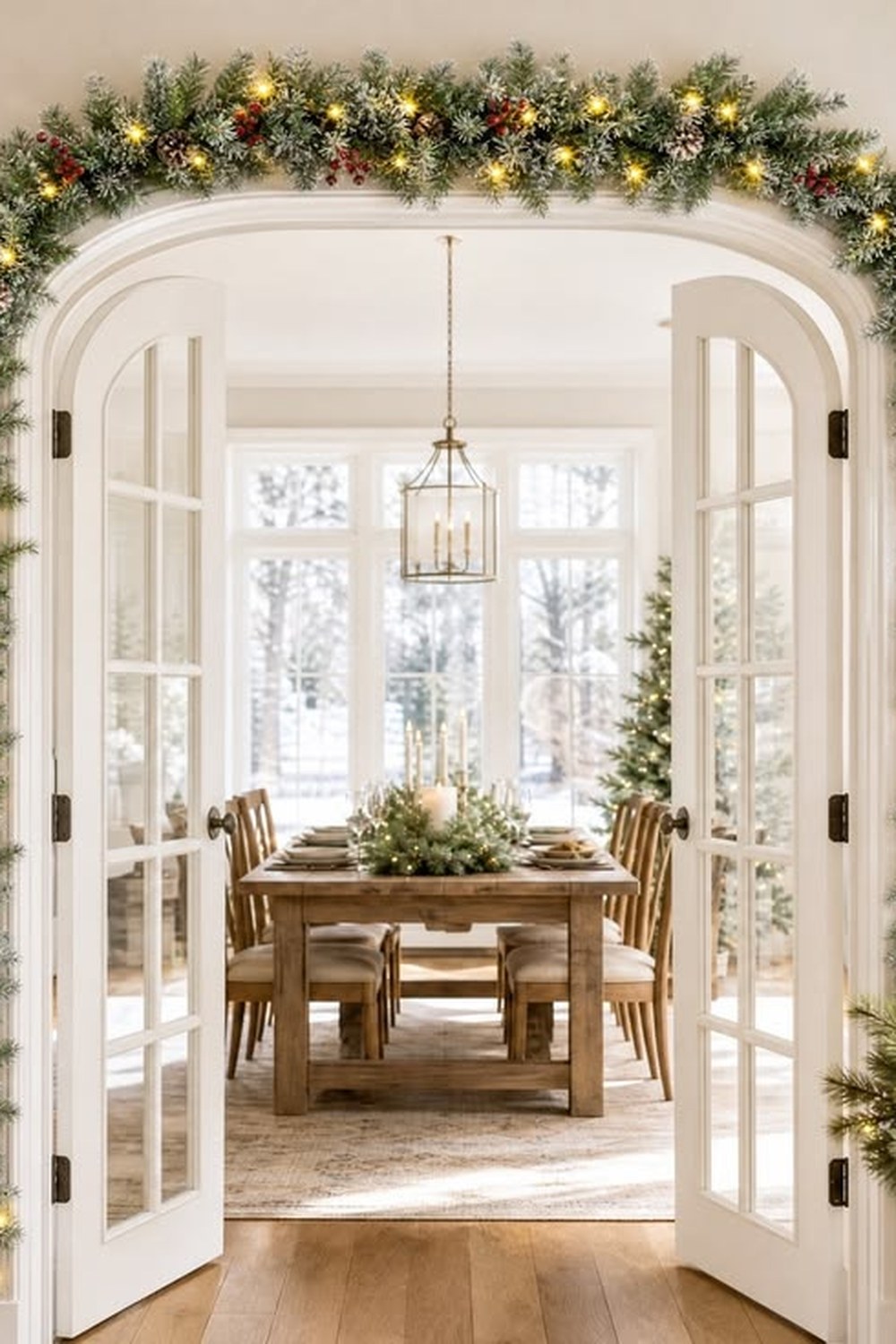
Stand in any doorway and the next room should rhyme — this is the whole guide in one idea.
The thread holding this tour together is not any single decoration; it is the repeated palette: deep green, warm cream, natural wood, one accent. Before adding anything to any room, hold it against that list. A beautiful object outside the palette makes one corner prettier and the whole house less calm; the same object inside the palette strengthens every room at once.
Styling tip: take a phone photo of your tree and keep it as your shopping reference all season. Every purchase gets one question: does it belong in that photograph?
30. The Same Ribbon Everywhere: Repetition Is the Design

One bolt of ribbon, bought once, appearing in every room — the cheapest design system there is.
Choose one ribbon — velvet in your accent colour is the season's favourite — and use it everywhere: the bow on the door wreath, the mantel garland, the chair backs, the staircase swags, the towel tie, the napkin rings, the gifts. Separately each bow is nothing; together they are the reason a visitor feels the house was designed rather than decorated room by room on different days.
Styling tip: buy the whole bolt at the season's start, more than you think you need. Ribbon runs out mid-December in exactly the shade you chose, and a near-match is worse than a different finish in the same colour.
31. The Scent Layer: A House That Smells Like Christmas

Decor is seen — scent is felt. Give each zone one quiet source and the house smells designed too.
Plan scent the way you planned colour: one family, everywhere, never competing. A simmer pot of orange, cinnamon and cranberry on the hob for gathering days; beeswax or pine-scented candles in the living room; the eucalyptus bundle in the bathroom's steam; fresh greenery doing quiet work in every room. When the scents agree, guests describe the house as Christmassy before they can name a single thing they saw.
Styling tip: never run two different scented candles in adjoining rooms. One scent per zone, with the green, woody family as the house's base note, keeps the layer calm rather than perfumed.
32. One Warm Light: The Same Glow in Every Room

Cool light in one room breaks the spell in all of them — warm white everywhere, on timers.
Decide the house's light once: warm white fairy lights, warm bulbs, real or flameless candlelight, and nothing cool-toned anywhere. Then put the main strands — tree, windows, staircase, landing lantern — on timers set for dusk. The whole house lighting up at the same hour is the single most magical effect in this guide, and it costs nothing but consistency.
Styling tip: check every new light strand against the tree before it goes up. "Warm white" varies by brand, and one blue-ish strand in a window will argue with the rest of the house all month.
33. The Sound of the Season: Quiet Music, Low Down

The one decoration that fills every room at once — kept low enough to talk over.
Set one small speaker in the living room or hall and keep a single long playlist of quiet seasonal music — carols, piano, low voices — playing through gathering hours. Sound travels where garlands cannot, joining kitchen to living room to hall in one atmosphere, and it covers the silences that make even a beautiful room feel unfinished on a December evening.
Styling tip: keep the volume at conversation level and the playlist long enough never to loop within an evening. Music noticed for repeating stops being atmosphere and starts being a request.
34. Gifts as Decor: Wrapping in the Palette

Under the tree, the parcels are part of the landscape — wrap them like it.
Wrap gifts in two or three papers inside the palette — cream, kraft, deep green — tied with twine or the house ribbon and finished with a sprig of greenery or a wooden tag. Piled under the tree and stacked on the sideboard, the presents extend the scheme to the floor and make the house look generous from the first week of December, long before everything is bought.
Styling tip: wrap a few empty boxes in the same papers early in the month. A full drift of parcels makes the tree base look finished while the real gifts are still being chosen.
35. The January Edit: A Scheme Built to Last the Winter
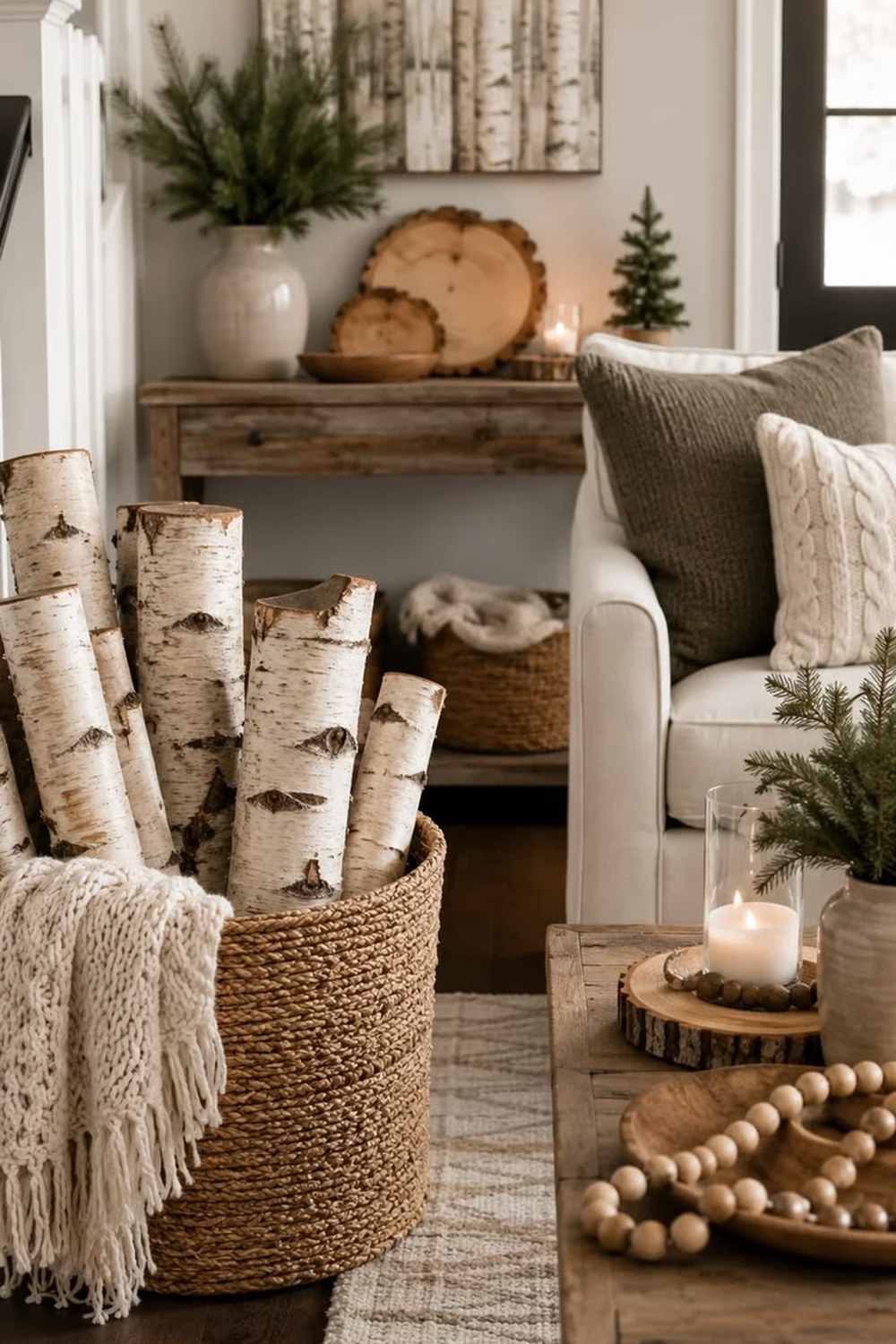
The final test of a whole-home scheme: how much of it still looks right in February.
Decorate from the start with January in mind. When the season ends, remove only the unmistakably festive pieces — the baubles, the bows, the tree — and leave the winter layer: cream textiles, plain greenery, candles, lanterns, log baskets and warm light. A house decorated in materials rather than novelties crosses into the new year still beautiful, and next December's tour starts from warmth instead of from empty rooms.
Styling tip: store the truly festive pieces in one labelled box per room. Packing away takes an hour, the winter layer stays earning its place, and unpacking next year is a tour you already know by heart.
Essential Decor Takeaways
- Decorate as a tour, not a scatter: door, living room, dining room, bedrooms and the in-between spaces should each hold at least one piece of the scheme.
- One palette ties it together — deep green, warm cream and natural wood as the base, with a single accent colour carried through every room.
- Repetition is the design system: the same ribbon, the same greenery and the same candle style appearing room after room is what makes a house feel designed.
- Protect the working surfaces: kitchens decorate doors, shelves and corners; bathrooms decorate with scent and textiles; stairs decorate the rail, never the treads.
- Light the whole house in one temperature — warm white only — and put the main strands on timers so every room glows at the same dusk moment.
- Add the invisible layers last: one scent family across the zones, quiet music underneath, and wrapping that treats gifts as part of the landscape.
- Favour winter decor over Christmas novelties — textiles, greenery, candles and wood that still look right in February, so the scheme earns its keep all season.
Frequently Asked Questions
What are the best christmas home decor ideas for decorating the whole house without it looking mismatched?
Work from one palette and repeat it ruthlessly. Choose a base of deep green, warm cream and natural wood, pick a single accent colour, and use the same ribbon, greenery style and warm white lights in every room. A wreath at the door, a garland on the mantel and staircase, one small green touch in each bedroom and bathroom, all in the same colours, reads as one designed home — even when the pieces themselves were bought in different years and shops.
Which rooms should I decorate first if I only have one weekend?
Follow the route a guest takes. Day one: the entryway (door wreath, console), the living room (tree, mantel, sofa textiles) and the dining table — the rooms that carry gatherings. Day two: the kitchen doors and shelves, the staircase garland, one touch per bedroom, and the bathroom's eucalyptus and candle. The finishing layers — scent, timers, matching wrapping — take an hour at the end and pull the whole house together.
Do small rooms like bathrooms and hallways really need decorating?
They need a touch, not a display — and the touch matters more than its size. A mini wreath on the bathroom mirror, eucalyptus in the shower steam, a lantern on the landing: these are the details guests remember, because they prove the decorating was for the people living there, not just for the rooms that get photographed. Keep them small, useful and inside the palette.
Can I create a whole-home Christmas scheme on a small budget?
Yes — the cohesion in this guide is mostly free. A palette costs nothing to choose, repetition costs one bolt of ribbon, and the strongest ideas here are textiles you swap, greenery you gather, candles you regroup and lights you move to timers. Spend first on the anchor pieces seen most (the tree, the door wreath, the staircase garland), make the small-room touches from offcuts and leftovers, and let consistency do the expensive-looking work.
A whole-home Christmas is not thirty-five separate decorations — it is one walk through a house that feels like the same celebration in every doorway: green and cream, warm light, the same ribbon, a scent that follows you kindly from room to room. Save your favourite christmas home decor ideas from this tour, start at the front door, and let the scheme grow one room at a time. For more seasonal inspiration, follow TheStylingHub on Pinterest, where we pin fresh tree, mantel, table and room-by-room ideas all season long.